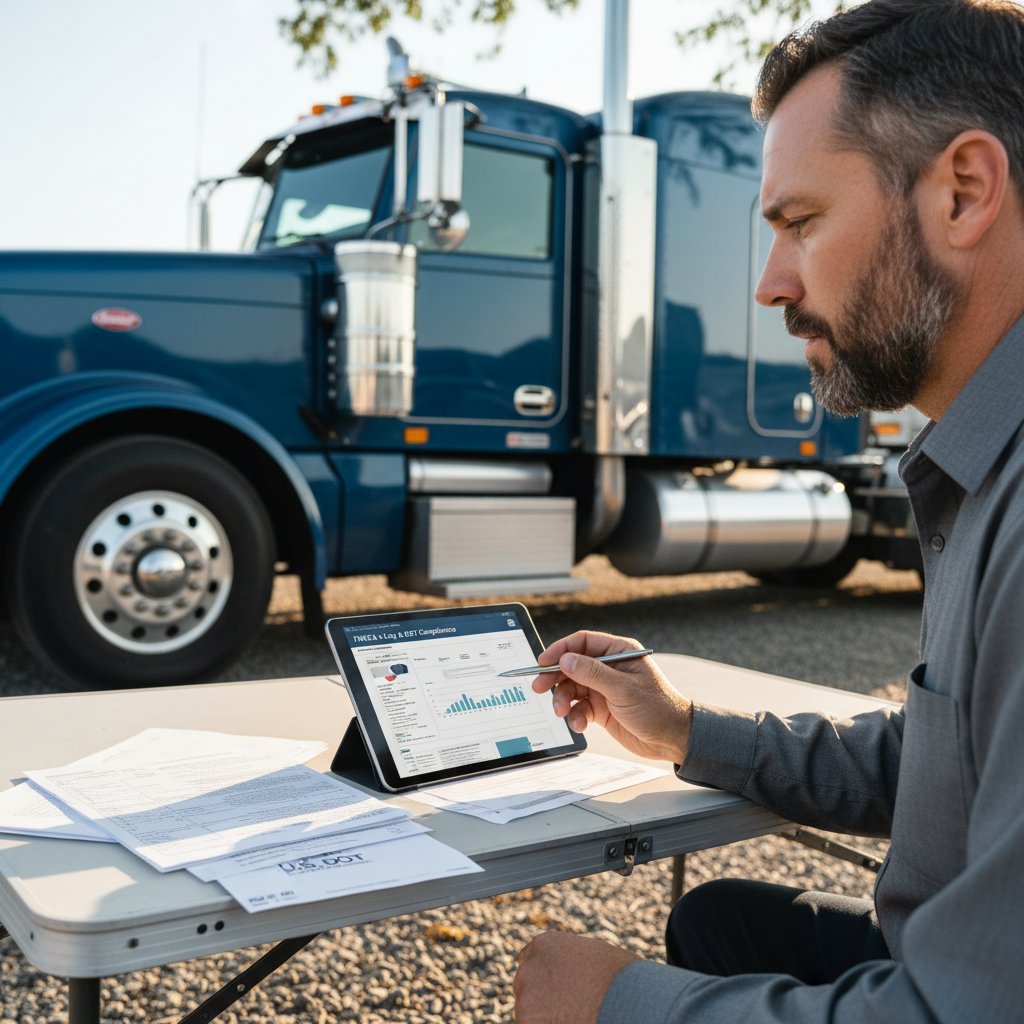
Motor truck cargo insurance can help pay for covered loss, damage, or theft of freight in your care, custody, and control. Learn coverage, exclusions, limits, 2026 cost drivers, COI language, and claims steps—get a quote.
Motor truck cargo insurance is coverage that may pay for covered loss, damage, or theft of a customer’s freight while it’s in your care, custody, and control (CCC)—typically while it’s in transit. It’s not the same as auto liability, and loading/unloading and temperature/spoilage are often limited or excluded unless you add the right endorsement.
If you haul freight for brokers or direct shippers, cargo coverage isn’t a “nice to have.” It’s how you stay set up, avoid chargebacks, and keep one claim from wiping out a month (or a year) of profit. This guide breaks cargo down like a business owner: what it covers, what gets denied, common broker limits, 2026 cost drivers, and what to do in the first 24 hours of a claim.
Key Takeaways: Essential Motor Truck Cargo Insurance
- Cargo covers the customer’s freight (CCC), not injuries, property damage to others, or damage to your truck.
- Most denials come from “conditions,” not the limit—unattended theft wording, temperature/spoilage gaps, incorrect paperwork, or missing endorsements.
- Buy limits and endorsements to match your commodities and lanes, not a generic $100,000.
- Claims are paperwork-heavy by design: if you can’t prove custody, condition, mitigation, and documentation, payouts get delayed or reduced.
Table of Contents
Reading time: 12 minutes
- What Is Motor Truck Cargo Insurance—and Who Needs It?
- What Motor Truck Cargo Insurance Covers (Typical Perils)
- Where Coverage Applies (In Transit, Terminal, Loading/Unloading)
- What’s Excluded (and Claim-Denial Triggers That Surprise Drivers)
- Endorsements & Add-Ons That Make Cargo Coverage Usable
- Cargo Limits, Deductibles, and Valuation (How Claims Actually Pay)
- How Much Does Motor Truck Cargo Insurance Cost in 2026?
- Do Brokers Require Cargo Insurance? (COI Requirements + Sample Language)
- Contingent Cargo vs. Motor Truck Cargo (When Each Matters)
- State, Lane, and Program Restrictions (What Actually Changes)
- Real-World Cargo Claims: Paid vs. Denied Examples
- Cargo Claim Checklist: What to Do in the First 24 Hours
- Endorsement Decision Checklist (Quick Tool)
- Frequently Asked Questions
- Why Logrock (and a Good Agent) Matters on Cargo
- Conclusion & Get a COI-Ready Cargo Quote
What Is Motor Truck Cargo Insurance—and Who Needs It?
Motor truck cargo insurance is a policy designed to cover covered loss or damage to freight while it’s in a carrier’s care, custody, and control (CCC), typically on a per vehicle/per occurrence limit such as $100,000.
Plain-English definition (CCC: care, custody, and control)
What it is (in plain English): It’s meant to protect the value of freight you’re hauling for someone else when a covered cause of loss happens while the shipment is under your control.
Why it matters (the business risk): If a broker/shipper holds you responsible for a damaged load and you don’t have workable cargo coverage, that loss often comes out of your settlement, your reserve, or your pocket.
Who typically needs it (and who sometimes doesn’t)
You typically need cargo coverage if you pull brokered loads, haul direct for shippers under contract, or move anything with meaningful value (electronics, food, building materials, automotive parts).
You might not need your own cargo policy if you’re leased to a motor carrier and the carrier’s cargo policy extends to you—but you should confirm that in writing, not assume it.
Cargo vs. liability vs. physical damage (quick comparison)
| Coverage | Protects | Example loss |
|---|---|---|
| Motor truck cargo | Customer’s freight in your CCC | Trailer overturn damages palletized product |
| Auto liability | Injuries/property damage to others | You hit a passenger vehicle; bodily injury claim |
| Physical damage | Your tractor/trailer (if scheduled) | Collision or deer strike damages your truck |
What Motor Truck Cargo Insurance Covers (Typical Perils)
Most motor truck cargo policies are built around direct physical loss or damage during transit, with common covered perils including collision/overturn and fire, and theft coverage that often includes extra conditions.
Common covered causes of loss (typical)
Many cargo forms commonly respond to:
- Collision / overturn
- Fire
- Certain theft (often with strict “how you parked/secured it” requirements)
- Sometimes water damage (depends on the form and exclusions)
Important: “Covered” depends on the exact policy language. Two policies with the same limit can behave very differently in a claim.
The real trigger: CCC + “direct physical loss”
Cargo claims are easiest when you can prove four things cleanly:
- Possession: when you took custody (signed BOL, seal recorded)
- Condition at pickup: notes/photos if anything looked off
- Condition at delivery: receiver exceptions documented
- Timing: the damage happened while it was under your control
Coverage vs. exclusions vs. endorsement fixes (quick chart)
Use this as a quote-call checklist so you’re not learning exclusions after a loss.
| Exposure | Often covered? | Common denial trigger | Possible fix |
|---|---|---|---|
| Collision/overturn | Yes | Late reporting / weak documentation | Train dispatch + keep a claim kit |
| Theft | Sometimes | “Unattended vehicle” wording, no forced entry, keys left | Broaden theft endorsement, security requirements |
| Wet damage | Sometimes | Improper tarping/securement | Clear securement procedures |
| Reefer spoilage | Often no | Mechanical breakdown excluded | Reefer breakdown/temperature endorsement |
| Loading/unloading | Often limited | “Handling” exclusion | Loading/unloading endorsement (if available) |
| Debris removal | Varies | Not included or sublimited | Debris removal endorsement |
| Earned freight charges | Varies | Not included | Freight charges endorsement |
Where Coverage Applies (In Transit, Terminal, Loading/Unloading)
Cargo policies most often apply while freight is in transit, but coverage can change during terminal storage and dock handling, where many policies add conditions, limits, or exclusions.
“In transit” is the easy part—real life isn’t
A lot of cargo losses happen outside the “rolling down the highway” moment:
- Temporary stops: truck stop parking, staging, drop yards
- Pickup/delivery activity: forklifts, dock plates, load checks
- Load shift events: hard braking, sudden swerves, uneven weight
Terminal/warehouse exposure is often limited
If you routinely store freight overnight at a yard or do cross-dock/short-term warehousing, you may be stepping into a different risk category. Many cargo policies limit coverage at a terminal or require conditions like fenced yards, locked buildings, or CCTV.
Loading/unloading: the most misunderstood gap
Many cargo forms treat “handling” differently than “in transit” loss, so loading/unloading can be limited or excluded unless endorsed.
Practical rule: if your rate confirmation or shipper contract can charge you back for dock damage, you either need to insure it or negotiate the term.
What’s Excluded (and Claim-Denial Triggers That Surprise Drivers)
The most common cargo claim denials come from policy exclusions and conditions like unattended theft wording, mechanical breakdown on reefers, and disputes over packaging or securement.
High-frequency exclusions you’ll actually see
These are the exclusions that show up again and again in real claims:
- Delay, loss of market, consequential loss: you usually aren’t covered for the customer’s lost sales or penalties.
- Wear and tear / mechanical breakdown: a big one for reefer units without the right endorsement.
- Inherent vice: freight that naturally spoils, warps, settles, or deteriorates.
- Improper packaging disputes: often contested and documentation-driven.
- Improper securement: you’ll be expected to meet regulatory and commodity norms.
Theft conditions (unattended vehicle, keys, forced entry)
Theft coverage is where “fine print” becomes expensive. Denials often come from conditions like unattended vehicle definitions, lack of forced entry proof, leaving a trailer in an unsecured location, or leaving keys in the unit.
- Cheap risk control underwriters like: tracking devices, documented seal/lock photos, and consistent secure parking procedures.
- Simple habit: photograph seals/locks at each stop (10 seconds) and keep them with the load file.
Reefer/temperature spoilage pitfalls
Reefer losses often turn into “prove it” claims, where insurers want set point documentation, downloadable temp logs, pre-trip evidence, and proof the doors weren’t opened repeatedly.
If you haul refrigerated freight even occasionally, don’t assume your cargo automatically covers temperature losses—this is one of the most common (and costly) gaps.
Endorsements & Add-Ons That Make Cargo Coverage Usable
Key cargo endorsements include reefer breakdown/temperature variation, loading and unloading/handling, and buy-ups for theft sublimits, and they often decide whether a $30,000–$150,000+ loss becomes paid or denied.
Reefer breakdown / temperature variation (spoilage)
What it is: coverage that may respond when refrigeration failure or temperature variation causes spoilage.
Why it matters: one rejected load of meat or produce can run $30,000–$150,000+ depending on commodity and volume.
Loading and unloading coverage
What it is: an extension that may cover certain damage during handling at pickup/delivery.
Why it matters: forklift punctures, dropped pallets, and dock accidents are common—and carriers often get charged back even when the shipper caused it.
Debris removal + earned freight charges
If freight is destroyed, you can get hit twice: cleanup/disposal costs plus lost freight charges. Depending on your operation, endorsements can reduce that cash-flow shock.
High-value / broadened theft / sublimit buy-ups
If you haul electronics, alcohol, pharmaceuticals, or branded retail, expect theft sublimits and security requirements. Get the endorsement before you accept the load, not after.
Cargo Limits, Deductibles, and Valuation (How Claims Actually Pay)
Most cargo policies pay up to a stated per vehicle/per occurrence limit (for example, $100,000) minus a deductible, but sublimits, valuation terms, and salvage can reduce the amount you actually receive.
Per load / per vehicle limits vs. aggregates
Many operations are written on a per vehicle/per occurrence basis, but multi-stop and mixed loads can create multiple claimants for one incident, all chasing the same limit.
Sublimits are where “$100k cargo” becomes “$10k paid”
Common sublimit areas include theft (especially unattended), high-value commodities, and specific restricted categories like electronics or alcohol. Brokers see the limit on the COI; claims departments apply the sublimits and conditions.
Valuation: what you think it’s worth vs. what the policy pays
Most cargo losses end up being settled around invoice value, salvage recovery, and what your contract says you owe. If salvage is possible, the claim payment can drop because the damaged freight still has recoverable value.
Choosing a deductible that won’t break cash flow
Deductibles can lower premium, but they raise what you self-fund on “dock damage” style claims.
- $1,000 deductible: higher premium, less pain on smaller claims.
- $5,000 deductible: lower premium, but you’re paying many losses out-of-pocket.
If your business can’t write a $5,000 check without floating fuel or repairs, don’t choose that deductible just to save a few dollars.
How Much Does Motor Truck Cargo Insurance Cost in 2026?
Motor truck cargo insurance cost in 2026 is primarily driven by commodity, limit, deductible, lane theft exposure, and loss history, and reefer and high-value operations typically price higher than general freight.
Cost benchmarks (use ranges, not a single number)
These are ballpark tendencies to help you sanity-check quotes; real pricing varies by market appetite and your operation.
| Operation type | Typical cargo limit | Rough pricing tendency |
|---|---|---|
| General freight | $100k | Lower end |
| Flatbed building materials | $100k–$250k | Moderate (securement scrutiny) |
| Reefer/perishables | $100k–$250k+ | Higher (spoilage exposure) |
| High-value freight | $250k–$1M | Highest (theft controls + sublimits) |
Regional and lane-driven pricing (why the same truck costs more)
Underwriters care about theft frequency on your lanes, where you park, congested metros vs. rural lanes, and weather/cat exposure (hail, flood, freeze corridors). If you tell an agent “48 states” but mostly run Midwest lanes, the quote can be priced wrong.
Top rating factors
- Commodities hauled (and any prohibited commodities)
- Requested limits + sublimits
- Deductible
- Prior cargo losses
- New venture status
- Driver experience and MVR
- Security controls (tracking, locked parking, SOPs)
- Radius/lane profile
Do Brokers Require Cargo Insurance? (COI Requirements + Sample Language)
A common broker setup requirement for general freight is $100,000 per occurrence in motor truck cargo insurance, with higher limits and specific endorsements often required for reefer or high-value loads.
What brokers/shippers commonly require
Many brokers require cargo before they’ll tender loads, and they may also specify conditions (reefer breakdown, theft requirements, and exclusions they won’t accept). Cargo is usually contract-driven, not an FMCSA filing like liability.
Sample COI requirement language (copy/paste templates)
Use these templates to sanity-check rate confirmations and shipper packets.
Template A — General Freight
Carrier shall maintain Motor Truck Cargo Insurance with limits not less than $100,000 per occurrence covering loss or damage to cargo while in Carrier’s care, custody, and control, including theft, with a deductible not to exceed $____.
Template B — Reefer / Temperature
Carrier shall maintain Motor Truck Cargo Insurance including coverage for refrigerated commodities, including temperature variation and/or reefer breakdown, with limits not less than $____ per occurrence. Carrier shall provide temperature records upon request in the event of a claim.
Template C — High-Value / Theft Controls
Carrier shall maintain Motor Truck Cargo Insurance with limits not less than $____ per occurrence, including theft. Carrier agrees to comply with shipper/broker security requirements (sealed loads, secure parking, no unattended vehicle exposure except in secure facilities, tracking active). Failure to comply may result in cargo claim responsibility.
Common COI mistakes that delay setup
- Wrong insured name (doesn’t match MC paperwork)
- Cargo limit shown but key sublimits not understood (then claim fight)
- Policy dates wrong or expired
- Missing reefer endorsement when hauling refrigerated freight
- Deductible too high for broker requirements
Contingent Cargo vs. Motor Truck Cargo (When Each Matters)
Motor truck cargo is typically the primary coverage for the carrier hauling the freight, while contingent cargo is usually a backup policy purchased by brokers/3PLs if the carrier’s coverage fails.
Motor truck cargo = primary coverage for the carrier
If you’re hauling under your authority (or you’re the carrier responsible under the contract), motor truck cargo is the policy that should respond first when a covered loss happens.
Contingent cargo = backstop (often for brokers/3PLs)
Contingent cargo is commonly used by brokers/3PLs as a “just in case” layer if the carrier has no cargo, the policy lapses, or the carrier’s claim gets denied (depending on why and how the contingent policy is written).
Why contingent cargo doesn’t “save” a bad primary cargo policy
Contingent coverage can fail when the underlying carrier didn’t comply with contract terms, the commodity is excluded, documentation is weak, or the loss falls into a known exclusion (unattended theft conditions, temperature without endorsement, etc.).
Business takeaway: treat contingent cargo as “their protection,” not your plan.
State, Lane, and Program Restrictions (What Actually Changes)
Motor truck cargo insurance is generally not an FMCSA filing and is usually driven by broker/shipper contracts and insurer underwriting appetite rather than a federal minimum coverage requirement.
Cargo “requirements” are mostly contractual
What you “need” is often dictated by what a broker will accept on a rate con, plus what a market will write for your commodity and loss history.
What changes by state/lane (real-world)
- Theft patterns and severity
- Cat exposure (hail and flood corridors)
- Claim behavior and investigation intensity
- Availability of certain limits for new ventures
Program restrictions you must ask about before binding
- Prohibited commodities list
- Theft sublimits
- New venture max limits (common)
- Reefer coverage wording (if applicable)
- Unattended vehicle definition
Real-World Cargo Claims: Paid vs. Denied Examples
Real-world cargo outcomes often hinge on a few proof points—police report, timely notice, photos, delivery exceptions, and whether a specific endorsement was in place for a $30,000–$250,000 loss.
1) PAID: Overturn damages palletized general freight
- What happened: Driver avoids a sudden brake-check, trailer tips, pallets shift and crush.
- Why it paid: Clear CCC, police report, photos, receiver exceptions, timely notice.
- What it cost: Deductible + possible salvage handling.
2) PAID (with endorsement): Reefer unit failure causes spoilage
- What happened: Reefer fails overnight; product temperature exceeds tolerance.
- Why it paid: Reefer/temperature endorsement + temp logs + maintenance records + mitigation steps documented.
- What to do differently next time: Keep service history handy and document set points and stop activity.
3) DENIED: Unattended theft in an unsecured lot
- What happened: Trailer dropped overnight; theft discovered in the morning.
- Why it was denied: Secure parking and/or forced entry conditions weren’t met; unattended vehicle wording applied.
- How to prevent it: Use secure lots, maintain tracking, and confirm theft wording before hauling theft-attractive freight.
4) PARTIAL: Theft sublimit applies to high-value commodity
- What happened: Electronics stolen; policy limit $250,000.
- Why it paid less: Theft sublimit reduced payout; salvage and depreciation applied.
- Fix: Buy up sublimits or avoid high-value loads without the right endorsement.
Cargo Claim Checklist: What to Do in the First 24 Hours
In the first 24 hours of a cargo claim, insurers and brokers typically expect immediate notice, proof of mitigation, and a complete document package (BOL, rate con, delivery exceptions, photos, and police report number for theft).
First 60 minutes
- Secure the scene and mitigate further damage.
- Notify dispatch/broker/shipper immediately (don’t wait until delivery).
- For theft: call police and get a report number.
- Take photos: trailer, seals, locks, freight condition, skid counts, pallet tags.
Same day (within 24 hours)
- Gather documents: BOL, rate confirmation, seal numbers (pickup + reseals), delivery receipt with exceptions, temp logs (reefer), lumper/warehouse notes.
- Don’t dispose of freight without written authorization (salvage matters).
- Document mitigation costs (tarping, re-stacking, cold storage, etc.).
Communication tip (prevents chargebacks)
Send one email thread with a timeline, photos, what you did to mitigate, and what documentation is coming next. It prevents the “carrier went dark” narrative and helps keep the claim moving.
Endorsement Decision Checklist (Quick Tool)
Choosing cargo endorsements should be based on three measurable facts: what you haul most weeks, your maximum load value (for example, $50,000 vs. $250,000+), and where your equipment sits overnight (secure yard vs. public lots).
Step 1: What do you haul (most weeks)?
- General freight
- Flatbed materials
- Reefer/perishable
- High-value (electronics, alcohol, pharma)
- Mixed/unknown (load board life)
Step 2: What’s your max load value?
- Under $50k
- $50k–$100k
- $100k–$250k
- $250k+
Step 3: Where do you park and stage freight?
- Secure yard
- Customer yard
- Truck stops / public lots
- Drop-and-hook yards
Step 4: Match endorsements to reality
- Reefer loads: reefer breakdown/temperature endorsement + temp log expectations.
- Overnight public parking: theft wording review + tracking + secure parking procedures.
- Frequent dock handling: loading/unloading coverage consideration.
- High-value: confirm theft sublimits and security requirements in writing.
Red-flag questions to ask before binding
- “Is theft covered if the trailer is unattended? What does ‘unattended’ mean in this policy?”
- “Are there theft sublimits for electronics/alcohol/pharma?”
- “Do you cover loading/unloading or is it excluded?”
- “Do you cover temperature/spoilage, and what triggers it?”
- “What commodities are prohibited or restricted for new ventures?”
Frequently Asked Questions
Motor truck cargo insurance typically covers covered loss, damage, or theft of a customer’s freight while it’s in your care, custody, and control (CCC), usually on a per occurrence limit such as $100,000. Many policies cover collision/overturn and fire, while theft often comes with conditions (secure parking, forced entry proof, unattended vehicle definitions) and may have sublimits. Coverage for loading/unloading and reefer temperature/spoilage is frequently limited or excluded unless you add an endorsement. The exact “covered causes of loss” and conditions vary by insurer and form, so the policy wording matters as much as the limit shown on a COI.
Motor truck cargo insurance cost is mainly driven by commodity, limit, deductible, lane/theft exposure, and loss history, and reefer or high-value freight typically costs more than general freight. A common general freight limit is $100,000 per occurrence, while higher-value or specialty freight may require $250,000 to $1,000,000, which changes pricing. If you’re trying to keep premiums affordable without underinsuring, the biggest levers are choosing the right limit, avoiding mismatched commodities, tightening parking/security procedures to reduce theft risk, and only adding endorsements you actually need (like reefer breakdown if you haul temperature-controlled loads).
Any carrier hauling someone else’s freight under a broker or shipper contract typically needs motor truck cargo insurance, and a common broker setup requirement starts at $100,000 per occurrence for general freight. Even when cargo isn’t legally mandated like liability filings, it’s often required to get set up with brokers, stay on shipper lists, and avoid chargebacks. Owner-operators leased to a carrier may be covered under the carrier’s cargo policy, but that depends on the lease agreement and policy terms. The practical test is simple: if your contract makes you responsible for the load, you want cargo coverage that matches that responsibility.
Motor truck cargo insurance commonly excludes delay and consequential loss, mechanical breakdown and wear-and-tear, inherent vice, and many temperature/spoilage losses unless a reefer endorsement is added. Theft losses can also be denied when policy conditions aren’t met, such as unattended vehicle restrictions, lack of forced entry proof, unsecured parking, or leaving keys in the unit. Disputes over improper packaging or securement are another frequent trigger, because the insurer will look for evidence you took reasonable steps to protect the freight. The safest approach is to review exclusions and conditions against your real lanes, parking habits, and commodities before binding.
Many freight brokers require motor truck cargo insurance as a contract condition to tender loads, and a common baseline is $100,000 per occurrence for general freight. Reefer, alcohol, pharmaceuticals, and other higher-risk commodities often require higher limits and specific endorsements (such as temperature variation/reefer breakdown). Brokers also pay attention to COI details like the insured name matching MC paperwork, policy dates, and whether the deductible and endorsements meet the rate confirmation language. If your COI doesn’t match what’s required, you can lose the load even if you “have cargo” on paper.
Motor truck cargo insurance may cover loading and unloading only if the policy form grants it or you add a handling/loading-unloading endorsement, because many policies limit or exclude “handling” losses. Dock claims often involve forklifts, dropped pallets, or punctured product, and carriers can still be charged back even when the shipper’s crew caused the damage. Before you haul, compare your contract’s responsibility wording to your policy language and ask your agent whether loading/unloading is covered, excluded, or sublimited. If it’s excluded, you either need the endorsement or you need to negotiate the contract term.
No—motor truck cargo insurance is typically the primary coverage for the carrier hauling the freight, while contingent cargo is usually a backup policy purchased by a broker or 3PL. Contingent cargo may only respond when the carrier’s insurance doesn’t apply, lapses, or denies, and it can still fail if the loss is excluded, documentation is weak, or contract conditions weren’t met. From a cash-flow standpoint, relying on contingent cargo is risky because you don’t control that policy’s wording, claims handling, or triggers. If you’re responsible for the load under the contract, your own cargo coverage should stand on its own.
Why Logrock (and a Good Agent) Matters on Cargo
Cargo policies often hide decision-making details in sublimits and conditions, and a small wording difference can decide whether a $50,000 claim is paid, reduced, or denied.
Cargo isn’t just a checkbox—it’s a contract problem, an underwriting problem, and a claims paperwork problem. A solid trucking insurance advisor earns their keep by matching cargo to commodities and lanes, spotting theft conditions and sublimits before you bind, and confirming endorsements that brokers actually require on the COI.
If you run tight margins, a cargo review is one of the highest-ROI policy checkups you can do.
Conclusion: Get a COI-Ready Cargo Policy That Won’t Fall Apart in a Claim
Motor truck cargo insurance only does its job when three things line up: CCC is clear, the cause of loss is covered, and your endorsements and conditions match how you actually run loads. Most expensive surprises come from unattended theft wording, temperature/spoilage gaps, and sublimits—not the headline limit shown on the COI.
Key Takeaways:
- Buy cargo based on real commodities and lanes, not a generic number.
- Confirm theft conditions, sublimits, and loading/unloading wording before you accept higher-risk freight.
- When a claim hits, documentation and mitigation in the first 24 hours decide the outcome.
If you want a cargo quote that won’t get rejected at broker setup—and won’t turn into a denial when you file a claim—build it around your actual lanes, commodities, limits, and endorsements.