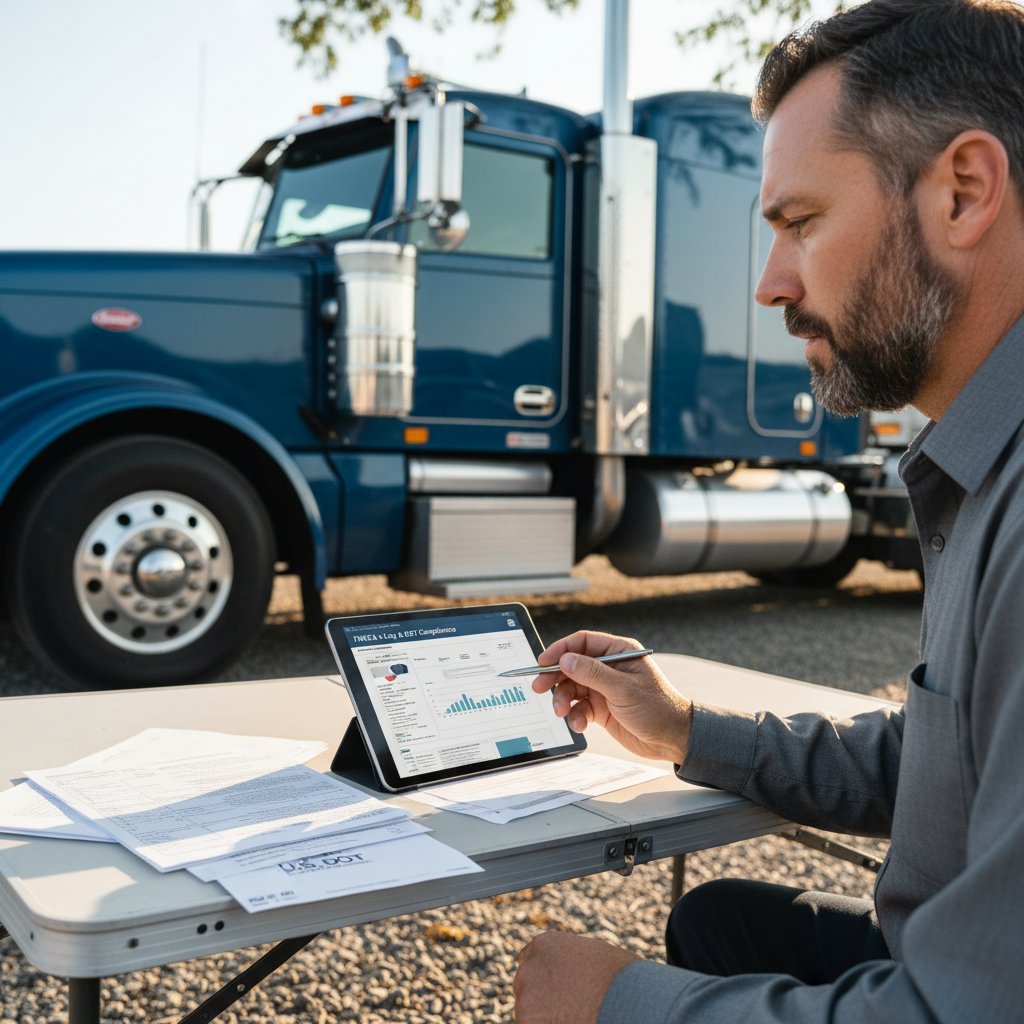
Motor truck cargo insurance protects freight you haul. Learn 2026 cost ranges, what it covers/excludes, broker requirements, and how to lower premiums—get a quote.
Motor truck cargo insurance pays for covered loss or damage to the freight you’re hauling while it’s in your care, custody, and control, typically with limits like $100,000 and deductibles like $1,000–$5,000. In 2026, cost varies widely by commodity (general freight vs. reefer vs. high-value), operating radius, theft exposure, and loss history, and most “surprise denials” come from exclusions like unattended vehicle, temperature spoilage, or unscheduled commodities.
You can run perfect HOS, keep maintenance tight, and still have one cargo claim wipe out months of profit—because freight claims don’t care about your CPM. If you’re trying to keep coverage “affordable but correct,” see our bigger-picture breakdown of affordable trucking insurance in 2026.
Key Takeaways: Essential Motor Truck Cargo Insurance
- Cargo insurance protects the freight (the customer’s product) while it’s in your care, custody, and control—not your truck (physical damage) and not the public (liability).
- 2026 cost ranges are driven by risk: commodity, limit, lanes/radius, deductible, security controls, and loss runs.
- Brokers often require cargo even when the law doesn’t, and reefer/high-value loads commonly need higher limits and endorsements.
- Most claim denials come from exclusions and conditions like unattended vehicle, temperature spoilage, unscheduled commodity, and missing paperwork.
Table of Contents
Reading time: 9 minutes
- What Is Motor Truck Cargo Insurance?
- What Motor Truck Cargo Insurance Covers (And What It Usually Doesn’t)
- Endorsements & Add-Ons That Actually Matter (Reefer, High-Value, Earned Freight)
- Motor Truck Cargo Insurance Cost in 2026 (Benchmarks + How to Estimate Yours)
- Does Cargo Insurance Cost Vary by State or Region?
- What Drives Motor Truck Cargo Insurance Pricing?
- Is Motor Truck Cargo Insurance Required by Law? (FMCSA vs. State vs. Broker Reality)
- Leased-On vs. Own Authority: How Cargo Coverage Works
- “Best” Motor Truck Cargo Insurance Providers: How to Compare Apples-to-Apples
- Real-World Examples: What Cargo Claims Actually Look Like
- Why Logrock’s Approach Works for Owner-Operators
- Frequently Asked Questions
- Conclusion: Get the Right Cargo Form for the Freight You Haul
What Is Motor Truck Cargo Insurance?
Motor truck cargo insurance is coverage that pays for covered loss or damage to freight while it’s being transported in your care, custody, and control, subject to the policy’s exclusions, conditions, limits, and deductible.
Think of it as revenue protection and relationship protection: one five-figure claim can put you behind for months, and brokers remember how a carrier handles a claim.
Plain-English definition (quick glossary)
- Limit: The maximum the policy pays per loss (example: $100,000).
- Deductible: What you pay out of pocket first (example: $2,500).
- Per occurrence: Each claim event (one theft, one rollover, one fire).
- Care, custody, and control: The freight is your responsibility while you have possession, even if you don’t own it.
Who needs it (owner-operators, fleets, leased-on vs. own authority)
If you run under your own authority (MC/DOT), you almost always need cargo coverage because brokers require it before they tender loads.
If you’re leased on, the carrier may provide cargo under their authority—but don’t assume it covers what you’re doing day-to-day. Confirm the limit, deductible, commodity restrictions, and whether deductibles get charged back to contractors.
Cargo insurance vs. liability vs. physical damage
Cargo insurance pays for the customer’s freight, while liability pays for injuries/property damage you cause to others, and physical damage covers your truck/trailer. If you want a clean “program basics” breakdown, read Cheapest commercial auto insurance (2026) and how to pay less and compare how liability, physical damage, and cargo fit together.
What Motor Truck Cargo Insurance Covers (And What It Usually Doesn’t)
Motor truck cargo forms vary by insurer, and two policies that both show “$100,000 cargo” on a COI can respond differently because coverage hinges on the form wording, exclusions, and sub-limits.
That’s why “cheap cargo” often becomes expensive later—when the adjuster points to an exclusion you didn’t know applied to your operation.
Typical covered losses (varies by form)
- Theft: Often covered when you can document forced entry and proper reporting.
- Fire: Commonly covered when freight is damaged by a vehicle or trailer fire.
- Collision/overturn: Commonly covered when an accident damages the load.
- Handling damage: Sometimes covered, but the wording matters a lot.
The exclusions that most often blow up claims
- Unattended vehicle conditions: Parked overnight in an unsecured lot, keys left, doors unlocked, no forced entry evidence.
- Improper securement / load shift: Disputes where the shipper argues carrier fault.
- Temperature spoilage: Usually excluded unless you add a reefer/temperature endorsement.
- Unscheduled or excluded commodities: You hauled outside your declared commodity list.
- Mysterious disappearance: No proof of theft (no police report, no forced entry).
- Delay / loss of market: Customer lost a sale due to late delivery—commonly excluded.
- Wear & tear / inherent vice: Product defect, poor packaging, normal shrinkage—commonly excluded.
Table: Covered vs. Often Excluded (read your form)
| Scenario | Often Covered | Often Excluded / Limited (unless endorsed) |
|---|---|---|
| Rollover damages the load | Yes | — |
| Trailer fire damages freight | Yes | — |
| Theft with forced entry evidence | Often | Unattended vehicle conditions may apply |
| Load shifts and freight crushes | Maybe | Improper securement / negligence disputes |
| Reefer unit fails, product spoils | Rarely | Temperature spoilage unless endorsed |
| Late delivery causes customer losses | No | Delay/loss of market |
Operational reality: Adjusters ask for documents. If you can’t produce them fast (BOL, delivery receipt notes, seal logs, temperature logs), the claim gets slower, uglier, and easier to contest.
Endorsements & Add-Ons That Actually Matter (Reefer, High-Value, Earned Freight)
Most cargo claim surprises come from endorsements and sub-limits, because that’s where a “$100k cargo” policy can quietly become $25k for a specific commodity or $0 for temperature spoilage.
If your operation changed in the last 6–12 months (new commodity, new lanes, more drop-and-hook), this is the section that prevents denial headaches.
1) Reefer breakdown / temperature-control endorsements
Reefer/temperature endorsements add coverage for temperature deviation/spoilage that a base cargo form commonly excludes.
Underwriters like controls because they reduce severity. Keep PM records, set-point documentation, continuous temperature logs (telematics or reefer unit data), and a simple alarm protocol (who gets called and what happens next).
2) High-value or scheduled commodities endorsements
Scheduled commodity coverage is how you avoid getting hit with sub-limits for high-theft or high-severity freight like electronics, alcohol, cosmetics, or certain consumer goods.
A common problem is a COI that says $100,000 cargo, while the policy has a $25,000 sub-limit for a theft-prone commodity unless it’s scheduled. Don’t guess load value—ask for commodity description and invoice value on the rate confirmation.
3) Debris removal, earned freight, and downtime realities
Add-ons like debris removal or earned freight vary a lot by insurer and state. They can help, but they don’t fix the bigger issue if the base cargo form is wrong for what you haul.
Motor Truck Cargo Insurance Cost in 2026 (Benchmarks + How to Estimate Yours)
Motor truck cargo insurance cost in 2026 is primarily driven by commodity, limit, lanes/radius, deductible, security controls, and loss runs, with general freight usually cheaper than reefer or high-value.
Cargo premium is typically quoted annually, but your real “cost” is premium plus the risk you retained through exclusions, sub-limits, and a deductible you can’t comfortably cash-flow.
Typical 2026 cost ranges (illustrative benchmarks)
| Cargo Setup | Common Limit | Typical 2026 Range (Annual) | Why It Moves |
|---|---|---|---|
| General freight (dry van) | $100,000 | ~$500–$2,000+ | Lanes/radius, theft exposure, deductible, loss runs |
| Reefer / temp-controlled | $100,000–$250,000 | ~$1,500–$6,000+ | Temperature endorsement, claim severity, controls |
| High-value/scheduled commodities | $100,000–$500,000 | ~$2,500–$8,000+ | Commodity, security requirements, sub-limits, theft hotspots |
Important: Cargo is often packaged with your broader commercial truck insurance (liability, physical damage, etc.). When comparing quotes, match the same limits, deductible, commodity list, and radius—otherwise it’s not apples-to-apples.
Per-shipment vs. annual cargo insurance (when each makes sense)
Per-shipment cargo insurance can make sense if you run seasonal work, haul under your authority only occasionally, or take rare one-off high-value loads and don’t want to re-rate your annual policy.
- Trade-off: Per-load cost is often higher than annual when you run steady volume.
- Trade-off: Terms can be tighter and proof requirements may be stricter.
- Trade-off: Many brokers still prefer an annual policy on file for fast onboarding.
Simple break-even example
If per-shipment coverage costs $60 per load and an annual cargo policy costs $1,200 per year, the break-even is about 20 loads per year. Above that, annual is usually cheaper and easier for broker setup.
Commodity-specific pricing: what you haul changes everything
Underwriters price cargo based on frequency and severity: general freight tends to be lower severity, reefer can be total-loss severity, and certain commodities have elevated theft risk.
To get the most accurate estimate, bring your agent your top 5 commodities, max load value, typical lanes (including where you park overnight), and loss runs if you have them.
Does Cargo Insurance Cost Vary by State or Region?
Motor truck cargo insurance pricing varies by state and region because theft frequency, accident exposure, weather losses, and secure parking availability change the carrier’s loss environment.
Geography matters most when it forces operational decisions, like overnight parking in unsecured areas or running high-theft corridors regularly.
Geography vs. operating radius (local, regional, long-haul)
- Metro congestion: More stops and more accident exposure.
- High-theft corridors: Higher probability of theft claims.
- Storm/hail zones: Weather-related losses can spike.
- Parking realities: Limited secure parking can create “unattended vehicle” friction.
Multi-state operations: keep your lanes honest
If you were quoted as “TX/OK/LA regional” and you quietly start running higher-risk lanes, you can create rating issues at renewal and claim friction if your operation doesn’t match what was presented.
What Drives Motor Truck Cargo Insurance Pricing?
Underwriters price motor truck cargo insurance using a handful of measurable inputs—especially commodity, max load value, radius, deductible, security practices, and loss history.
They’re not trying to punish you; they’re trying to price risk they can’t personally control.
Underwriting factors (the “why” behind the quote)
- Commodity list + max load value: The fastest way to change price and availability.
- Limits required by brokers: $100k vs. $250k+ is a different severity profile.
- Deductible: Higher deductible can reduce premium, but only if you can cash-flow it.
- Loss history: Cargo and auto liability losses both affect markets and pricing.
- Security controls: Parking, tracking, seals, and documented SOPs matter.
- Experience/new venture: New authorities often pay more early on.
Controls that reduce loss risk (and sometimes premium)
- Seal logs + chain-of-custody notes: Makes theft and shortage claims easier to defend.
- Photos at pickup and delivery: Cuts down on “it was damaged when you got it” disputes.
- No-unattended-vehicle SOP: Defines where you will and won’t park.
- For reefer: Continuous temp monitoring and documented response actions.
Is Motor Truck Cargo Insurance Required by Law? (FMCSA vs. State vs. Broker Reality)
Motor truck cargo insurance is not a universal FMCSA filing requirement for every for-hire motor carrier, but brokers and shippers commonly require cargo limits like $100,000, $250,000, or $500,000+ by contract.
This is where a lot of confusion happens, because “required” depends on who you’re answering to: a regulator, a broker, or a shipper contract.
Federal (FMCSA): generally not a universal cargo requirement
For many for-hire carriers, FMCSA focuses on liability financial responsibility filings rather than cargo filings. Cargo requirements can be operation-specific, and certain segments (commonly cited: household goods movers) may have specific cargo rules—verify your authority and commodity requirements with your agent and the applicable regulations.
State rules and special operations
State permits and certain cargo classes can create additional insurance expectations. Even when a state doesn’t mandate cargo, the market often does through contract language.
Broker/shipper contracts: the real-world requirement
- General freight: $100,000 cargo is a common starting point.
- Reefer/high-value: $250,000+ is common.
- Special commodities/customers: $500,000+ can show up.
Business rule: Set your cargo limit to the highest-value load you’ll accept, not the average load you hope you’ll get.
“Best” Motor Truck Cargo Insurance Providers: How to Compare Apples-to-Apples
There is no single “best” motor truck cargo insurer because market appetite changes by commodity, radius, and loss history, so the smart comparison is the cargo form and sub-limits—not just the premium.
A low premium can be a bad deal if it comes with restrictive unattended vehicle conditions, temperature spoilage exclusions, or commodity sub-limits that don’t match your loads.
What to compare (not just price)
- Commodity acceptance: What’s included vs. excluded.
- Sub-limits: Especially for high-value categories.
- Reefer endorsements: Availability and how temperature claims are defined.
- Deductibles: Including special deductibles (percentage theft deductibles can exist).
- Claims handling requirements: Documentation, reporting timelines, police report expectations.
Where to shop
Independent agents who specialize in trucking can compare multiple markets and explain how the forms differ. If you run specialized work (reefer, high-value, expedited), make sure whoever quotes you understands the niche—because generic policies are where denials are born.
Real-World Examples: What Cargo Claims Actually Look Like
Most cargo claims come down to a short list of patterns—overnight theft, temperature excursions, and securement disputes—plus whether your documentation matches the policy conditions.
These examples are general, but they mirror how disputes typically happen in the field.
Example 1: Dry van theft at an unsecured lot
- Driver parks overnight at a poorly lit, unsecured location.
- Trailer is breached; freight is missing.
- Adjuster asks for police report, forced entry proof, parking receipts, and chain-of-custody documents.
Where it goes wrong: Unattended vehicle condition or lack of forced entry evidence.
Takeaway: Parking SOP + documentation matters as much as premium.
Example 2: Reefer temperature excursion
- Unit alarms overnight; product arrives out of spec.
- Shipper rejects the load.
- Claim hinges on endorsement + temperature logs + documented response actions.
Takeaway: Reefer claims are documentation wars—monitor continuously and record what you did.
Example 3: Load shift / securement allegation
- Freight arrives damaged; shipper alleges improper securement.
- Photos at pickup/delivery and a basic securement checklist become critical.
Takeaway: A $0 checklist can prevent a $50,000 argument.
Why Logrock’s Approach Works for Owner-Operators
Owner-operators don’t need “more coverage” as a default; they need coverage that meets broker limits, matches real commodities and lanes, and reduces claim denials through correct forms and endorsements.
The goal is simple: keep your authority alive, protect cash flow, and avoid paying for coverage you can’t use.
- Broker-ready COIs: Limits and endorsements aligned to what you’re actually booking.
- Commodity matching: So “unscheduled commodity” doesn’t wreck a claim.
- Practical risk controls: Documentation and SOPs that make claims cleaner.
Frequently Asked Questions
Motor truck cargo insurance covers covered loss or damage to freight while it’s in your care, custody, and control during transit, subject to the policy’s exclusions, conditions, limit, and deductible. A common setup is a $100,000 limit with a $1,000–$5,000 deductible, but the COI number alone doesn’t tell you how the form responds. Cargo is different from primary liability (injury/property damage to others) and physical damage (your truck/trailer). The biggest “gotcha” is assuming coverage exists for temperature spoilage, unattended vehicle theft, or a commodity that wasn’t scheduled.
Motor truck cargo insurance in 2026 often ranges from about $500–$2,000+ per year for $100,000 general freight cargo, and roughly $1,500–$6,000+ for reefer or higher-risk operations, with high-value scheduled commodities commonly higher. Pricing is driven by commodity, limit, lanes/radius, deductible, security controls, and loss runs. If you haul only a handful of loads per year under your authority, per-shipment options may make sense, but many brokers still prefer an annual policy on file for faster onboarding and fewer setup delays.
Motor truck cargo insurance often covers theft, fire, and collision/overturn damage to freight, but coverage depends on the cargo form language and conditions. Many policies exclude or tightly condition claims involving unattended vehicles, load shift/securement disputes, “mysterious disappearance,” and temperature spoilage unless you add the right endorsements. Sub-limits are also common, meaning a “$100,000 cargo” policy might pay only $25,000 for certain high-theft commodities unless scheduled. To keep claims moving, expect to provide the BOL, delivery receipt notes, photos, and police reports for theft.
Motor truck cargo insurance is generally not a universal FMCSA filing requirement for every for-hire carrier, but cargo coverage is commonly required by brokers and shippers as a contract condition to tender loads. Certain operations can have different requirements (household goods is commonly cited as a segment with specific cargo rules), and state permits or special cargo classes can add expectations. In real-world dispatch, most carriers treat cargo as “required” because common broker thresholds start around $100,000 and can jump to $250,000 or $500,000+ for reefer or high-value freight.
You can lower motor truck cargo insurance cost without creating coverage gaps by tightening your commodity list to what you actually haul, choosing a deductible you can realistically pay (often $1,000–$5,000), and reducing theft/claims frequency with documented controls. Practical steps include using secured parking when possible, maintaining seal logs and chain-of-custody notes, taking pickup/delivery photos, and using continuous temperature monitoring for reefer work. For broader premium-saving tactics across liability, physical damage, and cargo together, use this guide on affordable trucking insurance in 2026.
Brokers commonly require $100,000 in cargo insurance for general freight, and $250,000 or more for reefer and higher-value freight, with some customers requiring $500,000+ depending on commodity and shipper contract. The limit you carry should match the highest-value load you’ll accept, not the average load, and you also need to check sub-limits for specific commodities. If your policy shows $100,000 but has a $25,000 sub-limit for electronics or alcohol, a broker may accept the COI, but a claim can still get capped.
Cargo insurance sometimes covers loading and unloading damage, but it’s frequently limited or excluded depending on the cargo form and how “handling” is defined. If your operation involves driver-assist, liftgate deliveries, inside delivery, or frequent dock work, you should have the form reviewed for handling/strapping/securement language and any special conditions. Many disputes turn into “carrier negligence” arguments, so your best protection is pairing correct coverage with documentation: photos, delivery receipt notes, and a basic securement checklist that shows what was done and when.
To file a cargo claim, you typically need the bill of lading (BOL) and rate confirmation, a delivery receipt noting damage or shortage, and photos from pickup and delivery, with a police report for theft and temperature logs for reefer shipments. Many carriers also request seal logs, chain-of-custody notes, inspection/repair reports, and any communication that shows timeline and actions taken. Fast, clean paperwork reduces disputes about “when it happened” and helps prevent denials tied to conditions like forced entry proof or timely reporting requirements.
Conclusion: Get the Right Cargo Form for the Freight You Haul
Motor truck cargo insurance is a business tool that protects freight, contracts, and cash flow, but only when your form, commodity list, limits, sub-limits, and endorsements match what you actually haul.
If you’re changing lanes, adding reefer, or taking higher-value loads, don’t wait until after a claim to find out you were underinsured.
Key Takeaways:
- Claims are won or lost on exclusions + documentation (BOLs, photos, seal logs, temp logs).
- Commodity list and max load value drive underwriting and sub-limits more than most drivers expect.
- Brokers often require cargo limits even when regulators don’t.
Related Reading: Affordable trucking insurance in 2026, and Cheapest commercial auto insurance (2026) and how to pay less.