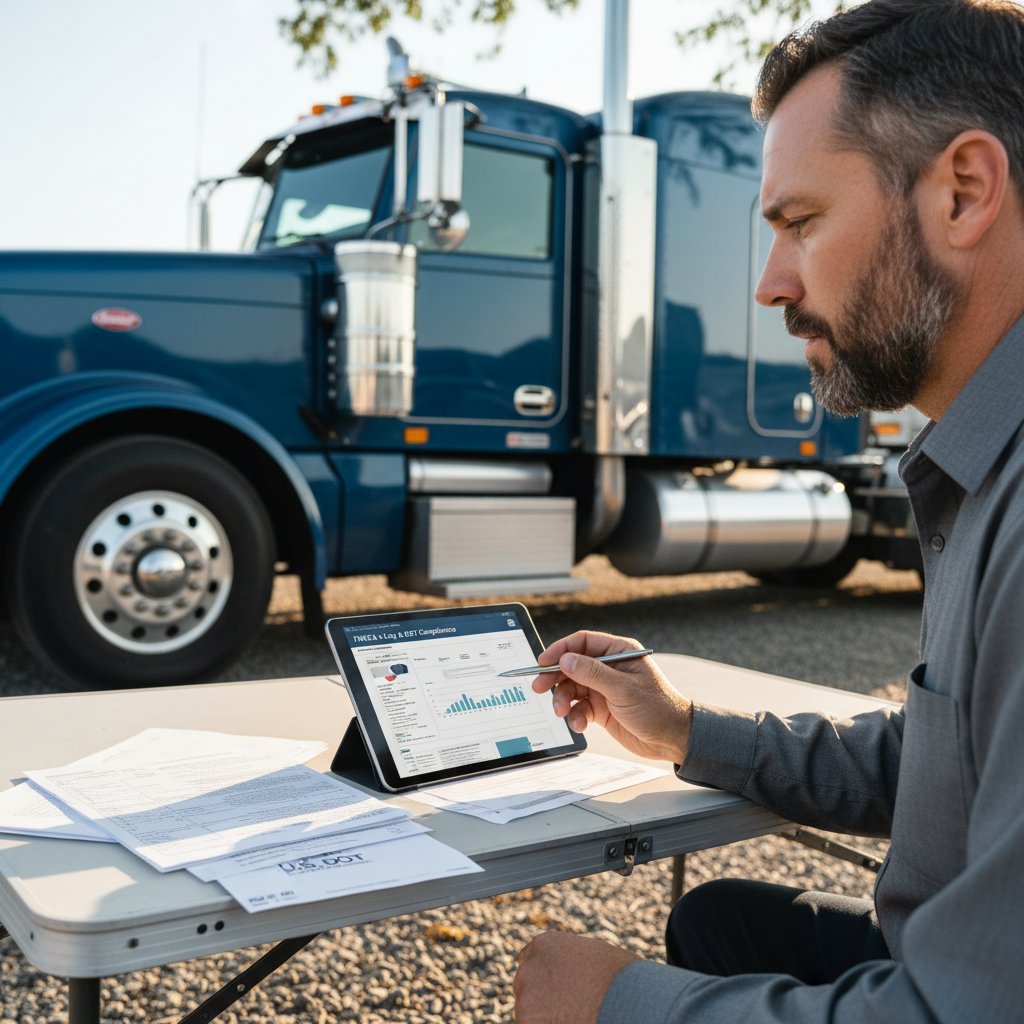
Learn the owner-operator meaning in trucking, the lease-on vs authority options, and how trucking insurance fits your risk. Get a Logrock quote.
If you’re searching for the owner operator meaning, here’s the practical definition that actually helps you make money: an owner-operator is a self-employed trucking business owner who owns (or finances) the truck and runs day-to-day operations—including dispatch choices, maintenance, compliance, and insurance. In trucking, you can be an owner-operator while leased on to a carrier or while running under your own authority (USDOT/MC).
This guide breaks down the three real-world models, the paperwork that comes with each one (IFTA/IRP, HOS/ELD, filings), and how commercial truck insurance changes so you can protect your weekly net without paying for coverage you don’t need.
Key Takeaways: Essential Owner-Operator Meaning (What It Really Means for Your Business)
- You’re a business, not a job title: “Owner-operator” means you own the equipment and take on business risk—maintenance, compliance, and liability.
- There are 3 common models: Lease-on, own authority, and hotshot—each changes your rates, responsibility, and trucking insurance requirements.
- Authority isn’t automatic: Many owner-operators do not have their own authority; they operate under a carrier’s authority via a lease agreement.
- Insurance is a cash-flow decision: The “cheapest” policy is rarely the best affordable trucking insurance if it leaves gaps that turn into out-of-pocket losses or parked equipment.
Table of Contents
Reading time: 9 minutes
- What Does “Owner-Operator” Mean? (Simple Definition)
- Owner-Operator in Trucking: The 3 Models That Actually Matter
- Owner-Operator vs Company Driver (Profit, Risk, Control)
- Do Owner-Operators Need Operating Authority? (DOT/MC Explained)
- What Responsibilities Does an Owner-Operator Have? (The Real Work)
- Trucking Insurance Basics for Owner-Operators (What Changes by Model)
- Pros and Cons in 2026 (Real-World Money and Risk)
- Common Misconceptions That Cost Owner-Operators Money
- Frequently Asked Questions
- The Logrock Difference: Insurance Built for Business Owners
- Conclusion & Get a Quote
What Does “Owner-Operator” Mean? (Simple Definition)
An owner-operator in trucking is a self-employed driver who owns or finances the truck and pays the operating costs (fuel, repairs, permits, and insurance) while running the business day-to-day.
In plain terms: you’re the driver and the decision-maker on maintenance, cash reserves, compliance habits, and risk. That’s why “owner-operator” usually means higher upside, but it also means you’re the one who feels every breakdown, claim, and slow-pay week.
For a deeper breakdown of how the industry uses the term, see: owner-operator (trucking) meaning.
Owner-Operator in Trucking: The 3 Models That Actually Matter
Owner-operators generally work in one of three models—lease-on, own authority, or hotshot—and each model changes who holds the operating authority (USDOT/MC) and who must carry key insurance like primary auto liability.
1) Lease-On Owner-Operator (Operate Under a Carrier’s Authority)
- What it is: You own the truck, but you operate under a carrier’s DOT/MC authority, typically through a lease agreement.
- Main business risk: Pay structure, chargebacks, and unclear “who covers what” when a claim happens.
- Common fit: Newer owner-operators who want faster start-up and fewer filings.
- Veteran tip: Confirm in writing: Who provides primary liability? Who provides cargo? What deductibles hit you? Who controls COIs?
2) Owner-Operator With Your Own Authority (Independent Motor Carrier)
- What it is: You run your own USDOT/MC, book freight under your name, and control lanes, shippers, and broker relationships.
- Main business risk: You carry the full stack—claims, filings, audits, and cash-flow gaps from slow pay.
- Common fit: Owner-operators who want maximum control, stronger rate negotiation, and room to scale (2–5 trucks).
- Veteran tip: Budget for insurance + plates + IFTA + maintenance reserves before you flip the switch.
3) Hotshot Owner-Operator (Pickup + Trailer)
- What it is: You haul freight with a 3/4-ton or 1-ton pickup and trailer, often regional or expedited.
- Main business risk: Compliance and insurance can change quickly when weight, trailer, state rules, and shipper contracts change.
- Common fit: Operators running partials, expedited, or lanes where a semi isn’t required.
- Veteran tip: Don’t “assume” you’re non-regulated—your GVWR/GCWR, scale tickets, and for-hire status control your reality.
Owner-Operator vs Company Driver (Profit, Risk, Control)
A company driver is typically paid wages while the carrier pays most operating costs, while an owner-operator pays operating costs and keeps the remaining margin—so your upside and your downside both increase.
Here’s the CEO-level comparison that matters when you’re deciding which seat to take.
| Category | Company Driver | Owner-Operator (Lease-On) | Owner-Operator (Own Authority) |
|---|---|---|---|
| Control of loads/lanes | Low | Medium | High |
| Who pays fuel/repairs | Carrier | You | You |
| Insurance complexity | Low | Medium | High |
| Compliance burden (IFTA/IRP/filings) | Low | Low–Medium | High |
| Income upside | Limited | Medium | Highest (but volatile) |
| Cash-flow risk | Lower | Medium | Highest |
Business reality: when the truck is down, revenue is down. Under your own authority, you’re also managing the full compliance and insurance stack—so downtime and admin mistakes cost more.
What Responsibilities Does an Owner-Operator Have? (The Real Work)
FMCSA hours-of-service rules limit most property-carrying drivers to 11 hours of driving within a 14-hour on-duty window (49 CFR 395.3), so paperwork, planning, and maintenance directly affect how many paid miles you can legally run.
Owner-operators don’t fail because they can’t drive. They fail because the business gets them: cash flow, compliance, and downtime.
1) Equipment and maintenance (downtime = lost revenue)
- Preventive maintenance scheduling (not “when it breaks”).
- Tire strategy (rotations, replacements, planned spend vs panic spend).
- Repair reserves so one breakdown doesn’t wipe out the month.
2) Compliance and paperwork (IFTA/IRP/HOS/ELD)
- Trip planning that reduces deadhead and avoids avoidable out-of-service issues.
- Clean logs and defensible ELD data (the ELD rule applies to most drivers who must keep RODS under 49 CFR Part 395).
- Fuel and mileage tracking that matches how you file IFTA and report miles.
3) Contracts, COIs, and getting paid
- Read rate confirmations like contracts—because they are.
- Document detention and accessorials so you can actually collect them.
- Move Certificates of Insurance (COIs) quickly, because a missing COI can cost you a load.
Trucking Insurance Basics for Owner-Operators (What Changes by Model)
FMCSA financial responsibility rules set minimum public liability limits of $750,000 for most interstate for-hire carriers hauling non-hazardous property, with higher minimums for certain hazardous materials (49 CFR Part 387).
Insurance isn’t just a checkbox—it’s a risk transfer tool. The right policy keeps one accident, one cargo claim, or one lawsuit from wiping out your truck, your authority, and your future cash flow.
1) Primary auto liability (the “must-have” for most authority setups)
- What it is: Pays for injuries/property damage to others when you’re at fault.
- Why it matters: Brokers/shippers commonly require $1,000,000 liability even when the legal minimum is lower.
- Who needs it: Typically own-authority carriers; lease-on may be covered by the motor carrier (verify in writing).
2) Physical damage (protects your truck—your income engine)
- What it is: Collision and comprehensive coverage on your tractor (and sometimes trailer by endorsement).
- Why it matters: If the truck is totaled and you can’t replace it, you don’t have revenue.
- Pro tip: Pick deductibles you can pay today, not “in a perfect month.”
3) Motor truck cargo (because claims happen even when you’re careful)
- What it is: Covers damage/loss to freight you’re hauling (terms vary by policy and commodity).
- Why it matters: Cargo claims can become quick-pay deductions, litigation, or being blacklisted by a broker.
- Who needs it: Lease-on and authority operators hauling brokered/shipper freight.
4) Non-trucking liability (NTL) / bobtail (the off-duty gap people miss)
- What it is: Coverage that can apply when you’re not under dispatch (definitions vary by insurer and lease terms).
- Why it matters: Parking, deadheading, or grabbing food can still create liability exposure.
- Pro tip: Your lease and your policy language decide what “not under dispatch” really means—don’t guess.
5) General liability (slip-and-fall, yard incidents, non-auto claims)
- What it is: Covers non-auto liability tied to your business operations.
- Why it matters: Some customers require it; it covers exposures auto liability doesn’t.
6) Hotshot insurance vs semi truck insurance (why “commercial” still applies)
- What it is: “Hotshot insurance” is still trucking insurance—built around vehicle class, weights, radius, and cargo.
- Why it matters: A pickup hauling for hire with a trailer can create severe losses in the same ways bigger equipment can.
If you want a quote that matches your model (lease-on vs authority, semi vs hotshot), start here: commercial truck insurance quote.
Stop guessing—get owner-operator trucking insurance that matches your model.
Whether you’re lease-on, running your own authority, or building a hotshot operation, your insurance should fit how you actually work (and how you actually get paid).
- Fast COIs
- Coverage gap check
- Built for cash-flow reality
Pros and Cons in 2026 (Real-World Money and Risk)
Many insurers rate brand-new operating authority as a new venture for roughly the first 24 months, which can increase premiums compared to established carriers with stable loss history.
Owner-operator life can be a strong business move—but the wins come from managing variability.
Pros (why owner-operators do it)
- Control: More say in lanes, home time, and freight type.
- Upside: When rates are solid and your truck is healthy, margins can beat a company seat.
- Asset building: You’re building equity (or at least moving toward ownership).
Cons (what actually breaks owner-operators)
- Volatile cash flow: Slow-paying brokers, chargebacks, deadhead, and seasonal dips hurt fast.
- Downtime risk: One breakdown can erase weeks of profit.
- Paperwork load: IFTA/IRP, HOS/ELD, audits, filings—none of it drives the truck, but all of it can park it.
- Insurance cost swings: New ventures, new authority, certain cargo, or past claims can move premiums quickly—so “cheap” affordable trucking insurance has to be weighed against deductibles and coverage gaps.
Business-minded way to think about it: the goal isn’t “highest gross.” It’s best net after fuel, maintenance, insurance, and downtime.
Common Misconceptions That Cost Owner-Operators Money
Federal thresholds like 26,001+ lbs GVWR/GCWR and placarded hazmat rules can trigger CDL and safety requirements even for pickups, so “it’s just hotshot” is not a compliance strategy.
Misconception #1: “Owner-operator means you have your own authority.”
Plenty of owner-operators are lease-on. Authority changes your responsibility, filings, and insurance—don’t mix them up.
Misconception #2: “My carrier covers insurance, so I’m covered.”
A carrier may provide primary liability, but you can still need physical damage, NTL/bobtail, cargo solutions, or endorsements. Read the lease and verify COI requirements.
Misconception #3: “Hotshot isn’t ‘real trucking,’ so rules don’t apply.”
If you’re hauling for hire and meet the thresholds for interstate commercial operation, the rules and insurance expectations can apply quickly.
Misconception #4: “Lowest premium = best deal.”
A low premium with a huge deductible, wrong radius, wrong commodity class, or missing endorsements can turn into a denied claim or an uncovered loss.
Frequently Asked Questions
An owner-operator in trucking is a self-employed driver who owns (or finances) the truck and runs the business side—maintenance, expenses, compliance, and insurance—either leased to a carrier or operating under their own USDOT/MC authority.
The difference from a company driver is that the owner-operator takes the financial risk and operational responsibility, including downtime, fuel/repair costs, and keeping compliant logs and filings. If you’re on your own authority, you’re also responsible for carrier-level requirements like authority status, COIs, and having insurance limits that meet broker/shipper contracts (often $1M auto liability and cargo requirements).
Yes, many owner-operators lease on to a carrier and operate under the carrier’s DOT/MC authority instead of getting their own authority.
You still own the truck, but the carrier typically controls or supports dispatch and often provides the primary liability policy required to run under their authority. The money and risk details live in the contract: rate split, fuel surcharge handling, escrow/chargebacks, and which coverages you’re paying for (commonly physical damage and NTL/bobtail). Before you sign, get in writing who is primary on liability, what cargo coverage exists, and what deductibles or chargebacks can hit your settlement.
The difference between an owner-operator and a company driver is that the owner-operator controls the business and takes on the operating costs and liability, while a company driver is typically paid wages and the carrier pays most truck-related expenses.
Company drivers trade upside for stability: the carrier handles equipment costs, most compliance admin, and the insurance program. Owner-operators can earn more, but they’re on the hook when freight slows, the truck breaks, or insurance deductibles hit. If you’re comparing paths, use a realistic cost-per-mile that includes fuel, maintenance reserves, tires, plates/permits, and insurance—not your best week ever.
Not always—owner-operators who lease on to a motor carrier usually do not need their own operating authority because they operate under the carrier’s DOT/MC.
If you book loads under your own MC with brokers or shippers, then you generally do need authority and the related compliance and insurance structure. That typically includes maintaining active FMCSA registration, keeping required filings current (like BOC-3 and UCR), and carrying motor-carrier-style insurance limits that meet both legal minimums (49 CFR Part 387) and contract requirements (often $1M auto liability plus cargo). When in doubt, confirm your role: leased contractor under a carrier vs regulated motor carrier under your own name.
Semi truck insurance cost per month for an owner-operator varies widely because the premium is priced off specific underwriting factors like authority status, radius, commodity, equipment value, limits, and loss history.
Key pricing inputs include liability limits (many brokers expect $1M), physical damage value and deductible, cargo type, operating radius, garaging state, driving experience, MVR/claims, and whether you’re a new venture (often rated higher during the first 24 months of authority). If you’re trying to keep affordable trucking insurance, the biggest levers you can control are clean driving history, consistent operations, accurate cargo classification, realistic radius, and deductibles that match your cash reserves.
The Logrock Difference: Insurance Built for Business Owners
Brokers commonly require proof of insurance like $1,000,000 auto liability and cargo limits before they tender loads, which makes correct coverage structure and fast COIs a real revenue issue.
Logrock works with people who live the owner-operator reality: thin margins, unpredictable downtime, broker requirements that change weekly, and paperwork that never stops.
- We match commercial truck insurance to your model (lease-on vs authority vs hotshot) so you’re not paying for the wrong setup.
- We move fast on COIs because a missed certificate costs real money.
- We talk in business terms: risk, cash flow, cost-per-mile, and coverage gaps.
Conclusion: Owner-Operator Meaning (2026) and the Setup That Protects Your Net
An owner-operator is a self-employed trucking business owner who owns (or finances) the equipment and either leases to a carrier under their authority or operates under their own USDOT/MC with carrier-level compliance and insurance responsibilities.
Your model (lease-on, own authority, or hotshot) determines your filings, your risk, and which insurance policies matter most.
Key Takeaways:
- Know your model: “Owner-operator” can mean lease-on, own authority, or hotshot—and each one changes liability and compliance.
- Authority changes everything: Going under your own MC adds filings, contracts, and insurance requirements.
- Coverage protects cash flow: The wrong policy can create gaps that turn into deductibles, denied claims, or lost loads.
If you want coverage built for how you actually run, get started with a quote.
Related Reading: FMCSA official site, Owner-operator overview, and Get a Logrock quote.