
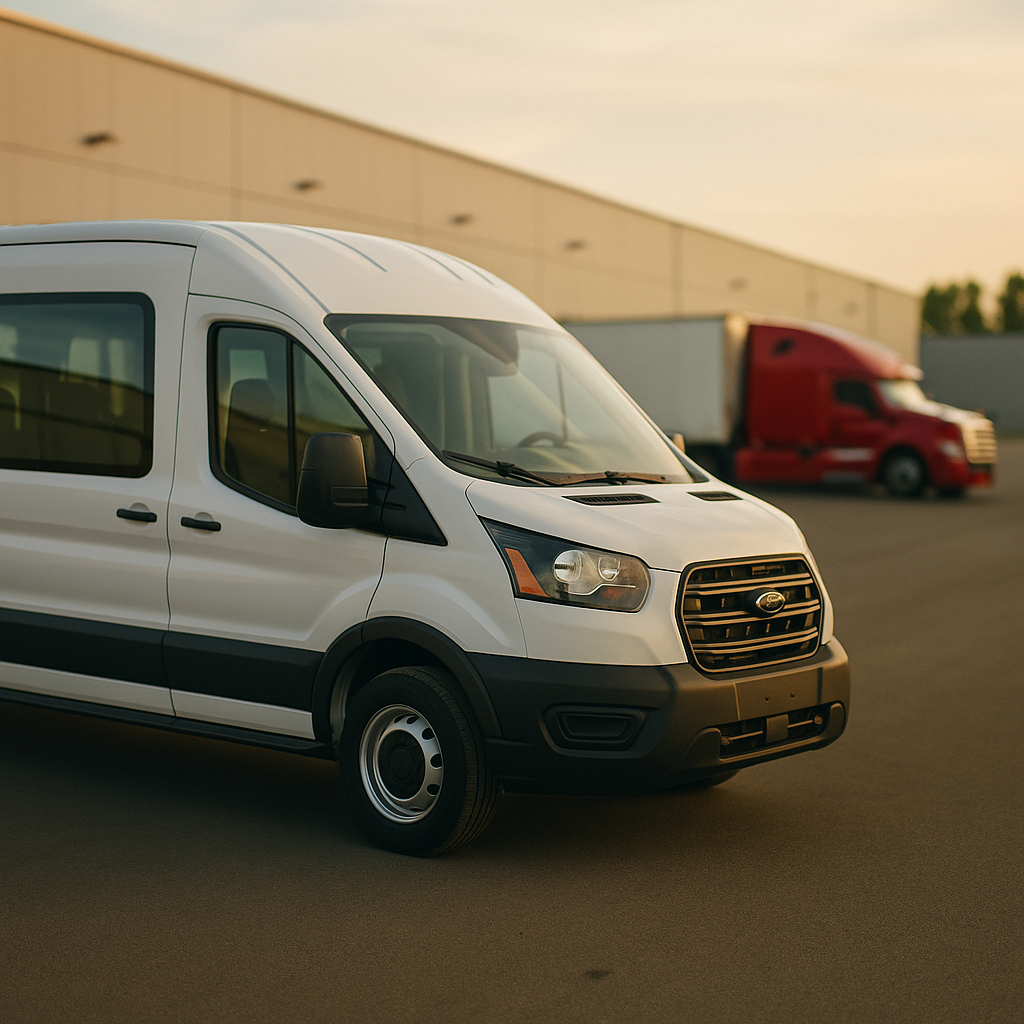
Passenger van insurance in 2026 can run $80–$350/mo personal or $150–$700+/mo commercial. Learn coverage, limits, and requirements—then get a quote.
Passenger van insurance is a simple purchase until the day you have a crash with a full load of people. One fender-bender can turn into multiple injury claims, a contract getting pulled, and a renewal that doubles (or a non-renewal).
Featured answer (2026): Most personal-use passenger vans land around $80–$350 per month, while business-use passenger van policies commonly fall around $150–$700+ per month; for-hire shuttles and tours can run $300–$1,500+ per month when required limits jump to $2M–$5M+. For broader van benchmarks (and how personal vs commercial framing changes pricing), see van insurance quotes (2026) cost ranges.
Key Takeaways: Essential Passenger Van Insurance
- Your “use” matters more than your van: personal use vs church/daycare vs hotel shuttle vs for-hire can change your policy type and pricing.
- Passenger count drives severity: 12- and 15-passenger van insurance is usually higher than 8-passenger because injury exposure is higher.
- Limits are the real budget lever: requirements can jump to $1M–$5M+ depending on rules and contracts—often solved with primary + umbrella.
- Misclassifying use is how claims go sideways: if you’re getting paid to transport people, don’t try to squeeze into a personal auto policy.
Table of Contents
Reading time: 10 minutes
- What Is Passenger Van Insurance (and When You Need It)?
- Is Passenger Van Insurance Different From Commercial Van Insurance?
- Passenger Van Insurance Cost in 2026 (Monthly & Annual)
- What Coverage Do You Need for a Passenger Van? (Coverage Checklist)
- State Insurance Requirements for Passenger Vans (What to Know + Examples)
- How to Get an Accurate Passenger Van Insurance Quote (Checklist)
- Model & Seating Examples: What You Might Pay by Van Type
- How to Lower Passenger Van Insurance Costs
- Frequently Asked Questions
- Why Logrock: Practical Commercial Auto Help (No Fluff)
- Conclusion & Get a Quote
What Is Passenger Van Insurance (and When You Need It)?
Passenger van insurance is auto insurance for vans that typically seat 8–15 passengers, written on a personal auto or commercial auto policy depending on whether the van is used for family driving, organizational transport, business shuttles, or for-hire rides.
The policy has to match how the van is actually used—who rides, who drives, where it goes, and whether money changes hands. When your real-world use doesn’t match the policy, that’s when you see claim escalations, cancellations, or non-renewals.
Personal passenger van vs business passenger van (plain English)
- Personal use: family trips and errands, no pay, no contracts. Some carriers still ask extra questions for 12/15-passenger vans.
- Business/organizational use: churches, daycares, hotels, senior centers, employee shuttles. Even if you don’t charge fares, it’s still a business exposure.
- For-hire/livery use: paid shuttle, tours, airport runs sold to the public. This is where limits and requirements tend to jump.
The seat-count factor (8, 12, 15-passenger vans)
Seat count affects premium because it affects worst-case outcomes: a crash with one injured driver is one injury claim, but a crash with 10–14 passengers can create many claims in a single loss.
If you regularly run near capacity, the usual move is higher liability limits (often with an umbrella) instead of trying to “save money” with low limits that won’t survive a passenger loss.
Is Passenger Van Insurance Different From Commercial Van Insurance?
Passenger transport is underwritten as a higher-severity exposure because one at-fault crash can injure multiple occupants, so many passenger van setups are written on commercial auto even when the vehicle looks like a standard van.
Here’s the clean way to think about it:
- Commercial van insurance is the policy form (who/what is insured for business use).
- Passenger transport is the risk class that can change underwriting rules, required limits, and price.
If your operation is a church/daycare/hotel shuttle or any business-use passenger transport, it’s worth reading commercial van insurance (2026) cost & requirements so you don’t get boxed into the wrong classification.
Real-world risk: a hotel shuttle, daycare run, or paid tour insured as “personal use” is a common reason a claim gets kicked up for review. The goal is simple: disclose use clearly upfront so the coverage holds when the loss is ugly.
Passenger Van Insurance Cost in 2026 (Monthly & Annual)
Passenger van insurance cost in 2026 is mainly driven by (1) use type, (2) liability limits, and (3) driver quality, with vehicle value and physical damage coverage usually acting as secondary pricing factors.
Typical cost ranges (personal vs business vs for-hire)
These are directional ranges, not promises—your state, garaging ZIP, loss history, mileage, and required limits can swing the price.
| Use Type | Typical Monthly Range | Typical Annual Range | Notes / Common Assumptions |
|---|---|---|---|
| Personal-use passenger van | $80–$350 | $960–$4,200 | Standard personal auto rating, driver-based pricing |
| Business/organizational passenger van | $150–$700+ | $1,800–$8,400+ | Higher liability limits, more driver scrutiny |
| For-hire shuttle/tour operations | $300–$1,500+ | $3,600–$18,000+ | Higher required limits, higher mileage, tighter underwriting |
Rule of thumb: higher limits + more passengers = higher premium. The fastest way to blow the budget is to discover late that a contract requires $2M–$5M total limits.
Example scenarios (pricing bands you’ll actually see)
1) 12-passenger church van (local trips, volunteer drivers)
Typical setup: organizational use, limited radius, strong driver screening.
Common limit target: $1M CSL (plus umbrella if required).
Cost tendency: mid-range unless the driver roster is messy (young/inexperienced drivers, inconsistent MVR checks).
2) Hotel airport shuttle (daily runs, employed drivers)
Typical setup: higher mileage, frequent passenger loading/unloading, more time in traffic.
Common limit target: $1M–$2M total (often via umbrella).
Cost tendency: higher frequency exposure = higher premium.
3) For-hire shuttle/tour van (public-facing paid rides)
Typical setup: stricter underwriting, higher required limits, COIs requested frequently.
Common limit target: $2M–$5M total depending on regulator/contract.
Cost tendency: high, because severity + regulatory/contract requirements stack up.
What Coverage Do You Need for a Passenger Van? (Coverage Checklist)
A solid passenger van insurance setup usually includes liability plus the right mix of physical damage, medical/occupant protections, and umbrella/excess limits based on seating capacity, passengers, and contract requirements.
You’re not buying a policy to check a box—you’re buying it so one bad day doesn’t wipe out cash reserves or shut down the operation.
1) Liability (BI/PD or CSL) — the non-negotiable
What it does: pays for injuries and property damage to others when you’re at fault.
- Why it matters for passenger vans: passenger injuries can burn through low limits fast, especially in a multi-occupant loss.
- What to ask for: request CSL (Combined Single Limit) quotes when available because one “pot” per accident is often simpler than split limits for passenger claims.
2) Comprehensive & Collision (Physical Damage)
What it does: pays to repair/replace your van after theft, vandalism, weather, animal strikes (comp), or crashes (collision).
- When it’s required: lenders and lessors typically require comp/collision.
- When it’s optional: if the van is paid off, decide based on replacement cost vs your cash buffer.
3) MedPay / PIP (state-dependent) + UM/UIM (smart in most states)
What it does: MedPay/PIP can help with medical expenses for occupants, and UM/UIM protects you if the at-fault driver has low/no insurance.
Why it’s a big lever: passenger injuries don’t care whose fault it was, and UM/UIM is often the coverage that saves an operation from an underinsured third party.
4) Hired & Non-Owned Auto (if volunteers or employees drive personal cars)
What it does: provides liability protection when people drive rentals (hired) or their own cars (non-owned) on your organization’s behalf.
Why it matters: the driver’s personal policy is usually primary, but your organization can still get pulled into the lawsuit.
5) Umbrella / Excess Liability (how many passenger operations reach $2M–$5M)
What it does: adds extra liability limits on top of auto (and sometimes GL), often sold in $1M layers.
Why it’s often cost-efficient: many requirements are written as total limits, and umbrella can be the cleanest way to reach them without overpaying on the primary auto.
State Insurance Requirements for Passenger Vans (What to Know + Examples)
Passenger van insurance requirements can come from state DOT/PUC rules, city/airport authority rules, and contracts, and the strictest requirement often drives your needed limits (commonly $1M–$5M+ total for shuttle-style work).
Intrastate vs interstate changes the rulebook
- Intrastate: you operate only within one state, and the state regulator sets minimums.
- Interstate: crossing state lines may trigger additional federal oversight depending on the operation type, especially for for-hire passenger carriage.
Business reality: even if the law says “X,” your contract might require “Y,” and you have to meet the stricter one to keep the work.
Examples of how high passenger minimums can be (illustrations, not a 50-state chart)
- Washington intrastate example (passenger-carrying): regulator guidance for certain passenger classes can reach $1.5M CSL and higher-capacity classes can reach $5M CSL (illustrative example based on regulator materials).
- NYC commuter van example: municipal rules can require $1.5M per occurrence for certain seating capacities.
How to verify your exact requirement (do this before you buy)
- Check your state DOT/PUC passenger-carrier insurance page (search “{State} intrastate passenger carrier insurance requirements”).
- If you operate in/through a major metro, check the city/airport authority requirements.
- Pull the contract insurance section and match the wording: limits, additional insured, waiver of subrogation, primary/noncontributory, and COI delivery deadlines.
How to Get an Accurate Passenger Van Insurance Quote (Checklist)
An accurate passenger van insurance quote typically requires a VIN, seating capacity, use classification, driver roster, and target liability limits, because underwriters price passenger risk mainly from exposure and driver quality rather than just the vehicle model.
If you want real numbers (not guesswork), gather this before you shop:
- Van details: VIN, year/make/model, seating capacity, unit value, modifications, garaging ZIP
- Use details: personal vs organizational vs for-hire; routes; days/week; radius; estimated annual miles
- Passenger details: typical passenger count; adults vs minors; any special-needs transport
- Driver roster: names, DOB, license state, experience, training, MVR expectations (who is allowed behind the wheel)
- Safety controls: written driver policy, maintenance logs, dash cam/telematics (if used), incident reporting process
- Coverage targets: liability limit/CSL target, UM/UIM, comp/collision deductibles, umbrella target
- COI needs: certificate holder(s), additional insured (if required), waiver of subrogation, primary/noncontributory (if required)
Practical tip: the best “rate reducer” is often a tighter driver program because it changes how underwriters view the risk, not just the deductible.
Model & Seating Examples: What You Might Pay by Van Type
Passenger van pricing is influenced by vehicle value, repair cost, claim frequency, and parts availability, especially when you carry comprehensive and collision on newer or higher-end vans.
Use this table as directional guidance on how underwriting tends to look at common platforms:
| Van Type | Typical Seating | Common Passenger Use | Cost Tendency | Underwriting Notes |
|---|---|---|---|---|
| Ford Transit (passenger) | 8–15 | Church/daycare/hotel | Medium | Common platform; repair costs vary by trim |
| Mercedes Sprinter (passenger) | 10–15 | Premium shuttle/tours | Medium–High | Higher repair costs; parts/labor can push PD premium |
| Ram ProMaster (converted) | 8–12 | Shuttle/transport | Medium | Conversions should be disclosed |
| Chevy Express / GMC Savana | 8–15 | Org transport | Low–Medium | Often cheaper PD; age/condition matters |
| Nissan NV (used market) | 8–12 | Small shuttle | Medium | Availability/parts considerations |
Single van vs fleet
Fleets can sometimes earn better per-unit pricing when the operation is standardized (routes, training, supervision), but fleets also bring aggregate exposure—sloppy driver controls can erase any discount.
How to Lower Passenger Van Insurance Costs
Passenger van insurance premiums usually drop when you improve the factors carriers price most heavily—driver MVR quality, mileage/radius, claim frequency, and a smarter limits strategy (often primary + umbrella).
1) Right-size limits (meet requirements, don’t guess)
- Meet the legal/contract requirement first.
- Then compare umbrella vs raising the primary—umbrella is often the more efficient way to buy higher total limits.
2) Clean up the driver roster
- Put minimum standards in writing (experience, violation thresholds, no handheld phone use).
- Run MVRs consistently—don’t wait for renewal.
3) Reduce claim frequency with boring discipline
- Passenger loading/unloading procedures (where most “small incidents” start).
- Route planning that reduces congestion and chaos.
- Dash cams + clear incident reporting to cut fraud and speed claims handling.
4) Adjust deductibles only if you have cash reserves
Higher deductibles can lower premium, but only if you can handle the out-of-pocket hit without wrecking cash flow.
Frequently Asked Questions
The most common passenger van insurance questions in 2026 focus on cost ranges ($80–$350/month personal and $150–$700+/month commercial) and how required liability limits can rise to $2M–$5M+ for shuttle contracts and for-hire work.
In 2026, passenger van insurance typically costs $80–$350 per month for personal use and $150–$700+ per month for business or organizational passenger transport, with for-hire shuttle/tour operations often running $300–$1,500+ per month. Pricing moves most when your use type changes (personal vs business vs for-hire), when your liability limits increase (many contracts require $2M–$5M+ total limits), and when driver quality or mileage/radius increases. The same van can price very differently if it’s a weekend family vehicle versus a daily airport shuttle.
At a minimum, a passenger van needs liability coverage, and if the van is financed or leased you’ll usually need comprehensive and collision as well. For passenger operations, it’s smart to add UM/UIM (protection when the at-fault driver has low/no insurance) plus MedPay or PIP where available, because occupant injuries can be expensive even when someone else caused the crash. If a regulator or contract requires higher limits, you typically reach $2M–$5M+ total limits using an umbrella/excess policy layered over the commercial auto.
Passenger van insurance is often written as commercial auto insurance when the van is used for a church, daycare, hotel shuttle, employee shuttle, or any paid passenger transport, because carrying multiple passengers increases injury severity. Underwriters rate “passenger transport” differently than simple delivery or personal driving, and that can change eligibility, required driver screening, and pricing. If you’re paid to transport people (for-hire), you should assume commercial rating and disclose it, because misclassifying use is one of the fastest ways to trigger a coverage dispute or non-renewal after a claim.
State passenger-van insurance requirements vary based on state DOT/PUC rules, seating capacity, whether you’re for-hire, and whether you operate intrastate or interstate, and many passenger operations end up needing $1M–$5M in liability limits to satisfy regulators or contracts. On top of state rules, city/airport authorities and customers (schools, venues, hotels, tour partners) can set their own insurance requirements, and the strictest requirement usually controls. Always verify your exact minimums with your state regulator and then match the wording in your contract’s insurance section, including COI terms.
You lower passenger van insurance costs by improving the pricing inputs insurers care about most: driver quality (clean MVRs and consistent standards), mileage/radius (tighter exposure), claim frequency (loading/unloading procedures, route discipline), and limits strategy (often keeping a reasonable primary limit and using umbrella to reach $2M–$5M+ when required). Practical wins include written driver rules, routine MVR checks, maintenance logs, and dash cams, because they reduce preventable claims and help underwriters trust the operation.
Why Logrock: Practical Commercial Auto Help (No Fluff)
Passenger transport policies fail most often because the insurance was built wrong—wrong use class, wrong limits, wrong COI wording, wrong driver setup, wrong garaging, or an unrealistic radius—and those mistakes show up when a claim hits or a contract gets reviewed.
Logrock’s approach is simple: build the policy around your operation, then shop it correctly so you’re not paying for mismatched coverage—or gambling on a technicality.
Conclusion: Buy Passenger Van Insurance Based on Use, Limits, and Drivers
Passenger van insurance is a risk decision and a cash-flow decision, and in 2026 the biggest pricing drivers are still use type, liability limits, and driver quality, with many shuttle-style contracts pushing total limits to $2M–$5M+.
The fastest way to overpay is guessing on classification and limits. The fastest way to get hurt is underinsuring a passenger operation because “it’s just a van.”
Key Takeaways:
- Price is mostly use type + limits + driver roster (not just the van model).
- 12- and 15-passenger vans often cost more because one crash can create multiple injury claims.
- Requirements come from regulators and contracts, not only “normal auto minimums.”
If you want numbers that match reality (and limits that pass a contract review), quote it with your seat count, routes, drivers, and limit targets in hand.



