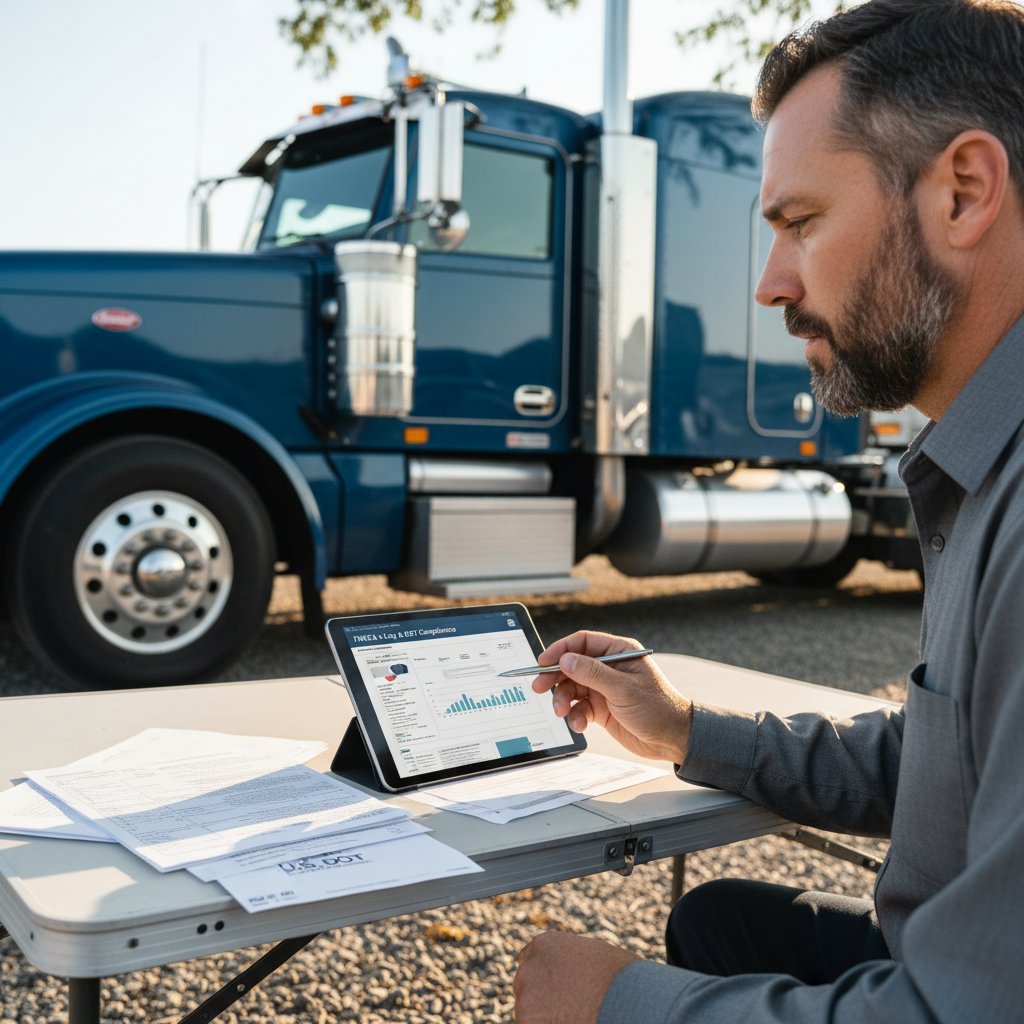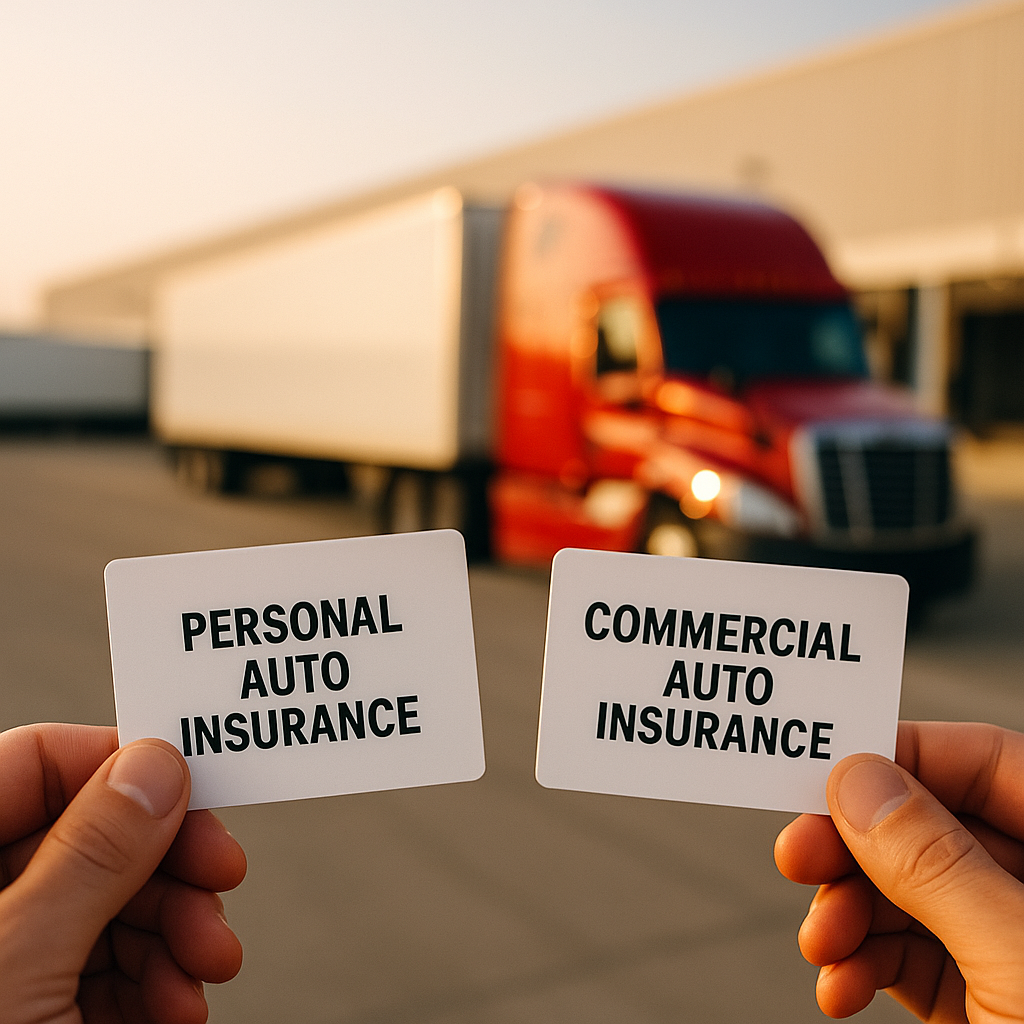
Learn the difference between personal auto insurance and commercial auto insurance—business-use rules, drivers, limits, endorsements, and 2026 cost factors. Get it right before a claim—get a quote.
The difference between personal auto insurance and commercial auto insurance comes down to risk: personal policies are priced for household driving, while commercial policies are built for business operations, business drivers, and contract-level liability. If a vehicle helps you earn revenue (deliveries, job sites, hauling tools, employee errands), a personal policy can trigger delays, disputes, or flat-out gaps when a claim hits.
This 2026 guide is a practical playbook for choosing the right policy type, avoiding coverage holes, and keeping your paperwork clean. If you want a baseline comparison first, start with Logrock’s commercial vs personal auto insurance guide.
Table of Contents
Reading time: 10 minutes
- Quick Comparison: Personal vs. Commercial Auto (60-second answer + table)
- When Personal Auto Fails: Business use, drivers, limits, and claim fallout
- What Commercial Auto Covers: Endorsements, real-world pricing drivers, and cost control
- Frequently Asked Questions
- Why Logrock: Practical insurance that matches how you actually operate
- Conclusion: Match the Policy to Ownership, Drivers, and Use
Quick Comparison: Personal vs. Commercial Auto (60-second answer + table)
The difference between personal auto insurance and commercial auto insurance is that personal auto is designed for household driving, while commercial auto is designed for business-owned vehicles or business use—often with higher liability needs (commonly $1,000,000 for contracts), broader driver setups, and proof-of-insurance paperwork.
Featured snippet summary (50–70 words)
Personal auto insurance is meant for personal driving (commuting, errands, family use) and often limits or excludes many business activities. Commercial auto insurance is designed for business risk—work driving, employee drivers, higher liability limits, and contract requirements like a certificate of insurance (COI). If the vehicle helps you earn revenue, commercial coverage is often the safer (and sometimes required) option.
At-a-glance table
| Category | Personal Auto (Typical) | Commercial Auto (Typical) |
|---|---|---|
| Primary purpose | Household/personal driving | Business operations and business liability |
| Who drives | You + household / listed drivers | Employees/permissive drivers (as allowed by policy) |
| Business use | Often limited; varies by carrier | Built for work use (deliveries, job sites, service calls) |
| Liability needs | Often lower | Often higher (contracts + higher exposure) |
| Proof for clients | Rarely needed | Often required (COI, additional insured requests, etc.) |
| Best fit for | Commuters, families, occasional personal trips | Contractors, delivery, service fleets, trucking/hotshot operations |
The 3 questions that usually decide it
- Who owns the vehicle? (You personally vs. an LLC/corporation)
- Who drives it? (Only you vs. employees/partners/volunteers)
- How is it used? (Commute-only vs. multiple stops, deliveries, hauling tools/equipment)
If you want a deeper breakdown of “use + vehicle type + underwriting,” see differences between commercial and personal auto insurance.
When Personal Auto Fails: Business use, drivers, limits, and claim fallout
Personal auto policies commonly restrict business activities (especially delivery, frequent job-site driving, or carrying work materials), and that mismatch is a top reason small businesses run into claim friction, non-renewals, or lawsuits that outgrow personal limits.
1) Business use: what insurers often treat as “commercial” (even if it’s your personal car)
Business use means the vehicle is being used as part of your operations—not just getting you to work—and that distinction can change how the policy is rated and how a claim is handled.
Common examples that can push you into commercial classification include:
- Delivery/courier work: food delivery, packages, medical courier, parts delivery
- Multiple job sites: driving job-to-job during the workday (not just home → office)
- Transporting tools/equipment/materials: contractors, trades, service work
- Client/passenger transport: business-related passenger exposure
- For-hire hauling: where trucking/hotshot operations usually require commercial structures
For a practical overview of how classification tends to work, read business use vehicles and insurance.
Protect-yourself move: If you’re close to the line, ask the carrier (or your agent) to confirm your use classification in writing. Verbal “you’re fine” doesn’t help when a claim adjuster is asking questions after a crash.
2) Driver setup: “only me” vs. employees, subs, or permissive use
Commercial auto is typically structured for business reality—more drivers, different driver types, and more time on the road—while personal auto is usually built around a smaller, household-based driver pool.
Pay extra attention if you have helpers who run errands, employees who drive to suppliers, or a “one vehicle today, more vehicles next quarter” growth plan. Even if the vehicle isn’t titled to the business, your business can still be named in a lawsuit if the driver was on company business.
3) Liability limits: state minimums vs. real-world business exposure
State minimum liability limits are the legal floor, but many commercial contracts require higher limits—often $1,000,000 in liability—because business losses and injury claims can exceed low limits quickly.
Here’s the hard part: once attorneys see a business activity angle, the claim can escalate fast. If the policy hits its max limit, the remaining damages don’t disappear—they can land on the business.
4) What the wrong policy looks like in the real world (2 quick scenarios)
These scenarios are illustrative, but they match patterns that repeatedly show up when personal policies meet commercial exposure.
- Scenario A — delivery use not disclosed: You’re delivering parts after hours in your personal vehicle and rear-end another driver in stop-and-go traffic. The claim gets investigated and business use becomes a key question. Best case: delays and paperwork. Worst case: a coverage dispute when you need quick payment.
- Scenario B — employee errand in their own car: An employee uses their personal vehicle to pick up materials and causes an accident. The injured party’s attorney names your business because the employee was on company business, even though you don’t own the car.
What Commercial Auto Covers: Endorsements, real-world pricing drivers, and cost control
Commercial auto insurance is designed for business exposure, which usually means more annual miles, more potential drivers, and higher-stakes liability—so it’s commonly the policy type used to satisfy contract insurance requirements like $1,000,000 liability and COIs.
1) Core coverages (what you’re actually buying)
Commercial auto typically includes liability (injury/property damage you cause) and can include physical damage (comprehensive and collision), plus state-specific options like Med Pay/PIP and UM/UIM depending on where you operate.
The key difference isn’t just “bigger limits.” It’s that the policy is built to respond to business operations and business claims—without forcing every incident into a personal-policy box.
2) The endorsement that plugs a huge gap: Hired & Non-Owned Auto (HNOA)
Hired & Non-Owned Auto (HNOA) coverage helps protect the business if it’s sued due to an auto accident involving a vehicle the business doesn’t own, such as an employee’s personal car used on company errands or a rented vehicle.
This is the classic “we don’t own cars, so we’re fine” blind spot. You can still get pulled into litigation because the trip was for your business.
For a deeper explanation (and where HNOA fits), see Hired and Non-Owned Auto (HNOA) coverage basics.
3) Cost in 2026: why commercial is usually higher (and how to keep it under control)
Commercial auto usually costs more than personal auto because it’s rated for higher exposure—more road time, broader driver use, heavier vehicles, and higher liability limits often tied to contracts.
Commercial pricing commonly moves based on:
- Business type: delivery/courier often rates higher than office/service calls
- Radius & mileage: more miles typically means more exposure
- Driver MVRs & experience: violations and at-fault accidents can hit hard
- Vehicle type: repair costs, weight/class, equipment
- Limits & deductibles: higher limits and lower deductibles usually cost more
Cost control works best when you lower risk without buying “cheap wrong.” That can look like setting deductibles your cash flow can handle, tightening driver screening, and choosing vehicles with manageable repair and replacement costs.
4) Where trucking is different (owner-operator note)
For-hire hauling and trucking operations often require commercial structures with higher limits and stricter proof-of-insurance expectations because the severity of losses (and contractual requirements) is typically higher than everyday passenger auto use.
If you’re an owner-operator, the goal isn’t “the cheapest policy.” The goal is a policy that keeps loads moving, satisfies contracts, and doesn’t fall apart during a serious claim.
Frequently Asked Questions
Personal auto insurance can cover limited business use, but many policies restrict or exclude higher-risk activities like regular deliveries, frequent job-site driving, or using the vehicle as part of daily operations. Coverage depends on the carrier, your application details, and the specific activity at the time of loss. If a claim investigation shows business use that wasn’t classified correctly, you can face delays, disputes, or non-renewal. The practical rule: if the vehicle is helping you earn revenue or serving customers, confirm the carrier’s classification in writing and consider commercial auto.
Commercial auto insurance typically covers business-use driving for liability (injury and property damage you cause) and can include physical damage (comprehensive and collision) for the insured vehicles. It’s also designed to handle business driver setups, like employees or permissive drivers, depending on the policy terms. Many businesses buy higher liability limits—often $1,000,000—to satisfy client or broker requirements and reduce out-of-pocket exposure in a severe injury claim. The exact coverages, drivers, and limits are underwriting decisions based on your operations.
Commercial auto insurance usually costs more than personal auto in 2026 because it’s rated for higher exposure (more miles, more drivers, heavier or more expensive vehicles, and higher liability limits like $1,000,000 that show up in contracts). Your premium is heavily influenced by business type, radius/mileage, driver MVRs, vehicle class, and your limits and deductibles. One of the most direct levers you control is the deductible—just make sure it matches your cash flow. For a practical walkthrough, see deductibles and commercial auto insurance costs.
You may need both if you have household vehicles that are truly personal-use and separate vehicles that are owned by (or primarily used for) the business. Many owners keep a personal policy for family driving and a commercial policy for business vehicles, employee drivers, or contract requirements like COIs. The key is matching each vehicle’s ownership, drivers, and daily use to the right policy form. If employees ever use their own cars for errands, you’ll also want to evaluate whether the business needs HNOA protection for that non-owned exposure.
Why Logrock: Practical insurance that matches how you actually operate
Coverage mistakes often happen because operations change faster than insurance paperwork, and even one change—new routes, more job sites, a new driver, or a new contract—can shift your risk class and insurance requirements.
Logrock’s approach is simple:
- Classify your use correctly so the policy matches reality
- Build around business risk (not just minimum limits)
- Keep paperwork clean so contracts and loads don’t get held up
If your business needs proof of coverage, COIs can become a bottleneck when they’re wrong or slow. Here’s what to know about certificate of insurance (COI) requirements for trucking and commercial operations.
Conclusion: Match the Policy to Ownership, Drivers, and Use
Personal vs. commercial auto insurance is a business decision, not a paperwork decision, and the cleanest way to choose is to evaluate ownership, who drives, and how the vehicle is used day-to-day.
When the policy matches reality, you’re protecting cash flow, meeting contract requirements, and reducing claim chaos.
Key Takeaways:
- If the vehicle is part of operations, personal auto can be the wrong tool—especially for deliveries, job sites, and hauling work materials.
- Commercial auto is often about structure, including driver setup and contract paperwork (like COIs), not just “bigger limits.”
- Mixed-use is where you should slow down and confirm classification in writing before a claim tests it.
Related reading: choosing cars for cheaper commercial insurance and claims history impact on commercial auto insurance.