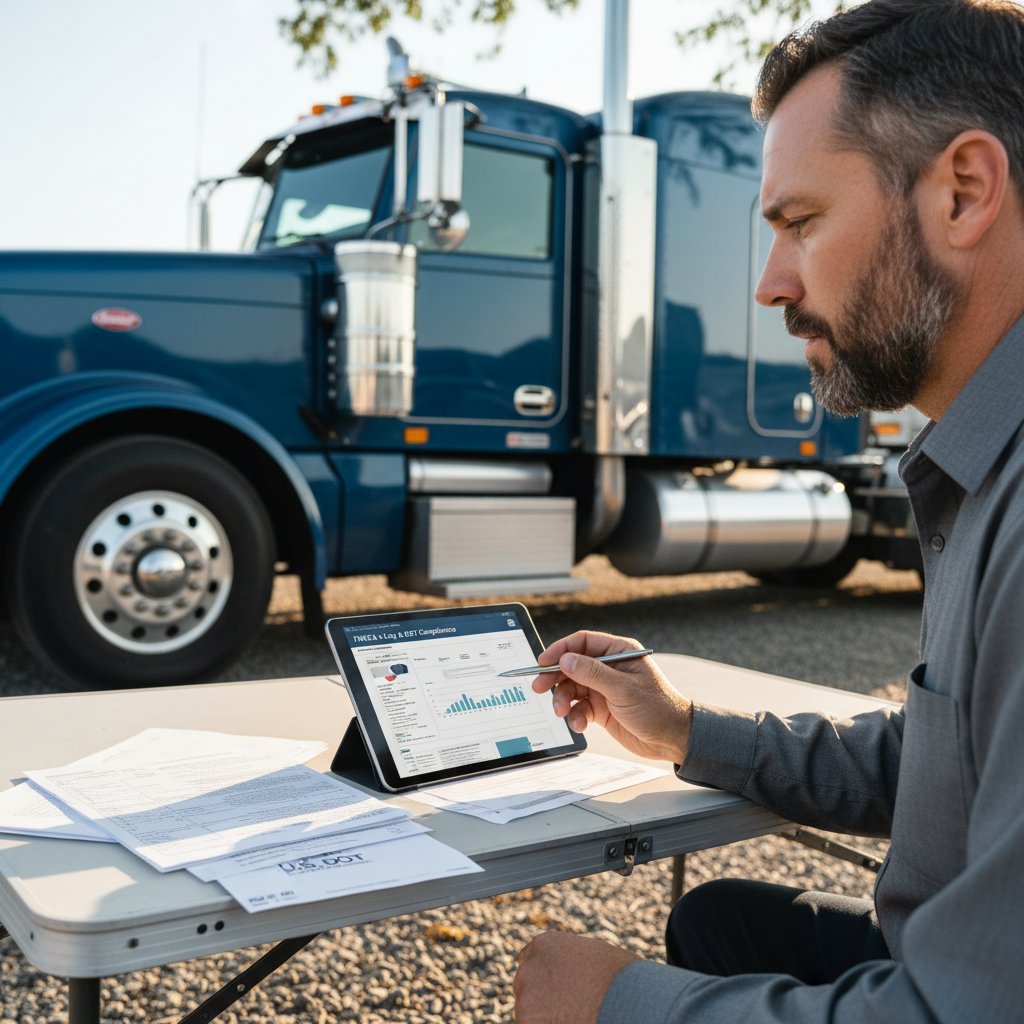
Using your personal car for work? Learn what counts as business use, common exclusions, endorsement steps, cost ranges, and when commercial auto insurance is required. Get a quote.
Personal business use car insurance usually means a personal auto policy that allows some work-related driving (like client visits) or a business-use endorsement that updates the vehicle’s “use” rating so claims don’t turn into coverage fights. Many personal policies still exclude higher-risk “for-hire” driving (delivery and rideshare) unless you buy specific coverage.
If you’re using your personal car to make money—client visits, job sites, deliveries, rideshare—and you get in a wreck, the fastest way to torch your cash flow is learning after the fact that your policy doesn’t like what you were doing. Before you assume you’re fine, pull your declarations page and read the policy section commonly labeled “Exclusions” or “Vehicle Use”.
Table of Contents
Reading time: 9 minutes
- What Counts as “Business Use” vs Commuting?
- Does Personal Auto Insurance Cover Business Use?
- Common Scenarios: What Coverage Usually Fits
- Endorsement vs Commercial Auto Insurance: Which Do You Need?
- How to Add Business Use (Step-by-Step)
- Decision Flowchart: Pick the Right Policy Fast
- How Much Does It Cost in 2026?
- Real Claim-Denial Scenarios (and How to Avoid Them)
- Frequently Asked Questions
- Why Logrock: Practical Insurance Help Without the Runaround
- Conclusion & Get a Quote
Key Takeaways: Essential Personal Business Use Car Insurance
- Business use isn’t one thing: “Sales calls” and “DoorDash” are treated very differently by most insurers.
- Personal auto may allow limited business driving if it’s disclosed and rated correctly, but delivery/for-hire is commonly excluded without special coverage.
- The fix is often simple: correct vehicle-use rating or a business-use endorsement—unless your exposure is heavy, where commercial auto is usually the cleaner fit.
- Get the answer in writing: updated declarations page and endorsement forms matter more than a phone call.
What Counts as “Business Use” on a Personal Auto Policy?
Auto insurers commonly rate personal vehicles as pleasure, commute, business, or for-hire use because claim risk generally rises with mileage, time pressure, and how often you drive in traffic and unfamiliar areas.
The same car can move between categories over time, and that classification affects both your price and how cleanly a claim gets handled. When insurers say “misclassified use,” they usually mean the policy was written as lower-risk driving than what actually happened on the day of the loss.
Typically personal use (usually OK)
- What it is: errands, school runs, road trips, normal life driving.
- Why it matters: your policy is designed for this exposure.
- Who needs it: everyone.
Commute use (usually allowed, but must be rated correctly)
- What it is: driving from home to one regular workplace and back.
- Why it matters: commute mileage is predictable, and insurers price it differently than “pleasure.”
- Who needs it: employees, tradespeople with a fixed shop, anyone with a regular office.
Business use (often allowed only if disclosed / may require endorsement)
- What it is: driving to multiple client sites, sales calls, inspections, showings, nursing visits, contractor estimates, banking/deposits, and supply runs tied to a job.
- Why it matters: weekly or daily work driving increases exposure and can trigger disputes if the car is rated as pleasure/commute only.
- Who needs it: self-employed, 1099 contractors, outside sales, service techs, consultants.
“For-hire” business use (commonly excluded on personal auto without special coverage)
- What it is: getting paid to transport people or property—rideshare (Uber/Lyft) or delivery/courier (DoorDash/Instacart/Amazon Flex, medical courier, parts delivery).
- Why it matters: many personal auto policies contain “public or livery conveyance” style exclusions that restrict for-hire use unless endorsed.
- Who needs it: gig/app drivers, couriers, anyone delivering for money.
Prep step: Pull your declarations page and search your policy for “exclusions,” “livery,” “delivery,” “for a fee,” “for-hire,” or “public conveyance.” If you can’t find it, ask for the exact policy form and endorsement list.
Does Personal Auto Insurance Cover Business Use?
Many personal auto policies cover occasional business driving (like client visits) only when the use is disclosed and rated correctly, and many policies still exclude delivery or rideshare unless you add specific coverage.
The part that surprises people is how the claim conversation goes: even if the accident wasn’t your fault, the adjuster can still ask what you were doing, whether you were “on the clock,” and whether you were transporting people or goods for a fee.
Why insurers care (plain English)
- More miles: more time on the road means more opportunities for a loss.
- More pressure: deliveries and appointments create tight schedules and riskier driving decisions.
- Different liability: passengers or cargo “for a fee” changes who can claim against your policy and how often claims occur.
Ask this instead of “Am I covered?”
“If I’m in an accident while doing [specific task] at [specific time], will my liability and collision apply under this policy and form?”
Common Business-Driving Scenarios (and the Coverage That Usually Fits)
Most insurers treat business driving as a spectrum, where occasional errands may fit a personal policy but frequent client-site driving, delivery, and rideshare usually require endorsements or commercial auto insurance.
Use the table below as a quick match, then confirm with your insurer in writing because wording and availability vary by company and state.
Scenario-to-coverage cheat sheet
| How you use the car | Typical fit | Biggest gotcha |
|---|---|---|
| Office errands, occasional meetings | Personal policy (rated correctly) | Not disclosing increased mileage/use |
| Multiple daily client visits/job sites | Personal + business-use classification/endorsement | Being rated as “pleasure/commute” only |
| Carrying tools/equipment (not for delivery) | Often personal + endorsement, sometimes commercial | Tool theft is usually not covered by auto |
| Food/package delivery for pay | Delivery endorsement / hybrid product / commercial auto | Personal policy commonly excludes delivery |
| Rideshare (Uber/Lyft) | Rideshare endorsement or commercial | “App on, no ride yet” gap (often called Period 1) |
Occasional work errands
Occasional work errands (bank deposits, supply runs, a meeting across town) are often acceptable as incidental business use when your insurer agrees and your mileage estimate is realistic.
Pro tip: underreporting mileage to save money is a bad trade if it creates a classification dispute later.
Driving to multiple client sites
Driving to multiple client sites is classic “business use” even when you aren’t delivering goods, because your workday depends on being on the road.
Delivery/courier work
Delivery/courier work is where personal policies most often draw a hard line, so you should assume you need delivery coverage unless your insurer confirms otherwise in writing.
Rideshare/TNC
Rideshare use is frequently excluded on personal auto, and platform coverage can change depending on whether the app is off, on, or you have a passenger, so the “gap” period needs to be explicitly addressed.
Personal Business-Use Endorsement vs Commercial Auto Insurance: Which Do You Need?
A business-use endorsement typically modifies or re-rates a personal auto policy for work driving, while commercial auto insurance is built for business ownership, heavier use, multiple drivers, and contract-driven liability requirements.
This is the fork in the road: do you need a small correction to a personal policy, or do you need a policy designed around business exposure?
When a business-use endorsement on a personal policy may be enough
- Use type: you drive to clients/job sites but you’re not transporting people or property for a fee.
- Primary purpose: the car is mostly personal, with secondary business use.
- Drivers: one or two household drivers (no employee pool).
When commercial auto insurance is more appropriate
- Ownership: the vehicle is titled/owned by an LLC or corporation (carrier rules vary, but mismatches create underwriting friction).
- Drivers: employees or multiple non-household drivers use it.
- Operations: regular delivery/for-hire driving is part of the business model.
- Contracts: you need higher limits for vendor agreements, property managers, or job-site requirements.
Does commercial auto insurance cover personal use?
Commercial auto often allows incidental personal use, but “permitted use” wording differs by carrier, so you should confirm personal-use permission before binding coverage.
How to Add Business Use to Your Personal Auto Policy (Step-by-Step)
Adding business use usually means updating the vehicle-use rating and/or adding an endorsement, and the key inputs are mileage, radius, driver list, and whether you do any for-hire driving.
Don’t overcomplicate it—just describe your week like an underwriter would.
1) Describe your driving like an underwriter
- What you do: job title plus what you actually do day-to-day.
- How often you drive for work: days per week and typical schedule.
- Annual mileage and radius: realistic totals and how far from home you usually go.
- Gig work: any app-based delivery or rideshare (even part-time).
2) Ask for the exact solution, not a vague “business use”
Carriers don’t label it the same way, so ask for the exact policy setup that matches your scenario: permitted use + correct rating/endorsement.
3) Confirm what is still excluded
Be direct: “Is delivery for pay excluded? Is rideshare excluded? What about ‘app on’ time?”
4) Get proof in writing
Updated declarations page + endorsement forms beat verbal assurances every time, because phone calls don’t pay claims.
5) Recheck when your work changes
If you start a new side gig, change territory, or your mileage jumps, update the policy now—don’t wait for renewal.
Decision Flowchart: Pick the Right Policy in 60 Seconds
A simple decision flow can sort most drivers into the right lane—personal policy, personal + endorsement, or commercial auto—based on for-hire use, frequency of work driving, ownership, and driver count.
Printable graphic note: Add a simple flowchart image here in production if you want a shareable version.
- Do you transport people or packages for pay?
- Yes: you likely need rideshare/delivery coverage or commercial auto (depends on frequency and carrier).
- No: continue.
- Do you drive to multiple client sites or job locations weekly?
- Yes: ask for business-use rating/endorsement on your personal policy.
- No: continue.
- Is the car owned/titled to a business or used by employees?
- Yes: commercial auto is usually the cleanest fit.
- No: continue.
- Is this mostly personal driving with occasional work errands?
- Yes: a personal policy may be fine if disclosed and rated correctly.
Rule of thumb: Don’t buy “cheap.” Buy “correct.” Correct permitted-use language is what keeps a claim from becoming a negotiation.
How Much Does Personal Business Use Car Insurance Cost in 2026?
In 2026, a business-use re-rating or endorsement on a personal auto policy is often a modest increase (commonly tens of dollars per month), while commercial auto insurance frequently starts around $100–$300+ per month per vehicle and can rise with heavier use, higher limits, more drivers, and loss history.
Exact pricing depends on state, insurer, driving record, vehicle value, mileage, garaging location, and whether the use is for-hire.
Typical cost ranges (planning numbers)
- Business-use endorsement / business-use rating on personal auto: often a modest add-on, commonly in the tens of dollars per month (varies by mileage and exposure).
- Rideshare/delivery endorsements: often materially higher than basic personal coverage, and some insurers won’t offer them.
- Commercial auto insurance: often around $100–$300+ per month per vehicle for many small-business cases, and can go higher with heavy use, higher limits, multiple drivers, or prior claims.
What drives the price up fast
- High annual mileage and dense metro driving
- Recent tickets/accidents
- New gig work (delivery/rideshare) without prior history
- Low deductibles plus high physical damage values
- Multiple drivers (especially non-household)
Money tip: Raising deductibles can reduce premium, but only do it if you could pay that deductible tomorrow—not “someday.”
Real Claim-Denial Scenarios (and How to Avoid Them)
Claim denials and coverage limitations most often happen when the insurer says the vehicle was used outside the policy’s permitted-use rules, such as delivery-for-a-fee, rideshare app-on time, or mismatched ownership between the titled owner and the named insured.
Outcomes depend on policy language and state rules, but the patterns below show where people get blindsided.
Example 1: Delivery crash + “delivery excluded”
Scenario: You’re mid-delivery, rear-end someone, and file a liability/collision claim. The adjuster asks what you were doing and you say “DoorDash.”
What can happen: the insurer cites a delivery-for-a-fee or livery-type exclusion and denies (or limits) coverage.
Avoid it: add delivery coverage (endorsement/hybrid/commercial) before you start.
Example 2: Rideshare “Period 1” gap
Scenario: The app is on, you’re waiting for a request, and you get in an accident.
What can happen: your personal policy may exclude app-on use, and platform coverage may be limited or contingent depending on the phase and state.
Avoid it: get a rideshare endorsement that explicitly covers app-on/no-ride time (often called Period 1).
Example 3: Business-titled vehicle on a personal policy
Scenario: The car is titled to an LLC for tax reasons, but you kept it on a personal policy.
What can happen: underwriting issues, non-renewal, or claim friction if ownership and named insured don’t meet carrier rules.
Avoid it: confirm the carrier accepts business ownership on a personal policy—or move to commercial auto.
Quick prevention checklist
- Disclose the use before you drive for money
- Keep estimates honest: miles, radius, and frequency
- Confirm excluded uses in writing
- Save app activity logs if you do gig work
- Avoid policy lapses (even short ones)
Frequently Asked Questions
The FAQs below cover the most common questions about personal business use car insurance, including what “business use” means, when endorsements work, and when commercial auto is the safer fit.
Personal auto insurance can cover some business use (like client visits or work errands) when the use is disclosed and the vehicle is rated correctly, but many policies exclude delivery-for-a-fee and rideshare without a specific endorsement. The cleanest way to verify coverage is to ask for confirmation of permitted use and to get an updated declarations page showing the correct use classification. If you drive to multiple job sites weekly, carry business exposure daily, or your car is business-owned or used by employees, commercial auto insurance is often the more appropriate policy structure.
Business use typically means driving beyond a simple home-to-one-workplace commute, such as visiting multiple client sites, traveling between job locations, inspections, real estate showings, and supply runs tied to a job. Many insurers treat delivery and rideshare differently because transporting people or property for a fee is considered higher risk and is frequently restricted by “livery/for-hire” exclusions unless endorsed. If your workday depends on driving, you should assume the insurer needs the vehicle rated for business use, not pleasure or commute.
In many cases, yes—insurers can add a business-use endorsement or re-rate your personal policy for non–for-hire work driving like client visits and job-site travel. Expect the carrier to ask about annual mileage, driving radius, job duties, who drives the car, and whether you do any delivery or rideshare. If you regularly deliver food/packages or drive passengers for pay, the insurer may require a rideshare/delivery endorsement, a hybrid product, or a move to commercial auto insurance. The key is getting the updated declarations page and endorsement forms in writing.
Commercial auto insurance often allows incidental personal use, but it depends on the carrier’s permitted-use wording and who is listed as drivers on the policy. If you plan to use the vehicle for weekends, errands, or family driving, you should ask the agent to confirm personal use is permitted and documented before binding coverage. Commercial policies are typically designed for business ownership, higher mileage, multiple drivers, and contract requirements, so confirming use language up front helps prevent a claim dispute later—especially if the vehicle is titled to an LLC or used by employees.
Why Logrock: Practical Insurance Help Without the Runaround
Correctly matching your vehicle’s real-world use to the policy’s permitted-use language—and documenting it on the declarations page—is one of the most reliable ways to reduce claim surprises.
If you’re running a business (even a side gig), insurance is a cash-flow protection tool. The goal isn’t to “buy more.” The goal is to buy the right coverage for how you actually drive so one wreck doesn’t turn into a financial sinkhole.
- Match vehicle-use classification to reality (commute vs business vs for-hire)
- Explain trade-offs (personal endorsement vs commercial auto)
- Keep documentation clean (declarations page + endorsements) so claims don’t turn into fights
Conclusion: Confirm Coverage for How You Actually Drive
If you use a personal vehicle for paid work, the safest coverage path is to match the policy’s permitted-use language to your real driving (client sites, delivery, rideshare, business ownership) before you’re in a claim.
Light work errands might fit a properly rated personal policy. Heavy business driving, delivery, rideshare, multiple drivers, or business ownership often pushes you into endorsements or commercial auto insurance.
Key Takeaways:
- Disclose business use early—don’t wait for a claim.
- Delivery/rideshare is where personal policies most often exclude coverage.
- Compare endorsement vs commercial quotes using the same limits and deductibles.
If you want the fastest clarity, quote it side-by-side and get the permitted-use answer in writing.