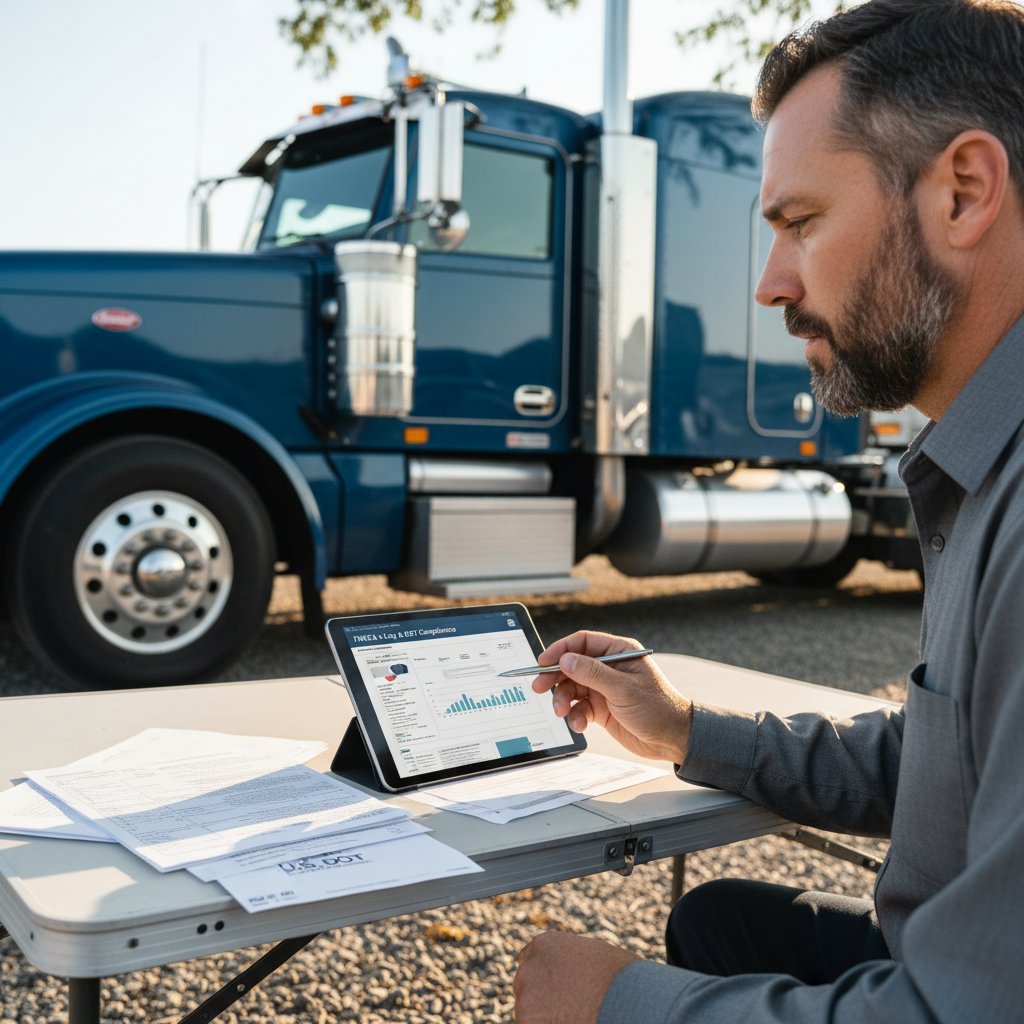
Learn the difference between personal and commercial insurance, when you need commercial coverage, what policies are included, cost drivers, and pitfalls. Get help now.
The difference between personal and commercial insurance is simple: personal policies are priced for household life, while commercial policies are written for business risk, business-use driving, employees, and contract-required liability limits. If your real-world use doesn’t match the policy type, the claim you need most is the one most likely to get denied or limited.
If you’re running any kind of business—owner-op trucking, hotshot, landscaping, a mobile mechanic, a small retail shop—the fastest way to get financially wrecked is thinking, “my personal policy should cover it,” right up until a claim happens.
Table of Contents
Reading time: 9 minutes
- Personal and Commercial Insurance (Quick Definitions)
- Personal and Commercial Insurance: Key Differences (At-a-Glance Table)
- When Do You Need Commercial Insurance Instead of Personal? (Decision Rules)
- Does Personal Auto Insurance Cover Business Use? (Personal vs Commercial Auto)
- What Types of Coverage Are Included in Commercial Insurance? (Beyond Auto)
- Commercial Insurance Examples (Real-World Scenarios)
- Legal, Regulatory, and Contract Requirements (US Overview)
- Are Premiums Higher for Commercial Insurance? (2026 Cost Drivers)
- How to Choose the Right Mix (Practical Checklist)
- Frequently Asked Questions
- Conclusion & Next Step
Key Takeaways: Essential Personal vs Commercial Insurance
- Personal insurance protects a household. Commercial insurance protects a business. The “who/what is insured” is different, not just the price.
- If you drive for work, haul for pay, have employees, sign contracts, or step onto job sites, you’re usually in commercial territory.
- The biggest risk isn’t premium—it’s a coverage gap (wrong named insured, wrong vehicle use class, missing endorsements, no COI ability).
- Commercial policies are often required because of contracts and certificates of insurance (COIs), not just laws.
Personal and Commercial Insurance (Quick Definitions)
Personal insurance is typically written for individuals on 6- or 12-month policy terms, while commercial insurance is written for business entities and often needs contract-ready limits like $1,000,000 per occurrence general liability.
Most problems happen when the policy matches your identity (you) but not your use (how you actually work). Personal lines assume household exposure. Commercial lines assume customers, job sites, deliveries, hired help, and “getting paid” for what you do.
What counts as personal insurance?
Personal insurance covers an individual or household for primarily personal activities, such as commuting, errands, and personal property at home.
Think: personal auto, homeowners/renters, personal umbrella, and personal property. Many business owners still keep these for household vehicles and their residence.
- Best for: Private life and private-passenger use
- Common gotcha: Business-use limitations (especially auto)
- Practical tip: “Small side hustle” doesn’t automatically mean “covered” because underwriting is about use, not business size.
What counts as commercial insurance?
Commercial insurance covers a business (LLC, corporation, or sole proprietorship) for liability and property losses caused by business operations, including business-use vehicles and employees.
Commercial policies are built to handle business activities (job sites, deliveries, hauling), higher limits that contracts require, and proof of insurance (COIs, additional insured requests).
- Best for: Revenue-generating activities with third-party risk
- Common gotcha: Wrong classification or missing endorsements
- Reality check: If you need a COI for a client, you’re almost always in commercial territory.
Personal and Commercial Insurance: Key Differences (At-a-Glance Table)
Commercial contracts commonly require limits like $1,000,000 auto liability and $1,000,000/$2,000,000 general liability, and commercial policies are structured to issue COIs and add additional insureds to meet that language.
Most confusion disappears when you look at what the policy is designed to insure and who’s listed as the named insured.
Personal vs Commercial Insurance: Comparison
| Category | Personal Insurance | Commercial Insurance |
|---|---|---|
| Primary purpose | Protect a household | Protect a business + operations |
| Named insured | Individual(s) | Business entity (and sometimes individuals too) |
| Vehicle use | Personal/commuting; limited business use varies | Business driving classifications; multiple drivers common |
| Liability limits | Often lower; umbrella optional | Often higher; contracts may require higher limits |
| Who drives/works | Household members | Owners, employees, permissive drivers; hired/non-owned vehicles may apply |
| Proof to third parties | Rarely needs COIs | COIs are routine; additional insured is common |
| Pricing factors | Household drivers, vehicle, location, personal history | Industry class, revenue, payroll, driver pool, vehicle use, claims, contracts |
| Common “gotcha” | Business-use exclusion/denial | Wrong classification, missing endorsements, underreported operations |
Business reality: Paying for the wrong policy is like running cheap oil until you spin a bearing—looks “affordable” until it destroys the engine.
When Do You Need Commercial Insurance Instead of Personal? (Decision Rules)
If you deliver, haul for pay, have employees driving, or sign contracts requiring a COI with $1,000,000 liability limits, you’re typically in commercial insurance territory.
Use these rules to stay out of the gray area and avoid the “I thought I was covered” conversation after a loss.
Decision Rules & Examples
| Scenario | Personal Coverage Likely OK? | Commercial Coverage Typically Needed | Notes |
|---|---|---|---|
| Driving to/from a W-2 job | Often yes | Not usually | Standard commuting |
| Occasional drive to a client meeting (no deliveries) | Maybe | Maybe | Carrier-dependent; disclose it |
| Delivering goods (even “part-time”) | Rarely | Yes | Delivery exposure is treated differently |
| Hauling freight for pay (hotshot / semi) | No | Yes | Commercial truck insurance territory |
| Transporting people for pay | No | Yes | Higher liability exposure |
| Employees drive your vehicle | No | Yes | Vicarious liability + driver pool |
| Client contract requires COI/additional insured | No | Yes | Personal policies usually can’t meet the wording |
| Tools/equipment stored in van/truck | Not fully | Often | May need inland marine/equipment coverage |
| You operate from a shop/office with customers | Not fully | Yes | Premises liability exposure (slip-and-fall) |
The claim-denial risk (why this matters)
A common denial scenario is when a personal policy concludes the vehicle or activity was being used “for business,” which triggers a limitation or exclusion in the personal contract.
A denied claim doesn’t just hurt—it can wipe out savings, trigger lawsuits, break your ability to keep contracts, and sideline your income.
- High-risk operations: delivery, contractor trades, owner-operator trucking, hotshot
- High-risk moments: under dispatch, on a job site, carrying customer property, or transporting tools for paid work
Does Personal Auto Insurance Cover Business Use? (Personal vs Commercial Auto)
Many personal auto policies restrict “delivery” or “for-hire” use, and for-hire interstate trucking is subject to FMCSA minimum financial responsibility—often $750,000 in liability for general freight (higher for certain hazardous materials).
This is where small-business owners get burned: the vehicle looks personal, but the use is business.
What personal auto may cover (limited business use)
Some personal auto policies allow incidental business use (like an occasional trip to a client), but the definition of “incidental” varies by insurer and state.
If your truck/van is a revenue tool, you want the claim answer to be clear, not “we’ll see after underwriting reviews the loss.”
- Be careful if you: drive daily to job sites, run mobile services, deliver products, haul property for pay, or have employee drivers
- Practical move: Describe your exact use in writing and ask, “Am I covered under this policy for these activities?”
What commercial auto is built for
Commercial auto is designed for business driving patterns, business liability, and driver pools that include employees or permissive users.
Commercial underwriting looks at things personal lines usually don’t: vehicle class, radius, load exposure, driver pool, and whether the vehicle is central to operations.
Trucking-specific note
If you haul freight for pay (hotshot or semi), you’re typically shopping commercial truck insurance rather than a contractor-style commercial auto policy, because compliance and broker/shipper contracts drive the coverage structure.
That may include liability, physical damage, and cargo (and sometimes required filings depending on operations).
What Types of Coverage Are Included in Commercial Insurance? (Beyond Auto)
A common small-business “starter stack” is general liability at $1,000,000 per occurrence, a BOP (GL + property + business income), and workers’ comp when you have employees (requirements vary by state).
Commercial insurance isn’t one policy—it’s usually a stack that matches how you make money and what could go wrong.
Common Commercial Policy Types
| Policy Type | What It Covers | Who Needs It | Typical Proof/Contract Requirement |
|---|---|---|---|
| General Liability (GL) | Customer injury, property damage, some advertising injury | Most businesses | COI requested by clients/landlords |
| Commercial Property | Building/contents, inventory | Shops, offices, storage | Lease requirements |
| Business Owner’s Policy (BOP) | Bundle: GL + property (often business income) | Many small businesses | Common for landlords |
| Workers’ Comp | Employee injuries | Employers (varies by state) | Required by law in many cases |
| Professional Liability (E&O) | Claims alleging mistakes/negligence in services | Consultants, pros, some contractors | Client contracts |
| Cyber Liability | Breach response, ransomware costs, notifications | Any business handling data/payments | Vendor requirements increasing |
| Commercial Umbrella/Excess | Extra limits above underlying policies | Businesses with higher exposure | Required in larger contracts |
| Commercial Auto / Trucking | Liability + physical damage for business-use vehicles | Vehicle-dependent businesses | Contracts, state/federal rules |
The foundation most businesses start with
For many small businesses, general liability plus property coverage (often via a BOP) is the baseline because it addresses the most common third-party injury and property damage claims.
One slip-and-fall or one accidental property damage claim can wipe out months of profit.
Employee-related coverages (where owners get surprised)
Workers’ compensation is commonly triggered by having employees, but state rules and owner exemptions vary by jurisdiction and industry classification.
Medical costs and lost wages are expensive; workers’ comp is designed to handle that and reduce lawsuits.
Modern risk coverages (not “optional” anymore)
Cyber and E&O claims can hit small businesses because the exposure is tied to data and advice, not company size.
If you invoice, store customer info, take card payments, or give guidance that can cause financial harm, these policies are worth pricing out.
Commercial Insurance Examples (Real-World Scenarios)
Real losses usually fall into auto crashes, third-party injuries, or theft/property damage, and total costs can reach five or six figures fast once towing, medical bills, and attorneys get involved.
Here’s how the coverage differences show up in real life.
Contractor van + tools stolen at a hotel
Tool theft while traveling for paid work often requires inland marine/equipment coverage because personal auto typically doesn’t insure business tools well (or at all).
If your tools are how you earn, treat them like business property, not “stuff in a car.”
Coffee shop customer slip-and-fall
Customer injury on premises is a classic general liability claim because it’s bodily injury to a third party arising out of operations.
Even a “simple” fall can turn into medical bills plus legal defense costs.
Hotshot/owner-operator rear-ends a passenger vehicle while under dispatch
Freight-for-hire operations rely on commercial truck insurance because limits, filings, and cargo exposures are structured around dispatch and broker/shipper requirements.
This is also where incorrect classification can become catastrophic: the crash is tied directly to how you get paid.
Client contract requires a COI + additional insured
Commercial contracts often require a COI and endorsements (like additional insured), and personal policies typically aren’t built to meet those contract terms.
If you can’t satisfy the insurance section of the contract, you may not be allowed on the job—or you don’t get paid.
Legal, Regulatory, and Contract Requirements (US Overview)
Commercial insurance requirements usually come from state law, federal rules for certain industries, and contracts, and FMCSA minimum liability for for-hire interstate general freight is commonly $750,000 (with higher limits for oil and certain hazmat).
Insurance isn’t just about being “legal.” It’s about being able to survive a claim and keep contracts.
What’s “required” vs what’s “smart”
State minimums can be far below the dollar values in real claims, while contracts frequently require higher limits such as $1,000,000 auto liability and $1,000,000/$2,000,000 general liability.
Being compliant with a minimum doesn’t mean you’re protected when a loss gets serious.
Trucking note (common regulatory trigger)
For-hire trucking is a specialized category because operating authority, filings, and broker/shipper requirements often dictate coverage structure and limits.
Practical advice: Match coverage to your rate confirmations, broker packets, and operating authority needs—not just the cheapest monthly payment.
Are Premiums Higher for Commercial Insurance? (2026 Cost Drivers)
Commercial premiums are often higher because insurers price for higher miles, more public exposure, more drivers, and higher limits like $1,000,000 auto liability or $1,000,000/$2,000,000 general liability.
Usually, yes. But it’s not “business owners get gouged.” The exposure is different, and the policies are built to respond differently.
Why commercial premiums are often higher
Commercial risk trends higher in frequency and severity because work driving, job sites, and time pressure increase the odds and cost of claims.
- More miles: More time on the road usually equals more loss opportunity.
- More people involved: Customers, vendors, and the public get pulled into the risk.
- More drivers: Employee or permissive-use driving expands the “human factor.”
- Higher limits: Contracts often force higher limits than personal minimums.
What insurers use to price commercial policies
Commercial underwriting commonly uses business metrics like revenue, payroll, driver lists, radius/mileage, vehicle class, and prior losses to set the premium.
- Industry/class code: What you do matters (contractor vs delivery vs trucking).
- Revenue/payroll: A proxy for scale and exposure.
- Location: Theft, weather, traffic, and litigation climate can change rates.
- Vehicles: Weight, use class, radius, miles, and safety tech.
- Experience: Time in business and loss history affect pricing.
Cost ranges (honest guidance)
National “average cost” figures are usually misleading because commercial pricing depends heavily on operations, limits, drivers, and claims history.
If you want to control cost without creating a coverage gap, focus on controlling inputs:
- Accurate classification: Don’t under-report use to chase a lower premium.
- Right limits: Enough to meet contracts and survive a real claim.
- Deductibles you can cash-flow: Only raise deductibles if you can pay them tomorrow.
- Loss control: Dash cams and telematics can help when they earn real credits and improve claim defensibility.
How to Choose the Right Mix (Practical Checklist)
You can choose the right personal vs commercial setup by documenting 5 items—vehicle use, named insured, drivers, contract/COI requirements, and what property you carry—before you request quotes.
Use this checklist like a pre-trip: it prevents dumb breakdowns.
Practical checklist (answer these in writing)
- What do you do to get paid? (deliveries, job sites, hauling, consulting)
- Who drives? (only you, employees, permissive drivers)
- Who owns the vehicle? (you personally vs LLC)
- Do contracts require a COI, additional insured, waiver of subrogation?
- Do you carry tools/equipment or customer property?
- Do you have employees or 1099 labor?
- Do customers come to you (premises risk) or do you go to them (job site risk)?
- Do you store customer info or take card payments (cyber risk)?
Biggest mistakes to avoid
- Misclassifying vehicle use to chase a lower premium
- Not updating the named insured (individual vs LLC) when you form an entity
- Assuming a personal policy will satisfy a commercial contract
- Letting coverage lapse (especially damaging for trucking and contract work)
Frequently Asked Questions
The difference between personal and commercial insurance is that personal insurance covers individuals and households, while commercial insurance covers a business entity and its operations, including business-use driving and job-site liability. Personal policies are usually rated on household drivers and personal use, often written on 6- or 12-month terms. Commercial policies are rated on business exposure like revenue, payroll, driver pools, and vehicle class, and they’re built to support COIs and contract language. In practice, many contracts expect limits like $1,000,000 auto liability and $1,000,000 per occurrence general liability, which is why businesses often need commercial coverage even when a personal policy exists.
You typically need commercial insurance when you use a vehicle or your activities to generate revenue (deliveries, paid hauling, frequent job-site driving), when employees drive, or when contracts require a COI and endorsements like additional insured. A clean rule is this: if the vehicle is a tool of the business (not just transportation), personal auto is usually the wrong home for the risk. Contracts are a major trigger because they often require specific limits such as $1,000,000 auto liability and $1,000,000/$2,000,000 general liability. If you can’t meet the insurance section, you may lose the job regardless of what the state minimum is.
Personal auto insurance may cover limited, incidental business use, but delivery, for-hire driving, frequent work use, or employee drivers often require a commercial auto policy (or commercial truck insurance for freight-for-hire). The exact line depends on the insurer’s policy wording and underwriting rules, which is why you should disclose your real use before there’s a claim. For trucking, the risk is even clearer: for-hire interstate motor carriers must meet FMCSA financial responsibility, commonly $750,000 in liability for general freight (higher for certain hazmat), and brokers/shippers often require higher limits by contract. Get the use clarified in writing so you’re not guessing on claim day.
Commercial insurance commonly includes general liability, commercial property (often packaged as a BOP), commercial auto/trucking coverage, and workers’ compensation when you have employees (state rules vary). Many businesses also add professional liability (E&O), cyber liability, and umbrella/excess to reach contract-required limits. A typical baseline for a small business is $1,000,000 per occurrence general liability (often $2,000,000 aggregate), plus property coverage for tools, inventory, or a location. What you “need” depends on how you operate: job sites, deliveries, customer traffic, employee drivers, and handling customer property or data all push you toward broader commercial coverage.
Commercial insurance premiums are often higher because the exposure is usually higher and the limits are often higher (for example, $1,000,000 auto liability or $1,000,000/$2,000,000 general liability). Insurers price commercial policies using factors like industry class code, revenue and payroll, number of drivers, vehicle type and radius, prior claims, and time in business. A cheaper personal policy can become the most expensive option if it creates a coverage gap and a claim is denied due to business use. The best way to control cost is accurate classification, contract-right limits, and deductibles you can actually pay.
Yes, many owners keep personal insurance for household needs and add commercial insurance for business operations, vehicles, and contract requirements. A common setup is personal home/renters plus personal auto for household-only vehicles, alongside commercial general liability (often $1,000,000 per occurrence), commercial auto/trucking for business-use vehicles, and workers’ comp when required. The key is coordination: the named insured should match who owns the business and vehicles (you vs your LLC), and the limits should stack correctly if you add umbrella/excess. If you’re signing contracts or issuing COIs, commercial coverage is usually the piece that keeps work from getting blocked.
Conclusion: Match the Policy to the Way You Make Money
Personal insurance is for personal life. Commercial insurance is for business risk, business driving, contracts, and the liability that comes with making money in the real world.
If wheels are turning for revenue, freight is moving, or customers are involved, don’t gamble on assumptions. Get the policy type and named insured right first. Then shop pricing.
Key Takeaways:
- Personal vs commercial is about use and exposure, not your business size.
- The biggest threat is a coverage gap (denial, wrong entity, missing endorsements).
- Contracts and COIs often force commercial coverage—plan for it early.
If you want a quick sanity check based on your actual use (not guesses), run a coverage fit check and make sure your policy matches reality.