
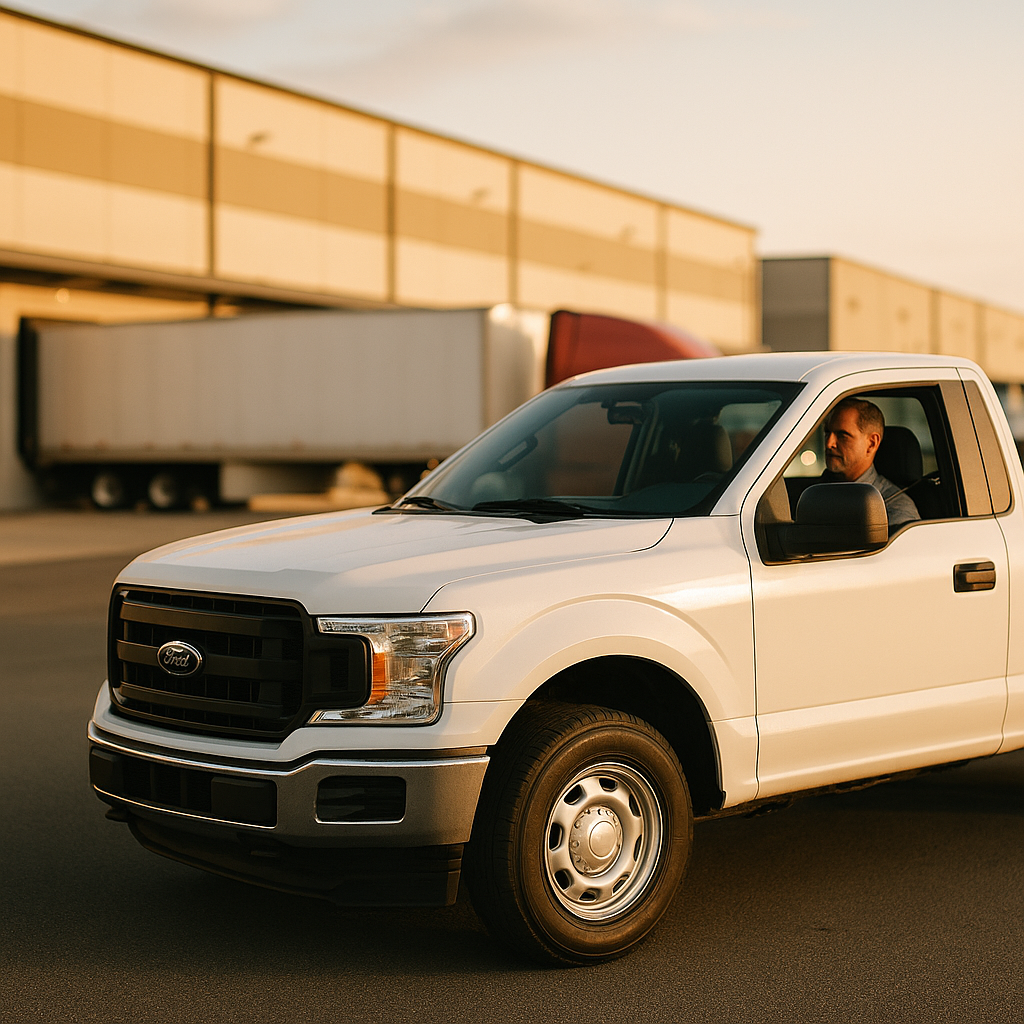
See 2026 pickup truck insurance costs, what coverage you need, and when you need commercial pickup truck insurance (delivery, contracting, hotshot). Get a quote.
Pickup truck insurance gets expensive (and risky) when you’re earning money with your truck, because a personal policy can fall apart fast when a claim reveals business or for-hire use. In 2026, many personal-use pickups land around $150–$350 per month, light business use often runs $200–$500 per month, and for-hire hotshot setups can be $450–$1,200+ per month depending on limits, drivers, miles, radius, and cargo.
If your pickup is how you make money, the wrong policy type can turn one accident into a denied claim, a stalled repair, and a lost week of revenue. Below is a practical guide to coverage, personal vs. commercial rules, and the levers that actually lower premium without leaving gaps.
- Personal vs. commercial use is the biggest pricing and claim lever for pickup truck insurance.
- In 2026, business use and for-hire (hotshot) usually costs materially more than commuting-only personal use.
- The “cash-flow coverages” (tools, trailer, cargo, downtime/rental) often matter as much as comp/collision.
Table of Contents
Reading time: 11 minutes
- Pickup Truck Insurance Cost in 2026 (Quick Answer + Table)
- How Pickup Truck Insurance Works (What It Covers)
- Personal vs. Commercial Pickup Truck Insurance (Delivery, Contracting, Hotshot)
- What Insurance Does a Pickup Truck Need? (Coverage Checklist)
- What Factors Affect Pickup Truck Insurance Rates?
- Pickup Insurance Costs by Model (Including Electric Pickups) + State Differences
- How to Lower Pickup Truck Insurance Premiums (2026 Discounts + Real Examples)
- Your Questions Answered: “People Also Ask” FAQs
- Why Logrock (And a Good Agent) Saves You Money Long-Term
- Conclusion: Get the Right Pickup Truck Coverage Without Overpaying
Pickup Truck Insurance Cost in 2026 (Quick Answer + Table)
Pickup truck insurance in 2026 commonly ranges from about $150–$350 per month for personal use to $200–$500 per month for light business use, while for-hire hotshot operations often price around $450–$1,200+ per month depending on limits, drivers, mileage, and cargo needs.
Your price swings based on garaging ZIP code, driving record, truck value/trim, annual miles, towing frequency, and whether you need commercial documents like a certificate of insurance (COI) for customers or job sites.
| Use case | Typical 2026 range (monthly) | Notes |
|---|---|---|
| Personal use | $150–$350 | Varies heavily by model/trim, ZIP, and driver history |
| Business use (light commercial: contracting/deliveries) | $200–$500 | Often higher due to mileage, job-site exposure, and use class |
| For-hire / hotshot (pickup + trailer, hauling for others) | $450–$1,200+ | May require higher limits + cargo; filings may apply if you have authority |
Important: These are “sanity-check” ranges, not quotes. To compare fairly, price it apples-to-apples with the same limits, same deductibles, same drivers, and the same use classification.
How Pickup Truck Insurance Works (What It Covers)
Pickup truck insurance is a bundle of coverages—typically liability, comprehensive, collision, and uninsured/underinsured motorist—priced based on vehicle, driver, location, and use (personal, business-use, or for-hire).
The “gotchas” usually show up when you tow, carry expensive tools, deliver items, or haul for-hire, because those exposures can change what your policy covers and how a claim is handled.
1. Liability coverage (bodily injury + property damage)
Liability coverage pays for other people’s injuries and property damage when you’re at fault, and it’s required by law to drive.
If you do business-to-business work, many customers and general contractors expect limits above state minimums, and they may ask for a COI before you can access a job site.
2. Collision coverage
Collision coverage pays to repair or replace your pickup after a crash (subject to your deductible), including hitting an object or rolling the vehicle.
If your truck is financed, collision is commonly required by the lender, and it’s often the difference between staying working or getting forced into a new loan after a total loss.
3. Comprehensive coverage
Comprehensive coverage pays for non-collision damage like hail, theft, vandalism, animal strikes, and fire (subject to deductible).
Pickups take heavy hail losses in many states, and theft claims can involve high-dollar parts like tailgates, wheels/tires, and electronics.
4. Uninsured/underinsured motorist (UM/UIM)
UM/UIM coverage helps pay for injuries and certain damages when the at-fault driver has no insurance or not enough insurance to cover the loss.
UM/UIM is one of the most practical protections if you drive in dense metro traffic or along high-accident corridors.
5. Add-ons pickup owners overlook (the “cash flow” coverages)
- Towing/roadside: Useful if you tow or drive long rural routes.
- Rental reimbursement / downtime: Helps you keep working when the truck is in the shop.
- Gap coverage (financed trucks): Helps if the truck is totaled and the loan balance exceeds the payout.
- Tools/equipment coverage (business): Toolboxes and gear often need an endorsement or separate coverage to be insured properly.
Personal vs. Commercial Pickup Truck Insurance (Delivery, Contracting, Hotshot)
Insurers rate pickup truck insurance as personal, business-use, or for-hire, and for-hire interstate property carriers operating under FMCSA authority generally must carry at least $750,000 in public liability coverage under 49 CFR §387.9.
The simplest rule is also the one people ignore: the policy type should match how you use the truck, because misclassification is one of the fastest ways to end up in a coverage dispute after a loss.
When personal pickup insurance is usually enough
A personal auto policy is designed for commuting and household driving, not daily business operations or hauling freight for others.
- Commuting to a W-2 job
- Errands, family trips, personal towing within personal-use guidelines
- Moving your own items (your own furniture, your own ATV, your own trailer)
Modification tip: If you’ve got a lift, wheels/tires, bed cap, headache rack, or other add-ons, ask whether the carrier will schedule the value by endorsement; otherwise, claims may pay closer to “stock” value.
When you likely need commercial pickup truck insurance
Commercial pickup truck insurance is typically written under a commercial auto policy and is rated for higher and different exposure, such as job-site driving, deliveries, and business-owned vehicles.
- You visit job sites daily (contractor, trades, construction)
- You carry tools/materials as part of the job
- You make deliveries or run routes
- The truck is titled or registered to a business name
- Multiple drivers or employees operate the vehicle
- You need COIs to access sites or meet vendor requirements
Hotshot / for-hire hauling: the line you can’t cross on a personal policy
For-hire hauling means transporting someone else’s goods for compensation, and that exposure typically requires commercial auto plus cargo and trailer coverage that a personal policy usually won’t provide.
If a loss happens “under load” and your policy doesn’t match the operation, you’re relying on fine print instead of coverage designed for the risk.
Compliance note: DOT/FMCSA requirements can apply based on weight, interstate vs. intrastate operation, and whether you’re operating under your own authority. Don’t guess—confirm your authority and insurance requirements in writing.
What Insurance Does a Pickup Truck Need? (Coverage Checklist)
Every state requires auto liability coverage to drive legally, and lenders typically require comprehensive and collision when a pickup is financed or leased.
After the legal and lender basics, the right coverage is about what you’re protecting: a personal lifestyle asset or an income-producing business asset.
Coverage checklist: personal vs. business use
| Coverage | Personal use (typical) | Business use (typical) | Notes |
|---|---|---|---|
| Liability | Required | Required (often higher limits) | Customers/GCs may require higher limits than state minimums |
| Comprehensive | Strongly recommended | Strongly recommended | Hail/theft/deer are common pickup losses |
| Collision | Recommended (often required if financed) | Recommended (often required if financed) | Pick deductibles based on cash reserves, not vibes |
| UM/UIM | Recommended | Recommended | Protects you from underinsured drivers |
| Medical payments / PIP | Optional | Optional | State-dependent; can help with immediate medical bills |
| Tools/equipment | Sometimes separate | Often needed | Tools may not be covered the way you assume |
| Cargo (for-hire) | N/A | If hauling others’ goods | Hotshot/for-hire operations commonly need this |
| Hired & non-owned auto | N/A | Sometimes | If employees use personal cars for business errands/deliveries |
The pickup-specific exposures most people miss
- Towing liability vs. trailer physical damage: You can be legal and still underinsured.
- Tool theft at job sites: Especially if you park overnight at hotels or unsecured lots.
- High-tech trims: Sensors, cameras, and LED assemblies can push repair bills much higher than older trucks.
What Factors Affect Pickup Truck Insurance Rates?
Pickup truck insurance rates are primarily driven by garaging ZIP code, driver record, vehicle value/repair costs, annual mileage, and the insurer’s use classification (personal vs business-use vs for-hire).
If you want to manage premium like an owner (not a bargain hunter), focus on the biggest levers first.
1. Vehicle factors
- Model/trim + MSRP: Higher value usually increases comp/collision costs.
- Repairability: Sensors and ADAS calibrations add labor and specialized steps.
- Theft frequency: Some models and parts are targeted more often.
- Modifications: Lift kits, tunes, and oversized tires can change risk and claims outcomes.
2. Driver + household factors
- MVR/violations and prior claims
- Years licensed and driver age (where rating applies)
- In many states, credit-based insurance score (where allowed by law)
3. Location factors (garaging ZIP)
- Theft and vandalism rates
- Hail/wind exposure
- Traffic density and claim frequency
- Litigation environment and medical costs
4. Usage factors (often the biggest lever for pickups)
- Personal vs. business vs. for-hire classification
- Annual mileage and commuting patterns
- Radius (local vs regional)
- Towing frequency and trailer value
- Multiple drivers/employees
Reality check: Pickups can cost more than cars because they’re heavier (more damage in impacts), some parts are theft targets, and many trims are expensive to repair.
Pickup Insurance Costs by Model (Including Electric Pickups) + State Differences
The same pickup can cost hundreds of dollars per month more (or less) to insure based on ZIP code because state minimum laws, repair labor rates, theft frequency, fraud, traffic density, and weather risk vary by region.
People ask for “the cheapest pickup to insure,” but your location and use case can outweigh the badge on the grille. Still, there are patterns worth using when you’re shopping.
1. Cheapest pickups to insure (what “cheap” usually means)
Lower premiums usually track with lower MSRP, cheaper parts, strong safety performance, and lower theft/claim frequency.
- Midsize or work-trim trucks are often cheaper than high-trim full-size models.
- Older, fully paid-off trucks can still be expensive if theft or loss frequency is high in your ZIP.
- The “cheapest” premium can be a trap if it excludes the way you actually use the truck.
2. Electric pickup insurance costs in 2026 (why it can differ)
Electric pickups can cost more to insure on comprehensive and collision because battery-related repairs are specialized, parts can be expensive, and repair networks can be limited in some areas.
When you quote an EV pickup, ask about OEM parts availability, calibration costs for cameras/sensors after repairs, and how the carrier handles total-loss valuation for high-cost components.
3. State-by-state differences (why your ZIP matters)
State minimum liability requirements and claim costs (medical, legal, labor, and parts) vary by state, so identical drivers with identical pickups can see very different premiums across state lines.
| Region / state example | What changes pricing most | Your action |
|---|---|---|
| Texas / hail-prone areas | Hail + theft + miles driven | Don’t cheap out on comprehensive; choose deductibles intentionally |
| Florida / high-claim areas | Litigation + medical + theft | Compare limits carefully; verify UM/UIM options |
| California / high repair costs | Labor + parts + traffic | Consider higher deductibles only if you can cash-flow them |
| Upper Midwest / winter states | Weather + collision frequency | Balance comp/collision and add roadside if you travel rural routes |
Frequently Asked Questions
A pickup truck needs state-required liability insurance to drive legally, and financed or leased trucks typically need comprehensive and collision to satisfy the lender. If you use the pickup for business (job sites, deliveries, tools/materials), you may need a commercial policy so the use class matches the exposure. If you haul freight for others for pay (hotshot/for-hire), you’ll usually need commercial auto plus add-ons like cargo and trailer physical damage. A practical baseline is liability + comp/collision + UM/UIM, then add tools, trailer, and downtime coverage as needed.
Pickup truck insurance in 2026 often runs $150–$350 per month for personal use, $200–$500 per month for light business use, and $450–$1,200+ per month for for-hire hotshot setups depending on limits, drivers, miles, and cargo. Your exact cost is driven by garaging ZIP code, driving record, truck value/trim, deductibles, and (most importantly for pickups) how the insurer classifies use: personal vs business vs for-hire. The fastest way to get a real number is to compare quotes with identical limits and deductibles so you’re not comparing “cheap” coverage to better coverage.
The cheapest pickup truck to insure is usually a lower-MSRP, lower-trim truck with cheaper parts and lower claim frequency, which often points to midsize or work-trim models rather than high-trim full-size pickups. That said, insurers price by more than the badge: your ZIP code, driving record, annual miles, and use classification can outweigh the model by a wide margin. If you’re shopping, quote the exact trim you want (including safety packages) and keep the same deductibles and limits across quotes. “Cheap to insure” should also mean “fits your real use” so claims don’t get disputed later.
Pickups often cost more to insure than cars because they can cause more damage in a crash due to weight, many trims have high replacement and repair costs, and certain pickup parts are theft targets. Comprehensive and collision pricing is also sensitive to repair complexity, including sensors and camera calibrations after body work. However, not every pickup is more expensive than every car: a modest-trim midsize pickup can price competitively against SUVs and higher-end sedans in the same ZIP code. The fairest comparison is to quote both vehicles with identical limits and deductibles under the same driver profile.
Pickup truck insurance rates are driven by the vehicle (value/trim, repair cost, safety tech, theft risk), the driver (violations and claims), the location (garaging ZIP, hail/theft patterns, traffic, litigation costs), and the policy setup (limits, deductibles, UM/UIM). For pickups specifically, usage classification is often the biggest swing factor: personal use, business use, and for-hire hauling are priced very differently. Annual mileage, operating radius, towing frequency, and multiple drivers also push rates. To control price, lock down the correct use class first, then tune deductibles and optional coverages.
You typically need commercial pickup truck insurance when the pickup is used primarily for business—daily job sites, deliveries, carrying tools/materials as part of paid work, business ownership/registration, or multiple drivers/employees. If you haul goods for others for compensation (including many hotshot operations), you usually need commercial coverage and may need cargo and trailer coverage as well. For interstate for-hire property carriers operating under FMCSA authority, the federal minimum public liability limit is commonly $750,000 under 49 CFR §387.9. Requirements can vary by operation and authority, so confirm your specific filings and limits with an agent in writing.
Electric pickups can be more expensive to insure, especially for comprehensive and collision, because they often have higher replacement cost, specialized battery-related repairs, and fewer certified repair options in some regions. Even when frequency is lower due to safety tech, severity can be higher because parts and labor are expensive and post-repair calibrations are common. Pricing varies a lot by carrier and ZIP code, so it’s worth comparing multiple quotes with identical deductibles and limits. When you shop, ask how OEM parts are handled, whether calibration is covered normally, and how total-loss valuation is determined for EV components.
Why Logrock (And a Good Agent) Saves You Money Long-Term
A commercial auto certificate of insurance (COI) is a standardized proof of coverage that lists your named insured, vehicles, policy dates, and liability limits—often $1,000,000 per occurrence on many job-site contracts.
A pickup is more than transportation. It’s your job-site access pass, your tool hauler, your tow rig, and sometimes your one-truck fleet.
The goal isn’t just shaving $30/month; it’s building coverage that matches how you actually operate so you don’t discover a gap at the body shop.
- Correct classification: personal vs commercial vs for-hire, so claims match the rated use.
- Business-ready limits: structured around real risk and customer requirements.
- Coverage for “stuff”: tools, equipment, trailer, and cargo when it applies.
- Quote comparison help: apples-to-apples review instead of confusing “cheap vs good” options.
For a deeper apples-to-apples quoting checklist, see cheapest commercial auto insurance (2026) — apples-to-apples quote checklist.
Conclusion: Get the Right Pickup Truck Coverage Without Overpaying
Pickup truck insurance in 2026 is priced mainly by how you use the truck (personal, business-use, or for-hire) and by the limits and deductibles you choose.
If you’re earning with the truck—deliveries, contracting, towing, or hotshot—don’t try to force a personal policy to fit. Get the use class right, choose deductibles like an owner, and compare quotes apples-to-apples.
Key Takeaways:
- Classification is king: Personal vs commercial vs for-hire drives both premium and claim outcomes.
- Protect cash flow: Pair comp/collision with deductibles you can fund and add tools/trailer/cargo when needed.
- Shop smart: Start 30–45 days before renewal and standardize coverages before comparing price.
Related Reading: The best next step is to review the two pricing guides linked above, then get a quote using your real use case so the policy is built to pay when it matters.



