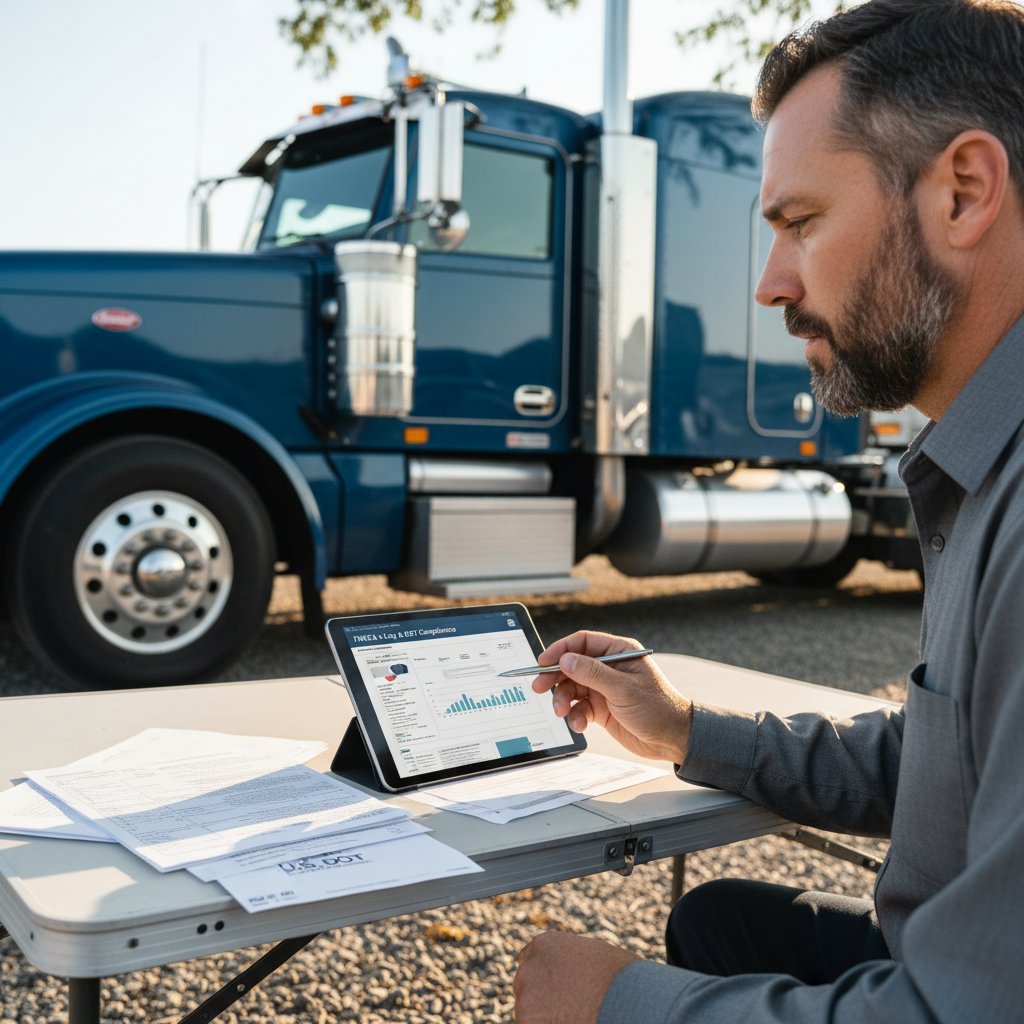
A 2026 guide to small construction business insurance: required coverages, cost ranges by trade, COI checklist, and ways to cut premiums—get a quote.
Small construction business insurance is the difference between one claim being a painful week and one claim wiping out months of profit. Most small contractors don’t lose sleep over “insurance” in general—they lose sleep over a GC rejecting a certificate, a surprise exclusion, or a lawsuit that blows through cash flow.
Featured snippet answer: Small construction business insurance typically includes General Liability, Workers’ Comp (when required), and Commercial Auto if you use vehicles for work. Many contractors also need Tools & Equipment (inland marine) and Builder’s Risk for specific projects. Requirements vary by state and by contract, so your COI and endorsements often matter as much as the policy itself.
This guide breaks it down like a business tool: what you need, what it costs in 2026, what’s commonly required, and how to get job-ready proof fast.
Table of Contents
Reading time: 10 minutes
- What insurance does a small construction business need? (Core coverages)
- How much does small construction business insurance cost in 2026?
- 2026 cost by trade: sample price ranges (table)
- What insurance is required for construction in my state? (Requirements framework)
- Optional (but common) contractor coverages in 2026—and when they’re worth it
- COI & same-day binding: step-by-step checklist (copy/paste template)
- How to reduce contractor insurance costs (without creating gaps)
- Frequently Asked Questions
- Why Logrock’s approach is built for small contractors
- Conclusion & Get a Quote
What insurance does a small construction business need? (Core coverages)
Most small construction businesses need General Liability (often $1M/$2M), Workers’ Compensation when required by state law, and Commercial Auto (often $1M CSL on commercial jobs) to meet common GC and client requirements.
You don’t need “every policy under the sun.” You need the right stack for your trade, your jobs, and your contracts—and you need it documented correctly on the COI. For deeper context, see general liability insurance guide.
Core construction insurance policies: what they cover, when required, typical limits
| Policy | What it covers | When it’s required (law/contract) | Typical limit/examples | Common endorsements/notes |
|---|---|---|---|---|
| General Liability (GL) | 3rd-party bodily injury + property damage (you damage someone else’s stuff) | Almost always required by clients/GCs | Often $1M per occurrence / $2M aggregate | Additional Insured, Primary & Noncontributory, Waiver of Subro |
| Workers’ Comp (WC) | Employee injuries: medical + lost wages | Commonly required if you have employees; sometimes even with 1 | Driven by state + payroll | Class codes, audits, and EMR (experience mod) matter |
| Commercial Auto | Liability if you cause an accident in a work vehicle | Required if business-owned vehicles; many contracts require it | Often $1M CSL on commercial jobs | Hired/Non-Owned if employees drive personal vehicles |
| Tools & Equipment (Inland Marine) | Theft/damage of tools on the move or at jobsite | Not “legally required,” but financially common-sense | Limit based on tool values | Unattended theft rules, scheduling vs blanket |
| Builder’s Risk | Property coverage for work in progress/materials | Project/contract-driven; lender/owner may require | Based on project value | Theft conditions, weather exclusions, flood/quake add-ons |
| BOP (Business Owner’s Policy) | Bundle (typically GL + property + business income) | Optional; best fit if you have a shop/office | Varies | Not always ideal for project-only operations |
1) General Liability (GL): the baseline policy most clients require
General Liability insurance covers third-party bodily injury and property damage claims, and most contractor COIs show limits like $1,000,000 per occurrence and $2,000,000 aggregate.
Think: you crack a homeowner’s tile, a visitor trips over your extension cord, or overspray damages a finished surface. For most jobs, GL is the ticket to enter—no GL, no contract.
Pro tip: Ask whether your GL includes completed operations (claims that show up after the job is done). See general liability insurance and a completed operations explainer.
2) Workers’ Compensation (WC): when it’s required and how it’s priced
Workers’ Compensation insurance pays medical bills and wage replacement for employee job injuries, and state rules often determine when coverage becomes mandatory based on employee count and exemptions.
Construction injuries happen, and without WC you’re exposed to medical costs, wage replacement, and potential penalties depending on your state.
- Contractors with employees (most states)
- Sometimes contractors with one employee
- Misclassified “subs” can create WC risk if they function like employees
Pro tip (money lever): WC pricing is driven by payroll and class codes, and audits can hit you when codes or payroll split don’t match reality. See workers’ compensation insurance for contractors and payroll/class code basics.
3) Commercial Auto: if you use trucks/vans for work, personal auto won’t cut it
Commercial Auto insurance covers liability for business vehicle accidents, and many commercial contracts require showing $1,000,000 CSL on the COI even when state minimums are lower.
If you’re hauling tools/materials daily, using a branded vehicle, or letting employees run errands for work, personal auto is often not designed for the exposure.
Pro tip: If employees use personal vehicles for job errands, ask about Hired & Non-Owned Auto (HNOA). See commercial auto and hired/non-owned coverage for contractors.
4) Tools & Equipment (Inland Marine): protects gear in transit and at the jobsite
Tools and equipment (inland marine) coverage is mobile property insurance designed for tools that move between shop, truck, trailer, and jobsite, with limits set to your equipment values.
Tool theft is common, and replacing gear quickly is how you keep cash flow alive when a trailer gets popped.
Pro tip: Ask about “unattended theft” wording—some carriers are strict if a tool was left in an unlocked vehicle or trailer. See tools and equipment (inland marine) insurance guide.
5) Builder’s Risk: project-based property coverage during construction
Builder’s Risk insurance covers materials and work in progress during construction or major renovation, with limits typically based on the project value rather than your annual revenue.
A fire, theft, or wind event mid-project can create a six-figure mess, and Builder’s Risk keeps the project from turning into a total loss.
- Who buys it: often the owner or GC, but some contracts push it down to a sub
- Confirm: offsite materials, theft/security conditions, and flood/earthquake (often excluded unless added)
See builder’s risk insurance basics and who buys it.
6) BOP for contractors: bundling GL + property can be cheaper (when it fits)
A BOP (Business Owner’s Policy) commonly bundles General Liability with business property coverage and may add business income, which can be cost-effective for contractors with a shop, office, or stored materials.
If you’re truly job-to-job with minimal property exposure, standalone GL may fit cleaner than a bundle.
See what a BOP includes for contractors.
If a GC is asking for proof of coverage, you need the right policies and the right COI wording—fast.
How much does small construction business insurance cost in 2026? (Realistic ranges)
In 2026, many small/new contractors see General Liability around $500–$3,000+ per year, while a starter stack that includes GL plus WC/Auto/Tools commonly totals $2,500–$10,000+ per year depending on trade, payroll, and vehicles.
Construction insurance pricing isn’t one-size-fits-all—underwriters price the risk based on trade scope, payroll, subcontractor use, vehicles, claims history, and your biggest job size.
2026 baseline cost ranges (what most small contractors see)
- General Liability: roughly $500–$3,000+ per year for many small/new contractors (higher for higher-risk trades, larger revenue, or bigger limits).
- Starter stack (GL + some combination of WC/Auto/Tools): commonly $2,500–$10,000+ per year.
- Workers’ Comp: often the biggest swing factor because it’s payroll + class-code driven, and audits can change your final cost.
What changes your price fastest (top rating drivers)
- Trade & scope: handyman vs roofing/excavation
- Payroll and employee count
- Subcontractor costs and how you collect/verify their COIs
- Claims history: frequency matters
- Vehicles & drivers: MVRs, vehicle type, usage
- Contract limits + endorsements: higher limits and special wording increase premium
2026 cost by trade: sample price ranges (table)
Construction insurance costs vary heavily by trade because some trades are more GL-heavy (property damage risk) while others are more WC-heavy (injury frequency/severity), and many are both.
You want realistic ranges—not fantasy quotes that won’t pass a GC’s insurance exhibit.
2026 sample insurance cost ranges by construction trade (illustrative)
| Trade | GL (annual range) | WC sensitivity | Auto exposure (typical) | Common add-ons |
|---|---|---|---|---|
| Handyman / light repairs | $500–$1,500 | Low–Med | Pickup/van | Tools (inland), HNOA |
| Painting | $600–$2,000 | Med | Van | Tools, pollution add-on (sometimes) |
| Flooring / tile | $800–$2,500 | Med | Van/trailer | Tools, installation floater (carrier-specific) |
| Carpentry / trim | $700–$2,500 | Med | Truck/van | Tools, WC |
| Drywall | $900–$3,000 | Med–High | Truck/van | WC, tools |
| Electrical | $800–$3,000 | Med | Van | Tools, E&O if design/advice |
| Plumbing | $900–$3,500 | Med | Van | Tools, E&O (sometimes) |
| Concrete | $1,200–$4,000+ | High | Truck | WC, umbrella for commercial jobs |
| Roofing | $1,500–$6,000+ | High | Truck | WC, umbrella (often), strict underwriting |
| Excavation / grading | $1,500–$7,500+ | High | Heavy truck | WC, umbrella, equipment coverage |
Reality check: Higher-risk trades often face stricter underwriting and may need higher limits to win commercial work.
What insurance is required for construction in my state? (Requirements framework)
State requirements for construction insurance differ most on Workers’ Compensation thresholds and exemptions, while job contracts frequently require higher limits like $1,000,000 GL and $1,000,000 Auto CSL plus specific endorsements.
There’s no safe way to guess your requirements from memory, and contracts often demand more than the law.
The short answer: states differ, and contracts often require more than the law
- Workers’ Comp is the most state-variable requirement (employee thresholds, owner exemptions, enforcement).
- Commercial Auto has state minimums, but contracts often require higher limits.
- Licensing boards and municipalities may require proof of insurance for permits or licensing in certain trades.
How to verify requirements quickly (checklist)
- State Workers’ Comp agency / Dept. of Labor: who must carry WC, exemptions, penalties
- Contractor licensing board (trade-specific): insurance/bond requirements for your license class
- The contract’s insurance exhibit: limits + endorsements + COI wording
- Permitting office (local): some permits require proof of coverage
Mini-template: “State requirements to confirm” (copy/paste)
- Workers’ Comp required with: ☐ 0 employees ☐ 1 employee ☐ 2+ employees ☐ other
- Owner/officer exemption allowed: ☐ yes ☐ no ☐ conditions: ______
- Auto minimums (if applicable): ______
- License bond required: ☐ yes ☐ no ☐ amount: ______
- Any trade-specific requirements: ______
Optional (but common) contractor coverages in 2026—and when they’re worth it
Optional contractor coverages like umbrella, E&O, cyber, and surety bonds are commonly added when contracts require higher limits (often $2M–$5M+) or when your operations create gaps that General Liability doesn’t cover.
Optional doesn’t mean unnecessary—it means you buy it when the risk and the contract justify it.
1) Umbrella / Excess Liability: meeting higher contract limits
Umbrella insurance adds extra liability limits above your GL and often Auto, helping contractors meet $2M or $5M requirements without rewriting every underlying policy.
It’s especially common for larger commercial work, public entity jobs, and higher-risk scopes like roofing, concrete, and excavation.
Pro tip: Umbrella is often more cost-effective than raising limits on every underlying policy. See commercial umbrella insurance for contractors.
2) Professional Liability (Contractors E&O): for design-build, advice, and spec mistakes
Contractors E&O (professional liability) covers financial losses tied to professional services (design, advice, specs, measurements) that General Liability typically doesn’t cover.
If you’re design-build or you provide spec guidance, you can get hit with “your mistake cost me money” claims even when nobody got hurt.
3) Cyber liability: for invoicing fraud and ransomware
Cyber liability insurance can cover ransomware response, data/privacy costs, and some types of funds transfer fraud depending on the form and endorsements.
Construction businesses are common targets because invoices and vendor payments are easy to redirect with email compromise scams.
4) Surety bonds (license/performance/payment): not insurance, but often required
Surety bonds are financial guarantees (license, performance, payment), and if a surety pays a claim you typically must reimburse the surety under the indemnity agreement.
If your license or a job requires a bond, you can’t bid or operate without it. See surety bonds for contractors—license vs performance vs payment.
COI & same-day binding: step-by-step checklist (copy/paste template)
A contractor COI is usually issued on an ACORD 25 certificate, and many job rejections happen because required endorsements like Additional Insured, Waiver of Subrogation, or Primary & Noncontributory aren’t properly documented.
Most “insurance delays” aren’t the carrier—they’re missing info: wrong legal name, unclear scope, no payroll breakdown, or no contract requirements. See certificate of insurance (COI) guide and endorsements explained.
What to gather before requesting quotes (to avoid delays)
- Business legal name (match SOS filing) + DBA (if any)
- Entity type: sole prop / LLC / corp
- Years in business + prior coverage (if any)
- Annual revenue (last 12 months + projected)
- Payroll (by role/trade) + # of employees
- Subcontractor costs (annual) and whether you 1099 subs
- Largest job size and typical job type (residential vs commercial)
- Claims history / loss runs (or “none”)
- Vehicle schedule + driver info (if you need auto)
- Tools/equipment values (if insuring tools)
- Contract insurance exhibit (limits + endorsements + COI wording)
COI checklist for contractors (job-ready)
- ☐ Named insured matches your legal entity
- ☐ Correct policy types listed (GL/WC/Auto/Umbrella as required)
- ☐ Effective dates cover the project timeframe
- ☐ Limits match contract requirements
- ☐ Certificate holder name/address is correct
- ☐ Additional insured shown by endorsement where required
- ☐ Waiver of subrogation included where required
- ☐ Primary & noncontributory included where required
COI request template (copy/paste)
Subject: COI Request for [Project Name] — Due [Date]
Hello,
Please issue a COI for the following project and include any required endorsements.
Certificate holder (name/address):
[Paste here]
Project name/location:
[Paste here]
Required limits:
- GL: $_____ per occurrence / $_____ aggregate
- Auto: $_____ CSL
- WC: Statutory / Employers Liability $_____
- Umbrella: $_____
Required endorsements: ☐ Additional Insured (Ongoing + Completed Ops) ☐ Waiver of Subrogation ☐ Primary & Noncontributory
Delivery deadline: [Date/Time]
Send to: [Email] | CC: [Email]
Notes from contract: [Paste special wording if any]
Thank you,
[Name / Phone]
Same-day binding/COI is often possible when you provide contract requirements and business details up front (eligibility varies by carrier and trade).
How to reduce contractor insurance costs (without creating gaps)
Reducing contractor insurance costs usually comes from lowering claim frequency, tightening payroll/class-code accuracy for audits, and controlling subcontractor risk—not simply slashing limits below what GCs require.
Lowering premium is good business as long as you’re not trading a $500 savings for a $50,000 problem.
- Run a basic safety program and document it. Toolbox talks, PPE rules, ladder/fall protection, and job hazard analysis (JHA) help when underwriting gets tight.
- Control subcontractor risk. Require subs’ COIs, verify limits, and keep additional insured expectations consistent with contracts.
- Keep classifications honest and updated. Wrong class codes or payroll splits can trigger audit surprises.
- Raise deductibles strategically. Especially tools/equipment and physical damage—if you can absorb it.
- Protect your loss history. Nuisance claims add up; consider when it’s smarter to pay small losses out-of-pocket.
- Shop at renewal (and when operations change). New vehicles, new employees, bigger jobs, and new scopes are all signals to re-rate coverage.
Frequently Asked Questions
Most small construction businesses need General Liability, Workers’ Comp when required by state law, and Commercial Auto if they use vehicles for work, with common limits like $1M/$2M GL and $1M Auto CSL on commercial contracts.
Many contractors also add tools and equipment (inland marine) to protect mobile gear and builder’s risk for specific projects. The “gotcha” is usually the paperwork: your contract may require endorsements like additional insured, waiver of subrogation, and primary & noncontributory language that must be backed by endorsements, not just typed onto the COI. See contractor insurance coverage types.
In 2026, many small/new contractors see General Liability around $500–$3,000+ per year, while starter packages that include GL plus WC/Auto/Tools commonly land around $2,500–$10,000+ per year depending on trade, payroll, vehicles, claims, and required limits.
Workers’ Comp is often the biggest variable because it’s rated on payroll and class codes, and audits can change the final number. Roofing, excavation, and concrete typically price higher than handyman, painting, and light carpentry due to severity and injury risk.
Construction insurance requirements depend on your state’s rules—especially for Workers’ Comp thresholds and exemptions—and your contracts may require higher limits like $1M GL and $1M Auto CSL plus endorsements.
To confirm the exact requirements, check your state Workers’ Comp agency/Dept. of Labor, your contractor licensing board (trade-specific), the contract’s insurance exhibit, and local permitting requirements. Don’t rely on what another contractor “heard,” because employee-count triggers and owner exemptions vary widely across states and enforcement can be strict.
A small construction business can reduce insurance costs by lowering claims, tightening payroll/class-code accuracy for WC audits, and controlling subcontractor risk instead of cutting limits below what contracts require.
Practical moves include documenting safety practices (toolbox talks, PPE, fall protection), verifying subcontractor COIs and limits, updating class codes when your scope changes, and choosing deductibles you can truly absorb. Also, shopping at renewal (and when you add vehicles or employees) helps you avoid paying for mismatched coverage that underwriters will re-rate anyway after an audit.
A contractor BOP (Business Owner’s Policy) usually bundles General Liability with business property coverage and may include options like business income, which can be a strong fit if you have a shop/office or stored materials.
A BOP isn’t automatically better than standalone GL, especially for project-only operations with minimal premises/property exposure. Always confirm what’s excluded and whether key exposures—like completed operations, offsite tools, subcontractor work, or specific endorsements—are properly handled. See BOP for contractors explained.
You need Builder’s Risk insurance when your contract makes you responsible for materials and work in progress during a build or major remodel, and the required limit is typically based on the project value.
Builder’s Risk is often purchased by the owner or GC, but some contracts push it down to a subcontractor—so don’t guess. Confirm who’s responsible before mobilizing and verify details like offsite materials, theft/security requirements, and whether flood/earthquake are excluded unless added. See builder’s risk insurance—who buys it.
Why Logrock’s approach is built for small contractors
Small contractors typically need coverage that matches their trade scope, payroll, vehicle use, and contract endorsements, because mismatched policies and incorrect COI language are a common reason jobs get delayed or rejected.
Small contractors don’t have time for back-and-forth, reissued COIs, or paying for coverage that doesn’t match the job. The best approach is simple:
- Build coverage around your trade + your contracts (not generic packages).
- Get the COI and endorsements right the first time.
- Keep pricing aligned to reality by keeping payroll, scope, and subs clean.
If you’re trying to grow from small jobs to bigger commercial work, your insurance setup becomes a profit lever—not just an expense.
Conclusion: Get job-ready with the right coverage stack
Small construction business insurance is about staying in business when something goes sideways—and staying eligible for the jobs you want. Start with GL, WC (when required), and Commercial Auto, then add tools, builder’s risk, umbrella, or bonds when the job demands it.
Treat your COI like a contract document, not an afterthought.
Key Takeaways:
- Buy the coverage stack that matches your trade, payroll, vehicles, and contracts.
- Expect 2026 pricing to vary widely by trade and Workers’ Comp exposure.
- COI wording + endorsements can make or break job eligibility.
Related Reading (TODO: add Logrock internal links): General Liability for Contractors, COI & Endorsements Explained, Workers’ Comp for Construction Payroll.