
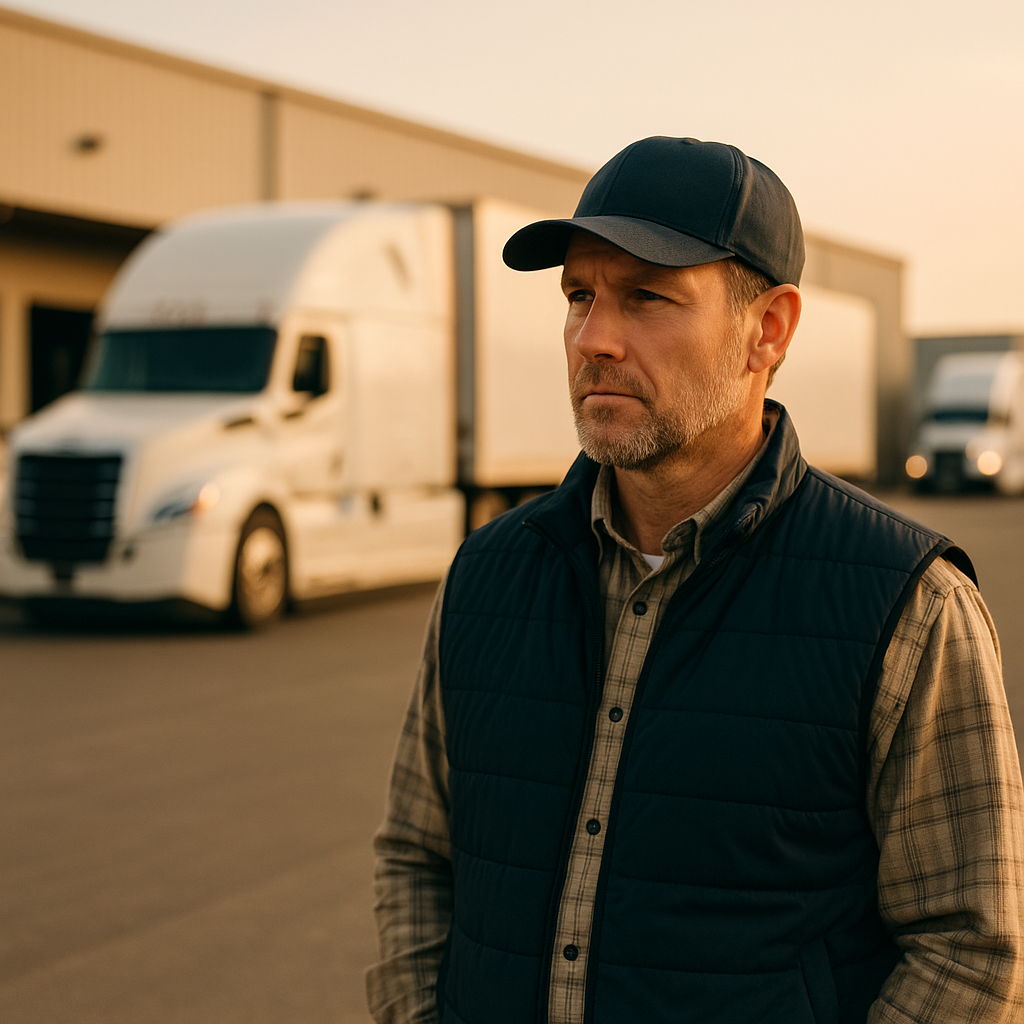
Truckers commercial insurance can make or break your cash flow. Learn required coverages, 2026 cost drivers, and money-saving moves—then get a quote built for how you actually run.
Truckers commercial insurance is the protection stack that keeps one crash, cargo claim, or lawsuit from turning into a business-ending week. For most for-hire operators, it means (1) auto liability that meets FMCSA financial responsibility rules, plus (2) optional-but-critical coverages like physical damage, motor truck cargo, and non-trucking liability/bobtail based on dispatch status.
If you want the “no surprises” version of compliance, start with FMCSA insurance requirements, then match coverage to your authority, lanes, trailer setup, and commodity mix. That’s how you avoid overpaying for coverage you can’t use—and avoid the gaps that get claims denied.
Key Takeaways: Essential Truckers Commercial Insurance
- Liability is the price of admission: While the federal minimum can be $750,000 for many non-hazmat carriers, many brokers effectively require $1,000,000 auto liability.
- Physical damage + cargo protect your balance sheet: A totaled truck or a $100,000 cargo claim can erase months of profit.
- Your operation type changes everything: Leased-on vs. your own authority vs. hotshot insurance needs are not interchangeable.
- “Cheap” can become expensive fast: Common gaps include wrong radius, excluded commodities, and dispatch-status issues with NTL/bobtail.
Table of Contents
Reading time: 11 minutes
- What Truckers Commercial Insurance Covers (Plain English)
- FMCSA Minimums, Broker Requirements, and Filings (BMC-91X)
- The Core Coverages: Build Your Policy Like a Business Owner
- 2026 Cost Reality: What Commercial Truck Insurance Costs (and Why)
- Match Coverage to Your Operation: Owner-Op, Leased-On, Hotshot, Fleet
- Claim Denials & Exclusions That Kill Cash Flow
- How to Get Affordable Trucking Insurance Without Cutting the Wrong Corners
- Frequently Asked Questions
- The Logrock Difference: Insurance Built for Business Owners
- Conclusion: Get a Quote That Fits Your Operation
What Truckers Commercial Insurance Covers (Plain English)
Truckers commercial insurance is a set of policies built around FMCSA financial responsibility rules (49 CFR Part 387) and common contract requirements like $1,000,000 auto liability and $100,000 cargo on brokered freight.
Think of it as a coverage “stack” that changes based on your authority, trailer control, and whether you’re under dispatch. If you want a clean compliance baseline, review FMCSA insurance requirements first, then adjust for your real day-to-day operation.
Here’s the simplest way to map what protects what:
- When you hit someone or damage property: auto liability responds (and defense costs can start immediately).
- When your truck is wrecked, stolen, or totaled: physical damage responds (if you bought it).
- When freight is lost or damaged: motor truck cargo responds (if the commodity and conditions are covered).
- When you’re off-dispatch but still driving the tractor: NTL/bobtail may respond, depending on policy wording and dispatch status.
Quick coverage map (what protects what)
| Coverage | Protects | Usually required by | Biggest “gotcha” |
|---|---|---|---|
| Primary Auto Liability | Other people + property | FMCSA + brokers/shippers | Wrong class/vehicle, excluded drivers, bad filings |
| Physical Damage (Comp/Collision) | Your tractor (and sometimes trailer) | Lenders + your own survival | Deductible too low = premium spikes; stated value disputes |
| Motor Truck Cargo | The freight you haul (legal liability) | Brokers/shippers | Commodity exclusions, unattended vehicle conditions, sub-limits |
| General Liability (GL) | Non-auto business incidents | Shippers/warehouses/contracts | Doesn’t replace auto liability |
| Non-Trucking Liability (NTL) | Off-dispatch personal use (varies) | Some leases | Dispatch status definitions control coverage |
| Bobtail Liability | Tractor-only driving (often off-dispatch) | Some leases / practical risk | Trailer attached/under dispatch can void the trigger |
FMCSA Minimums, Broker Requirements, and Filings (BMC-91X)
For interstate for-hire carriers, 49 CFR Part 387 generally requires $750,000 public liability for many non-hazardous freight carriers, $1,000,000 for certain higher-risk categories, and $5,000,000 for certain hazardous materials.
Here’s the part that surprises new authorities: the federal minimum isn’t the market minimum. Many brokers and shippers won’t tender decent freight unless your COI shows $1,000,000 auto liability (sometimes with specific endorsement wording).
FMCSA baseline (interstate)
- $750,000: common minimum for many non-hazmat for-hire carriers (general freight).
- $1,000,000: applies to certain higher-risk categories and many broker requirements in practice.
- $5,000,000: applies to certain hazmat operations.
Filings that matter (and why they’re revenue-critical)
Filings are not “paperwork” when they control your ability to stay active under authority and book loads.
- BMC-91X: liability filing commonly used to show proof of required liability coverage.
- MCS-90 endorsement: a federal financial responsibility backstop attached to many for-hire policies (it’s not a replacement for real coverage terms).
- Contract-driven cargo/COI requirements: not usually federal filings, but often mandatory to keep lanes and broker relationships.
Business-owner takeaway: late or incorrect filings can mean lost loads, cancelled contracts, or authority issues at the worst time—when your truck payment and fuel card still hit on schedule.
The Core Coverages: Build Your Policy Like a Business Owner
A practical truckers commercial insurance stack for an owner-operator often includes $750,000–$1,000,000+ auto liability, physical damage, motor truck cargo, and add-ons like GL, NTL/bobtail, and UM/UIM based on contract requirements and dispatch status.
Below is how to evaluate each coverage like a line item on your P&L: what risk it transfers, what it prevents, and where people get burned.
1) Primary Auto Liability (commercial truck insurance foundation)
- What it does: Pays for injuries and property damage you cause while operating the truck.
- Why it matters: A serious accident can create multi-party litigation that exceeds the value of your truck and savings.
- Who needs it: Any for-hire operation; it’s mandatory for authority and expected by brokers.
- Veteran tip: If you want broker freight, budget your business around $1,000,000 liability even if your lane could technically run on the federal minimum.
2) Physical Damage (Comp + Collision) for semi truck insurance
- What it does: Covers your tractor for collision, theft, fire, vandalism, and weather (subject to deductible and value terms).
- Why it matters: Your truck is your revenue engine; a total loss without physical damage can park you permanently.
- Who needs it: Financed trucks (usually required) and most owner-ops who can’t self-insure a $60k–$200k+ asset.
- Practical tip: Raise deductibles only if you can pay them tomorrow without missing a payment or sitting a week.
3) Motor Truck Cargo (the policy brokers care about)
- What it does: Covers your legal liability for cargo loss/damage while hauling.
- Why it matters: One cargo claim can erase multiple profitable weeks, and many brokers require proof before tendering loads.
- Who needs it: Most operators under their own authority hauling brokered or shipper-direct freight.
- Fine-print watchlist: commodity exclusions, unattended vehicle rules, reefer temp documentation, and sub-limits are where claims get reduced or denied.
4) General Liability (GL) — not auto liability
- What it does: Covers certain non-auto risks (example: you damage a facility while unloading, or a visitor is injured at your yard).
- Why it matters: Warehouses and shippers often require GL for access and contracts.
- Reality: GL is usually inexpensive compared to auto, but it can be the difference between “approved” and “turned away.”
5) Non-Trucking Liability (NTL) vs. bobtail (stop guessing)
Non-trucking liability and bobtail are both designed to address “gap time,” but they trigger differently based on dispatch status and whether a trailer is attached.
| Item | Non-Trucking Liability (NTL) | Bobtail Liability |
|---|---|---|
| Best description | Off-dispatch personal use (policy wording controls) | Tractor-only driving (no trailer), often off-dispatch |
| Can apply with trailer attached? | Sometimes, depending on language | Typically no (focus is bobtailing) |
| Biggest trigger issue | Dispatch status | Trailer attached / under dispatch |
| Common mistake | Thinking it covers you “anytime you’re not loaded” | Thinking it covers you when dispatched but empty |
For a deeper breakdown with real trigger examples, see Non-trucking liability vs bobtail insurance.
6) Uninsured/Underinsured Motorist (UM/UIM)
- What it does: Helps cover injuries (and sometimes related damages) when you’re hit by a driver with no insurance or not enough insurance.
- Why it matters: Medical bills and downtime don’t care who caused the wreck.
- Ask your agent: how UM/UIM applies to you as the driver and any passenger, not just the vehicle.
7) Additional insured + waiver of subrogation (contract reality)
- What it is: Common endorsements required by brokers/shippers to satisfy contracts and COI language.
- Why it matters: Slow COI updates can cost you loads today, not “someday.”
2026 Cost Reality: What Commercial Truck Insurance Costs (and Why)
In 2026, many new authorities budget roughly $12,000–$25,000+ per year for commercial truck insurance, while established owner-operators with clean history often land around $8,000–$16,000, with high-risk operations reaching $25,000–$40,000+ depending on commodity, radius, and loss history.
Those are planning ranges, not promises—underwriters price risk, and trucking has a lot of inputs that can move a quote fast.
Typical 2026 ranges (single power unit, budgeting ballpark)
- New authority / limited experience: often $12,000–$25,000+ per year
- Established owner-op with clean history: commonly $8,000–$16,000 per year
- High-risk commodities / heavy metro / poor loss history: can be $25,000–$40,000+ per year
What drives your premium (levers you can control)
- Authority age / new venture status: one of the biggest pricing penalties in the market
- Driver factors: MVR, PSP, years of verifiable experience, prior coverage continuity
- Radius + lanes: local vs regional vs OTR; congestion and theft exposure
- Cargo type: general freight vs high-value vs reefer vs hazmat
- Vehicle value/specs: higher values and certain unit classes rate higher
- Deductibles: lower deductibles typically raise premium
- Insurance history: lapses and constant re-shopping can increase pricing
Cash-flow tip
If weekly payments are choking the business, ask about pay-in-full options, installment fees, deductible tuning, and removing redundant coverage when you switch from leased-on to running your own authority.
Match Coverage to Your Operation: Owner-Op, Leased-On, Hotshot, Fleet
Coverage responsibilities change by operating model: under your own authority you typically carry the primary liability policy and filings, while leased-on operators often rely on the motor carrier’s liability while dispatched and buy separate gap coverage like bobtail/NTL.
Buying the wrong structure is one of the fastest ways to get a denial because your policy assumes a different dispatch/control reality than the one you’re actually living.
Owner-operator under your own authority (most coverage needed)
Most authority-based owner-ops typically need:
- Primary auto liability (with filings support)
- Physical damage
- Motor truck cargo
- General liability (often contract-driven)
- NTL/bobtail depending on personal use and dispatch language
- UM/UIM (strongly recommended)
Reality check: You’re also managing COIs, endorsements, filings, audits, and claims workflow—budget time for it or outsource it.
Leased-on to a carrier (different responsibility split)
Many leases work like this:
- The carrier’s policy covers primary liability while you’re dispatched under their authority.
- You may still need physical damage, bobtail/NTL (commonly required), and occupational accident depending on the lease.
Pro move: Ask for the lease agreement’s insurance section and match coverage line-by-line. “I thought the carrier covered that” is an expensive sentence.
Hotshot (1-ton/medium duty + trailer)
Hotshot insurance can be priced lower than Class 8 in some cases, but underwriting can spike quickly with long-haul radius, limited experience, or higher-risk freight.
- Auto liability rated correctly for the unit class and for-hire use
- Cargo that matches your actual max load value and commodity type
- Physical damage for truck and (if applicable) trailer
- GL for shipper/warehouse access
Underwriter reality: GVWR/GCWR, trailer type, securement practices, and declared cargo values are core rating inputs—be accurate or expect re-rating later.
Small fleet (2–10 power units)
Fleet pricing can improve when you can prove control with documentation, not vibes.
- Driver qualification files (DQ) and hiring standards
- Maintenance records and inspection cadence
- ELD-backed safety policy enforcement
- Dash cams / telematics programs
Business-owner takeaway: Underwriters don’t reward “we’re careful.” They reward controls you can show.
Claim Denials & Exclusions That Kill Cash Flow
Most trucking claim denials or reductions trace back to policy conditions—commodity class, unattended vehicle rules, reefer temperature documentation, radius/garaging accuracy, and dispatch-status triggers for NTL/bobtail.
Competitors love listing coverages; owner-operators need to know what actually gets a “no” when money is on the line.
Common denial/reduction scenarios (real-world patterns)
- Commodity not covered: You’re rated as “general freight,” then haul electronics/pharma and hit an exclusion or sub-limit.
- Unattended vehicle conditions: Theft claim reduced/denied because the unit was left unattended, parked in a non-secure location, or keys were left in the vehicle.
- Reefer temperature disputes: Missing temp logs, wrong set-point, or poor pre-trip documentation can lead to partial payment or denial.
- Radius/garaging misrepresentation: Policy written “regional,” but you’re consistently OTR; or garaging address doesn’t match reality.
- Dispatch status confusion: Accident happens “between loads,” but you were still considered under dispatch, impacting NTL/bobtail triggers.
The fix: treat insurance like compliance
If you document HOS and pre-trips, you can document insurance-critical items too:
- Confirm commodity type and maximum cargo values you accept
- Confirm radius/lane profile matches what you actually run
- Keep BOLs, rate cons, photos, and reefer logs organized
- Know how your policy defines “dispatch” and “non-trucking use”
How to Get Affordable Trucking Insurance Without Cutting the Wrong Corners
Affordable trucking insurance is usually achieved by reducing underwriter uncertainty—continuous coverage, accurate operations data, and documented safety controls—rather than stripping limits below broker requirements.
If you want a step-by-step checklist, use how to lower trucking insurance cost and apply it like a weekly process, not a one-time “shopping” event.
Practical moves that actually move the needle
- Maintain continuous coverage: lapses are heavily penalized in trucking underwriting.
- Pick a deductible you can fund: higher deductibles can reduce premium, but only if you can pay without parking the truck.
- Control MVR exposure: preventables and serious violations can affect pricing for years.
- Run safer lanes when possible: some metros increase both accident frequency and cargo theft exposure.
- Use dash cams: not magic, but they can improve claim outcomes and underwriting confidence.
- Stop “random” cargo: stable commodity class and consistent lanes can stabilize renewals.
- Be fast with COIs/endorsements: speed keeps you loaded and reduces admin friction.
What not to do
- Don’t underinsure cargo because “it’s rare.” Cargo claims aren’t rare.
- Don’t assume broker contracts are standard—verify limits and endorsement wording.
- Don’t treat your agent like a quote printer; you need operational matching and gap checking.
Frequently Asked Questions
Commercial truck insurance covers required auto liability for bodily injury and property damage you cause, and it can also include physical damage (comp/collision), motor truck cargo, and general liability depending on your contracts and operation. For many for-hire carriers, brokers commonly expect $1,000,000 liability and cargo limits like $100,000+ (commodity-dependent). Optional gap coverages like non-trucking liability (NTL) or bobtail address off-dispatch exposures, but triggers depend on dispatch status and trailer attachment. The “right” policy is the one that matches your authority, radius, and what you haul.
Anyone hauling freight for-hire needs truckers commercial insurance because personal auto policies are not designed for commercial trucking risk or FMCSA compliance. If you operate under your own interstate authority, federal financial responsibility rules under 49 CFR Part 387 apply, and your policy must support required filings. If you’re leased-on to a motor carrier, the carrier may provide primary liability while you’re dispatched, but many leases still require you to carry bobtail/NTL, and you may still need physical damage or occupational accident depending on the contract. If money changes hands for the haul, you’re in commercial territory.
Commercial truck insurance in 2026 commonly budgets around $700–$2,500+ per month for many owner-operators, with new authorities and high-risk operations exceeding that range based on radius, cargo, state, driver history, and loss experience. New authorities often see annual totals around $12,000–$25,000+, while established clean accounts may fall closer to $8,000–$16,000 (all ranges vary by underwriting). The fastest way to get an accurate number is to quote with precise inputs—garaging address, lanes/radius, commodity type, driver MVR/PSP, and truck value—so you don’t get re-rated after binding.
FMCSA minimum public liability limits for interstate for-hire carriers under 49 CFR Part 387 are commonly $750,000 for many non-hazardous freight carriers, $1,000,000 for certain higher-risk categories, and $5,000,000 for certain hazardous materials. Many brokers and shippers still require $1,000,000 auto liability regardless of the federal minimum, because they’re managing their own risk and contract standards. In practice, “legal minimum” and “enough to access profitable freight” are often two different numbers—so plan coverage around both compliance and the lanes you want to run.
To satisfy many brokers and shippers, truckers typically need $1,000,000 auto liability, motor truck cargo (often $100,000+ depending on commodity), and $1,000,000 general liability, plus contract endorsements like additional insured and a waiver of subrogation shown on the COI. Some lanes require higher cargo limits, specific commodity classes, or special wording (reefer, high-value, or project freight). Always verify the broker/shipper contract and match your policy to the exact requirement—because “we usually accept this” can turn into a rejected COI or a denied claim later.
The Logrock Difference: Insurance Built for Business Owners
Logrock designs truckers commercial insurance for owner-operators and small fleets with filings support, broker-ready COIs, and coverage built around your authority, radius, equipment, and commodity mix.
What that looks like in practice:
- We ask operational questions up front (lanes, trailer control, max cargo value) so you don’t get surprised at claim time.
- We help keep COIs, endorsements, and filings from becoming a weekly fire drill.
- We build coverage for the real-world “in-between” moments where gaps happen (dispatch status, bobtail/NTL triggers, and contract language).
Conclusion: Get a Quote That Fits Your Operation
If you’re hauling for-hire freight in 2026, plan around broker realities like $1,000,000 liability, cargo limits that match your true maximum load value, and gap coverage (NTL/bobtail) that matches your dispatch status.
Truckers commercial insurance isn’t just a legal requirement—it’s a business survival tool that protects your truck, your authority, and your cash flow when something goes sideways.
Key Takeaways:
- Buy coverage based on operation type (authority vs leased-on vs hotshot), not assumptions.
- Expect many brokers to push $1,000,000 liability even when FMCSA minimums are lower.
- “Cheapest” often hides the most expensive gaps (cargo exclusions, NTL/bobtail triggers, radius mismatches).
Related reading: FMCSA insurance requirements, Non-trucking liability vs bobtail insurance, and how to lower trucking insurance cost.



