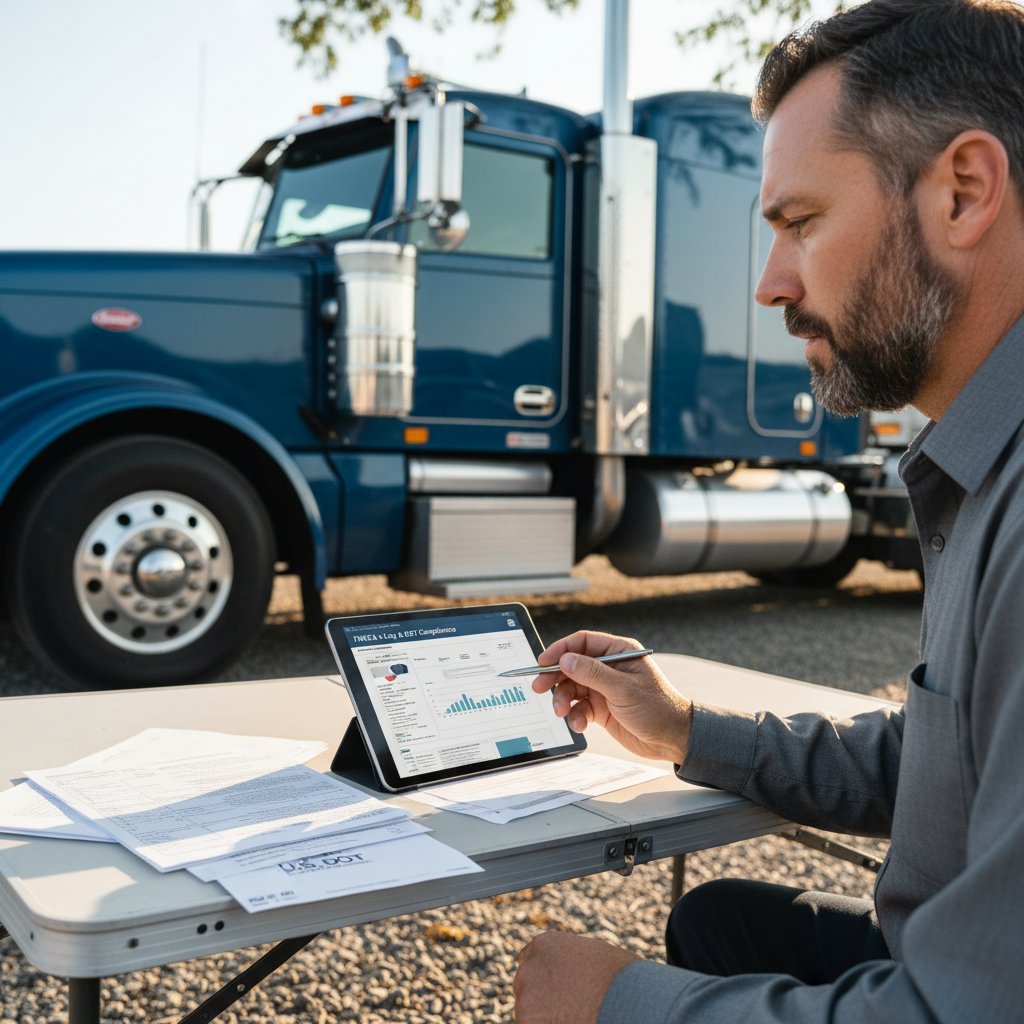
See 2026 trucking company insurance cost benchmarks by coverage type, truck type, authority age, and state—plus monthly & per‑mile budgeting. Get a quote.
In 2026, trucking company insurance cost commonly ranges from $12,000–$25,000+ per truck per year for carriers running their own authority, with new authorities often landing higher due to limited operating history. A realistic budget usually ends up around $900–$2,500+ per month per truck once you account for limits, cargo, radius, state, driver history, and loss runs.
If you price this wrong, it’s rarely “just an expensive premium.” It becomes a cash-flow problem (big down payment), a load-board problem (COI rejected because limits don’t match the rate confirmation), or a claim problem (coverage gaps right when the truck is down). For tractor-only benchmarks, see insurance cost for semi trucks in 2026.
Table of Contents
Reading time: 11 minutes
- 2026 Quick Benchmarks: Typical Cost Ranges
- Trucking Company Insurance Cost by Truck Type (Semi, Hotshot, Box Truck, Reefer)
- Cost Breakdown by Coverage Type (Line Items)
- New Authority vs Established Authority (What Changes)
- Why Trucking Insurance Is So Expensive (2025–2026 Drivers)
- State-by-State Variation: Why Location Matters
- What Impacts Your Quote the Most (Top Rating Factors)
- Budgeting: Monthly and Per‑Mile Targets
- How to Lower Trucking Company Insurance Cost (10+ Moves)
- 5‑Minute Self‑Estimator (Quick Pricing Method)
- Frequently Asked Questions
- Why Logrock (Practical, Quote-Ready Insurance Help)
- Conclusion & Get a Quote That Matches Your Operation
2026 Quick Benchmarks: What Trucking Companies Pay (Typical Ranges)
In 2026, for-hire carriers with their own authority most often land in the $10,000–$30,000+ per truck per year range depending on authority age, state, cargo, radius, driver history, limits, and loss runs.
The “cheap number” you hear at the truck stop usually isn’t apples-to-apples on limits, filings, deductibles, cargo, or where the truck actually runs. If you want a tighter tractor benchmark (and what drives the spread), start with insurance cost for semi trucks in 2026.
Typical annual & monthly cost per power unit (benchmarks)
Assumptions: For-hire trucking, common broker requirement of $1M auto liability, typical cargo limits (often $100,000, but varies), and a clean-ish record. New authority, hazmat, high-theft lanes, metro garaging, or poor loss runs can push pricing up fast.
| Operating model | Authority age | Typical annual range (per truck) | Typical monthly range | Notes |
|---|---|---|---|---|
| Own authority (for-hire) | New (Year 1) | $14,000–$30,000+ | $1,200–$2,500+ | Widest spread; underwriting is conservative |
| Own authority (for-hire) | Established | $10,000–$22,000+ | $900–$1,850+ | Can improve at renewal if claims-free |
| Leased-on (to a motor carrier) | Any | $3,000–$12,000+ | $250–$1,000+ | Carrier may provide primary liability; you may still pay other policies |
| Small fleet (2–5 trucks) | Mix | $11,000–$26,000+ | $900–$2,200+ | Fleet safety + driver turnover matters a lot |
Why “per month” is the number that can hurt you
Even when the annual premium looks manageable, the down payment + fees + first installment can turn insurance into a first-month gut punch. That’s the moment a budget breaks—right when fuel, repairs, and slow-paying brokers are also competing for the same cash.
Practical ask when comparing quotes: “What’s the down payment and the installment schedule?” not just “What’s the monthly?”
Trucking Company Insurance Cost by Truck Type (Semi, Hotshot, Box Truck, Reefer)
In 2026, insurers price trucking risk primarily by power unit type, operating radius, cargo/commodity, garaging territory, and loss history, not by the generic label “trucking.”
Same driver, same state, same limits—but a different unit (tractor vs hotshot) can create a totally different loss profile, which is why “my buddy pays X” is rarely transferable.
1) Semi truck insurance cost (tractor-trailer)
Definition: A Class 8 tractor pulling a trailer in for-hire operations, typically requiring higher limits and generating higher claim severity.
One serious wreck can create a liability loss that doesn’t care about your margins, your factoring rate, or your dispatch plan. If you’re budgeting a tractor, use the deeper tractor-only benchmark page: insurance cost for semi trucks in 2026.
2) Hotshot insurance cost (dually + flatbed)
Definition: A one-ton pickup (often a dually) hauling for-hire freight on a flatbed or lowboy under a motor carrier authority.
Hotshot claims still get expensive—especially with securement issues, partial loads, and mixed lanes. Don’t “downplay” radius or commodity to chase a cheaper quote; misclassification is a common reason claims get delayed or disputed.
3) Box truck / straight truck insurance cost
Definition: Straight trucks used for local and regional delivery (parcel, furniture, white glove, contractor work) where claim frequency can be higher due to dense traffic and dock exposure.
For city-heavy operations, your garaging ZIP and day-to-day congestion exposure can swing pricing as much as annual miles.
4) Reefer & specialized hauling insurance cost
Definition: Temperature-controlled operations where cargo sensitivity increases claim likelihood and claim size, especially from temperature excursions and theft.
Reefer cargo is where exclusions and “requirements” matter (tracking, temp logs, secure parking). Missing a requirement can turn a normal-looking claim into a painful coverage fight.
Cost Breakdown by Coverage Type (Line Items)
In 2026, two “same price” trucking policies can protect you very differently because the total premium is built from separate line items like auto liability, cargo, physical damage, general liability, and more.
This is where people get burned: they compare totals while buying different limits, deductibles, and exclusions. For a deeper view of why quotes vary so much, read commercial truck insurance rates (2026).
| Coverage | What it covers | When it’s required/typical | Main cost drivers | Common expensive mistake |
|---|---|---|---|---|
| Primary auto liability | Injury/property damage you cause | Always for for-hire; brokers often want $1M | Driver history, radius, state, loss runs, limits | Buying too low, then re-quoting after a broker rejects your COI |
| Motor truck cargo | Freight you’re responsible for | Common shipper/broker requirement | Commodity, limit ($100k vs $250k), theft lanes, reefer | Not understanding exclusions (unattended theft, theft controls, temp deviation) |
| Physical damage (comp/collision) | Your scheduled truck/trailer | Often required by lender/lessor; smart if truck value matters | Stated value, deductible, repair costs, garaging | Choosing a low deductible without cash reserves (higher premium) |
| Non-trucking liability / bobtail | Liability when off-dispatch (varies by policy) | Common for leased-on operators | Dispatch status rules, lease terms | Assuming you’re covered when you’re not (dispatch-status gaps) |
| General liability (GL) | Slip/fall, dock incidents, non-auto claims | Many brokers/warehouses require it | Ops, limits, prior claims | Skipping GL and losing access to facilities or customers |
| Trailer interchange | Damage to non-owned trailers in your care | If you pull other people’s trailers | Limits, trailer types, lanes | Not carrying it, then paying out-of-pocket for a trailer claim |
| Workers’ comp / Occupational Accident | Injury to employees/contractors | Depends on state + driver classification | Payroll, class code, claims | Misclassification leading to audits, back-premium, and penalties |
Why Trucking Insurance Is So Expensive (2025–2026 Drivers)
From 2025 to 2026, trucking premiums have been pressured by higher claim severity, rising repair costs, and cargo theft concentration in specific lanes and commodities.
1) Claims are more expensive (severity)
Even if you run safely, the industry gets priced on catastrophic losses. Medical costs, litigation expense, and verdict trends push the risk cost up across the market.
2) Repair costs keep climbing
Newer trucks include sensors, cameras, and ADAS components—helpful for safety, expensive to fix. Longer repair cycles also increase storage/tow and downtime-related claim costs.
3) Cargo theft and “network risk”
Theft isn’t random. Certain lanes, facilities, and commodities get hit repeatedly, and underwriters price that clustering. Controls like secure parking habits, tracking, and clear SOPs can materially improve how your risk looks.
State-by-State Variation: Why Your Location Changes Trucking Company Insurance Cost
In 2026, location impacts trucking company insurance cost through rating territory (garaging ZIP), traffic density, litigation climate, theft patterns, and regional medical and repair cost trends.
What actually changes by state
- Garaging address: Where the truck is parked most nights
- Operating radius and lanes: Where you actually run, not just your home state
- Severity environment: Congestion + crash outcomes
- Theft activity: Hot lanes and commodity targets
- Legal climate: Frequency/cost of litigation in certain venues
2026 state benchmark table (directional)
These are directional bands to illustrate spread, not guaranteed pricing.
| State | Typical relative cost | Why it often lands there |
|---|---|---|
| California | Higher | Dense traffic, severity trends, regulatory environment |
| Florida | Higher | Severity, weather losses, traffic density |
| Texas | Medium | Large market; metro lanes vs non-metro lanes can price very differently |
| Illinois | Medium-High | Chicago exposure can drive severity and frequency |
| Georgia | Medium-High | Atlanta congestion + severity trends |
| Ohio / Indiana | Medium | Major freight corridors; lane mix matters |
| Arizona / Nevada | Medium | Lane mix + metro exposure |
Pro tip: “Texas-based” doesn’t mean “Texas-priced.” A Texas garaging address with daily metro exposure can be priced closer to other high-severity territories.
What Impacts Your Quote the Most (Top Rating Factors Insurers Use)
In commercial trucking, the biggest pricing swings usually come from driver quality, operating radius/lane mix, commodity class, loss history, and prior coverage continuity.
If you want scenario-based examples (leased-on vs own authority, why two quotes can be worlds apart), see commercial truck insurance rates (2026).
1) Driver factors
- MVR: Violations and at-fault accidents
- Experience: CDL time and stability (turnover hurts fleets)
- Screening: Consistent hiring standards and file discipline
2) Operational factors
- Radius: Local vs regional vs long-haul
- Lanes: Where you actually run (metro vs non-metro)
- Cargo/commodity: General freight vs high value/higher hazard
- Miles: Annual mileage and consistency (including deadhead)
3) Equipment factors
- Truck value: Drives physical damage premium
- Safety tech: Dash cams/telematics can help in some programs
- Parking: Yard/secure lot vs street parking
4) Insurance structure choices
- Limits: Liability + cargo requirements
- Deductibles: Especially physical damage
- Pay plan: Pay-in-full vs financed installments
- Prior coverage: Lapses are expensive
Budgeting: Convert Your Premium Into Monthly and Per‑Mile Targets
Insurance budgeting is most accurate when you track monthly cash flow and insurance cost per mile instead of only looking at the annual premium.
Monthly budgeting (cash-flow truth)
Build your budget around the numbers that actually hit your bank account:
- Down payment: Often the biggest first-month shock
- Installment amount: The ongoing monthly/biweekly cost
- Fees/filings: If applicable for your setup
- Deductible reserve: Your “self-insurance” portion
A good gut-check is: can you handle the down payment and a deductible in the same quarter without missing repairs or payroll?
Per‑mile budgeting (simple formula)
Insurance cost per mile = Annual premium ÷ Annual miles
- $18,000/year ÷ 100,000 miles = $0.18/mile
- $18,000/year ÷ 60,000 miles = $0.30/mile
That’s why lower-mile operations can feel “overpriced”: insurance is largely fixed, and it gets spread over fewer loaded miles (deadhead makes it worse).
How to Lower Trucking Company Insurance Cost (10+ Practical Moves)
Lowering trucking company insurance cost in 2026 is usually about improving underwritability, standardizing quote inputs, and preventing claims, not chasing the lowest advertised monthly payment.
If you want a deeper cost-cutting playbook that’s built for real operations (not fantasy “cheap” coverage), read Affordable trucking insurance in 2026 (cost bands + how to pay less).
Before you shop (make yourself underwritable)
- 1) Screen drivers consistently: MVR and documented standards
- 2) Write a one-page safety SOP: speed, following distance, distraction, backing
- 3) Document maintenance: inspections, brakes, tires, dated repairs
- 4) Control your radius: don’t say “local” and then run cross-country
While you shop (quote structure that avoids rework)
- 5) Quote limits you actually need: broker rate confirmations drive this
- 6) Standardize inputs across carriers: same radius, cargo, limits, deductibles
- 7) Set deductibles strategically: raise PD deductible only if you keep cash reserves
- 8) Avoid duplicate coverage: especially common when leased-on
After you bind (prevent renewal shock)
- 9) Add dash cams/telematics: and keep the data organized
- 10) Report claims fast and clean: sloppy reporting increases severity
- 11) Avoid lapses: even short gaps can spike renewal pricing
- 12) Re-shop early: start 60–90 days before renewal, not 10
Shopping pro tip: If you’re trying to compare “cheap” options without missing a hidden limit or deductible, use an apples-to-apples method like Cheapest commercial auto insurance (2026): compare quotes apples-to-apples.
5‑Minute Self‑Estimator: How to Estimate Your Trucking Company Insurance Cost
A fast trucking insurance estimate in 2026 should start with your operating model, limits, radius, commodity, and authority age, then convert the premium into monthly and per‑mile targets.
This won’t replace a real quote, but it will keep you from planning your business on a fake number.
Step 1: Identify your model
- Own authority: you’re buying the full stack (liability + cargo + extras)
- Leased-on: confirm what the carrier provides vs what you must carry
Step 2: Choose limits that match your freight
- Liability: brokers commonly require $1,000,000; FMCSA minimums for for-hire interstate carriers vary by commodity under 49 CFR Part 387 (often $750,000 for general freight, higher for some classes)
- Cargo: commonly $100,000, but reefer/high-value may require more
Step 3: Apply “big driver” multipliers (directional)
- New authority: expect higher range
- Hazmat/high-value/high-theft lanes: higher range
- Metro garaging + heavy traffic: higher range
- Rough loss runs: higher range
Step 4: Convert to monthly and per-mile
- Monthly: include down payment and pay-plan reality
- Per-mile: annual premium ÷ realistic annual miles (loaded + deadhead)
Frequently Asked Questions
For carriers running their own authority in 2026, trucking company insurance cost often budgets around $900–$2,500+ per month per truck, with new authorities frequently landing higher.
The monthly figure depends on state, garaging ZIP, operating radius, cargo type, driver MVRs, loss runs, and chosen limits (many brokers require $1,000,000 auto liability and cargo limits commonly start near $100,000). Also plan for cash-flow reality: the down payment + fees can make month one significantly higher than later installments.
Insurance for a new authority in 2026 commonly falls in the $14,000–$30,000+ per truck per year range because underwriters price limited operating history as higher uncertainty.
New authorities are often evaluated more strictly on radius, lanes, commodity, driver quality, and prior coverage continuity, and even small inconsistencies can move the price. If you want a realistic comparison framework, review scenarios in commercial truck insurance rates (2026) and then request multiple quotes using identical inputs (same limits, deductibles, radius, and cargo).
It is often cheaper to be leased-on for primary auto liability because the motor carrier commonly carries the main liability policy, but leased-on operators still face meaningful insurance costs.
Many leased-on owner-operators still pay for physical damage (especially if financed), bobtail/non-trucking liability, and sometimes cargo coverage depending on the lease and the freight. The right answer comes from the lease agreement and dispatch status rules, because “covered” can change based on whether you’re under dispatch, deadheading, or using the truck personally.
The fastest way to lower trucking company insurance cost in 2026 without losing loads is to shop apples-to-apples on the limits brokers require (often $1,000,000 auto liability and cargo around $100,000+) and then reduce risk drivers like radius creep, weak driver screening, and preventable claims.
Practically, that means standardizing your quote inputs, tightening radius discipline, adding dash cams/telematics, and adjusting deductibles only if you maintain cash reserves for the deductible. For a step-by-step savings playbook that avoids “cheap-but-wrong” coverage, see Affordable trucking insurance in 2026 (cost bands + how to pay less).
Why Logrock: Practical, Quote-Ready Trucking Insurance Help
Logrock helps trucking businesses match insurance to real operations by quoting with consistent inputs and building coverage stacks that meet common broker requirements like $1M liability and appropriate cargo limits.
Most insurance headaches aren’t mysterious—they come from mismatched radius, unclear commodity descriptions, last-minute COI requests, and budgets that ignore down payments and deductibles. The goal is simple: get you quote-ready, contract-ready, and budget-ready so you can keep hauling without coverage surprises.
Conclusion: Get a Quote That Actually Matches Your Operation
Trucking company insurance cost in 2026 is manageable when you treat it like a controllable business input: choose the coverages your operation really needs, compare quotes apples-to-apples, and budget both monthly and per mile.
When you keep clean documentation, avoid lapses, and reduce preventable losses, you give yourself the best shot at better renewals—without buying coverage that fails a COI check or falls apart in a claim.
Key Takeaways:
- Own authority typically costs more because you’re buying the full coverage stack, not just add-ons.
- New authority pricing is higher because limited operating history gets priced as uncertainty.
- Your best budgeting tool is per-mile math plus a plan for down payment and a deductible reserve.
If you’re ready to compare real options, get multiple quotes using the same radius, commodity, limits, and deductibles so you can pick the best total cost—not just the lowest payment.