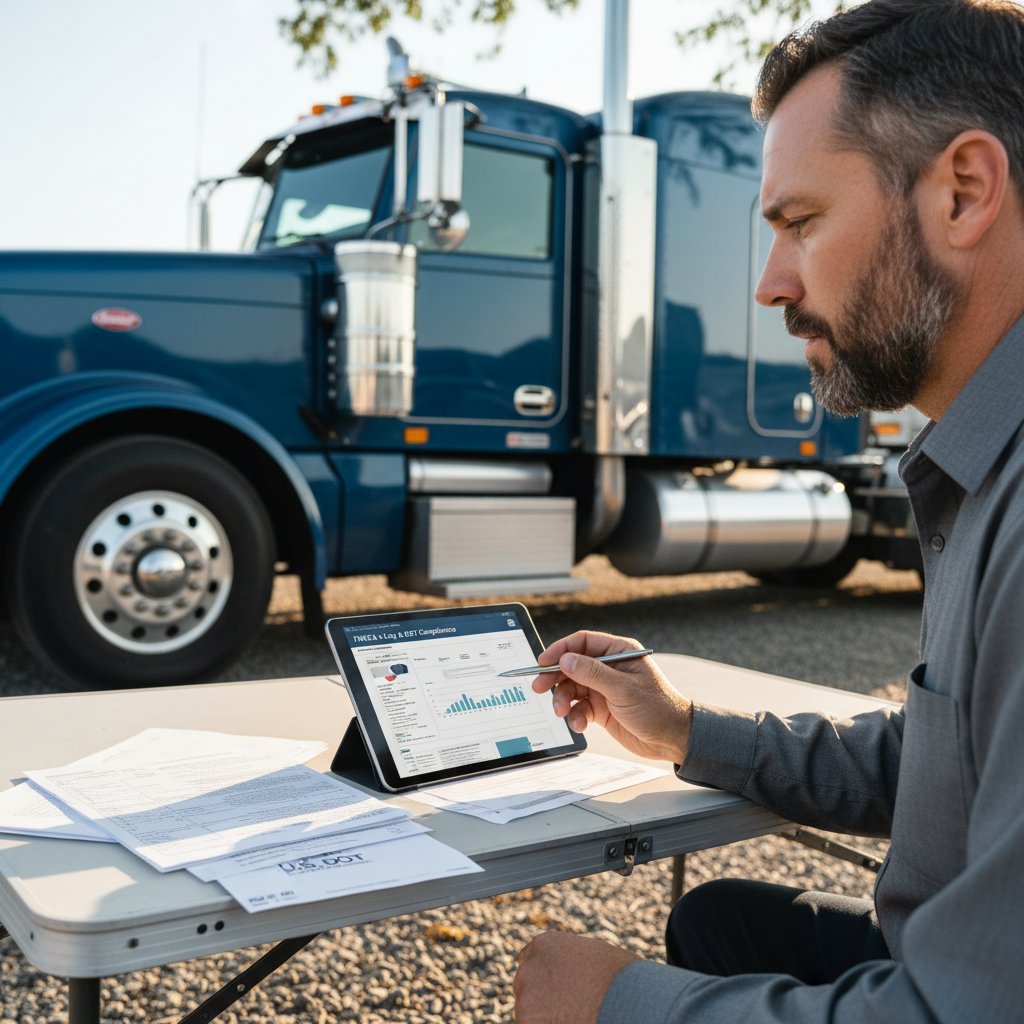
Learn what a trucking insurance agency does, what coverages they offer, typical cost ranges per truck, and how to choose the right agency—without buying junk you don’t need.
If you’re shopping for a trucking insurance agency, you’re usually doing it because one missed filing, one wrong endorsement, or one denied claim can park your truck and choke your cash flow. The right agency isn’t just “getting you a policy”—it’s keeping you loadable, compliant, and renewable.
Featured snippet answer: A trucking insurance agency helps owner-operators and fleets shop, place, and service commercial truck insurance through one carrier (captive) or multiple carriers (independent). To choose the right agency, focus on trucking specialization, carrier access, licensing in your states, fast COI/endorsement turnaround, clear explanations of exclusions and deductibles, and a real renewal and claims process—not just the cheapest quote.
Key Takeaways: Essential Trucking Insurance Agency Decisions
- Agency vs. carrier matters: the carrier underwrites and pays claims; the agency builds the submission, shops markets, and services COIs/endorsements.
- The “right” trucking insurance is contract-driven: broker/shipper requirements often matter as much as FMCSA minimums.
- Speed is money: if your agency can’t turn COIs and additional insured requests same-day, you’ll miss loads.
- Cost control is operational: clean MVRs, stable radius/cargo, accurate classifications, and proactive renewals beat last-minute price shopping.
Table of Contents
Reading time: ~11 minutes
- What Does a Trucking Insurance Agency Do?
- What Coverage Does a Trucking Insurance Agency Offer? (Comparison Table)
- Federal vs. State Trucking Insurance Requirements (And Filings)
- Owner-Operator vs. Fleet: What to Look For in an Agency
- How to Choose a Trucking Insurance Agency (2026 Checklist)
- How Much Does Trucking Insurance Cost Per Truck? (Benchmarks)
- What “Good Service” Looks Like: COIs, Claims, and Renewals
- Mini Case Studies: Picking the Right Agency
- Frequently Asked Questions
- Why Logrock (And Agencies Like It) Win for Small Carriers
- Conclusion & Next Steps
What Does a Trucking Insurance Agency Do?
A trucking insurance agency collects your operational details (equipment, drivers, radius, lanes, cargo, contracts) and turns them into an underwriter-ready submission, then services your policy with COIs, endorsements, and renewals after binding.
Think of the agency as your operator-side quarterback: you bring the truth about the operation, and they translate it into insurance language that markets can price without misclassifying you.
Agency vs. Carrier vs. Captive Agent (Quick Definitions)
- Insurance carrier: the company that underwrites the risk and (if covered) pays the claim.
- Independent trucking insurance agency: can quote multiple carriers/markets, which matters when your operation changes or your renewal jumps.
- Captive agent / direct writer: represents one carrier (or a narrow panel), which can be simpler but may limit options.
Why this matters: if your agency only has one market and that market doesn’t like your cargo class or new authority, you don’t have a quote problem—you have an access problem.
What a Good Agency Handles Beyond the Policy
- Underwriting negotiation: clarifies your operation so you don’t get misclassified (and re-rated later).
- Certificates of Insurance (COIs): issues COIs for brokers/shippers and handles additional insured/waiver wording when required.
- Endorsements: adds trailer interchange, increases cargo limits, adds an umbrella, and updates units/drivers.
- Renewal strategy: remarkets early so you’re not begging for options a week before expiration.
What Coverage Does a Trucking Insurance Agency Offer? (Comparison Table)
Most trucking insurance coverage stacks include auto liability, physical damage, cargo, and general liability, with optional add-ons like trailer interchange, bobtail/non-trucking liability, occupational accident, and umbrella/excess based on contracts and lease terms.
A lot of pain comes from mixing up three categories: required by law, required by contract, and nice-to-have. Your broker packet often matters as much as a minimum filing.
The Core Trucking Coverages (Most Common)
- Primary auto liability: pays for bodily injury/property damage you cause to others in an at-fault crash; this is the backbone of commercial truck insurance and what brokers look for first.
- Physical damage (comp/collision): fixes your truck after collision, theft, vandalism, weather, animal strike; financed trucks usually require it.
- Motor truck cargo: covers covered loss/damage to freight you’re responsible for—exclusions and theft conditions matter a lot.
- General liability: covers non-auto liability claims (for example, premises or loading-related incidents not tied to an auto accident).
- Trailer interchange: covers damage to non-owned trailers under an interchange agreement while in your care/custody/control.
Optional / Operation-Dependent Coverages (Where People Get Burned)
- Bobtail / non-trucking liability: applies when you’re not under dispatch; definitions vary by policy and lease situation.
- Occupational accident: common for owner-operators who don’t carry workers’ comp on themselves; provides medical/disability-type benefits after a covered injury.
- Downtime / rental reimbursement (where available): helps revenue continuity when your truck is down.
- Pollution / hazmat endorsements: relevant if you have spill exposure, hazmat, or certain petroleum operations.
- Umbrella / excess liability: adds limits above the underlying policies when a shipper/broker requires higher limits.
Trucking Insurance Coverage Comparison (Use This to Compare Quotes Apples-to-Apples)
| Coverage | What it covers (plain English) | Who needs it | Common limit range (typical contracts) | Common exclusions / “gotchas” |
|---|---|---|---|---|
| Primary auto liability | Injuries & property damage to others | Everyone for-hire | Often $1,000,000 in the broker world | Wrong use/classification can trigger coverage disputes |
| Physical damage | Damage to your truck (comp/collision) | Anyone protecting equipment; commonly lender-required | Based on stated value | High deductible can wreck cash flow after a loss |
| Motor truck cargo | Covered freight loss/damage you’re liable for | Most for-hire operations | Often $100,000+ depending on freight | Unattended theft rules, temperature exclusions, commodity restrictions |
| General liability | Non-auto liability claims | Most carriers with shipper/broker facility exposure | Often $1,000,000 | Doesn’t replace auto liability; different trigger |
| Trailer interchange | Damage to non-owned trailer in your control | Power-only; interchanging trailers | Often $20,000–$50,000+ | Only applies with an interchange agreement; not your own trailer |
| Bobtail / non-trucking liability | Liability when off-dispatch | Leased-on owner-ops; some independents | Varies | “Under dispatch” definitions are where claims get denied |
| Umbrella / excess | Extra liability limit above underlying policies | Higher-limit contracts; higher-risk operations | $1,000,000–$5,000,000+ | Must match underlying requirements; gaps if not scheduled correctly |
Practical tip: if you’re chasing affordable trucking insurance, don’t compare quotes until you’ve matched limits, deductibles, radius, cargo, driver list, and the key cargo/theft terms that actually apply to your freight.
Federal vs. State Trucking Insurance Requirements (And Filings)
FMCSA financial responsibility rules in 49 CFR Part 387 set interstate minimum public liability limits of $750,000 for non-hazardous for-hire carriers, $1,000,000 for certain oil/hazardous categories, and $5,000,000 for certain hazardous materials.
Even when the legal minimum is lower, many brokers and shippers still require $1,000,000 auto liability because that’s their risk standard—and “legal” and “loadable” aren’t the same thing.
Federal (FMCSA) Minimums: The Practical Take
- Minimums depend on what you haul: general freight vs. regulated hazmat categories can change required limits.
- Contracts often override minimums: broker packets commonly ask for $1M auto liability and specific COI wording.
- Your lane and commodity matter: some high-theft or higher-severity profiles push underwriting expectations up.
Filings (What They Are and Why They Matter)
Insurance filings are the proof-of-insurance documents that keep your authority and compliance standing intact, and missing filings can trigger delays or enforcement issues.
- BMC-91 / BMC-91X: liability filings submitted by the insurer for certain FMCSA-regulated operations.
- MCS-90 endorsement: a federal endorsement commonly attached to motor carrier auto liability policies that supports public financial responsibility; it is not a substitute for proper coverage and can include reimbursement obligations to the insurer in certain scenarios.
State-Specific Needs (Intrastate, PUC, Special Programs)
Intrastate operations and state permitting programs can require additional proof of insurance beyond FMCSA filings, and the exact requirements vary by state, commodity, and how your business is registered.
State-by-State Framework (Don’t Guess—Verify)
| State | Intrastate rules? | Typical proof/filings (varies) | Common contract limits seen | Notes |
|---|---|---|---|---|
| Texas | Often yes (if intrastate-only) | Proof for registration/permits may be required | $1M liability common | Confirm intrastate vs. interstate authority and where you actually run |
| Florida | Often yes | Proof may be required for state compliance | $1M liability common | Commodity and registration details can change expectations |
| Georgia | Often yes | Proof requirements can apply | $1M liability common | Verify if you truly stay in-state for intrastate-only programs |
| California | Often yes; enforcement can be strict | State-specific proof/filings may apply | $1M+ common | Expect documentation scrutiny; keep COIs/filings clean |
Owner-Operator vs. Fleet: What to Look For in an Agency
Owner-operators usually need speed and clarity (quoting, dispatch-ready COIs, deductible strategy), while fleets need structure and process (driver controls, program design, renewal discipline).
Both need trucking insurance—but the agency skillset that protects you is different once you add drivers, units, and contracts.
Owner-Operators (1 Truck): Priorities
- Fast quoting + straight talk: vague answers don’t help when you’re trying to book loads.
- Deductible strategy: a cheap premium with a brutal deductible isn’t “affordable” if one claim drains your maintenance account.
- COI speed: brokers will ask for additional insured and waiver wording with zero patience.
If you do hotshot (one-ton + trailer) or run partials, be extra careful with classification and cargo descriptions—bad descriptions create audit surprises and claim headaches.
Fleets (2+ Trucks): Priorities
- Driver onboarding & controls: underwriters care who’s in the seat and how you manage hiring.
- Program structure: scheduled vs. any auto, hired/non-owned auto, umbrella layering, and consistent units/drivers lists.
- Renewal discipline: fleets get punished for last-minute renewals and sloppy loss documentation.
How to Choose a Trucking Insurance Agency (2026 Checklist)
The best way to choose a trucking insurance agency is to verify trucking specialization, multi-carrier access, licensing where you operate, and a documented process for COIs, endorsements, claims advocacy, and renewals.
This is where you avoid the “cheap-now, pay-later” trap: the quote looks good until a broker rejects the COI wording or a claim hits an exclusion nobody explained.
The 10-Point Agency Selection Checklist
- They specialize in trucking (not generic commercial lines only).
- They can quote multiple markets (independent access beats one-carrier dependence).
- They’re licensed where you operate (and can service multi-state needs).
- They understand your cargo class (reefer vs dry van vs flatbed vs hotshot vs hazmat).
- They understand your radius (local, regional, long-haul—pricing changes fast).
- They can turn COIs/endorsements same-day (or they’re costing you loads).
- They explain exclusions plainly (theft, unattended vehicle, temperature, dispatch status).
- They have a claims advocacy process (who calls who; what happens in days 1–3).
- They’re transparent on payments/fees (premium finance terms, down payment, service fees).
- They have proof (reviews, tenure, carrier relationships, documented results).
Questions to Ask (Copy/Paste Script)
- “How many trucking carriers can you quote me with for semi truck insurance?”
- “What’s the most common reason claims get denied for my operation?”
- “How fast can you issue a COI and add a broker as additional insured?”
- “Do you remarket renewals 30–60 days out, or do you wait until the last week?”
- “If I change radius/cargo mid-year, what happens?”
How Much Does Trucking Insurance Cost Per Truck? (Benchmarks)
Commercial truck insurance pricing is typically quoted per truck per month and can range from roughly $700 to $2,500+ per month for many for-hire owner-operators, with new authorities often higher until they build time-in-business and clean loss runs.
There isn’t one “average” that helps you run your business; what helps is understanding the levers that move the number and comparing quotes with the same inputs.
Cost Benchmarks (Ranges + Why They Swing)
- Many for-hire owner-operators: often land in the hundreds to a few thousand dollars per month per truck, depending on state and risk profile.
- New authority / new venture: commonly priced higher due to underwriting uncertainty and limited history.
Payment Structure Matters (More Than People Admit)
- Pay-in-full: usually cheapest overall premium cost.
- Monthly premium financing: helps cash flow but adds finance charges and can change your true cost per mile.
What Underwriters Price (So You Can Improve It)
- Driver experience + MVR: tickets and preventable accidents are rate multipliers.
- Authority age: time-in-business reduces uncertainty over time (assuming clean losses).
- Cargo type: high-theft or high-value freight can spike pricing and tighten cargo terms.
- Radius and lanes: where you run matters as much as miles.
- Claims history/loss runs: frequency can hurt more than severity.
- Truck value + deductible: higher values and lower deductibles cost more.
- Safety tech: dashcams/telematics and documented controls can help in certain markets.
Pro tip: if you’re chasing the lowest down payment, you can accidentally pick the worst long-term cost structure. The goal is cost-per-mile stability, not “cheapest this week.”
What “Good Service” Looks Like: COIs, Claims, and Renewals
Good trucking insurance service is measured in operational uptime: same-day COIs and endorsements, clean claim reporting, and renewals started at least 30–60 days before expiration.
If service is slow, your truck can be “insured” but not “bookable,” which is a hidden way carriers lose revenue.
COIs & Endorsements (The “Don’t Miss the Load” Test)
- Issue COIs fast (often same-day in a working operation).
- Add additional insureds correctly and consistently.
- Handle waiver wording without endless back-and-forth.
- Keep a paper trail for broker audits and compliance checks.
If you’re waiting 24–48 hours for a COI update, you’re donating revenue.
Claims Support (What an Agency Can—and Can’t—Do)
Agencies don’t pay claims—carriers do—but a strong agency improves outcomes by helping you report correctly, document early, and keep communication tight between adjusters, repair, and your operation.
Renewals (Where You Win or Lose a Year of Profit)
- Start renewal strategy 30–60 days out.
- Update driver lists, radius, and cargo honestly to avoid audit surprises.
- Fix classification mistakes early—re-rates can hurt more than the original premium.
Mini Case Studies: Picking the Right Agency
Real-world trucking insurance outcomes usually improve when the agency tightens the submission, matches coverage to contracts, and has a repeatable COI/endorsement process that doesn’t break during dispatch.
Case Study 1: New Authority Owner-Operator (Dry Van, Interstate)
Problem: high new venture pricing; broker requires fast COI and specific additional insured wording.
Agency move: clean submission, tight radius/cargo description, realistic deductible strategy, and a same-day COI process.
Outcome: coverage placed without dispatch delays; renewal plan built early to shop improved markets around months 9–10.
Case Study 2: Small Fleet (3 Trucks) Adding a Contract
Problem: shipper requires higher limits and specific certificate language; fleet needs consistency across units and drivers.
Agency move: structured limits and endorsements correctly, clarified umbrella needs, and documented driver controls for underwriting.
Outcome: contract met without last-minute chaos; fewer compliance headaches; cleaner renewal narrative.
Frequently Asked Questions
A trucking insurance agency is a licensed insurance business that shops, places, and services trucking policies with one carrier (captive) or multiple carriers (independent) based on your equipment, drivers, radius, lanes, cargo, and contracts.
In practice, they build your submission for underwriters, bind coverage, issue COIs, handle additional insured and waiver wording, process endorsements, and start renewals early. The carrier is the company that underwrites the risk and pays covered claims, but the agency can prevent expensive mistakes by matching classifications and exclusions (like cargo theft conditions and “under dispatch” wording) to how you actually operate.
Choose a trucking insurance agency that specializes in trucking, can quote multiple markets, is licensed where you operate, and can issue COIs and endorsements the same day when dispatch is waiting.
Then pressure-test process, not promises: ask how they handle claims in days 1–3, whether they remarket renewals 30–60 days before expiration, and what exclusions commonly trigger denied claims for your cargo and dispatch setup. If they can’t explain your radius, cargo class, deductibles, and key exclusions in plain English, you’ll likely pay for it later through re-rates, broker rejections, or claim disputes.
Most trucking insurance agencies can place primary auto liability, physical damage (comp/collision), motor truck cargo, general liability, trailer interchange, bobtail/non-trucking liability, occupational accident, and umbrella/excess liability.
The right mix depends on your contracts and operating reality: whether you’re for-hire, whether you pull non-owned trailers under interchange agreements, whether you’re leased on and considered “under dispatch,” and what limits brokers require (often $1,000,000 auto liability even when minimums differ). Cargo is where many operators get burned, so you should review theft conditions, unattended vehicle rules, temperature requirements, and commodity exclusions before you assume two quotes are the same.
Yes, you may need state-specific trucking insurance proof or filings if you operate intrastate or participate in a state permitting or regulatory program, because requirements vary by state, commodity, and registration.
Interstate for-hire carriers generally follow FMCSA financial responsibility rules (49 CFR 387), but intrastate rules can add separate proof-of-insurance steps. Even when federal rules apply, contracts often require higher limits than the legal minimum (commonly $1,000,000 auto liability), plus specific certificate language such as additional insured and waiver of subrogation wording. The safest move is to verify requirements for the states you actually operate in—not guess based on what another carrier told you.
Trucking insurance cost per truck commonly ranges from about $700 to $2,500+ per month for many for-hire owner-operators, with new authorities often higher until they establish time-in-business and clean loss runs.
The price is driven by driver MVRs and experience, authority age, cargo type, lanes and radius, claims frequency, truck value, and deductible choices. To compare quotes fairly, keep the inputs identical: same liability limit, same cargo limit, same deductibles, same radius, same driver list, and the same cargo/theft terms. If any of those change, you’re not comparing the same product, even if the premium looks “close.”
You lower trucking insurance premiums without increasing denial risk by improving what underwriters price (drivers, operations, and documentation) while keeping classifications and exclusions aligned with how you actually run.
That means clean MVRs and hiring controls, stable lanes/radius, accurate cargo descriptions, and deductibles you can pay tomorrow—not just on paper. Many markets also respond to safety programs such as dashcams/telematics when they’re paired with documented coaching and enforcement. The biggest leverage often comes from process: a strong submission and early remarketing 30–60 days before renewal, because last-minute renewals reduce options and increase the chance you accept a policy with ugly cargo or dispatch wording.
Why Logrock (And Agencies Like It) Win for Small Carriers
Small carriers don’t lose money because they “picked the wrong company name”; they lose money when coverage, classifications, and contract requirements don’t match their real operation at claim time or when a broker audits the paperwork.
A trucking-focused agency earns its keep by translating your operation into underwriting language, keeping you compliant without drowning you in paperwork, and protecting your ability to keep rolling with fast COIs, clean endorsements, and renewal planning.
Conclusion & Next Steps: Get a Quote Package That Won’t Blow Up Later
The best trucking insurance agency is the one that keeps your truck loadable, compliant, and insurable at renewal—not the one that wins on a shaky quote that collapses when you need a COI or file a claim.
Key Takeaways:
- Compare quotes apples-to-apples: limits, deductibles, radius, cargo, drivers, and cargo/theft terms.
- Treat COI speed and endorsement accuracy like uptime—because it is.
- Start renewals early (30–60 days) so you have leverage and options.
If you want a clean quote package, bring your MC/DOT (or pending), operating radius, cargo, truck value, and driver info. You’ll get a straight answer on what you need—and what you can skip.
Related Reading
- Trucking insurance requirements by state (intrastate vs. interstate) and filings explained
- How to compare trucking insurance quotes apples-to-apples
- COI and endorsement best practices for owner-operators and small fleets