
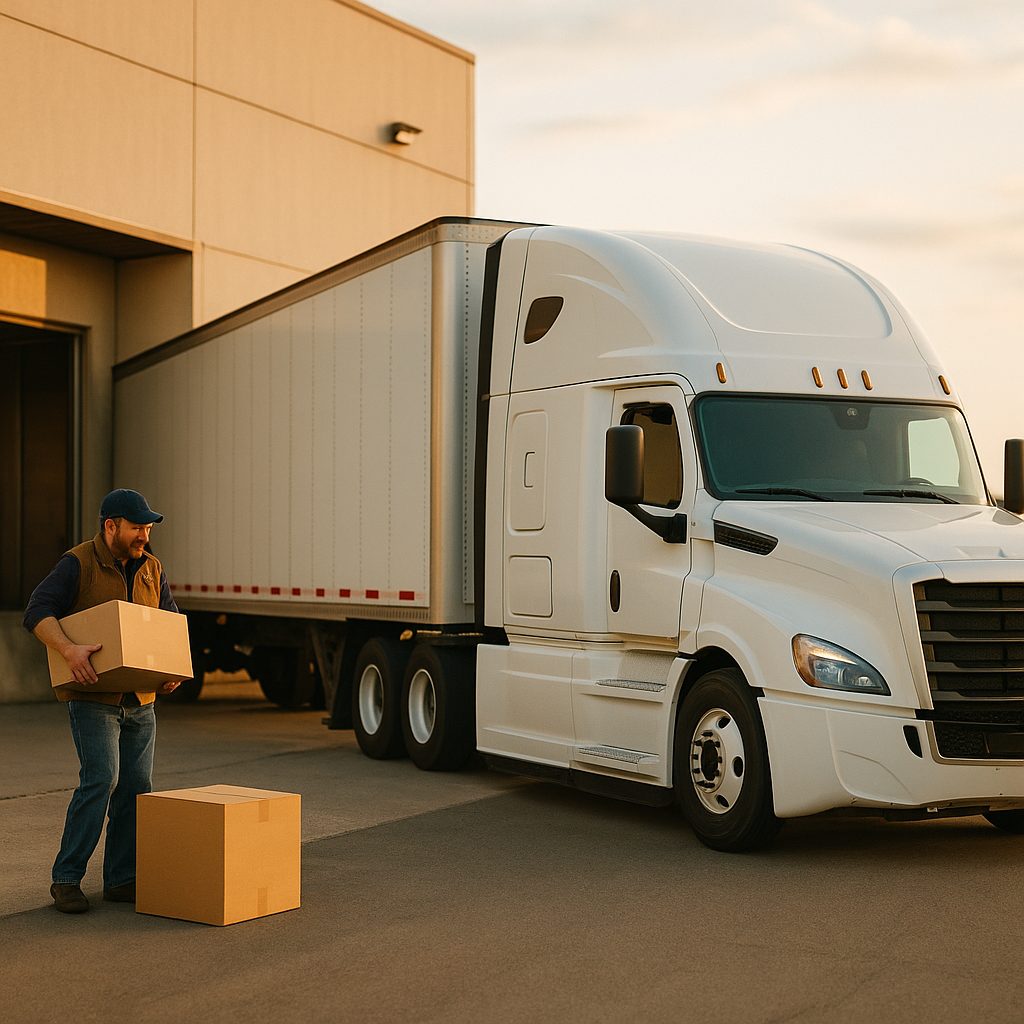
What does motor truck cargo insurance cover? Learn covered perils, key exclusions, limits/deductibles, and claim-proof tips to avoid denied cargo claims—get a quote.

What does motor truck cargo insurance cover? In most policies, it covers cargo you’re legally liable for while it’s in your care, custody, and control, for losses caused by specific perils like collision/overturn, fire, theft, vandalism, and (sometimes) certain weather—but only when your form, endorsements, conditions, and sub-limits line up with the loss.
If you’re hauling for brokers, one denied cargo claim can wipe out a month of profit—or get you kicked off a lane. For the broader overview, start with Logrock’s guide to motor truck cargo insurance.
Key Takeaways: Essential Motor Truck Cargo Coverage
- Motor truck cargo insurance covers freight you’re legally liable for while it’s in your care, custody, and control—typically for perils like collision/overturn, fire, theft, and some weather (policy form matters).
- The fine print is where claims get denied: unattended theft conditions, packaging/securement disputes, late reporting, and commodity exclusions are common.
- Limits and sub-limits can cap your payout hard. A “$100K cargo policy” can still pay far less on electronics, unattended theft, or reefer spoilage.
- Documentation is part of the coverage. No photos, no seal notes, no temp logs, no police report—expect pushback.
Table of Contents
Reading time: 9 minutes
- Motor Truck Cargo Insurance in Plain English
- What Motor Truck Cargo Insurance Typically Covers (Common Perils)
- Endorsements That Change What’s Covered
- What Motor Truck Cargo Insurance Does NOT Cover
- Limits, Deductibles, and Sub-Limits: How Claims Pay
- Documentation Checklist (What Adjusters Ask For)
- Top Claim-Denial Triggers (And How to Avoid Them)
- Who Needs Motor Truck Cargo Insurance (And Is It Required?)
- Real-World Examples: “Is This Covered?”
- Frequently Asked Questions
- Why Logrock (Practical Insurance Help for Working Trucks)
- Conclusion & Next Step
Motor Truck Cargo Insurance in Plain English
Motor Truck Cargo (MTC) insurance is coverage that can pay for cargo loss or damage you’re legally liable for while freight is in your care, custody, and control, subject to policy terms, exclusions, deductibles, and sub-limits.
Think of it as: “If I’m on the hook for this load, does my cargo policy help me pay it?”
1) What it is (and what it isn’t)
What it is (plain English): Coverage for cargo loss or damage while the freight is in your care, custody, and control—usually tied to “in transit” and your legal liability.
What it isn’t:
- Primary auto liability (injuries/property damage you cause to others with the truck)
- Physical damage (your truck/trailer)
- General liability (slip-and-fall / non-auto business claims)
Why it’s essential: Cargo disputes quickly turn into chargebacks, claim letters, withheld settlement, and “we’ll use another carrier next time.”
2) Cargo coverage vs. liability coverage (quick comparison)
| Coverage Type | Protects | What it pays for |
|---|---|---|
| Motor Truck Cargo | The freight | Damaged/stolen cargo (subject to limits/conditions) |
| Primary Liability (commercial truck insurance) | The public | BI/PD you cause with the truck |
| Physical Damage (semi truck insurance add-on) | Your equipment | Truck damage from collision/comp/theft |
What Motor Truck Cargo Insurance Typically Covers (Common Perils)
Most motor truck cargo policies cover either named perils (only listed causes of loss) or broad/all-risk (covers most causes of loss unless excluded), and the difference changes what claims get paid.
Either way, these are the most common “yes, usually” items—with conditions.
3) Covered causes of loss (most common)
Perils are the causes of loss that trigger a cargo claim, and they’re defined in your policy wording (not your broker’s assumptions).
Typically covered perils (most policies):
- Collision / overturn (wreck, rollover, jackknife leading to freight damage)
- Fire / explosion
- Theft / robbery (often with strict conditions—see denial triggers)
- Vandalism / malicious mischief
- Some weather (hail/wind/water intrusion can be tricky—proof matters)
Pro tip: Ask your agent: “Is my form named-perils or all-risk—and can you show me the theft conditions and commodity sub-limits in writing?”
4) Common “extra” coverages you may see (sometimes included, often endorsed)
Some policies offer options like debris removal/cleanup, earned freight, or re-delivery/extra expense, but these are often endorsements with tight wording and separate limits.
- Debris removal / cleanup: After an accident, paying for cleanup related to the covered loss
- Earned freight: The money you would’ve made hauling the load
- Re-delivery / extra expense: Costs to finish delivery after a covered loss
5) Where coverage applies (the “when” and “where” that matters)
Many cargo policies are built around “in transit” and care, custody, and control, which can create gaps when freight is parked, stored, or dropped for extended time.
- Coverage may start only after you’ve accepted the load (paperwork + control).
- Coverage may end when freight is delivered and signed.
- Storage time limits may apply at a terminal/yard.
If you drop a loaded trailer in a lot for a weekend, don’t assume you’re still “in transit.”
Endorsements That Change What’s Covered
Endorsements are policy add-ons that expand, restrict, or add conditions to motor truck cargo insurance coverage, and they often control the exact claims that get denied (loading/unloading, reefer spoilage, and unattended theft).
This is where “I thought I was covered” usually lives.
6) Is loading/unloading covered under motor truck cargo insurance?
Direct answer: Sometimes—but many policies exclude or limit loading/unloading unless your form defines it as part of transit or you add an endorsement.
A forklift puncture at the receiver can become a finger-pointing contest: the receiver says it’s on you, the broker chargebacks you, and the insurer asks whether it happened during covered transit and who had control.
Pro tip: If you do driver assist or hands-on work, build a simple routine: pickup photos, securement shots, and delivery receipt notes before you leave the dock.
7) Does reefer breakdown coverage apply in motor truck cargo policies?
Direct answer: Usually only if you have a reefer breakdown/spoilage endorsement, and the endorsement often has its own sub-limit and deductible.
- Temperature logs / telematics
- Setpoint history
- Proof it was a mechanical breakdown (not “door left open,” “unit off,” or “wrong setpoint”)
- Maintenance records to support breakdown vs. neglect
If you haul food or pharma, “looks fine” doesn’t matter—if the receiver rejects it on temp, you’ve got a claim.
8) Unattended theft / protective safeguards (the silent claim killer)
Many cargo forms cover theft only if protective safeguards are met, such as locked doors, keys not left in the unit, evidence of forced entry, time limits, or parking in approved/secured locations.
Miss the condition and the claim can get denied—even if the load is gone.
What Motor Truck Cargo Insurance Does NOT Cover
Motor truck cargo insurance exclusions are policy sections that remove coverage for specific commodities, causes of loss, or situations, even when freight is damaged or stolen.
Every cargo policy has exclusions, and the fastest way to get burned is hauling a commodity you’re not actually covered for.
9) Common exclusions you should expect (or plan around)
Common exclusions / denial areas:
- Certain high-value commodities unless scheduled (electronics, alcohol, tobacco, pharma, jewelry—varies by form)
- Improper packing / inadequate dunnage (shipper-pack vs. carrier responsibility gets messy)
- Improper load securement (shifting due to insufficient securement)
- Spoilage without a covered cause (no mechanical breakdown, wrong setpoint, door open)
- Wear and tear / gradual deterioration / inherent vice
- Infestation/contamination (often excluded or tightly controlled)
- Illegal/contraband
- War/terrorism (common standard exclusion language)
Pro tip: Keep dispatcher/broker notes clean: commodity description, value, seal number, pickup/delivery times. Sloppy paperwork creates disputes.
Limits, Deductibles, and Sub-Limits: How Cargo Claims Pay
A cargo policy’s limit is the maximum payable for a covered loss, a deductible is your out-of-pocket amount per claim, and a sub-limit is a smaller cap that can reduce payout even when the loss type is covered.
This is where cash flow lives, because a “$100K cargo policy” can still pay far less than $100K.

10) Limit vs. shipment value (why underinsuring is common)
Your cargo limit is the maximum the policy pays per covered loss—often per vehicle/per occurrence—so a load that exceeds your limit can leave you paying the difference.
Real-world example: You carry a $100,000 cargo limit, you accept a $165,000 load, and you roll it over for a total loss. Best-case (if covered), you’re still exposed for the gap—plus salvage/disposal arguments.
11) Deductibles (how they really hit your pocket)
Motor truck cargo deductibles commonly range from about $1,000 to $5,000 per claim, and some forms use higher deductibles for theft or refrigerated spoilage.
- Flat deductible: $1,000 / $2,500 / $5,000 (examples)
- Peril-specific deductible: higher for theft or reefer spoilage
- Endorsement deductible: separate deductible for add-ons
A cheap premium with a big deductible can turn small claims into self-pay—and still count against your loss history if it’s reported.
12) Sub-limits (the fine print that surprises owner-operators)
Sub-limits are smaller caps inside your main limit (for example, a $25,000 unattended theft sub-limit inside a $100,000 cargo policy).
- Unattended theft sub-limit
- Electronics sub-limit
- Reefer spoilage sub-limit
- Alcohol/tobacco sub-limit
- Water damage sub-limit
Business reality: Sub-limits are how you end up with a “$100K cargo policy” that only pays $10K–$25K on the exact type of loss you just had.
Documentation Checklist (What Adjusters Ask For)
Cargo claims are documentation-driven, and insurers typically request the BOL/rate confirmation, photos, pickup/delivery records, and incident reports to confirm cause of loss, condition, and legal liability.
If you don’t have proof, you don’t have leverage.
13) Core documents for almost any cargo claim
- Bill of Lading (BOL) + rate confirmation
- Pickup and delivery timestamps (ELD/dispatch screenshots help)
- Photos/video: freight condition, securement, inside trailer, damage, packaging, pallets
- Delivery receipt with exceptions noted immediately
- Emails/texts with broker/shipper about the incident
14) Theft claims (what adjusters want)
- Police report (file it immediately)
- Location details (address, lot name, camera info)
- Proof of forced entry if applicable (photos)
- Key/lock/seal details (seal number at pickup and what was found after)
15) Reefer/spoilage claims (what makes or breaks it)
- Temperature logs/telematics
- Setpoint history (show it was set correctly and stayed on)
- Maintenance records for the unit
- Receiver rejection paperwork + disposition (salvage/destruction)
Pro tip: If your reefer has app-based tracking, screenshot it right away; telematics data can be hard to recover later.
Top Claim-Denial Triggers (And How to Avoid Them)
Most cargo claim denials trace back to unmet theft conditions, late reporting, excluded commodities, missing proof of condition, securement disputes, or missing reefer temperature documentation.
These are the patterns that keep showing up in denied or reduced claims.
16) The “Trigger → Why denied → Prevention” list
- Unattended theft condition not met → Policy requires locked/secured/forced entry/approved parking → Park smart, document location, lock/seal, keep receipts/camera info
- Late reporting → Notice wasn’t “prompt” → Report immediately and notify broker/shipper the same day
- Commodity mismatch → Excluded freight or value exceeded declared → Don’t take the load until coverage matches commodity + value
- No proof of condition at pickup → Adjuster argues “pre-existing damage” → Photo freight and note exceptions at pickup
- Securement dispute → Claim blames shifting/insufficient straps/bars → Take securement photos and keep a simple checklist
- Reefer data missing → No logs means no proof → Save logs, setpoint screenshots, and maintenance info
Who Needs Motor Truck Cargo Insurance (And Is It Required?)
Most for-hire motor carriers carry cargo coverage because brokers and shippers commonly require it by contract, with frequent minimums around $100,000 for general freight and $250,000+ for higher-value commodities (requirements vary by customer).
17) Who typically needs it
If you’re hauling freight for others (for-hire), cargo coverage is practically mandatory to stay eligible for brokered loads. Hotshot setups may need cargo too, depending on what you haul and who you haul for—especially under your own authority.
18) Federal vs. state vs. contract requirements (the honest answer)
- For most general freight carriers, cargo insurance is more often a contract requirement than an FMCSA filing requirement.
- Household goods carriers have specific cargo/valuation rules and requirements.
- Certain commodities and state rules can change expectations.
Bottom line: Don’t ask “is it required?” Ask “what does my broker/shipper require, and what would bankrupt me if it happened?”
Real-World Examples: “Is This Covered?”
Coverage outcomes depend on the cause of loss, policy form, endorsements, exclusions, and conditions like theft safeguards, prompt notice, and documentation.
19) Scenario checks (Facts → Likely outcome → Why)
- Rollover damages palletized dry goods → Often covered → Collision/overturn is a common covered peril (subject to deductible/limit).
- Forklift punctures freight during unloading → Gray area → Depends on whether loading/unloading is treated as covered transit and who had control.
- Trailer dropped in an unsecured lot overnight; no forced entry → Often denied/reduced → Unattended theft conditions and sub-limits are common.
- Reefer unit fails; temp rises; logs show breakdown → Often covered if endorsed → Reefer breakdown/spoilage endorsement + proof + sub-limit/deductible control the payout.
Frequently Asked Questions
These FAQs answer common questions about what motor truck cargo insurance covers, what it excludes, and what conditions, endorsements, and limits typically decide whether a claim pays.
Motor truck cargo insurance typically covers freight you’re legally liable for while it’s in your care, custody, and control, for losses caused by perils like collision/overturn, fire, theft, vandalism, and some weather (depending on your policy form and endorsements). Coverage usually applies while “in transit” and can be limited by theft conditions, storage time limits, and documentation requirements. The payout is also controlled by your per-occurrence limit, your deductible, and any commodity or peril sub-limits (for example, electronics or unattended theft). For a broader overview of cargo coverage basics, see Logrock’s motor truck cargo insurance guide.
Motor truck cargo insurance commonly does not cover excluded commodities (often high-value items unless scheduled), spoilage without a covered cause, improper packaging, improper securement, inherent vice/wear and tear, contamination/infestation, illegal/contraband shipments, and losses outside defined “in transit” or allowed storage time limits. Even when a peril like theft is covered, the claim can be denied if protective safeguards aren’t met (locked doors, approved parking, forced-entry evidence, or time limits), depending on your form. Always check commodity exclusions and sub-limits because a $100,000 limit can be reduced dramatically for specific cargo types or scenarios.
Loading and unloading are sometimes covered, but many motor truck cargo policies exclude or limit these activities unless “loading/unloading” is defined as part of covered transit or added by endorsement. In practice, coverage often turns on who had control and who caused the damage (shipper/receiver forklift vs. driver assist), plus whether the cargo was still in your care, custody, and control. If you do driver assist, pallet jack moves, tailgate work, or touch freight at the dock, ask for the exact wording in writing and document pickup condition and delivery exceptions immediately to reduce disputes.
Reefer breakdown/spoilage coverage usually applies only if you have a specific endorsement, and it often carries its own sub-limit and deductible separate from the base cargo limit. Most reefer claims rise or fall on documentation: temperature logs/telematics, setpoint history, receiver rejection paperwork, and proof the loss resulted from mechanical breakdown rather than doors left open, unit shut off, or an incorrect setpoint. If you haul food, produce, or pharmaceuticals, confirm the endorsement, the spoilage sub-limit, and the exact reporting requirements before you accept temperature-sensitive loads.
Owner-operators and motor carriers hauling freight for others typically need motor truck cargo insurance because brokers and shippers commonly require proof of coverage before tendering loads. Contract minimums often start around $100,000 for general freight and can be $250,000+ for higher-value commodities, depending on the customer and lane. Even when it isn’t mandated by a specific filing, cargo coverage protects you from paying out-of-pocket for damaged or stolen freight when you’re legally liable. If you’ve changed commodities, lanes, or customers, your cargo form and endorsements should be reviewed.
You typically need a cargo limit that matches the maximum value load you haul (not your average), while also meeting broker and shipper contract requirements. If you occasionally haul “spiky” values—electronics, spirits, appliances, seasonal retail—underinsuring is common and can leave a large uninsured gap after a total loss. You should also verify sub-limits that can shrink payouts, such as unattended theft, electronics, alcohol/tobacco, and reefer spoilage, plus separate deductibles for theft or endorsements. A limit only matters if it applies to your commodity and the conditions are satisfied.
Cargo insurance may cover unattended theft only if you meet the policy’s protective safeguard conditions, which can include locked doors, keys not left in the unit, evidence of forced entry, parking in secured/approved locations, and time limits on how long the truck can be left unattended. Unattended theft is a frequent denial or sub-limited payout scenario because many policies add a separate unattended theft sub-limit that is lower than the main cargo limit. To protect the claim, document where you parked, keep receipts, note cameras/security, keep seal and lock details, and file a police report immediately.
Why Logrock (Practical Insurance Help for Working Trucks)
Most cargo claim problems come from mismatched endorsements, commodity exclusions, and sub-limits—not from whether “collision, fire, theft” appear on a website checklist.
Most insurance content stops at “collision, fire, theft.” That’s not where owner-operators get hurt.
- Matching limits and sub-limits to your real load values
- Making sure your COI matches what brokers actually require
- Spotting denial triggers before you find out the hard way at claim time
If you want affordable trucking insurance, the cheapest premium isn’t the win—the claim that actually pays is.
Conclusion: Build Cargo Coverage for Your Freight (Not a Generic Checklist)
Motor truck cargo insurance only works as intended when your covered perils, endorsements, conditions, and sub-limits match the freight you actually haul and the way you actually operate.
Cargo coverage can be a lifesaver, but only when it’s built for your lanes and commodities—on paper and in real claims.
Key Takeaways:
- Coverage is about legal liability and “care, custody, and control,” not just “stuff got damaged.”
- Exclusions, theft conditions, and sub-limits are where most surprises live (and where payouts shrink).
- Proof matters: photos, seals, temp logs, and police reports often decide whether a claim gets paid.
If you’ve changed lanes, commodities, or brokers in the last 6–12 months, a quick coverage check can prevent the next claim from turning into a denial.
Related Reading: Motor Truck Cargo Insurance (Logrock).





