Learn what makes a van a commercial vehicle: GVWR thresholds, business use, federal CMV rules, and commercial truck insurance basics. Get a quote.
If you run a van for work, commercial truck insurance and compliance rules can kick in faster than most people expect. A van becomes a commercial vehicle based on (1) how it’s used, (2) its GVWR/GCWR rating, (3) what/who it carries (passengers or hazmat), and (4) your state’s registration rules—and getting it wrong can lead to tickets, downtime, or denied claims.
Featured snippet (When is a van legally a commercial vehicle?): A van is typically considered a commercial vehicle when it’s used for business and/or meets commercial motor vehicle (CMV) triggers—commonly 10,001+ lbs GVWR/GCWR in interstate commerce, passenger-for-hire, 16+ passengers, or placarded hazmat. States can also require commercial plates/registration even below federal thresholds.
Key Takeaways: Essential “Commercial Van” Rules
- The 10,001-lb rule matters: If your van is 10,001+ GVWR/GCWR and you run interstate commerce, federal CMV rules can apply (USDOT number, compliance, etc.).
- “Commercial” doesn’t always mean “CMV”: Your state may label a van “commercial” for plates, taxes, or parking even if it’s under 10,001 lbs.
- Business use changes insurance fast: Personal auto is built to exclude many business exposures; hauling freight, tools, or deliveries often belongs on a commercial/trucking policy.
- Passengers and hazmat can override weight: For-hire passengers or placarded hazmat can make a van “commercial” even at lower weights.
Table of Contents
Reading time: 8 minutes
- The Fast Definitions: “Commercial Vehicle” vs “CMV”
- Federal CMV Triggers That Make a Van “Commercial”
- State and City Rules: Registration, Plates, and Local Enforcement
- Real-World Van Scenarios (So You Can Class Yours Correctly)
- Insurance: When You Need Commercial Truck Insurance for a Van
- Compliance Snapshot: DOT Numbers, ELD, IFTA/IRP (Van Edition)
- Your Questions Answered: “People Also Ask” FAQs
- The Logrock Difference: Insurance Built for Business Owners
- Conclusion & Get a Quote Without the Runaround
The Fast Definitions: “Commercial Vehicle” vs “CMV” (They’re Not Always the Same)
A “commercial motor vehicle (CMV)” under FMCSA rules (commonly referenced in 49 CFR 390.5) is triggered by factors like 10,001+ lbs GVWR/GCWR in interstate commerce, passenger thresholds (9+ for-hire or 16+ not-for-hire), or placarded hazmat.
Most confusion comes from mixing up two different concepts:
- Commercial vehicle (common/DMV/local meaning): often means “used for business” or “registered as commercial,” which affects plates, taxes, parking, and local enforcement.
- Commercial Motor Vehicle (CMV) (federal/FMCSA meaning): a specific definition used for federal safety rules (USDOT number, inspections, HOS/ELD situations, driver qualification files, and more).
How to classify your van (fast, in the right order)
- Check the door sticker: confirm the van’s GVWR (and your GCWR if you tow).
- Interstate or intrastate: crossing state lines can change which rules apply.
- Cargo or passengers: property-for-hire, passenger-for-hire, and hazmat are common triggers.
- State registration: your DMV may require commercial plates even under federal CMV thresholds.
- Insurance match: policy language and underwriting must match your actual use (this is where claim problems start).
For a quick insurance baseline, start with a commercial auto vs. personal auto breakdown.
Federal CMV Triggers That Make a Van “Commercial” (FMCSA Rules That Actually Matter)
FMCSA’s CMV framework (often cited from 49 CFR 390.5) commonly applies to vans used in interstate commerce when they meet triggers like 10,001+ lbs GVWR/GCWR, passenger thresholds (9+ for compensation or 16+ not for compensation), or placarded hazardous materials.
For van operators, the biggest “yes/no” lines are below.
1) GVWR/GCWR Threshold: 10,001+ lbs (Common Van Breakpoint)
- What it is: If your van (or van + trailer) is rated 10,001 lbs or more and you’re operating in interstate commerce, you can be treated as a CMV under federal rules.
- Why it matters: This is where you may need a USDOT number, face roadside inspections, and inherit compliance costs you didn’t price into your lane.
- Practical tip: Enforcement and underwriting care about the rating (door sticker GVWR/GCWR), not your “empty weight.”
2) Passenger Rules: 9+ For Compensation or 16+ Not for Compensation
- For compensation: designed/used to carry more than 8 passengers (including driver) for compensation (commonly summarized as 9+) can trigger CMV rules.
- Not for compensation: designed/used to carry more than 15 passengers (including driver) (commonly summarized as 16+) can trigger CMV rules.
- Why it matters: Passenger operations are high-severity exposure, and misclassification can lead to non-renewal or coverage disputes.
3) HazMat: Placarded Materials Can Make a Van a CMV Fast
- What it is: hauling hazardous materials that require placards can put you into CMV territory even if you’re “just a van.”
- Why it matters: hazmat errors can trigger fines and can sharply limit your insurance options (and pricing) later.
Quick CMV Trigger Table (Van-Friendly)
| Trigger | Typical “Yes” Line | What it can change for you |
|---|---|---|
| Weight | 10,001+ GVWR/GCWR (often in interstate commerce) | USDOT number, safety compliance, inspections |
| Passengers (for hire) | 9+ including driver | Higher insurance scrutiny, compliance |
| Passengers (not for hire) | 16+ including driver | CMV status, driver requirements |
| Hazmat | Placarded | Hazmat compliance + insurance complexity |
State and City Rules: Registration, Plates, and Local Enforcement
State DMVs can require commercial registration for business-use vans even below the federal 10,001-lb CMV threshold, and city ordinances can add parking and road restrictions regardless of whether you’re a federal CMV.
Even if you’re not a federal CMV, your state (and certain cities) can still treat your van as “commercial” for practical reasons:
- Commercial registration/plates
- Higher registration fees
- Parking restrictions (often the trap in dense metros)
- Local signage/marking rules (varies by jurisdiction)
1) “Commercial Plates” Often Follow Use, Not Just Weight
Many states tie “commercial registration” to business use (deliveries, carrying tools/materials for a trade, transporting property for compensation). If you’re plated wrong, it can mean stops, citations, and delays that wreck your schedule.
2) City Rules Can Be Stricter Than the State (Parking Is the Trap)
Some cities treat cargo-configured or marked vans as commercial for parking and restricted roads. If you work downtown, tickets aren’t “bad luck”—they’re overhead you should price into your jobs.
3) One State’s “Personal Use Exemption” Doesn’t Protect You Everywhere
If you cross state lines routinely, assume your operation will eventually be judged by a stricter interpretation. That’s another reason your registration, filings (if any), and insurance classifications need to match your real use.
Real-World Van Scenarios (So You Can Class Yours Correctly)
Most insurers and DMVs treat a van as commercial when it’s used to earn income or transport property for compensation, even if the van is under 10,001 lbs GVWR and never triggers federal CMV status.
These setups are where owner-operators and small fleets get burned.
Scenario 1: Cargo Van Deliveries (Courier / Expedited Freight)
- Likely commercial? Yes—business use is obvious.
- Likely CMV? Depends on GVWR/GCWR and interstate commerce; many cargo vans are under 10,001 GVWR, but not all (and towing can change GCWR fast).
- Insurance takeaway: If you’re hauling for others, don’t try to force-fit a personal auto policy.
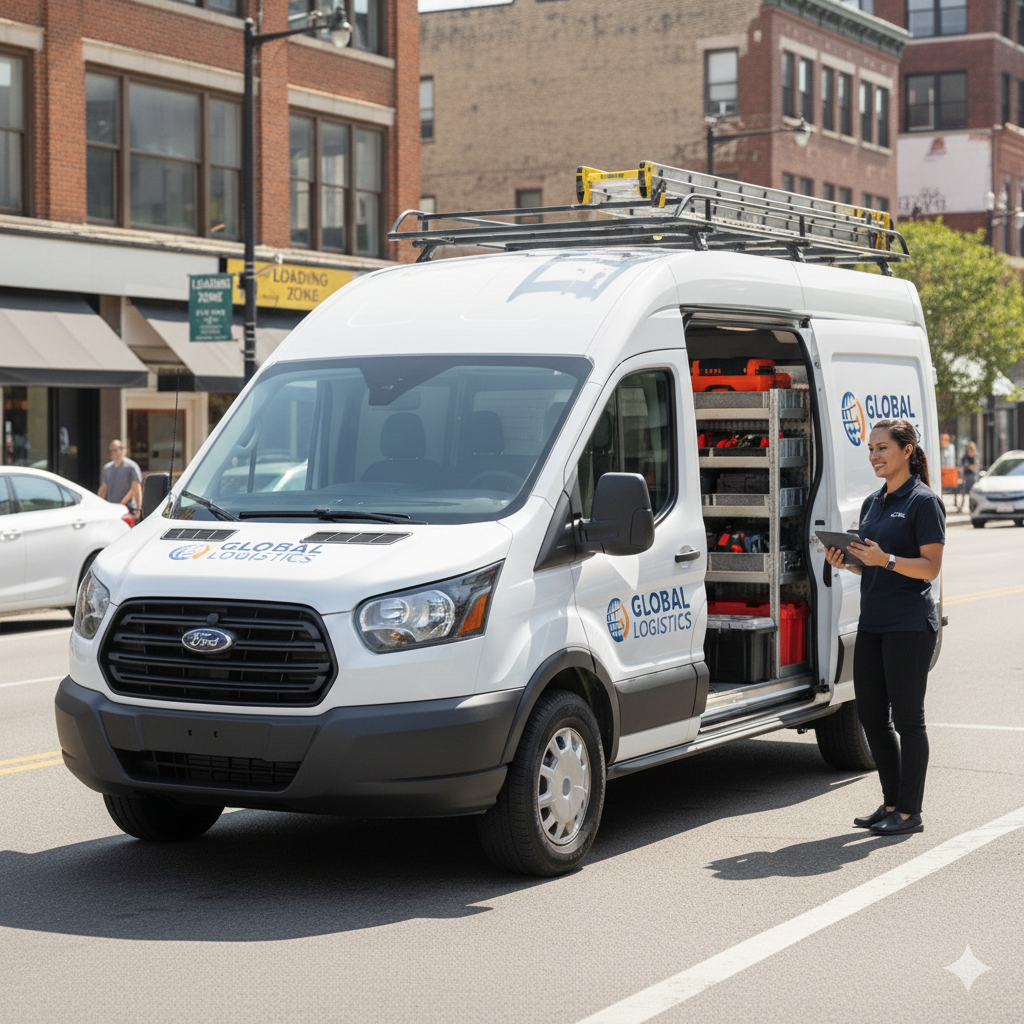
Scenario 2: Contractor Van (Tools, Ladders, Job Sites)
- Likely commercial? Almost always (business use in a trade).
- Likely CMV? Usually not unless weight/towing pushes you over thresholds or you’re in regulated interstate work.
- Insurance takeaway: You may not need “semi truck” coverage, but you still need business-appropriate auto and (often) tools/equipment coverage.
Scenario 3: Passenger Van / Shuttle Work
- Likely commercial? Yes if for compensation.
- Likely CMV? Potentially, based on passenger count (9+ for-hire or 16+ not-for-hire).
- Insurance takeaway: Passenger work is not the place to chase the lowest premium; classification and limits matter.
Scenario 4: Camper Conversion / “It’s Personal Use” Claim
- Likely commercial? Not if it’s truly personal recreation and registered/used that way.
- Where people get burned: “Mostly personal” plus occasional paid loads or side-gig deliveries can trigger claim disputes.
- Pro tip: If you’re mixing uses, disclose it. Policy language is what controls the claim, not intentions.
Scenario 5: Van + Trailer (Small Hotshot-Style Setup)
Towing can push you over GCWR thresholds quickly, and brokers may still expect “truck-like” documentation (COIs, cargo limits, clean filings where required). If you’re hauling property for others, you’re often closer to commercial truck insurance territory than you think.
Insurance: When You Need Commercial Truck Insurance for a Van (And When You Don’t)
Commercial truck insurance for a van commonly means commercial auto liability plus trucking-specific coverages (like cargo), and interstate for-hire carriers often carry at least $750,000 public liability under FMCSA financial responsibility rules (49 CFR Part 387) depending on operation and cargo.
This is the part that hits your wallet—and protects your business when something goes sideways.
1) Personal Auto vs. Commercial Auto vs. Trucking Insurance (Van Operators)
- Personal auto: built for commuting and personal errands; many business uses are excluded or restricted.
- Commercial auto: built for business-owned/use vehicles (contractors, service vans, deliveries).
- Trucking insurance / commercial truck insurance: often refers to commercial auto plus trucking-specific needs like cargo and filings when you’re hauling for-hire.
Bottom line: If you’re hauling for money and your policy doesn’t match your operation, a claim can turn into a coverage dispute at the worst possible time.
2) Cargo Coverage: The “Broker Won’t Load You Without It” Problem
If you’re moving other people’s freight, cargo coverage is usually non-negotiable. Even if the load is light, claims can be expensive (electronics, medical supplies, high-value parts), and many brokers won’t dispatch without a COI showing adequate cargo limits.
- Practical tip: Match cargo limits to what you actually haul. Overbuying is wasted premium; underbuying can cost you the customer.
3) Liability Limits: Minimum Legal vs. Minimum to Stay in Business
Legal minimums and “market minimums” aren’t the same. Shippers, brokers, and job sites often require higher limits than bare state minimums, and higher limits can be a gate to better-paying loads.
4) Physical Damage, Rental Reimbursement, and Downtime Risk
A van down for 10 days isn’t an inconvenience—it’s a revenue shutdown. Make sure your physical damage (comp/collision) fits the van’s value and a deductible you can absorb, and consider how you’ll handle replacement/rental and downtime.
To compare coverage pieces, see a plain-English guide to commercial truck insurance coverages.
Compliance Snapshot: DOT Numbers, ELD, IFTA/IRP (Van Edition)
Interstate operations that meet CMV triggers—commonly 10,001+ lbs GVWR/GCWR, placarded hazmat, or certain passenger thresholds—often need a USDOT number and must follow applicable FMCSA safety rules under 49 CFR Parts 390–399.
Not every van operation turns into a compliance headache, but you need to know where the lines are.
1) Do I Need a USDOT Number for a Van?
- Often yes if you’re interstate and meet CMV triggers (commonly 10,001+ GVWR/GCWR, placarded hazmat, or certain passenger operations).
- Intrastate rules vary by state; some states require DOT numbers at lower thresholds for certain operations.
2) Do I Need an ELD in a Van?
ELD requirements depend on whether you’re subject to hours-of-service (HOS) rules. Many lighter van operations fall outside HOS; even when you’re inside, exemptions can apply (such as short-haul or limited-use scenarios).
- Practical tip: Confirm whether your specific operation is under HOS/ELD rules before you spend money on hardware and subscriptions.
3) IFTA/IRP: Usually Not for Vans, Until You Start Scaling Weight/Distance
IFTA and IRP typically show up as you scale into heavier, apportioned operations. Many cargo vans never touch them, but towing heavier or moving into bigger units can change your admin burden quickly.
Your Questions Answered: “People Also Ask” FAQs
Yes, a van is typically considered a commercial vehicle when it’s used for business, even if it’s under the federal 10,001 lbs GVWR/GCWR CMV threshold. If the van also meets CMV triggers commonly summarized from FMCSA rules (often cited from 49 CFR 390.5)—like 10,001+ lbs in interstate commerce, 9+ passengers for compensation, 16+ passengers not for compensation, or placarded hazmat—you can face DOT-style compliance and insurance requirements. The clean approach is to separate (1) state registration/plates, (2) federal safety compliance, and (3) insurance policy classification.
10,001 lbs GVWR/GCWR is the common federal breakpoint that can make a van a CMV in interstate commerce under FMCSA-style rules (often cited from 49 CFR 390.5). Below 10,001 lbs, your van can still be considered “commercial” by your state DMV and by insurers based on business use (deliveries, hauling tools/materials, transporting property for compensation). The best action step is simple: read the door sticker GVWR, confirm whether you ever operate interstate, and make sure your registration and insurance match what you actually do.
Usually no, because a CDL is typically required at higher weight classes (commonly 26,001+ lbs GVWR/GCWR) or with certain passenger/hazmat triggers. Most cargo vans (Sprinter/Transit/ProMaster class) are under CDL thresholds. However, “no CDL” doesn’t mean “no rules”: a non-CDL van operation can still be a CMV when it crosses the 10,001+ lbs GVWR/GCWR line in interstate commerce or triggers passenger/hazmat rules, which can bring DOT compliance expectations and stricter insurance underwriting.
A van often needs commercial registration when it’s used primarily for business (deliveries, hauling tools/materials for a trade, transporting property for compensation) or when it meets your state’s weight/configuration rules—even if it’s under the federal 10,001-lb CMV threshold. Because registration rules are state-specific, the correct move is to confirm with your DMV and then align your insurance to the same use and ownership structure. If you want a paperwork-and-coverage gut check, use a commercial vehicle insurance checklist before you renew or switch carriers.
Commercial use for insurance generally means the van is used to earn income or support business operations—deliveries, courier routes, hauling freight, transporting customers, or jobsite-to-jobsite work with tools and materials. Even part-time commercial use can matter because personal auto policies are not priced or written for many for-hire exposures. If you haul property for others, you’ll usually be quoted in a commercial/trucking lane that may include liability, cargo, and (where required) appropriate filings so your COIs match what brokers and customers expect.
The Logrock Difference: Insurance Built for Business Owners
Many brokers require a COI showing $1,000,000 auto liability and often $100,000 cargo before dispatch, even for cargo vans, so classification and certificates have to be right the first time.
Most insurance conversations waste time because they ignore how you actually operate: tight margins, detention that doesn’t pay, parking headaches, and the reality that one claim can wipe out a month’s profit.
- Correct classification: the #1 fix for bad quotes and claim headaches.
- Coverage built around your use: local delivery, courier/expedite, contractor use, towing.
- Clean COIs: so you can book freight without back-and-forth.
If your van operation is evolving toward heavier freight or higher liability, it’s smart to build a plan now instead of bouncing from “cheap” to “uninsurable” after one rough year.
Conclusion & Get a Quote Without the Runaround
A van becomes a commercial vehicle based on business use and common CMV triggers like 10,001+ lbs GVWR/GCWR in interstate commerce, 9+ for-hire passengers, 16+ not-for-hire passengers, or placarded hazmat—plus whatever your state requires for registration and plates.
If you’re hauling freight, making deliveries, or towing, the policy has to match the operation so a claim doesn’t turn into a disaster.
Key Takeaways:
- Don’t confuse state “commercial plates” with federal CMV rules—you may have one without the other.
- The 10,001+ GVWR/GCWR line is a common tipping point for DOT-style compliance in interstate commerce.
- If you haul for money, align your policy and COIs with your real operation—“affordable” only matters if it actually pays.
When you’re ready, get a quote built around your real routes, loads, and risk profile.
Related Reading: Commercial Auto vs Personal Auto: What Actually Changes?, Commercial Truck Insurance Coverages Explained, and Insurance Checklist for Delivery and Courier Vans.