
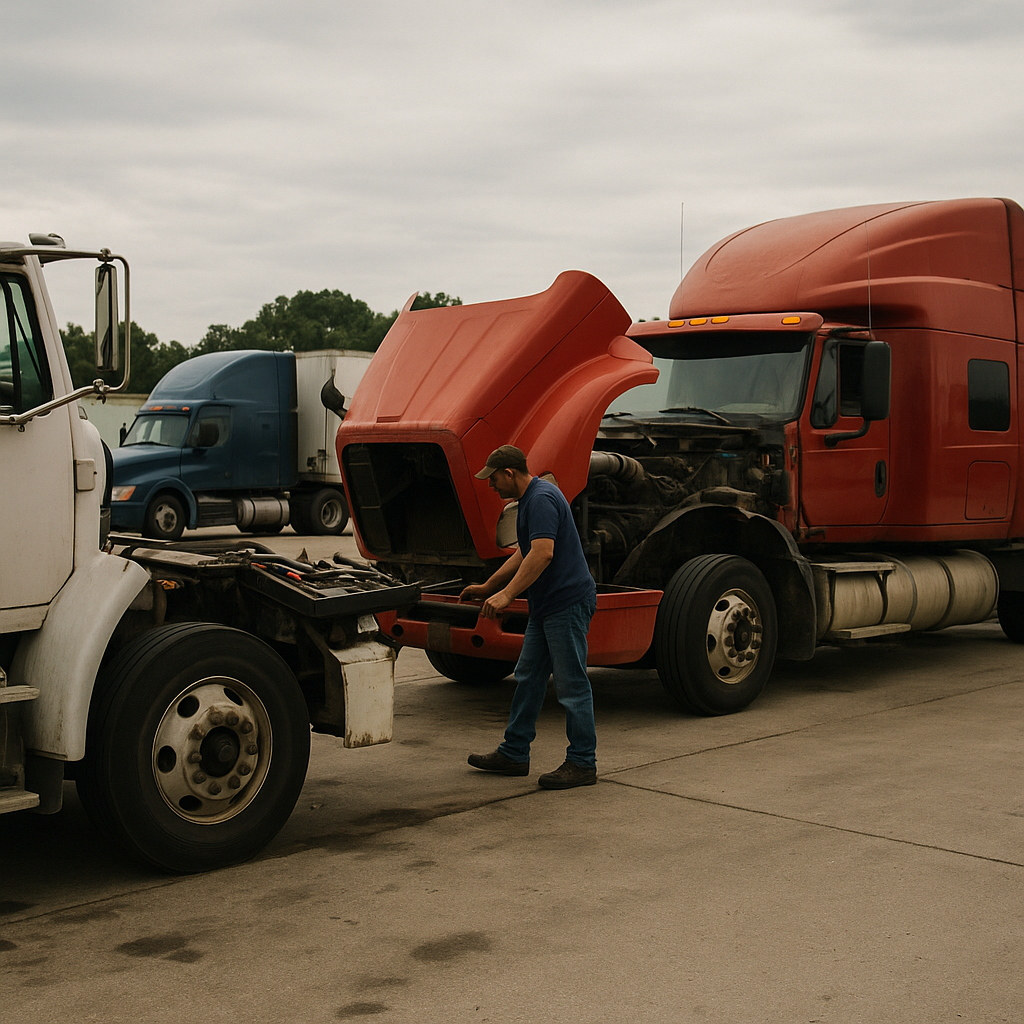

Tow truck driver jobs can look simple on a job board, but the real work changes a lot by truck type, license, schedule, and market. If you’re comparing openings, the smart move is to separate light-duty from heavy-duty work, CDL from non-CDL roles, and real entry-level jobs from vague recruiting ads.
Tow Truck Driver Jobs in 2026: What the Role Actually Includes#
Tow truck driver jobs usually mean local, fast-response work moving disabled, wrecked, impounded, or improperly parked vehicles. The title changes by employer, but most openings fall into a few buckets: light-duty towing, roadside assistance, rollback work, and heavy-duty recovery. Your license, the truck, and the calls the company handles decide what the job really is.
A tow truck operator is the driver who loads, secures, and transports vehicles using towing equipment. A wrecker operator usually means the same thing, though some companies use it more for recovery and accident work. A rollback driver operates a flatbed-style tow truck with a tilting bed used to load vehicles onto the truck rather than towing them behind it.
Common job titles and what they mean#
Job titles overlap more than most listings admit. One company may post “tow truck driver,” another may say “wrecker operator,” and a third may advertise “roadside assistance driver” even though all three jobs include basic towing.
A heavy-duty towing role handles larger commercial vehicles like tractors, buses, or other large units that need specialized equipment and training. A light-duty towing role focuses on passenger cars, pickups, and smaller vehicles. Some employers blend both, but many shops split them because the equipment and skill level are different.
Light-duty, heavy-duty, and roadside assistance differences#
Roadside assistance means service calls like lockouts, jump starts, tire changes, and fuel delivery, with some towing mixed in. These jobs can feel more customer-service heavy and may involve high call counts, short stops, and constant dispatching.
Heavy-duty work is a different animal. It usually means tougher recoveries, more complex scenes, more risk, and more odd-hour calls. Light-duty roles are often the most realistic starting point for new drivers.
CDL vs non-CDL tow work#
A CDL, or commercial driver’s license, is the license required to operate certain commercial motor vehicles under federal and state rules. FMCSA guidance and 49 CFR Part 383 control when a CDL is required for commercial driving roles, and towing jobs can fall on either side depending on the truck’s configuration and how the employer operates it. For background on commercial driver licensing, use FMCSA and the federal rules under Part 383.
Some tow truck driver jobs are non-CDL, especially in lighter local service fleets. Others require a CDL because of vehicle weight, air brakes, or the type of heavy-duty equipment in use. Don’t assume the title tells you the answer; check the listing for the truck class, license requirement, and actual day-to-day duties.

How to Find Local Tow Truck Openings Without Wasting Time#
The best way to find tow truck driver jobs is to search locally first, not broadly. Towing is a local business built around dispatch areas, police rotation zones, storage yards, highway corridors, and service contracts. If you only search national job boards by title, you’ll miss how different one local opening can be from another.
Where to search first#
Start with searches by city, county, and nearby highway corridors rather than just “tow truck driver jobs near me.” A job near a busy interstate may offer very different call volume than one in a smaller town, even if the title and pay format look similar.
Look for clues about who the company serves. Police impounds, roadside clubs, private property enforcement, dealerships, and commercial recovery all create different workdays.
How to read local listings#
Read past the headline. If a listing mentions a storage yard, dispatch software, police rotation, motor club work, or a defined roadside coverage area, that’s useful detail. If it says almost nothing beyond “great pay” and “must be reliable,” treat it carefully.
Before applying, it’s smart to verify the company is a real operating business. If the employer handles commercial vehicles or runs as a regulated carrier, you may be able to check basic company status through SAFER, FMCSA’s public lookup system.
What to look for in part-time, full-time, and shift work#
Tow work often means nights, weekends, holidays, and on-call rotation. A “full-time” listing might really mean a long shift plus after-hours call coverage, while a “part-time” role could still require weekend availability.
That’s where people get burned. A pay claim can sound strong until you realize the schedule depends on overnight dispatches, long standby windows, or constant phone coverage. If you’re unsure how to sort through job claims versus real operating details,
No-Experience Tow Truck Jobs: Real Entry Paths vs Recruiting Language#
No-experience tow truck driver jobs are real, but “no experience” rarely means no skills, no work history, and no screening. Most employers mean no prior towing experience specifically, while still expecting a solid driving record, decent judgment, and the ability to learn equipment and safety procedures quickly.
What “no experience” usually means#
A listing may say no experience required but still prefer applicants who can back a truck, work outdoors, follow directions, and stay calm with customers. Many shops will train the right person, but they still want someone dependable who can show up on time and handle pressure.
That matters because towing is hands-on from day one. You’re dealing with traffic, awkward vehicle positions, winches, chains, straps, and customers who may already be upset before you arrive.
Training, licensing, and ride-along expectations#
Entry-level training often starts with ride-alongs, yard practice, and supervised calls. Some employers use helper or apprentice-style roles first, especially if they want you to learn loading procedures, scene safety, and paperwork before running calls alone.
Even beginner roles may require a clean motor vehicle record, a medical card in some setups, or employer-specific safety training. Check whether the posting clearly says training is provided, or whether “experience preferred” quietly means you’ll be competing against drivers who’ve already done the work.
When beginner roles are realistic#
The most realistic entry path is usually light-duty towing or mixed roadside assistance. Those jobs often give new hires a chance to learn customer interaction, dispatch flow, and basic equipment handling before moving into harder recovery work.
If a listing promises top-tier pay and says no experience is fine, slow down and read it twice. Real beginner jobs usually explain the training path instead of acting like anyone can jump straight into every kind of call.
How Much Tow Truck Drivers Make: Pay by Role and Market#
Tow truck driver pay varies most by role, market, schedule, and call volume. A light-duty local driver in a small town may earn very differently than a heavy-duty recovery operator covering a busy metro interstate. Advertised pay can also be hourly, commission-based, per-call, or some mix of the three.
The U.S. Bureau of Labor Statistics is useful for broad wage context, but local towing income can swing more sharply than many standard driving jobs because dispatch volume and specialty work matter so much.
What affects pay most#
The biggest pay drivers are usually the kind of truck, the kind of calls, and how often those calls come in. Heavy-duty towing, recovery work, night coverage, and high-volume roadside service tend to carry higher earning potential than basic daytime local towing.
Experience matters too. A driver trusted with difficult recoveries, larger equipment, or police-rotation calls may bring in more than someone handling simple transport runs.
Why location matters#
Metro areas often have more accidents, more impounds, denser traffic, and more contract work. Highway-heavy regions may create steadier breakdown and recovery volume. Smaller markets can still be solid, but earnings may depend more on a few major accounts or seasonal spikes.
That means the best-paying market isn’t just “big city equals better.” It’s the mix of demand, competition, schedule, and the kind of calls the company actually gets.
How to read hourly pay, commission, and weekly earnings claims#
Hourly pay is the easiest format to understand, but it may not tell the whole story if overtime or on-call work drives the real income. Commission or per-call structures can look attractive, but they depend heavily on dispatch consistency and route density.
Weekly earnings claims deserve extra scrutiny. Ask whether the number assumes overtime, weekend work, overnight calls, or a top producer’s results. Your actual pay depends on your market, role, schedule, experience, and the company’s call volume, not just the headline in the ad.
| Role type | Typical pay driver | Common schedule pattern | Main variable |
|---|---|---|---|
| Light-duty towing | Hourly or blended pay | Local shifts with on-call | Daily call volume |
| Roadside assistance | Per-call or blended pay | High-turn short calls | Dispatch density |
| Rollback driver | Hourly or hourly plus call pay | Mixed local and scheduled runs | Vehicle mix |
| Heavy-duty operator | Higher hourly or specialty pay | Nights, weekends, recovery calls | Skill and equipment level |
| Owner-operator | Revenue minus operating costs | Self-managed or contract dispatch | Expenses and downtime |
Can You Make Good Money With a Tow Truck?#
Yes, you can make good money with a tow truck, but it depends on the role, the hours, the market, and whether you’re an employee or an owner-operator. The stronger-paying jobs usually come with more responsibility, tougher schedules, more physical work, or more specialized equipment. It’s not a simple case of getting a tow truck and watching the money roll in.
What drives higher earning potential#
Higher earnings usually come from one or more of these: heavy-duty calls, recovery work, overnight coverage, steady dispatch volume, or a market with strong highway demand. Skills that are harder to replace also tend to support better pay.
That said, those jobs often ask more from you. You may work longer shifts, deal with harder scenes, or stay available when most people are off the clock.
Owner-operator versus employee realities#
An owner-operator is a self-employed driver who owns or controls the truck and runs the business side as well as the driving. That’s a very different math problem from collecting a paycheck as an employee.
Employee pay is simpler to compare because the truck, fuel, maintenance, and most operating costs belong to the company. Owner-operator revenue can look bigger on paper, but net take-home depends on fuel, maintenance, downtime, tires, equipment, and insurance.
What higher pay usually costs in time and physical effort#
In towing, higher pay often costs time first. Nights, weekends, weather exposure, and middle-of-the-night recoveries are common tradeoffs.
If you’re thinking about the business side, don’t just ask what the truck can gross. Ask what you’ll actually keep after operating costs and the time required to stay available.
What CDL Tow Truck Jobs Are Best for Higher Weekly Pay?#
The CDL tow truck jobs with the best shot at higher weekly pay are usually heavy-duty towing, recovery work, and specialized high-demand dispatch roles. Those jobs can sometimes reach very strong weekly numbers, but that’s not standard and usually depends on long hours, difficult calls, and steady volume. If you see a claim like $3,000 a week, treat it as possible in the right setup, not typical everywhere.
Which CDL towing roles tend to pay more#
CDL-heavy-duty work tends to sit at the top because the truck is larger, the calls are harder, and fewer drivers can do the job well. Recovery work, commercial breakdown response, and specialty hauling tied to towing can also push earnings higher.
Those openings may require more than just holding a CDL. Employers may want proven recovery experience, equipment knowledge, and the ability to work odd hours without much hand-holding.
Why $3,000 a week usually means specialized work#
That kind of weekly pay often assumes a strong market, high call volume, overtime, and lots of after-hours work. In some cases, it may also reflect a contractor-style arrangement rather than a straight W-2 employee role.
So when you see a big weekly number, ask what has to go right for that number to happen. If the answer is nonstop dispatches and every weekend on call, that’s part of the real pay picture.
How to verify the job is real before applying#
Ask whether the role is employee or contractor based, what the actual schedule looks like, and whether the calls are mostly light-duty, heavy-duty, or mixed. Also ask how often drivers really hit the advertised number.
A real employer should be able to explain the dispatch area, call volume, truck type, and pay structure clearly. If they can’t, the headline number may be doing more work than the job itself.
Is Tow Truck Driving Hard? What the Work Is Really Like#
Yes, tow truck driving is hard work. It can be physically demanding, mentally draining, and risky because you’re often working roadside, in bad weather, around traffic, and under time pressure. The people who do well in it usually like solving problems, staying mobile, and handling unpredictable days without getting rattled.
Physical demands and weather exposure#
The work isn’t just driving. You’re hooking vehicles, loading units, checking clearances, handling gear, bending, climbing, and standing outside in heat, cold, rain, or snow.
Some calls are simple. Others turn into awkward, muddy, cramped, or dangerous jobs where the vehicle isn’t positioned cleanly and the customer wants it fixed fast.
Safety risks and patience under pressure#
Roadside safety is one of the hardest parts. You’re working near moving traffic while trying to stay aware of the vehicle, the scene, and the customer at the same time.
You also deal with people on bad days. Breakdowns, crashes, impounds, and missed deadlines make customers stressed, and that stress often lands on the driver first.
Who tends to do well in the job#
The drivers who last tend to be patient, steady, and mechanically minded. They don’t panic when a call changes, and they can balance safety with speed.
If you like variety, independence, and practical work, tow jobs can be satisfying. If you hate weather, conflict, and unpredictable hours, the job can wear you down fast.
How to Choose the Best Tow Truck Job for You#
The best tow truck job for you is the one that matches your license, your experience, your schedule, and the kind of work you actually want to do. Don’t compare openings by headline pay alone. Compare the truck, the calls, the shifts, the training, and the dispatch reality.
Start with your lane. If you don’t have a CDL, focus on light-duty or clearly listed non-CDL roles. If you do have a CDL and want stronger pay upside, compare heavy-duty and recovery-focused jobs carefully.
Then ask direct questions:
- Is this light-duty, heavy-duty, roadside assistance, or mixed work?
- Is the role hourly, commission, per-call, or blended pay?
- What does the schedule really look like?
- How large is the dispatch area?
- Is training provided?
- Is this W-2 employment or contractor-style work?
A good job ad should survive good questions. If you’re sorting through the business side of towing or thinking ahead about truck insurance as an owner-operator,
FAQ#
Where do tow truck drivers get paid the most?
Tow truck drivers often get paid the most in high-demand metro areas, major highway corridors, and recovery-heavy markets where call volume stays strong. Geography matters, but it isn’t the only factor. Heavy-duty towing, overnight shifts, and commercial recovery work can matter just as much as the city itself.
A smaller market with steady police rotation or interstate traffic may outperform a bigger city with weaker dispatch volume. When comparing jobs, look at the kind of calls, the hours required, and the pay structure, not just the zip code.
Can you make good money with a tow truck?
Yes, tow truck work can pay well, especially if you move into heavy-duty, recovery, or high-volume dispatch work. But the answer depends on your role, schedule, market, and whether you’re an employee or running your own truck. Stronger earning potential usually comes with harder shifts, more responsibility, and less predictable hours.
If you’re an employee, compare actual pay terms and likely call volume. If you’re considering becoming an owner-operator, focus on net take-home after fuel, maintenance, insurance, and downtime instead of just revenue.
What CDL job can I make $3000 a week?
In towing, the CDL jobs with the best chance of reaching that level are usually heavy-duty towing, specialized recovery, or high-demand commercial breakdown work. Even then, that kind of weekly pay is usually tied to long hours, overtime, nights, weekends, and a market with strong and steady dispatch volume.
It should be treated as a possible top-end outcome in the right setup, not a normal baseline. Ask whether the role is W-2 or contractor based, how often drivers actually hit that number, and what schedule or call volume is required.
Is it hard to be a tow truck driver?
Yes, it can be hard. Tow truck driving combines physical labor, roadside safety risk, weather exposure, time pressure, and customer stress. You’re not just driving from point A to point B. You’re loading vehicles, working around traffic, solving awkward situations, and dealing with people who may already be frustrated when you arrive.
That said, some drivers really like the variety and independence. If you’re patient, safety-minded, and comfortable with unpredictable work, it can be a good fit. If you want a clean, routine, low-stress driving job, towing may feel much tougher than expected.





