
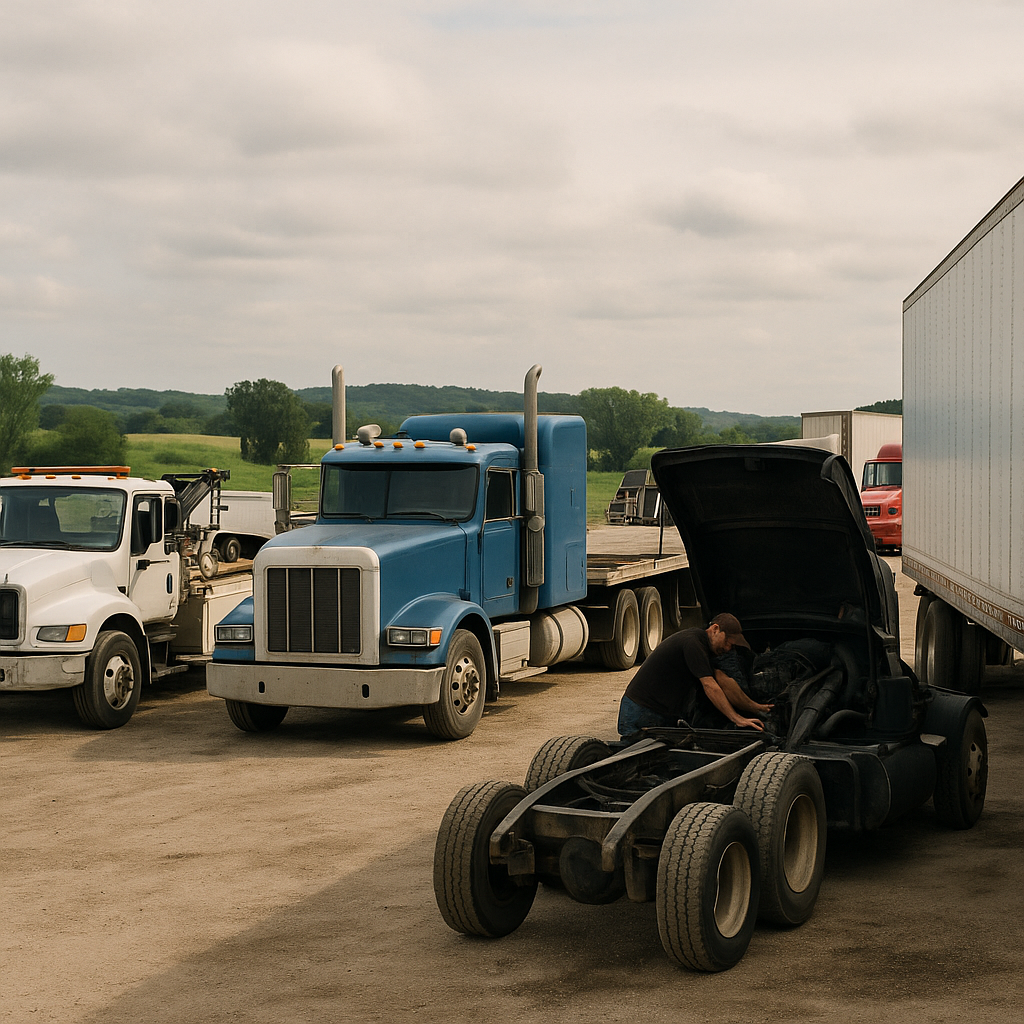
Iowa tow truck insurance isn’t just regular commercial auto with a different truck on the schedule. If you tow disabled vehicles, handle roadside calls, or move customer vehicles, your policy needs to match those risks. The difference between a usable policy and a cheap-looking wrong one usually comes down to how the towing exposure is scoped.
What Iowa tow truck insurance covers#
Iowa tow truck insurance usually combines commercial auto with towing-specific protection for vehicles in tow, roadside work, and damage that can happen during hook-and-tow operations. The exact mix depends on whether you do recovery, roadside service, repossessions, or vehicle transport, because each setup creates different exposures.
A tow truck operation has risks that a standard business pickup doesn’t. You’re not just driving your own truck around Iowa. You’re loading, hooking, lifting, towing, and sometimes storing or moving somebody else’s vehicle.
Tow truck operations and tow risks#
Hook-and-tow means attaching, lifting, and towing another vehicle behind or on your truck. On-hook coverage is insurance commonly used to protect a customer’s vehicle while it’s attached to your tow truck or in your care during towing. That’s one of the biggest gaps in generic commercial auto policies.
If you only buy basic commercial auto, which is business-use vehicle insurance for liability and certain damage to your own truck, that may not protect the car you’re towing. That’s a problem for tow operators because the customer’s vehicle is often the most obvious claim after a bad turn, a loading mistake, or damage during transport.
Tow risk also changes by job type. A roadside-only operator doing lockouts, jump starts, and short local tows has a different risk profile than a heavy tow unit, a repossession operator, or a carrier moving vehicles longer distances.
Core coverages to understand#
Auto liability is the foundation. It covers damage or injuries you cause to others with the tow truck, subject to the policy limit.
Physical damage is coverage for damage to your own truck from collision or other covered causes like theft, fire, or weather. If the truck itself is financed, a lender will often require it.
General liability is coverage for certain business-related bodily injury or property damage claims that don’t come from driving the truck itself. For a tow business, that can matter if someone gets hurt around your operation and the claim doesn’t fit under auto liability.
Motor truck cargo is coverage usually used for freight hauled by a for-hire trucker. For many tow operations, it is not the main answer for vehicles being towed, which is why tow operators need to look closely at how on-hook and vehicle-in-tow exposures are handled instead of assuming cargo solves it.
What is usually optional vs needed by operation#
Most Iowa tow operators will at least discuss auto liability, physical damage, and towing-specific protection for vehicles in tow. Beyond that, the right structure depends on what the business actually does day to day.
If you do light-duty roadside service, your policy may be built differently than a business doing accident recovery or repossessions. If you transport vehicles on a carrier instead of towing them behind the truck, underwriting may look at the exposure differently too. The key is matching the policy to the actual tow model, not just buying a generic commercial auto package.
What Iowa requires vs federal trucking rules#
Iowa rules and federal trucking rules are not the same thing. Iowa handles state-level vehicle and insurance basics, while FMCSA rules apply based on how you operate, especially whether you run in interstate commerce and how your business is classified. Being a tow truck by itself does not automatically put every operator under the same federal insurance rule.
A lot of confusion starts when drivers mix up state minimums, federal minimums, and contract requirements. Those are three different things, and a tow business may deal with more than one at the same time.
Iowa registration and insurance basics#
Iowa operators need to handle state registration, titling, and insurance requirements for business vehicles through the state framework. For Iowa-specific guidance on insurance and licensing questions, start with the Iowa Department of Insurance and confirm any vehicle registration issues with the applicable state agency before binding a policy.
State minimum liability requirements can be a legal starting point, but they are not a shortcut to a complete tow-truck insurance setup. A lender, motor club, auction, police contract, storage yard, or private customer agreement may expect higher limits or different coverages than the bare minimum.
When FMCSA rules apply#
FMCSA rules apply based on the operation, not just the truck type. If your tow business operates in interstate commerce, meaning you cross state lines or take part in transportation that is part of interstate movement, federal filings and insurance rules may come into play.
Under 49 CFR Part 387, for-hire interstate carriers hauling general freight in vehicles over 10,001 pounds must carry at least $750,000 in public liability. That is a federal financial responsibility rule, not a universal rule for every truck in Iowa. The FMCSA explains carrier registration and operating authority questions at fmcsa.dot.gov, and you can check a carrier’s status through SAFER.
Some tow operators need a USDOT number. Some may also need an MC number depending on the operation. Others stay entirely intrastate and don’t trigger the same federal setup. That’s why the scoping questions matter: Are you for-hire or private? Interstate or intrastate? Towing disabled vehicles locally, or acting as a broader motor carrier?
Why state minimums may not be enough#
State minimums may not be enough because they only address part of the risk. They usually don’t answer the bigger tow-business questions, like whether a vehicle in tow is covered, whether your own truck has physical damage, or whether a contract requires higher limits.
This is where cheap policies cause expensive problems. A quote can look compliant on paper and still leave out the part you actually need when a customer’s vehicle is damaged. If you’re not sure how your operation should be scoped,
How tow truck insurance pricing is usually built#
Tow truck insurance pricing is built from your operation’s risk profile, not from a single statewide rate card. Underwriters usually look at the truck, the drivers, the towing work, the radius, prior losses, and the coverages you choose. That’s why one Iowa operator can see a very different quote from another with what looks like a similar truck.
Price-sensitive shoppers aren’t wrong to ask about monthly cost. The mistake is assuming there’s one normal number for all tow businesses.
Primary cost drivers#
Underwriting is the process insurers use to evaluate risk and price a policy. For Iowa tow truck insurance, underwriting often focuses on your driving record, years of experience, claims history, truck value, and where and how the truck operates.
Towing radius matters because longer trips usually mean more time on the road and more exposure. So does tow type. A local light-duty truck doing roadside service and short disabled-vehicle tows is not priced the same way as a unit doing recovery work, repossessions, or regular longer-distance vehicle transport.
Coverage structure changes price too. Higher liability limits, lower deductibles, broader physical damage, and stronger protection for vehicles in tow will usually change the premium.
Why quotes vary so much#
Quotes vary because carriers don’t all classify tow operations the same way. One insurer may be comfortable with a narrow roadside-service profile but pull back on mixed towing and recovery work. Another may accept the operation but add tighter terms, exclusions, or higher deductibles.
That means two quotes can look far apart even when they’re both technically for a tow truck. One may include the towing exposure more clearly, while the other may be stripped down to make the total price look easier to swallow.
A realistic monthly cost framework is this: tow truck insurance can range widely based on the truck, the operation, and the coverages selected. Your actual premium depends on your operation, cargo, radius, driving history, and other factors. For tow businesses, vehicles-in-tow exposure and physical damage often have a major effect on the final number.
What makes a policy look cheap#
A policy often looks cheap because something meaningful was narrowed, excluded, or pushed onto you through a higher deductible. That can show up as weaker protection for customer vehicles, tighter driver eligibility, reduced physical damage terms, or missing liability layers that a contract expects.
The best way to spot that is to compare the quote structure, not just the payment amount. If the total looks much lower than every other option, assume there is a reason and find it before you bind. That’s especially true in towing, where the biggest claim may involve the vehicle you were hired to move, not your own truck.

How to compare Iowa tow truck quotes without buying the wrong policy#
The best way to compare Iowa tow truck quotes is line by line, with your actual tow work in mind. Start with the business model, then review each quote for towing-specific protection, exclusions, limits, deductibles, and service. The lowest premium only helps if the policy still works when a claim happens.
A tow operator usually gets in trouble when the quote says “commercial auto” but the actual work is broader than that label. That is how undercoverage sneaks in.
Match the quote to the tow business model#
Start by writing down what the truck really does. Is it mostly roadside service? Short local disabled-vehicle tows? Repossession? Mixed light-duty towing and transport? A carrier-style setup moving vehicles on a bed?
Then make sure the quote reflects that exact use. If the application describes a simpler operation than what you actually do, the quote may come back cheaper for the wrong reason.
Check exclusions and endorsements#
An endorsement is a policy change that adds, removes, or modifies coverage terms. In towing, endorsements and exclusions matter because they often decide whether the customer’s vehicle is protected.
Review the quote for any language around vehicles in tow, on-hook exposure, repossession, recovery work, unattended vehicles, storage-related issues, and physical damage terms. If a coverage sounds implied but isn’t clearly shown, ask for it in writing before you decide.
Compare limits, deductibles, and service#
A deductible is the amount you pay out of pocket on a covered claim before insurance pays the rest. Higher deductibles can reduce premium, but they also change what a claim feels like when you need the coverage.
Use a simple checklist when comparing quotes:
- Confirm the exact towing operation listed on the application
- Confirm liability limits
- Confirm physical damage terms for the tow truck
- Confirm how vehicles in tow are addressed
- Confirm deductibles by coverage
- Confirm any excluded drivers or uses
- Confirm claims and certificate turnaround expectations
If you’re comparing two quotes that seem close but not identical,
before choosing the one that only looks cheaper at first glance.
How to save money on tow truck insurance in Iowa#
The safest way to save money on tow truck insurance in Iowa is to lower risk, not strip out the coverages that protect the towing work. Clean drivers, secure parking, fewer claims, and a properly scoped operation usually help more over time than buying a bargain policy with the wrong exclusions.
Most real savings come from making the account easier to underwrite. Insurers pay attention to that.
Ways to lower risk without cutting needed coverage#
Keep driver MVRs clean, tighten hiring standards, and document training for hookup procedures, roadside safety, and vehicle handling. Secure overnight parking and anti-theft steps can also help the risk profile, especially when the truck itself has significant value.
If you choose a higher deductible, make sure it’s an amount the business can actually absorb. A deductible only saves money if it doesn’t wreck cash flow after a loss.
Operational choices that may affect price#
Shorter operating radius, clearer job mix, and avoiding unnecessary exposure can all affect how a policy is priced. A business that mainly handles local roadside calls may be viewed differently than one doing broader towing, recovery, and transport under one roof.
Be accurate on the application. Misstating the operation to get a lower quote can create much bigger problems later than the premium difference ever fixed.
When to revisit your policy#
Review the policy whenever the operation changes in a meaningful way. That includes buying another truck, adding a driver, expanding the radius, taking on new contract work, or shifting from roadside-only service into regular towing or recovery.
Tow businesses evolve fast. Insurance should keep up with that, or yesterday’s quote becomes today’s coverage gap.
How to choose coverage for your tow business#
The right way to choose coverage is to start with the tow business model, then match the policy to the real risks, confirm any legal or contract requirements, and review exclusions before you buy. For Iowa tow operators, the goal is not the broadest policy on earth. It’s the right policy for the work you actually do.
That sounds simple, but this is where a lot of owner-operators get burned. The paperwork says “commercial auto,” so they assume they’re set.
Match coverage to operation type#
If you mainly do roadside service with occasional short tows, your needs may look different from a business doing dedicated towing, repossessions, or transport. If you work in interstate commerce, federal scoping may matter too. If you stay local in Iowa, state and contract requirements may be the bigger issue.
The point is to identify the actual operation first. Insurance should follow that, not the other way around.
Avoid common towing gaps#
The most common mistake is buying generic commercial auto and assuming it automatically handles towing-specific risk. It may not. Another mistake is focusing so hard on monthly payment that you never verify how the policy treats a customer’s vehicle while it’s being towed.
Operators also miss changes in the business. Adding a second truck, hiring a driver, or moving into a different tow niche can all change what coverage fits.
When to ask for human help#
If you don’t have time to decode exclusions, ask for help before you bind. That matters even more if your quote language is vague, your operation is mixed, or you need to sort out Iowa requirements versus FMCSA-related rules quickly.
LogRock specializes in trucking insurance for owner-operators and small fleets. If you’re not sure what coverage fits your operation, LogRock can help you scope it.
FAQ#
What insurance do I need for a tow truck?
Most tow trucks need commercial auto liability as the base coverage, and many operations also need physical damage for the truck itself plus towing-specific protection for vehicles being towed. Depending on the operation, a business may also discuss general liability and other endorsements tied to roadside work, repossessions, or transport. The exact mix depends on what the truck actually does, whether you handle customer vehicles in tow, and whether you operate only in Iowa or in interstate commerce. The safest move is to scope the policy to the real tow model instead of assuming a generic commercial auto policy is enough.
How much is tow truck insurance per month?
There is no single monthly price for tow truck insurance because the premium depends on the operation details. A realistic quote framework is that pricing can vary widely based on driving history, tow radius, truck value, claims history, coverage limits, deductibles, and whether the policy clearly includes towing-specific exposures like vehicles in tow. A lighter local operation may price very differently from a business doing mixed towing, recovery, or transport. If one quote comes in much lower than the rest, check whether it removed or narrowed an important coverage instead of assuming you found the better deal.
Who has the cheapest tow truck insurance?
The cheapest tow truck insurance is usually just the quote with the least expensive structure, not automatically the best fit for a tow business. That lower price may reflect higher deductibles, narrower physical damage, stricter driver terms, or weak treatment of on-hook and vehicles-in-tow exposure. For towing, the better question is which quote gives you the right protection for the operation at a price your business can carry. Compare the business use listed on the application, the exclusions, the limits, and the deductibles before judging any option by price alone.
What’s the cheapest insurance in Iowa?
The cheapest insurance in Iowa is often the policy with the fewest protections, which can be a bad trade for a tow operator. State-minimum thinking doesn’t solve towing-specific risk, and a low-cost policy may still leave out protection for customer vehicles, physical damage to your truck, or contract-required limits. Iowa operators should compare legal basics, business requirements, and tow exposures together. If a policy is cheap because it doesn’t match the real work, it isn’t really cheaper once a claim happens or a contract rejects your limits.
Do Iowa tow truck operators need FMCSA insurance filings?
Some do, and some don’t. It depends on how the operation is classified and whether it operates in interstate commerce. FMCSA-related insurance rules are tied to carrier type and federal scope, not simply to the fact that the vehicle is a tow truck. A local Iowa operator working intrastate may face a different insurance setup than a for-hire operator crossing state lines or handling transportation that is part of interstate movement. Check federal status through FMCSA and SAFER, and make sure the policy matches both your legal setup and the actual towing work being performed.





