
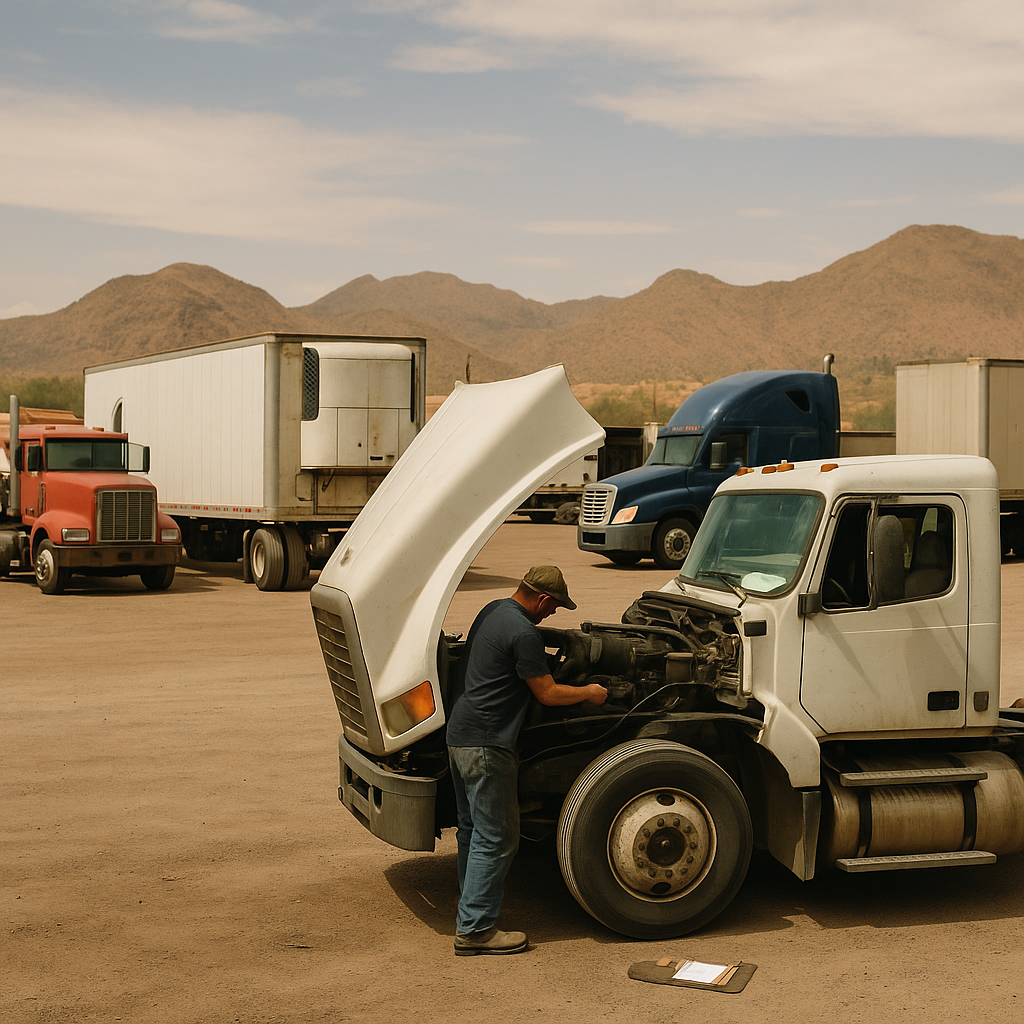

If you’re shopping for semi truck insurance Arizona, the biggest mistake is treating a working truck like a personal vehicle. Arizona semi truck insurance is commercial coverage built around how you haul, where you run, what you carry, and whether you operate under your own authority or lease onto another motor carrier.
This guide breaks down the Arizona side, the FMCSA side, the coverage pieces most owner-operators actually need, and the quote details that can keep you from binding the wrong policy.
Arizona Semi Truck Insurance Basics#
Arizona semi truck insurance is commercial insurance for trucks used in business, especially hauling freight for pay. It is not the same as a personal auto policy, even if the vehicle is titled in your name and you mainly operate inside Arizona.
A motor carrier is the business responsible for transporting property or passengers by commercial motor vehicle. An owner-operator is a driver who owns the truck and either runs under their own authority or leases onto another carrier.
What makes trucking insurance different from personal auto#
Personal auto insurance is designed for private driving, not hauling freight, pulling commercial trailers, or meeting motor carrier contract requirements. Once the truck is being used in a trucking business, the insurance structure usually has to change.
That catches a lot of first-time operators. A one-ton pickup or a tractor parked at home in Phoenix, Tucson, Mesa, or Yuma may still need commercial trucking coverage if it’s used to haul loads, pull a trailer for pay, or satisfy a lease agreement.
Who usually needs commercial trucking coverage#
If you haul freight for money, lease onto a carrier, or run under your own USDOT or MC number, you usually need commercial trucking insurance. The exact setup depends on whether the operation is interstate or intrastate, the vehicle weight, the cargo, and what your contract requires.
A common Arizona example: an owner-operator buys a tractor, leases onto a carrier, and assumes a personal auto policy plus the carrier’s coverage is enough. In practice, the carrier may require a specific insurance setup for times when you’re not under dispatch, for trailer use, or for physical damage on your truck. If you’re not sure what coverage fits your operation,

FMCSA Rules vs. Arizona Requirements#
For many for-hire trucking operations, federal FMCSA rules control the liability requirements, while Arizona rules still matter for registration, licensing, and state insurance oversight. Your state minimum isn’t automatically your trucking minimum, and meeting one does not always satisfy the other.
FMCSA is the Federal Motor Carrier Safety Administration, the federal agency that regulates interstate commercial trucking. BIPD means bodily injury and property damage liability, often called public liability in federal filings.
Federal liability requirements#
Under 49 CFR Part 387, for-hire interstate carriers hauling general freight in vehicles over 10,001 lbs must carry at least $750,000 in public liability. The minimum can be lower for some lighter vehicles, and higher for certain operations like auto hauling or hazmat.
An MCS-90 is an endorsement tied to federally required financial responsibility for certain motor carriers. If you run interstate for-hire freight under your own authority, this federal layer is often part of the compliance picture.
How Arizona context fits in#
Arizona still has its own insurance and regulatory context through the Arizona Department of Insurance and Financial Institutions and state vehicle rules. But Arizona’s ordinary auto minimums are not the same thing as federal trucking requirements.
Here’s the practical version: a truck could meet Arizona auto minimums and still be unusable for your business because it won’t satisfy FMCSA authority requirements, shipper requirements, or a carrier contract. That’s where drivers get tripped up.
Why carrier contracts matter#
If you lease onto a carrier, that carrier may require limits above the legal minimum, specific endorsements, or certain coverages beyond liability. If you operate under your own authority, the filings and policy details have to match your operation.
You can verify interstate operating status and authority details through SAFER before you assume a policy setup is correct. Requirements can change based on cargo, weight, whether you’re for-hire or private, and whether you’re hauling under your own authority or someone else’s.
Coverage Types to Consider#
Most Arizona semi truck insurance programs start with auto liability, then add the other pieces your operation actually needs. The right mix depends on whether you haul under dispatch, own the truck outright, pull someone else’s trailer, carry customer freight, or run refrigeration equipment.
Commercial auto liability pays for injury or property damage you cause to others in a covered accident while operating the truck in business. Motor truck cargo covers damage to the freight you’re hauling, subject to policy terms and exclusions. The NAIC offers plain-language insurance education that helps frame these basic coverage roles.
Auto liability#
Auto liability is the foundation for most trucking operations because it handles third-party injury and property damage claims. It is also the coverage most often tied to legal minimums, filings, and authority requirements.
For a dry van owner-operator running under their own authority, this is usually the first policy piece to get right. But liability alone rarely finishes the job.
Motor truck cargo#
Motor truck cargo protects the load you are transporting. If a shipper, broker, or carrier requires cargo coverage, the policy limit and exclusions matter just as much as the fact that the coverage exists.
A driver hauling general dry freight may need a very different cargo setup than someone touching higher-risk or theft-sensitive loads. If the quote leaves out cargo and your contracts require it, the lower premium won’t help much.
Physical damage#
Physical damage covers direct loss to your truck, usually through collision and comprehensive or fire and theft with combined additional coverage. Collision pays for damage to your truck from impact, and it should not be written as a standalone trucking solution without the companion comprehensive-style protection.
This matters most when the tractor has real cash value you can’t afford to lose. A newer financed truck usually needs more attention here than an older paid-off unit.
General liability#
General liability covers certain non-driving business liability exposures, separate from auto accidents. For-hire truckers often run into it through contracts, yard access, or customer requirements.
Bobtail and non-trucking liability#
Bobtail insurance usually refers to liability when operating a tractor without a trailer. Non-trucking liability covers certain personal, non-business use when you’re not under dispatch, and it is not a replacement for primary auto liability.
That distinction matters. If you’re hauling a load, deadheading under dispatch, or otherwise working, non-trucking liability generally is not the answer.
Trailer and reefer options#
Trailer interchange applies when you have a signed trailer interchange agreement and are responsible for someone else’s trailer. Non-owned trailer physical damage usually fits owner-operators using trailers they don’t own without that signed interchange setup, which is often the more relevant fit for non-intermodal operators.
A small Arizona fleet with owned reefers may also need refrigeration breakdown protection in addition to cargo and physical damage. That’s a very different setup from a leased-on dry van owner-operator who only needs to protect the tractor and occasional trailer exposure.
What Drives the Cost in Arizona#
Arizona semi truck insurance cost depends more on your operation than on your ZIP code alone. The biggest pricing drivers are what you haul, where you run, the truck’s value, your driving history, your prior insurance history, and whether the policy has to support filings or carrier-specific requirements.
That is why two trucks that look similar on paper can price very differently.
Operation type and radius#
A local Arizona operator hauling ordinary dry van freight around a tighter radius may present a different risk than someone running long interstate lanes through multiple states. The more miles, more exposure, and more complex the operation, the more underwriters tend to scrutinize it.
Interstate work can also pull in different compliance expectations. That affects both eligibility and premium.
Truck value and driving history#
A newer, more expensive tractor usually costs more to insure for physical damage than an older truck with less stated value. Driving history, years of CDL experience, and prior claims also shape how a carrier views the risk.
A first-year owner-operator with recent violations will usually be viewed differently than a driver with a clean record and stable prior coverage. Same truck, very different quote story.
Cargo, endorsements, and deductibles#
Cargo type matters because some freight is more theft-prone, more damage-prone, or more legally sensitive than standard general freight. Endorsements, added insured requirements, trailer protection, and refrigeration exposure can all change the quote.
Deductibles matter too. A higher deductible may lower premium, but only if it still leaves you with an out-of-pocket amount you can realistically handle after a loss.
Why quotes differ between carriers#
Different insurers weigh the same risk differently. One may be comfortable with a local Arizona owner-operator hauling dry van freight with an older tractor, while another may rate more heavily against a newer truck running longer lanes under new authority.
That is why comparing premium alone is risky. A lower quote might leave out cargo, physical damage, trailer coverage, or filings you need to get on the road. When that gap shows up after binding, it usually costs time, money, or both.
If a quote feels confusing, missing pieces are usually the reason.
What a $1,000,000 Liability Quote Usually Means#
A $1,000,000 liability quote refers to the policy’s liability limit, not a standard price everyone pays. Whether that limit makes sense depends on your operation, your contracts, your filings, and whether the policy is built for interstate or intrastate trucking.
That number alone does not tell you if the quote is complete.
What the limit covers#
Liability limits apply to covered third-party bodily injury and property damage claims. Many owner-operators hear “$1 million policy” and assume that means they have the right trucking coverage across the board, but that’s only one part of the setup.
Some carriers or shippers want that limit even when a lower legal minimum might apply. Others care just as much about cargo, trailer, or named insured details.
What to verify before binding#
Check who the named insured is, whether required filings are included, whether the tractor is scheduled correctly, and whether the policy matches your actual operating territory. If you’re leased on, confirm the lease arrangement the quote is built around.
A common mistake is a lease-on driver getting a quote that looks complete, then learning it doesn’t include the filings or operational structure the carrier expects. That can delay onboarding fast.
Common quote misunderstandings#
The biggest misunderstanding is treating liability limit, premium, and compliance as the same thing. They are not.
A quote can show a strong-looking liability limit and still be wrong for the intended operation because it excludes the freight, misses a trailer exposure, or is written for the wrong use.
How to Compare Quotes Before You Bind#
The best way to compare Arizona semi truck insurance quotes is to line up the actual coverage details side by side. If one quote is cheaper because it leaves out a filing, excludes cargo, or uses a much higher deductible, it is not really the same quote.
This is where a lot of first-time authority holders lose time.
Checklist for apples-to-apples comparison#
Start with the basics:
| Item | What to check | Why it matters |
|---|---|---|
| Liability | Limit and operating use | Must fit contracts and legal scope |
| Cargo | Limit and exclusions | Low premium may mean reduced protection |
| Physical damage | Stated value and deductible | Affects claim payout and cash flow |
| Filings | Included or not included | Needed for some authority setups |
| Trailer coverage | Owned, non-owned, or interchange | Wrong form can leave trailer gaps |
| Territory | Arizona only or interstate | Must match actual lanes |
Red flags in trucking quotes#
Watch for vague descriptions of use, missing trailer language, cargo that’s mentioned but not clearly scheduled, or a policy written like ordinary commercial auto instead of a trucking operation. Those are the spots where coverage surprises tend to happen.
Also watch for a quote built around assumptions you didn’t make, like intrastate use when you’re planning to cross state lines.
Questions to ask a broker or agent#
Ask whether the quote fits a lease-on arrangement, an owner-operator under their own authority, or a small fleet. Ask what filings are included, what operations are excluded, and what changes would require the policy to be rewritten.
If the person answering can’t clearly explain those points, keep asking before you bind.
Ways to Reduce Risk and Keep Coverage Working#
The most reliable way to keep trucking coverage workable is to run a clean, consistent operation and keep the policy aligned with what the truck is actually doing. Underwriters reward cleaner records and fewer surprises more than they reward last-minute patch jobs.
Small details matter here.
Safer operations and cleaner underwriting#
Clean driving, disciplined maintenance, accurate garaging, and honest mileage reporting all help present a more stable risk. Parts of your compliance routine also support that story, including inspection and maintenance habits tied to federal safety rules under FMCSA.
Choosing the right deductible#
A deductible should lower premium without putting you in a cash bind after a claim. If you raise deductibles just to make the quote look better, make sure the number still works in the real world.
Avoiding coverage gaps when changing operations#
If you add a trailer, switch cargo, move from intrastate Arizona work to interstate lanes, or change authority status, review the policy before the change goes live. A trucking policy can stop fitting fast when the business changes faster than the paperwork.
Arizona Trucking Insurance FAQ#
Who has the cheapest semi truck insurance?#
There is no universal cheapest company for every Arizona trucker. The lowest quote depends on your operation type, driving record, cargo, radius, truck value, prior insurance history, and required limits or filings.
A leased-on owner-operator hauling local dry van freight may price very differently from a new authority running interstate lanes. The useful move is to compare complete quotes, not just the lowest premium line. Check liability, cargo, deductibles, trailer coverage, and filings before you decide.
How much would it cost to insure a semi truck?#
Semi truck insurance can vary widely because the policy is built around risk, not just the truck itself. Arizona quotes change based on authority status, experience, CDL record, truck value, freight type, lanes, and coverage choices like cargo or physical damage.
For example, a paid-off older tractor hauling ordinary freight locally may underwrite differently than a newer financed tractor running interstate. When you request a quote, ask what factors are driving it so you know what can and cannot be adjusted.
How much does a $1,000,000 liability insurance policy cost?#
A $1,000,000 liability policy limit is not a standard price point. The premium still depends on the truck, the operation, the driver history, the cargo, the territory, and whether filings or other coverages are included.
Two Arizona owner-operators can both ask for $1,000,000 liability and get very different quotes because one is leased on and one has their own authority. Before comparing prices, confirm both quotes are built for the same operating use and include the same filings.
Why is semi truck insurance so high?#
Semi truck insurance is usually higher than personal auto because the losses can be much larger. A commercial truck can create serious third-party liability, cargo loss, equipment damage, downtime, and contract exposure in one claim.
Insurers also price for operational complexity. Longer routes, higher-value tractors, newer authorities, less experience, and specialized freight can all increase premium. The best next step is to figure out which parts of your operation are driving the quote instead of assuming every coverage piece costs the same.
Can I use personal auto insurance for a semi truck in Arizona?#
Usually no, not if the truck is being used in a trucking business. Personal auto coverage is not built for hauling freight, operating under a motor carrier agreement, or meeting trucking liability and filing requirements.
This is one of the most common and expensive misunderstandings for new owner-operators. If you’re leasing on, pulling trailers for pay, or running under your own authority, confirm the policy is written as trucking coverage and matches the actual use before you bind.





