
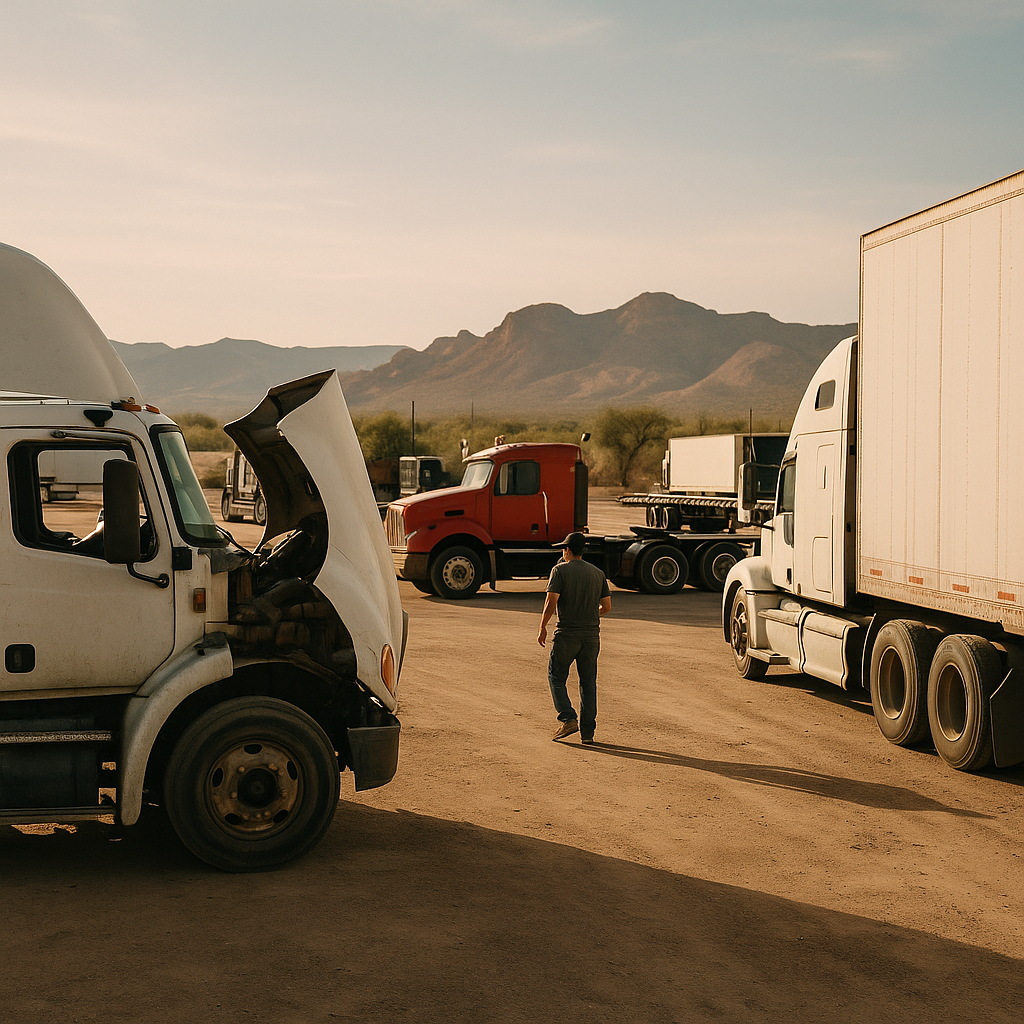

Arizona hot shot trucking insurance usually means a commercial policy built for hauling for hire with a pickup-and-trailer setup, not a personal auto policy with a business use guess. If you’re running loads in Arizona, the right coverage depends on what you haul, how heavy the setup is, and whether you cross state lines.
A lot of new hot shot operators get stuck on the same points. They hear “non-CDL” and assume the insurance is simpler than it is, or they hear “Arizona minimums” and assume that settles the federal side too. It doesn’t.
This guide breaks down what Arizona hot shot trucking insurance covers, when FMCSA rules matter, what changes for CDL and non-CDL operators, and why quotes can look very different from one truck to the next.
What Arizona hot shot trucking insurance actually covers#
Arizona hot shot trucking insurance covers business hauling done with a pickup and trailer, usually for-hire freight moved on shorter notice or smaller loads than a full semi operation. It starts with commercial auto liability, then adds cargo, truck, and trailer protection based on how your operation is set up.
Hot shot trucking vs personal pickup use#
Hot shot trucking is hauling freight for pay, often with a one-ton or similar pickup and a trailer such as a gooseneck. The insurance issue isn’t whether the truck looks like a personal pickup. The issue is whether you’re using it in a commercial freight operation.
Personal auto insurance is built for personal driving, not hauling loads for a customer. If you’re pulling a trailer with a skid steer to a jobsite for hire in Arizona, that’s a commercial exposure. If you’re crossing into New Mexico with a gooseneck and equipment for a paying load, that is even more clearly commercial.
The core coverages most operators compare#
Commercial auto liability pays when your truck causes bodily injury or property damage to others in a covered accident. For many hot shot operators, this is the policy that ties directly to operating authority and proof of insurance requirements.
Motor truck cargo covers damage to freight you’re hauling for someone else, subject to the policy terms. If the load shifts, gets damaged in a wreck, or is stolen from the trailer, cargo is the coverage people usually mean when they ask, “Am I covered for the load?”
Physical damage covers the truck itself, and usually the trailer if scheduled, for things like collision and comprehensive losses. Comprehensive means non-collision losses such as theft, fire, hail, or vandalism.
Non-trucking liability covers the truck when it’s being used for non-business driving, not while hauling for pay. That’s where many owner-operators get tripped up: non-trucking liability is not a substitute for primary commercial auto liability.
Trailer interchange covers damage to a trailer in your care when a signed interchange agreement applies. Non-owned trailer physical damage covers a trailer you don’t own when interchange paperwork isn’t the real issue, which is often the more practical need for non-intermodal hot shot operators.
What changes by cargo, weight, and trip type#
The exact package changes with carrier type, vehicle weight, cargo, and whether the operation is interstate or intrastate. A local Arizona operator hauling lighter equipment may need a different setup than an interstate hot shot carrier moving higher-value freight across several states.
That difference is where bad advice gets expensive. A borrowed trailer, financed pickup, customer cargo requirement, or interstate authority can each add a coverage need that doesn’t show up in a generic “truck insurance” quote.

Who needs it: CDL and non-CDL hot shot operations in Arizona#
A non-CDL hot shot operation can still need full commercial trucking insurance if it’s hauling for hire or operating as a business. CDL rules, federal registration, and insurance underwriting overlap, but they are not the same question.
When a non-CDL setup still needs commercial insurance#
Non-CDL means the setup may fall below a licensing threshold for that driver and vehicle combination. It does not mean the hauling is personal.
If you use a pickup and trailer to move a customer’s compact loader, pallets, or equipment for money, insurers and regulators will still look at the business use. The truck is generating revenue, and that usually means commercial coverage needs to be on the table.
How vehicle weight and load type affect the insurance conversation#
Vehicle weight matters because some federal rules turn on weight thresholds, and underwriters care because heavier combinations generally bring bigger loss exposure. Cargo matters because hauling general freight, machinery, autos, or higher-value loads can change both liability expectations and cargo needs.
A practical example: a hot shot operator staying inside Arizona with a lighter setup may be focused mainly on state operating rules, truck value, and cargo type. An operator with a heavier combination running interstate loads may also need to line up federal filings tied to operating authority.
Why personal auto usually does not fit hauling for hire#
Personal auto usually does not fit hot shot work because the truck is being used in a commercial freight business. Even if the truck is titled like a pickup you’d see in a driveway, hauling for hire changes the risk completely.
That’s one of the most common and most expensive mistakes. A driver tries to save time by keeping a personal policy, then finds out too late that business hauling was excluded or never properly rated.
If you’re unsure whether your setup is being treated like a true commercial operation, that’s the moment to stop guessing and
Arizona and FMCSA rules that shape your policy#
Arizona hot shot trucking insurance is shaped by both state rules and, for many carriers, FMCSA federal requirements. If you haul interstate for hire, federal financial responsibility rules can control your liability minimums and filings even if Arizona state minimums look lower.
Federal vs state minimums#
This is the part many new operators get wrong: your state minimum isn’t automatically your federal minimum. Under FMCSA rules and 49 CFR Part 387, for-hire interstate carriers hauling general freight in vehicles over 10,001 pounds must carry at least $750,000 in public liability. Under 10,000 pounds, the federal minimum can be lower for the applicable carrier class, while auto haulers and hazmat operations can require more.
So picture two Arizona-based operators. One stays intrastate and only hauls inside Arizona. The other crosses into Nevada and New Mexico for hire. The second operator may trigger federal authority and filing requirements that the first one does not, even if both drive pickups with trailers.
When FMCSA filings matter#
An MC number is federal operating authority for certain for-hire interstate carriers. A USDOT number is a registration identifier used for safety oversight and carrier identification.
When interstate authority applies, the insurer generally files proof of liability electronically so your authority can move toward activation. The MCS-90 is an endorsement tied to certain federally regulated motor carrier liability policies, and it’s part of the broader financial responsibility framework rather than a substitute for choosing the right coverage.
In plain English: before you haul a load under interstate authority, your insurance usually has to do more than exist. It has to match the operation and be filed correctly.
Why intrastate operators still need to check Arizona rules#
Intrastate-only doesn’t mean “no rules.” Arizona-based operators should still confirm state registration and operating requirements with the Arizona Department of Transportation and business insurance expectations with the Arizona Department of Insurance and Financial Institutions.
Before you dispatch, confirm four things:
- Your authority setup matches how you actually operate.
- Your liability coverage fits the carrier type, weight, cargo, and territory.
- Your cargo coverage matches what you’re hauling.
- Your trailer coverage matches whether you own, borrow, or interchange trailers.
If any one of those is off, the policy can look fine on paper and still fail your real operation.
What affects the cost of Arizona hot shot insurance#
Arizona hot shot insurance cost depends on the risk profile of the operation, not just the truck itself. Underwriters usually price around the driver, equipment, cargo, territory, authority type, and how likely the setup is to produce a claim.
Truck, trailer, and driver factors#
The truck’s value matters because financed or newer equipment usually needs physical damage, which raises the total premium structure. The trailer matters too, especially if it’s expensive, borrowed often, or used for higher-value cargo.
Driver history is one of the biggest factors. A first-time owner-operator with limited commercial experience, recent violations, or prior claims will usually be viewed differently than a seasoned operator with a cleaner record and a longer history in similar equipment.
Cargo type and operating radius#
Cargo changes the risk fast. General freight, equipment, vehicles, and higher-value loads don’t all look the same to an underwriter. The farther you run, the more road time and exposure the carrier is taking on.
A simple example: an Arizona operator hauling lighter equipment on shorter intrastate runs may present a different profile than a new interstate operator moving more expensive cargo across several states each week. Both are “hot shot,” but they are not the same insurance risk.
Why quotes vary so much from one operator to the next#
This is why one owner-operator can hear a very different number than another driver with what seems like a similar pickup. Add cargo coverage, physical damage on a financed truck, or protection for a borrowed trailer, and the quote changes because the insurer is covering more exposures.
| Factor | Lower-risk example | Higher-risk example | Why it changes price |
|---|---|---|---|
| Experience | Established operator | First-year authority | Less operating history |
| Radius | Mostly local Arizona | Multi-state runs | More exposure time |
| Cargo | Lighter general freight | Higher-value equipment | More severe losses |
| Equipment value | Older paid-off unit | Financed newer unit | More physical damage exposure |
| Trailer use | Owned trailer only | Borrowed or varied trailers | More coverage complexity |
What makes insurance feel expensive is usually not one line item. It’s the stack of exposures. A financed dually, a gooseneck, first-year authority, cargo coverage, and a wider radius add up quickly even before you compare optional protections.
Your actual premium depends on your operation, cargo, radius, driving history, and other factors.
How to compare coverages without overbuying or missing a gap#
The best way to compare Arizona hot shot trucking insurance is to start with the exposures you cannot afford to get wrong: liability, cargo, the truck itself, and any trailer you don’t fully control. After that, compare optional coverages based on lender requirements, customer contracts, and how much downtime your business can survive.
Liability limits and proof requirements#
Commercial auto liability is the first thing to scope correctly because it connects to legal responsibility and, in some cases, federal filings. Some operators buy a limit because they heard another driver mention it. A better approach is to match the limit to your authority type, cargo profile, and any contract requirements from brokers or shippers.
If you’re interstate for hire, the policy also has to line up with the filings side. A cheap-looking quote that doesn’t fit the authority setup can cost more in delays than it saves on paper.
Cargo, physical damage, and trailer protection#
Motor truck cargo matters if you haul someone else’s freight and would have a problem replacing or defending that loss. Physical damage matters if you need to repair or replace your truck after a wreck, theft, hailstorm, or fire.
Trailer interchange matters when a signed interchange agreement applies. Non-owned trailer physical damage is often the more relevant coverage when you’re pulling a trailer you don’t own but don’t have formal interchange paperwork.
Useful extras for downtime and equipment ownership#
Some operators also look at downtime-related options when missing a week of work would hit cash flow hard. That only makes sense if the coverage solves a real business interruption problem, not just because it sounds nice on a quote.
If budget is tight, prioritize in this order: liability that matches the operation, cargo if you’re hauling customer freight, physical damage if the truck is valuable or financed, then trailer protection based on actual trailer use.
Step-by-step: getting insured and ready to haul in Arizona#
Getting insured for hot shot work in Arizona goes fastest when you gather the operation details first, confirm whether state or FMCSA filings apply, and review the quote against how you really plan to haul. Most delays happen when the truck, cargo, trailer, or authority setup described on the application doesn’t match reality.
Gather the truck, trailer, and cargo details#
Start with the basics underwriters will ask for: truck VIN, trailer information, garaging location, driver history, planned operating territory, and the type of freight you expect to haul. Be specific.
“General freight” may be true, but “construction equipment, palletized materials, and occasional machinery parts within Arizona and nearby states” is more useful. Also confirm whether the trailer is owned, financed, leased, or borrowed, because that changes the trailer coverage conversation.
Confirm authority and filing needs#
Next, confirm whether you’re operating intrastate only or hauling interstate for hire. That affects whether you may need a USDOT number, MC authority, and insurance filings tied to activation.
You can verify carrier information and status through SAFER. For a new operator, that matters because dispatch-ready doesn’t just mean “I bought insurance.” It means the registration, authority, and proof side all line up.
Submit to underwriting and review the quote#
Once the file goes to underwriting, review the quote for fit, not just price. Make sure the listed radius, cargo, trailer setup, and coverage types reflect what you’ll actually do in the truck.
Here’s a practical first-time example. A single-truck Arizona owner-operator has a dually, a gooseneck, first-time authority, and plans to haul equipment into neighboring states. That operator may need commercial auto liability, cargo, physical damage, and non-owned trailer protection before taking the first load. If any one of those pieces is missing, the quote may look simpler than the real risk.
That is where a fast, human-guided process helps. You’re not just trying to buy a policy. You’re trying to avoid stalling authority activation or finding a gap after a shipper asks for proof.
What LogRock writes for hot shot operators#
LogRock writes the core coverages many Arizona hot shot operators need when the setup fits its appetite: commercial auto liability, motor truck cargo, physical damage, non-trucking liability, trailer interchange, non-owned trailer physical damage, and reefer breakdown when relevant. The fit depends on the operation, cargo, and how the truck and trailer are being used.
Common hot shot coverages available#
For owner-operators and small fleets, the common lineup is straightforward. Liability handles third-party damage claims. Cargo handles freight. Physical damage protects the truck, and sometimes the trailer if scheduled. Non-trucking liability can apply during non-business use. Trailer interchange and non-owned trailer physical damage help when the trailer situation creates a separate exposure.
Hot shot setups that are not a fit#
LogRock does not write intermodal, household goods movers, last-mile or final-mile as the primary class, or driveaway. It also does not write non-trucking liability bundled with cargo, general liability, trailer interchange, or non-owned trailer physical damage.
That matters because it lets you self-qualify before spending time on a quote request. If your operation is primarily a standard hot shot setup for general freight or equipment, the fit may be much better than if you’re trying to place a class outside that appetite.
How to think about brokerage fit before requesting a quote#
If you’re a single-truck owner-operator or a small fleet running a straightforward hot shot operation, the value is less about flashy promise language and more about getting the policy scoped correctly. LogRock specializes in trucking insurance for owner-operators and small fleets.
FAQ#
What is the best insurance for hotshot trucking?
The best insurance for hotshot trucking depends on how you operate, what you haul, and whether you run interstate or intrastate. Most hot shot setups start with commercial auto liability, then add motor truck cargo if they haul customer freight, physical damage if the truck is valuable or financed, and trailer-related coverage if they use borrowed, leased, or non-owned trailers.
A good policy is not just the one with the lowest number on the quote. It is the one that matches your real operation, authority setup, cargo, and equipment use so you do not find out after a loss that the policy was built for something else.
How much does insurance cost for a hot shot trucking company?
Hot shot trucking insurance cost varies based on the truck, trailer, driver experience, driving record, cargo type, operating radius, claims history, authority type, and the coverages selected. A first-year interstate operator with a financed truck, cargo coverage, and broader territory usually presents a very different risk than an experienced intrastate Arizona operator hauling lighter loads on shorter routes.
That is why broad online price claims are usually not very helpful. Insurance can feel expensive because several exposures are being priced at once: liability, cargo, truck value, trailer use, and business history. Your actual premium depends on your operation, cargo, radius, driving history, and other factors.
How much is $1,000,000 liability insurance a month?
There is no reliable flat monthly number for $1,000,000 liability insurance on a hot shot operation because the limit is only one part of the underwriting picture. The insurer also looks at the truck and trailer setup, whether you haul for hire, your territory, cargo type, prior losses, years of experience, and whether the policy is tied to interstate authority and related filings.
Two operators can both ask for the same liability limit and get very different quotes. One may run intrastate with a cleaner profile, while another may be a first-time interstate operator hauling costlier freight. The limit matches the operation, but the monthly cost still depends on the risk behind it.
Is Hotshot worth it in 2026?
Hotshot can be worth it in 2026 if the operation is built around consistent freight, disciplined costs, and the right equipment for the lanes being run. It usually looks less attractive when the business starts with weak load planning, high truck payments, thin margins, and an insurance setup that was underestimated from day one.
The real question is not whether hotshot is universally worth it. It is whether your freight demand, operating radius, equipment financing, maintenance budget, and insurance costs support a sustainable business. Operators who know their costs and match their loads to their setup usually make better decisions than operators chasing a simple “hotshot is booming” story.
Do non-CDL hot shot operators need commercial insurance?
Yes, many non-CDL hot shot operators still need commercial insurance if they are hauling for hire or using the pickup-and-trailer setup in a business. Non-CDL only speaks to licensing thresholds in a given situation. It does not turn a revenue-generating freight operation into personal use.
If you are moving a customer’s equipment, machinery, or freight for money, the insurer will usually focus on the business exposure. That is why personal auto often does not fit, even when the truck itself looks like an ordinary pickup. Commercial auto liability is usually the starting point, then cargo and truck or trailer protection are added based on the job.





