
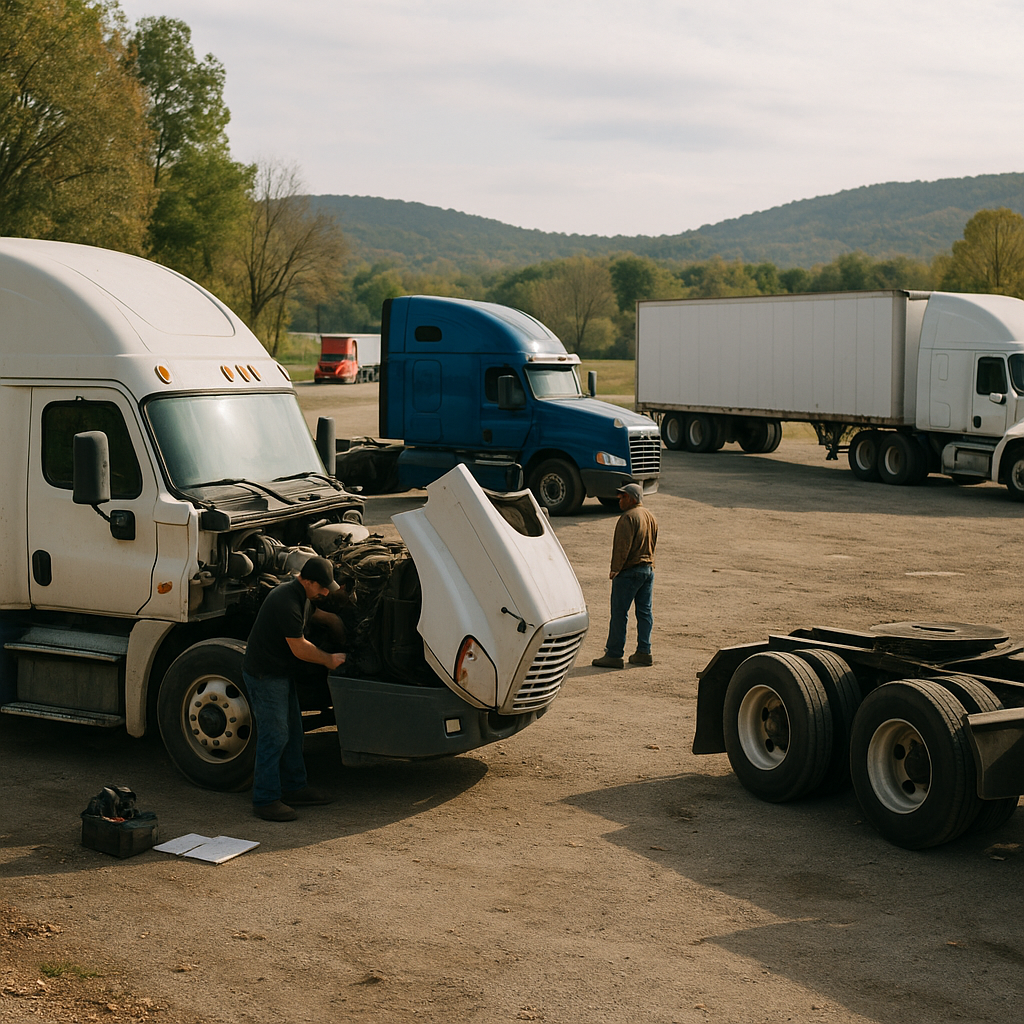

Box truck insurance in Arkansas is commercial coverage for a business that uses a straight truck or box truck to haul goods. The right setup depends on whether you run local Arkansas routes, cross state lines, haul freight for hire, or operate under your own authority.
Box Truck Insurance in Arkansas: The Basics#
Box truck insurance in Arkansas usually means commercial coverage built for a business vehicle, not a personal auto policy. Most Arkansas operators need coverage matched to how the truck actually works: local delivery, intrastate hauling, or interstate freight. What you haul, who you haul for, and whose authority you run under all matter.
A box truck is a straight truck with an enclosed cargo area attached to the same chassis as the cab. Box truck insurance is commercial insurance for that operation, usually centered on auto liability and then built out with cargo, physical damage, or other coverages as needed.
If you want a wider primer on how policies fit together, start with these commercial truck insurance basics.
What counts as a box truck business#
A box truck business can be a single-truck LLC delivering furniture around Little Rock, a contractor hauling equipment across Arkansas, or a for-hire carrier moving palletized freight into Tennessee or Texas. Same truck style, very different insurance picture.
That difference matters because coverage follows exposure. A local truck that stays close to home and carries its own company goods is not rated the same way as a for-hire truck taking loads for multiple customers.
How Arkansas operators usually get covered#
Most Arkansas box truck operators start with commercial auto liability, which pays for bodily injury and property damage you cause to others in a covered accident. Then they add coverages based on the job, like motor truck cargo, which protects freight you’re hauling for someone else, or physical damage, which covers damage to your truck from collision or other covered causes.
Some operators need filings tied to authority. Others don’t. A leased-on owner-operator may have one insurance setup, while a new LLC trying to activate its own authority may need a different one.
Why personal auto insurance is not enough#
A personal auto policy is built for private driving, not business hauling for pay. If your box truck is titled to an LLC, used to deliver customer goods, or operated in a commercial freight business, trying to rely on personal auto coverage can leave a major gap.
This is one of the most common startup mistakes. A non-CDL box truck or smaller straight truck may feel closer to a regular vehicle, but if it’s being used in a trucking business, the insurance still needs to match that business use.

Arkansas Rules, FMCSA Requirements, and Authority Filings#
Arkansas box truck operators need to separate state rules from federal FMCSA rules. If you stay intrastate, Arkansas requirements may control. If you’re a for-hire interstate carrier, FMCSA financial responsibility rules under 49 CFR Part 387 can apply instead, and your insurance filings may affect whether your authority can stay active.
When Arkansas minimums apply#
Arkansas-level requirements usually matter most when the operation stays inside the state and doesn’t trigger federal interstate for-hire rules. State insurance regulation also plays a role in how policies are approved and sold, which is one reason plain-language insurance terms from NAIC can be helpful when comparing coverage.
A practical example: a local furniture delivery company with a box truck that operates only inside Arkansas may be dealing mostly with state registration, state insurance expectations, and customer contract requirements. That truck still needs commercial coverage, but it may not need the same federal filing structure as an interstate for-hire carrier.
When FMCSA rules apply#
FMCSA rules matter when a box truck operation is for-hire and interstate. Interstate means the business transports property across state lines or in a movement tied to interstate commerce. Under FMCSA rules and 49 CFR Part 387 on eCFR, for-hire interstate carriers hauling general freight in vehicles over 10,001 lbs must carry at least $750,000 in public liability.
That doesn’t mean all box truck operators need the same limit. Requirements vary by carrier type, vehicle weight, cargo, and whether you operate interstate or intrastate. A local Arkansas route truck can sit in a different rules bucket than a box truck moving expedited freight into Oklahoma under its own MC number.
Why authority and insurance filings are linked#
Operating authority is FMCSA permission for certain for-hire interstate carriers to haul regulated freight for pay. MCS-90 refers to an endorsement used to satisfy certain federal financial responsibility requirements, and insurance filings are often part of authority activation and maintenance.
If a carrier needs federal authority, insurance isn’t just a policy issue. The filing has to line up with FMCSA records so the authority can move toward active status. You can review carrier status through SAFER and get a clearer picture of FMCSA authority filings before binding coverage.
A common real-world headache: an Arkansas startup gets an LLC, a truck, and a customer, but the insurance filing doesn’t match the authority setup. The result is delay, confusion, and missed work.
What Insurance a Box Truck LLC Usually Needs#
A box truck LLC usually starts with commercial auto liability, then adds other coverages based on whether it hauls freight for others, owns the truck, leases on to another carrier, or operates under its own authority. The right mix is tied to the business model, not to generic advice that treats every truck the same.
Core liability coverage#
Commercial auto liability is the base policy that covers injury or damage you cause to others with the truck. If the LLC owns and operates the vehicle, this is usually the first coverage discussed because without it, the business often can’t legally or contractually operate.
If the truck runs under someone else’s authority, don’t assume that removes the need for your own insurance. Sometimes the motor carrier provides primary liability. Sometimes the truck owner still needs separate coverages, depending on the lease, dispatch setup, and who is responsible for what.
Cargo and physical damage choices#
Motor truck cargo covers freight you’re hauling for someone else, subject to policy terms, commodity restrictions, and exclusions. If your customers care about the goods in the box, this is often part of the conversation early. For a deeper look, see cargo insurance for box trucks.
Physical damage covers the truck itself. That usually includes collision and comprehensive, or fire and theft with combined additional coverage, depending on how the policy is structured. If the truck is financed, the lender will usually care a lot about this piece. Learn how physical damage coverage works before comparing quotes.
When extras like GL or NTL matter#
General liability covers certain non-driving business exposures, like third-party injury or property damage that doesn’t come from operating the truck itself. Some shippers, warehouse contracts, or landlord agreements may ask for it even though it doesn’t replace auto liability.
Non-trucking liability, often called bobtail in casual conversation, generally applies to non-business use, not paid hauling. That’s a common point of confusion. If you’re an owner-operator leased on to a carrier and driving the truck for personal use when not under dispatch, this may matter. If you’re actively hauling for pay, it doesn’t replace your main liability coverage.
How Box Truck Insurance Costs Are Typically Set#
Box truck insurance in Arkansas doesn’t have one standard price because underwriters rate the operation, not just the truck size. Cost usually moves based on the truck’s value, your driving history, where the truck is garaged, the cargo you haul, your operating radius, whether you have your own authority, and any prior losses or lapses in coverage.
Main factors that affect price#
A clean driver running predictable local routes with a modest-value truck may look very different from a startup hauling mixed freight across several states. Even if both use a box truck, the exposure isn’t the same.
Underwriters usually look at details like:
- VIN and truck value
- Garaging address
- Years of CDL or commercial driving experience, if applicable
- MVR and loss history
- Cargo type
- Radius of operation
- Annual mileage
- Authority status and filing needs
A truck garaged in Arkansas but regularly dispatched into dense urban areas in other states can rate differently than one doing steady in-state appliance delivery.
Why a 26ft box truck can cost differently by operation#
A 26-foot box truck is a common search term, but size alone doesn’t tell the story. One 26-foot truck may be hauling light household goods locally under a private business model. Another may be a for-hire interstate carrier moving retail freight under its own authority.
Those two trucks can land in very different insurance buckets. The same goes for CDL versus non-CDL use, whether the truck is owned outright or financed, and whether cargo claims are likely in that line of work.
How higher liability limits change the quote#
A liability limit is the maximum the policy will pay for covered liability claims. Higher requested limits often increase cost, but how much they change the quote depends on the risk profile.
A $1,000,000 liability request can price very differently between two Arkansas box truck operators. One may need that limit because a shipper contract requires it. Another may choose it because the exposure justifies it. Add filings, hired requirements, broader endorsements, or higher-risk freight, and the quote can move again.
The key point is simple: there is no universal price for a $1,000,000 liability policy. Your actual premium depends on your operation, cargo, radius, driving history, and other factors.
Ways Arkansas Box Truck Owners Can Lower Risk and Improve Quotes#
Better box truck insurance quotes usually come from cleaner information, not guesswork. Arkansas operators who show underwriters exactly what the truck does, where it runs, and who drives it are easier to price correctly. That can help avoid inflated assumptions, missing coverages, or delays during binding.
What to prepare before requesting quotes#
Have these details ready before you start:
- VIN
- Garaging address
- USDOT and MC number, if applicable
- Driver history
- Cargo description
- Estimated annual mileage
- Business structure
- Current or prior insurance details
If your business model is still changing, say that up front. It’s better to explain “local delivery now, interstate expansion later” than to leave the use vague.
How to avoid coverage gaps#
A lot of bad surprises come from mismatched descriptions. If you say the truck is for local business use but you’re really hauling for-hire freight across state lines, the quote may not reflect the true risk or filing need.
The same applies when a truck runs under someone else’s authority. Shared authority or dispatch arrangements don’t automatically tell an underwriter who insures the truck, who carries cargo, or who is responsible after a loss.
Practical ways to present a cleaner risk profile#
Clear records help. So does consistency between your LLC documents, truck title, authority records, and insurance application.
In practical terms, shopping faster works better when the operation is documented cleanly from the start. If you’re not sure how to scope it, LogRock can help you sort the business model before the quote request gets messy.
Box Truck Insurance by Operating Scenario#
The right insurance setup for a box truck in Arkansas depends heavily on how the truck operates day to day. A single-truck owner-operator, a leased-on driver, and a small fleet can all own similar trucks and still need very different policy structures, limits, and filings.
Own authority versus leased-on#
If you run under your own authority, you may need insurance that supports federal filings and matches your operating profile. If you’re leased on to another carrier, that carrier may provide some coverage, but that does not automatically mean every exposure is handled.
For example, the carrier may cover primary liability while the truck owner still needs physical damage or other protection. The lease agreement matters.
Local Arkansas routes versus interstate freight#
A box truck staying in Arkansas for local store deliveries is not the same as one moving freight into neighboring states. Once the operation becomes interstate for-hire, FMCSA rules and filing issues can enter the picture.
That distinction matters even for smaller straight trucks and non-CDL setups. Insurance follows what the business actually does, not what the truck looks like from the outside.
New startup versus established fleet#
A startup usually faces more questions because there is less operating history. Expect to show business details, driver information, vehicle details, and a clear description of planned operations before coverage is bound.
An established two-to-five-truck fleet may have more history to review, but it also has more moving parts: more drivers, more units, more claim exposure, and more chances for inconsistency.
How to Get a Quote for Arkansas Box Truck Insurance#
The fastest way to get a usable box truck insurance quote in Arkansas is to match the submission to the real business model. If the truck is local private-use commercial, say that. If it’s a for-hire interstate startup under its own authority, say that too. The more precise the setup, the more useful the quote.
Information to gather first#
Before you request quotes, pull together your truck details, driver information, business structure, planned radius, and any DOT or MC information. This commercial auto quote checklist can help you organize it.
How to compare quotes fairly#
Compare the same liability limits, deductibles, cargo terms, and filing needs. A quote isn’t really cheaper if it quietly removes cargo, raises the deductible, or leaves out a required filing.
What to ask before you bind coverage#
Ask whether the quote matches your authority status, whether cargo is included, what exclusions apply, and whether any certificates of insurance will be needed for shippers or contracts. Cheapest-looking isn’t always complete.
FAQ#
What is the best insurance for a box truck?
The best insurance for a box truck depends on how you use it. Most Arkansas operators start with commercial auto liability because that’s the core coverage for damage or injuries you cause to others. If you haul freight for customers, motor truck cargo may matter. If you own the truck and need to protect its value, physical damage usually comes up too. Some contracts also ask for general liability. The right answer is not one policy for everyone. It’s a setup that matches your route type, cargo, authority status, and whether you’re leased on or running your own operation.
How much does insurance cost for a 26ft box truck?
Insurance for a 26-foot box truck can vary a lot because the truck length is only one rating factor. In Arkansas, the quote often changes based on your driving record, where the truck is garaged, whether you run local or interstate routes, the type of cargo, the value of the truck, and whether you need filings tied to authority. A local delivery truck with a clean record may price very differently from a startup hauling for hire across state lines. The best way to compare is to keep limits, deductibles, and coverages consistent across quotes.
How much does a $1,000,000 liability insurance policy cost?
There is no single price for a $1,000,000 liability policy on a box truck. That limit can cost more or less depending on the operation behind it. Underwriters usually care about radius, cargo, prior losses, driver history, garaging location, and whether the business needs interstate filings or special endorsements. In real life, two Arkansas box truck businesses can ask for the same liability limit and still get very different quotes because one looks like a stable local delivery risk and the other looks like a newer, broader, higher-exposure freight operation. Your actual premium depends on your operation and risk details.
What kind of insurance is needed to start a box truck LLC?
A new box truck LLC usually starts with commercial auto liability, because that’s the base coverage for operating the truck in business. After that, what you need depends on the model. If you haul freight for others, cargo coverage may be needed. If you own or finance the truck, physical damage often matters. If you’re operating under your own interstate authority, filings may be part of the process. If you’re leased on, some coverages may be handled differently under the lease. The key is to line up the policy with the LLC’s real operation, not just the fact that you formed a business.





