
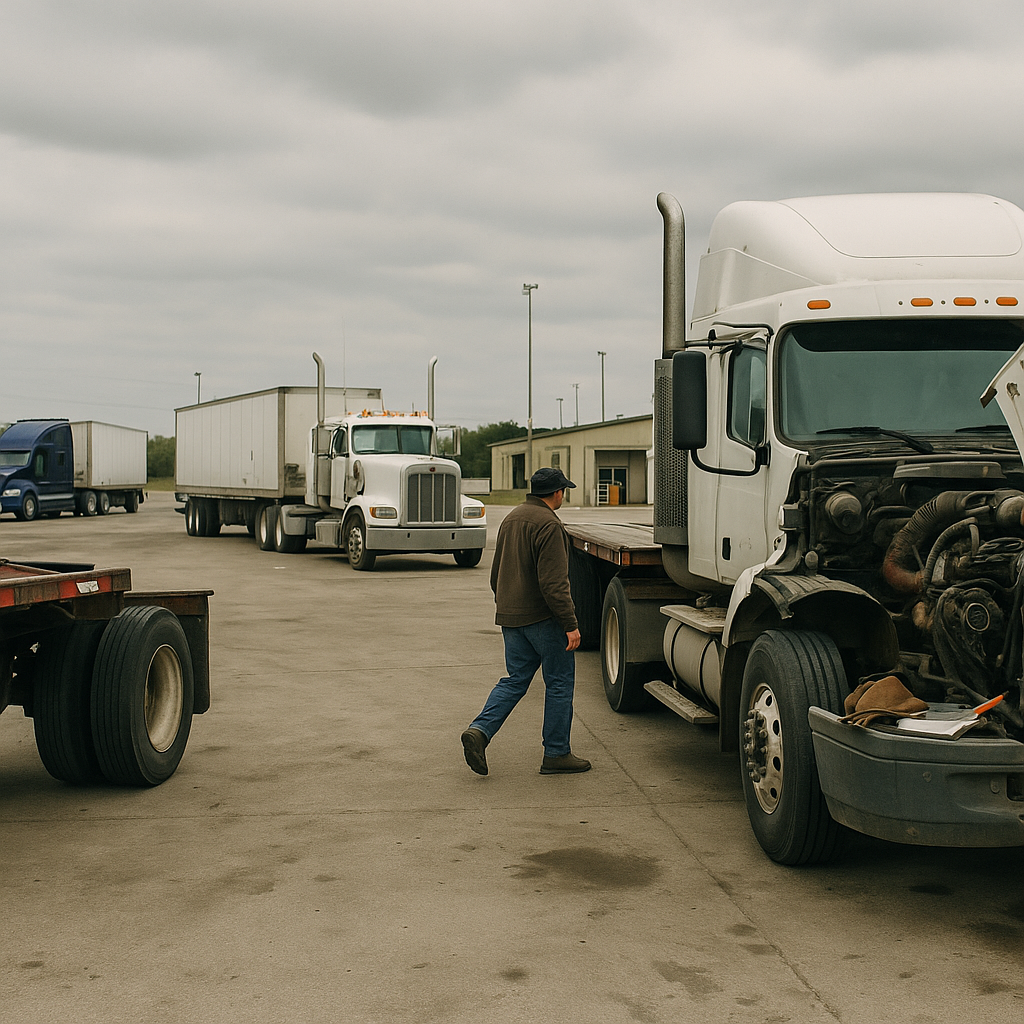

Fleet truck business costs make more sense when you split them into startup costs, monthly operating costs, and profit math. That matters because a one-truck owner-operator and a five-truck small fleet can run the same freight with very different insurance, labor, compliance, and cash-flow pressure.
Truck Fleet Business Costs: What Counts as a Fleet?#
A one-truck operation can absolutely be a real trucking business, but most people use “fleet” to mean two or more trucks under the same company. What changes costs isn’t the label by itself. It’s whether you drive the truck yourself, hire drivers, run under your own authority, and what freight you haul.
An owner-operator is a driver who owns or controls the truck and runs it as a business, either under their own authority or leased to a motor carrier. A small fleet usually means a company running a handful of trucks, often with more payroll, admin work, and downtime risk than a solo operation. A DOT number is the identifier FMCSA uses to track safety and operating information for carriers subject to federal rules.
Owner-operator vs. small fleet#
If you have one truck and drive it yourself, your labor and management sit in the same seat. Once you move to two to five trucks, costs change fast because somebody still has to handle dispatch, maintenance scheduling, bookkeeping, permits, and driver issues even when the wheels are turning.
That’s why “how much does a trucking business cost?” never has one clean answer. A solo owner-operator leased on to a carrier may have a much simpler cost stack than a small fleet with its own authority, its own trailers, and hired drivers.
Why cost structure changes by setup#
The same truck can carry very different costs depending on haul type, operating radius, and compliance scope. Interstate for-hire general freight, local intrastate work, auto hauling, and hazmat don’t carry the same insurance and filing requirements.
A MC number is FMCSA operating authority for carriers that need federal authority to haul regulated freight in interstate commerce. If you operate under your own authority, you’re not just paying for a truck. You’re paying for the structure around the truck.
What this guide covers#
This guide separates startup costs from ongoing operating costs, then turns those costs into per-day and per-mile planning numbers. That gives you something more useful than gross revenue bragging or startup checklists that ignore the first ugly months.

Startup Costs to Launch a Small Trucking Operation#
Startup costs include more than the truck and a filing fee. A real startup budget should include equipment, registration, insurance setup, compliance filings, and enough working capital to survive fuel, repairs, and slow-paying invoices in the first months.
Truck purchase or lease#
Your biggest early decision is usually buying versus leasing the truck. Buying may give you more control over the asset and long-term equity, while leasing can lower the upfront hit and preserve cash for operations. Neither is automatically better because the right choice depends on equipment condition, financing terms, revenue consistency, and how much repair risk you can absorb.
A used truck with a lower purchase price can still become the expensive option if it starts life in your business with deferred maintenance. A newer truck may reduce surprise downtime, but higher payments can squeeze cash flow just as hard if load volume drops.
Registration, DOT number, and authority filing fees#
Federal and state setup costs stack up quickly. FMCSA handles registration and authority for interstate operations, and carriers should verify what applies to their business through FMCSA. State agencies may also require separate registrations, apportioned plates, and other operating credentials depending on where and how you run.
This is where new carriers often confuse a DOT number, operating authority, and insurance filings as if they’re one thing. They aren’t. Each solves a different compliance problem.
Initial insurance and compliance setup#
Insurance is usually one of the biggest startup costs because you’re not just buying a card for the glove box. You may need commercial auto liability, cargo, physical damage, and other trucking-specific coverages depending on your operation.
A commercial auto liability policy covers bodily injury and property damage you cause while operating a business vehicle. Physical damage coverage pays for damage to your insured truck from collision or other covered causes, subject to the policy terms and deductible. Motor truck cargo covers covered freight you haul for others when loss falls within the policy terms.
Working capital and reserve funds#
The startup budgets that fail usually fail because they only count launch costs. They ignore the first rounds of fuel, insurance, tolls, repairs, and payroll before enough customer money actually lands in the bank.
That gap matters even more if brokers or shippers pay on delay, or if your first breakdown hits before your first profitable month. A reserve fund isn’t “nice to have.” It’s what keeps a startup from becoming a parked truck with authority.
Monthly Operating Costs: The Expenses That Decide Survival#
Monthly operating costs are what decide whether a truck survives, not the startup spreadsheet. Fuel, repairs, insurance, labor, tolls, and admin overhead create the real cash burn that hits every week, even when gross revenue looks decent on paper.
Fuel and fuel taxes#
Fuel is the cost most operators watch first, and for good reason. It moves constantly, it’s visible every day, and it can wipe out a decent rate if your route planning and idle habits are sloppy.
An IFTA account is the fuel tax reporting system used by eligible interstate carriers to report miles and fuel purchases across member jurisdictions. Fuel tax isn’t just “included in diesel.” Your reporting and routing habits affect how cleanly that cost gets managed.
Maintenance and repairs#
Maintenance isn’t one line item. It’s preventive service, tires, wear parts, roadside breakdowns, shop labor, downtime, and the loads you couldn’t cover while the truck sat.
This is where cheap startup math blows up. A truck can be revenue-positive on paper and still cash-crush the business if repairs bunch up in the same month as insurance, fuel, and slow receivables. If that’s already sounding familiar, this is where it helps to
before you build the wrong budget around the wrong policy structure.
Insurance premiums and deductibles#
Insurance is a monthly operating cost even if you think about it as a startup hurdle. Premium financing, renewals, down payments, and deductibles all affect cash flow, and the cheapest-looking quote can turn expensive if it leaves gaps or piles on exclusions.
If you finance equipment, lenders may also expect certain coverages to stay in place. Many operators bundle their planning around physical damage coverage because truck payments don’t stop when a unit is damaged and off the road.
Trailer use adds another layer. If you regularly pull trailers you don’t own, the cost question may involve non-owned trailer coverage, especially when your exposure isn’t the same as a formal interchange setup.
Driver pay, dispatch, tolls, and admin overhead#
A solo truck still has labor cost, even if you don’t cut yourself a formal payroll check every week. Once you add drivers, the cost stack grows fast with wages, payroll taxes, recruiting, turnover, and empty-mile inefficiency.
Then there’s the unglamorous overhead that kills margins quietly: bookkeeping, ELD subscriptions, factoring or banking fees, dispatch software, permit renewals, office help, and time spent fixing billing errors. Small fleets often underestimate this because they price trucks, fuel, and insurance correctly but treat paperwork like it’s free.
Commercial Truck Insurance Costs and Coverage Scope#
Commercial truck insurance costs depend on carrier type, weight, cargo, and whether you operate interstate or intrastate. State minimums and FMCSA federal requirements are not the same thing, and mixing them up is one of the fastest ways to budget wrong.
What insurance a carrier may need#
A trucking operation may need several different policies, not one catch-all policy. Common examples include liability, cargo, physical damage, bobtail or non-trucking liability, trailer-related coverage, and sometimes reefer-related protection for refrigerated operations.
If you want the broader overview first, start with commercial trucking insurance. If you haul freight for others, motor truck cargo coverage often becomes part of the real-world conversation quickly because brokers and shippers may require it even when a new carrier is focused only on liability.
State minimums vs. FMCSA requirements#
For interstate for-hire carriers, federal minimum financial responsibility rules are set under 49 CFR Part 387. Under 49 CFR Part 387, for-hire interstate carriers hauling general freight in vehicles over 10,001 lbs must carry at least $750,000 in public liability. That does not mean all truckers need $750,000, because minimums vary by weight, commodity, and operation.
For example, certain heavier interstate operations carrying general freight may be at that federal minimum, while auto haulers and hazmat operations can face higher requirements. Intrastate carriers may also face separate state rules. If you need a clearer map of trucking insurance requirements, scope the question by haul type first.
What coverage does and does not include#
This is where forum advice gets people into trouble. Personal auto insurance is not the same as trucking insurance, and non-business coverages don’t magically become valid because the truck is parked or deadheading.
Bobtail coverage usually refers to liability coverage when a tractor is operated without a trailer, while non-trucking liability applies to non-business use only and not paid hauling. If you’re sorting through that confusion, bobtail insurance is one of the most misunderstood pieces of the stack.
Why quote comparisons get confusing#
Two quotes can look similar and still protect very different risks. One may include broader cargo terms, different deductibles, tighter driver restrictions, or trailer assumptions that don’t fit your actual operation.
That’s why comparing only the premium misses the point. You need to compare what the quote actually contemplates you doing.
Permits, Taxes, Tolls, and Compliance Fees#
Permits, taxes, tolls, and compliance fees are small compared with a truck purchase, but they add up fast and can surprise new carriers. These costs scale with where you run, what you haul, and how your operation is registered, not just how many trucks you have.
Federal and state filings#
Federal filings cover one layer of compliance, while states may handle others such as registration, apportioned plates, and tax accounts. New operators often treat all paperwork as a one-time launch event when in reality some items renew, some vary by jurisdiction, and some only apply based on route or equipment.
IFTA and fuel tax basics#
IFTA simplifies multi-state fuel tax reporting, but it doesn’t eliminate recordkeeping. You still need clean trip data, fuel receipts, and consistent reporting habits if you don’t want tax and audit headaches later.
Tolls, permits, and route-related fees#
Tolls and permit costs depend on where your trucks actually run. Oversize or specialized work, certain corridors, and frequent metro routes can produce a fee pattern that looks very different from a long-haul general freight setup.
If you’re checking whether a carrier’s authority and operating status are active, FMCSA’s SAFER system is the practical place to verify the basics. That doesn’t replace state-level checks, but it helps catch bad assumptions early.
Common paperwork mistakes that create surprise costs#
The most common mistakes are simple: missed renewals, bad mileage records, wrong classification assumptions, and treating compliance notices like junk mail. None of those feels expensive on day one. They get expensive later.
Revenue, Profit, and Break-Even Math for One Truck or a Small Fleet#
Revenue only matters after it clears your real operating cost. The most useful way to plan fleet truck business costs is to convert your numbers into cost per mile, cost per day, and break-even revenue so you can price loads against reality instead of hope.
Cost per mile and cost per day#
Cost per mile is your total operating cost divided by total loaded and empty miles. Cost per day is your total operating cost divided by working days in the period. Both views matter because a truck can look fine by the month while losing money on weak daily utilization or too many unpaid empty miles.
A simple spreadsheet works better than memory here. Track fixed costs like truck payments, insurance, and software separately from variable costs like fuel, maintenance, tolls, and driver pay. Then divide both ways.
Estimating load revenue#
Don’t judge a load by the gross line alone. Compare expected revenue against fuel burn, tolls, deadhead, driver time, detention risk, and whether the load blocks you from a better reload later.
That’s the difference between “booked freight” and “good freight.” If you’re not sure whether your insurance structure matches the type of freight you’re chasing,
before a bad assumption follows you into every rate decision.
Break-even and operating ratio basics#
Break-even is the point where revenue covers all operating costs without producing true profit. Operating ratio is operating expenses divided by operating revenue, shown as a percentage. Lower is generally better because it means less of each revenue dollar gets consumed by expense.
If your break-even is too close to your average load revenue, one breakdown, one bad week of rates, or one insurance change can push the truck into the red fast. That’s why smart planning focuses on margin cushion, not just whether the truck can technically pay its bills in a good month.
When a truck turns from revenue-positive to cash-negative#
A truck becomes cash-negative when timing works against you even if jobs are booked. Slow receivables, repair clusters, deductible hits, and fuel spikes can drain cash before the revenue catches up.
That’s also why adding trucks too early can hurt. More trucks can mean more revenue, but they also multiply payroll, maintenance events, insurance spend, and admin complexity.
How Much Do Fleet Owners Make Per Truck?#
Fleet owners can make money per truck, but there is no honest universal number because profit depends on freight mix, utilization, maintenance, insurance, financing, and downtime. The right question is not “what does a truck gross?” but “what is left after the truck’s full cost stack is paid?”
What affects profit per truck#
A paid-off truck, a financed truck, and a leased truck can all haul the same lane and produce very different net results. The same goes for a truck hauling stable contracted freight versus spot market freight with more volatility.
Why same-size fleets earn differently#
Two three-truck fleets can have completely different outcomes because one has cleaner maintenance discipline, better collections, lower empty miles, and tighter admin control. Fleet size alone doesn’t tell you much.
Cash flow versus true profit#
Cash in the bank this week is not the same as profit for the quarter. A good week can hide upcoming repairs, tax obligations, or insurance bills you haven’t felt yet.
When to add truck number two#
Truck number two usually makes sense only after truck number one has stable lanes, disciplined cost tracking, and enough cash cushion to absorb normal chaos. Growth before control usually just scales confusion.
How to Control Costs Without Cutting Safety or Compliance#
You can control a surprising share of fleet truck business costs without cutting safety, maintenance, or compliance. The best savings usually come from cleaner habits: fewer avoidable repairs, better fuel discipline, regular policy reviews, and tighter expense tracking.
Preventive maintenance#
Preventive maintenance costs money up front, but reactive maintenance usually costs more because it adds downtime, towing, missed loads, and rushed repairs. A disciplined service schedule is one of the few cost controls that protects both safety and margin.
Fuel efficiency habits#
Route discipline, reduced idle time, tire pressure checks, and better trip planning won’t solve a bad rate environment, but they do reduce waste you can actually control. Small gains repeated all year matter.
Annual insurance review#
Review insurance at renewal with your actual operation in hand, not the version you started with. Different cargo, new drivers, trailer changes, or a move from leased-on work to your own authority can change what fits.
Expense tracking tools and spreadsheet habits#
The simple version works: track every expense by truck, by week, and by category. If you can’t tell what one truck costs per day and per mile, you’re guessing on rates and growth.
A basic spreadsheet with tabs for startup, fixed monthly costs, variable trip costs, and repairs is enough to start. What matters is consistency, not fancy software.
FAQ: Fleet Truck Business Costs#
How much do fleet owners make per truck?#
Fleet owners make very different amounts per truck because net profit depends on more than revenue. Freight mix, empty miles, fuel prices, maintenance, insurance, debt service, driver pay, and downtime all change the result. A truck with strong gross revenue can still underperform if repairs, financing, or poor lane planning eat the margin. The practical way to judge performance is to track net profit per truck after full operating costs, not just settlement totals or weekly gross.
How many trucks do you need to have a fleet?#
There’s no universal legal line where one truck stops being a business and two trucks become a fleet in every context. In everyday trucking use, many people call two or more trucks a fleet, while a one-truck business is usually treated as an owner-operator operation. The practical difference is less about the label and more about complexity. Once you add more trucks, you usually add more dispatch work, maintenance coordination, labor cost, insurance variables, and back-office burden.
Is there a $7500 tax credit for truck drivers?#
Don’t assume there is a blanket $7,500 tax credit for truck drivers. Tax credits depend on the vehicle, business use, tax year, and the exact federal or state program involved. The safest move is to verify current eligibility with the IRS and your tax professional before building that number into your business plan. A deduction, depreciation rule, or vehicle-specific credit is not the same thing as a universal cash credit available to every driver or carrier.
Why do most people quit trucking?#
A lot of people leave trucking because the business side hits harder than expected. Thin margins, cash-flow gaps, major repairs, insurance pressure, long hours, and nonstop admin work wear people down fast. Some drivers are profitable on paper but still struggle because money comes in late while fuel, truck payments, and repairs are due now. Better planning helps. Clear cost tracking, realistic reserves, and tighter load selection won’t remove all pressure, but they do reduce the surprises that push people out.
What’s the simplest way to calculate fleet truck business costs?#
Start by splitting expenses into startup, fixed monthly, and variable trip costs. Fixed costs usually include truck payments, insurance, permits, software, and admin overhead. Variable costs usually include fuel, tolls, maintenance, repairs, and driver pay. Then calculate cost per day and cost per mile for each truck. That gives you a working number you can compare against load revenue. If you only track annual totals, you’ll miss the day-to-day cash pressure that actually decides whether the truck is healthy.





