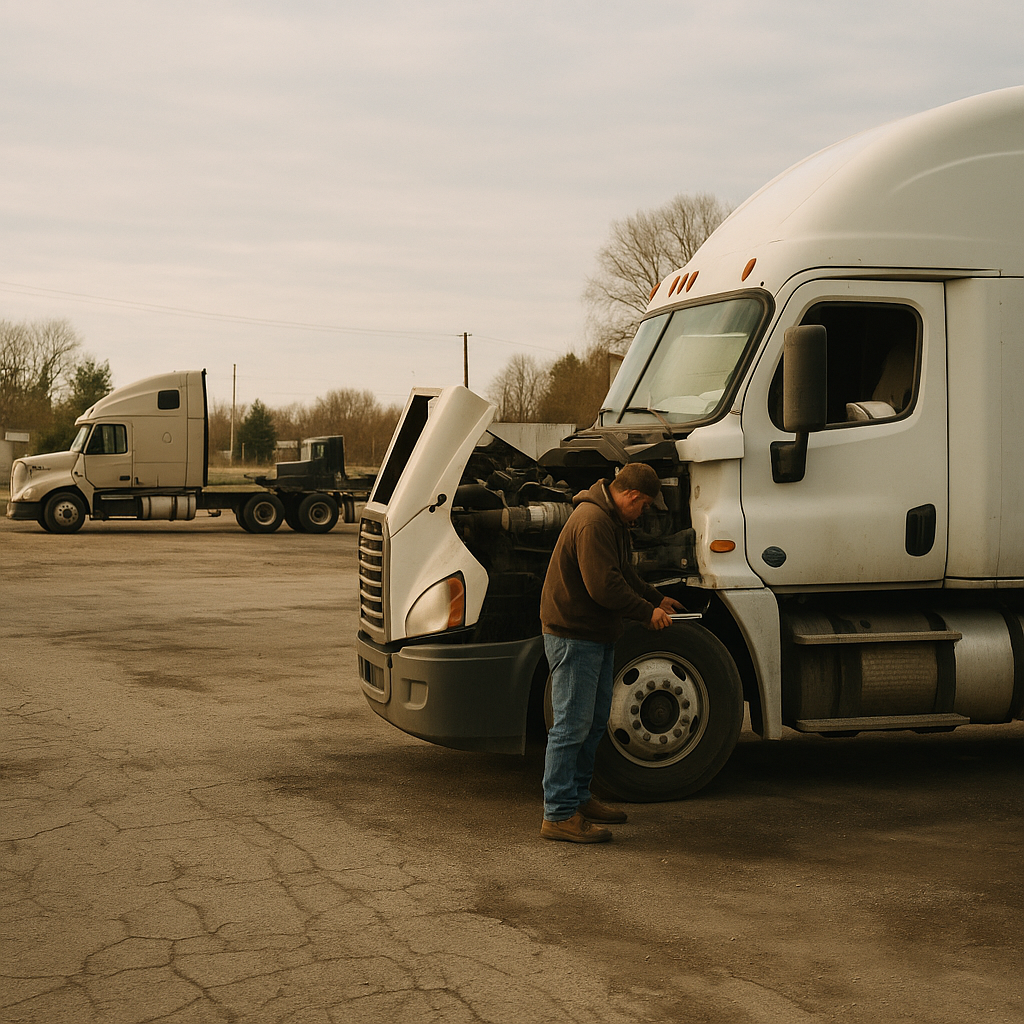

Cargo van truck insurance Indiana usually comes down to one question first: how are you actually using the van? A cargo van used for personal errands is insured differently than a van making business deliveries, running leased-on loads, or hauling freight under its own authority. This guide sorts out Indiana rules, FMCSA-triggered requirements, coverage choices, and the quote details that matter.
Start With How You Use Your Cargo Van#
Cargo van truck insurance Indiana isn’t based on the van alone. It depends on what work the van does, whether anyone is paying for transportation, what freight you haul, how far you run, and whether you’re leased to a carrier or operating under your own authority. Get that classification wrong, and the quote may look fine until a claim or contract problem exposes the gap.
Personal use#
A cargo van isn’t automatically a commercial vehicle just because it looks like one. If you use it only for personal errands and your personal auto policy allows that use, personal coverage may fit.
The problem starts when “personal use” slowly turns into paid work. Many personal auto policies limit or exclude business use or for-hire activity, so don’t assume you’re covered just because the van is titled in your own name.
Business use, and for-hire delivery#
Business use means the van supports a business, even if you aren’t hauling regulated freight for someone else. That can include delivering your own products, carrying tools, or making regular business trips.
For-hire delivery means you’re being paid to transport property for someone else. That’s where commercial auto liability, cargo concerns, contracts, and possibly federal filings can come into play depending on the operation.
A quick Indiana cargo van insurance decision path#
Start with the use, not the label on the vehicle. If the van is personal only, confirm your personal policy allows that use. If it serves a business, move into commercial auto territory. If you’re leased-on to another carrier, review the lease and that carrier’s insurance setup. If you’re running under your own authority, expect more responsibility for compliance, filings, and contract-driven coverage.
A simple way to sort it:
- Personal errands only: confirm personal policy use rules
- Business-owned or business-used local delivery: review commercial auto needs
- Leased-on for-hire work: review lease, carrier policy, and your own gap exposures
- Own-authority for-hire work: review state, federal, cargo, and contract requirements together
Details to gather before requesting a quote#
Good cargo van insurance quotes depend on clean details. The more accurate your information is up front, the more useful the quote comparison will be later.
Have these ready before you shop:
- Vehicle identification number, or VIN, which is the unique serial number tied to the van
- Garaging ZIP code, where the van is normally kept
- Ownership or lease status
- Commodities hauled
- Typical routes and states traveled
- Annual mileage
- Driver information
- Loss and claims history
- Lease agreements, broker packets, shipper contracts, or finance documents

Know Which Indiana and FMCSA Rules Apply#
Indiana cargo van insurance requirements are not one-size-fits-all. Indiana has state-level financial responsibility rules for vehicles, while some interstate for-hire operations can also trigger federal financial responsibility requirements under FMCSA rules. Your actual requirement depends on the operation, vehicle, cargo, and whether you run intrastate or interstate.
Indiana financial responsibility requirements#
Indiana’s baseline rules and your trucking or delivery setup are not the same thing. The Indiana Bureau of Motor Vehicles handles state vehicle and financial responsibility information, which is the starting point for understanding Indiana registration and proof-of-insurance expectations.
That said, a state minimum doesn’t tell you what a commercial policy needs to look like for paid delivery work. It also doesn’t tell you what a lease, lender, shipper, or broker will require. That’s why cargo van operators get in trouble when they rely on general auto advice instead of matching insurance to the actual work.
When interstate for-hire operations can trigger federal requirements#
Federal Motor Carrier Safety Administration, or FMCSA, rules can apply when your operation crosses into interstate for-hire motor carrier territory. A USDOT number is the federal identifier used to track certain commercial carriers and safety records. An MC number is operating authority for certain for-hire interstate operations.
Under 49 CFR Part 387, federal financial responsibility rules apply based on the operation. They are not triggered simply because a vehicle is a cargo van. The facts that matter include whether you’re for-hire or private, whether you operate interstate, what you haul, and how the vehicle is classified under the applicable rules.
For example, under 49 CFR Part 387, for-hire interstate carriers hauling general freight in vehicles over 10,001 lbs must carry at least $750,000 in public liability. Under 10,000 lbs, the minimum can be different. Hazmat and certain other operations can require much higher limits. That’s why “all truckers need $750K” is wrong.
MCS-90 is the federal endorsement used to show proof of certain public liability financial responsibility for qualifying motor carriers. It does not replace reading the full policy, and it does not mean every gap in the policy disappears.
Why contracts can require more than the legal baseline#
Legal minimums are only part of the picture. A shipper, broker, motor carrier, warehouse, landlord, or finance company may demand higher liability limits, cargo coverage, specific endorsements, or proof of additional insured status before they’ll work with you.
That means an MC number, USDOT number, or proof of basic insurance still may not satisfy the job. A van operator can be legally allowed to run but still be turned away because the contract asks for broader coverage than the baseline law.
SAFER is the FMCSA’s public system for checking carrier registration and safety information. You can use SAFER to review public records tied to a carrier or authority, but it won’t tell you whether a quote actually covers your van, freight, route, or contract terms.
How to verify authority and safety information#
Use public records to confirm facts, not to guess at policy fit. SAFER can help you verify a carrier’s public status, and FMCSA registration guidance can help you understand whether the operation points toward a USDOT number or operating authority question.
But don’t confuse public compliance data with insurance analysis. Two operators can have similar public records and very different insurance needs because one hauls low-value local goods and the other carries higher-theft freight across state lines under tighter contracts.
Build Coverage Around the Van, Freight, and Contract#
The right cargo van insurance setup usually combines several coverages, each solving a different problem. Commercial auto liability protects against covered third-party injury and property damage from vehicle use, physical damage protects the van itself, motor truck cargo protects covered freight, and general liability handles certain non-driving business claims. The right mix depends on the van, the freight, and the contracts you sign.
Commercial auto liability for third-party injury and property damage#
Commercial auto liability is the part of the policy that addresses covered bodily injury and property damage you cause to others while using the insured vehicle, subject to limits and policy terms. For a cargo van doing business or for-hire work, this is usually the backbone of the insurance plan.
This is where operators often confuse “having insurance” with “having the right insurance.” A personal auto policy may not be built for delivery, business-use, or for-hire exposures. A commercial auto quote should reflect the real work: who owns the van, who drives it, what it hauls, where it runs, and whether the operation is intrastate or interstate.
Physical damage for the cargo van itself#
Physical damage coverage pays for covered damage to your own insured vehicle. In plain language, that usually means collision for crash damage and comprehensive for things like theft, vandalism, fire, or certain weather losses, subject to deductibles and policy terms.
For many van operators, this decision starts with the van’s value and the finance or lease agreement. If a lender or lessor is involved, physical damage may be required. Even when it isn’t required, a newer or more expensive van can be hard to replace out of pocket after a major loss.
Deductibles matter here. A higher deductible can reduce premium, but only if it’s an amount you could realistically pay after a bad week. Choosing a deductible you can’t actually absorb is one of the fastest ways to turn a manageable claim into a cash-flow problem.
Motor truck cargo for customers’ freight#
Motor truck cargo is coverage for a carrier’s covered legal responsibility for freight in its care, custody, or control, subject to exclusions, limits, and conditions. If you’re hauling other people’s goods for pay, this is the coverage that deserves careful attention.
A lot of drivers and shippers casually say “cargo insurance,” but that phrase is too vague to be useful by itself. Motor truck cargo is a specific policy form. What matters is whether your actual commodities are covered, what the per-load limit is, what theft protections apply, and what exclusions could block a claim.
Read the conditions closely if you haul theft-prone freight or leave the van unattended. Some policies limit coverage based on where the van is parked, whether forced entry is shown, how long the vehicle was left unattended, or what anti-theft controls were in place. If the freight spoils from temperature failure, ordinary cargo coverage may not solve that exposure.
When that risk gets missed, the quote can look cheap right up until a broker rejects your certificate or a freight claim lands on your desk. If you’re not sure whether your setup matches the work,
General liability for non-driving business exposures#
General liability is coverage for certain third-party non-auto bodily injury, property damage, and related claims arising from business operations, subject to the policy terms. Think slip-and-fall type exposure at a business location or certain contract-driven requirements that have nothing to do with a crash.
It does not replace commercial auto liability. It also does not stand in for motor truck cargo. That’s the key distinction. A lot of operators add it because customers, warehouses, or landlords ask for it, not because it solves on-road vehicle losses.
Optional protections that depend on the operation#
Some coverages only matter if your operation creates that exposure. Buying them “just because” isn’t the point. Skipping them when the exposure is real is the problem.
Examples include:
- Trailer interchange, which applies when you use a non-owned trailer under a signed interchange agreement
- Non-owned trailer physical damage, which can apply when you use a trailer you don’t own without that interchange setup
- Reefer or refrigeration breakdown coverage, which addresses certain temperature-control equipment failures for refrigerated loads
Those aren’t automatic needs for every cargo van. They matter when the contracts, equipment, or commodity profile make them relevant.
Choose the Right Setup: Leased-On or Own Authority#
Leased-on and own-authority cargo van operators can drive similar vehicles and still need very different insurance reviews. If you’re leased to another carrier, start with the lease and the carrier’s insurance documents. If you’re running under your own authority, expect more responsibility for filings, evidence of coverage, and contract compliance.
What to confirm when leased to another carrier#
If you’re leased-on, get the lease agreement, insurance requirements, dispatch rules, and proof-of-insurance documents in hand before you assume anything is covered. The FMCSA registration overview helps frame the difference between registration, authority, and operating arrangement, but your lease controls a lot of the practical insurance detail.
Carrier-provided coverage may apply only while you’re under dispatch or performing certain work. It may not protect every obligation you take on personally. That’s especially true if the lease shifts deductibles, cargo responsibility, downtime costs, or off-dispatch exposures back to you.
What changes when you operate under your own authority#
Under your own authority, you usually carry more of the compliance burden directly. That can include maintaining required insurance evidence, handling filings tied to the operation, satisfying shipper or broker setup demands, and keeping cargo coverage aligned with what you actually haul.
Own-authority operators also need to keep business details current. If your radius expands, you add interstate lanes, switch commodities, or add drivers, the policy needs to reflect that. Small changes in the operation can change underwriting and compliance expectations in a hurry.
Avoiding gaps between carrier-provided and operator-provided coverage#
The safest move is to compare every insurance document against the lease, broker setup packet, shipper requirements, and vehicle finance agreement. Don’t assume a certificate proves everything you need is handled.
This is where operators get burned: one document says the carrier provides coverage, another makes the owner-operator responsible for cargo deductibles or physical damage, and nobody catches the mismatch until a loss happens. Before you bind anything,
Understand What Drives Indiana Cargo Van Insurance Costs#
Cargo van truck insurance Indiana pricing is based on the full risk profile, not a universal rate card. Insurers look at the van, where it’s kept, who drives it, what it hauls, how far it runs, the coverage limits, and whether the business looks stable and accurately described. Your actual premium depends on your operation, cargo, radius, driving history, and other factors.
Vehicle, garaging, and mileage factors#
The van itself matters. Newer vans, higher replacement values, specialized upfits, and expensive parts can all affect the quote. So can the garaging ZIP code, since theft patterns, traffic density, weather, and repair environments vary by area.
Mileage and radius also tell the insurer how much exposure you’re putting on the road. A van making short local runs isn’t evaluated the same way as one crossing multiple states on tighter schedules.
Driver experience, violations, and claims history#
Experience matters, but so does documented experience. Years of commercial driving, clean records, and continuity in similar work can help underwriters understand the risk.
Violations, preventable accidents, prior cargo losses, and coverage lapses can push a quote in the wrong direction. New ventures may also get closer review, especially when there’s limited commercial history to underwrite.
Cargo, delivery radius, and operating territory#
What you haul can matter as much as how you drive. Higher-value goods, theft-prone commodities, time-sensitive delivery work, and interstate operations often draw more underwriting attention than lower-risk local work.
Even if the van stays the same, the quote can change when the freight changes. That’s why “I only changed customers” can still turn into a major insurance update if the new loads bring different commodity or contract exposure.
Coverage limits, deductibles, and contract requirements#
Higher liability or cargo limits can raise premium, but lower limits aren’t automatically useful if they don’t meet the job requirements. The same goes for deductibles. A policy with a low premium and a bad deductible fit can still be the wrong buy.
Contract requirements also shape cost. If a broker or shipper wants higher limits, special endorsements, or fast certificate turnaround, that can affect which markets fit the operation.
Practical ways to improve quote readiness without creating coverage gaps#
There are smart ways to clean up a quote, and risky ways. The smart way is to improve accuracy and documentation.
Focus on these steps:
- Keep business details current and consistent
- Use realistic deductibles
- Correct old or overly broad classifications
- Document actual commercial driving experience
- Compare equivalent quotes line by line
- Maintain prior insurance continuity when possible
What you don’t want to do is hide freight details, understate the radius, cut needed limits, or buy personal coverage for commercial work just to make the price look better. That usually saves nothing when a claim or contract review exposes the mismatch.
Use This Quote Comparison Checklist Before You Bind#
A cargo van insurance quote is only useful if it matches your real operation. Compare named insureds, vehicle and driver details, use classification, cargo, limits, deductibles, and endorsements before you compare premium. A lower price doesn’t mean much if the quote excludes the actual route, freight, driver, or work you’re being paid to do.
Match the policy to your operating authority and work type#
Start with the business identity. The named insured should match the person or entity that actually needs coverage. The use classification should match the real work: business use, leased-on for-hire work, or own-authority operations.
Then check the authority setup. If you’re leased-on, confirm the quote fits that arrangement. If you’re under your own authority, confirm the policy and any required filings line up with that setup.
Compare limits, deductibles, and exclusions—not just the premium#
Premium is the last comparison, not the first. Two quotes can look similar until you compare liability limits, cargo limits, physical damage deductibles, and excluded exposures.
Watch for restrictions that affect real van work, including unattended-vehicle conditions, theft requirements, excluded commodities, rental vehicle issues, subcontracted work, or non-owned vehicle use. If those details differ, the quotes are not truly comparable.
Review freight and vehicle details line by line#
This is where small errors cause big headaches. Check the VIN, garaging location, vehicle value, driver list, states traveled, annual mileage, operating radius, and commodity description.
If the van hauls electronics, tools, retail goods, food products, or mixed general freight, the quote should reflect that accurately. “Cargo van” is not a commodity description. Underwriters need to know what sits in the back of the van.
Confirm certificates, filings, and contract requirements#
A good quote also has to work administratively. Check effective dates, cancellation provisions, payment structure, and certificate turnaround expectations.
If customers or brokers need proof fast, ask that question before you bind. If a lease or shipper contract requires certain wording, make sure that requirement is reviewed before the first load, not after you’re already under pressure.
Questions to ask an Indiana cargo van insurance broker#
A short question list can keep you out of a bad fit. Ask direct questions and make the broker answer them against your actual work, not generic van insurance language.
Use questions like these:
- Does this policy cover my actual delivery or for-hire work?
- What commodities are excluded?
- Does the quote match my lease or authority setup?
- What deductibles apply to the van and the freight?
- Are there unattended vehicle or theft conditions?
- Which certificates or filings will my customers request?
- What changes do I need to report if I expand lanes or add drivers?
Get Your Indiana Cargo Van Coverage Details in Order#
Indiana cargo van insurance gets easier when you follow the sequence in the right order. First identify how the van is used. Then confirm whether Indiana-only rules apply or whether your operation also triggers federal requirements. After that, match coverage to the van, the freight, and the contracts, then compare equivalent quotes instead of chasing the lowest headline price.
Before requesting a review, gather your vehicle details, driver information, authority setup, cargo description, operating radius, and contract requirements. Revisit the policy anytime you change authority, add interstate work, haul new commodities, add drivers, or sign a new carrier or shipper agreement.
Indiana Cargo Van Insurance FAQs#
What type of insurance does a cargo van need?#
It depends on how the cargo van is used. A personal-use van may fit under personal auto coverage if the policy allows that use, but business-use and for-hire cargo vans commonly need commercial auto liability instead. Then you add other coverages based on the work. Physical damage protects the van itself, motor truck cargo can protect covered freight, and general liability can help with certain non-driving business exposures. The right setup depends on the vehicle, freight, contract requirements, operating territory, and whether you’re leased-on or running under your own authority.
Who has the cheapest full coverage car insurance in Indiana?#
That question usually points people in the wrong direction for cargo van work. Personal full-coverage rankings are not a good way to choose insurance for a business-use or for-hire cargo van. Instead, request commercial quotes using the same vehicle, drivers, garaging ZIP, radius, cargo, limits, deductibles, and endorsements, then compare exclusions and contract fit before comparing premium. The cheapest-looking option can become the most expensive mistake if it excludes the actual work you do or fails a broker, shipper, or lease requirement.
What is considered a commercial vehicle in Indiana?#
For insurance planning, treat a cargo van as commercially operated when it is used to transport goods or passengers for a business or for compensation. That can include business-owned delivery use, contractor use, or for-hire hauling. The exact registration or regulatory classification can depend on the facts, so confirm vehicle and financial responsibility rules with the Indiana Bureau of Motor Vehicles. Just as important, make sure the insurance policy itself permits the van’s real-world use. A personal policy and a commercial operation often do not mix well.
Is motor truck cargo the same as cargo insurance?#
Not exactly. “Cargo insurance” is a broad phrase people use loosely, but motor truck cargo is a specific type of coverage for a carrier’s covered responsibility for freight in its care, custody, or control. That’s why the details matter. Review the commodity list, per-load limits, exclusions, deductibles, and theft conditions instead of assuming the label alone tells you enough. If you haul mixed loads, high-value items, or theft-prone freight, a generic reference to cargo insurance is not enough to confirm that the policy fits.
Do I need FMCSA insurance requirements if my cargo van stays in Indiana?#
Not always. Federal financial responsibility rules usually depend on the operation, not just the vehicle type or where the van is parked. If the work is intrastate only, that may point you toward Indiana-specific requirements and contract requirements rather than FMCSA-triggered rules. But if the operation is for-hire and part of interstate commerce, federal requirements can still become relevant depending on the facts. Review the setup carefully, especially if loads cross state lines, involve brokers, or move under an interstate carrier arrangement.