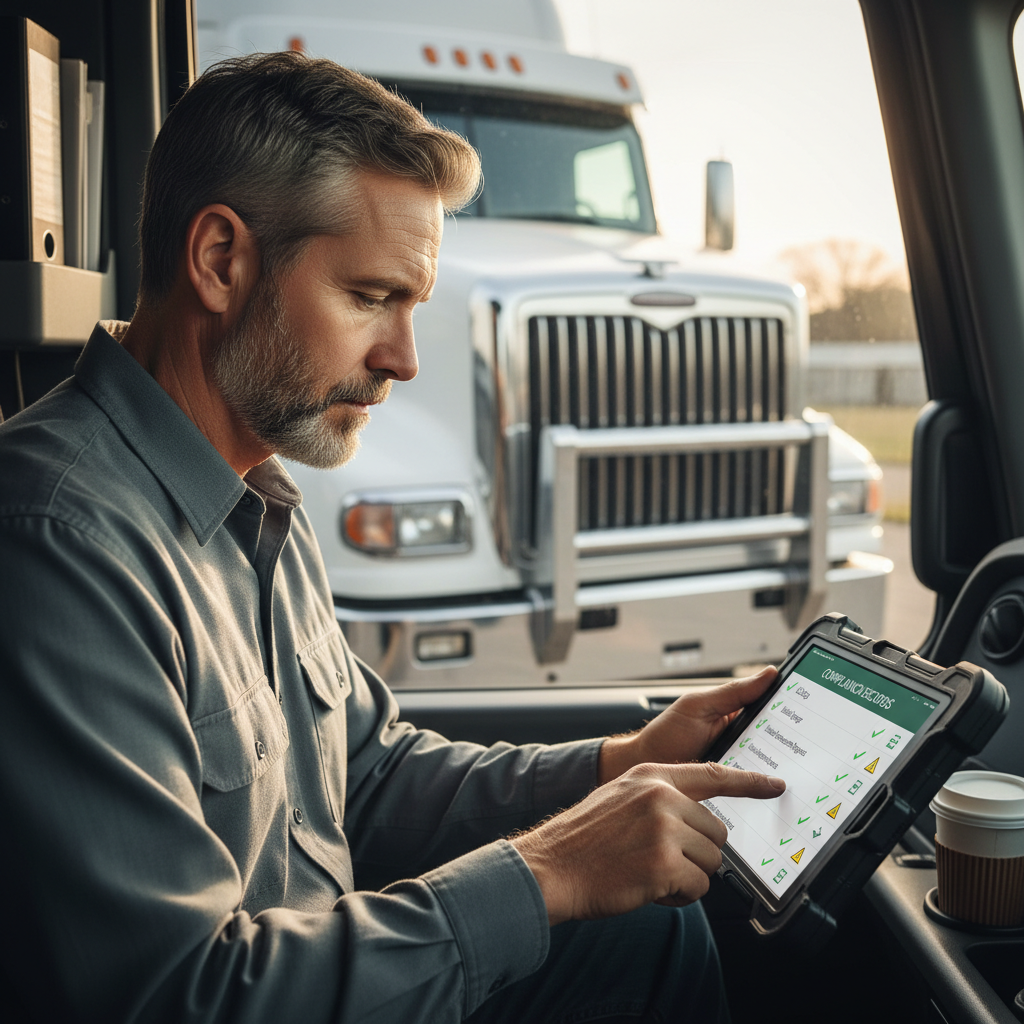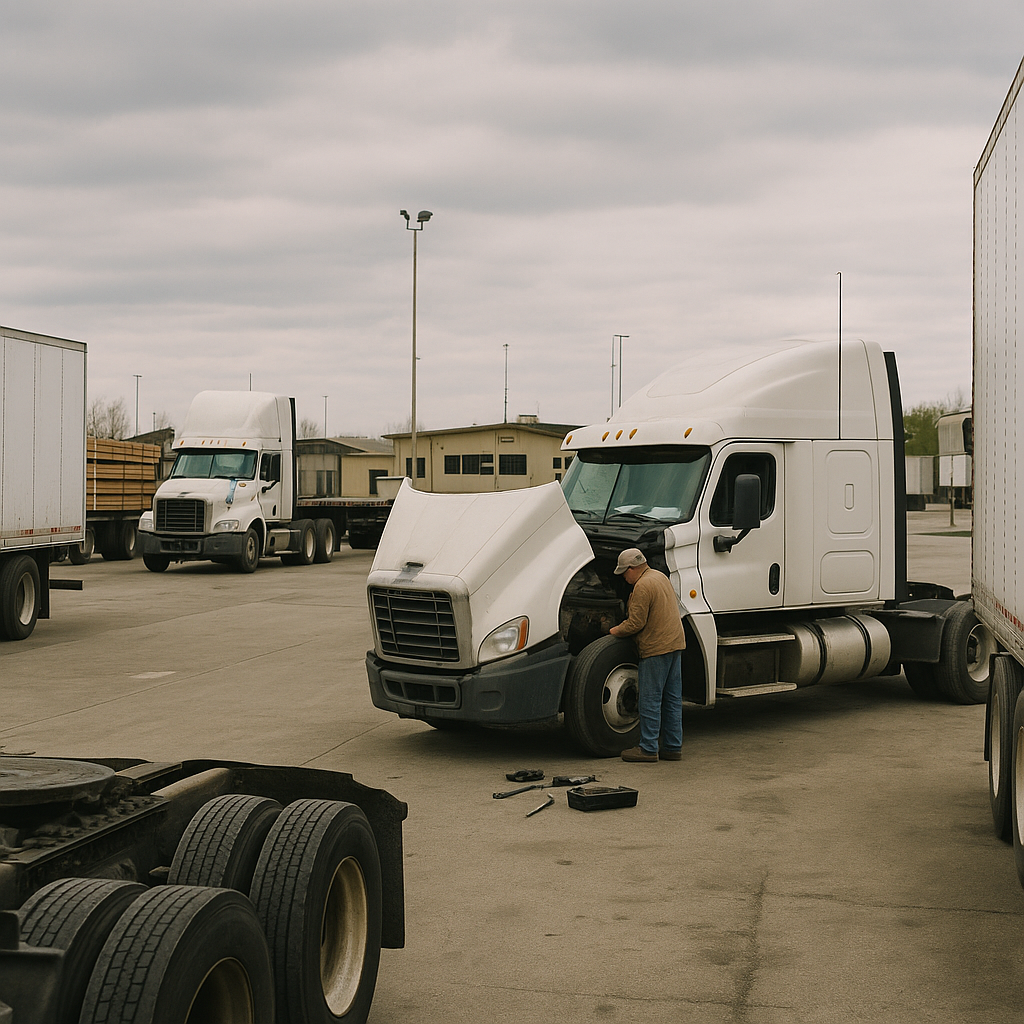

Your Trucking Insurance Garaging Address is the physical place your truck is normally parked when it’s not operating. That’s simple in theory, but a lot of owner-operators get tripped up because the address on business paperwork, the place you get mail, and the place the truck actually sleeps at night may not be the same.
This guide breaks down what a garaging address means, why insurers care, what can count as proof, and how to handle home parking, yard parking, terminal parking, or multiple regular locations without creating an avoidable underwriting mess.
What a Trucking Insurance Garaging Address Means#
A trucking insurance garaging address is the physical location where a truck is normally parked overnight when it is not in use. It is not automatically your mailing address, business address, or home address unless that is truly where the truck is usually kept.
The location where the truck is normally kept overnight#
A garaging address is the physical location where a truck is normally parked when it is not operating. For most owner-operators, that means the place the truck returns to most nights or the place it is regularly stored between trips.
That sounds obvious, but the confusion usually starts when the truck doesn’t stay at the same address printed on your LLC paperwork or your driver’s license. If your truck usually stays in a leased yard across town, that yard may matter more for underwriting than the house where you get your mail.
Commercial trucking insurance looks at how the truck actually operates in the real world. The question isn’t “Which address is easiest to use?” The question is “Where is this truck normally parked?”
Why commercial trucking disclosures differ from personal auto assumptions#
Commercial trucking disclosures work differently from the simpler personal auto idea many drivers are used to. Personal auto insurance often treats garaging as a basic household question, but trucking insurers usually dig deeper into operating facts, storage arrangements, and recurring parking patterns.
A commercial truck can run interstate, park at a residence, sit in a fenced yard, rotate through terminals, or spend weeks on the road before returning to its base location. That makes the disclosure more fact-specific than a standard car policy.
If you’ve only dealt with personal auto before, don’t assume the same shortcuts carry over. A tractor used in business gets underwritten as a commercial risk, not just as a vehicle with an address attached.
Garaging address versus mailing address, business address, and dispatch location#
Your mailing address is where you receive mail. Your business address is the address tied to your company records. A dispatch location is the place dispatching or administrative work happens. None of those automatically proves where the truck is garaged.
A truck might be dispatched from one city, insured under an LLC registered in another, and parked every night in a small rented yard somewhere else. That’s not automatically a problem, as long as each address is accurate for its own purpose.
What creates trouble is mixing them up or using whichever one seems most convenient. For trucking insurance, the right answer is the actual normal overnight location.

Why the Garaging Location Can Affect Trucking Insurance#
Your truck’s normal parking location can affect trucking insurance because insurers may review local risk conditions at that address as one part of underwriting. It matters, but it is only one factor alongside your radius, cargo, vehicle type, driver history, limits, and prior losses.
Local risk factors insurers may review#
Underwriting is the process an insurer uses to evaluate risk before offering or changing coverage. In trucking, that review often includes where the truck normally parks when it’s off the road.
Insurers may look at factors tied to the location itself, such as theft exposure, traffic density, weather patterns, local repair costs, and whether the truck is kept in a secured or unsecured spot. A tractor parked inside a controlled yard may present a different risk picture than one left on an open street, but that doesn’t guarantee any specific rate result.
The key point is that location feeds into the overall file. It doesn’t work by itself.
The difference between where the truck parks and where it travels#
The garaging address tells part of the story, not the whole story. A truck can be garaged in one place and still operate across a much wider area.
That’s why insurers also care about radius, commodity, equipment type, driver history, coverage limits, and loss history. A truck that parks in a low-traffic area but runs difficult lanes or specialized freight may still underwrite very differently from a truck with a similar parking setup.
So don’t think of garaging as a shortcut to a better policy setup. It’s one real operational fact among several.
Why an address change can require an underwriting review#
A change in garaging location can trigger an underwriting review because the insurer may need to reevaluate the truck’s risk based on the new normal parking arrangement. That review can happen even if nothing else about the truck, driver, or authority changed.
Some drivers make the mistake of using an address that “looks better” on paper instead of the place the truck actually parks. That’s the kind of mismatch that can create trouble later if records or verification requests don’t line up.
The safer move is simple: disclose the actual normal parking location and update it when that pattern changes. If you’re unsure how a proposed move affects your policy,
Choose the Correct Address for Where Your Truck Actually Parks#
The correct garaging address is the place your truck is normally parked overnight, based on actual use rather than convenience. If you park at home, in a leased yard, at a terminal, or at multiple regular locations, disclose the real pattern and any recurring alternate spots.
Truck parked at home#
If your truck is usually parked at your residence, your home may be the correct garaging address. But that only works if the truck is actually kept there, not just if that’s where you live or receive mail.
Be careful with nearby lots or side yards. If the truck spends most nights in a separate storage lot, farm lot, or rented parcel down the road, that separate physical location may be the better answer.
Insurers may also want to know practical details, like whether the truck is behind a gate, in a driveway, on private property, or exposed on the street. The point isn’t to make the setup look prettier than it is. The point is to describe it accurately.
Truck parked in a leased commercial yard#
If the truck normally stays in a leased yard, use the yard’s street address and be ready to explain the arrangement. A leased yard is a commercial parking or storage location you rent or use with permission for keeping the truck.
What matters most is whether the truck is actually stored there on a normal basis. You should also be ready to confirm that you have permission to park there, whether the yard is secured, and whether the truck is stored there full-time or only between certain trips.
A vague answer like “my truck is around that industrial area” won’t help much if the insurer asks for documentation. Use the actual location and the real arrangement.
Truck parked at a carrier terminal#
A terminal is not automatically the right garaging address just because you have access to it. A terminal is a carrier’s operating facility where trucks may be dispatched, staged, serviced, or parked.
If you occasionally leave the truck at a terminal but usually take it home or return it to your own yard, the terminal may not be the truck’s normal garaging location. On the other hand, if the truck is regularly stored there overnight as its true home base, that may be the right disclosure.
This is where owner-operators get into gray areas. Having a terminal available is different from normally garaging the truck there.
Truck parked at more than one location#
If your truck parks at more than one place, identify the normal overnight location first, then disclose recurring alternate locations. Don’t guess, and don’t just pick the address that seems most favorable.
Maybe the truck stays at home on weekends, in a rented yard during the week, and sometimes at a terminal between loads. In that case, explain the pattern plainly. The insurer may want the main location plus a note about regular alternatives.
That matters because a rotating setup can still be accurate if you describe it correctly. Problems usually start when the application shows one fixed address but your actual parking pattern is something else entirely.
What Can Count as Proof of a Garaging Address#
Proof of a garaging address is carrier-specific, but it usually means documents that connect you to the physical location where the truck is normally parked. Before sending anything, confirm what document type the insurer wants and make sure it clearly supports the actual parking arrangement.
Documents that connect you or your business to the location#
Acceptable proof can vary by insurer, so don’t assume one document works everywhere. One carrier may accept a utility bill, while another may ask for a lease, property record, or additional explanation.
Common examples include:
- utility bill
- lease or rental agreement
- property tax record
- mortgage statement
- business license
- yard-storage agreement
- terminal parking agreement
- signed letter granting parking permission
The important part is that the document ties you or your business to the physical address in a recognizable way. When possible, it should show a name, the address, and a date.
Documents that show permission to park there#
A document can prove either control of the location or permission to use it for truck parking. That’s especially relevant when the truck is stored in a commercial yard, on another person’s property, or at a terminal.
A yard-storage agreement is a written agreement showing that you rent or are allowed to keep the truck at a specific yard. A signed parking-permission letter can also help if a landlord, family member, or property owner allows the truck to stay there.
Don’t alter documents to make them fit. If the name on the proof doesn’t match exactly because the property is in a spouse’s name or the yard contract is under the business name, explain the mismatch up front instead of hoping nobody notices.
Why an insurer may request more than one document#
An insurer may ask for more than one document when the first proof doesn’t fully show who controls the location, whether the address is current, or whether the truck is actually allowed there. That’s not unusual.
A simple prep checklist helps:
- use a current document
- send a readable copy
- match the legal or business name where possible
- explain any name mismatch
- confirm the physical address is visible
If you’re dealing with a carrier such as Progressive, follow the upload or submission instructions given by the company or its representative rather than assuming there’s one universal process.
How to Handle a Garaging Address Change During the Policy Term#
If your truck’s normal overnight parking location changes permanently or on a recurring basis, report it promptly instead of waiting for renewal. Ordinary over-the-road travel is different from moving the truck’s true home base or regularly keeping it at a new location.
Moves that should be reported before the truck begins parking there#
If you’re moving the truck from home to a rented yard, from one yard to another, or from regular home parking to regular terminal parking, that’s the kind of change you should raise before relying on the new setup.
The same goes for recurring changes, not just full relocations. If the truck used to come home every night but now spends most nights in a commercial yard, the normal garaging pattern changed even if your mailing address didn’t.
Waiting until renewal can leave the policy file out of date for months. That’s an avoidable risk.
Temporary travel versus a true garaging change#
Temporary travel is part of trucking. A truck can be out on the road, parked at truck stops, shippers, receivers, or temporary layover points without changing its garaging address.
What matters is whether the truck’s normal base location has changed. If the truck now regularly returns to a new lot, a new residence, or a terminal instead of the address on file, that is more than ordinary travel.
A good test is simple: when the truck is not working, where does it normally live now?
What information to have ready for your insurance representative#
When you report a change, have the key details ready so the review goes faster. That usually includes:
- new physical address
- effective date of the change
- whether parking is secured
- how often the truck stays there
- supporting documents, if requested
A quick call before the truck starts parking there can save a long cleanup later. If you’re planning a change and want a trucking-focused review first,
What Can Happen When the Garaging Address Is Wrong#
When the garaging address is wrong, an insurer may ask questions, request documents, update the policy, or send the file back through underwriting. What happens next depends on the policy language, the facts, state law, and whether the mismatch was an honest mistake or something more serious.
Why inaccurate location information creates underwriting problems#
Insurance applications rely on accurate information. The NAIC generally emphasizes that policyholders should review policy documents and notify insurers of relevant changes according to policy requirements.
That matters here because the garaging address is part of the underwriting picture. If the insurer believes the truck is normally parked in one place but the actual operation points somewhere else, the file may no longer reflect the real risk.
That doesn’t mean every mismatch leads to the same outcome. But it does mean inaccurate location information can create preventable problems.
Address discrepancies that may appear during verification#
Common discrepancies are usually pretty ordinary. A driver uses a home mailing address even though the truck sleeps in a yard. A prior address stays on file after a move. A terminal gets listed even though the truck usually parks at home.
Those differences can come up during underwriting questions, document review, policy changes, or claim investigation. The issue is often less about one dramatic event and more about small records that don’t line up.
That’s why “close enough” is a bad strategy with commercial trucking insurance.
How to correct an honest mistake#
If you notice a mistake, fix it quickly and document the fix. Start by contacting the insurer or your broker, explain the actual parking arrangement, and give the effective date for when that arrangement started.
Then send whatever verification is requested and keep copies of what you submitted. Save emails, confirmations, updated dec pages, and any notes showing the correction was reported.
The goal is to create a clean record that matches reality. That gives underwriting the best chance to review the situation on current, accurate facts.
Keep Garaging Details Consistent With Your Commercial Trucking Records#
Garaging details should stay consistent with your broader trucking records, but that does not mean every address in your business has to be the same. Different addresses can be legitimate as long as each one is accurate for its own purpose and your insurance disclosures match actual truck parking.
Records that may use different addresses for legitimate reasons#
An owner-operator can have several valid addresses in the same operation. Your company may have a registered business address, a mailing address, a principal place of business, a dispatch location, and a separate garaging address.
That’s normal. The problem isn’t having different addresses. The problem is using one address as a shortcut for another when they serve different purposes.
When you move, change yards, or switch parking arrangements, review both your insurance paperwork and your business records so the right addresses stay attached to the right functions.
When USDOT and operating-authority records matter#
Your USDOT number is the identification number FMCSA uses for safety and regulatory tracking. Your MC number is a motor carrier operating-authority identifier used in certain for-hire operations. Those records matter, but they do not automatically establish a truck’s garaging address for insurance purposes.
You can verify carrier identification and safety-related records through FMCSA’s SAFER system, but SAFER is not an independent proof of where a truck is normally garaged. FMCSA records serve regulatory and identification functions.
Likewise, federal financial responsibility rules under 49 CFR Part 387 address certain insurance requirements, including public liability and the MCS-90 for applicable operations, but those federal rules are separate from a carrier’s underwriting decision about the truck’s normal parking location. An MCS-90 is a federally required endorsement used for certain motor carriers to demonstrate financial responsibility.
A practical consistency review for owner-operators#
A quick consistency review can prevent a lot of headaches. Check your insurance application, declarations page, yard or parking agreements, company records, and any recent address changes together.
Ask three basic questions: where does the truck usually park, what address is on the policy, and do my supporting records still reflect the current setup? If those answers don’t line up, fix the mismatch before it turns into an underwriting problem.
Garaging Address Checklist Before You Bind or Renew Coverage#
Before you bind or renew coverage, confirm the truck’s real normal parking address, gather proof, and disclose any recurring alternate locations. The right answer is based on actual parking practice, not the address that seems easiest to use on an application.
Confirm the normal overnight location#
Start with the basic fact pattern. Where does the truck normally stay overnight when it is not operating?
If the answer is home, use home only if the truck really parks there. If the answer is a yard or terminal, use that location if it is truly the normal base. If the truck rotates between places, identify the main one and disclose the recurring alternatives.
Prepare documents before underwriting asks#
Collect proof before someone asks for it. That can save time if the insurer wants verification during quoting, binding, or a policy change.
Try to have a current readable document that shows the physical address, your legal or business name when possible, and any parking permission details for yards or terminals. If something doesn’t match perfectly, attach a short explanation instead of leaving the reviewer to guess.
Report changes instead of waiting for renewal#
If the truck’s home base changes, report it promptly rather than assuming it can wait. That includes moves between home parking, leased yard parking, terminal parking, or any new recurring storage setup.
Owner-operators with changing parking arrangements usually do best when they get the question answered before the file goes stale.
FAQ#
What is my garaging address?
Your garaging address is the physical location where your truck is normally parked overnight when it is not operating. For trucking insurance, that is not automatically your home, mailing address, dispatch address, or business registration address. The right answer is the place the truck usually returns to or is regularly stored between trips. If the truck parks in more than one place, identify the normal main location first and disclose recurring alternate locations rather than guessing or using the most convenient address.
What does garaging address mean for insurance?
For insurance, a garaging address tells the insurer where the truck is normally kept when it’s off the road. That location can be one underwriting factor among many, along with radius, cargo, vehicle type, driver history, limits, and loss history. Insurers may look at local conditions such as theft exposure, traffic density, weather, repair costs, and whether parking is secured or unsecured. It does not determine price by itself, but it does need to match your actual operation so the policy file reflects real risk.
What qualifies as proof of garaging address?
What qualifies as proof depends on the insurer, but common examples include a utility bill, lease, rental agreement, mortgage statement, property tax record, business license, yard-storage agreement, terminal parking agreement, or a signed letter giving you permission to park there. The best proof usually shows a recognizable name, the physical address, and a date when applicable. If the document is in a spouse’s name or your company name instead of your personal name, explain that clearly. Always confirm the carrier’s requested document type before submitting anything.
How to send proof of garaging address progressive?
If Progressive asks for proof of garaging address, follow the submission instructions given in the request or by your representative. There is not one universal method that applies in every case. Send a readable current document that supports the physical location where the truck is normally parked, and make sure the address is clear on the copy. If the name on the document does not match perfectly, include an explanation. After sending it, confirm receipt so you know the file was updated and no additional proof is still pending.