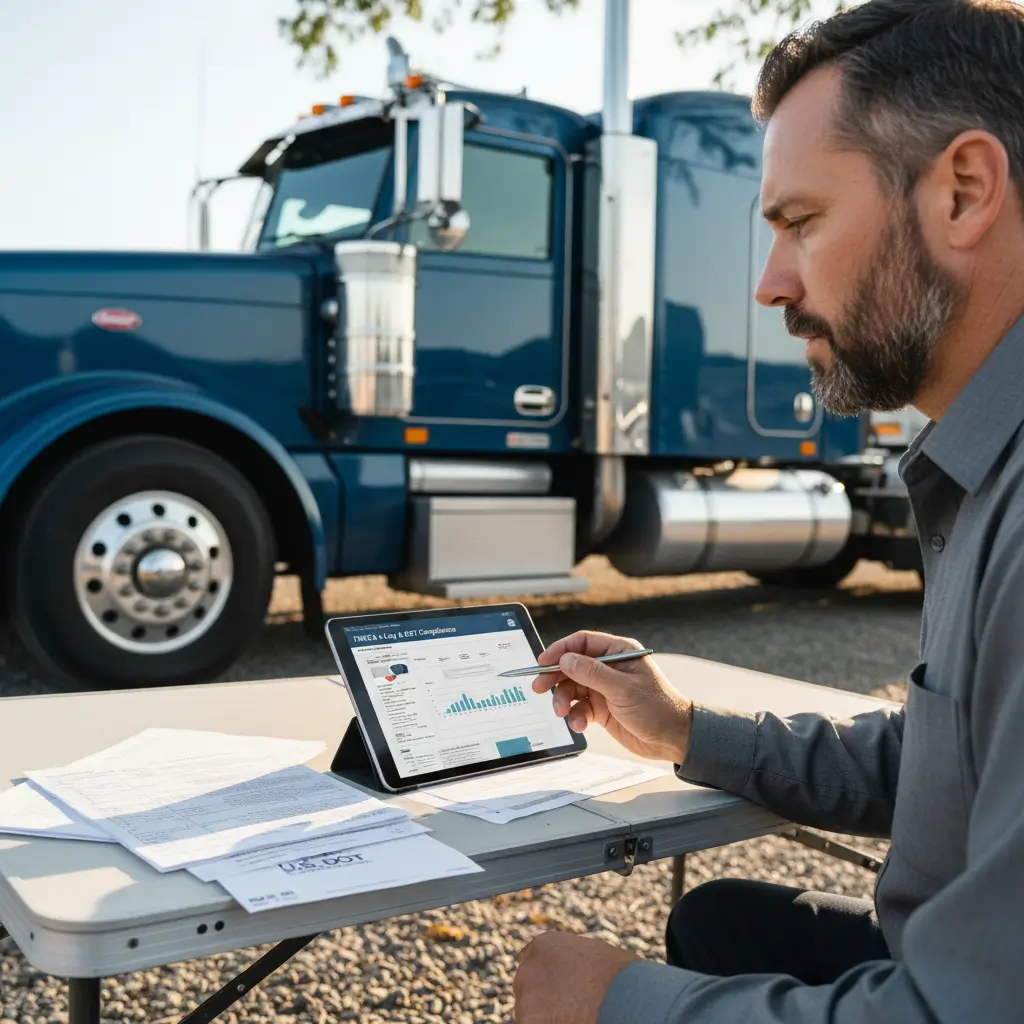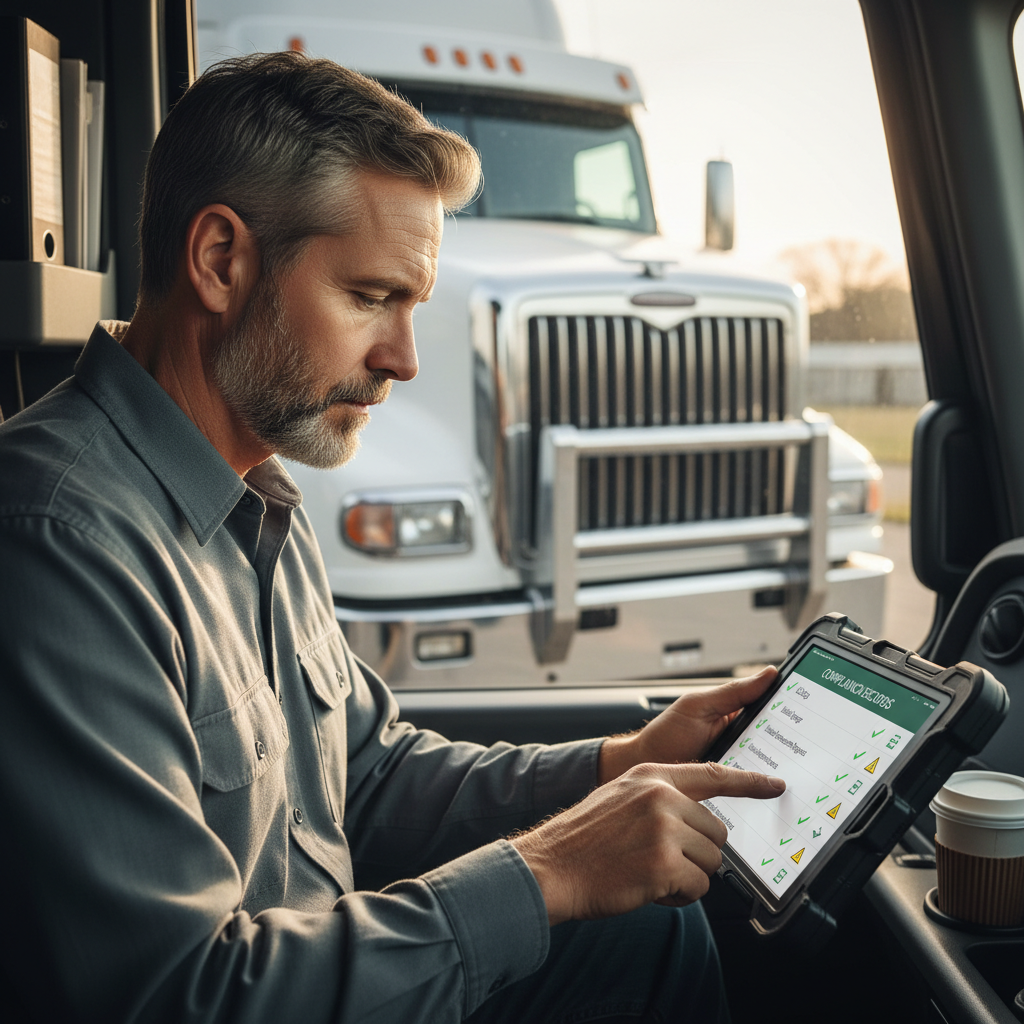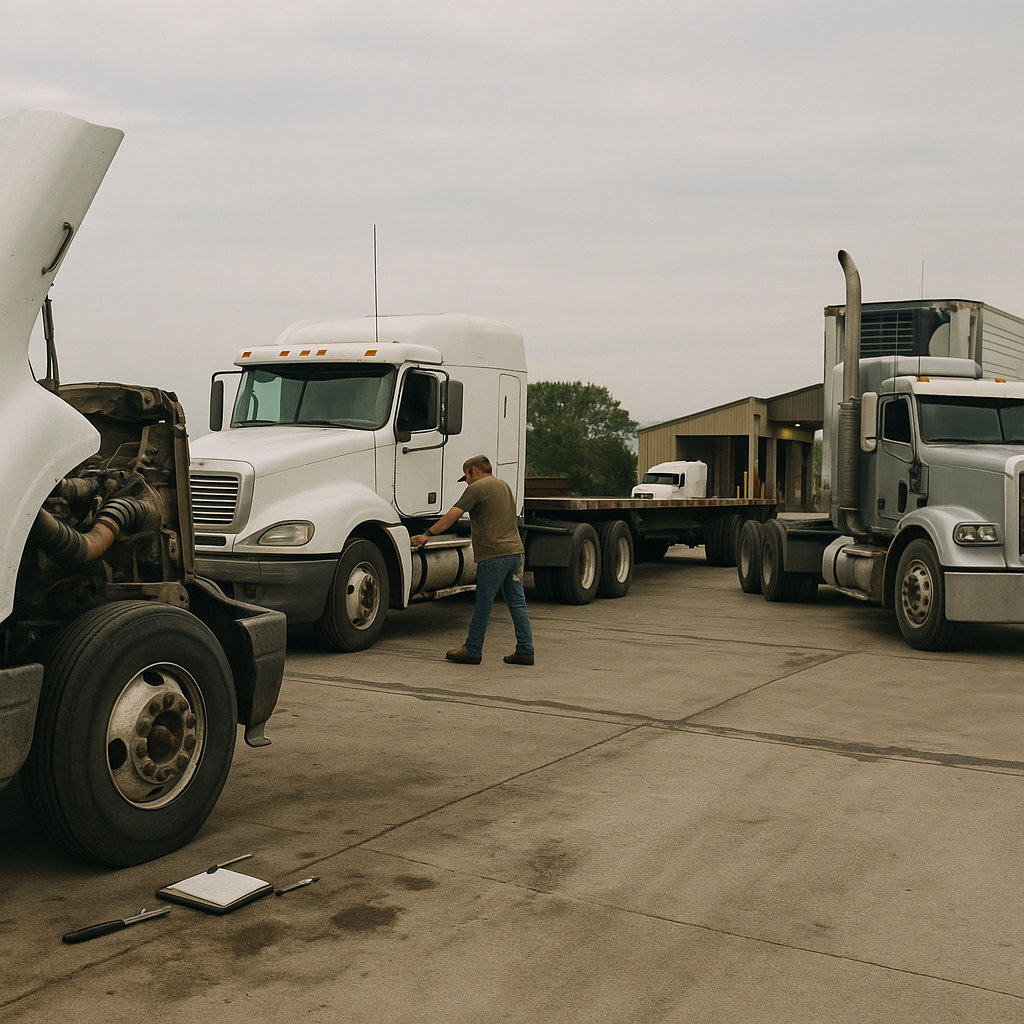

A lot of trucking insurance mistakes start with one bad assumption: if the vehicle isn’t owned by the business, one label should solve it. That’s how owner-operators and small fleets end up treating rented trucks, borrowed pickups, employee cars, and leased power units like they’re all the same exposure.
Hired and Non-Owned Auto Insurance for Trucking can help in some situations, but it is not a catch-all truck policy. The right answer depends on the vehicle, who owns it, who is driving it, how it’s being used, and what your contracts say.
What Hired and Non-Owned Auto Insurance Means for Trucking#
Hired and non-owned auto liability coverage is coverage that may respond when a business is legally liable for an accident involving certain vehicles it does not own. In trucking, that usually means you need to sort out the vehicle type, driver, dispatch status, and policy wording before assuming HNOA applies.
Hired and non-owned auto liability coverage, often shortened to HNOA, is liability coverage for qualifying vehicles a business uses but does not own. That sounds simple until trucking gets involved.
A hired auto can include a vehicle rented, hired, short-term leased, or otherwise obtained for business use, subject to the policy’s definitions and exclusions. A non-owned auto commonly means a vehicle the business does not own, lease long-term, hire, or borrow as its own regular equipment, such as an employee-owned or personally owned vehicle used for business.
Those are not the same exposure. A rented substitute vehicle for a work trip, an employee’s personal pickup used to drop paperwork, and a borrowed truck from another party can trigger very different underwriting and coverage questions.
Hired auto versus non-owned auto#
Hired auto usually points to a vehicle your business pays to use. Non-owned auto usually points to a vehicle someone else owns and your business uses for work without it becoming a scheduled company vehicle.
That distinction matters because policy treatment can change based on the arrangement. A short-term rental may fit one bucket, while a permanently leased power unit may need to be handled under commercial auto instead.
Why trucking operators should not treat HNOA as truck coverage#
HNOA is generally liability coverage. It is not a replacement for commercial auto insurance, which is the policy built to cover scheduled business vehicles such as tractors, trucks, and other owned units used in the operation.
If you’re thinking about a power unit you run in the business, HNOA usually should not be your starting point. Trucking exposure often also involves cargo, trailer use, authority filings, and contract requirements that go far beyond a simple hired/non-owned label.
The first question: Which vehicle is being used?#
Before you ask whether you need HNOA, ask what vehicle is involved. In trucking, the vehicle type, who is driving, whether it is under dispatch, the carrier’s operating authority, the cargo, and the exact policy wording all affect whether HNOA is even relevant.

Classify the Vehicle and Use Before Asking for Coverage#
Start with ownership, then move to use, driver relationship, lease arrangement, dispatch status, and contract obligations. That order keeps you from calling something “non-owned” when it really belongs under commercial auto or another trucking coverage structure.
The cleanest way to review HNOA is to classify the vehicle before you talk coverage. If you skip that step, you can easily ask for the wrong policy and still miss the real exposure.
Rented or short-term leased vehicles#
If the vehicle is rented or short-term leased for business use, you’re usually looking first at whether it qualifies as a hired auto under the policy. That is different from a truck or tractor permanently leased into the operation.
A rental car used by staff, a short-term substitute pickup, or a temporary rented unit while equipment is down may raise hired-auto liability questions. But a power unit tied into the business on a long-term basis often belongs in a commercial auto discussion, not a quick HNOA add-on.
Borrowed vehicles and employee-owned vehicles#
If the vehicle belongs to an employee, owner, or another party and gets used for company business, you may be dealing with a non-owned exposure. That still doesn’t make every use covered.
An employee’s personal car used to run business errands is different from a borrowed pickup used around the yard. Both are different again from a borrowed truck used in a freight operation.
Company-owned and permanently leased power units#
If the business owns the truck, it normally belongs on a commercial auto policy. The same caution applies to power units that are effectively part of the ongoing operation through a permanent or long-term lease arrangement.
Calling those vehicles non-owned just because the title sits elsewhere can create expensive confusion. The real question is how the unit is used, controlled, and insured in the operation.
Questions to document before requesting a review#
Before asking for coverage, gather the documents and facts that actually decide the answer:
- Who owns the vehicle
- Whether it’s rented, borrowed, employee-owned, or leased
- Whether the lease is short-term or permanent
- Who will drive it
- Whether it’s under dispatch
- What business use is planned
- What contract requirements apply
- What the rental or lease agreement says about damage and liability
The problem gets expensive fast when an operator assumes “non-owned” means covered, then learns after a loss that the vehicle was classified differently than expected.
If you’re not sure how your scenario should be classified,
What HNOA Liability May Cover—and What It Usually Does Not#
HNOA is commonly tied to third-party bodily injury and property damage liability from covered business use of a qualifying hired or non-owned vehicle. It usually does not automatically pay for damage to that vehicle itself, and it does not replace cargo, trailer, or other trucking coverage.
Bodily injury and property damage liability#
Bodily injury and property damage liability means coverage that may pay when your business is legally responsible for injuring someone or damaging someone else’s property in an auto accident. That’s the core reason businesses buy hired and non-owned auto liability.
If a covered hired or non-owned vehicle is involved in an accident during covered business use, the policy may respond to third-party liability claims, subject to its terms, limits, and exclusions. That’s the liability side.
Damage to the hired or non-owned vehicle#
Here’s the big confusion: liability coverage and physical-damage coverage are not the same thing. HNOA liability does not automatically pay to repair the rented, borrowed, or employee-owned vehicle itself.
Physical damage is coverage for damage to the vehicle, such as collision for impact losses and comprehensive for things like theft, weather, or vandalism. For a hired vehicle, you need to confirm separately whether any policy extends physical-damage protection and whether the rental or lease agreement makes you responsible for damage.
Some agreements push that responsibility back on the user hard. If you don’t read the contract, you can assume the policy handles the vehicle damage when it actually does not.
Cargo, trailers, and other trucking exposures#
HNOA also does not automatically create motor truck cargo coverage, trailer interchange coverage, non-owned trailer physical damage coverage, or reefer breakdown coverage. Those are separate trucking exposures.
A rented vehicle can create liability exposure, physical-damage exposure, contract exposure, and cargo exposure at the same time. One HNOA label does not solve all four.
Why the rental agreement still matters#
Your review should identify the vehicle owner, who has possession, who owes for damage, and whether any existing commercial auto policy extends coverage to temporary substitute or hired vehicles. In trucking, the paperwork often decides whether the insurance discussion starts in the right place.
HNOA vs. Commercial Auto, Non-Trucking Liability, and Other Trucking Coverage#
Commercial auto is generally the starting point for business-owned or scheduled power units, while HNOA may address qualifying hired or non-owned vehicle liability exposures. Non-trucking liability is different again because it applies to a leased owner-operator’s truck outside covered business use, not to every hired or non-owned vehicle situation.
Commercial auto for business-owned power units#
Commercial auto insurance is insurance designed for business vehicles used in the operation, including scheduled trucks and power units. For most owner-operators and small fleets, that’s the backbone policy for the trucks actually doing the work.
If a truck is business-owned or functionally part of the operation through a permanent arrangement, commercial auto is usually where the conversation begins. HNOA may fill a side exposure, but it usually doesn’t replace the main truck coverage structure.
Why HNOA is not non-trucking liability or bobtail coverage#
Non-trucking liability, often called bobtail coverage, is liability coverage for a leased owner-operator’s truck when it is being used outside covered business or dispatch activities, subject to policy terms. It is not the same as HNOA.
HNOA focuses on qualifying vehicles the business does not own. Non-trucking liability focuses on a different use of a specific truck, usually in a leased owner-operator setup. Ownership, use, insured party, and coverage trigger are all different.
That’s why these coverages should never be treated as interchangeable. If a truck is hauling, under dispatch, or tied to business activity, non-trucking liability may not apply. If the unit is a scheduled business truck, HNOA may not be the answer either.
When rental, lease, and carrier contracts change the analysis#
A rental company, motor carrier, shipper, or broker may require certain insurance wording, a certificate of insurance, or additional insured status. A certificate of insurance is a document that shows evidence of insurance but does not change the policy itself.
An additional insured is a person or organization added by endorsement for certain protection under the policy, if the insurer allows it. In practice, the contract can demand more than the policy label tells you.
Why a standalone policy may not solve the full exposure#
A standalone HNOA policy may fit some business situations. But in trucking, the real exposure may sit across commercial auto, physical damage, cargo, trailer coverage, and authority-related requirements instead of in one narrow HNOA form.
That is why a generic online label can be misleading. A trucking operation needs the vehicle-use scenario reviewed as a whole.
Requirements, Authority, Certificates, and Additional-Insured Requests#
Federal financial-responsibility rules for motor carriers are separate from whether your business buys or qualifies for HNOA. In trucking, the legal minimums and filings depend on the operation, commodity, vehicle weight, and whether you run interstate or intrastate, not on a blanket “all truckers need this one HNOA setup” idea.
Federal financial-responsibility rules versus policy choices#
For-hire interstate carriers have federal financial-responsibility requirements under 49 CFR Part 387, and those requirements vary by carrier type, vehicle weight, and commodity. For example, under 49 CFR Part 387, for-hire interstate carriers hauling general freight in vehicles over 10,001 lbs must carry at least $750,000 in public liability.
That federal requirement is separate from whether HNOA makes sense for a side exposure in your operation. It also does not mean all truckers need the same structure, because hazmat, auto hauling, lighter vehicles, private carriage, and intrastate operations can change the analysis.
Operating authority and carrier-type screening#
Your USDOT number is the identifier tied to safety and regulatory oversight, and your MC number is the operating-authority identifier used for certain for-hire interstate operations. Before assuming coverage, screen the operation by carrier type, authority status, commodity, route, and vehicle type.
You can verify public motor-carrier information and insurance filing status through FMCSA SAFER. SAFER is useful, but it does not replace reading the actual policy, endorsements, or contracts.
Certificates of insurance do not change coverage#
A certificate of insurance can show someone that a policy exists, but it does not amend coverage. If the policy does not cover the scenario, the certificate doesn’t fix that.
The same caution applies to the MCS-90, which is a federal endorsement tied to certain motor-carrier financial-responsibility obligations. It is not a general substitute for reviewing whether the actual vehicle and use fit the policy you are asking about.
How to evaluate an additional-insured request#
If someone asks to be additional insured on hired and non-owned auto coverage, review the contract, the named insured, the vehicle-use scenario, and whether the insurer offers the needed endorsement. A certificate alone does not grant additional-insured status.
What Drives Hired and Non-Owned Auto Costs and How to Request the Right Review#
Pricing and availability depend on the vehicles involved, drivers, operations, contract demands, and how often hired or non-owned vehicles are used. In trucking, occasional employee-car use creates a very different underwriting discussion from regularly renting power units or operating under a carrier’s authority.
Underwriting details that affect eligibility and pricing#
Your actual premium depends on your operation, cargo, radius, driving history, prior losses, locations, requested limits, and other factors. Frequency matters too.
A rare errand in an employee’s personal car is not the same risk as routinely hiring substitute vehicles. A short-term rented unit can also be viewed differently than a vehicle that has effectively become part of the fleet.
Information to bring to an insurance conversation#
Bring the facts that let someone review the exposure correctly:
- Ownership documents
- Rental or lease agreement
- Vehicle identification
- Driver list
- Intended use
- Radius
- Authority information
- Cargo details
- Requested limits
- Certificate or additional-insured wording
When to ask for a broader trucking insurance review#
Sometimes the answer is not “add HNOA.” Sometimes the real fix belongs in commercial auto, physical damage, cargo, trailer coverage, or a broader trucking policy structure.
That is especially true when the vehicle might haul freight, operate under authority, or create contract obligations beyond simple liability. The goal is to match the exposure, not force the exposure into the wrong label.
A practical next step for owner-operators and small fleets#
The best next step is to request a review built around the actual vehicle-use scenario and the contracts in front of you. That keeps you from relying on a generic term that may not fit the way your business really operates.
FAQ#
Does any auto cover hired and non-owned?
Not automatically. Some commercial auto policies can include hired-auto and non-owned-auto liability coverage by endorsement or built-in policy language, but you should never assume every auto policy has it. Coverage depends on the policy form, the vehicle, the driver, the business use, the exclusions, and whether the scenario fits a trucking operation.
This is where operators get in trouble with assumptions. A scheduled truck, a rented substitute vehicle, and an employee’s personal car used for work can all be treated differently. The safest move is to confirm the exact scenario rather than relying on the words “any auto.”
How to explain hired and non-owned auto coverage?
The simplest explanation is this: it is business liability coverage for certain vehicles the business uses but does not own. Hired autos are usually rented, hired, or short-term leased vehicles used in the business. Non-owned autos are often employee-owned, personally owned, or borrowed vehicles used for business purposes.
For trucking, that basic definition needs one more step. You still have to ask what kind of vehicle it is, who is driving, whether it is under dispatch, and whether the exposure really belongs under commercial auto instead. The label is only the starting point.
Can you be additional insured on a hired non-owned auto?
Sometimes, but only if the insurer offers the right endorsement and the policy supports the request. Additional-insured status is not created just because a contract asks for it or a certificate mentions it.
Review the underlying contract, the named insured, the vehicle-use scenario, and the endorsement wording. In trucking, this matters because rental companies, carriers, brokers, and shippers can all ask for wording that goes beyond a basic certificate. If the policy does not allow the request, the certificate alone does not fix the gap.
What does the hired auto and non-owned auto liability endorsement on a businessowners policy cover?
It may provide liability coverage for qualifying hired or non-owned autos used in the business, subject to the policy’s terms, limits, and exclusions. That usually means third-party bodily injury or property damage liability, not every auto-related loss tied to the business.
It generally does not automatically cover damage to the vehicle itself, cargo, trailers, or the full commercial-auto exposure of a trucking power unit. For a trucking business, that is a major limitation. A businessowners policy endorsement can help with some liability situations, but it is not a full trucking auto program.
Is personal auto insurance enough for business use in trucking?
Usually, you should not assume it is. Personal auto policies often limit or exclude certain business uses, and they are not designed to handle the full exposure of trucking operations. Even when a personal vehicle is involved, the business use can create liability questions that need to be reviewed under business insurance.
That matters when an owner, employee, or family member uses a personal vehicle for company errands, paperwork runs, or other work-related tasks. The fact that the vehicle is personally owned does not automatically mean the personal auto policy is enough for the business exposure.