
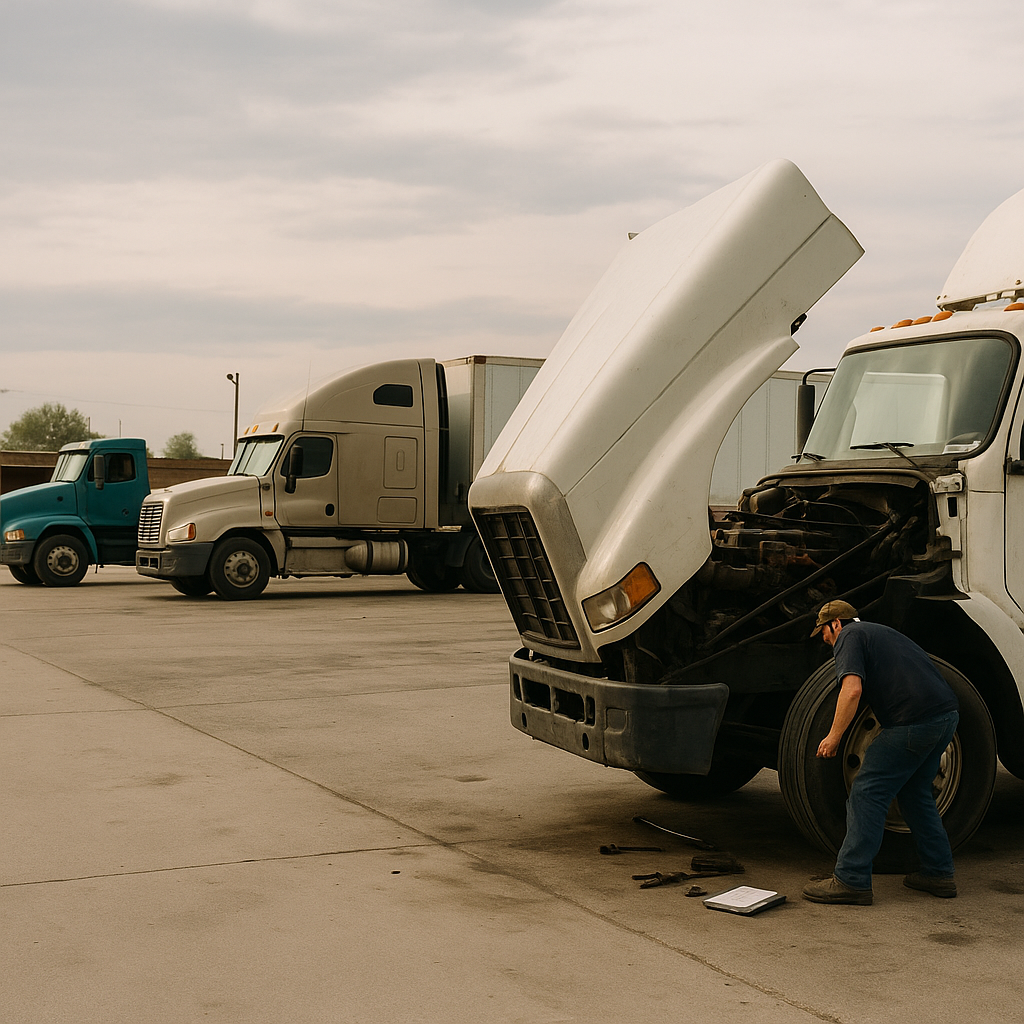

Detroit truck insurance starts with your operation, not just your ZIP code. If you haul freight for pay in Detroit or anywhere in Southeast Michigan, the right coverage depends on your authority, cargo, truck, radius, drivers, and where the truck is parked. This guide shows what to confirm before you compare quotes.
Detroit Truck Insurance Starts With Your Operating Profile#
Detroit truck insurance is built around how you operate, not around a generic vehicle lookup. For Detroit owner-operators and small fleets, the useful starting point is your business model: who you haul for, where you run, what you haul, and whether you operate under your own authority or someone else’s. That profile drives both eligibility and pricing.
Who this guide is for#
This guide is for Detroit-based owner-operators and 1–5 truck fleets, plus operators in nearby Southeast Michigan who garage in the area or run Detroit regularly. It also fits leased owner-operators who need to sort out what the motor carrier covers versus what still falls on them.
A USDOT number is your federal carrier identifier used for safety and regulatory tracking. An MC number is operating authority for certain for-hire interstate operations.
Why Detroit location is only one part of the insurance decision#
Detroit matters, especially for garaging, parking, theft exposure, and route patterns. But location is only one piece. Underwriters also look at authority status, cargo, truck value, driver experience, claims history, operating radius, and whether the truck is used for for-hire freight.
If a tractor hauls freight for compensation, that usually pushes the conversation into commercial trucking coverage. Personal use on the side doesn’t change the need to analyze the operation correctly.
The details to confirm before shopping#
A useful quote doesn’t start with “it’s a semi in Detroit.” It starts with accurate operating details: who owns the truck, who dispatches it, what contracts apply, what freight moves, and where the unit is normally parked.
That matters because a vehicle-only estimate can miss the real issue. The policy that fits a leased owner-operator pulling dry van under another carrier’s authority can look very different from the policy package for a Detroit carrier running its own interstate loads.

Separate Personal Auto Insurance From Commercial Trucking Insurance#
Personal auto insurance is not the same thing as commercial trucking insurance. If you’re hauling freight for pay, a personal auto policy generally is not designed to handle the liability, vehicle type, contract demands, and regulatory exposure tied to that work. That’s where many first-time operators get sideways.
Why a personal auto policy is not a trucking policy#
A personal auto policy is insurance built for private household vehicle use, not for-hire freight operations. Commercial auto liability is coverage for third-party bodily injury and property damage arising from covered business driving.
A tractor or work truck used in freight hauling creates a different risk than a personal pickup used for errands. The vehicle, the use, the contracts, and the legal obligations are different. That’s why Detroit car insurance conversations often confuse new operators who assume commercial trucking works the same way.
When commercial auto liability becomes relevant#
Commercial auto liability becomes relevant when the truck is part of a business operation hauling freight, especially for compensation. If you’re an owner-operator under your own authority, or leased to a carrier but still responsible for parts of the insurance stack, you need to know exactly where your responsibility starts and stops.
This is also where people mix up state minimums with federal rules. Your Michigan minimum for a personal vehicle is not the same thing as the liability requirements that can apply to a for-hire interstate trucking operation.
Why state minimums and federal requirements are not interchangeable#
Federal financial responsibility rules can apply based on whether the carrier is for-hire, whether it runs interstate, the vehicle weight, and what commodity it carries. Under 49 CFR Part 387, for-hire interstate carriers hauling general freight in vehicles over 10,001 lbs must carry at least $750,000 in public liability, while some operations require different limits.
That doesn’t mean every trucker needs the same number. It means you need to scope the operation correctly. A shipper requirement, a broker contract, a lease agreement, a lender demand, and an FMCSA filing requirement can all be different at the same time.
Confirm Whether Michigan or FMCSA Filing Rules Apply#
The first filing question is simple: whose authority are you running under, and where do you operate? If you hold your own interstate authority, FMCSA-related filings may apply. If you’re leased to another carrier, that carrier’s authority and insurance may handle some of the regulatory piece, but your lease and policy wording still matter.
Operating under your own authority#
If you operate under your own authority, you need to confirm whether your operation triggers FMCSA insurance filing requirements. The exact liability requirement depends on the operation, vehicle classification, and property carried, not on a universal trucking rule. The governing federal framework is laid out in 49 CFR Part 387.
An MCS-90 is a federally required endorsement used for certain motor carriers to satisfy public liability financial responsibility requirements. It is not the same thing as saying every loss is covered under your policy in every situation.
The FMCSA explains that filings and the MCS-90 have specific regulatory functions, and they should not be treated as interchangeable with all policy coverage terms on FMCSA.
Leasing on to another carrier#
If you’re leased on, the carrier’s operating authority may control the main liability filing requirement while you’re operating in that business. But that does not automatically answer every coverage question. You still need to review who insures the tractor, who covers off-dispatch use, who takes cargo responsibility, and who pays for damage to a non-owned trailer.
This is where leased owner-operators often assume “the carrier covers me” without checking the lease. Sometimes that’s partly true. Sometimes it’s dangerously incomplete.
Interstate versus Michigan-only operations#
If you run interstate, federal rules may apply along with customer and contract demands. If you operate intrastate only, verify Michigan-specific carrier, insurance, and contract requirements with the appropriate state authority and your broker rather than assuming interstate guidance fits your setup.
A public record can help you start the check. The SAFER system is FMCSA’s public database for carrier identification and authority-related information. You can review carrier records on SAFER, but public status is not a substitute for confirming current insurance filings, policy terms, or contract requirements.
Using USDOT, MC, and SAFER information correctly#
Use USDOT and MC information to verify how the operation is set up, not to guess at coverage. Then match that with the lease, shipper packet, broker agreement, terminal rules, and lender requirements.
A broker may require more insurance than the legal minimum. A terminal may require specific certificates. A lease may shift trailer responsibility. Those practical requirements can matter just as much as the regulation.
Build Coverage Around the Loads, Truck, and Contract#
The right Detroit truck insurance package depends on what you haul, what you own, what contracts you sign, and when the truck is in business use versus off-dispatch use. For most owner-operators, the real job is building the right mix of liability, cargo, truck protection, and trailer-related coverage without assuming one policy does everything.
Auto liability for third-party injury and property damage#
Commercial auto liability is the core coverage for injuries or property damage you cause to others in a covered accident. It is the foundation of most trucking policies because it responds to the road-risk part of the business.
This is also the coverage most tied to authority, filings, and contract minimums. If you’re comparing quotes, confirm the limit and confirm whether the insurer can support any required filing instead of assuming a certificate solves it.
Motor truck cargo for customer freight#
Motor truck cargo is coverage for eligible customer freight while it’s in your care, custody, or control. It can matter just as much as liability if a broker, shipper, or customer requires proof before dispatch.
Cargo is never one-size-fits-all. Limits, exclusions, deductibles, theft conditions, commodity restrictions, and temperature requirements all matter. A dry van operator hauling packaged goods has a different cargo exposure from a refrigerated carrier moving temperature-sensitive freight.
Physical damage and collision losses#
Physical damage is coverage for damage to your insured truck. It can include collision, which covers impact losses, and comprehensive, which covers non-collision causes like theft, weather, or vandalism. It can also include fire and theft plus combined additional coverage, depending on how the policy is structured.
This coverage protects the equipment side of the business, not third-party injuries. If the truck is financed, your lender may require it. The truck value, deductible, and valuation basis all affect how useful the coverage really is at claim time.
General liability for non-driving operations#
General liability is coverage for certain non-driving business liability exposures, such as incidents connected to premises or business operations away from the truck’s driving exposure. It does not replace commercial auto liability.
That’s an important distinction because some operators see “liability” on a quote and assume it covers the whole business. It doesn’t. Auto liability and general liability handle different problems.
Non-trucking liability for qualifying off-dispatch use#
Non-trucking liability is liability coverage intended for qualifying non-business use when the truck is not under dispatch. People often call it bobtail coverage, but the key issue is the actual policy wording and the lease rules.
It does not cover paid hauling. It also should be reviewed against dispatch status and lease terms, because off-dispatch and personal-use definitions can be narrower than drivers expect.
Trailer interchange, non-owned trailer damage, and reefer breakdown#
Trailer interchange is coverage that can apply when you’re responsible for a non-owned trailer under a signed interchange agreement. Non-owned trailer physical damage is coverage for damage to a trailer you don’t own when you are responsible for it, often without the interchange setup many non-intermodal operators never use.
Reefer breakdown is coverage relevant to refrigerated freight when temperature-control equipment failure causes a covered cargo problem. If you haul temperature-controlled loads, check the cargo wording, equipment requirements, and claims conditions closely.
Prepare Detroit Garaging and Route Details Before Requesting Quotes#
The fastest way to get a useful quote is to gather the real operating facts first. For Detroit truck insurance, underwriters want to know where the truck lives, where it runs, who drives it, what it hauls, and what contracts shape the risk. If those details are incomplete or inconsistent, the quote can come back wrong or not at all.
Document the primary garaging location#
Your garaging location is the address where the truck is primarily kept when not in use. That can be a Detroit yard, a secure lot in another Michigan city, a terminal, or even a cross-border setup if the truck regularly parks outside Detroit.
Be accurate about where the truck actually sits. Parking in a secured lot versus on an open street can matter. So can the difference between a Detroit address on paper and a real overnight location elsewhere.
Describe Detroit-area routes and operating radius#
Your operating radius is the typical distance and territory your truck runs from its base, not the occasional load you hope to take. If you run Detroit metro, regional Midwest lanes, or interstate freight, say that clearly.
Don’t describe only the best-case version of your business. Underwriters want the regular route pattern, not the rare exception. The cleaner your route description, the cleaner the quote comparison later.
Gather driver, truck, cargo, and loss-history information#
Before requesting quotes, gather these details:
- Garaging address and parking setup
- Truck VIN, year, and current value
- Driver license information and commercial driving experience
- Cargo types and operating radius
- Authority status and current filings, if any
- Loss runs and current declarations pages
- Lease, broker, shipper, terminal, or lender insurance requirements
If you skip these details, quote comparisons get messy fast. If you’re not sure what coverage fits your operation,
Identify contract-driven coverage requirements#
Many insurance surprises come from contracts, not from the road. A shipper may require cargo terms you don’t currently carry. A lease may define trailer responsibility differently than you assumed. A lender may require physical damage terms you can’t ignore.
Get those documents together before you compare. It keeps you from choosing a quote that looks cheaper only because it left out something your operation actually needs.
Understand What Drives Detroit Truck Insurance Costs#
Detroit truck insurance costs are individually underwritten, and they can vary a lot from one operation to another. The biggest pricing drivers usually include authority status, driving history, claims, cargo, radius, truck value, garaging, limits, deductibles, and business experience. That’s why a headline price from another driver rarely helps much.
Operational factors that affect underwriting#
Underwriters look at how the truck is used, not just what the truck is. Own authority versus leased-on status matters. So do regular lanes, cargo type, time in business, prior losses, and who will actually drive the unit.
A new venture hauling broader freight across state lines presents a different risk from an experienced leased owner-operator with stable lanes and clean history. Even two Detroit-based operators can price very differently if the operation differs.
Truck value, coverage choices, and deductibles#
The truck’s value affects physical damage decisions. Higher values generally mean more premium at risk, while deductible choices change how much loss you absorb before the policy responds.
The goal isn’t to strip coverage until the payment looks easier. It’s to choose deductibles and limits that fit your operation, contracts, and ability to handle a loss. Lowering a limit or removing a coverage part can create a cheaper-looking quote that doesn’t really fit the business.
Why Detroit car-insurance discussions do not answer trucking questions#
Detroit personal car insurance discussions don’t tell you what commercial trucking insurance should cost. The vehicles, liability exposure, legal framework, and business-use patterns are different.
Michigan consumers should review policy terms and insurer information using state consumer resources, including guidance from the Michigan Department of Insurance and Financial Services, rather than relying on generalized insurance talk. That’s especially true when someone is mixing personal auto advice with commercial trucking decisions.
Reducing avoidable quote friction#
You can reduce avoidable pricing friction without weakening needed protection. Keep business records current. Correct outdated authority or filing details. Use consistent information across every application. Document secure parking and maintenance practices where applicable.
Most of all, compare equivalent quotes. A lower number means very little if the coverage terms, drivers, cargo conditions, or payment structure changed underneath it.
Compare Truck Insurance Quotes on an Apples-to-Apples Basis#
A truck insurance quote is only useful if every option is built on the same operating facts. Before choosing a policy, line up the same named insured, truck, drivers, garaging address, radius, cargo, and authority details across every quote. If those inputs don’t match, the price comparison is misleading.
Match liability limits and required filings#
Start with liability. Confirm the limit is the same on each option, and confirm whether the insurer can provide any filing your operation needs. A certificate of insurance is not the same as a required filing.
Also check whether the quote reflects your real authority status. A leased owner-operator quote and an own-authority carrier quote are not interchangeable, even if the truck is the same.
Compare cargo terms, exclusions, and deductibles#
Cargo needs close reading. Match the cargo limit, deductible, and covered commodity assumptions. Then ask about exclusions, unattended vehicle conditions, theft conditions, and any refrigeration or temperature-control requirements if you haul reefer loads.
This is where a quote can look competitive on paper while quietly narrowing how the cargo claim would actually be handled. Ask the uncomfortable questions before binding, not after a loss.
Check physical damage values and trailer responsibility#
Confirm the insured value for physical damage and ask how losses are valued where applicable. Then match deductibles and check whether towing or related assumptions affect the package.
If you ever pull someone else’s trailer, ask whether the quote addresses trailer interchange or non-owned trailer physical damage. That issue gets missed all the time, especially by operators who assume trailer responsibility is automatically covered somewhere else.
Review endorsements, drivers, payment terms, and cancellation conditions#
Ask what endorsements apply, what operations are excluded, and whether any driver restrictions affect who can legally and practically use the truck under the policy. Then review the down-payment structure, installment fees, cancellation terms, and how policy changes are handled mid-term.
The cheapest-looking quote can become the most expensive mistake if it leaves out a needed endorsement, excludes a common load, or creates a payment setup you can’t maintain.
Choose the Next Step for Your Detroit Trucking Operation#
The next step is straightforward: identify the operating model first, verify regulatory and contract requirements second, and compare matched coverage options third. That order keeps you from buying the wrong policy for the right truck.
If you are leased to a carrier#
Review the lease closely. Confirm on-dispatch versus off-dispatch exposure, who covers the tractor, who covers the trailer, who handles cargo responsibility, and whether any filing obligation sits with the carrier.
If you operate under your own authority#
Verify your authority status, any FMCSA-related obligations that apply, customer and cargo requirements, and every listed driver and unit. Make sure the policy structure matches the actual operation before a load is booked.
If you are adding a truck or changing freight#
If you’re expanding radius, changing commodities, adding refrigerated work, or taking on trailer responsibility, review coverage before the change takes effect. Insurance problems usually show up right after the operation changes, not before.
Bring your checklist, current declarations pages, and contract requirements into the review so the comparison is based on real facts, not assumptions.
FAQ#
Who is the cheapest truck insurance?
No insurer is the lowest-cost choice for every trucker, because commercial trucking risk is underwritten case by case. The same Detroit owner-operator can get different results depending on authority status, cargo, garaging, driving history, radius, truck value, and claims.
The better approach is to compare matched quotes for the same operation. Make sure the limits, filings, cargo terms, deductibles, endorsements, named insured, and driver list all line up. A quote that looks cheaper at first glance may simply be covering less, excluding more, or missing a requirement your lease, broker, lender, or shipper expects.
What is the cheapest insurance in Detroit?
For commercial operators, that question usually mixes up Detroit personal auto insurance with commercial truck insurance. They are different products built for different risks, and the lowest personal auto option tells you nothing useful about a for-hire trucking policy.
If you’re shopping commercial coverage, compare equivalent trucking quotes only. Check the same liability limits, cargo terms, physical damage values, deductible levels, filings, and trailer responsibility on each one. Then verify that the lower-priced option doesn’t conflict with your authority, lease, shipper agreement, broker packet, or lender requirements.
How much does truck insurance average cost?
An average cost isn’t a very useful decision tool in trucking. Commercial truck insurance varies depending on your authority status, driver history, losses, cargo, operating radius, truck value, garaging, limits, deductibles, and coverage choices.
The more useful move is to prepare your quote details before shopping. Gather the garaging address, truck VIN and value, driver information, years of experience, cargo types, authority status, route pattern, loss runs, and current declarations pages. That gives you a relevant comparison based on your operation instead of a number pulled from someone else’s setup.
Why is Detroit car insurance so high?
Detroit car insurance discussions usually focus on personal vehicle rating factors and Michigan consumer insurance issues. That’s a separate conversation from commercial trucking insurance, which is built around business use, heavier vehicles, regulatory exposure, cargo, and contract requirements.
If you run a truck for business, don’t use personal-car pricing talk as a proxy for what your commercial policy should cost. Instead, look at your own commercial factors: where the truck is garaged, how it’s parked, what routes it runs, what cargo it hauls, who drives it, and whether you operate under your own authority or leased to another carrier.
Do leased owner-operators need their own truck insurance?
Sometimes yes, sometimes no, and often partly. The answer depends on the lease, dispatch status, who owns the tractor and trailer, what the motor carrier’s policy covers, whether you have off-dispatch exposure, and whether a lender requires physical damage on the truck.
A leased owner-operator should review the lease and insurance setup together. Confirm what the carrier covers while you’re under dispatch, what happens when you’re off dispatch, whether non-trucking liability is needed, who handles cargo claims, and whether you’re responsible for damage to a non-owned trailer. Assumptions here create expensive gaps.
Can a Detroit owner-operator use personal auto insurance for freight hauling?
Generally, no. Personal auto insurance is not designed for for-hire freight hauling, and it usually does not fit the vehicle type, liability exposure, business use, or contract demands of a commercial trucking operation.
If you’re hauling freight for compensation, confirm the commercial auto liability structure that fits your operation and whether any filing obligation applies before you take the load. Also verify cargo, physical damage, and any lease-driven or trailer-related responsibilities. Using the wrong policy type can leave the operation uncovered when the business actually needs protection most.





