
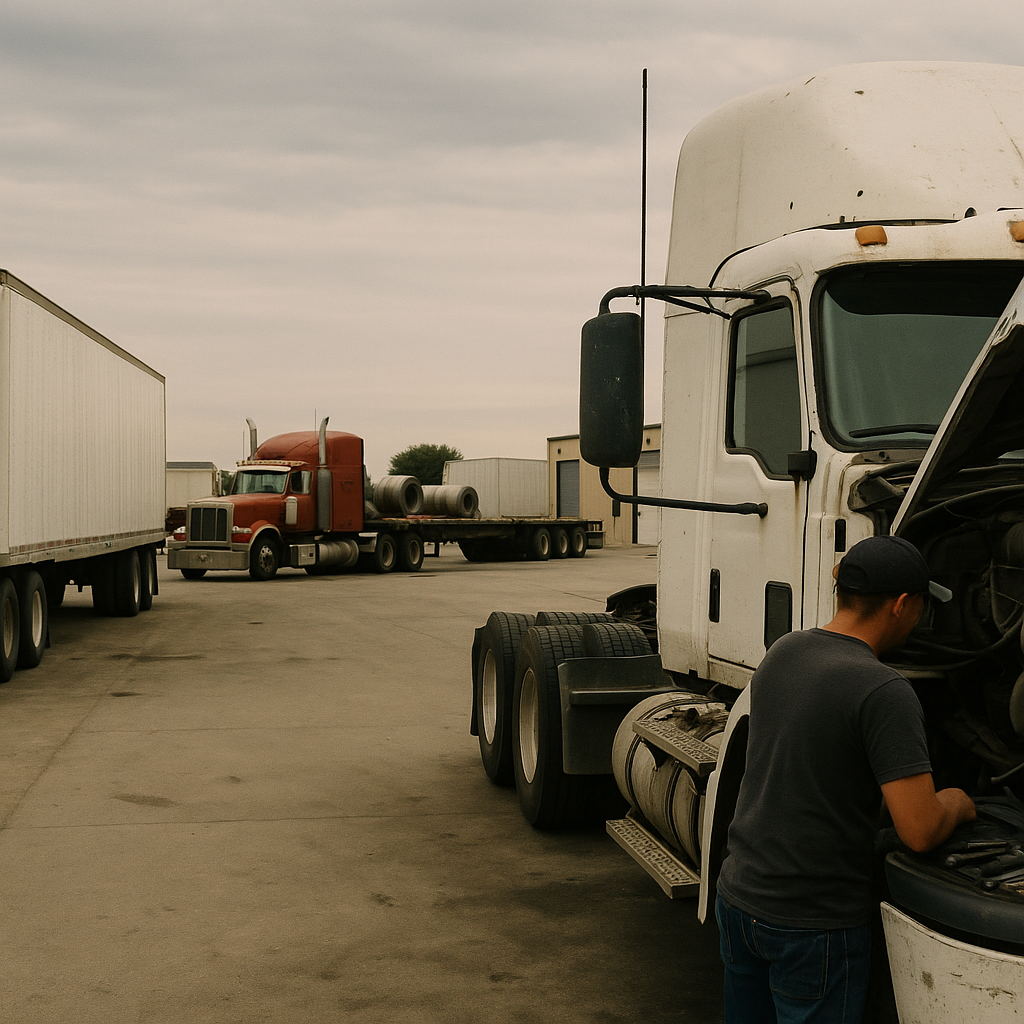

Denver truck insurance starts with one question most drivers skip: what kind of operation are you actually running? In Denver, that answer can change your liability requirements, filings, cargo needs, and whether your personal auto policy helps at all.
This guide is built for owner-operators and small fleets that need a clear answer fast. It walks through Colorado and federal rules, common coverage choices, Denver-specific cost factors, claims readiness, and how to compare quotes without missing the fine print.
Denver Truck Insurance Starts With Your Operating Profile#
Denver truck insurance isn’t one package every truck can use. The right setup depends on whether you haul for hire, where you operate, what you haul, what truck you run, and whether you’re under your own authority or leased to another carrier. Get those facts straight first, and the rest of the insurance conversation gets easier.
A for-hire carrier is a trucking business paid to haul property for someone else. An owner-operator is a driver who owns or controls the truck used in the business.
Why a Denver truck is not covered like a personal vehicle#
Commercial trucking insurance is built for business use, heavier vehicles, cargo exposure, and contract-driven hauling work. A personal auto policy is designed for personal driving, not for hauling freight, running under authority, or meeting motor-carrier requirements.
That’s where a lot of Denver drivers get burned. They hear “I have full coverage” and assume that means they’re set for trucking. It usually doesn’t.
A tractor running loads around Denver, I-70, or across state lines brings a different risk than a pickup used for commuting. Once the vehicle is part of a trucking operation, you need to look at commercial trucking coverage, not personal car insurance.
The six details that determine the insurance conversation#
Before you shop Denver truck insurance, pin down these six details:
- Vehicle type and weight
- For-hire or not
- Cargo type
- Operating radius
- Garaging location
- Own authority or leased-on status
A garaging location is where the truck is normally kept when it’s not working. Your operating radius is the typical distance your truck runs from its base area.
These details drive almost everything. They affect what filings may be needed, what coverage forms make sense, how underwriters view the risk, and what a quote is really quoting.
Interstate and intrastate operations can follow different rules#
Interstate and intrastate don’t always follow the same rulebook. Interstate commerce means transportation that crosses state lines or is part of a movement tied to another state, while intrastate means the load and transportation stay within one state.
A Denver-based truck might run Colorado-only freight this month and interstate freight next month. It might haul under a motor carrier’s authority one week and under its own authority later. That’s why there is no universal limit or one-size-fits-all coverage package that fits every operator.

Step 1 – Determine Which Colorado and Federal Rules Apply#
The first step in Denver truck insurance is figuring out whether Colorado rules, FMCSA rules, or both apply to your operation. Start with three facts: are you for hire, are you involved in interstate commerce, and are you operating under your own authority or leased to another carrier. Those answers decide what requirements and filings may follow.
The Federal Motor Carrier Safety Administration (FMCSA) is the federal agency that regulates certain commercial motor carriers. A USDOT number is an identifier used for safety monitoring and compliance, while an MC number is operating authority used for certain for-hire interstate operations.
Own authority versus leased-on operations#
If you run under your own authority, the insurance setup usually centers on your business, your filings, your vehicles, and your contracts. If you’re leased to a motor carrier, some insurance responsibilities may sit with that carrier, but that doesn’t mean every gap disappears.
Your lease matters here. It can spell out who carries primary liability, what physical damage is your responsibility, whether you need non-trucking liability, and what trailer-related coverage the carrier expects you to carry.
Being leased-on also doesn’t erase the need for accuracy. Your truck use, dispatch status, and lease terms still need to match the coverage you buy.
Interstate commerce and FMCSA financial responsibility#
If you’re a for-hire interstate carrier, federal financial responsibility rules may apply. Under 49 CFR Part 387, the minimum public liability requirement depends on the kind of operation, vehicle weight, and commodity hauled.
For example, under 49 CFR Part 387, for-hire interstate carriers hauling general freight in vehicles over 10,001 lbs must carry at least $750,000 in public liability. Under 10,000 lbs, the federal minimum can be lower, auto haulers can require $1,000,000, and certain hazmat operations can require $5,000,000. That’s why “all truckers need $750K” is wrong.
An insurance filing is proof sent electronically by the insurer to show required financial responsibility for applicable authority. For certain FMCSA-regulated operations, those filings tie directly to operating authority and can’t be guessed from another driver’s setup. FMCSA outlines those insurance requirements and filing rules at fmcsa.dot.gov.
Colorado intrastate operations and state-level verification#
If you operate only in Colorado, state-level requirements may still apply depending on your operation. Intrastate carriers shouldn’t assume that federal interstate rules automatically control everything, and they also shouldn’t assume a friend with a similar truck has the right setup for them.
Colorado-only operators should verify what applies to their authority, vehicle class, and business type through state channels such as the Colorado DMV and the Colorado Department of Transportation. The point isn’t to memorize every rule. It’s to avoid building a policy around hearsay.
Insurance filings, USDOT numbers, and MC numbers#
A USDOT number, MC number, and insurance filing are related, but they’re not the same thing. A USDOT number tracks safety and identification. An MC number is operating authority for certain for-hire interstate carriers. An insurance filing is proof your insurer submits when that authority requires it.
Not every Denver truck needs all three. A leased-on owner-operator may not need their own MC authority. An intrastate operator may have a different registration path. But if a filing is required, the insurer or broker has to submit it correctly, and you still have to provide accurate business details for that filing to match your real operation.
Step 2 – Build the Coverage Package Around Your Hauling Work#
The right Denver truck insurance package matches the work the truck actually does. Liability, cargo, physical damage, non-trucking liability, trailer-related coverage, and reefer breakdown each handle different exposures. If you mix them up, you can think you’re covered when you’re only covered for one piece of the risk.
Commercial auto liability is coverage for covered bodily injury and property damage liability arising from truck operation, subject to the policy terms and selected limits.
Commercial auto liability for trucking operations#
Commercial auto liability is the backbone of a trucking policy. It’s the coverage that responds when operation of a covered truck causes injury or damage to others, subject to the policy terms and limits.
This is also the coverage most tied to regulatory requirements. But required minimums and smart business limits are not always the same thing. Shipper contracts, broker agreements, and practical loss exposure often matter too.
Motor truck cargo coverage#
Motor truck cargo coverage helps protect against covered loss or damage to freight you’re hauling for a customer. It is separate from auto liability.
A lot of new operators miss that split. Hitting another vehicle is an auto liability issue. A stolen load, shifted freight, or damaged customer cargo is a cargo issue if the policy covers that cause of loss.
Cargo needs also change by commodity. General freight, refrigerated goods, higher-theft items, and specialty loads can bring different underwriting questions, exclusions, and documentation requirements.
Physical damage and collision exposure#
Physical damage is coverage for damage to your own truck or scheduled equipment, usually through collision and comprehensive-type protection, subject to deductibles and policy terms. Collision applies when the truck hits another object or overturns. Comprehensive usually addresses non-collision losses such as theft, vandalism, weather, or fire.
For trucking, physical damage can include collision, comprehensive, fire and theft, and optional combined additional coverage depending on the policy. It protects your asset, not someone else’s property.
One common gotcha: collision shouldn’t be treated like a standalone answer in trucking. The policy structure matters, your deductible matters, and the insured value has to be realistic if you want the coverage to work the way you expect after a loss.
General liability for for-hire businesses#
General liability covers certain non-driving business liability exposures, not crashes from operating the truck. For a for-hire trucking business, that can matter for premises exposure, some loading-related issues, or contract-driven requirements, depending on the policy.
What it does not do is replace commercial auto liability. If the truck causes a highway loss, general liability isn’t the fallback for missing auto liability.
Non-trucking liability for off-dispatch use#
Non-trucking liability is coverage for qualifying personal or non-business use of a truck that is not under dispatch. Many drivers call it bobtail coverage, but the better question is whether the truck is being used off dispatch and outside business use.
That distinction matters. Bobtail describes the truck without a trailer. It does not automatically describe the insurance status of the trip.
If you’re furthering the trucking business, deadheading to a pickup, or moving under dispatch instructions, non-trucking liability may not apply. Lease terms and policy wording matter a lot here.
Trailer interchange and non-owned trailer physical damage#
Trailer interchange coverage applies to damage to a trailer in your care, custody, or control when you’re using it under a written interchange agreement. Non-owned trailer physical damage addresses specified physical damage exposure for trailers you don’t own, typically where an interchange agreement isn’t the trigger.
Most non-intermodal owner-operators confuse these two. If there is a signed interchange agreement, trailer interchange is the issue. If there isn’t, and you’re just pulling a trailer you don’t own, non-owned trailer physical damage may be the more relevant question.
That difference becomes painfully obvious after a claim. A driver can assume “the trailer isn’t mine, so my policy should handle it,” then find out the wrong trailer coverage was chosen.
If you’re not sure which trailer exposure your operation has,
Reefer or refrigeration breakdown for temperature-controlled freight#
Reefer breakdown is coverage that can help when refrigeration equipment failure damages temperature-sensitive cargo, subject to policy terms. If you haul produce, frozen goods, dairy, medicine, or other temperature-controlled freight, this deserves a hard look.
It’s not the same as ordinary cargo coverage. A load can be ruined even when the trailer itself wasn’t hit and the freight wasn’t stolen. If the refrigeration unit fails, the equipment records, set-point records, and incident timeline can all matter.
Step 3 – Match Coverage to Your Denver Operating Situation#
The best Denver truck insurance setup depends on how you operate day to day. A leased-on owner-operator, an own-authority carrier, a driver using a truck off dispatch, and a small fleet all face different gaps. Match coverage to the real use of the truck, not the label another driver uses.
If you are leased to a motor carrier#
Start with the lease. Review what the carrier covers, what it requires you to carry, when you’re considered under dispatch, and what happens when you’re using the truck outside dispatched business.
This is where non-trucking liability questions usually come up. It also affects trailer use, physical damage responsibilities, and whether any deductions or charge-backs apply if the carrier places coverage on your behalf.
If you operate under your own authority#
If you’re under your own authority, line up your auto liability, cargo, physical damage, business details, and filing needs before you accept loads. That’s the cleanest way to avoid finding out after pickup that a broker agreement requires different coverage than what you bought.
Own-authority operators should also make sure truck values, garaging, commodity descriptions, and operating radius are accurate. A policy built on bad inputs is trouble waiting for a claim.
If you run bobtail, deadhead, or between dispatches#
Bobtail and deadhead are not interchangeable insurance terms. Bobtail describes the truck without a trailer. Deadhead usually means traveling with an empty trailer or with no load as part of business movement.
The insurance question is whether the trip is under dispatch, furthers the trucking business, or qualifies as off-dispatch use under the policy. That’s what decides whether non-trucking liability is relevant or whether business-use coverage needs to respond.
If you are growing from one truck to a small fleet#
Once you add trucks or drivers, consistency matters fast. Small fleets need clean vehicle schedules, driver eligibility review, centralized records, clear garaging information, and a process for reporting losses the same way every time.
Even with two to five trucks, sloppiness can create quote friction and claim friction. One unit listed at a different garaging address, one driver missing history, or one trailer used under different agreements can create avoidable problems.
Before you ask for a coverage review, gather your operating facts in one place. If you want help pressure-testing those details,
What Affects Denver Truck Insurance Costs#
Denver truck insurance costs depend on the operation, not just the truck. Pricing can reflect driver history, claims, truck value, cargo, radius, authority, garaging, deductibles, and the insurer’s underwriting rules. The only useful cost comparison is one built on the same operating facts and the same coverage terms.
Driving history, claims history, and driver experience#
Underwriters look closely at who is driving and how the operation has performed. Tickets, accidents, prior claims, years of CDL experience, and time in business can all change how a risk is viewed.
For a small fleet, every scheduled driver matters. One weak driver can affect more than one truck’s pricing and insurability.
Truck value, equipment, and selected deductibles#
A newer or higher-value tractor usually means more physical damage exposure. Added equipment, aftermarket upgrades, and specialized units can also change the conversation.
Deductibles matter too. A higher deductible may lower the payment amount, but only if the business could actually absorb that out-of-pocket cost after a loss. Picking a deductible you can’t fund is not really savings.
Cargo, operating radius, and authority structure#
Cargo type can change both liability and cargo exposure. Some commodities are more theft-prone, more fragile, more time-sensitive, or more contract-heavy than others.
Operating radius matters because a truck running local Denver lanes faces a different pattern than one running regional or long-haul work. Authority structure matters too. Own-authority operations often bring a different risk profile than leased-on operations because the business controls more of the insurance and contract picture.
Denver garaging, mountain routes, and seasonal road conditions#
Where the truck is parked overnight can matter. Urban traffic, theft exposure, unsecured parking, and dense delivery environments around Denver can all affect the underwriting discussion.
Colorado mountain routes add another layer. I-70 and other corridors can bring steep grades, winter weather, and seasonal traction requirements. Colorado also has chain-law rules that operators should plan around on mountain routes, as outlined by the Colorado Department of Transportation. That doesn’t mean every Denver truck gets rated the same way. It means route reality matters.
How accurate information can prevent avoidable quote problems#
Some of the biggest pricing problems are self-inflicted. Wrong garaging, vague cargo descriptions, missing driver details, and guessed radius numbers can produce a quote that falls apart during underwriting or after a loss review.
The best move is simple: be exact. Use the true garaging address, list all regular drivers, describe your actual freight, and disclose how the truck is used. Accurate information won’t guarantee a lower premium, but it does make the quote more reliable.
Prepare for Claims Before a Denver Roadside Loss Happens#
Claims go smoother when the paperwork is ready before the loss. For a Denver trucking operation, that means keeping dispatch, cargo, trailer, vehicle, and contact documents easy to reach from the cab. After a crash, theft, or cargo incident, your job is to document the facts and report promptly, not guess whether the policy will pay.
What to document after a crash, theft, or cargo incident#
Keep a practical claims file with the basics:
- Insurer contact information
- Policy number
- Truck and trailer photos
- Registration
- Driver and witness details
- Incident photos
- Bill of lading
- Cargo condition records
- Maintenance records
- Reefer records when relevant
- Lease or trailer agreement
Report the incident according to the policy instructions as soon as you can. Early, accurate reporting usually helps more than trying to sort out fault or coverage from the shoulder of the road.
Why trailer agreements and cargo paperwork matter#
A bill of lading shows what you were hauling and under what shipment details. A trailer interchange agreement shows whether a borrowed or exchanged trailer was being used under a formal contract.
Those documents can become central fast. If trailer responsibility is unclear or cargo condition wasn’t documented at pickup and delivery, claim handling gets harder.
How to avoid coverage gaps that complicate a claim#
Some of the most common claim headaches come from bad setup, not bad luck. Unclear dispatch status, inaccurate garaging, missing reefer records, incomplete trailer agreements, and undocumented equipment can all create avoidable friction.
That doesn’t automatically mean a claim is denied. It does mean the insurer may need more proof, more time, or more clarification before deciding what applies.
A practical cab-ready claims file#
Keep digital copies on your phone and backups in email or cloud storage if you can. A simple folder setup works better than a stack of loose papers.
Think in terms of what you’d need to show from the cab: who you are, what truck was involved, what load was on board, whose trailer was being used, where the trip fit in dispatch, and how the equipment was maintained.
How to Compare Denver Truck Insurance Quotes Without Missing Key Differences#
The right way to compare Denver truck insurance quotes is to hold the operating facts constant and then compare what the policies actually cover. A lower payment amount does not mean the quote is better if the truck value, cargo terms, deductibles, or exclusions changed. Match facts first, then compare coverage.
Compare coverage terms before comparing payment amounts#
Make sure each quote is built on the same basics: same business type, same drivers, same truck values, same cargo, same radius, and same requested coverages. If one quote uses a lower physical damage value or strips a needed endorsement, the price isn’t apples to apples.
That’s why a “cheap” quote can become expensive later. The missing piece usually shows up after a loss or when a broker contract gets reviewed.
Confirm filing and authority details#
If your operation needs authority-related filings, confirm that the quote matches that need. If you’re leased-on, confirm the quote reflects leased-on use rather than own-authority assumptions.
When relevant, you can check public carrier and authority information through FMCSA SAFER. SAFER helps verify public carrier details, but it is not a substitute for reviewing the actual policy, lease, and contract requirements.
Review exclusions, deductibles, and cargo restrictions#
Don’t stop at the declarations page. Ask what cargo is excluded, what theft conditions apply, how reefer losses are treated, what deductibles apply to each coverage, and what happens when the truck is off dispatch.
This matters even more in Denver if your operation mixes urban work, mountain routes, trailer swaps, or changing cargo. The details inside the policy often matter more than the headline payment amount.
Gather the documents a broker or insurer will need#
Have these ready before you request quotes:
- USDOT and MC information when applicable
- Vehicle identification number
- Driver information
- Loss runs
- Cargo types
- Operating radius
- Garaging address
- Business details
- Lease agreements
- Requested shipper or broker requirements
A loss run is a report showing prior claims history for the business or policy period. If you’re not sure what is and isn’t included in a quote, ask a dedicated insurance professional to spell it out before you bind coverage.
Denver Truck Insurance Checklist: Your Next Steps#
Good Denver truck insurance decisions follow a simple order. First, identify the real operation. Next, verify whether Colorado rules, FMCSA rules, or both apply. Then map the right coverages to your truck, cargo, contracts, and dispatch reality before you compare matching quotes.
Confirm your authority and operating territory#
Know whether you’re leased-on or under your own authority. Know whether you’re intrastate, interstate, or sometimes both.
That one step clears up a lot of confusion around limits, filings, and what type of policy you actually need.
List your truck, trailer, cargo, and contract exposures#
Write down the truck, trailer use, cargo types, radius, overnight parking, and any broker or shipper requirements. Don’t assume personal auto coverage or a generic business policy satisfies commercial trucking exposure.
The more accurately you describe the operation, the more useful the quote and coverage review will be.
Prepare records before requesting quotes#
Gather your VIN, driver information, claims history, lease documents, cargo details, and garaging address before you start. If you’re adding trucks, drivers, trailers, or new freight types, revisit the policy before those changes hit the road.
Review coverage with a trucking-focused advisor#
This is where a second set of eyes helps. A trucking-focused advisor can help sort out whether the policy matches your authority, dispatch use, trailer setup, and cargo exposure.
FAQ#
Who is the cheapest truck insurance?
No insurer is the cheapest for every owner-operator or small fleet. Trucking insurance pricing depends on your operation, cargo, operating radius, driving history, claims history, truck value, authority structure, garaging, and the actual coverage terms in the quote. One carrier may be more competitive for a leased-on dry van operator and less competitive for an own-authority reefer or flatbed operation. The better move is to compare equivalent coverage, deductibles, values, and exclusions. A lower payment amount only helps if the policy still fits the work you actually do.
How much is $1,000,000 liability insurance a month?
You can’t determine a monthly cost from the liability limit alone. A $1,000,000 liability selection is only one part of the rating picture. Your actual premium depends on your operation, cargo, radius, driving history, claims record, truck, garaging, authority, and other coverages included with the policy. Two Denver operators can carry the same liability limit and still have very different premiums because the rest of the risk is different. The only useful way to estimate cost is to quote the real operation with accurate business, vehicle, and driver information.
What is the cheapest car insurance company in Denver?
That question mixes two different products. Personal car insurance and commercial truck insurance are not the same thing. If you’re running a trucking business in Denver, the issue isn’t the cheapest personal auto company. It’s whether the policy is commercial, matches the truck’s business use, and fits your cargo, authority, radius, and contract requirements. A personal policy usually isn’t a substitute for commercial trucking coverage. For a trucking operation, compare commercial quotes using the same limits, truck values, cargo needs, and endorsements so you’re not comparing unlike policies.
Do I need an LLC to get commercial insurance?
No, an LLC is not universally required to get commercial truck insurance. A sole proprietor may be able to insure a commercial trucking operation, and some operators start that way. What matters most is that the named insured, vehicle ownership, authority records, lease documents, and business details are accurate and consistent. If the truck is titled one way, the authority is under another name, and the policy is written under something else, that can create problems. If you’re not sure how to line up those records, LogRock can help you scope it.
Does every Denver truck need FMCSA filings?
No. FMCSA filings apply to certain operations, not every truck with a commercial policy. Whether filings are needed depends on factors like for-hire status, interstate authority, vehicle weight, and commodity type. A leased-on owner-operator may not need their own filing if the carrier’s authority structure controls that piece. A Colorado intrastate operator may follow a different path. That’s why the first step is always to define the operation correctly. Once you know whether you are leased-on or under your own authority, and whether you are interstate or intrastate, the filing question gets much clearer.





