
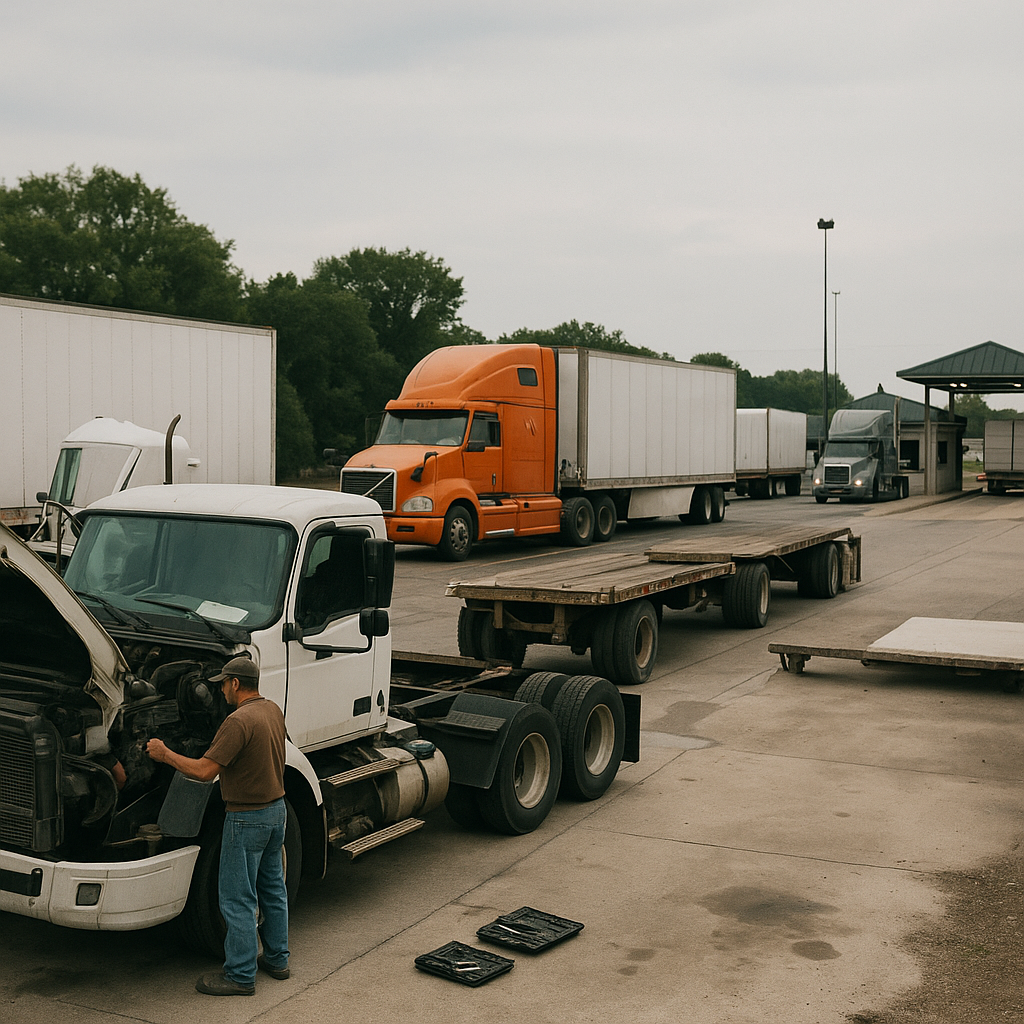

Omaha truck insurance depends on how you run the truck, what you haul, and whose authority you’re operating under. If you’re based in Omaha or anywhere in Nebraska, the big mistake is assuming one number or one policy setup fits every owner-operator. This guide breaks down the rules, the coverages, and how to compare quotes without missing a gap.
Omaha Truck Insurance Starts With Your Operating Setup#
Omaha truck insurance starts with your operating setup, not your ZIP code alone. The right coverage depends on whether you’re leased on or running your own authority, whether you haul interstate or intrastate, what the truck weighs, what cargo you carry, and what your contracts require.
A lot of confusion starts when drivers mix up personal auto and commercial trucking coverage. Personal auto insurance is coverage built for private passenger use, not for hauling freight for business. If you’re using a tractor for for-hire trucking, personal auto doesn’t replace a commercial truck policy.
The five details that usually shape an Omaha truck insurance decision are straightforward:
- authority status
- interstate or intrastate operation
- truck weight
- cargo type
- operating radius and contract requirements
Authority status matters first. A USDOT number is a federal identifier used to track safety and operating information, while an MC number is a federal operating-authority number used for certain for-hire interstate operations. If you’re leased to a motor carrier, that carrier may provide some primary coverages while requiring you to carry others yourself.
If you operate under your own authority, the insurance package usually gets broader and more document-heavy. That’s when Nebraska rules, federal filing requirements, and customer or broker contracts can all stack on top of each other. Same truck, same driver, different setup — very different insurance need.
Why personal auto insurance does not cover commercial trucking#
Commercial trucking creates a business-use exposure that personal auto policies aren’t built for. Hauling freight, using a tractor for dispatched work, or operating for hire changes the risk completely.
The five details that shape an Omaha truck insurance decision#
The details above drive both requirements and price. They also determine whether you need filings, cargo, physical damage, trailer-related coverage, or extra endorsements to satisfy a lease or broker packet.
Leased-on drivers versus carriers with their own authority#
Leased-on owner-operators usually need to understand exactly what the motor carrier covers and what stays on them. Carriers with their own authority need to build the full package around their own operation from the start.

Separate Nebraska Rules, FMCSA Requirements, and Contract Limits#
Nebraska rules, FMCSA requirements, and contract limits are three different things. State rules can apply to Nebraska-based or intrastate operations, federal rules can apply to qualifying interstate carriers, and contracts can demand more than either one.
For Nebraska-based trucking, state registration and intrastate rules may still matter even if a driver hears mostly about federal minimums. That’s why it helps to check your actual operating profile with the Nebraska Department of Transportation and the Nebraska Department of Insurance instead of relying on what another driver says at a truck stop.
For interstate operations, FMCSA financial responsibility rules come into play based on the kind of carrier you are, the weight of the vehicle, and what you’re hauling. Under 49 CFR Part 387, for-hire interstate carriers hauling general freight in vehicles over 10,001 lbs must carry at least $750,000 in public liability. That doesn’t mean all truckers need $750,000. Under the same federal framework, some operations fall under other thresholds, including $300,000 for certain carriers under 10,000 lbs, $1,000,000 for auto haulers, and $5,000,000 for certain hazmat operations.
An MCS-90 endorsement is a federal endorsement tied to certain financial responsibility obligations; it is not a plain-English promise that every truck-related loss is covered under your policy. FMCSA explains on fmcsa.dot.gov that filings and the MCS-90 serve specific regulatory purposes, so you shouldn’t treat them as a full summary of policy coverage.
Then come contracts. A broker, shipper, or motor-carrier lease may require higher liability limits, cargo terms, trailer-related coverage, or specific certificate wording beyond the regulatory baseline. That’s why comparing yourself to “what another driver carries” can steer you wrong fast.
Nebraska registration and intrastate insurance obligations#
Nebraska-based operators may have state-level requirements even when they aren’t running the same profile as a for-hire interstate carrier. Intrastate work can change the compliance picture.
Federal financial responsibility for interstate carriers#
Federal minimums depend on carrier type, weight, and commodity. Interstate for-hire trucking is where many owner-operators run into FMCSA filing requirements for the first time.
Why a broker, shipper, or motor-carrier agreement may require more#
Your contract may be the reason a quote needs higher limits or extra endorsements. If the load board, broker packet, or lease demands more, the legal minimum alone may not be enough to do the job.
Build the Coverage Package Around the Work You Haul#
The right Omaha truck insurance package should match the work you actually do. For most owner-operators, that means starting with liability, then adding cargo, physical damage, and operation-specific coverages based on dispatch type, trailer use, and the freight involved.
Commercial auto liability is the core coverage for covered bodily injury and property damage claims you cause while operating the truck in business use. This is the coverage tied most directly to regulatory minimums and contract limit requirements.
Motor truck cargo is coverage designed for covered freight loss or damage while the cargo is in your care. Cargo coverage needs to match the commodity, any exclusions or restrictions, the limit you’re expected to carry, and the deductible you can realistically handle after a loss.
Physical damage is coverage for covered damage to your truck from collision or non-collision causes like fire, theft, or certain weather events. In trucking, that often means Collision plus Comprehensive, or Fire & Theft with Combined Additional Coverage when available. The truck’s value, financing terms, and downtime exposure all matter here.
| Coverage | What it protects | Usually matters most when | Common gotcha |
|---|---|---|---|
| Auto liability | Third-party injury and property damage | Any business-use trucking operation | Limit may meet law but miss contract |
| Motor truck cargo | Covered freight in your care | Hauling customer freight for hire | Commodity restrictions can apply |
| Physical damage | Your truck and insured equipment | Truck has loan, value, or downtime risk | Deductibles vary more than drivers expect |
| Non-trucking liability | Eligible personal-use exposure | Leased owner-operator off dispatch | Not for paid hauling |
| Trailer interchange | Non-owned trailer by agreement | Written interchange agreement exists | Needs signed agreement |
| Reefer breakdown | Refrigeration-related cargo loss | Refrigerated freight operations | Not relevant without reefer exposure |
Non-trucking liability is liability coverage for certain eligible non-business use of a leased owner-operator’s truck when not under dispatch. Drivers often call this bobtail, but the key point is simple: it does not cover paid hauling.
Trailer interchange is coverage for a trailer in your care, custody, or control when a written interchange agreement applies. If there is no signed interchange agreement, some owner-operators may instead need non-owned trailer physical damage, depending on the setup.
Reefer breakdown is coverage meant to address certain loss exposures tied to refrigeration unit failure on temperature-controlled loads. It’s an add-on for eligible refrigerated operations, not something every dry van operator needs.
Getting this wrong usually shows up after a claim, not before. A quote can look fine until you realize the cargo commodity is restricted, the trailer setup isn’t covered, or the non-trucking liability won’t apply the way you thought it would. If you’re unsure how your Omaha operation should be classified,
Commercial auto liability for third-party injury and property damage#
This is the backbone of a trucking policy. It handles covered damage you cause to others, and it’s usually the first number brokers and regulators look at.
Motor truck cargo for freight you are responsible for#
Cargo should fit the loads you haul, not just the cheapest available limit. Commodity mismatches and exclusions are where many bad surprises start.
Physical damage and combined additional coverages#
Physical damage protects the truck itself. That matters even more when a financed tractor, newer equipment, or a long repair timeline could shut down your income.
Non-trucking liability, trailer interchange, and reefer breakdown#
These are the situational coverages that separate a usable policy from a bare-bones one. They should be added because your operation calls for them, not because someone online said every owner-operator needs the same package.
What Drives Omaha Truck Insurance Costs#
Omaha truck insurance pricing is individually underwritten, so there isn’t one standard Nebraska rate for every owner-operator. Your actual premium depends on your operation, cargo, radius, driving history, equipment, limits, deductibles, and other factors.
Underwriters usually look at the driver’s record first. That includes moving violations, accidents, years of commercial experience, and prior insurance or loss history. New authority can also change how a risk is viewed, even with a strong driving background.
The truck itself matters too. Vehicle type, insured value, where it’s parked, and how far it runs all affect pricing. Cargo type, interstate versus intrastate work, and any broker or shipper requirements can raise or narrow the acceptable market.
Lower cost doesn’t always mean better value. A cheaper quote may use different deductibles, narrower cargo terms, omitted trailer coverage, different radius assumptions, or exclusions that don’t fit how you actually operate.
The practical way to reduce cost is to make sure the application is accurate, remove duplicate or unsuitable coverage, and compare equivalent proposals side by side. Compare the protection, not just the premium.
Driving and loss history#
Clean records and stable insurance history usually help. Claims, lapses, or a short commercial track record can limit options.
Vehicle value, radius, and parking location#
A newer tractor, wider operating territory, or riskier parking setup can push physical damage and overall pricing higher. These details need to be right on the application.
Cargo, authority, and contract requirements#
Some commodities are harder to place than others. Running under your own authority or dealing with strict broker requirements can also shape both availability and price.
Limits, deductibles, and coverage structure#
Higher limits and lower deductibles can increase premium, but the real issue is fit. A quote only helps if the structure still works when something goes wrong.
Prepare These Documents Before Requesting Truck Insurance Quotes#
The fastest way to get usable Omaha truck insurance quotes is to gather your operating details before you apply. Complete, consistent information cuts down delays and makes side-by-side quote comparison much easier.
Start with business and driver information. Have your legal business name, garaging address, requested effective date, driver license details, and your USDOT number and MC number if they apply. You can also verify publicly available carrier identification and authority-related details through the FMCSA SAFER system.
Then gather truck, trailer, and cargo information. That includes VINs, unit years, values, lienholder details if financed, trailer details, cargo description, expected operating radius, and whether you haul interstate or intrastate.
Bring prior insurance documents too. Prior declarations pages, loss runs if available, and any lease agreement or customer contract insurance requirements can keep a quote from being built on bad assumptions.
Before authorizing a quote, ask whether the operation needs:
- regulatory filings
- additional insured wording
- certificate delivery support
- trailer interchange
- cargo terms for the actual commodity
- reefer breakdown
If any of those details are missing, the proposal may come back fast but still be wrong. Good applications save time because they give the insurer the facts needed to price the real operation.
Business, authority, and driver information#
Have the business setup and driver data ready before you call. Missing authority or license details often slow the process down right away.
Truck, trailer, and cargo details#
These facts shape both eligibility and price. They also help prevent a quote from being built for the wrong equipment or freight type.
Prior coverage and loss-history documents#
Prior declarations pages and loss runs tell a cleaner story than memory alone. If you’ve had changes or claims, documentation keeps the quote honest.
Questions to ask before authorizing a quote#
Ask what assumptions are being used. If a quote assumes the wrong radius, cargo, or trailer arrangement, it may not hold up when you need it.
Compare Truck Insurance Proposals Before You Bind#
Compare Omaha truck insurance proposals using the same operating facts and the same requested coverage structure. If the facts differ from quote to quote, the premium comparison won’t mean much.
Start with liability and filings. Make sure the commercial auto liability limit, any required filing, and the operating classification match the business you’re actually running.
Then read the cargo section carefully. Check the limit, deductible, commodity restrictions, exclusions, and radius classifications. A quote that looks cheaper can hide a tighter cargo form that doesn’t really fit the loads you haul.
Review physical damage next. Confirm how the truck is valued, what the deductibles are, and whether trailer-related protection or endorsements affect real-world claims. If the quote names an insurer or agency you don’t recognize, the NAIC consumer resources can help you verify insurance-related entities and understand the documents you’re reviewing.
Support matters too, especially when you’re on the road. Ask how certificates, policy changes, renewals, and claims reporting will be handled if a broker needs paperwork fast or your operation changes mid-policy. Dedicated human support won’t replace reading the policy, but it can help you interpret what the proposal is actually saying.
Stay Claims-Ready After Your Policy Starts#
Staying claims-ready means keeping your policy information easy to reach, reporting changes before they create a gap, and knowing what to do right after a loss. A good trucking policy helps most when your documents, contacts, and operating details stay current.
Keep policy documents, certificates, unit schedules, and claims contacts accessible from the cab and the office. If you add a truck, change cargo, expand your radius, bring on a new driver, switch authority status, or start using trailers differently, report it before it turns into a coverage issue.
After a loss, protect people first. Then document the scene, the truck, and the freight; preserve records; notify the right parties; and report the claim promptly under the policy’s instructions.
A policy review also makes sense before your operation changes, not after. If your Omaha-area operation is shifting from leased-on work to your own authority, or from dry freight to refrigerated loads,
FAQ#
Who is the cheapest truck insurance?
No insurer is always the cheapest for every trucking operation. Truck insurance pricing depends on the truck, driver, cargo, operating radius, authority status, claims history, requested limits, deductibles, and policy terms. A carrier that prices well for one Omaha owner-operator may not be competitive for another running different freight or a different radius. The better move is to compare equivalent proposals with matching liability limits, cargo terms, deductibles, and endorsements. If one quote is much lower, check whether it uses different assumptions or leaves out coverage your operation actually needs.
Who is Omaha Insurance Company?
If you see “Omaha Insurance Company” on a quote, certificate, or declarations page, don’t assume you know exactly which entity it is. Verify the legal insurer or agency name shown in the document, then check its licensing and company information through the Nebraska Department of Insurance or NAIC consumer resources. That’s especially important when the trade name, agency name, or underwriting company name isn’t clear. In trucking, several parties can appear on paperwork, including the retail agency, wholesaler, insurer, and certificate holder. Always confirm who issued what before you bind.
How much is $1,000,000 liability insurance a month?
There is no standard monthly price for $1,000,000 liability insurance in trucking. That limit is only one part of the risk. The premium depends on your driving and claims history, years of commercial experience, truck type and value, cargo, interstate or intrastate work, authority age, territory, garaging, and any contract-driven requirements. Two carriers can both ask for the same liability limit and still get very different pricing because the rest of the operation looks different to underwriters. The useful comparison is not just the limit, but the full coverage structure built around it.
What is the cheapest auto insurance in Nebraska?
For truck operators, this question can cause trouble because personal auto insurance and commercial truck insurance are not the same product. Personal auto is built for private passenger use, while commercial truck insurance is built around business use, freight hauling, and carrier operations. So the cheapest personal auto policy in Nebraska has little to do with what a tractor or for-hire trucking operation needs. If you’re insuring a truck for commercial work, compare commercial proposals with the same classifications, limits, deductibles, filings, and endorsements rather than shopping by personal-auto marketing claims.
Do I need different coverage if I’m leased on instead of running my own authority?
Yes, often you do. A leased-on owner-operator may operate under a motor carrier’s primary liability setup during dispatched business use, while still needing coverages like physical damage or eligible non-trucking liability personally. An owner-operator with their own authority usually needs a broader package built around their own filings, liability structure, cargo, and operational details. The exact split depends on the lease agreement and how the truck is being used. That’s why the first question in trucking insurance is usually not “What state are you in?” but “Whose authority are you running under?”





