
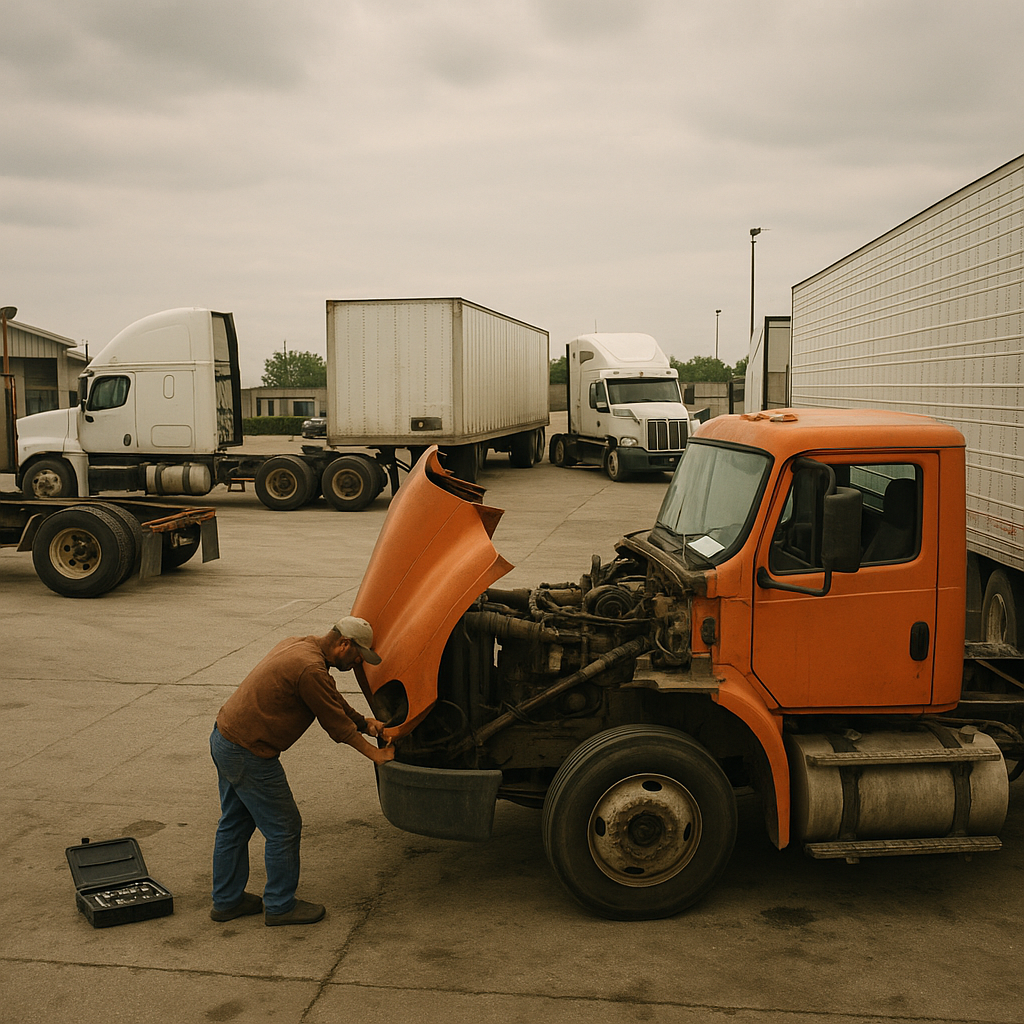

Toledo truck insurance isn’t the same thing as personal auto insurance with a bigger bill. If you run a truck for business in Toledo, garage it nearby, or haul freight across the Ohio-Michigan line, your coverage depends on how you operate, what you haul, and whose authority you’re running under.
This guide is built for owner-operators and small fleets with 1–5 trucks. The goal is simple: sort out which rules apply, match the right coverages to the work, and compare quotes without getting fooled by a cheaper number that leaves out something important.
What Toledo Truck Insurance Covers—and What It Does Not#
Toledo truck insurance is commercial coverage built for business use of trucks, not personal driving. The right policy usually depends on your operation, truck type, cargo, radius, authority status, and contracts, not just your Ohio address or a generic state minimum.
A commercial truck policy is built around risk from hauling, dispatching, loading exposure, customer requirements, and the value of the truck and freight. That’s why two drivers in the same Toledo ZIP code can need very different coverage.
Commercial trucking insurance is not personal auto insurance#
Commercial auto liability is insurance that covers third-party bodily injury and property damage caused by a covered business vehicle during covered operations. That’s different from a personal auto policy, which is written for personal driving, not for-hire trucking or business freight movement.
A lot of confusion starts here. Drivers search for Toledo truck insurance, then end up reading about personal cars, pickups, or Ohio auto minimums. That usually doesn’t answer the real question for a working truck.
Why Ohio passenger-car minimums do not answer trucking coverage questions#
Ohio’s personal-vehicle financial responsibility rules are a separate framework from commercial trucking insurance. The Ohio Bureau of Motor Vehicles can help explain state financial responsibility for passenger vehicles, but that doesn’t replace figuring out commercial coverage, contract requirements, or federal motor-carrier obligations.
Your trucking limits and filings may be driven by interstate status, cargo, vehicle weight, lease terms, or shipper requirements. So the right answer usually comes from the operation itself, not from a single statewide number.
Who this guide is for#
This guide is for Toledo-area owner-operators and small fleets, especially single-truck operators who run the business from the cab. If you’re leased on, running under your own authority, or trying to figure out whether Ohio-only work is different from interstate freight, this is the checklist to start with.

Start With the Rules That Apply to Your Operation#
The fastest way to sort out Toledo truck insurance is to classify the operation before you shop. Start with for-hire versus private carriage, then separate intrastate from interstate travel, then confirm authority, cargo, truck size, and contract requirements before you worry about price.
If you skip that order, it’s easy to buy the wrong policy or miss a filing you need before dispatch.
Step 1 – Identify for-hire, private-carriage, and leased-on status#
For-hire means you haul property or passengers for payment. Private carriage means a business hauls its own goods rather than hauling freight for customers. Leased-on status means an owner-operator runs under another motor carrier’s authority under a lease arrangement.
Those three setups can lead to very different insurance questions. A leased-on owner-operator may rely on the motor carrier for some liability structure, while still needing other coverages like physical damage or non-trucking liability.
Step 2 – Separate Ohio intrastate travel from interstate operations#
Intrastate means transportation that stays within one state. Interstate means transportation that crosses state lines or is part of interstate commerce, even if one leg of the trip looks local.
That matters because interstate for-hire carriers may be subject to federal financial responsibility rules. Under 49 CFR Part 387, the required minimums vary by operation and cargo; they are not one universal number for every trucker. For example, for-hire interstate carriers hauling general freight in vehicles over 10,001 lbs must carry at least $750,000 in public liability, while some operations require different limits.
Step 3 – Confirm authority, cargo, vehicle weight, and contract requirements#
A USDOT number is a federal identifier for certain commercial carriers. An MC number is operating authority for certain for-hire interstate operations regulated by FMCSA.
If you’re running under your own authority, check whether your operation requires an FMCSA insurance filing. FMCSA uses filings such as BMC-91 and BMC-91X to show proof of liability coverage for certain regulated operations, and the FMCSA explains when those filings support active authority.
Don’t stop at the regulation. Review broker packets, shipper contracts, warehouse agreements, and lease terms too. Contract requirements often exceed regulatory minimums and may require cargo, trailer coverage, or specific endorsements.
Step 4 – Verify filings before dispatching#
Before the first load moves, verify that your named insured, authority status, and required filings all line up. If the authority is active but the filing isn’t, or the filing is in place but the policy doesn’t match the operation, you’ve got a problem that a dispatcher or broker may catch before you do.
Build Coverage Around the Truck, Freight, and Contract#
Most Toledo truck insurance programs are built by stacking the coverages that match the actual operation. Start with liability, then add cargo, truck damage coverage, trailer-related protection, and any specialized options your lease or freight requires.
A basic liability policy often isn’t the whole story. A customer contract or lease can require coverage types that aren’t automatically included.
Commercial auto liability for injury and property damage#
Commercial auto liability covers third-party bodily injury and property damage caused by a covered truck during covered business use. This is the core coverage tied to many regulatory and contract requirements.
For owner-operators under their own authority, this is usually the first thing people ask about. But the right limit depends on the type of operation, weight, cargo, and whether you’re interstate or intrastate.
Motor truck cargo for customers’ freight#
Motor truck cargo is coverage for covered customer freight while it’s in the carrier’s care, custody, or control. It matters when you’re responsible for the value of what you’re hauling, not just damage you cause with the truck.
Cargo needs to match the freight profile. General dry goods, higher-theft commodities, temperature-sensitive products, and excluded items don’t all fit the same way. A quote that includes cargo in name only can still leave a gap if the commodity isn’t actually covered.
Physical damage and collision deductibles#
Physical damage is optional coverage for the insured truck itself. It commonly includes collision for upset or impact losses and comprehensive causes of loss such as fire, theft, vandalism, or weather.
Collision generally shouldn’t be treated as a standalone coverage. In practice, operators usually pair collision with comprehensive or with fire and theft plus CAC, depending on the policy structure. Deductibles matter here because they directly affect both premium and what you pay after a covered loss.
Non-trucking liability for qualifying leased owner-operators#
Non-trucking liability is specialized liability coverage for certain leased owner-operators during non-business use of the truck. It does not cover paid hauling and it does not replace the motor carrier’s required primary liability coverage.
This is one of the most misunderstood truck coverages. If you’re under dispatch, hauling, or otherwise using the truck in business, non-trucking liability is not the fallback answer.
Trailer interchange and non-owned trailer physical damage#
Trailer interchange coverage applies when a written interchange agreement makes you responsible for a non-owned trailer. Non-owned trailer physical damage is a separate coverage concern and often fits operators who use someone else’s trailer without a signed interchange agreement.
A lot of non-intermodal owner-operators confuse these two. The paperwork usually decides which question you should ask.
Reefer and refrigeration breakdown for temperature-controlled freight#
Reefer breakdown covers certain losses tied to refrigeration unit failure on temperature-controlled freight. If you haul produce, frozen goods, or other sensitive commodities, this can matter just as much as the cargo limit itself.
The key point is simple: if a lease, broker packet, or customer contract requires a coverage, don’t assume it’s bundled into a basic truck policy.
What Affects Toledo Truck Insurance Costs#
Toledo truck insurance costs are individually underwritten, so no insurer is the lowest-cost choice for every operation. Your actual premium depends on your operation, cargo, radius, driving history, truck value, requested limits, and other factors.
That means a cheap-looking quote can be cheap for the wrong reason. It may be built on a smaller radius, a different deductible, missing cargo, or an inaccurate business description.
Truck type, value, and equipment#
Underwriters look at the truck’s age, value, body type, and attached equipment. A more expensive tractor or specialized setup usually changes the physical damage side of the policy.
Operating radius and regular lanes#
Garaging ZIP code and regular lanes matter. A truck that stays local around Toledo may underwrite differently from one that runs long interstate lanes every week.
Cargo and customer requirements#
What you haul affects both eligibility and pricing. So do customer requirements for cargo limits, certificates, and added policy features.
Authority, years in business, and safety history#
A new venture under its own authority usually gets reviewed differently than a seasoned leased-on operator. Years in business, inspection history, and overall safety profile all matter.
Driver records, claims, and deductibles#
Driver experience, violations, accidents, and prior claims can all change the proposal. On physical damage, a higher deductible can reduce premium, but it also increases what you pay out of pocket after a covered loss.
To keep costs under control, use accurate applications, keep driver and loss information clean, review vehicle values, avoid duplicate coverage, and compare equivalent proposals instead of headline prices.
If you’re trying to sort out those details before comparing options, [](https://www.logrock.com/?utm_source=BLOG&utm_campaign=Toledo-truck-insurance).
Use a Like-for-Like Quote Comparison Checklist#
The best Toledo truck insurance comparison is a like-for-like comparison. Give every quote source the same operation facts and ask for the same coverage structure, or the numbers won’t mean much.
This is where a lot of owner-operators lose time. One quote may look lower simply because it covers less.
Business and authority details#
Have your legal business name, garaging address, USDOT number, and MC number ready if they apply. Also confirm whether you’re leased on, applying for authority, or already operating under your own authority.
Truck and trailer details#
Prepare the truck VIN, stated value or cost basis, unit details, and trailer ownership information. If you pull non-owned trailers, say that clearly up front.
Cargo, lanes, and customer contracts#
List the commodities you haul, your operating radius, and the states you travel in. If a broker, shipper, or motor carrier contract requires specific limits or endorsements, include that before quotes are built.
Driver and loss-history details#
Be ready with driver license details, experience, violation history, accident history, and prior loss runs if available. Missing or vague information can lead to bad comparisons or surprises later.
How to compare policy terms instead of only the bottom line#
Ask each quote source for the same liability limit, cargo limit, physical damage deductible, trailer terms, and endorsements. Then check whether any proposal excludes a commodity, changes a deductible, omits cargo, omits trailer coverage, or fails a lease or shipper requirement.
Also ask who handles certificates, filings, endorsements, claims questions, and renewal changes after binding. Human support matters when a one-truck operation changes lanes, adds a trailer, starts hauling new freight, or moves from leased-on work to its own authority.
Toledo and Michigan Border Operations: What to Verify#
Running Toledo freight into Michigan doesn’t automatically create one blanket insurance answer. What it does do is trigger a smart verification step: confirm whether your actual work is interstate, whether authority or filings are affected, and whether customer contracts change the coverage you need.
This is where forum advice goes sideways fast. The right answer comes from the operation, not from a personal auto rule or a one-line comment from another driver.
Crossing state lines can change the questions to ask#
If you regularly cross from Ohio into Michigan, verify interstate-commerce status, policy territory, and contract requirements. For some operators, that’s the point where federal authority and filing questions become relevant.
Review lanes, authority, and customer requirements#
Use SAFER to review carrier identification and safety-related information tied to your USDOT and authority details. It’s a good verification step when you’re checking what status appears before dispatch or before changing how you operate.
Update the insurer when operations change#
Tell your insurance professional before you add Michigan lanes, change commodities, expand radius, or switch from leased-on work to operating under your own authority. Those changes can affect both pricing and whether the current setup still fits.
Choose Coverage With the Right Facts Before You Bind#
Before you bind Toledo truck insurance, classify the operation, verify the rules and contracts, choose the coverages that match the work, compare equivalent quotes, and confirm any required filings or certificates. That’s the order that helps prevent expensive mistakes.
Right before binding, review the named insured, truck and trailer schedules, drivers, garaging address, commodities, radius, limits, deductibles, endorsements, certificates, and filing status. Small errors here can turn into big problems at dispatch time or claim time.
Update the policy when you change trucks, add drivers, change authority, haul new cargo, take on a trailer interchange obligation, or expand lanes. Those are not small housekeeping details in commercial trucking.
If you’re not sure what coverage fits your operation, LogRock can help you scope it.
FAQ#
Who is the cheapest truck insurance?
No insurer is the cheapest option for every trucker. Commercial trucking is individually underwritten, so the price changes based on the truck, garaging location, cargo, lanes, authority status, years in business, driver history, claims, limits, and deductibles. A lower quote may also reflect less coverage, a different radius, or a missing endorsement rather than a better fit.
The smart move is to compare equivalent proposals. Make sure each quote uses the same liability limit, cargo limit, physical damage deductible, trailer terms, and business description before deciding which one is actually competitive.
Who has the cheapest car insurance rates in Ohio?
That’s a personal auto question, not a commercial trucking one. Personal car insurance pricing in Ohio doesn’t tell you what a working truck should be insured for, and it doesn’t answer whether you need commercial auto liability, cargo, physical damage, or FMCSA-related filings.
If the vehicle is used in a trucking business, compare commercial coverage based on the real operation. That includes garaging location, vehicle type, cargo, radius, authority status, and any contract requirements. Personal auto shopping and commercial truck shopping are different lanes.
Why is pickup truck insurance so high?
Pickup insurance can be higher because of vehicle value, repair costs, theft exposure, driver history, where the truck is kept, and the coverages selected. Some pickups are also used more heavily than passenger cars, which can change how insurers view the risk.
The bigger issue is use. If a pickup is being used for commercial hauling or business operations, personal auto assumptions may not fit. A business-use pickup may need commercial coverage based on how it’s actually used, not just what the vehicle looks like.
Can someone drive my car if they are not on my insurance in Ohio?
That depends on the personal auto policy, the insurer’s permissive-use rules, the driver’s status, and any policy exclusions. You should check with the insurer before lending the vehicle, because coverage isn’t something to guess at after a loss.
That’s separate from commercial trucking. On a business auto or trucking policy, driver scheduling, permissive use, and eligibility rules can be much tighter. Don’t assume a personal auto answer carries over to a commercial truck policy.
Do I need FMCSA filings for Toledo truck insurance?
Maybe, but only if your operation falls into the categories that require them. Certain for-hire interstate carriers need insurance filings to support active FMCSA operating authority, while other operations may not. The answer depends on whether you’re for-hire or private, interstate or intrastate, under your own authority or leased on, and what you haul.
Check your USDOT and MC status, review the authority setup, and confirm whether a filing such as BMC-91 or BMC-91X is needed. This is one of the first things to verify before dispatch, not after.





