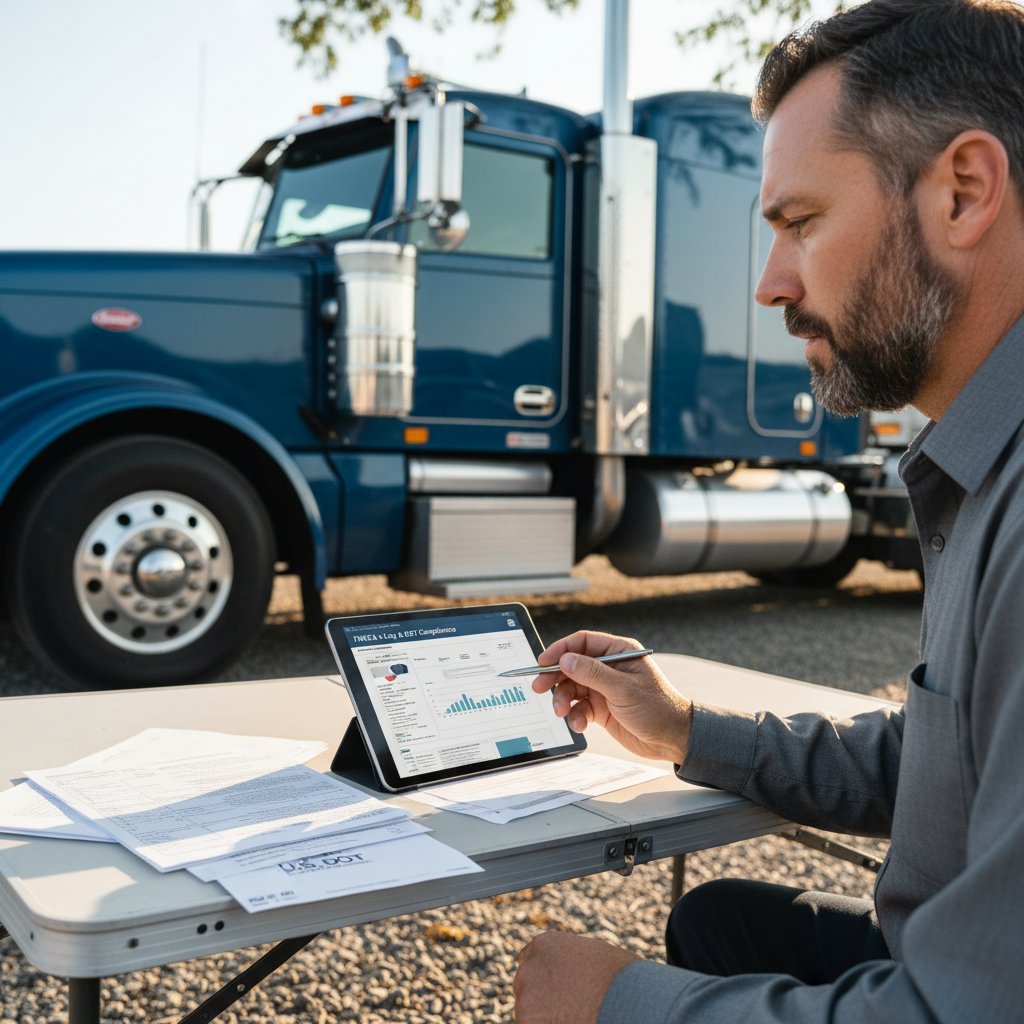
See 2026 truck insurance monthly costs for owner-operators, leased-on drivers, and fleets—plus ranges by truck type and state, what coverages cost most, and proven ways to lower premiums.

How much is truck insurance per month? In 2026, most drivers budget a wide range because pricing depends on your authority (leased-on vs own), truck type, garaging ZIP/state, cargo, operating radius, and safety record. As a realistic starting point: leased-on drivers often pay about $250–$500/month out-of-pocket, while owner-operators with their own authority commonly land around $900–$1,600+/month for a full commercial package.
If you want the basics of what’s included in a typical package before you compare quotes, start with Trucking Insurance 101. Then use the ranges below to set a budget and price it to your exact operation.
Key Takeaways: Essential Monthly Truck Insurance Budgeting
- Leased-on is usually cheaper out-of-pocket. Your carrier typically provides primary liability, so your monthly spend is mostly add-ons (NTL/bobtail, physical damage, occ/acc).
- Own authority costs more because you’re buying the full package. Primary liability + cargo + physical damage are the big ticket items for semi truck insurance.
- Location and lanes move the number fast. Your garaging ZIP, radius (local/regional/OTR), and cargo class can swing pricing 2–3×.
- The cheapest premium isn’t always the best deal. A “low” payment can mean missing cargo, wrong radius, weak deductibles, or filing issues—aka expensive surprises.
Table of Contents
Reading time: 9 minutes
- 2026 average truck insurance cost per month (quick ranges)
- How much is semi-truck insurance per month? (owner-operator vs leased-on)
- How truck type and location change monthly premiums (with state snapshots)
- What you’re actually paying for: coverage components that drive the monthly bill
- What factors affect truck insurance premiums the most?
- How can truckers lower their insurance costs? (2026 tactics that actually move the price)
- Real-world monthly cost examples (2 quick scenarios)
- Frequently Asked Questions
- The Logrock Difference: Insurance Built for Owner-Operators
- Conclusion: Budget a range, then price it to your exact operation
2026 average truck insurance cost per month (quick ranges)
In 2026, typical truck insurance cost per month ranges from $250–$500 for many leased-on drivers to $900–$1,600+ for many owner-operators with their own authority, with small fleets often budgeting $750–$1,200+ per truck depending on loss history and lanes.
These are budget bands, not a promise, because underwriting is personal. But if you’re trying to plan cash flow, this gets you close enough to avoid sticker shock.
Typical monthly cost ranges by operator type
| Operator type | Typical monthly range (2026) | What’s usually included (high level) |
|---|---|---|
| Leased-on driver | $250–$500 | Often NTL/bobtail + optional physical damage/occ-acc (carrier usually has primary liability) |
| Owner-operator (own authority) | $900–$1,600+ | Primary liability + cargo + physical damage (often plus GL, NTL, trailer interchange, etc.) |
| Small fleet (per truck) | $750–$1,200+ | Similar to owner-op packages; pricing is heavily loss-history driven |
Reality check: why two drivers can pay 2–3× different prices
Two people can run “the same lane” and still price out wildly different because insurers rate the risk signals behind the operation, not just the route name.
- New authority vs established authority: New ventures usually price higher because there’s less proven insurance history.
- MVR/PSP, claims, and violations: Speeding, following too close, and recent claims can spike premiums quickly.
- Cargo class: General freight prices differently than hazmat or high-value loads.
- Radius and run states: Local vs regional vs OTR and metro-heavy lanes can change costs dramatically.
- Truck value + repair costs: Newer rigs and higher repair severity often cost more to insure.
How much is semi-truck insurance per month? (owner-operator vs leased-on)
Semi truck insurance per month is typically ~$900–$1,600+ for an owner-operator with authority and ~$250–$500 for a leased-on driver because the motor carrier usually carries primary liability. Your exact number depends on limits, cargo, lanes, truck value, and your safety record.
Owner-operator semi (own authority)
If you run under your own MC/DOT, you’re buying a true commercial truck insurance package, and the biggest cost drivers are usually primary liability, cargo, and physical damage.
- Primary liability: Limit requirements matter; brokers commonly require $1,000,000 even when the federal minimum for many for-hire interstate carriers is lower (cargo and operations can change requirements).
- Cargo: What you haul and the limit you need (or your broker requires) drives this line item.
- Physical damage: Truck value + deductible + comp/collision rating typically determine the monthly spend.
Where it gets expensive fast: new ventures, tough loss history, higher-risk freight, high-theft areas, and broad OTR exposure.
Leased-on semi (carrier policy vs your add-ons)
When you’re leased onto a motor carrier, the carrier typically provides primary liability while you may still need coverage personally (depending on the lease and how you operate).
- Non-trucking liability (NTL) / bobtail: Common for off-dispatch movement.
- Physical damage: Often required by a lender if the truck is financed.
- Occupational accident: A common alternative to workers’ comp for owner-ops/leased-on drivers.
- Trailer interchange: Sometimes required if you’re swapping/holding someone else’s trailer.
Leased-on can look cheaper, but the trade-off is usually less control over how coverage is structured and what’s deducted.
What you’re actually paying for: coverage components that drive the monthly bill
Most commercial truck insurance premiums are the combined cost of primary auto liability, motor truck cargo, and physical damage, plus endorsements like general liability, NTL/bobtail, or trailer interchange, and each component is priced separately.
A lot of frustration around “affordable trucking insurance” comes from not realizing the monthly premium is a stack of coverages—some required by law or contracts, some required by your lender, and some required by common sense.
If you want the clean checklist view, use the Owner-Operator’s insurance checklist (6 critical coverages).
Primary liability vs cargo vs physical damage (plain-English)
- Primary Auto Liability: Pays for injuries/property damage you cause. This is the main compliance and contract piece for most authorities and broker requirements.
- Motor Truck Cargo: Pays for covered damage to freight you’re responsible for (limit depends on what you haul and contract requirements).
- Physical Damage: Covers your truck (comp/collision). This is heavily tied to truck value, repair costs, and your deductible.
Other common add-ons that can move the monthly bill:
- General Liability: Non-auto exposures (for example, slip-and-fall at a shipper/receiver).
- NTL/bobtail: Especially common in leased-on situations.
- Trailer interchange: If you’re swapping/holding someone else’s trailer.
- Occupational accident: Common for owner-ops and leased-on drivers.
Example package breakdown (sample budget)
Not a quote—just a budgeting example to show how the bill is often built:
| Coverage bucket (example) | Illustrative monthly budget | What changes it most |
|---|---|---|
| Primary liability | $550 | Authority age, lanes, safety history, limit requirements |
| Cargo | $150 | Cargo class, limit amount, claims history |
| Physical damage | $250 | Truck value, deductible, comp/collision rating, garaging |
| Other (GL / NTL / occ-acc, etc.) | $75 | Lease requirements, endorsements, payroll/driver setup |
| Total (illustrative) | $1,025/month | Your operation + your paperwork + your risk signals |
If you’re unsure what you actually need vs what a broker prefers, start with a checklist before you shop.
How can truckers lower their insurance costs? (2026 tactics that actually move the price)
The most reliable ways to lower commercial truck insurance premiums are to reduce underwriting risk signals (clean MVR/claims, stable lanes, no lapses) and to compare quotes with identical limits, deductibles, radius, cargo class, and filings so you’re not buying mismatched coverage.

Start here: Affordable Trucking Insurance: 10 levers to lower your premiums.
Practical moves that actually affect the number
- Shop apples-to-apples: Same limits, same deductibles, same radius, same cargo class, same filings.
- Set deductibles strategically: A higher physical damage deductible can lower monthly spend, but only if you can pay it tomorrow.
- Avoid lapses: Cancellations are expensive and sticky in underwriting.
- Run clean: Inspections, maintenance, and fewer violations (HOS/ELD compliance matters).
- Use modern proof: Dashcams + telematics + documented safety process (ask what earns credit—don’t assume).
- Tighten the story: Correct garaging ZIP, accurate radius, accurate driver list—bad info can cause denied claims or non-renewals.
Questions to ask when shopping
- “Is this quote rated for my real radius (local/regional/OTR)?”
- “Does this include filings (BMC-91/91X) if I need them?”
- “Any exclusions for my cargo class?”
- “What discounts are available for dashcam/telematics, and what proof do you need?”
More tactical ideas here: 10 ways to save on your trucking insurance premiums.
Real-world monthly cost examples (2 quick scenarios)
For 2026 budgeting, a new-authority OTR owner-operator often starts around $1,200–$2,000+ per month, while a leased-on driver buying only personal add-ons often lands around $250–$600 per month, depending on what they carry.
These scenarios are simplified, but they reflect how underwriting usually thinks: authority age + lanes + cargo + truck value + history.
Scenario A: New authority owner-operator (semi, OTR)
- Setup: New authority, 1 truck, OTR general freight, $1M liability, financed tractor (physical damage required), standard cargo limit.
- Typical outcome: Often ~$1,200–$2,000+/month to start (sometimes higher in tougher states/loss environments).
- Why: New authority + broad state exposure + lender-required physical damage + limited insurance history.
What helps at renewal: clean year (no claims), stable lanes, consistent miles, no lapses, and clean inspections.
Scenario B: Leased-on driver (semi, regional) + personal add-ons
- Setup: Leased to a carrier for primary liability; driver buys NTL/bobtail and possibly physical damage + occ/acc.
- Typical outcome: Often ~$250–$600/month out-of-pocket (depending on what you personally carry).
- Trade-off: Lower personal premium, but less control and more dependence on carrier structure/requirements.
Frequently Asked Questions
Semi truck insurance per month is typically $900–$1,600+ for an owner-operator with authority and about $250–$500 for a leased-on driver buying personal add-ons, because the carrier usually provides primary liability.
Quotes jump above that range most often due to new authority, recent claims/violations, higher-risk cargo, OTR radius, or high-loss garaging ZIPs. Limits also matter: brokers commonly require $1,000,000 liability, and higher physical damage values (newer financed tractors) raise comp/collision costs. The fastest way to avoid bad comparisons is to keep quotes apples-to-apples on radius, cargo class, limits, and deductibles.
Truck insurance premiums are most heavily driven by MVR/PSP and claims history, authority and prior insurance history (including lapses), cargo class, operating radius and run states, garaging ZIP, and truck value.
Those factors influence both claim frequency (how often) and severity (how expensive), which is what underwriters price. Even two “general freight” operations can price 2–3× apart if one runs dense metros, has a recent claim, or is a new venture. For the complete checklist-style breakdown, use what affects the cost of truck insurance.
Truckers can lower insurance costs by reducing risk signals and by shopping identical coverage packages so carriers are truly comparable.
In practice, that means: avoid lapses, keep inspections and violations clean, stabilize lanes/radius, document safety processes, and ask what credits exist for dashcams/telematics (and what proof is required). On the shopping side, keep limits, deductibles, radius, cargo class, and required filings consistent across quotes so a “cheaper” policy isn’t just missing coverage. For a step-by-step list, use 10 ways to save on your trucking insurance premiums.
Leased-on is often cheaper out-of-pocket because the motor carrier typically provides primary liability, while owner-operators with authority usually pay more because they buy the full package (liability + cargo + physical damage + endorsements).
As a 2026 budgeting range, leased-on drivers commonly spend $250–$500/month on personal add-ons, while owner-operators with authority often land around $900–$1,600+/month depending on state, lanes, and history. The real comparison question is “what’s included,” because a low payment can mean missing cargo, wrong radius, or no trailer interchange. Use the Owner-Operator’s insurance checklist (6 critical coverages) to verify you’re not buying holes.
Truck type and location materially impact insurance rates because they change claim frequency and severity, including theft risk, traffic density, repair costs, and litigation trends.
For example, an OTR semi typically carries higher liability exposure (more miles and more states), while a box truck can be lower or comparable depending on urban delivery density and frequent stops. Garaging ZIPs in high-loss metros often price higher than rural ZIPs, and certain states trend higher due to legal and medical cost environments. If you want a benchmark by state, start with commercial truck insurance cost in Texas and compare it to where you actually run.
Box truck insurance is often cheaper than semi-truck insurance when the operation is local, the truck value is lower, and the lanes avoid high-loss metro corridors—but it is not automatically cheaper in every case.
Urban delivery exposure (more stops, more backing, more traffic), higher GVW, and certain cargo classes can push box truck premiums up quickly. The only fair comparison is same limits, same deductibles, same garaging ZIP, and the same radius classification (local/regional/OTR). If any one of those changes, you’re not comparing price—you’re comparing different risk profiles and different coverage.
The Logrock Difference: Insurance Built for Owner-Operators
Logrock builds truck insurance quotes around the real variables that control pricing and compliance—authority status, garaging ZIP, radius, cargo class, driver history, and common broker requirements like $1,000,000 liability and COI turnaround time.
Most insurance content ignores how you actually live: tight margins, broker deadlines, ELD/HOS pressure, and the fact that one claim can turn into 60 days of cash-flow pain.
- Fast, clean quoting: With the right assumptions and COI-ready limits.
- Coverage that matches reality: Radius, cargo, lanes, and endorsements aligned to what you actually do.
- A monthly budget you can plan around: Not a vague annual number that hides surprises.
If you’re trying to scale from 1 truck to 2–5, insurance isn’t just a bill—it’s a gatekeeper for better freight and steady broker relationships.
Conclusion: Budget a range, then price it to your exact operation
Monthly trucking insurance budgets in 2026 typically fall around $250–$500 for leased-on drivers and $900–$1,600+ for owner-operators with authority, but your exact premium is set by underwriting variables like ZIP, radius, cargo, and loss history.
Use the ranges in this guide to set your budget, then get apples-to-apples quotes with correct limits and deductibles so you’re not paying for surprises later.
Key Takeaways:
- Your authority status (leased-on vs own authority) is one of the biggest price splitters.
- Primary liability, cargo, and physical damage usually drive most of the monthly payment.
- The fastest path to affordable trucking insurance is clean operations + clean shopping (no lapses, no mismatched radius/cargo, consistent quoting).
If you want to quote without losing a day at a desk, use our mobile-first quote form and keep this savings guide handy: Affordable Trucking Insurance: 10 levers to lower your premiums.
Related Reading: Trucking Insurance 101, what affects the cost of truck insurance, and 10 ways to save on your trucking insurance premiums.