
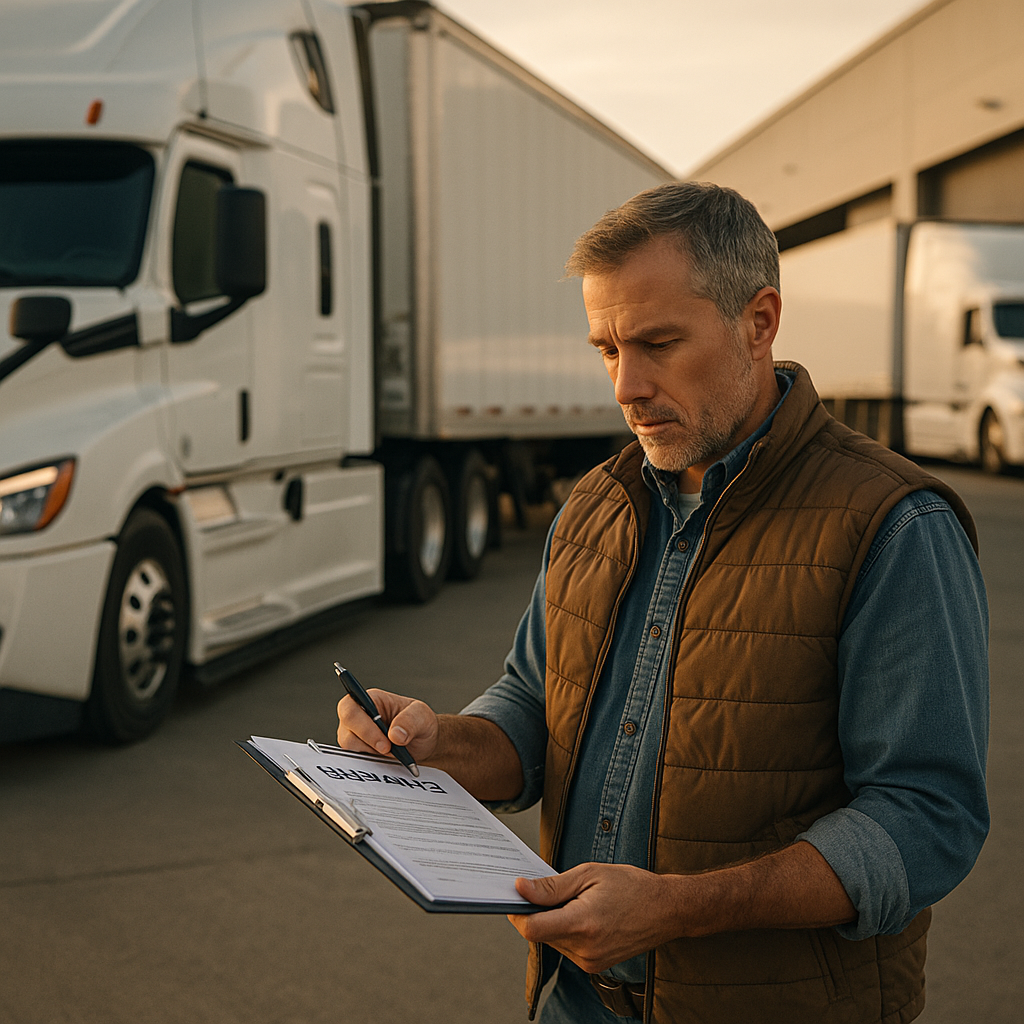

Owner operators truck insurance doesn’t have to be confusing. Learn required coverages, broker minimums, real costs, and money-saving tips. Get your Logrock quote.
Owner operators truck insurance is the firewall that keeps one wreck, one cargo claim, or one lawsuit from wiping out your cash flow. Most owner-operators need Primary Auto Liability, Motor Truck Cargo, and Physical Damage at a minimum; if you run under your own authority, you’ll also need FMCSA/state filings, and if you’re leased-on, you may still need Non-Trucking Liability (NTL)/Bobtail, plus coverage to close dispatch gaps.
Here’s the business reality: the “cheapest” policy is the one that actually responds in a claim and keeps you booking loads. This checklist breaks down required vs. optional coverages, common broker minimums (often higher than FMCSA), and practical ways to keep insurance from crushing your cost-per-mile (CPM).
Key Takeaways: Essential Owner Operators Truck Insurance
- Liability is the ticket to play: FMCSA sets minimums, but brokers/shippers often require $1,000,000—quote for real-world requirements, not just legal minimums.
- Cargo + Physical Damage protect your week’s revenue: A cargo claim or a totaled hood can erase months of progress if you’re underinsured.
- Leased-on vs. your own authority changes everything: Your lease agreement decides who carries liability/cargo—and where dangerous gaps show up.
- Affordable trucking insurance = smart structure, not “cheap”: Higher deductibles, clean MVR, correct radius, and accurate operations class can cut premium without creating a claims disaster.
Table of Contents
Reading time: 9 minutes
- Start Here: Own Authority vs Leased-On (Quick Decision)
- What’s Actually Required (FMCSA + Broker Minimums)
- The 8 Coverages Owner-Operators Should Price (With Plain-English Risk)
- Realistic Cost Ranges: How Much Trucking Insurance Costs
- Filings, COIs, and Paperwork: What Slows You Down (and How to Fix It)
- How to Lower Premium Without Gambling Your Business
- The Logrock Difference: Commercial Truck Insurance Built for Owner-Operators
- Your Questions Answered: “People Also Ask” FAQs
- Conclusion & Get a Quote

Start Here: Own Authority vs Leased-On (Quick Decision)
Operating under your own authority typically means you carry primary auto liability and your insurer files FMCSA proof, while a leased-on setup typically means the carrier provides liability during dispatch and you buy gap coverages like NTL/bobtail.
Before you buy anything, decide this: Are you running under your own MC authority or leased to a carrier? That single detail changes which policies you must carry, who files what, and where you can get burned by gaps.
Quick guide (then confirm your lease in writing)
| Setup | Who usually carries Primary Liability? | Who usually carries Cargo? | What you often still need personally |
|---|---|---|---|
| Own authority (your MC) | You | You | Liability, cargo, physical damage, plus filings/COIs |
| Leased-on to a carrier | Carrier (during dispatch) | Carrier (sometimes) | Often Physical Damage, Non-Trucking Liability/Bobtail, sometimes Cargo, plus occupational accident |
Pro tip: If you’re leased-on but running side work (or power-only/hotshot on weekends), you can fall into a “coverage gray zone” fast. Don’t assume dispatch “has you covered”—match your policy to your actual operation.
What’s Actually Required (FMCSA + Broker Minimums)
FMCSA sets federal liability minimums as low as $750,000 for many interstate carriers, but many brokers and shippers commonly require $1,000,000 auto liability and $100,000 cargo to tender loads.
There are two “required” standards that matter: (1) legal minimums (FMCSA/state) and (2) market minimums (brokers/shippers/ports/warehouses). A lot of owner-operators are legal but still get shut out of better freight because their limits don’t meet contract requirements.
1) FMCSA Primary Auto Liability minimums (baseline)
- What it is (plain English): The policy that pays for injuries and property damage you cause to others.
- Why it matters: A serious crash can turn into a lawsuit that goes after your business, your truck, and future earnings.
- Common federal minimums (general reference):
- $750,000 for many interstate general freight carriers (baseline)
- $1,000,000 for certain oil carriers
- $5,000,000 for certain hazmat classes
- Reality check: Many brokers require $1,000,000 liability even if a lower legal minimum could apply.
2) Broker/shipper “contract minimums” (what gets you better loads)
Even if you’re legal, a shipper can still say “no.” Common contract requirements include:
- $1,000,000 Auto Liability (very common)
- $100,000 Cargo (common floor; higher for electronics, food, and other high-value loads)
- General Liability (often requested for certain facilities)
Business takeaway: Treat insurance like access to lanes. The right limits can open higher-paying freight and reduce downtime caused by “COI drama.” For a deeper breakdown on certificates and why they get rejected, see this guide on Certificates of Insurance (COIs) for trucking.
The 8 Coverages Owner-Operators Should Price (With Plain-English Risk)
The eight most commonly quoted coverages for owner-operators are Primary Auto Liability, Motor Truck Cargo, Physical Damage, Non-Trucking Liability/Bobtail, General Liability, Trailer Interchange, Occupational Accident, and UM/UIM + Medical Payments.
This is the practical shopping list for commercial truck insurance and semi truck insurance. Not everyone needs every line item, but every owner-operator should understand what each one does, when it applies, and where the gaps show up.
1) Primary Auto Liability (required to operate under your authority)
- What it is: Pays others when you’re at-fault (bodily injury + property damage).
- Why it’s essential: One serious injury claim can exceed $1,000,000 quickly, especially with attorneys involved.
- Who needs it: Any owner-operator with their own authority (MC/DOT).
- Veteran advice: Quote $1M if you want consistent broker access.
2) Motor Truck Cargo Insurance (protects the load + your relationships)
- What it is: Covers loss/damage to freight you’re responsible for (collision, theft, and other covered causes; endorsements may apply for reefer/temperature).
- Why it’s essential: Cargo claims can end broker relationships fast, and some contracts allow deductions from your settlement.
- Who needs it: Most owner-operators under their own authority; many leased-on operators depending on lease terms and who holds bill-of-lading responsibility.
- Pro tip: Match the limit to your real freight—many brokers start at $100,000, and some lanes/commodities need $250,000+.
3) Physical Damage (comprehensive + collision for your truck)
- What it is: Repairs or replaces your tractor after wrecks, theft, vandalism, hail, and other covered losses.
- Why it’s essential: If your truck is your income, physical damage is paycheck protection—and downtime can cost more than the repair.
- Who needs it: Anyone with a financed truck (lenders commonly require it) and anyone who can’t replace a truck out-of-pocket.
- Cost-control lever: Pick a deductible you can actually pay within 24 hours without wrecking your fuel or rent money.
4) Non-Trucking Liability (NTL) vs. Bobtail (coverage “off dispatch”)
NTL is about not being under dispatch, while bobtail is about not having a trailer; the exact trigger depends on how your endorsement defines “under dispatch.”
| Coverage | When it typically applies | Real-world example |
|---|---|---|
| Non-Trucking Liability (NTL) | Driving for personal use not under dispatch | You’re off-duty, grabbing groceries, and you hit a car |
| Bobtail Liability | Driving without a trailer (on/off dispatch depends on wording) | You drop a trailer, drive to a shop, and cause an accident |
- Who needs it: Most leased-on owner-operators, because the carrier’s liability may apply only when dispatched.
- Pro tip: Don’t guess—get the carrier’s “under dispatch” definition in writing, then match the endorsement language.
For a deeper breakdown, see Non-Trucking Liability vs Bobtail insurance.
5) General Liability (GL) (often required by shippers/facilities)
- What it is: Covers non-auto liabilities (dock damage, forklift incidents, slip-and-fall claims at your yard, etc.).
- Why it’s essential: Some facilities require GL, and it can respond when the truck isn’t “in motion” for an auto claim.
- Who needs it: Many operators working with larger brokers, specific warehouses, or doing ancillary services.
6) Trailer Interchange (if you pull someone else’s trailer)
- What it is: Covers physical damage to a non-owned trailer under a written interchange agreement.
- Why it’s essential: If it’s stolen or damaged while in your care, you don’t want the bill out-of-pocket.
- Who needs it: Operators regularly swapping/holding trailers they don’t own (often power-only setups).
- Pro tip: Cargo coverage usually does not cover the trailer itself.
7) Occupational Accident (Occ/Acc) or workers’ comp alternative (your body = your asset)
- What it is: Medical and disability-style benefits if you’re hurt on the job (benefits vary by plan and contract).
- Why it’s essential: One injury can park you for weeks, and no miles means no money.
- Who needs it: Many leased-on owner-operators (especially if the carrier requires it), and anyone without strong health/disability coverage.
8) Uninsured/Underinsured Motorist (UM/UIM) + Medical Payments (often overlooked)
- What it is: Helps when someone with low or no insurance hits you; Med Pay can help with medical bills regardless of fault (state rules apply).
- Why it’s essential: You can do everything right and still get wrecked by someone carrying minimum limits.
- Who needs it: Most owner-operators, especially those running high-traffic metros.
Stop guessing on limits: Share your authority setup, trailer situation, cargo type/value, and lanes. We’ll build coverage that matches how you actually run so you can book freight without COI issues.
Realistic Cost Ranges: How Much Trucking Insurance Costs
Owner-operator insurance commonly ranges from about $900–$2,000+ per month for a new venture under its own authority, while leased-on operators often pay about $250–$900+ per month for personal coverages like NTL/bobtail and physical damage.
There’s no single number, but you need a ballpark for budgeting and rate negotiation.
Typical monthly ranges (general guidance)
| Profile | What you’re running | Rough monthly range |
|---|---|---|
| New venture, own authority | 1 truck, general freight | $900–$2,000+ / month |
| Leased-on owner-operator | Carrier provides liability; you carry NTL + physical damage | $250–$900+ / month |
| Hotshot insurance | 1-ton/medium duty + trailer (varies heavily) | $300–$1,200+ / month |
| Higher-risk operations | Hazmat, high-value, long radius, new CDL/authority | $1,800–$4,000+ / month |
What moves your price the most
- Driving record (MVR): Speeding, at-fault accidents, CSA history
- New authority: Many carriers rate new MCs higher
- Radius + lanes: Regional vs. OTR; dense metro vs. rural
- Cargo type/value: Commodity matters
- Truck value + deductible: Physical damage cost swings fast
- Credit/insurance score (where allowed): Can materially affect premium
- Equipment specifics: Reefer/hotshot equipment and theft exposure
Business move: Convert premium to CPM. If your premium is $1,500/month and you run 10,000 miles, that’s $0.15/mile before fuel, maintenance, plates, IFTA, and repairs.
Filings, COIs, and Paperwork: What Slows You Down (and How to Fix It)
For owner-operators under their own authority, insurers typically file FMCSA proof of coverage (often via forms like BMC-91/BMC-91X depending on structure), while brokers and shippers usually require a COI showing limits, dates, and certificate holder language.
Insurance isn’t just a policy—it’s also filings and proof. This is where owner-operators lose time, miss loads, and get cancellation notices.
What “filings” usually mean for trucking insurance
- FMCSA filings (own authority): Your insurer files proof of liability with FMCSA (commonly via forms like BMC-91/BMC-91X depending on structure).
- State filings: Some states require additional filings (varies by state and operation).
- MCS-90: Often attached to liability policies for interstate carriers; important, but it’s not a “replacement” for real coverage.
- COIs (Certificates of Insurance): What brokers and shippers request to verify limits and add certificate holder/additional insured language.
Simple workflow to avoid “COI panic”
- Build your coverage with correct operations (radius, commodities, trailer ownership).
- Set your standard certificate language correctly.
- Turn COIs around fast when dispatch needs them.
- Re-check COIs anytime you change lanes, commodities, or add equipment.
If you’re tired of admin eating your drive time, start with a clean process and templates. This walkthrough on truck insurance paperwork and compliance can help.
How to Lower Premium Without Gambling Your Business
Lowering trucking insurance premiums usually comes from tightening underwriting inputs (MVR, radius, commodity, and loss control) and choosing deductibles you can fund quickly, not from stripping required coverages like $1M liability or contract cargo limits.
“Affordable trucking insurance” isn’t about cutting coverage to the bone—it’s about making sure you’re rated accurately and your risk looks clean on paper.
1) Raise deductibles strategically (not emotionally)
If you can’t float a $2,500 deductible within 24 hours, don’t choose it just to save a small amount each month. A claim will cash-flow you to death.
2) Fix your classification: cargo, radius, and use
Misclassified operations can trigger premium surprises at audit, broker COI rejections, and coverage disputes at claim time. If you changed from local to OTR (or started hauling different freight), update the policy.
- Premium surprises at audit
- Denied or limited claims
- Broker COI rejections
3) Tighten your safety story (because underwriters price risk)
- Document pre-trips/post-trips (apps count)
- Use dash cams (front + driver-facing if you can tolerate it)
- Keep maintenance logs (oil, tires, brakes)
- Control speeding (it’s the silent premium killer)
4) Don’t shop price only—shop structure
Two quotes can be the same premium and produce totally different outcomes due to exclusions, theft limitations, “under dispatch” definitions, and towing/storage limits after a wreck. Ask what happens in a real claim, not just what the declarations page looks like.
The Logrock Difference: Commercial Truck Insurance Built for Owner-Operators
Most owner-operators need broker-ready limits like $1,000,000 auto liability and commonly $100,000 cargo, plus fast COIs and correct filings to keep freight moving with minimal downtime.
You’re not buying “insurance.” You’re buying operating stability.
Logrock is built for the owner-operator mindset: tight margins, real risk, and paperwork that never quits. We help you structure trucking insurance that matches how you run—whether that’s semi truck insurance for your own authority, hotshot insurance for a new setup, or a leased-on package that closes gaps around dispatch and personal use.
What that looks like in practice
- Faster COI turnaround so you can book the load now—not tomorrow
- Help aligning limits to broker requirements (so you’re not shut out of lanes)
- Clear explanations in plain English (no vague coverage talk)
- A business-first approach: premium vs. risk vs. cash flow
Frequently Asked Questions
Owner operator truck insurance typically includes Primary Auto Liability (often quoted at $1,000,000 to satisfy broker contracts), plus Motor Truck Cargo (commonly $100,000 minimum) and Physical Damage for the tractor. Depending on your setup, you may also need Non-Trucking Liability (NTL)/Bobtail, General Liability, Trailer Interchange, Occupational Accident, and UM/UIM. The correct package hinges on whether you’re under your own MC authority (you carry liability/cargo and need filings) or leased-on (carrier may cover dispatch-time liability).
Owner-operators commonly pay about $900–$2,000+ per month under their own authority for liability, cargo, and physical damage, while leased-on operators often pay about $250–$900+ per month for personal coverages like physical damage and NTL/bobtail. Your premium is driven by MVR/claims history, whether you’re a new authority, your radius and lanes (local vs. OTR), commodity and cargo value, truck value, and deductibles. For pricing loads, convert the premium to CPM (for example, $1,500/month ÷ 10,000 miles = $0.15/mile).
Yes—most owner-operators need motor truck cargo insurance because brokers and shippers commonly require at least $100,000 in cargo limits to tender loads, and a cargo loss can become your financial problem through contracts and chargebacks. Even if you’re not negligent, you may still have contractual responsibility for the freight depending on the rate confirmation and bill of lading terms. Leased-on operators may also need cargo coverage if the carrier’s cargo doesn’t apply to your specific loads, lanes, or dispatch arrangement. Match the cargo limit to what you actually haul (high-value or reefer loads can require higher limits and endorsements).
Non-trucking liability (NTL) insurance covers liability when you’re operating the tractor for personal use and not under dispatch, which is when a motor carrier’s liability policy often does not apply. NTL is most common for leased-on owner-operators because the carrier’s liability typically follows you only while you’re dispatched or performing work for the carrier. The key detail is the endorsement wording for “under dispatch,” which can change whether a trip to a shop, wash, or parking location is covered. If you’re unsure, get your carrier’s definition in writing and match your endorsement to it.
Physical damage coverage is not usually a legal requirement like liability, but it is commonly required by lenders when the truck is financed, and it’s often the difference between staying in business or sitting for weeks after a loss. Physical damage combines collision and comprehensive-style coverage for your tractor against wrecks, theft, vandalism, and weather events. If you’re paid off and considering dropping it, run the numbers on replacement cost, repair timelines, towing/storage exposure, and your cash reserves. Also choose a deductible you can fund fast (many owner-operators pick $1,000–$2,500 depending on cash flow).
Conclusion: Build a Checklist That Protects Cash Flow (Not Just Compliance)
Owner operators truck insurance that holds up in the real world usually means quoting broker-ready limits (often $1,000,000 auto liability and $100,000+ cargo), protecting your truck with physical damage, and closing dispatch gaps with NTL/bobtail when you’re leased-on.
Get the required coverages right, meet broker minimums, and price insurance as a hard CPM number so your rate decisions stay grounded in profit.
Key Takeaways:
- Quote to broker reality (often $1M liability), not just minimum compliance.
- Protect weekly revenue with cargo and physical damage that match your lanes and freight value.
- Close leased-on gaps with NTL/bobtail and the right “under dispatch” wording.
If you want a clean, broker-ready setup, get a quote built around your authority, lanes, equipment, and freight—then keep your COIs and filings tight so you don’t lose loads to paperwork.
Related Reading: Non-Trucking Liability vs Bobtail, Trucking COI Guide, and Truck Insurance Paperwork & Compliance.





