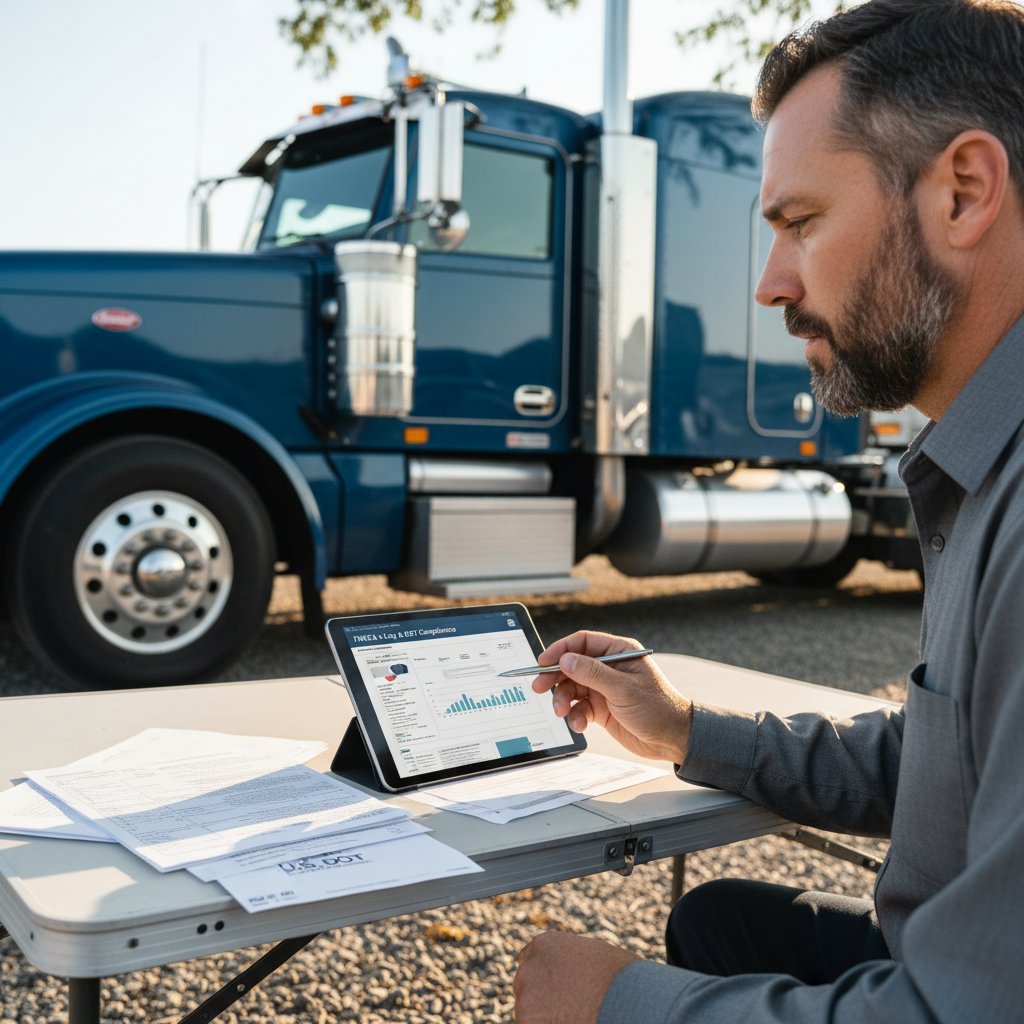
Confused about truck car insurance? Compare truck vs car insurance costs and coverage in 2026, learn when you need commercial truck insurance, and get a quote.

You searched truck car insurance because you’re trying to avoid the expensive mistake: paying for the wrong policy, then finding out after a wreck (or a broker claim) that the loss is “outside of coverage.”
Featured snippet answer: Truck insurance isn’t automatically more expensive than car insurance—the price and coverage depend mostly on how the truck is used (personal vs business vs for-hire). A personal-use pickup can be rated like a car, but once you’re hauling for pay, running hotshot, or operating under DOT/MC authority, you’re in commercial truck insurance territory and limits/requirements often increase fast. If you’re unsure what “commercial” typically includes, review a real truck coverage package first.
Key Takeaways (quick scan):
- Personal pickup ≠ commercial truck: The biggest cost swing is usually the usage classification, not the body style.
- Disclose business use: Misclassified use is a common reason claims get delayed, limited, or denied.
- Commercial is contract-driven: COIs, limits, and cargo requirements often matter more than state minimums.
- Shop “correct,” then shop price: The cheapest premium can be the most expensive mistake if you’re underinsured.
Table of Contents
Reading time: 7 minutes
- What People Mean by “Truck Car Insurance” (And Why It Matters)
- Does Car Insurance Cover Trucks? (The Real-World Answer)
- Truck vs Car Insurance: Coverage Differences That Actually Change Your Risk
- How Much Does Truck Insurance Cost vs Car Insurance in 2026?
- Why Logrock: Practical Trucking Insurance Help (No Fluff)
- Frequently Asked Questions
- Conclusion: Get the Policy Type Right Before You Need It
What People Mean by “Truck Car Insurance” (And Why It Matters)
In insurance underwriting, “truck car insurance” usually refers to either (1) a personal auto policy on a pickup/SUV or (2) a commercial auto/truck policy rated for business or for-hire use.
That distinction matters because the policy form, exclusions, and rating assumptions change with use. In plain terms: a pickup can be insured like a car only if it’s actually used like a car.
1) Personal auto insurance for a pickup (or SUV)
What it is (plain English): A standard personal auto policy (liability, comprehensive, collision, etc.) rated like a typical “car” policy.
Why it matters (business risk): If you use the truck as a commuter vehicle (work, errands, family trips), you’re usually fine. If you use it as a business asset, coverage can change quickly—especially when you’re towing, transporting property for pay, or regularly operating for a company.
- Who needs it: Drivers using a pickup primarily for personal use.
- Pro tip: Even if you’re not hauling for hire, tell your agent if you regularly carry tools/equipment or tow for side work, and ask for the use classification in writing.
2) Commercial truck insurance (business use / for-hire / trucking)
What it is (plain English): A policy designed for commercial exposure—higher liability limits, business operations, and often add-ons like cargo, filings, and endorsements depending on how you run.
Why it matters (business risk): If you’re running loads, hotshotting, or operating under authority, you can’t “personal-policy” your way through a broker packet. You’ll need coverage that makes you COI-ready for customers and carriers.
Quick decision filter:
- Are you getting paid to transport goods?
- Does a broker/shipper ask for a Certificate of Insurance (COI)?
- Are you operating under DOT/MC authority (or leased on but responsible for certain gaps like NTL)?
If “yes” shows up, you’re in trucking insurance territory—and your coverages should be built like a trucking policy, not a personal auto policy with a pickup on it.
Does Car Insurance Cover Trucks? (The Real-World Answer)
Most personal auto policies can cover many pickups used for personal, non-business driving, but many policies exclude or restrict for-hire hauling and certain business uses.
This is where people get burned: the declarations page looks normal, the payment goes through, and everything feels fine—until the claim adjuster starts asking what you were doing, where you were going, and whether you were being paid.
When a personal auto policy usually covers your truck
What it is: Personal use, titled personally, no for-hire hauling, and no regular commercial exposure.
Why it’s essential: It can keep premiums lower and claims simpler—as long as the use description matches real life.
- Best fit: The everyday pickup owner who drives like a family vehicle.
When it often doesn’t (common denial triggers)
What it is: The gray zone where coverage disputes show up:
- For-hire hauling (including many hotshot setups)
- Courier/delivery use
- Truck registered to an LLC and used in operations (carrier rules vary)
- Regularly hauling tools/materials as part of a business (carrier rules vary by state and underwriting guidelines)
Why it’s essential: If the carrier decides the use was misrepresented or excluded, you can end up in a coverage fight during the worst week of your life.
Prefer the direct form? Use Get a truck insurance quote and tell us how you use the truck before you bind coverage.
Truck vs Car Insurance: Coverage Differences That Actually Change Your Risk
Commercial truck insurance often adds or modifies coverages beyond a personal auto policy—such as cargo coverage, filings, and non-trucking liability—because trucking losses are typically higher severity and contract-driven.
A pickup and a sedan can share the same labels (liability, comp, collision), but the risk can be different due to towing, weight, miles, and business exposure.

Side-by-side: what’s typically different
| Coverage | Personal Car / Personal Pickup | Commercial Truck (For-Hire / Business Use) |
|---|---|---|
| Auto liability | Yes (state minimum + optional higher limits) | Yes (often higher limits; contracts drive it) |
| Collision / Comprehensive (physical damage) | Optional; usually required by lender | Common; often required by lender/lease |
| Cargo coverage | Not typical | Common if hauling freight (often contract-required) |
| Bobtail / Non-trucking liability | Not typical | Common for many owner-operator setups |
| Filings / proof for authority | Not typical | Often required when operating under authority |
| General liability (non-auto) | Not typical | Sometimes required by shippers/warehouses |
If you want the trucking version broken down in plain English (liability, cargo, physical damage, bobtail/NTL), start with this: truck coverage package.
The biggest “gotcha”: cargo and contracts
Motor truck cargo coverage is designed to respond to claims involving freight you’re transporting, and it’s not a standard feature of most personal auto policies.
Even when cargo isn’t legally required, it’s commonly required by customers and brokers as part of doing business, along with a COI that lists the limits they expect.
Regulatory reality check: commercial liability minimums
For interstate for-hire motor carriers transporting non-hazardous property, federal financial responsibility minimums are commonly referenced as $750,000 under 49 CFR §387.9, while many broker/shipper contracts require $1,000,000 auto liability.
That’s why “state minimum” comparisons can be misleading for trucking: your real-world requirement is often the contract you need to sign to get loads.
How Much Does Truck Insurance Cost vs Car Insurance in 2026?
Commercial truck insurance is usually priced higher than personal car insurance because it’s rated for business exposure, higher liability limits (often $750,000 to $1,000,000), and greater claim severity from heavier vehicles and more miles.
You’ll see “national averages” online, but they’re rarely useful for your dispatch reality. A better framework is to think in buckets: personal-use vs business-use vs for-hire trucking.
Typical cost buckets (high-level)
- Personal car / personal pickup: Often priced in the same universe; driver record, ZIP code, and vehicle value dominate.
- Commercial light truck/van (business use): Often higher than personal because the use is business-rated and limits are typically higher.
- Commercial trucking (for-hire): Often higher again due to higher limits, COI/filings needs, and claim severity.
If you’re budgeting like an owner-operator, the most useful benchmark is real monthly ranges and what pushes them up or down; see: affordable trucking insurance (2026) cost reality check.
Cost drivers that move your premium the most
Insurance pricing is driven by underwriting inputs like use classification, radius, limits, and loss history—not by the word “truck” on the title.
- Use classification: Personal vs business vs for-hire (this is the big lever).
- Radius & miles: Local vs regional vs OTR; more miles usually means more exposure.
- Vehicle value & repair costs: Newer tech can increase repair severity (sensors, body panels, recalibration).
- Liability limits & deductibles: Higher limits cost more; higher deductibles can reduce premium.
- Experience & loss history: New ventures and new authorities can rate differently than established operations.
Pro tip (save money without breaking compliance): Compare quotes “apples-to-apples” (same limits, same deductibles, same radius, same commodities). This is exactly how to avoid paying extra for coverage you didn’t want—or missing coverage you assumed was included. Use this guide as your checklist: cheapest commercial auto insurance (2026) and how to pay less.
Why Logrock: Practical Trucking Insurance Help (No Fluff)
A correct commercial policy must match your operation details—radius, commodities, for-hire status, and required limits—so your COI and any filings align with broker and regulatory requirements.
You don’t need an insurance lecture—you need a policy that matches how you actually run.
What “correct” looks like in real life
- Correct classification: Personal vs commercial vs for-hire, based on what you do day-to-day.
- COI-ready options: Limits and add-ons that fit common broker/shipper expectations.
- Less waste: Remove extras that don’t protect your authority, contracts, or cash flow.
If you want a clean next step, connect with the Logrock trucking insurance team and describe your operation as it really is (even if it’s a side hustle today).
Frequently Asked Questions
Yes, truck insurance is often more expensive than car insurance when the truck is rated for business or for-hire use, because underwriting assumes more miles, heavier vehicles, and higher liability limits (commonly $750,000 to $1,000,000 in trucking contexts). A personal-use pickup can price similarly to a car if the use is truly personal and the coverages are comparable (same deductibles, same limits, same drivers). The biggest pricing swing isn’t “truck vs car”—it’s personal vs commercial classification and the operation details you list on the application.
Personal pickups typically need liability (at least your state’s minimum) and, if financed, collision + comprehensive for physical damage. Commercial and for-hire trucks usually need a package built around primary auto liability plus operation-based add-ons like motor truck cargo, physical damage, and sometimes non-trucking liability (NTL/bobtail) depending on lease and dispatch rules. For interstate for-hire property carriers, federal minimums are commonly cited as $750,000 under 49 CFR §387.9, and many brokers require $1,000,000. A plain-English breakdown is in our truck coverage package guide.
Yes, car insurance often covers pickups and SUVs when they’re used for personal driving (commuting, errands, family use) and the vehicle fits the carrier’s personal-auto eligibility rules. Many personal auto policies, however, can exclude or restrict for-hire hauling, some delivery use, or certain business operations, which is why a “work truck” can trigger coverage issues at claim time. If you get paid to transport goods or you need a COI for a broker, you should have the use classified correctly as commercial before you haul. If you’re unsure, start with Get a truck insurance quote and describe the job accurately.
Truck insurance cost varies by use class, limits, radius, vehicle value, and loss history, so there isn’t one number that fits everyone. A personal-use pickup is often priced similarly to a car with the same drivers, ZIP code, and deductibles. Commercial trucking policies are commonly higher because they’re built around higher liability limits (often $750,000 to $1,000,000) and trucking exposure (more miles, heavier vehicles, contract requirements). The best way to forecast cost is to compare quotes with identical inputs—same limits, deductibles, radius, and commodities—then adjust one lever at a time. For real-world budgeting ranges and cost drivers, see affordable trucking insurance (2026) cost reality check.
Conclusion: Get the Policy Type Right Before You Need It
The safest way to shop truck car insurance is to match the policy form and classification to how the truck is used (personal, business, or for-hire) before you haul a load or sign a broker contract.
If it’s truly a personal pickup, you can often insure it like a car. If it’s a working truck—especially hotshot or for-hire—your insurance has to match the job, the contracts, and the risk.
Key Takeaways:
- A pickup can be insured like a car only if the use is truly personal.
- Commercial truck insurance costs more mainly because it’s business-rated and often carries higher limits (commonly $750k–$1M in trucking contexts).
- The most expensive “cheap policy” is the one that doesn’t pay because the use was misclassified.
If you want to move forward without guesswork, start here: Get a truck insurance quote.