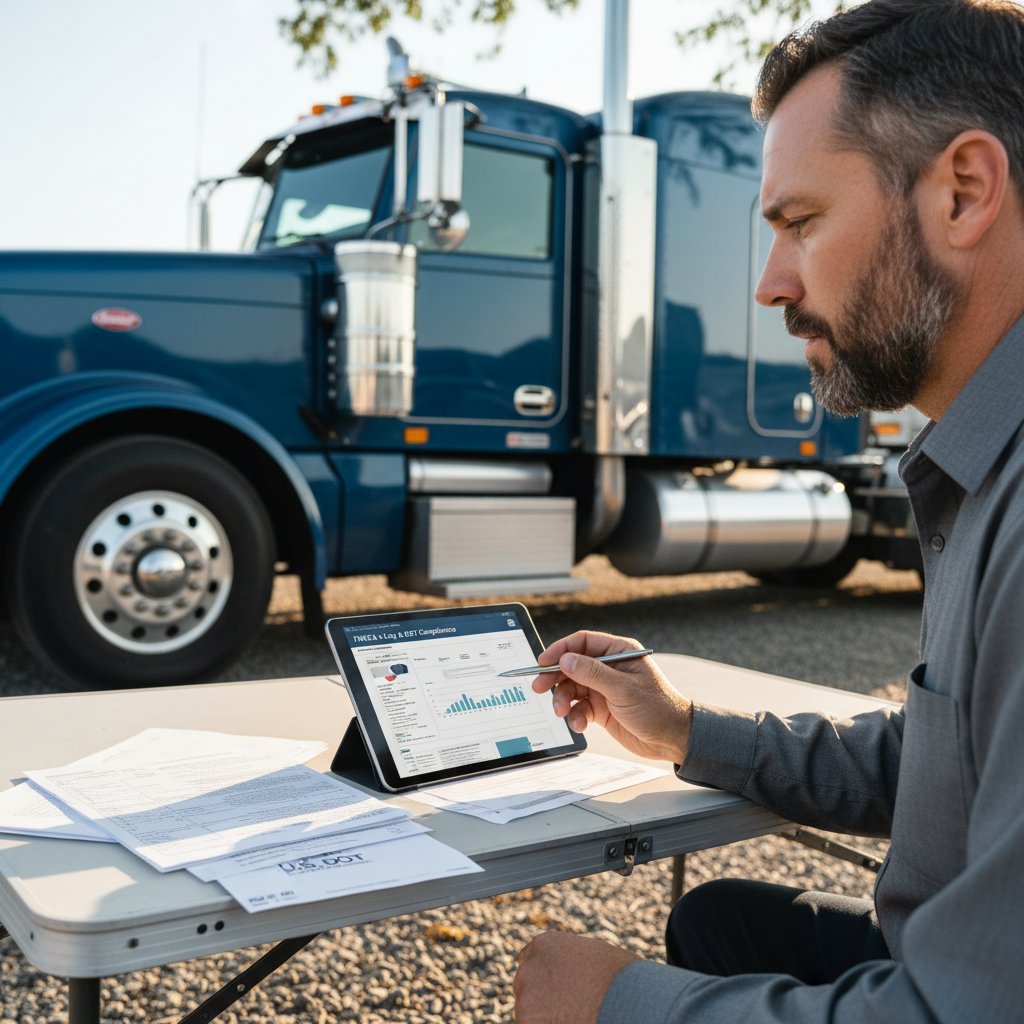
Walmart Freight carrier requirements can change. Use this 2026 readiness checklist to review authority, insurance, safety, ELD compliance, and broker-ready documentation before you apply.
For years, getting loads from Walmart Freight Brokerage felt out of reach for growing carriers. Reported changes to authority eligibility created a new opportunity for some smaller fleets and professional owner-operators—but carrier requirements are operational and can change, so confirm the current rules directly in the Walmart carrier onboarding portal before applying.
What does not change: your operation needs to look like a reliable, low-risk carrier. That means active authority, contract-ready insurance, strong safety practices, ELD compliance, and equipment that fits the freight you want to haul.
Table of Contents
How to Prepare for Walmart Freight
- Verify current eligibility: Carrier requirements can change. Check the official onboarding portal before making a business decision based on authority age.
- Insurance is non-negotiable: Be ready to show the required insurance limits and cargo limits specified by the carrier agreement. A common shipper standard is $1,000,000 auto liability and $100,000 cargo insurance, but the contract controls.
- Safety is your resume: Review your CSA/BASIC scores, inspection history, and operating record before you apply.
- Equipment and visibility matter: Confirm that your equipment fits the lanes you want and that your ELD tracking is compliant and ready for the program’s expectations.
For background on what Walmart Freight Brokerage can mean for trucking and insurance, see our related analysis.
Why This Matters for Owner-Operators
Large-shipper freight can help a qualified carrier diversify beyond public load boards, reduce uncertainty around lane planning, and build a stronger business track record. But access is not a substitute for operations: a single safety issue, coverage mismatch, or missing certificate can still stop a carrier during onboarding.
- Potential access to steadier freight: A direct broker relationship may create more consistency than spot-only work.
- Stronger operating profile: Meeting a major shipper’s insurance and compliance requirements can also improve your readiness for other brokers.
- More accountability: Strong systems for safety, maintenance, ELD records, and COIs become essential—not optional.
If you have just reached an eligibility milestone and want to strengthen your load strategy, this video covers practical ways to find freight with a newer authority:
Are You Walmart-Ready? A 4-Point Compliance Checklist
Use this checklist before submitting a carrier application. The carrier agreement and onboarding portal remain the final source for current requirements.
| Compliance check | What to verify | Why it matters |
|---|---|---|
| Active authority | Your active MC/DOT authority and operating status | Check your public operating status in the FMCSA SAFER System before you apply. |
| Insurance coverage | $1,000,000 auto liability and $100,000 cargo insurance, if required by the agreement | Your COI, limits, and endorsements must match the shipper or broker’s exact requirements. |
| Safety performance | Inspection, crash, and CSA data | Safety data can influence carrier selection and insurance eligibility. |
| Technology and equipment | ELD compliance and equipment fit | Your truck, trailer, and operating records must fit the lanes and visibility requirements. |
Not sure what a $1M auto-liability requirement actually protects? This overview explains the foundation for new carriers:
Frequently Asked Questions
Use Walmart’s carrier onboarding process and have your active MC number, EIN, insurance documents, equipment details, and safety information ready. Before you submit, confirm the current eligibility criteria directly in the Walmart carrier onboarding portal, since carrier requirements can change.
Having your carrier packet organized before you submit an application speeds up onboarding and reduces the risk of missing documents causing a delay. A standard carrier packet for a broker program typically includes your active MC and DOT numbers, a completed W-9, your current COI with the required limits and any requested additional insureds, an equipment list, and ACH or direct deposit information. Even if the portal collects this digitally, having each document current and accurate before you begin reduces back-and-forth and helps you move faster once accepted.
Many large shippers and brokers use third-party carrier vetting platforms to verify authority, insurance, and compliance before assigning loads. If Walmart’s program uses a platform like RMIS, Highway, or a similar service, completing your profile there in advance can reduce onboarding delays. Check the carrier portal directly for the current platform requirement — and if you already haul for other brokers, confirm your insurance certificates are current on any platform where you are registered.
Walmart Freight Brokerage’s core freight is generally associated with standard trailer equipment such as dry vans, reefers, and flatbeds. Equipment acceptance can vary by lane and current program requirements, so confirm eligibility during carrier onboarding before relying on a specific equipment type.
If the current program requires one year of active authority, wait until you meet that threshold and use the time to prepare the rest of your file: insurance limits, safety record, ELD compliance, equipment details, and a broker-ready COI. Confirm the current requirement directly with Walmart before applying.
A lapse, revocation, or inactive period can affect how a broker evaluates authority history. Check your current status and operating record through the FMCSA SAFER System, then confirm with Walmart how it evaluates continuous active authority before applying.
A declined carrier application does not permanently close the door. The reason for the decline matters: a missing document or an insurance gap can usually be corrected and the application resubmitted. A safety record issue may require more time to resolve before reapplying. If your application is declined, use the waiting period to address the specific gap — verify the issue through your FMCSA record, update your coverage if needed, and confirm the reapplication process directly with Walmart’s carrier support.
Carrier programs that onboard motor carriers directly generally evaluate the authority under which the freight will move. If you are leased onto another carrier, the relevant authority is typically that carrier’s—not your own. Review your operating structure and, if you plan to run independently, use this guide to apply for DOT and MC numbers.
Safety reviews commonly look at a carrier’s crash, inspection, and compliance history. Review the information available through the FMCSA CSA program and the Safety Measurement System; if a record is inaccurate, FMCSA’s DataQs system is the formal channel for requesting a review.
Use the FMCSA Safety Measurement System to review the public information available for your carrier and, where applicable, log in to review additional carrier data. Pay close attention to Unsafe Driving, Hours-of-Service Compliance, and Vehicle Maintenance patterns, then resolve root issues before sending an application.
Before applying to any major shipper program, it’s worth reviewing your FMCSA record for inaccuracies — this walkthrough shows how to use DataQ to challenge violations and protect your operating profile:
Walmart’s public carrier onboarding materials should be treated as the source of truth for current technology requirements. At a minimum, use an ELD that meets the applicable FMCSA requirements and keep your records consistent with your operation. Review ELD compliance before you apply.
A COI can often be issued quickly after coverage is bound, but timing depends on whether your policy, required limits, and requested endorsements are already in place. Send the broker’s exact insurance requirements to your agent before you bind so the certificate and endorsements match the contract.
The shipper name itself is not usually the main rating factor. Insurers generally focus on authority age, safety and claims history, equipment, operating radius, cargo type, limits, and driver records. If you need to raise your limits to meet a shipper’s requirements, your premium can change because the policy structure changes.
Often yes, provided the policy is written for the equipment, commodities, and exposures you actually run. Reefer and temperature-sensitive freight may require additional cargo terms or endorsements, so confirm that your cargo coverage matches both dry-van and reefer operations before you accept those loads.
A direct broker relationship with Walmart does not require exclusivity. Most carriers continue using public load boards alongside any direct shipper or broker program to keep assets moving between assignments. What changes is accountability: you’ll need to maintain the compliance standards both relationships require — especially insurance limits, equipment condition, and safety record — at all times, not just during Walmart loads. Operating with both channels also means your COI needs to stay current and match every broker’s certificate requirements.
No. Where FMCSA financial responsibility rules apply, the federal minimum for for-hire non-hazardous property carriers is generally $750,000 for vehicles at or above 10,001 pounds GVWR. However, brokers and shippers can require higher limits, such as $1,000,000. Review FMCSA insurance filing requirements and your contract requirements before binding coverage.
Still unsure what insurance limit fits your operation? Watch this before you bind:
Get Walmart-Ready Before You Apply
Carrier onboarding is easier when your file is already organized: active authority, accurate safety information, compliant ELD operations, appropriate equipment, and insurance limits that match the agreement. Do not assume a federal minimum automatically meets a shipper’s contract requirement.
If you’re preparing to apply to Walmart Freight Brokerage, the clearest next step is confirming your coverage aligns with the agreement before you submit — not after. LogRock can review your current policy, verify your limits and endorsements meet the shipper’s requirements, and issue a broker-ready COI the same day.