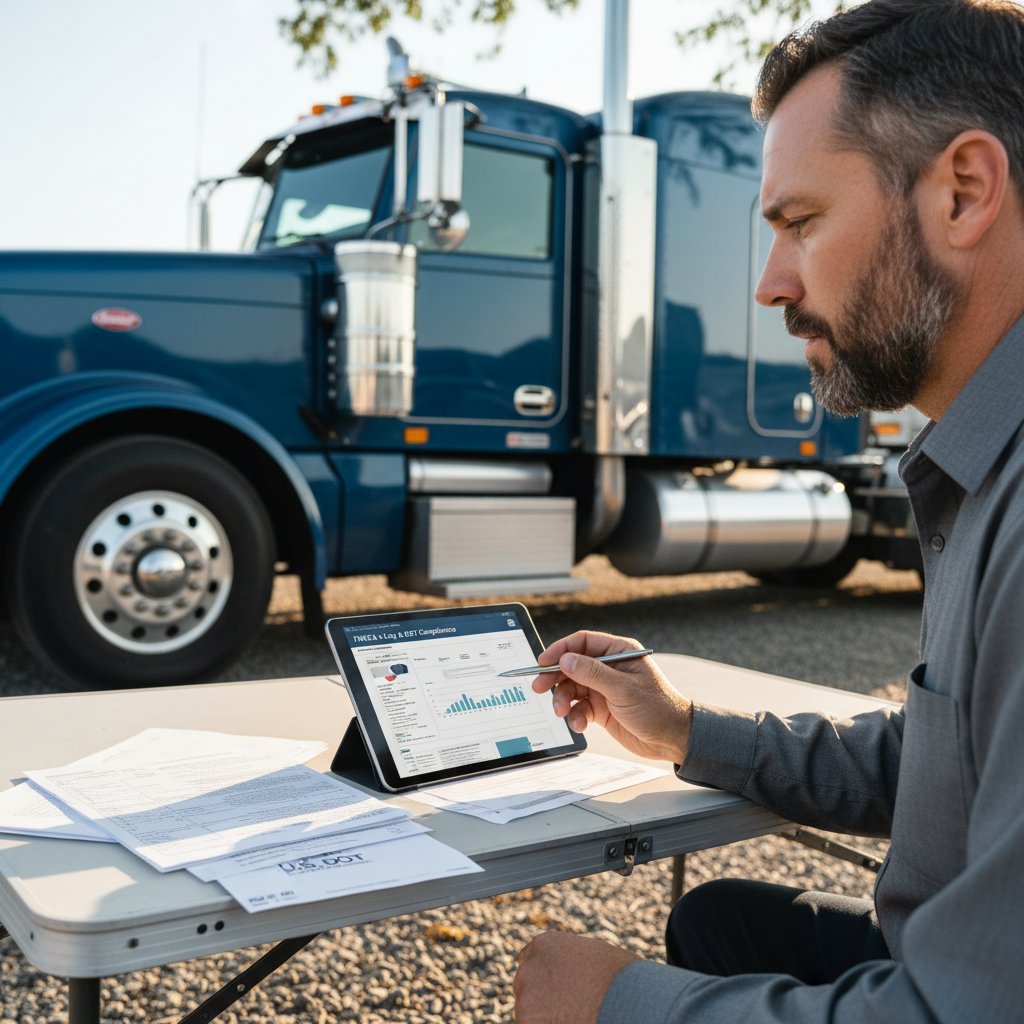
Non trucking bobtail insurance (NTL) helps protect you off-dispatch. Learn bobtail vs NTL vs deadhead, 2026 costs, dispatch traps, and a buying checklist—get a quote.

Non trucking bobtail insurance usually means non-trucking liability (NTL): third-party liability coverage that may apply when you’re not under dispatch and using the tractor for personal, non-business driving; many leased-on owner-operators pay about $30–$100/month, but claim outcomes depend on the policy’s “under dispatch / in the business of the carrier” wording, not the “bobtail” label.
You don’t lose money in trucking because you didn’t work hard—you lose money because one “small” misunderstanding turns into a denied claim, an out-of-pocket lawsuit, or a carrier telling you your COI isn’t acceptable. If you want the deeper definition breakdown first, read the non-trucking liability insurance (NTL) guide, then come back here for the decision tree and buying checklist.
Table of Contents
Reading time: 9 minutes
- Key takeaways
- Key definitions: NTL, bobtail, and deadhead
- Non-trucking liability vs bobtail vs deadhead: which do you need?
- What non trucking bobtail insurance covers (and what it doesn’t)
- Real-world examples: when NTL/bobtail applies (and denials)
- How much does non trucking bobtail insurance cost in 2026?
- State-specific considerations
- Lease & dispatch traps (the #1 reason NTL doesn’t apply)
- How to save on non trucking bobtail insurance (without gaps)
- Buying checklist: what to ask when you quote
- Frequently asked questions
- Conclusion
Key Takeaways: Essential non trucking bobtail insurance (NTL) rules
Non-trucking liability (NTL) is triggered by “not under dispatch” personal use, while bobtailing only describes driving a tractor without a trailer and does not guarantee coverage.
- NTL is about “not under dispatch,” not “no trailer”: Bobtailing is a driving condition; NTL is a use/dispatch-status issue.
- Most denials happen in the gray area: Deadhead, repositioning, “going to maintenance,” or being “available for dispatch.”
- NTL/bobtail is usually cheap—until you buy the wrong wording: Saving $10–$30/month isn’t worth a six-figure uncovered loss.
- Your lease language matters as much as your policy: If the carrier defines you as “in their business” more often than you think, your NTL may not trigger when you expect.
Key definitions: NTL, bobtail, and deadhead (plain English)
Insurance adjusters typically decide NTL/bobtail claims using documented dispatch status (texts/emails), lease wording, and the policy’s definition of “non-trucking use,” not the driver’s slang for the trip.
1) What is non-trucking liability (NTL)?
Non-trucking liability (NTL) is third-party liability coverage (bodily injury and property damage) for personal use of a tractor when you’re not under dispatch for a motor carrier. If you’re leased-on and the carrier’s liability only applies while you’re “in their business,” you need a plan for the times you’re truly off-dispatch.
Who needs it: Mostly leased-on owner-operators (and sometimes hotshot operators leased to a carrier) who drive personal miles, aren’t always under dispatch, and/or must satisfy a lease requirement.
2) What is bobtail insurance?
“Bobtail” means you’re driving the tractor without a trailer attached, and “bobtail insurance” is often a marketing label for NTL rather than a separate guarantee of coverage. The common mistake is assuming “no trailer = covered,” even if you’re repositioning for the carrier.
For the deeper version, see the bobtail insurance (2026 guide).
3) What is deadhead—and why does it matter?
Deadhead is driving empty (with or without a trailer) between revenue loads, and it’s often treated as business use when you’re moving for the next load. That’s why empty miles can still be “in the business of the carrier,” which can knock out NTL.
Quick mini-table (fast clarity)
| Term | What drivers mean | What insurers often care about |
|---|---|---|
| Bobtail | No trailer | Dispatch/business-use status + policy wording |
| NTL | Off-duty use | “Not under dispatch” / “not in the business of” |
| Deadhead | Empty miles | Usually still business use (depends on dispatch) |
Non-trucking liability vs bobtail vs deadhead: which one do you actually need?
Most leased-on owner-operators need NTL to cover personal, off-dispatch driving because a motor carrier’s liability typically applies only when you’re under dispatch or “in the business of the carrier.”
The 20-second decision tree (the part that prevents denials)
- Step 1: Are you leased to a motor carrier? If yes, the carrier’s liability usually covers you while you’re in their business/under dispatch, and NTL helps for personal use.
- Step 2: At the time of the accident, were you under dispatch or doing anything for the carrier’s business? If yes, NTL usually does not apply; if no, NTL may apply depending on the exact wording.
- Step 3: Was a trailer attached? Trailer/no trailer can affect labels, but dispatch status is still the main trigger.
Where owner-operators get it wrong (common money mistakes)
- “No trailer = bobtail = I’m covered.” Not always; repositioning for a load can still be business use.
- “Deadheading = personal use.” Deadhead is usually business use if you’re moving to the next load.
- “I was off-duty on my ELD, so NTL applies.” ELD status helps, but dispatch messages and lease terms can still put you in business use.
What non trucking bobtail insurance covers—and what it doesn’t
Most non trucking bobtail insurance (NTL) is designed to cover third-party liability (injuries and property damage to others) during personal, off-dispatch use, not damage to your own tractor or business-use driving.
What it typically covers (third-party liability)
- Bodily injury liability: Injuries you cause to other people.
- Property damage liability: Damage you cause to someone else’s vehicle or property.
- Defense costs: Varies by policy, but many forms include legal defense within the coverage.
What it typically does NOT cover (the expensive misunderstandings)
- Hauling a load: Business use; the motor carrier’s primary liability (or your own authority policy) should respond.
- Deadheading under dispatch: Often business use; NTL may be excluded.
- Damage to your own tractor: That’s physical damage (comp/collision), not liability.
- Injury to you: That’s usually occupational accident or workers’ comp depending on your setup.
Practical quote question: Ask your agent, “Show me the exact definition of non-trucking use and under dispatch in the policy form.”
Real-world examples: when NTL/bobtail applies (and when claims get denied)
Claim decisions are typically based on facts (dispatch instructions, timestamps, trip purpose) plus the policy’s non-trucking definition, which is why “scenario thinking” prevents denials.
Likely covered: personal errand, truly off-dispatch
You’re leased-on, it’s Saturday, no load accepted, no instructions, and you bobtail to grab groceries. You rear-end a car at a light.
Likely result: NTL/bobtail may respond for third-party liability.
Often NOT covered: you’re empty, but you’re repositioning for the next load
Dispatch texts: “Head to the yard in Joliet. You’re loading first thing.” You’re bobtailing (no trailer) and sideswipe a car.
Likely result: Denial risk if your policy excludes coverage while “in the business of the carrier.”
Gray area: maintenance trip
Carrier says: “Get a DOT inspection and repair that light today.” You drive to the shop and hit a parked car.
Likely result: Depends on lease + policy wording; it may be treated as business use.
Label trap: trailer attached doesn’t automatically kill coverage—but it can signal business use
You’ve got an empty trailer and you’re headed home, not under dispatch. An accident happens.
Likely result: Disputed more often, because “trailer attached” can be interpreted as business activity.

Scenario sanity check: Before you quote (or report a claim), gather your lease, your dispatch messages, and your ELD/off-duty timestamps. Those three items decide most “covered vs denied” outcomes.
How much does non trucking bobtail insurance cost in 2026?
In many leased-on owner-operator setups, non trucking bobtail insurance (NTL) commonly costs about $30–$100 per month ($350–$1,200 per year), with price driven by garaging ZIP/state, MVR, claims, and prior insurance history.
Typical 2026 price ranges (realistic budgeting)
- $30–$100/month (often packaged with other coverages)
- $350–$1,200/year depending on state/garaging ZIP, driving record, and underwriting appetite
If you’re high-risk (bad MVR, claims, lapse in coverage), it can be higher—or the insurer may decline the coverage entirely.
What moves the price the most (rating factors that actually matter)
- Garaging ZIP/state: Litigation environment and loss frequency.
- MVR + violations: Speeding, careless driving, etc.
- Prior insurance history: Lapses can raise rates fast.
- Dispatch reality: “Available for dispatch” 24/7 can narrow the NTL trigger.
- Bundling: Packaging NTL with your truck policy can reduce total cost.
Where this fits in a full trucking insurance budget
To control costs, focus on the big buckets first (primary liability, physical damage, cargo), then tighten up NTL wording so you don’t create a gap. For broader budgeting tactics, read affordable trucking insurance in 2026.
State-specific considerations: what to check before you buy
State laws and claim environments affect NTL pricing and claim handling, even though NTL eligibility is usually driven by the policy’s non-trucking wording and your lease requirements.
What to confirm (practical checklist)
- Are you doing any intrastate work that changes how your coverage needs to be structured?
- Does your state have unique personal-injury rules (like no-fault/PIP concepts) that can change how claims are paid?
- Do you operate in high-litigation states where liability claim severity trends higher?
- Is your garaging location a higher-theft or higher-loss ZIP?
Questions to ask your agent (so you don’t get surprised)
- “Does this NTL form exclude anything considered in the business of the carrier?”
- “How do you define under dispatch—accepted load, dispatched, or physically hooked?”
- “If I deadhead to staging/parking for a load, is that excluded?”
Lease & dispatch traps: the #1 reason NTL/bobtail doesn’t apply
Most NTL/bobtail denials happen because the insurer documents that the driver was “under dispatch” or “in the business of the carrier,” based on dispatch instructions and lease wording.
What “under dispatch” can mean in real life
Depending on the policy and lease, “under dispatch” may include:
- You accepted a load (even if pickup is tomorrow).
- You’re repositioning at carrier direction.
- You’re going to pick up a trailer.
- You’re returning to a yard/terminal because you were told to.
Lease language that should make your antennas go up
Watch for phrases like:
- “In the business of the carrier”
- “At the direction of the carrier”
- “Available for dispatch”
- “Under dispatch upon notification”
Why it matters: When the facts are messy, adjusters read the lease. If your lease treats you as “working” whenever you’re available, your NTL trigger can be much narrower than you think.
How to reduce the gray area (cheap habits that save big money)
- Keep dispatch communication in one place (email/app/text you can export).
- Use clear notes when you’re off-duty/personal use.
- Don’t assume ELD “off-duty” overrides dispatch instructions.
How to save on non trucking bobtail insurance (without creating a coverage gap)
The safest way to reduce NTL cost is to lower total policy cost through bundling and clean underwriting, because choosing the wrong NTL wording can create a six-figure uncovered liability gap.
Smart ways to lower the premium (the safe way)
- Bundle: Package NTL/bobtail with your overall commercial truck insurance when it reduces total premium.
- Avoid lapses: A missed payment can cost more than a year of NTL savings.
- Choose limits based on your lease and risk: Don’t buy the cheapest number without checking requirements.
- Re-shop at renewal: A clean year can open better options.
For broader cost tactics across commercial auto, see cheapest commercial auto insurance (2026) and how to pay less.
Buying checklist: what to ask when you quote NTL/bobtail
A good NTL quote is one where the agent can show you the written definition of “non-trucking use” and “under dispatch,” and confirm it matches your lease and dispatch practices.
- Definition check: What exact definition of “non-trucking use” does the policy use?
- Dispatch trigger: How does the policy define “under dispatch”?
- Business-use exclusion: Does it exclude “in the business of the carrier”? What does that mean in the form?
- Parking question: If I’m bobtailing to parking, is that business use?
- Maintenance question: If I’m going to maintenance, is that business use?
- Lease requirement: What limits does my lease require for bobtail/NTL?
- Claim proof: What proof will I need if there’s a claim (texts, dispatch logs, ELD, location data)?
- No-gap detail: Confirm effective date/time so there’s no coverage gap.
Frequently Asked Questions
Non-trucking liability (NTL) coverage is third-party liability insurance that may apply when a leased-on owner-operator drives the tractor for personal use while not under dispatch (often described as “not in the business of the motor carrier”). NTL is typically designed to pay for bodily injury and property damage you cause to others during off-duty driving, plus defense costs depending on the form. NTL usually does not replace the motor carrier’s primary auto liability during dispatched work. For the deeper definition and triggers, see the non-trucking liability insurance (NTL) guide.
Bobtail insurance is commonly used as a nickname for NTL, but “bobtail” technically only means driving a tractor with no trailer attached. NTL is about dispatch status and trip purpose—personal use while not under dispatch—so an accident can be denied even when you’re bobtailing if you were repositioning for a load or otherwise “in the business of the carrier.” The claim usually comes down to policy definitions like “under dispatch” and “non-trucking use,” plus the lease language and dispatch messages. For examples and use cases, read the bobtail insurance (2026 guide).
Non-trucking liability (NTL) or “bobtail” coverage commonly costs about $30–$100 per month ($350–$1,200 per year) for many leased-on owner-operators, but rates vary by garaging ZIP/state, MVR violations, claims history, and prior coverage lapses. The biggest pricing swings usually come from underwriting risk factors, not from small differences in monthly premium. The cheapest long-term move is buying the correct wording once—especially the “under dispatch” and “in the business of the carrier” definitions—because a denied liability claim can easily become a six-figure out-of-pocket loss.
Leased-on owner-operators most commonly need non-trucking liability (NTL) because the motor carrier’s auto liability generally applies while the driver is under dispatch or operating in the carrier’s business, not during personal off-duty driving. Many leases also require NTL (often called “bobtail”) even if you rarely run personal miles. If you ever drive the tractor to eat, shop, go home, or run errands while not under dispatch, NTL is the coverage meant for that gap. The key is matching the policy’s definition of “non-trucking use” to your real dispatch practices.
Non-trucking liability (NTL) often does not apply when you are hauling a load, repositioning for the next load, deadheading under dispatch, or otherwise operating “in the business of the motor carrier” as defined by the policy and your lease. Many denials happen when a driver is empty (even bobtail) but has dispatch instructions, an accepted load, or a required move like returning to a terminal. In a claim, adjusters typically review dispatch texts/emails, ELD timestamps, location history, and the lease terms to determine if the trip was personal or business use.
Deadheading is usually not covered by non-trucking liability (NTL) if you’re under dispatch or moving for the motor carrier’s business, because many NTL forms exclude coverage while “in the business of the carrier.” Deadhead miles often include driving to pick up a load, repositioning at dispatch direction, returning to a terminal, or staging for a pickup—all commonly treated as business use. If you are truly off-dispatch and driving for personal reasons, NTL may apply, but the outcome depends on the written definitions in your policy and the documentation of the trip purpose.
If you have your own authority, you typically carry primary auto liability for business operations under your own commercial truck policy, so NTL as a separate “off-dispatch” add-on is less common than it is for leased-on operators. That said, you still need to confirm how your policy treats personal use, permissive use, and any exclusions that could affect non-business driving of the tractor. If you run mixed operations (sometimes leased-on, sometimes under your authority), it’s especially important to document which policy is primary in each scenario and avoid gaps between dispatch statuses.
Conclusion: Get the wording right (not just the label)
Non trucking bobtail insurance is simple when you keep it honest: NTL is about being off-dispatch and out of business use. Bobtailing (no trailer) doesn’t automatically mean you’re covered, and deadhead miles are where most people get burned.
Key Takeaways:
- NTL/bobtail is third-party liability for personal use: It’s not a catch-all for “empty miles.”
- Dispatch status + lease wording decide most claim outcomes: Save your texts, timestamps, and instructions.
- Buy based on definitions and triggers, not just monthly price: The wrong form can mean a denied claim.
Related reading: non-trucking liability insurance (NTL) guide, bobtail insurance (2026 guide), and affordable trucking insurance in 2026.