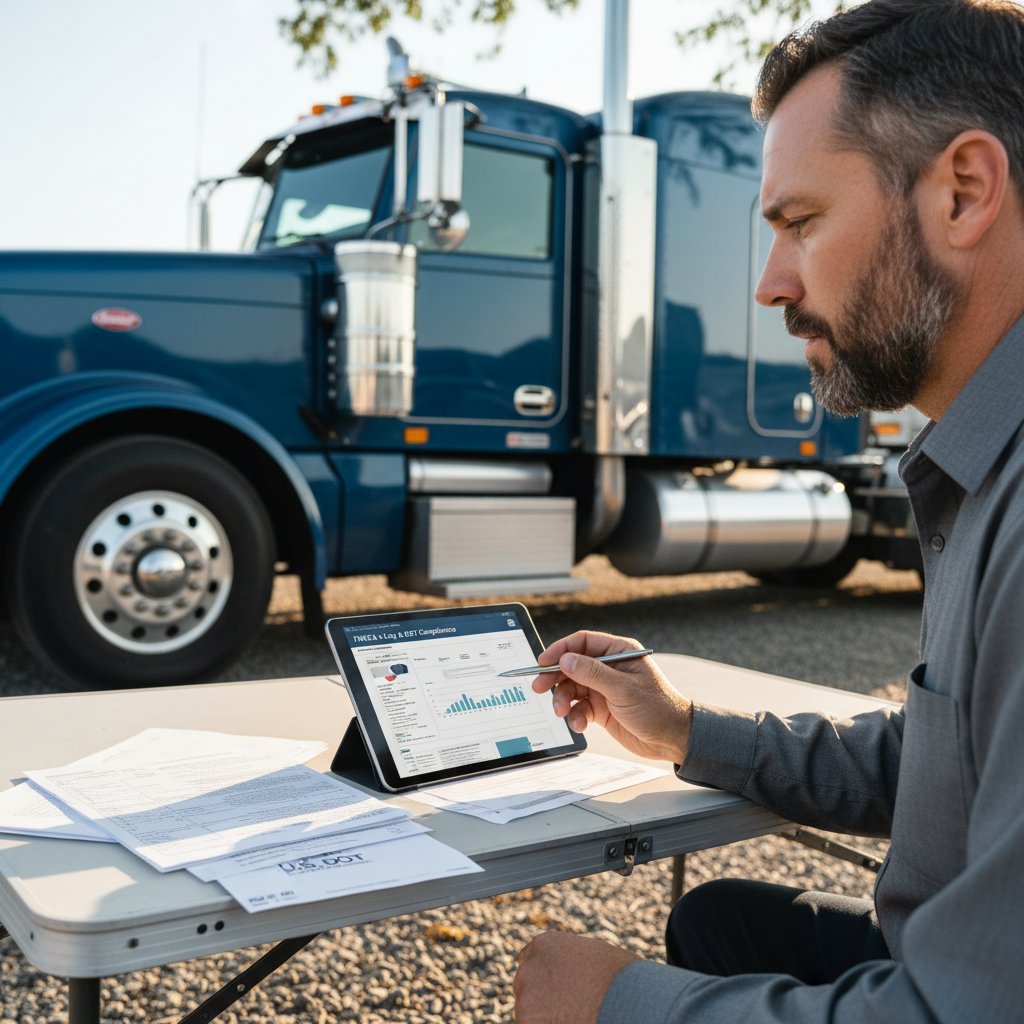
Learn the difference between personal and commercial insurance, the biggest coverage gaps, 2026 cost drivers, and when you must switch—especially for business auto.
If your insurance is set up wrong, you usually don’t find out at renewal—you find out after a wreck, theft, or lawsuit, when cash flow is already tight. In plain terms, the “personal and commercial insurance” question comes down to this: personal insurance protects a household, while commercial insurance protects business operations (and the lawsuits that come with them).
The biggest trap is using a personal policy for business exposure (or buying commercial coverage you don’t need). This guide breaks it down like a business owner: what each policy is built to do, the switch points that trigger commercial coverage (especially vehicles), realistic 2026 price drivers, and when packages like a BOP or umbrella are worth it.
Table of Contents
Reading time: 10 minutes
- Quick Answer: What’s the difference between personal and commercial insurance?
- What Is Personal Insurance?
- What Is Commercial Insurance?
- Personal vs. Commercial Insurance: The Real Differences (Side-by-Side)
- Auto, Liability, Property: Which Coverages Change When You Go Commercial?
- 2026 Cost Ranges & What Drives Price
- Package Solutions: BOP and Umbrella (When They’re Worth It)
- Real-World Scenarios: Where People Get Burned
- Frequently Asked Questions
- Why Logrock’s Approach Is Different (Practical, Not Salesy)
- Conclusion: Match the Policy to the Risk (Then Get It in Writing)
Quick Answer: What’s the difference between personal and commercial insurance?
Personal insurance is written to protect individuals and households, while commercial insurance is written to protect business entities and business activities, typically with higher limits (often $1,000,000 liability limits in contracts) and business-specific endorsements like additional insured and Certificate of Insurance (COI) support.
That difference matters because many personal policies restrict or exclude certain business uses, especially for-hire driving, regular deliveries, employee drivers, and business-titled vehicles. Commercial policies are built and priced for those exact exposures.
| Category | Personal Insurance | Commercial Insurance |
|---|---|---|
| Who it’s built for | Individuals/households | Businesses (sole props, LLCs, corporations) |
| Typical limits | Lower (often personal-asset focused) | Higher (often contract-driven) |
| Vehicle use | Personal/commute | Business use, multiple drivers, deliveries/hauling |
| Proof requirements | Rare | Common (COI, additional insureds, sometimes filings) |
| Claim risk | Business use may be excluded | Built to defend business exposure (still with exclusions) |
Key takeaways (the stuff that prevents claim surprises)
- If money changes hands because of the activity, treat the exposure as commercial until an agent confirms otherwise in writing.
- The #1 place people get burned is auto: deliveries, hauling, multiple drivers, or a vehicle titled to the business can trigger commercial auto.
- Commercial policies cost more mainly because limits, defense costs, and third-party liability are bigger, not because insurers “just charge more.”
- If you’re an owner-operator, hotshotter, or contractor, treat insurance like overhead: price it per month and per mile, not “once a year and forget it.”
What Is Personal Insurance?
Personal insurance is coverage designed and priced for household risk (not business operations) and commonly uses personal-asset-focused liability limits such as $100,000/$300,000 on personal auto policies (though limits vary by insurer and state).
It’s built around the things that happen when you’re living your life, not running a job site, delivering for pay, or sending employees out in vehicles.
What personal insurance is designed to cover
What it is (plain English): coverage for personal assets and personal liability.
- Personal auto: commute, errands, family driving (with carrier-specific rules for incidental work use).
- Homeowners / renters: your dwelling and personal property, plus personal liability.
- Personal umbrella: extra liability over home/auto (often sold in $1M increments).
Common personal-policy exclusions that matter for business use
Personal policies often assume you aren’t driving “for-hire” or running business operations, and that assumption shows up in exclusions, definitions of “business use,” and claim investigation questions after a loss.
- Delivery/courier work: some insurers allow limited app-based driving with an endorsement; others require commercial auto.
- Tools/stock carried daily: regular job-site use can change the risk profile even if you drive a “personal” pickup.
- Multiple job sites all week: contractor-style travel can be treated differently than a simple commute.
- Employees driving your vehicle: employee drivers are a common commercial trigger.
- Hauling for compensation: this is where commercial trucking liability lives, not personal auto.
Pro tip: “Some business use allowed” isn’t the same as “commercial coverage.” Get your specific use case documented in writing (even an email) so there’s no surprise at claim time.
What Is Commercial Insurance?
Commercial insurance is coverage designed to protect a business’s operations, contracts, employees, and business-used vehicles, and it commonly supports higher limits like $1,000,000 per occurrence for general liability when required by customers, landlords, or general contractors.
Commercial insurance exists for one job: keep the business alive after a bad day—an at-fault crash, a lawsuit, a fire, stolen equipment, or an injured worker.
What commercial insurance is designed to cover
What it is (plain English): coverage for business operations, business property, business liability, and business-driven vehicles.
- General liability (GL): third-party injury and property damage from operations.
- Commercial auto: business vehicle use, multiple drivers, heavier mileage patterns, higher liability needs.
- Commercial property: equipment, inventory, and sometimes the building/space.
- Workers’ compensation: often required by state law once you have employees (rules vary).
- Professional liability (E&O): mistakes in professional services or advice.
- Cyber: breaches, ransomware, invoice fraud, and data incidents.
- Umbrella/excess: additional limits (commonly sold in $1M layers) over GL and auto.
Why commercial policies look “more complex”
Commercial coverage gets detailed because the risk is detailed. Underwriters price based on drivers, payroll, revenue, locations, vehicle radius, subcontractor use, and contract requirements.
- Higher limits: because lawsuits and contract requirements are bigger.
- Endorsements: additional insured, waiver of subrogation, hired/non-owned auto, and more.
- Compliance: certain industries require filings or documented minimums.
Trucking note: For many interstate for-hire motor carriers, FMCSA financial responsibility requirements set minimum public liability limits at $750,000 for many property carriers, with $1,000,000 and higher applying in specific circumstances (for example, certain oil/hazardous materials can require higher limits). Many brokers and shippers still contractually require $1,000,000 even when the federal minimum is lower.
Personal vs. Commercial Insurance: The Real Differences (Side-by-Side)
The difference between personal vs. commercial insurance is primarily determined by ownership (who owns the asset), use (how it’s used day-to-day), and third-party requirements (contracts that demand COIs and higher limits like $1,000,000+).
Here’s the practical comparison that actually helps you decide:
| Issue | Personal | Commercial |
|---|---|---|
| Ownership | Usually individual | Business entity or business activity |
| “Use” definition | Personal/commute | Operations, deliveries, job-site travel, for-hire |
| Limits | Often lower | Often higher (contract-driven) |
| Who can drive | Household drivers | Employees, scheduled drivers, permissive use rules |
| Claims & legal defense | Personal defense | Business defense (often more complex) |
| Proof to third parties | Rare | Common: COI, additional insureds, filings |
| Exclusions | Business operations commonly restricted/excluded | Designed to cover operations (still has exclusions) |
The simple “switch point” test
You’re typically in commercial territory when the risk is tied to operations and third parties (customers, job sites, or the public) can be financially harmed by what you do.
- The vehicle/equipment is owned by the business (titled/registered to the LLC or company).
- You’re delivering, hauling, or transporting people/goods for pay.
- You have employees or regular subcontractors.
- A customer/GC/broker requires a COI or additional insured.
- Your risk is tied to job sites, contracts, or professional advice.
Bottom line: “Business vs personal insurance” is less about what you call yourself and more about what you actually do all week.
Auto, Liability, Property: Which Coverages Change When You Go Commercial?
When a business shifts from personal to commercial insurance, the biggest changes usually happen in auto liability structure, third-party liability defense, and property/business interruption coverage, and those changes often come with higher limits like $1,000,000 required by contracts.
Auto matters a lot, but real protection comes from understanding how auto + liability + property work together.
1) Auto: when commercial auto is required vs personal auto is enough
Commercial auto is built for business driving patterns and business liability—more miles, more stops, more drivers, and more third-party exposure.
Who needs commercial auto (typical triggers):
- Vehicle titled/registered to an LLC or company name
- Multiple drivers or employee drivers
- Regular deliveries/courier work
- Transporting customers/clients
- Tools/materials hauled daily as part of your service
- Wide radius / heavy miles / multiple job sites
- Any for-hire hauling (where commercial truck insurance, semi truck insurance, and hotshot insurance come into play)
When personal auto might be enough (sometimes):
- Commuting to one primary work site
- Occasional incidental errands for work (carrier- and state-dependent)
- No deliveries/for-hire use and no employee drivers
Pro tip: If you’re hauling loads, even occasionally, treat “personal auto + trailer” as a red flag. The cheap setup can become the expensive setup after a claim.
2) Liability: personal liability vs general liability vs professional liability
Personal liability (home/renters) covers personal activities, while general liability (GL) covers third-party injury/property damage from operations and professional liability (E&O) covers service mistakes, and many customers require GL limits of $1,000,000 per occurrence before you can start work.
- General liability (GL): slip-and-fall, property damage, job-site accidents, advertising injury.
- Professional liability (E&O): errors in design, advice, specs, consulting, and certain service work.
GL is often what stands between a lawsuit and a wiped-out bank account. E&O matters when your deliverable is advice or decisions—claims can show up months later.
3) Property: homeowners/renters vs commercial property
Commercial property protects business equipment and inventory and can include business interruption coverage, while homeowners and renters policies often cap business property coverage and may not respond the way you expect after a commercial loss.
If your tools, inventory, or equipment are how you make money, treat property coverage as “downtime protection,” not just theft protection.
4) Employee-related coverages that push you into “commercial”
Workers’ compensation is commonly required by state law once you have employees, and hired & non-owned auto can be critical when employees use personal vehicles for errands because employer liability can still attach to the business.
Employee injuries and auto liability can create expensive claims fast—and courts don’t care that your business is “small.”

2026 Cost Ranges & What Drives Price
In 2026, insurance pricing is still heavily influenced by claim severity drivers like vehicle repair complexity, medical costs, and litigation, which is why commercial auto and trucking premiums can swing widely even for similar businesses.
You don’t budget insurance off a national average. You budget it like an operator: what moves the premium, what can you control, and what’s non-negotiable because of contracts or compliance.
Practical cost expectations (ranges, not fake precision)
Costs vary by state, class code/industry, limits, loss history, and driver record, but these ranges are common starting points many small businesses see:
- Personal auto: often roughly $1,500–$3,500/year depending on driver, vehicle, location, and limits.
- Commercial auto (light/medium business use): often roughly $2,500–$6,000 per vehicle/year, and higher with heavy mileage, multiple drivers, or tougher territories.
- General liability (low-risk services): often roughly $400–$2,000/year, scaling with payroll/revenue, class, and limits.
- Commercial truck insurance (for-hire): commonly one of the largest overhead items and can run $12,000–$25,000+ per power unit/year depending on radius, experience, cargo, losses, and filings/requirements.
Use these as budgeting ranges, not promises. A single major loss, a new venture, or a tougher operation can push numbers well above typical bands.
What drives the price (what underwriters actually look at)
- Claims, violations, and loss runs: frequency matters, but severity matters even more.
- Driver history (MVR) and experience: years licensed, CDL experience, and prior commercial history.
- Vehicle type and value: replacement and repair costs, theft risk, and safety technology.
- Miles and radius: local vs regional vs OTR changes exposure.
- Operations: deliveries, hauling, passengers, job-site work, hazardous activities.
- Location: territory impacts theft, crash rates, and litigation trends.
- Limits and deductibles: higher limits cost more; higher deductibles often reduce premium.
- Years in business / new venture: new ventures can price higher until there’s credible history.
- Trucking-specific: cargo type, trailer type, DOT/MC status, safety factors, and contractual requirements.
Cost control tip: If you’re shopping for affordable trucking insurance, don’t chase the cheapest number—chase the quote that matches your actual operation. The expensive mistake is a denied claim or a broker rejecting your COI.
Package Solutions: BOP and Umbrella (When They’re Worth It)
A BOP (Business Owner’s Policy) commonly bundles general liability + commercial property, and an umbrella typically adds $1,000,000+ in extra liability limits over underlying policies, which can be the most cost-effective way to meet contract requirements.
1) BOP (Business Owner’s Policy): what it bundles and who it fits
What it is (plain English): a BOP often bundles general liability + commercial property, and may include business interruption.
Who it fits: many small offices, retail, and some contractors (eligibility varies by class and carrier appetite).
- Good fit when: you have a location, equipment, or inventory that would hurt to replace out-of-pocket.
- Not a replacement for: commercial auto, workers’ comp, E&O, cyber, or trucking-specific coverages.
Many trucking companies don’t “fit” a standard BOP neatly, but some operations can still benefit if they have real non-trucking exposures (office/dispatch, storage, tools, signage, yard exposure).
2) Umbrella/excess: personal umbrella vs commercial umbrella
What it is (plain English): a personal umbrella sits over personal home/auto, while a commercial umbrella sits over GL/commercial auto (and sometimes employer’s liability), usually sold in $1M layers.
When it’s worth it: if you have meaningful assets, higher-risk operations, or contracts that require $2,000,000+ limits, umbrella can be the cleanest way to buy more protection—if the underlying policies are set correctly.
Real-World Scenarios: Where People Get Burned
Most denied-claim horror stories come from the same issue: the policy’s declared use doesn’t match reality, especially with vehicles used for deliveries, employee driving, or for-hire hauling where commercial coverage (and sometimes filings) are expected.
Gig work and delivery (food, packages, courier)
If you’re doing deliveries, many personal auto policies treat that as business use. Some carriers offer endorsements; others require commercial auto. Also, don’t assume an app’s insurance covers you in every phase—coverage can change depending on whether you’re waiting, accepting, or actively delivering.
Contractors and trades (plumbing, electrical, handyman, HVAC)
You might drive a personal pickup, but if you’re hauling tools daily, running multiple job sites, or having helpers drive, you’re in the danger zone. General contractors commonly require:
- General liability limits (often $1,000,000)
- Additional insured status
- COIs before you step on the site (and sometimes before you get paid)
Consultants and professional services
You may not have vehicles or job sites, but you still have E&O exposure (claims your advice cost money), cyber exposure (invoice fraud and credential theft), and homeowners limitations on business equipment.
Owner-operators, hotshotters, and small fleets
This is where the confusion gets expensive fast. If you’re operating for-hire, you’re not comparing “personal vs commercial auto” anymore—you’re comparing:
- Commercial truck insurance structure and filings
- Primary liability requirements (often $750,000–$1,000,000+ depending on operation/requirements)
- Cargo expectations from brokers/shippers
- Physical damage, bobtail/non-trucking liability depending on dispatch arrangement
- COI requirements that have to match broker language, not just “a policy exists”
Frequently Asked Questions
Personal insurance is coverage written for individuals and households to protect personal assets like a home, savings, and a personal vehicle, and it’s priced assuming non-commercial use. It commonly includes personal auto, homeowners/renters, and sometimes a personal umbrella (often sold in $1,000,000 increments). The key limitation is that many personal policies restrict or exclude certain business activities, especially for-hire driving or regular delivery use. If your “personal” vehicle is actually a work vehicle in practice, the coverage trigger isn’t what you call it—it’s how it’s used.
Commercial insurance is coverage written to protect a business’s operations, contracts, employees, and business-used vehicles, and it commonly supports higher liability limits like $1,000,000 per occurrence for general liability. It can include general liability, commercial auto, commercial property, workers’ comp (often state-required when you have employees), professional liability (E&O), cyber, and umbrella/excess. Commercial insurance also supports common contract needs like COIs and additional insured endorsements, which is why many businesses “need commercial” even before they feel big.
The key differences are who/what is insured (household vs. business), what uses are covered (personal activities vs. operations), and the limits and proof requirements (commercial often needs COIs and $1,000,000+ limits by contract). Commercial policies are designed to defend business-driven third-party lawsuits, employee-related exposures, and operational risk that personal policies often restrict. The cleanest way to decide is to look at ownership (who holds title), use (deliveries, job sites, for-hire), and whether a third party is requiring documented coverage to hire you.
You typically need commercial auto insurance when the vehicle is business-owned/titled, used for deliveries or hauling, driven by employees, used to transport clients, or driven heavily across a wide radius and multiple job sites. For for-hire trucking, you’re usually in commercial territory immediately, and FMCSA financial responsibility requirements commonly start at $750,000 for many interstate property carriers, with $1,000,000 or more often required by brokers/shippers or for certain operations. Personal auto may be enough for basic commuting and incidental errands, but you should confirm your exact use case with the carrier in writing.
Usually not in a clean “stacked coverage” way, because overlapping personal and commercial policies can create a dispute about which policy is primary and which one should pay first. The better approach is to match the policy to ownership (who holds title) and actual use (deliveries, employee driving, for-hire hauling), then add the right endorsements where needed, such as hired & non-owned auto for employees using personal cars. If you’re trying to insure the same vehicle two ways, it’s often a sign the use classification hasn’t been nailed down yet.
Yes, a denied or limited claim is a real risk if the loss investigation shows business use that your personal policy restricts or excludes, especially delivery/for-hire driving, regular commercial hauling, or employee drivers. Claim decisions depend on the policy wording and the facts of the incident, but insurers routinely verify vehicle use after serious accidents because the financial stakes are high. The safest move is to disclose the business use upfront and get the correct commercial policy (or a carrier-approved endorsement) confirmed in writing before a loss happens.
Maybe—because a BOP can be a cost-effective way to add commercial property and business interruption coverage on top of general liability, often with the same $1,000,000 per occurrence GL structure but more complete “business survival” protection. If you have tools, equipment, inventory, signage, or a leased space, a BOP is worth comparing. Just don’t expect it to replace commercial auto, workers’ comp, professional liability (E&O), or trucking-specific coverage like primary liability and cargo.
Why Logrock’s Approach Is Different (Practical, Not Salesy)
A correct commercial insurance setup starts with accurate classification of vehicles, drivers, radius, and operations because misclassification is one of the fastest ways to end up with a coverage dispute after a loss.
Most insurance advice online is generic—fine for theory, useless for operations. Our approach is straightforward:
- We classify your real-world use correctly (vehicles, radius, drivers, operations).
- We build a plan that meets contract requirements (COIs, limits) without buying junk you don’t need.
- We think like an operator: cash flow, downtime, cost-per-mile, and claim survivability.
If you’re running trucks (semi, hotshot, 1–5 unit fleet), you already know the truth: insurance isn’t a checkbox—it’s what keeps one bad day from turning into bankruptcy.
Conclusion: Match the Policy to the Risk (Then Get It in Writing)
Personal insurance protects your household. Commercial insurance protects your business. The moment your work creates third-party exposure—especially through vehicles—you need to stop guessing and make sure your coverage matches reality.
Key Takeaways:
- The biggest “personal vs commercial” trap is auto use (deliveries, hauling, multiple drivers, business ownership).
- Commercial insurance often costs more because limits and defense costs are bigger.
- Don’t buy coverage to feel safe—buy it to get paid, stay compliant, and survive a claim.
If you want to know exactly where you stand, get a quick review and price it out properly—then keep the decision documented in writing.
Related Reading
Editorial note: internal links were not inserted here because verified Logrock URLs weren’t available in this environment.
- Commercial auto vs personal auto (business use triggers)
- Certificate of Insurance (COI) requirements and additional insured basics
- Hotshot/owner-operator insurance basics (primary liability, cargo, physical damage)