
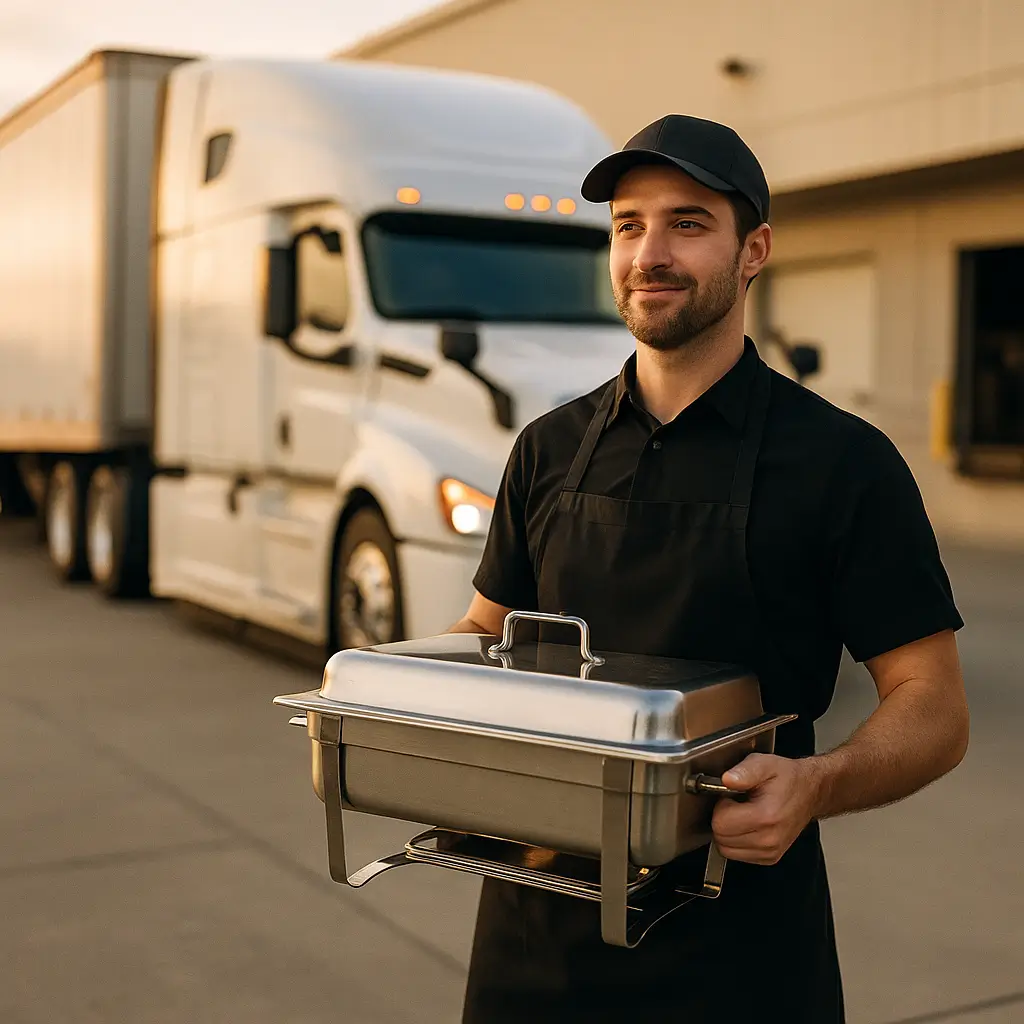
Learn event catering insurance coverage, typical costs, COI and venue rules, liquor liability, and single-event vs. annual options.

Event catering insurance is the set of business policies that protects a caterer from lawsuits and claims tied to food service at events—things like guest injuries, venue property damage, foodborne illness allegations, and (when applicable) alcohol-related incidents. If you cater for pay, one claim can erase months of profit, and venues often won’t let you load in until they’ve received a compliant COI.
The bigger headache is usually the paperwork: venues demanding a COI with exact wording, planners asking for “additional insured,” and clients assuming their event insurance covers vendors (it typically doesn’t). This guide breaks down what to buy, what venues require, how single-event catering insurance compares to annual coverage, and what details to collect so your quotes are actually comparable.
Table of Contents
Reading time: 9 minutes
- What Is Event Catering Insurance (vs. Event Insurance)?
- What Does Event Catering Insurance Cover? (Checklist + Table)
- How Much Does Event Catering Insurance Cost in 2026? (Pricing Framework)
- Single-Event vs Annual Caterer Insurance: Which Should You Buy?
- Do Venues Require Catering Insurance? (COI + Additional Insured)
- State Requirements: What’s Law vs What’s Contract?
- Real-World Scenarios (DIY, Pop-Ups, Alcohol, Delivery)
- Frequently Asked Questions
- Why Quote Shopping Breaks (and How to Fix It)
- Conclusion & Get Covered Before the Next Gig
Need a COI fast? Gather the venue’s legal name/address, event date(s), and required wording (additional insured, waiver, primary & noncontributory) before you request quotes—those details control how quickly a COI can be issued.
Key Takeaways: Essential Event Catering Insurance
- Food + operations need liability coverage: General liability plus products/completed operations is the usual base for catering claims.
- Venues enforce requirements through COIs and endorsements: “Additional insured” and contract wording often require an actual endorsement, not just a certificate note.
- Alcohol is a separate risk decision: Liquor liability is commonly excluded unless added or specifically included.
- Single-event vs annual is math + underwriting: Your event frequency, onsite cooking methods, and alcohol exposure usually decide which option is practical.
What Is Event Catering Insurance (and How It’s Different From General Event Insurance)?
Event catering insurance is vendor-side coverage that protects a caterer from third‑party claims arising from food service operations, including bodily injury, property damage, and food-related allegations. In practice, it’s what responds if your setup causes a burn, a guest trips over a cord, or someone claims your food triggered illness or an allergen reaction.
General “event insurance” is usually bought by the host (the couple, company, or organizer) to protect the event itself and may include event liability and cancellation coverage. That host policy doesn’t automatically defend a caterer if the caterer is named in a lawsuit.
Event catering insurance (vendor) vs event insurance (host)
- Vendor policy (caterer): “If my team’s work causes injury, property damage, or food-related harm, my policy responds.”
- Host event policy: “If something happens to the event, the organizer has coverage (often including cancellation).”
When you may need both
Large weddings, corporate events, and festivals often operate in two lanes: the host insures the event, and each vendor carries their own business coverage. That’s why venues and planners ask you for a COI that matches their contract language. Learn more about insurance for catering companies that operate across multiple venues and clients.
What Does Event Catering Insurance Cover? (Core Coverage Checklist)
Most venue contracts expect caterers to carry general liability with products/completed operations, and many also require workers’ compensation and specific COI endorsements (like additional insured and waiver of subrogation). The COI is the proof; the policy and endorsements are what actually determine whether a claim is covered.
Use the checklist below as a practical “coverage stack” for common catering operations.
Coverage checklist table (practical view)
| Coverage | What it protects | Common catering triggers | When venues ask for it |
|---|---|---|---|
| General Liability (GL) | Third-party bodily injury + property damage | Guest trips over a cord; hot tray burn; damage to floors/walls | Almost always |
| Products/Completed Operations (food liability) | Claims tied to food you served | Foodborne illness allegation; allergen cross-contact | Very common |
| Liquor Liability (if applicable) | Alcohol-related claims tied to service/sale | Overservice allegation; intoxicated guest injures someone | When alcohol is involved or contract requires |
| Equipment / Inland Marine | Mobile tools & gear on/off site | Stolen hot boxes/knives; damaged warmers; loss during transit | Sometimes |
| Hired/Non-Owned Auto Liability | Business liability when staff use personal/rented vehicles | Employee causes crash while transporting food/equipment | Rarely, but it’s a common gap |
| Workers’ Compensation | Employee injury coverage | Burns, cuts, slips, lifting injuries | Often, if you bring staff |
| Umbrella/Excess Liability | Extra limits above GL/liquor/auto | Large claims exceed base limits | Higher-end venues/corporate clients |
1) General liability (slip-and-fall, property damage, rented premises)
General liability pays for covered third-party injury or property damage claims and the legal defense tied to them. For caterers, the risk isn’t just “being careful”—it’s crowds, cords, hot surfaces, and tight load-in schedules in unfamiliar spaces.
2) Foodborne illness & product liability (products/completed operations)
Food-related claims are often handled under the products/completed operations portion of a general liability policy, depending on how the policy is written. Even weak allegations can be expensive to defend, and allergen claims can turn into major losses without a “mass outbreak.”
- Operational tip: If you market “nut-free” or “gluten-free,” document the process (labels, separate utensils, staff training) so your procedures match your advertising.
For a deeper pricing view, see our guide to food liability insurance costs.
3) Alcohol service: host liquor vs liquor liability
Liquor liability covers claims tied to alcohol service or sale, and many policies do not include it by default. Some businesses rely on limited “host liquor” coverage, but that’s not the same as liquor liability for bartending or selling alcohol; the NAIC notes that event liability coverage may be available with or without host liquor liability, and alcohol regulation varies by state.
- Ask this in writing: Who provides bartenders, who purchases alcohol, and whether you are charging for it (directly or bundled) all affect underwriting and coverage.
4) Equipment, tools, and mobile setup (property/inland marine)
Equipment coverage helps replace mobile gear you rely on to produce and serve food offsite. If you’ve ever had a warmer disappear during teardown or had a vehicle break-in between events, you already know the cash-flow hit.
5) Auto exposure (hired/non-owned) for deliveries and staff driving
Hired/non-owned auto liability protects the business when employees use personal cars for deliveries or you rent/borrow vehicles for catering work. If you own vehicles titled to the business or used regularly for deliveries, you may need a commercial auto policy instead of (or in addition to) hired/non-owned.
6) Optional add-ons worth pricing
- Professional liability / E&O: Useful when contract performance errors or service promises create financial losses.
- Cyber liability: Relevant if you take online payments or store client data.
- Business interruption: Can matter if a commissary kitchen is shut down by fire or water damage.
- Umbrella: Helps meet higher venue or corporate limit requirements.
How Much Does Event Catering Insurance Cost in 2026? (Practical US Pricing Framework)
Event catering insurance cost in 2026 is primarily driven by your risk profile (frequency, cooking method, guest counts, and alcohol exposure) rather than a single national “average” premium. Two caterers with the same revenue can price very differently if one does onsite frying and bar service and the other does drop-off only.
The biggest cost drivers underwriters care about
- Event frequency: One-off vs weekly/monthly operations
- Guest count: Attendance size and crowd density
- Cooking method: Offsite prep vs onsite cooking
- Higher-hazard methods: Open flame, smokers, deep fryers, propane
- Alcohol exposure: Serving/selling, bartending, type of events
- Claims history: Prior incidents, even if closed
- Experience: Time in business and operational controls
- Staffing: Employees/subs and payroll (affects workers’ comp)
- Equipment value: If you insure gear off-premises/in transit
Pricing model basics: per-event vs annual
Single-event policies can be efficient for true one-offs and pop-ups where you need a COI for a specific date and location. Annual policies often become the better deal once you issue COIs regularly or your operations involve higher hazards (onsite cooking, alcohol service, frequent deliveries).
Quote input checklist (so you don’t waste time)
- Event date(s), venue address, and estimated attendance
- Services: delivery-only vs full service; onsite cooking vs offsite prep
- Alcohol: are you serving, selling, or providing bartenders?
- Contract requirements: limits + wording (additional insured, waiver, primary/noncontributory)
- Prior losses/claims (if any)
- Number of staff and payroll estimate (if you have employees)
- Equipment list/value (if you want gear covered)
Practical quoting rule: If two quotes don’t treat food liability and alcohol the same way, you’re not comparing price—you’re comparing different products.
Single-Event Catering Insurance vs Annual Caterer Insurance: Which Should You Buy?
Single-event catering insurance is written for one specific event date/location, while annual caterer insurance covers your operations across many events during the policy term. The wrong choice usually shows up as either higher per-gig cost (buying too many single-event policies) or last-minute COI/endorsement stress (trying to force a one-off solution into recurring work).
Single-event policies (best for true one-offs)
Single-event catering insurance is typically tied to a specific venue and date, and it’s often purchased to satisfy a contract requirement for one job.
- Best for: One-time paid gig, pop-up, first corporate order, side-hustle catering with low frequency
- Pros: Event-specific COI, smaller upfront commitment
- Cons: Can be expensive per event; terms can be narrower; exclusions matter
Annual policies (best for ongoing operations)
Annual coverage is built for a business that routinely caters and issues COIs across different venues and clients.
- Best for: Monthly/weekly catering, repeat venues, corporate accounts, staff operations
- Pros: Consistent coverage, easier COI issuance, underwriting aligned to your real operations
- Cons: Requires more upfront info (revenue, operations details, loss history)
Quick rule-of-thumb decision guide
- If you have multiple events per year, compare the total cost of several single-event policies versus an annual premium plus your time cost.
- If you routinely do onsite cooking or touch bar service, lean annual so your operations are properly underwritten (and you’re not rebuilding coverage every gig).
Do Venues Require Catering Insurance? COIs, Additional Insureds, and Common Contract Language
Many U.S. venues require caterers to show a Certificate of Insurance (COI) with specified liability limits and endorsements, and a common baseline request is $1,000,000 per occurrence and $2,000,000 aggregate for general liability. The venue’s contract is the playbook, and “close enough” wording can still get rejected by risk management. If you are ready to start comparing options, see how to get catering insurance quotes with the right limits and endorsements already specified.
What a COI is (and what it isn’t)
A Certificate of Insurance (COI) is a summary document showing that a policy exists, its effective dates, and its limits. ACORD describes certificates as documents that provide information about insurance policies; a COI does not change coverage by itself.
If a venue wants to be an additional insured, that typically requires an endorsement issued by the carrier. Typing a name into the certificate holder box is not the same thing.
What venues commonly ask for (typical checklist)
- General liability limits: commonly starting around $1M / $2M, but venue-specific
- Additional insured: venue, sometimes property owner and/or event organizer
- Primary & noncontributory: your policy pays first (per contract wording)
- Waiver of subrogation: limits the insurer’s ability to seek recovery (when required)
- Correct event date(s) and venue address
- Liquor liability shown if alcohol is part of the event scope
How to get a COI quickly (step-by-step)
- Get the venue’s insurance requirements (sheet or contract clause).
- Confirm the venue’s legal name and address (not just the brand name on signage).
- List required endorsements (AI, waiver, primary/noncontributory).
- Send one clean COI request with all details, including event date(s) and venue contact email.
- Verify endorsements were actually issued if the contract requires them.
- Save the PDF and email thread for your records.
Time-saving habit: Keep a reusable “COI request template” email with fields for venue legal name, address, event date(s), limits, and wording. It cuts down the back-and-forth that delays approvals.
Are There State Requirements for Caterers? (What’s Law vs What Venues Require)
In the U.S., most catering “insurance requirements” come from venue and client contracts, while state laws more often control licensing, alcohol rules, and workers’ compensation obligations for employees. That’s why two venues in the same city can demand different limits and different COI wording.
Where state/local rules can affect your insurance decisions (and your ability to work) includes:

- Business licensing and permits (city/county requirements)
- Health department rules (food handling, commissary kitchens, inspections)
- Alcohol licensing (dram shop/liability exposure varies widely; check state alcohol control rules before pricing or contracting bar service)
- Workers’ comp rules if you have employees (thresholds and obligations vary by state)
- Auto requirements if you use commercial vehicles
For starting points, review U.S. Department of Labor guidance on workers’ compensation, NABCA resources on state alcohol regulation, and your state or local regulator for food permits, alcohol service, and venue-specific requirements.
Practical move: Treat the venue contract as your minimum operating standard, then verify alcohol and staffing requirements locally before you price the job.
Real-World Scenarios (DIY Caterers, Pop-Ups, and Alcohol-Heavy Events)
Most catering claims come from predictable moments—tight setups, crowded service lines, alcohol decisions, and delivery logistics—rather than “freak accidents.” These scenarios show how small gaps (like no food liability or no auto coverage) become expensive fast.
Scenario 1: “DIY” graduation catering + allergen allegation
You cater a graduation party for pay. A guest has a serious reaction and claims cross-contact. Personal policies (like homeowners) are not designed to cover business catering, and you may be personally exposed without vendor coverage.
- Fix: Single-event coverage for a one-off, or an annual policy that clearly includes food liability.
Scenario 2: Corporate drop-off + property damage
Your staff damages an elevator door while moving trays. The client wants reimbursement and the building manager asks for your COI.
- Fix: General liability, good delivery procedures, and documented handoff.
Scenario 3: Wedding open bar + intoxicated guest incident
An intoxicated guest leaves and injures someone. The lawsuit names the venue, bar service, planner, and often every vendor connected to alcohol service decisions.
- Fix: Clarify who is serving/selling alcohol and consider liquor liability when your scope touches bar service.
Scenario 4: Rented kitchen + gear theft
You stage gear at a venue or rented kitchen overnight, and items disappear. Replacing hot boxes, warmers, and smallwares out of pocket can wreck your weekend schedule.
- Fix: Equipment coverage plus tighter controls (inventory list, photos, locked storage).
How to reduce premiums without getting sloppy
Insurers price risk, and solid controls can help over time—especially when you can document them.
- Written food safety and hot/cold holding temperature logs
- Allergen process (labels, separate utensils, staff training)
- Cable management and a quick safety walk-through during setup
- Alcohol controls (licensed bartenders, ID checks, clear handoff of responsibility)
- Clear contracts that define scope and who is responsible for what
Frequently Asked Questions
Event catering insurance typically covers third‑party injury and property damage through general liability and food-related claims through products/completed operations, such as foodborne illness or allergen allegations. Many caterers also add liquor liability when they serve/sell alcohol, plus hired/non-owned auto if staff drive personal vehicles for deliveries. Equipment coverage (often inland marine) can protect mobile gear during transit and off‑premises setups. Coverage depends on exclusions and endorsements, so confirm in writing whether food liability and alcohol are included for your exact operations.
Event catering insurance cost is based on underwriting factors like event frequency, guest count, onsite cooking methods (especially open flame or deep frying), alcohol exposure, claims history, and staffing/payroll for workers’ comp. Costs can also increase when a venue requires endorsements such as additional insured, waiver of subrogation, or primary and noncontributory wording. The fastest way to get reliable pricing is to submit the same event details, limits, and endorsement requirements to each agent or carrier so the quotes are apples-to-apples.
Many venues require catering insurance and enforce it by requiring a COI that matches the contract, often showing at least $1,000,000 per occurrence and $2,000,000 aggregate in general liability (requirements vary by venue). Venues commonly also require the venue to be listed as an additional insured, and that usually means an endorsement must be issued by the insurer. If the contract demands primary and noncontributory wording or a waiver of subrogation, those typically must be supported by endorsements as well.
Alcohol liability is often not included by default, and liquor liability usually requires a specific endorsement or separate coverage when you serve or sell alcohol. Some general liability policies provide limited host liquor coverage for businesses that do not sell alcohol, but that is not the same as liquor liability for bartending or charging for alcohol. If alcohol is part of your scope, get the venue’s requirement in writing and confirm your policy language matches how alcohol is being provided (who serves, who sells, who supplies).
Yes, many insurers offer single-event catering insurance that is written for one specific event date and location, and it can be a good fit for a true one-off job or a pop-up. You’ll typically need to provide the event date(s), venue address, estimated attendance, what food you’re serving, whether you cook onsite, and whether alcohol service is involved. If you plan to do repeat events and issue COIs regularly, an annual policy is often easier and more consistent than buying a new policy each time.
Caterers commonly see venue requirements starting around $1,000,000 per occurrence and $2,000,000 aggregate for general liability, but higher-end venues and corporate clients may require higher limits or an umbrella policy. If your operations include onsite cooking, larger guest counts, frequent public events, or alcohol service, higher limits may be appropriate because severe injury claims can exceed base limits. The cleanest approach is to use the venue contract as your minimum and price higher limits when your risk profile is higher.
If you have employees, workers’ compensation may be required by your state, and many venues also ask for proof of workers’ comp as a contract condition. Catering work has predictable injury exposures—burns, cuts, slip-and-falls, and lifting injuries—so workers’ comp is more than a formality. If you use subcontractors, venues may still require proof of their coverage or specific contract terms, and misclassifying workers is a common way small operators get stuck paying out of pocket after an injury.
Most states do not have a single statewide law that says “all caterers must carry general liability insurance,” but states do regulate parts of the operation such as workers’ compensation for employees, auto insurance for vehicles, and alcohol licensing rules. In day-to-day catering, the most common “requirements” come from venue and client contracts that demand specific liability limits and COI endorsements. Treat the contract as your baseline, then verify local permit, health department, and alcohol rules for the event location.
A Certificate of Insurance (COI) proves a policy exists and shows limits and dates, but it does not create or change coverage. An endorsement is a policy change issued by the insurer. When a venue asks to be listed as an additional insured, that typically requires an endorsement. If the venue’s name is only typed on the COI without the endorsement, the venue may reject it or the protection may not match the contract.
Generally, no. Homeowners and personal liability policies are usually built for personal exposures and commonly exclude business activities. Catering for compensation is a business activity, even if it starts as an occasional side job. If a guest claims illness, injury, or property damage tied to paid catering work, a separate business liability policy or single-event catering policy is the safer fit.
Standard general liability and products/completed operations coverage usually focuses on third-party injury or property damage claims, not your own inventory loss before the event. Spoilage, contamination of your own product, or refrigeration failure can require separate property, equipment breakdown, product contamination, or spoilage coverage depending on the operation. If you prep food over multiple days or store inventory in a commissary kitchen, ask specifically how spoilage and contamination are excluded or covered.
Have the event date, venue address, estimated guest count, service type, onsite cooking details, alcohol involvement, staffing information, required limits, and COI wording ready. Include any contract language that mentions additional insured, waiver of subrogation, or primary and noncontributory wording. A complete submission reduces back-and-forth and makes it easier to compare quotes on the same basis.
Yes. In event claims, multiple vendors and the venue can be named in a lawsuit even when the facts are disputed. Liability is sorted out through the claim or legal process, but being named can still trigger defense costs and paperwork. That is why venue contracts often require additional insured status and why caterers need general liability coverage with legal defense protection.
Why Quote Shopping Breaks (and How to Fix It)
Most caterers overpay or end up underinsured because quotes often include different coverages, different exclusions, or different endorsements even when the premiums look comparable. If Quote A includes products/completed operations correctly and Quote B doesn’t, the cheaper quote may be cheaper for a reason. A closer look at what goes into a catering insurance policy can help you identify what is actually being priced in each quote.
What goes wrong
- One quote includes food liability correctly; another treats it narrowly or excludes parts of your operation.
- One includes liquor liability; another excludes alcohol entirely.
- One includes required endorsements; another charges per endorsement/COI or can’t provide the wording.
- Deductibles and exclusions differ and you don’t see it until a claim—or a venue rejection.
How to fix it (simple process)
- Create a one-page operations snapshot (services, onsite cooking, alcohol, deliveries, staff).
- Use the same limits and endorsement list for every quote request.
- Require written confirmation on how food liability and alcohol are treated.
- Only then compare price.
Conclusion: Get Covered Before the Next Gig
Event catering insurance isn’t about checking a box—it’s how you keep one claim from taking your business down. Start with a strong base (general liability plus food liability), treat alcohol as its own decision, and take COI endorsements seriously because that’s where venues enforce compliance.
Key Takeaways:
- You’re buying vendor protection: Host event insurance usually doesn’t protect caterers.
- COIs are proof; endorsements are power: Additional insured and special wording often require endorsements.
- Choose single-event vs annual on purpose: One-offs can fit single-event; recurring work usually fits annual.
If you have an upcoming event, start early—endorsements and COIs can take time, and “the day before” is when contracts fall apart.
If you’re putting together coverage for an upcoming event — or trying to get a COI that actually satisfies a venue’s contract — LogRock can help you identify the right coverage stack, review limit and endorsement requirements, and get a quote based on your exact operations. One conversation is usually all it takes to stop guessing and get a COI that holds up.
Related Reading: Catering Insurance (2026) · Catering Insurance for One Day · Best Catering Insurance Companies





