
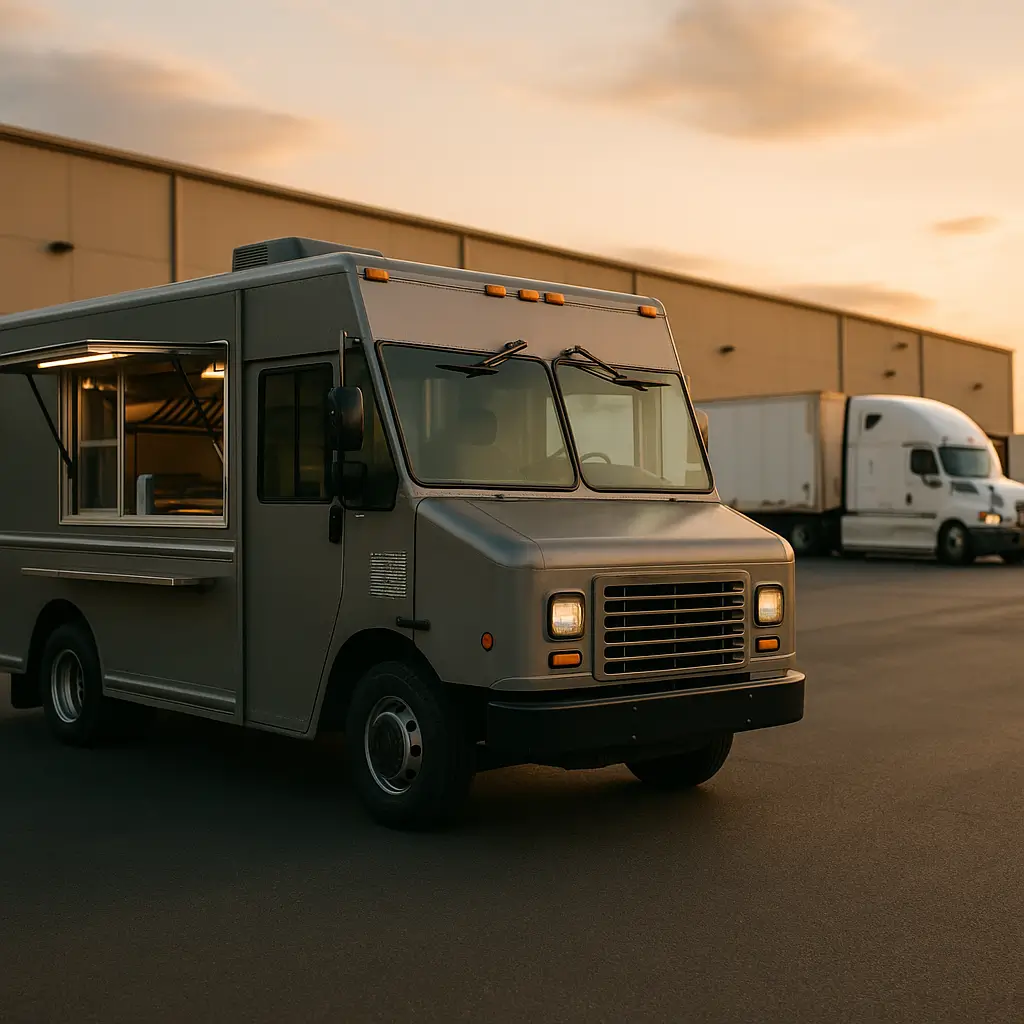

Food truck insurance companies differ mainly in whether they cover commercial auto, general liability with product liability, and equipment without cooking or fire exclusions. A typical package runs about $200-$800+ per month. Compare 3-5 quotes using identical limits and deductibles.
Food truck insurance companies aren’t interchangeable: the “best” option in 2026 is the one that correctly covers your commercial auto, general liability with product liability, and your truck build-out/equipment—without cooking or fire exclusions. Most operators end up around $200–$800+ per month for a practical package, depending on truck value, menu, mileage, payroll, and event requirements. If you need a fast shortlist, start by comparing NEXT, Progressive, FLIP, biBERK, Hiscox, Thimble, and at least one independent broker—then quote them with the same limits and deductibles.
If you’re brand new to coverage, it helps to understand how policies fit together before you shop quotes; start with commercial insurance basics for small businesses so you can compare apples-to-apples.
Table of Contents
Reading time: 8 minutes
- Key Takeaways
- How We Ranked Food Truck Insurance Companies (2026 Criteria)
- Best Food Truck Insurance Companies in 2026 (Comparison Table)
- What Insurance Does a Food Truck Need? (Required vs Optional)
- Food Truck Insurance Cost in 2026 + How to Buy It Without Overpaying
- Frequently Asked Questions
- Conclusion: Pick Coverage for Your Menu + Mileage + Venues

Key Takeaways
Most food truck operators need commercial auto, $1,000,000 per-occurrence general liability (typically with product/completed operations), and property/equipment coverage to avoid the most common claim gaps.
- “Best” depends on your risk mix: commercial auto exposure, cooking/fire risk, staffing, and how often you need event COIs.
- Minimum practical stack: commercial auto + general liability (with product liability) + equipment/build-out coverage.
- Typical cost reality: many operators land around $200–$800+/month for a real package, based on truck value, menu, mileage, and claims history.
- Fastest way to avoid expensive gaps: quote the same limits/deductibles, confirm cooking/fire exclusions, and make COIs easy before your first event.
How We Ranked Food Truck Insurance Companies (2026 Criteria)
We scored food truck insurance companies using five criteria that directly affect claims outcomes and day-to-day operations: coverage fit, speed, COI performance, underwriting appetite, and value.
What it is (the ranking criteria)
You’re not buying a logo—you’re buying a contract and a claims process, so we weighted options based on:
- Coverage fit for food trucks: commercial auto, general liability, product liability (foodborne illness), property/equipment, plus add-ons like spoilage or equipment breakdown.
- Speed and simplicity: online quoting, monthly pay, and fast proof-of-insurance workflows.
- COI performance: issuing certificates quickly, adding “Additional Insured,” and handling event-specific paperwork.
- Underwriting appetite: whether they can handle fryers, propane, grills, generators, and “mobile cooking” exposure.
- Value (not just cheap): price is meaningless if exclusions or low limits sink you.
If you want the “why” behind big price differences for similar trucks, read what affects insurance premiums, because insurers use the same cost drivers across most commercial lines.
Why it’s essential (business risk + contract requirements)
Many venues and partners require written insurance terms even when your city doesn’t spell out every policy type.
- Event organizers: often require $1M general liability and additional insured status for the venue/city.
- Commissaries and landlords: usually require proof of liability (and sometimes property coverage).
- Vehicle compliance: states require legally compliant auto liability to register and operate vehicles on public roads.
Who needs this ranking approach
- New owners deciding between “cheap liability” and a real package
- Festival/catering operators with frequent COI demands
- Any operator hiring staff (workers’ comp rules and payroll audits matter)
Pro tip: If you do lots of events, COI speed matters as much as price—missing a COI deadline can cost you an entire weekend’s revenue.
Best Food Truck Insurance Companies in 2026 (Comparison Table)
The most commonly shortlisted food truck insurance companies in 2026 include NEXT, Progressive, FLIP, biBERK, Hiscox, Thimble, and independent brokers, with availability and eligibility varying by state and cooking setup.
Note: This list isn’t sponsored, and you should still compare 3–5 quotes using the same limits and deductibles.
Commonly shortlisted food truck insurance companies / options
- NEXT Insurance — strong online workflow for small businesses; often used for liability-first setups
- Progressive — common pick for commercial auto needs (vehicle-focused quoting)
- FLIP (Food Liability Insurance Program) — widely used for vendor liability/food liability; verify what it does not include
- biBERK — small business focus; often competitive on packaged coverage depending on state
- Hiscox — small business liability options; good for straightforward risk profiles
- Thimble — short-term/event-friendly insurance in some cases; verify limits/eligibility
- Independent local broker — best for complex cooking, high-revenue events, multiple units, or prior losses
Provider comparison table (use this to shop faster)
| Company / Option | Best for | What to verify before buying | Pros | Cons / Watch-outs |
|---|---|---|---|---|
| NEXT | Fast online GL + add-ons | Product liability included? Equipment covered? | Simple UX; quick docs | Auto may require separate carrier |
| Progressive | Commercial auto-heavy setups | Is the policy correctly rated for “food truck” use? | Known in commercial auto | Liability/property may be separate |
| FLIP | Vendor/food liability | Does it meet event requirements + additional insured needs? | Popular with vendors | Often not “everything” (auto/property) |
| biBERK | Cost-conscious small business | Cooking/fryer eligibility; equipment limits | Often competitive | Not every risk class/state |
| Hiscox | Straightforward GL | Completed ops/product coverage terms | Business-friendly | Complex mobile cooking may vary |
| Thimble | Event-heavy/short-term | Eligibility for cooking + vehicle exposure | Flexible durations | May not replace full-time coverage |
| Local broker | Complex risks & bundles | Carrier options, exclusions, endorsements | Human guidance; niche carriers | Takes more time; varies by broker |
If you’re doing festivals, commissary agreements, or corporate catering, paperwork speed becomes an operational issue—make sure you can issue a certificate of insurance (COI) and additional insured explained on demand, not after 48 hours of back-and-forth.
What to ask every insurer (save this list)
- Does general liability include product/completed operations (foodborne illness and “after the sale” claims)?
- Is your truck build-out covered as property, and are permanently attached items included?
- Any exclusions for open flame, fryers, propane, or generators?
- Can they issue same-day COIs and add additional insured for venues/commissaries?
What Insurance Does a Food Truck Need? (Required vs Optional)
Most food trucks need commercial auto plus $1,000,000 per-occurrence general liability with product/completed operations, and property/equipment coverage for the build-out to satisfy common venue contracts and prevent major out-of-pocket losses.
What it is (the core stack)
Most operators end up with a “core stack” that looks like this:
- Commercial auto (liability + physical damage) for the truck
- General liability (slip-and-fall, third-party property damage)
- Product liability / food liability (often included in GL—confirm it’s included)
- Property / equipment coverage for build-out, attached equipment, tools, POS, signage
- Workers’ comp if you have employees (state rules vary)
- Hired & non-owned auto if staff use personal cars for errands/catering
Not sure how commercial auto liability and general liability work together for a food truck? This breakdown covers the key differences:
For a plain-English breakdown of what GL covers (and what it doesn’t), see general liability insurance explained.
Why it’s essential (real risk, not theory)
Food trucks combine auto risk with commercial cooking risk, which means claims can come from customers, equipment, and the road.
- Customer injuries: trip-and-fall, burns, spilled hot liquids
- Kitchen fire risk: fryers, grills, grease, propane
- Auto losses: tight parking, backing accidents, city driving
- Equipment downtime: generator/refrigeration failure can mean spoiled inventory and lost revenue
Many jurisdictions and inspectors reference standards like NFPA 96 for ventilation and fire protection in commercial cooking, and those expectations can show up in underwriting questions and eligibility decisions.
Who needs what (quick decision tool)
- Do you drive the truck on public roads? Yes → you need commercial auto.
- Do you sell food to the public? Yes → you need GL with product liability.
- Do you cook with open flame/fryer/propane? Yes → expect extra underwriting questions; confirm no cooking exclusions.
- Do you have employees (even part-time)? Yes → check workers’ comp rules and payroll rating.
- Do you do festivals/corporate events? Yes → prioritize COI speed + additional insured endorsements.
- Do you have a high-value build-out? Yes → confirm replacement cost values; consider higher property limits.
Food-truck note for operators who also shop trucking insurance
If you’ve shopped trucking insurance, commercial truck insurance, hotshot insurance, semi truck insurance, or even “affordable trucking insurance” packages, the pricing logic will feel familiar: insurers rate the vehicle exposure, operating radius, driver history, and operations. The difference is that a food truck adds a separate underwriting category—commercial cooking and fire exposure—so you can’t assume a policy that fits a delivery rig automatically fits a cooking truck.
Food Truck Insurance Cost in 2026 + How to Buy It Without Overpaying
Food truck insurance cost in 2026 commonly totals $200–$800+ per month for many operators, with the biggest price swings coming from commercial auto rating, cooking/fire exposure, truck value, and payroll.
Typical monthly cost ranges (realistic, not fantasy)
Your actual pricing depends on state, limits, truck value, cooking type, and driving record, but these ranges are common starting points:
- General liability (often incl. product liability): ~$40–$150/month
- Commercial auto: ~$125–$450+/month
- Property/equipment (build-out, attached gear): ~$50–$200+/month
- Workers’ comp: payroll/state dependent (often billed monthly)
- Typical “package feel” for many operators: ~$200–$800+/month total
These are estimates, not guarantees—use them to sanity-check quotes, not to budget down to the dollar.
What moves your premium the most
- Truck value and build-out replacement cost
- Cooking method + suppression/inspection history
- Annual revenue and busiest events (more foot traffic = more exposure)
- Employee count and payroll
- Operating radius and driving record (MVR)
- Prior claims and coverage lapses
For a deeper look at how these cost factors interact and how underwriters actually price a policy, watch this:
Commercial auto: don’t “personal policy” your way into a denial
Personal auto insurance is not designed to rate or cover most business-use exposures, which is why commercial auto policies exist and are priced differently; see the NAIC consumer overview here: https://content.naic.org/consumer/commercial-auto-insurance.
To understand what to ask for (and what usually triggers denials), use commercial auto insurance explained.
Requirements by state/city (the safe way to handle it)
Auto liability minimums and workers’ comp triggers are set by states, while cities, landlords, and events often require higher limits like $1,000,000 general liability and additional insured wording.
For an example of how states publish vehicle insurance responsibility requirements, see your state’s DMV/DOI pages (California DMV example): https://www.dmv.ca.gov/portal/vehicle-registration/insurance-requirements/.
Practical checklist (works in any state)
- Verify state vehicle financial responsibility rules (DMV/DOI)
- Verify workers’ comp triggers (state labor/insurance site)
- Ask every venue for written requirements: limits, additional insured wording, waiver of subrogation
- Keep a “COI requirements” note in your phone for fast turnaround
How to get the cheapest food truck insurance (without getting underinsured)
- Quote apples-to-apples: same limits, same deductibles, same covered equipment values.
- Bundle strategically: packaging liability + property can reduce total cost, but don’t mis-rate auto.
- Pick deductibles like a business owner: $1,000–$2,500 can lower premium, but don’t exceed your cash reserve.
- Reduce avoidable risk signals: driver training, clean maintenance logs, suppression inspections.
- Avoid lapses: even short gaps can raise rates.
Real-world scenarios (map your situation)
- Scenario A: Festival-heavy new truck (COI every weekend) — Expect higher limits and constant certificates; optimize for COI speed and additional insured handling.
- Scenario B: Lunch route + 2 employees — Workers’ comp becomes a real line item, and payroll reporting matters; consider hired/non-owned auto for errands.
- Scenario C: High-value build-out + fryer/open flame — Some carriers will decline or surcharge; documentation can improve eligibility (suppression system, inspections, propane storage).
Frequently Asked Questions
Most food truck insurance questions come down to three policies—commercial auto, general liability, and property/equipment—and many venues require $1,000,000 liability limits plus additional insured status.
The best food truck insurance in 2026 usually comes from comparing NEXT, Progressive, FLIP, biBERK, Hiscox, Thimble, and at least one independent broker, then choosing the quote with the right coverage and exclusions for your operation.
To compare fairly, request 3–5 quotes using the same limits (often $1M per occurrence GL for events) and the same deductibles, and confirm that product/completed operations and your equipment/build-out are actually covered. If you do frequent festivals, prioritize same-day COIs and easy “Additional Insured” issuance over a slightly lower monthly price.
A food truck typically needs commercial auto, general liability with product/completed operations, and property/equipment coverage for the build-out and attached gear.
Commercial auto is essential if the truck is driven on public roads, and many venues require $1,000,000 general liability plus additional insured wording for events or commissaries. If you have employees, you may also need workers’ compensation depending on state law, and if staff use personal vehicles for errands or catering deliveries, hired & non-owned auto coverage can prevent a costly gap.
Not always — and this is one of the most important things to confirm before buying. General liability policies often include “product/completed operations” coverage, which is the component that responds to foodborne illness claims or customer reactions to your food. However, some carriers write GL policies that exclude or limit product liability — particularly for certain cooking methods or ingredients.
Before you buy, ask the carrier to confirm in writing that product/completed operations is included, and request that it appear on your policy declarations page. If in doubt, have your agent show you the endorsement before you sign.
Food truck insurance cost in 2026 is often around $200–$800+ per month for a realistic coverage stack, but high-value trucks, fire-heavy cooking setups, and poor driving history can push it higher.
Many operators see general liability around $40–$150/month, commercial auto around $125–$450+/month, and property/equipment around $50–$200+/month, before workers’ comp or add-ons. The most reliable way to shop is to hold limits and deductibles constant, confirm cooking exclusions, and make sure the policy is properly rated for “food truck” use—not personal or generic business use.
No. Personal auto insurance is not rated or designed to cover commercial-use vehicles like food trucks. Most personal policies include a business-use exclusion, meaning a claim that arises from a commercial activity — selling food, catering events, or driving a designated business route — can be denied outright.
This is why commercial auto is a required component of any food truck’s coverage stack. A commercial policy rates the vehicle for its actual use and closes the gap that a personal policy leaves open.
When a venue or commissary asks to be listed as an “Additional Insured,” they want to appear on your certificate of insurance (COI) so your liability coverage can respond to claims arising from your operations at their location. It is a standard requirement for festivals, markets, and commissary agreements.
To add one, contact your agent with the venue’s full legal name, address, and any specific wording they require — venues often send a contract or requirement form. The fastest setup is a carrier or platform that issues COIs and adds additional insureds on demand, without a 24–48 hour wait.
Workers’ compensation is often required once you have employees, even part-time, but the exact trigger depends on your state’s workers’ comp statute and your business structure.
Because rules vary widely, the safest approach is to verify requirements with your state’s workers’ comp agency and get guidance from a licensed agent who can classify your payroll correctly. If you’re trying to understand when workers’ comp is mandatory versus when other injury coverage may be offered, start with workers’ comp vs occupational accident insurance so you don’t accidentally rely on a substitute that doesn’t meet legal or contract requirements.
FLIP (Food Liability Insurance Program) is a product-focused general liability policy widely used by food vendors and market operators. It is designed to cover third-party bodily injury, property damage, and product/food liability at events — and it is often priced at entry level. However, FLIP is not a complete commercial insurance package.
FLIP generally does not include commercial auto, property/equipment coverage for your build-out, or workers’ compensation. Most food truck operators who drive on public roads and have a significant build-out need FLIP or similar GL as one component of a broader stack — not as a standalone policy. Always review the declarations page and exclusions before relying on FLIP alone to meet event or commissary requirements. For a detailed comparison, see FLIP food truck insurance.
Conclusion: Pick Coverage for Your Menu + Mileage + Venues
The best food truck insurance companies for 2026 are the ones that can insure your vehicle use, cooking/fire exposure, and event paperwork needs under terms that match how you actually operate.
Take one practical step this week: write down your menu/cooking method, annual mileage and radius, event schedule, staffing, and truck/build-out value—then quote 3–5 carriers with identical limits and deductibles. That’s how you get a price that’s competitive and defensible at claim time.
Key Takeaways:
- Shop food truck insurance companies using the same limits, deductibles, and equipment values to avoid false “cheap” comparisons.
- Confirm product/completed operations, cooking/fire eligibility, and COI speed before you buy—those are common deal-breakers.
- Consider bundling where it makes sense; a business owner’s policy (BOP) explained can reduce total cost for some operators.
If you ever need to file a claim after a crash, fire, theft, or injury, keep a simple process ready—use this insurance claims checklist after an accident to document the loss and protect your payout.
If you’re comparing food truck insurance options and want to make sure your truck, build-out, cooking setup, and events are all properly covered, LogRock can help you review your operation and find the right fit. Talk to our team to ask questions, identify coverage gaps, and request a quote matched to your menu and mileage.





