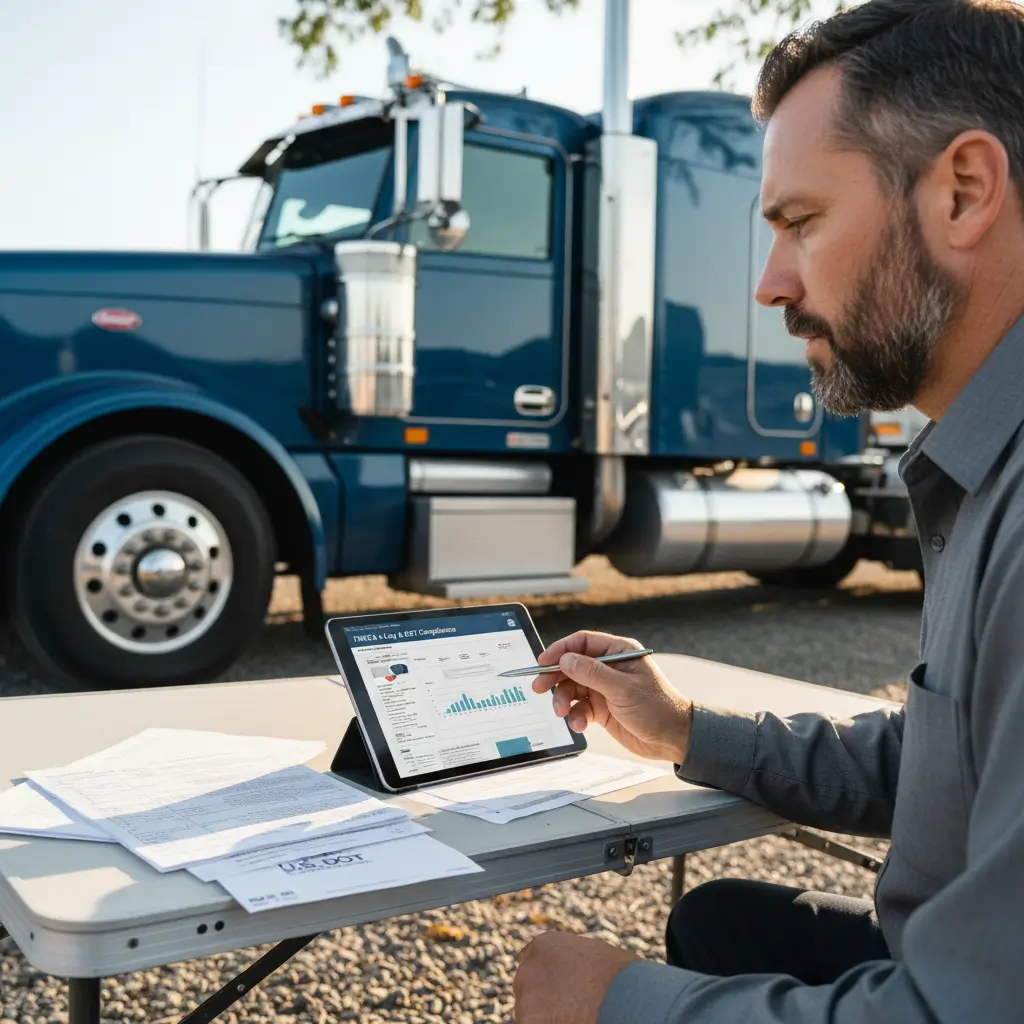

Construction company insurance is the coverage stack contractors use to keep one bad day—an injury, a fire loss, or a contract compliance miss—from turning into a cash-flow crisis. If you want the quickest 2026 answer to “what do I need?”, it’s usually general liability, workers’ comp, and commercial auto, then job-specific add-ons like builder’s risk, tools & equipment, and an umbrella.
You’ll see two different “rule books” in construction: state law and project contracts. This guide separates the two, shows realistic cost drivers, and gives you checklists you can actually use before you mobilize.
Key Takeaways: Essential Construction Company Insurance
- Most “requirements” are contract-driven. Your contract can demand higher limits and specific endorsements even if your state doesn’t.
- COIs don’t create coverage. If the contract requires an endorsement (additional insured, waiver of subrogation, primary/noncontributory), get the endorsement—don’t rely on the COI wording.
- Your trade + payroll/class codes + vehicles drive cost. A painter and an excavation crew can’t shop insurance the same way.
- The fastest way to keep insurance affordable is fewer claims. Documented safety + subcontractor control is real money over a year.
Table of Contents
Reading time: 10 minutes
- Construction insurance requirements: law vs contract
- Core policies most construction companies carry
- Project-specific & trade-specific coverages
- How much construction company insurance costs in 2026
- Frequently Asked Questions
- Why Logrock: practical insurance built for real job sites
- Conclusion & CTA: get contract-ready

Construction insurance requirements: law vs contract
Construction insurance requirements typically come from state workers’ compensation statutes plus project contracts that commonly require $1,000,000 per occurrence / $2,000,000 aggregate general liability limits and specific endorsements. The fastest way to stop guesswork is to treat insurance like a bid item: match what the job requires and prove it cleanly with a compliant COI package.
Start with a solid understanding of what a COI can (and can’t) do in our guide to certificate of insurance (COI) basics.
What’s usually required by law (common patterns)
Requirements vary by state — verify triggers and minimums with your state’s insurance regulator — but in construction the most common legal triggers are:
- Workers’ comp: Often required once you have employees; some states apply strict rules to officers and working owners. See the U.S. Department of Labor’s workers’ comp overview for state-by-state guidance.
- Commercial auto: At least state-minimum liability for business-owned vehicles.
- Other state programs: Some states tie licensing and financial responsibility rules to coverage, bonds, or proof of insurance.
What’s usually required by contract (what owners/GCs actually enforce)
Construction contracts routinely require higher limits and “must-have” endorsements that go beyond what state law demands.
- GL limits: $1M / $2M is common, with higher limits on bigger jobs.
- Umbrella/excess: +$1M, +$2M, +$5M (or more) depending on job size and owner requirements.
- Specific endorsements: The contract usually wants the endorsement on the policy, not just COI wording.
Quick table: “Required by law” vs “Required by contract”
| Coverage | Usually required by | Typical minimums you’ll see | Who asks for it |
|---|---|---|---|
| Workers’ comp | Law | State-specific | State agencies, GCs |
| Commercial auto | Law + contract | State minimums; often higher on contracts | State, project owners/GCs |
| General liability | Contract | $1M / $2M common | Owners, GCs, property managers |
| Umbrella/excess | Contract | $1M–$5M+ | Owners/GCs, public entities |
| Builder’s risk | Contract/lender | Project value | Owners, lenders |
| Tools & equipment | Business need/contract | Scheduled or blanket limits | You, sometimes GC |
| Contractor’s professional (E&O) | Contract + exposure | Varies | Design-build owners, sophisticated GCs |
| Pollution | Contract + exposure | Varies | Environmental clauses, certain trades |
| Cyber | Growing contract add-on | Varies | Larger GCs/owners |
Not sure how to think about limit selection beyond what your contract states? LogRock’s video on what insurance limit you really need walks through the key decision points.
Endorsement “translation” (the 4 phrases that cause the most job delays)
When you see these phrases in a contract, assume the COI alone won’t satisfy the requirement and plan for endorsements.
- Additional insured (AI): The owner/GC gets protection under your policy for claims arising out of your work.
- Waiver of subrogation (WOS): Your carrier agrees not to “go after” the other party after paying a claim (when the endorsement applies).
- Primary & noncontributory (P&NC): Your policy pays first; the other party’s policy doesn’t share.
- Ongoing vs completed operations: Some contracts require both (coverage during the job and after you’re done).
Want a contract-ready insurance checklist?
Send your insurance exhibit (the contract page with limits/endorsements). We’ll help you translate it into a clean “limits + endorsements” checklist so you can shop the job correctly.
- Fewer job delays
- Fewer COI rejections
- Less back-and-forth with GCs
Core policies most construction companies carry (and what they really cover)
Most construction company insurance programs start with general liability, workers’ compensation, and commercial auto, with contracts frequently requiring $1M/$2M GL and $1M–$5M umbrella limits. These are the policies that keep you working when a third party gets hurt, an employee is injured, or a vehicle claim hits mid-project.
For a deeper contractor-focused breakdown, see insurance for construction contractors.
1. General liability (GL)
- What it is (plain English): Pays for other people’s injuries or property damage tied to your operations (plus defense costs).
- Why it’s essential: One claim can wipe out your margin on multiple jobs—especially once attorneys get involved.
- Who needs it: Everyone—GCs, subs, owner-ops, and small crews.
- Pro tip: GL is not a warranty; “bad workmanship / re-do work” is a common pain point. Read your form and exclusions before assuming it’s covered.
2. Workers’ compensation + employers liability
- What it is: Medical and wage benefits for employee job injuries; employers liability helps with certain lawsuit exposures.
- Why it’s essential: It’s often the #1 legal requirement, and it’s a deal-breaker for most GCs.
- Who needs it: Any employer meeting the state trigger—and many subs will still be required to carry it by contract.
- Pro tip: Uninsured subs can cause audit surprises (and sometimes claims issues). Treat COI collection like jobsite access control.
3. Commercial auto (plus hired & non-owned auto)
- What it is: Liability (and optional physical damage) for business vehicles.
- Why it’s essential: Auto claims are frequent and expensive—jobsite driving, backing incidents, congested metro routes.
- Who needs it: Anyone with titled business vehicles; many contractors also need hired & non-owned auto when employees use personal trucks for errands or site visits.
- Trucking keyword reality check: If you also haul—dump trucks, roll-offs, or a tractor—ask specifically about commercial truck insurance, semi truck insurance, or hotshot insurance. That’s a different exposure than a pickup, and the wrong setup can lead to a denied claim.
4. Umbrella / excess liability
- What it is: Extra limits above GL/auto (and sometimes employers liability), subject to the umbrella form.
- Why it’s essential: Large commercial and public work is written around higher limits; umbrella is often the cheapest way to get there.
- Who needs it: GCs, higher-risk scopes, and anyone signing contracts that demand $2M–$5M+ total limits.
Project-specific & trade-specific coverages (where most contractors get surprised)
Project-specific construction coverages commonly include builder’s risk and inland marine/tools coverage because general liability usually does not pay for damage to your work-in-progress, your tools, or your mobile equipment. This is where “I thought my GL covered it” turns into a real cash hit.
1. Builder’s risk (course of construction)
- What it is: Property coverage for the structure while it’s being built/renovated (materials and partially completed work; details vary by form).
- Why it’s essential: Fire, theft, vandalism, and weather losses happen mid-project; without coverage, someone is eating that cost.
- Who needs it: Whoever the contract assigns—owner, GC, or lender-required party.
- Pro tip: Confirm whether stored materials offsite and materials in transit are included; that’s a common gap.
For a full breakdown of policy options — including how builder’s risk fits into larger programs — see our guide to commercial construction insurance.
2. Tools & equipment (inland marine / contractor’s equipment)
- What it is: Coverage for tools and mobile equipment that move job to job—often including theft and certain damage scenarios.
- Why it’s essential: Tools stolen out of a truck bed or gang box can stop production tomorrow morning.
- Who needs it: Any contractor with meaningful tools/equipment value (most trades).
- Start here: inland marine insurance basics (tools & equipment) so you don’t assume your property/GL will respond.
3. Contractor’s professional liability (E&O)
- What it is: Covers certain claims that you gave “professional services” (design-build, plan/spec advice, value engineering) and it went sideways.
- Why it’s essential: These claims can be huge and GL often excludes professional services.
- Who needs it: Design-build firms, GCs taking on means/methods advisory roles, specialty contractors stamping or advising on design.
4. Pollution liability (contractors pollution)
- What it is: Coverage for certain pollution events (fuel spills, disturbed materials, allegations of release), depending on the policy.
- Why it’s essential: Many GL policies have pollution exclusions or major limitations.
- Who needs it: Excavation, remediation-adjacent trades, certain demo scopes, and contracts with environmental clauses.
5. Cyber liability (invoice fraud + ransomware is hitting contractors)
- What it is: Coverage for certain data breaches, ransomware, and cyber-related losses.
- Why it’s essential: Invoice fraud and credential theft happen during change orders, pay apps, and vendor payments — FBI IC3 reports consistently rank business email compromise among the costliest cyber schemes targeting businesses.
- Who needs it: Anyone using email/AP systems, cloud PM tools, or handling customer data.
6. Wrap-ups (OCIP/CCIP) basics
- What it is: Project-sponsored insurance covering enrolled parties for certain coverages.
- Why it’s essential: It changes what your own policy must do—and what it won’t.
- Who needs it: Contractors on large projects where the owner or GC runs the program.
- Pro tip: Wrap-ups rarely solve everything; you often still need your own auto, tools, professional, cyber, and more.
How much does construction company insurance cost in 2026? (and what actually moves the price)
Construction company insurance cost in 2026 is mainly driven by trade hazard, payroll/class codes, vehicle use, subcontractor spend, project type, and loss history, with commercial auto often landing around $1,200–$6,000+ per vehicle per year for many contractors. There isn’t a single “average” that helps you bid accurately—two companies with the same revenue can price out completely differently.
Typical 2026 cost ranges (planning bands, not quotes)
- GL: Often $800 to $5,000+ per year for small contractors; higher for higher-hazard trades and bigger revenue.
- Workers’ comp: Heavily dependent on class codes/payroll; can be manageable for clerical-heavy operations and very expensive for roofing/excavation.
- Commercial auto: Often $1,200 to $6,000+ per vehicle per year depending on MVRs, radius, vehicle type, and claims.
- Umbrella: Commonly $500 to $3,000+ per year for $1M (can be more depending on trade/losses).
The fastest way to see real numbers for your trade is to pull construction insurance quotes with your actual payroll, vehicle count, and project type.
Cost drivers table (what moves premium up or down)
| Driver | Pushes cost up | Can help bring cost down |
|---|---|---|
| Trade hazard | Roofing, excavation, structural work | Lower-hazard scope, tighter subcontracting |
| Payroll + class codes | High payroll in high-rate codes | Accurate codes, clean audits, job costing |
| Subcontractor spend | Uninsured subs, poor COI tracking | COI verification + written subs agreement |
| Vehicles | Bad MVRs, big radius, heavy units | Driver standards, telematics, tighter dispatch |
| Claims | Frequency + severity | Safety program + incident reporting + training |
| Limits/endorsements | High limits, strict wording | Buy only what the contract truly requires |
Three real-world scenarios (how to think like an underwriter)
- Remodeler / handyman (no employees): GL + hired/non-owned auto + tools coverage if you have real tool value. Biggest swing: type of work (structural vs cosmetic) and prior claims. For solo operators and small crews, see what a small construction business insurance package typically includes.
- 10-employee roofing contractor: GL + workers’ comp + commercial auto + umbrella is common. Biggest swing: comp class code, prior losses, fall protection program.
- GC doing commercial TI with subs: GL with heavy contract wording + umbrella + strong subcontractor control. Biggest swing: contractual risk transfer, endorsement compliance (AI/WOS/P&NC), and claims history.
The honest lever: fewer claims. Safety is not “nice to have”—it’s premium math. If you want the straight connection between safety controls and premiums, read worker safety programs + insurance costs.
Frequently Asked Questions
The answers below reflect common 2026 construction contract norms, including $1M/$2M general liability requirements and frequent requests for additional insured, waiver of subrogation, and primary & noncontributory endorsements.
Most construction companies need general liability, workers’ compensation (when required by state law or contract), and commercial auto as a baseline, and many jobs also require builder’s risk, tools/equipment coverage, and a $1M–$5M umbrella. What you “need” is determined by both state rules (especially workers’ comp triggers) and the project insurance exhibit (limits plus endorsements). If your COIs keep getting rejected, endorsement wording is usually the reason; start with additional insured explained so you know what the contract is really asking for.
Construction company insurance cost depends on trade hazard, payroll/class codes, revenue, vehicles, subcontractor spend, and loss history, and it’s common to see auto priced around $1,200–$6,000+ per vehicle per year while small-contractor GL can start around $800–$5,000+ annually. Two contractors with the same revenue can price out very differently if one has higher-risk scopes (roofing/excavation), higher comp-rated payroll, or frequent claims. The biggest controllable driver is claims frequency: documented safety, hiring standards, and strong subcontractor COI control usually reduce premium over time.
Builder’s risk is often required by contract (and commonly by lenders) but it’s not typically a universal “by law” policy for contractors. The contract should state who buys it (owner vs GC) and the minimum covered value (often the full project value), and it should spell out key terms like deductible, covered causes of loss, and whether materials in transit and stored materials offsite are included. If the contract is vague, confirm responsibilities in writing before mobilizing so a mid-project fire or theft loss doesn’t turn into a dispute.
Workers’ compensation and auto liability are most often driven by law, while general liability limits, umbrella limits, builder’s risk, and endorsements are usually driven by contract. Many commercial contracts standardize $1M per occurrence GL and then add endorsement requirements like additional insured, waiver of subrogation, and primary & noncontributory. The practical way to stay compliant is verifying both rule sets before work starts: check your state’s trigger rules and then match the contract insurance exhibit line-by-line so the COI and endorsements align.
To meet construction insurance requirements for a new project, extract the insurance exhibit, list the required limits and endorsements, confirm policy dates cover the entire job, and then issue both the COI and the endorsement copies the GC requests. In practice, most delays come from missing endorsements (AI, WOS, P&NC, completed operations) or mismatched effective dates, not from the limit itself. You’ll also want a subcontractor process: collect COIs before anyone steps onsite, track renewals, and keep a simple checklist for each job so you can prove compliance quickly during precon and closeout.
A waiver of subrogation is an endorsement that prevents your insurance carrier from pursuing the other party — the owner or GC — after paying a claim arising from your work. Most commercial contracts require it, which means your carrier must agree in advance not to go after the additional insured. Simply noting it on a COI is not enough; the endorsement must be on the policy. If a contract requires a waiver of subrogation and your policy doesn’t have it, you have a coverage gap that can delay your start date or create a dispute after a loss.
Subcontractors generally need their own coverage — and most contracts and GL carriers require it. Your GL policy may exclude or charge for uninsured sub payroll at audit, and if a sub causes a loss, your carrier may seek recovery from that sub’s policy. The practical rule: collect COIs from every sub before they step onsite, verify the endorsements (AI and WOS at minimum), and track renewals. Treating COI collection like jobsite access control is one of the most effective ways to reduce audit surprises and potential claims disputes.
Workers’ comp for construction is priced primarily on payroll and class codes — each job function (carpenter, roofer, laborer) carries a rate per $100 of payroll, and those rates vary significantly by trade hazard and state. Roofers and excavation workers typically see the highest rates; clerical and supervisory roles are much lower. At year-end, your carrier audits actual payroll against the estimate — so accurate job costing and payroll reporting matter. A documented safety program and a clean claims history are the main levers for bringing rates down over time.
An Owner Controlled Insurance Program (OCIP) is purchased by the project owner to cover enrolled contractors for certain coverages on that job. A Contractor Controlled Insurance Program (CCIP) is similar but purchased by the GC. In both cases, enrolled parties give up some of their own coverage for that project in exchange for the wrap-up policy. What you still need to verify: wrap-ups rarely cover auto, tools, professional liability, or cyber, so confirm with your broker what’s excluded from enrollment before mobilizing. For more on how these programs interact with your own coverage, see our commercial construction insurance guide.
In many cases, yes — basic GL and commercial auto can often be bound quickly once an application is complete and a carrier approves. Builder’s risk can also move fast when project scope and value are clear. What slows things down is missing information (prior loss runs, incomplete vehicle lists, unclear subcontractor arrangements) or endorsement requirements (AI, WOS, P&NC) that need carrier approval. If you have a fast-turn project, start with your insurance exhibit and a basic operation snapshot — trade, payroll estimate, vehicle list — and have them ready before you call.
Why Logrock: practical insurance built for real job sites
Most commercial and public construction contracts require a compliant COI package plus endorsements like additional insured, waiver of subrogation, and primary & noncontributory, and missing one word can delay a start date. Construction isn’t theoretical. It’s theft out of a gang box, a backing accident in a tight lot, a slip-and-fall claim from a third party, and a GC rejecting your COI because one item doesn’t match the exhibit.
Logrock focuses on the “unsexy” part that protects your margin: compliance + clean documentation + fewer coverage gaps. If you want to tighten your process, start with best insurance practices for construction companies.
See what a full construction business insurance program typically looks like before your next quote.
Conclusion: get contract-ready before the next mobilization
A contract-ready construction insurance package typically includes at least $1,000,000 per occurrence general liability, statutory workers’ comp where required, and auto liability at or above state minimums, plus any job-specific coverages the exhibit lists. Construction company insurance is really two jobs: buy the right coverage and prove it correctly when the owner/GC asks.
The contractors who stay profitable treat insurance as part of operations—clean subcontractor control, documented safety, and contract-first shopping.
Key Takeaways:
- Separate law requirements from contract requirements every time.
- Don’t rely on COIs to do an endorsement’s job.
- Your trade + payroll + vehicles drive cost more than “shopping harder.”
- Claim prevention is the most reliable path to affordable premiums.
If you’re navigating a new contract, a GC rejection, or just trying to understand what your program actually covers, LogRock can help. Send us your insurance exhibit or a quick snapshot of your operation — trade, payroll, vehicles — and we’ll break down what’s truly required, what’s optional, and quote it clean.
Related Reading: workers’ compensation insurance requirements and waiver of subrogation guide.