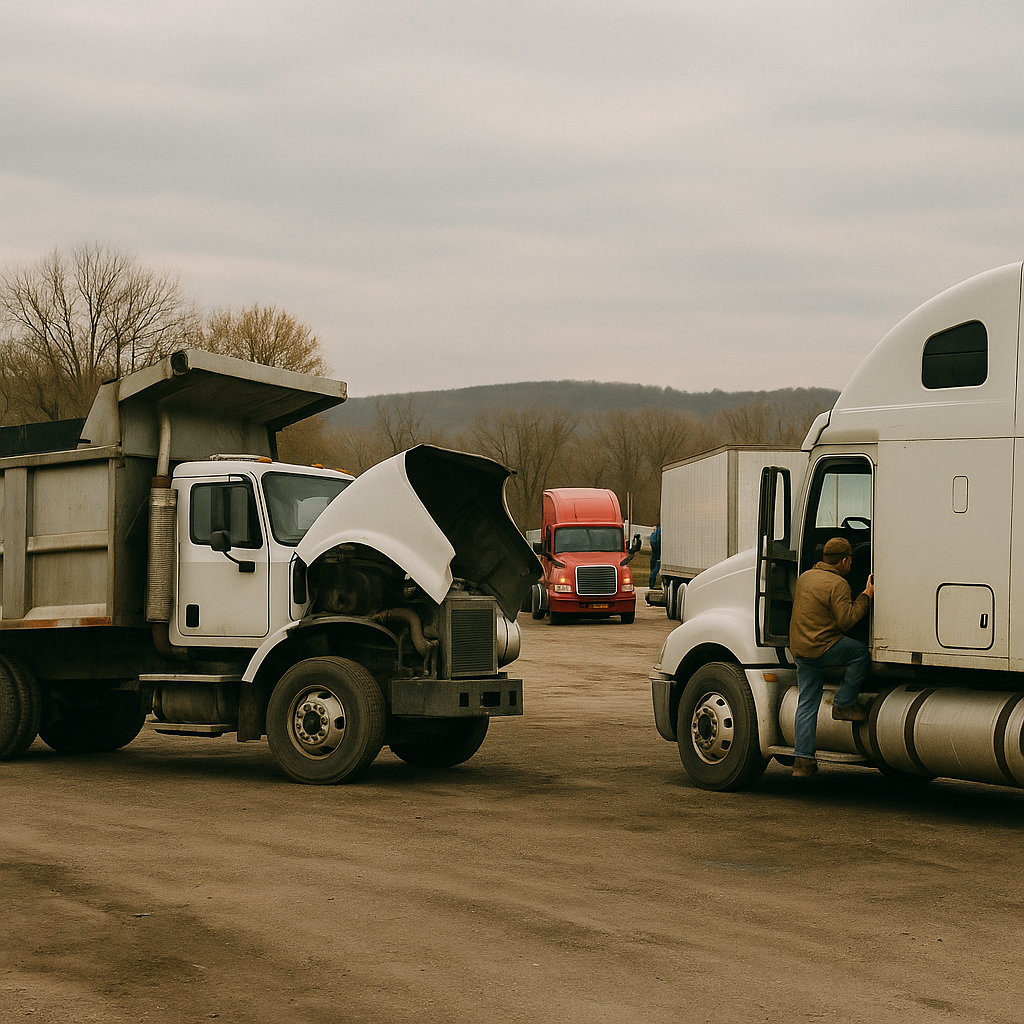
If you’re shopping for dump truck insurance in Ohio, the first thing to sort out is simple: is the truck really insured for how it works? A dump truck used for paid hauling usually needs commercial coverage, and the rules can change based on where you run, what you haul, and whether you operate for hire.
This guide breaks down what dump truck insurance covers in Ohio, when Ohio rules apply versus federal FMCSA rules, what usually drives the cost, and how to compare quotes without missing a coverage gap.
What Dump Truck Insurance Covers in Ohio#
Dump truck insurance in Ohio is commercial insurance built for a dump truck used in business, not a personal auto policy with a different vehicle listed on it. The right setup depends on whether the truck is for-hire or not, what materials it hauls, whether it crosses state lines, and how the truck is used day to day.
A personal-use dump truck is a dump truck used for non-business driving, while commercial use means the truck is part of a business operation or used to haul for work. That difference matters more than many owners expect.
Commercial vs. personal-use dump truck policies#
A landscaper who owns one dump truck and uses it only to move mulch, soil, and tools for that company’s own local jobs may need a different setup than a for-hire operator hauling gravel for several customers. A for-hire carrier is a business paid to haul property for someone else.
That second operation usually has more insurance moving parts because the truck is doing commercial hauling, possibly under a USDOT number, and may need filings tied to authority or interstate operation. A USDOT number is a federal identifier used to track carriers and safety records.
Core coverages most operators consider#
Auto liability pays for bodily injury and property damage you cause to others with the truck. Physical damage covers damage to your own truck from collision or other covered losses like fire, theft, or weather, depending on the coverage selected.
Motor truck cargo covers damage to property being hauled when that exposure exists. General liability covers certain non-driving business liability exposures and is often discussed for for-hire operations, but it doesn’t replace truck auto liability.
Non-trucking liability, often called bobtail by drivers, covers certain non-business use only and does not cover paid hauling. That’s a common point of confusion.
Common gaps for dump truck work#
The biggest gap is assuming a personal auto policy will handle regular commercial dump truck use. Another is buying liability but leaving the truck itself underinsured, especially when the equipment value is high.
A third gap shows up when the policy describes one use, but the truck actually does another. If a truck starts as occasional side-job use and turns into regular hauling for multiple paying customers, the policy needs to reflect that.
If you’re looking at a quote and the use description doesn’t sound exactly like your real operation, that’s where expensive surprises start. If you’re not sure what coverage fits your operation,
Ohio Requirements: State Rules vs. Federal FMCSA Rules#
Ohio dump truck insurance requirements depend on whether the truck runs only inside Ohio or operates in interstate commerce, along with the type of hauling being done. In plain terms, the legal question is not just "Do I have insurance?" but "Do I have the right proof of financial responsibility for this operation?"
When Ohio rules apply#
If a dump truck only hauls within Ohio, state registration, titling, insurance, and operating requirements may control most of the picture. The Ohio Bureau of Motor Vehicles handles vehicle registration matters, while the Ohio Department of Insurance oversees insurance regulation and consumer guidance in the state.
An intrastate operation is one that stays within a single state. A local dump truck working only on Ohio construction jobs may be intrastate, but the exact rule set still depends on the business model and how the truck is used.
When FMCSA rules apply#
If the truck crosses state lines or operates in a way that triggers federal motor carrier rules, FMCSA requirements can apply. FMCSA is the Federal Motor Carrier Safety Administration, the federal agency that regulates commercial motor carriers.
Under 49 CFR Part 387, for-hire interstate carriers hauling general freight in vehicles over 10,001 pounds must carry at least $750,000 in public liability. Public liability is the federal term covering bodily injury, property damage, and environmental restoration in required motor carrier liability coverage. That is not a universal rule for every dump truck, though. Requirements vary by carrier type, vehicle weight, cargo, and whether you operate interstate or intrastate.
For example, a dump truck hauling only within Ohio for a local contractor may face a different insurance and filing setup than a truck hauling loads across the Ohio line for multiple paying customers. If interstate authority is involved, you may also need an MC number, which is a federal operating authority number for certain for-hire interstate carriers.
What filings actually matter#
The practical filing question is this: what proof does the carrier need to keep plates, registration, and operating authority in good standing? For interstate operations, the answer often ties back to FMCSA authority, insurance filings, and active carrier status.
You can verify federal registration and operating status through SAFER, which is FMCSA’s carrier lookup system. SAFER is the Safety and Fitness Electronic Records system used to check USDOT and operating status information.
How Dump Truck Insurance Cost Is Usually Determined#
Dump truck insurance cost in Ohio depends on the operation first and the truck second. The quote usually changes based on use, driver history, radius, garaging location, vehicle value, materials hauled, claims history, and the coverages and deductibles selected.
There isn’t one honest flat price for dump truck insurance Ohio buyers can rely on. Your actual premium depends on your operation, cargo, radius, driving history, and other factors.
The main rating factors#
Insurers usually start with how the truck works. A single dump truck used on short local runs may rate differently from one working long days across several job sites with multiple drivers.
Garaging address matters because loss patterns vary by area. Radius of operation matters because more miles and broader territory can mean more exposure. Physical damage cost depends heavily on truck value and the deductibles chosen.
Why one dump truck costs more than another#
A truck hauling dirt locally for one contractor may present a different risk than a newer, higher-value dump truck moving between multiple jobs with more road time and broader exposure. A claims history with prior losses can also push the quote up.
The kind of material being hauled matters too. Even when two trucks look similar on paper, the work can be very different from an underwriting standpoint.
What can lower or raise the quote#
Accurate details usually help more than vague ones. If the application says "personal use" but the truck really supports paid hauling jobs, the quote may look better at first and become a problem later.
The right way to compare quotes is to match the same liability limits, physical damage deductibles, driver list, use type, and operating radius. Otherwise you’re not comparing one quote to another. You’re comparing different policies.
As a general consumer point, state insurance oversight focuses on fair policy and market conduct, but pricing still reflects the risk presented by the operation, as the Ohio Department of Insurance explains in its consumer insurance guidance.
How to Get a Dump Truck Insurance Quote in Ohio#
A good dump truck insurance quote in Ohio starts with accurate operating details, not just the year, make, and model. If the quote matches the real work, you’ll get a more useful number and fewer surprises when the policy is reviewed.
What information to gather first#
Have these details ready before you ask for quotes:
- VIN
- Garaging address
- Personal-use or commercial-use classification
- For-hire or not-for-hire description
- Materials or cargo hauled
- Operating radius
- Driver history
- Current coverages and limits
- Any current loss history
- Whether the truck runs only in Ohio or crosses state lines
A VIN is the vehicle identification number used to identify the truck. Garaging address means where the truck is primarily kept when not in use.
How to compare quotes correctly#
Start by gathering your documents. Then confirm the real operation type, request quotes, and review the exclusions before binding coverage.
The exclusion section lists what the policy does not cover. That’s where mixed-use problems, business-use problems, and cargo-related misunderstandings often show up.
If one quote includes physical damage, another leaves it off, and a third changes deductibles or liability limits, the cheapest-looking option may not actually be the best fit. Compare same truck, same drivers, same use, same limits.
When a broker helps most#
A broker is most useful when you’re unsure about filings, interstate versus Ohio-only operation, cargo scope, or whether the truck needs commercial-only treatment. That comes up often with dump trucks that started as occasional local work and grew into regular hauling.
LogRock specializes in trucking insurance for owner-operators and small fleets, so the conversation stays focused on how the truck actually runs rather than forcing a generic commercial auto template onto a dump truck operation.
How to Avoid Buying the Wrong Policy#
The wrong dump truck policy usually comes from one bad assumption: "It’s just a truck, so my regular policy should handle it." For business hauling, that’s often where coverage gaps begin.
Common coverage gaps#
One common mistake is carrying liability but skipping proper physical damage on a truck the business couldn’t easily replace. Another is assuming materials hauled don’t create any separate exposure worth discussing.
If the truck is financed, heavily used, or central to daily revenue, underinsuring the equipment can turn one loss into a business shutdown.
Personal-use mistakes#
A truck bought for occasional side jobs can drift into full commercial use without the policy ever being updated. Once that happens, the original rating basis may no longer fit the exposure.
That’s especially risky if the truck starts hauling for other people for pay. The business use changed, even if the truck itself didn’t.
Cargo and liability mismatches#
If the policy was built around light local use but the truck now hauls higher-value material, works broader territory, or takes on for-hire jobs, the liability and cargo setup may no longer match the work. That’s how owners think they’re covered until a claim tests the paperwork.
How to Pay Less Without Cutting the Wrong Coverage#
The safest way to pay less for dump truck insurance in Ohio is to tighten the quote details, improve the risk where you can, and compare the same coverage terms across options. The goal isn’t the cheapest-looking number. It’s a policy that fits the operation without paying for the wrong setup.
Compare the same limits and deductibles#
If one quote uses different deductibles or strips out key coverage, it may look cheaper without actually being comparable. Match the terms first, then judge the price.
Keep the operation details accurate#
Use the real garaging address, the real radius, and the real hauling description. Better information usually leads to a cleaner quote and fewer correction issues later.
Use risk-reducing choices that insurers understand#
Safe-driving records, a sensible deductible, and selecting only the coverages the operation actually needs can help keep pricing grounded. But the cheapest-looking option can get expensive fast if it leaves a commercial gap.
What Ohio Dump Truck Operators Should Check Before Binding#
Before you bind dump truck insurance in Ohio, check three things: the policy match, the rule match, and the quote match. The policy has to match how the truck really works, the rules have to match where and how you operate, and the quote has to reflect the same coverages and terms you’re comparing.
That means confirming whether the truck is truly personal-use or commercial, whether Ohio-only or interstate rules apply, and whether liability, physical damage, and any cargo-related coverage fit the work. A quote is only useful if it matches the real operation on the road.
FAQ#
How much is dump truck insurance in Ohio?
Dump truck insurance in Ohio varies based on how the truck is used, who drives it, where it’s garaged, how far it travels, what it hauls, the truck’s value, and the coverages selected. A local owner-operator hauling dirt on short runs may be rated very differently from a for-hire operation with broader radius and more exposure. The best way to get a useful number is to quote the real operation with matching limits, deductibles, and driver details. A low quote based on the wrong use class can create bigger problems later.
Do I need commercial insurance for a dump truck in Ohio if I only use it for side jobs?
If the dump truck is used for business, even part time, you should assume commercial insurance needs to be part of the conversation. Side jobs still count as business use if the truck helps you earn money or haul for work. That’s where many owners get in trouble by assuming occasional paid use is close enough to personal use. Once the truck regularly supports jobs, materials, or paid hauling, the policy should reflect that reality. The safe move is to describe the actual use clearly before coverage is bound.
Is Ohio dump truck insurance different from FMCSA insurance requirements?
Yes. Ohio requirements and FMCSA requirements are not automatically the same, because they depend on how and where the truck operates. If the truck stays intrastate in Ohio, state rules may control most of the picture. If the operation crosses state lines or requires federal operating authority, FMCSA rules can apply, including financial responsibility requirements under 49 CFR Part 387. The key questions are whether the operation is for-hire or private, what the vehicle weight is, what is being hauled, and whether the operation is intrastate or interstate.
Does a personal auto policy cover a dump truck?
Usually not for regular commercial dump truck work. A personal auto policy is built for personal driving, not paid hauling, business job-site use, or commercial trucking exposures. Even if the truck is owned by an individual, the real issue is how it’s used. If the truck starts out as a personal-use vehicle and later becomes part of a business, the insurance setup needs to change too. Waiting until after a claim to find that out is one of the most expensive mistakes dump truck owners make.
What do I need to get a dump truck insurance quote in Ohio?
Most carriers or brokers will want the VIN, garaging address, driver details, driving history, use type, hauling description, operating radius, current insurance information, and whether the truck operates only in Ohio or interstate. They may also ask whether the truck is for-hire, who owns the business, and what coverages you want included. The more accurately those details match the real operation, the more useful the quote will be. For dump trucks, the operation matters as much as the truck itself.