If you’re shopping for dry van trucking insurance in Ohio, the biggest mistake is treating it like regular car insurance or assuming Ohio’s minimums settle the question. They don’t. For an owner-operator or small fleet, the right policy depends on how the truck runs, what authority is involved, what freight you haul, and whether FMCSA rules apply.
This guide breaks down what dry van trucking insurance covers in Ohio, what may be required versus simply smart to carry, and why two trucks doing similar work can get very different insurance setups.
What Dry Van Trucking Insurance Covers in Ohio#
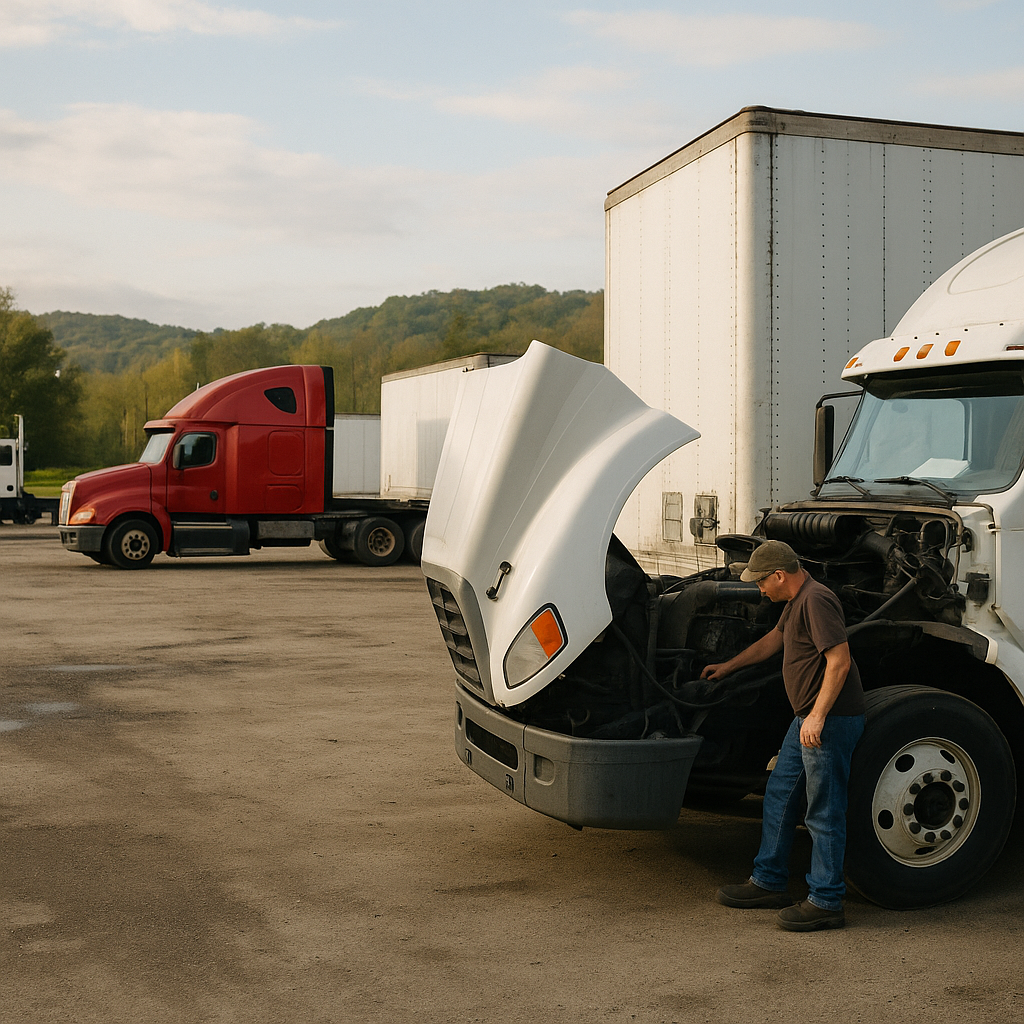
Dry van trucking insurance in Ohio is commercial insurance built for a truck hauling freight in an enclosed trailer, and it follows the operation, not just the truck. The right setup depends on whether you’re leased on or running under your own authority, whether you operate interstate or intrastate, what the truck weighs, and what cargo you haul.
A dry van is an enclosed trailer used to haul non-temperature-controlled freight. Dry van trucking insurance is the package of coverages that protects the trucking operation, the truck, and in many cases the freight or trailer exposures tied to that work.
How dry van coverage differs from personal auto#
Personal auto insurance usually doesn’t fit a commercial dry van operation because it isn’t built for business hauling, commercial filings, or heavy-truck risk. If you use a tractor to move freight for pay, you need commercial auto coverage that matches that operation.
A simple Ohio example shows the difference. If a driver has a personal policy on a pickup for errands, that’s one thing. If that same driver is operating a tractor pulling a dry van under a motor carrier’s dispatch, the exposure changes completely, and the insurance has to change with it.
The core coverages most Ohio dry van operators evaluate#
Most Ohio dry van owner-operators look at a mix of liability, truck, cargo, and trailer-related coverages. Some may be required by law, some may be required by a motor carrier, shipper, or lender, and some are just practical protection against losses that can park the truck.
The usual conversation includes primary auto liability, motor truck cargo, physical damage, general liability, bobtail or non-trucking liability, and trailer-related options. Which ones belong on your policy depends on the actual job the truck is doing.
What is required versus what is smart to carry#
Required coverage and smart-to-carry coverage are not the same thing. A truck can meet one requirement and still leave the operator badly exposed somewhere else.
For example, a single-truck Ohio owner-operator leased on to a motor carrier may rely on the carrier for some liability while still needing bobtail coverage for driving without a trailer. A different owner-operator running under their own MC number may need a full policy package with liability filings, cargo, and truck coverage because the authority and business obligations sit on their side.
That confusion gets expensive fast when a claim hits and the wrong policy setup leaves a hole. If you’re not sure whether your dry van operation is scoped right,
Ohio Requirements Versus FMCSA Requirements#
Ohio rules and FMCSA rules can both matter to a dry van operator, but they do different jobs. Ohio handles state-level vehicle and insurance issues, while FMCSA rules control federal operating authority and financial responsibility for interstate motor carriers under federal law.
What Ohio regulates at the state level#
Ohio can have its own expectations around registration, titling, and insurance matters tied to vehicles operating in the state. Those state-level rules matter, especially for intrastate operators, but they don’t automatically tell you what a for-hire interstate trucking operation needs.
The safest move is to verify state-side requirements with the Ohio Bureau of Motor Vehicles or the Ohio Department of Insurance. State requirements can matter a lot for how the truck is registered and insured, but they are not the same thing as a federal authority filing.
What FMCSA applies to interstate trucking#
If you run interstate for-hire freight, FMCSA financial responsibility rules come into play. FMCSA is the Federal Motor Carrier Safety Administration, the federal agency that regulates commercial motor carriers. Under 49 CFR Part 387, for-hire interstate carriers hauling general freight in vehicles over 10,001 lbs must carry at least $750,000 in public liability. That is the federal floor for that specific operation, not a universal rule for every trucker.
BIPD means bodily injury and property damage liability, the core public liability protection tied to motor carrier financial responsibility. MCS-90 is an endorsement used in certain federally regulated trucking policies to help satisfy public liability financial responsibility requirements.
You can also verify carrier status and authority information through FMCSA and the SAFER system. That’s useful when you’re checking whether an interstate authority is active and whether the insurance side is lining up with the operation.
Why state minimums and federal minimums are not the same thing#
State minimums and federal minimums are not interchangeable. A truck can be fine for one context and still be underinsured or noncompliant for another.
Here’s a practical example. An Ohio operator may think, "I have state-required insurance on the truck, so I’m good." But if that same truck starts hauling for-hire interstate general freight under its own authority, FMCSA rules under 49 CFR Part 387 may require a much higher level of public liability than a driver assumes from a personal auto or basic state minimum mindset.
That confusion is common with dry van operators because dry van freight sounds straightforward. But the legal question isn’t just "Do I have insurance?" It’s "Do I have the right insurance for this carrier type, weight class, cargo, and operating territory?"
Core Coverages for an Ohio Dry Van Truck#
Core dry van truck coverages in Ohio each solve a different problem: liability for damage you cause, cargo protection for the freight, physical damage for the truck, and optional protections for trailer use or off-dispatch driving. The right package depends on whether you’re under your own authority, leased on, financing equipment, or pulling someone else’s trailer.
Primary liability#
Primary liability is the coverage that pays when your truck causes bodily injury or property damage to others in an at-fault accident. It is the foundation of commercial trucking risk because it addresses the public damage side of a crash.
For a dry van operator, this is the policy people usually mean when they talk about trucking liability filings. If you rear-end traffic outside Columbus or sideswipe another vehicle during a lane change on I-71, this is the coverage designed to respond. If you want a cleaner breakdown of primary liability coverage, it helps to compare it against general liability because they are not the same thing.
Motor truck cargo#
Motor truck cargo covers the freight you’re hauling, subject to the policy terms, causes of loss, limits, and exclusions. In dry van work, that matters because the load inside the trailer can be worth far more than a driver expects.
A common dry van claim is shifted freight after a hard braking event or improper securement issue. Another is theft after a trailer is left at a stop or yard. This is why motor truck cargo insurance matters even when the truck itself wasn’t heavily damaged.
Physical damage#
Physical damage covers the truck itself from losses like collision, theft, fire, vandalism, or certain weather events, depending on the coverage selected. Collision pays for damage from impact or overturn. Comprehensive usually covers non-collision events like theft, hail, or fire.
A parked tractor stolen from a yard near Toledo is a different claim from a backing accident into a concrete post at a warehouse in Cincinnati. Physical damage is what separates those losses from liability claims against others. Collision should not be treated as a standalone solution; truck physical damage is usually built with the right combination of collision and comprehensive-type protection.
General liability#
General liability covers certain non-driving business exposures that don’t come from operating the truck on the road. Think of incidents around premises, loading areas, or other business activities outside an auto accident.
A simple dry van example is a warehouse visitor injury or a claim tied to business operations that falls outside auto liability. Not every operator needs the same scope here, but many contracts and shipping relationships expect it.
Bobtail and trailer-related coverage#
Bobtail insurance usually refers to liability coverage when a tractor is being driven without a trailer. Non-trucking liability covers certain non-business use when the truck is not under dispatch; it does not cover paid hauling. If you’re sorting out the difference, this guide to bobtail insurance helps avoid a very common mix-up.
Trailer interchange covers physical damage to a non-owned trailer when you’re using it under a written interchange agreement. Non-owned trailer physical damage is often the better fit when you’re pulling someone else’s trailer without that formal interchange setup.
That distinction matters for Ohio dry van operators who regularly pull shipper or carrier trailers. If you assume any trailer damage is covered automatically, a dropped trailer claim or backing loss can turn into a hard lesson.
How Much Dry Van Insurance Costs in Ohio#
Dry van trucking insurance in Ohio does not have one standard price because insurers rate the operation, not just the truck. Your actual premium depends on authority status, driving record, years in business, radius, cargo, truck value, garaging location, prior claims, and the exact coverages and limits on the policy.
Why there is no single price#
Two Ohio dry van operators can own similar tractors and still get very different pricing. One might be leased on to a motor carrier and only need a narrower set of coverages. The other might be a brand-new authority needing primary liability filings, cargo, and physical damage from day one.
That difference alone can change the insurance conversation completely. So can whether a lender requires physical damage, whether a broker requires certain cargo limits, or whether the operation crosses state lines.
The biggest cost drivers#
The biggest pricing drivers usually include:
- Authority status and whether you’re leased on or running your own MC number
- Driving history and prior claims
- Years of CDL and business experience
- Operating radius and where the truck runs
- Cargo type and theft exposure
- Truck value and chosen deductibles
- Garaging ZIP code
- Number of units and driver mix
A new owner-operator based near a higher-theft freight corridor with a financed truck and a fresh authority usually presents a different risk than a seasoned operator with a paid-off truck, a clean record, and a tighter operating pattern.
Practical examples of higher and lower risk profiles#
Picture two Ohio dry van operators. Driver A just got authority, hauls higher-value loads across multiple states, finances the tractor, and has limited business history. Driver B has years behind the wheel, a cleaner record, a more predictable lane pattern, and a simpler coverage need because part of the risk sits with the motor carrier relationship.
Both haul dry van freight, but they are not the same insurance risk. That’s why chasing the "cheapest" quote can backfire if the lower number leaves out cargo, uses the wrong liability setup, or ignores trailer exposure.
How to Lower the Cost Without Buying the Wrong Policy#
The best way to lower dry van trucking insurance cost in Ohio is usually to scope the policy more accurately, not to strip away coverage you actually need. Most overpayment happens when the insurer is rating the wrong operation, the wrong authority setup, or extra coverages that don’t match how the truck really runs.
Choose the right limits and deductibles#
Limits and deductibles should match the real exposure, contract requirements, and equipment value. A higher deductible can lower premium, but only if you can realistically absorb that out-of-pocket hit after a loss.
This is where practical tradeoffs matter. Saving a little on premium doesn’t help much if a theft or collision leaves you with a deductible you can’t manage while the truck is down.
Match coverage to your actual operation#
Coverage should fit the real operation, not a generic trucking template. If you’re leased on, not every line item used by a new authority belongs on your policy. If you never operate a non-owned trailer in a way that creates a certain exposure, that should be reviewed too.
A simple example: an Ohio owner-operator might be paying for coverage priced as if the truck runs a broader operation than it actually does. Fixing that mismatch can be more effective than cutting needed cargo or truck protection.
Reduce avoidable underwriting red flags#
Underwriters price uncertainty and sloppiness. Clean driver records, accurate garaging information, solid maintenance, and a truthful description of lanes and freight all help present a more stable risk.
Problems start when the application says one thing and the operation does another. If the truck is really parked in one place, dispatched in another, and hauling riskier freight than disclosed, that can hurt pricing and create claim trouble later.
When to ask for a second quote review#
Ask for a second review when the quote seems built for the wrong setup, when your operation changed, or when you’re comparing a leased-on arrangement against your own authority. A review also makes sense if one quote is much cheaper than the others and no one can explain why.
That kind of gap often means something material was excluded or misclassified. If you want a human review of what actually fits your operation,
How to Choose the Right Dry Van Policy in Ohio#
The right dry van policy in Ohio starts with how the truck actually operates, then works outward to authority, trailer use, cargo, and equipment requirements. The safest buying process is to match the policy to the real job first, then confirm contract and lender demands before you bind anything.
Start with how the truck actually operates#
Begin with the basics: Are you interstate or intrastate? Leased on or running your own authority? Hauling general dry goods only, or sometimes higher-theft commodities? Pulling your own trailer or someone else’s?
Those answers shape the policy. They affect whether FMCSA filings are needed, whether cargo is essential, whether non-trucking liability belongs, and whether trailer damage protection should be added.
Confirm what the motor carrier, shipper, or lender requires#
A motor carrier lease, shipper contract, or truck loan can add requirements beyond legal minimums. A lienholder may require physical damage. A carrier agreement may require bobtail or a certain trailer-related coverage. A shipper or broker may care about cargo.
That’s why "legal" and "enough" are not the same word in trucking.
Check for coverage gaps before you bind#
Before you bind, ask a few plain questions:
- What cargo do I actually haul?
- Whose trailer do I use?
- Do I need bobtail or non-trucking liability?
- Do I have a lienholder on the truck?
- Am I insured as a leased-on operator or as my own motor carrier?
- Are my garaging and radius details accurate?
LogRock specializes in trucking insurance for owner-operators and small fleets, so the process is built around getting this scoping right instead of forcing a one-size-fits-all package.
FAQ#
How much is dry van insurance?
Dry van insurance varies a lot because insurers price the operation, not just the trailer type. A leased-on Ohio owner-operator with a clean record may need a very different policy from a new authority hauling interstate freight under its own MC number. Truck value, cargo, operating radius, prior claims, and required coverages all push pricing up or down.
The practical move is to quote the exact operation instead of relying on a generic average. Make sure the quote reflects whether you’re leased on or running your own authority, what freight you haul, and whether you need cargo, physical damage, trailer-related coverage, or non-trucking protection.
Does Ohio require the same trucking liability as FMCSA?
No. Ohio state expectations and FMCSA federal financial responsibility rules are not the same thing. If you’re operating for-hire interstate, federal rules under 49 CFR Part 387 may apply based on carrier type, vehicle weight, and commodity. State-side registration or insurance expectations do not replace that.
This is where owner-operators get tripped up. Having insurance that works for a state or personal vehicle context does not automatically mean it satisfies what a federally regulated trucking operation needs. Check both the Ohio side and the FMCSA side before you assume you’re covered correctly.
Do I need cargo insurance for dry van trucking in Ohio?
Not always by law, but often by contract or by basic business reality. Cargo insurance protects the freight inside the trailer, and dry van loads can still be stolen, shifted, crushed, or damaged in transit. Even if it isn’t legally required in your situation, many brokers, shippers, and motor carriers expect it.
A driver hauling packaged consumer goods, electronics, or other theft-sensitive freight has a different cargo exposure from someone running a narrow, lower-risk lane pattern. The right question is not just "Is cargo required?" It’s "What happens to my business if the load is damaged and I don’t have it?"
Is bobtail the same as non-trucking liability?
No. Bobtail usually refers to liability coverage when the tractor is being driven without a trailer. Non-trucking liability applies to certain non-business use when the truck is not under dispatch. It does not cover paid hauling.
That distinction matters for leased-on operators in Ohio because one coverage may be required by contract while the other may not fit how the truck is actually used. If you buy the wrong one because the terms sound interchangeable, you can end up with a gap during a claim.
Is Ohio a cheap state for dry van trucking insurance?
Not in any simple, across-the-board way. Insurance cost depends more on your operation than on a state’s reputation. Ohio location can affect theft patterns, garaging, weather, court environment, and route density, but those are only pieces of the pricing picture.
A clean, experienced owner-operator with a stable lane pattern may present a lower risk than a new authority in the same state. That’s why comparing states or looking for the lowest advertised number usually doesn’t answer the real question. The better question is whether the policy matches your Ohio dry van operation without adding the wrong coverage or leaving out needed protection.