
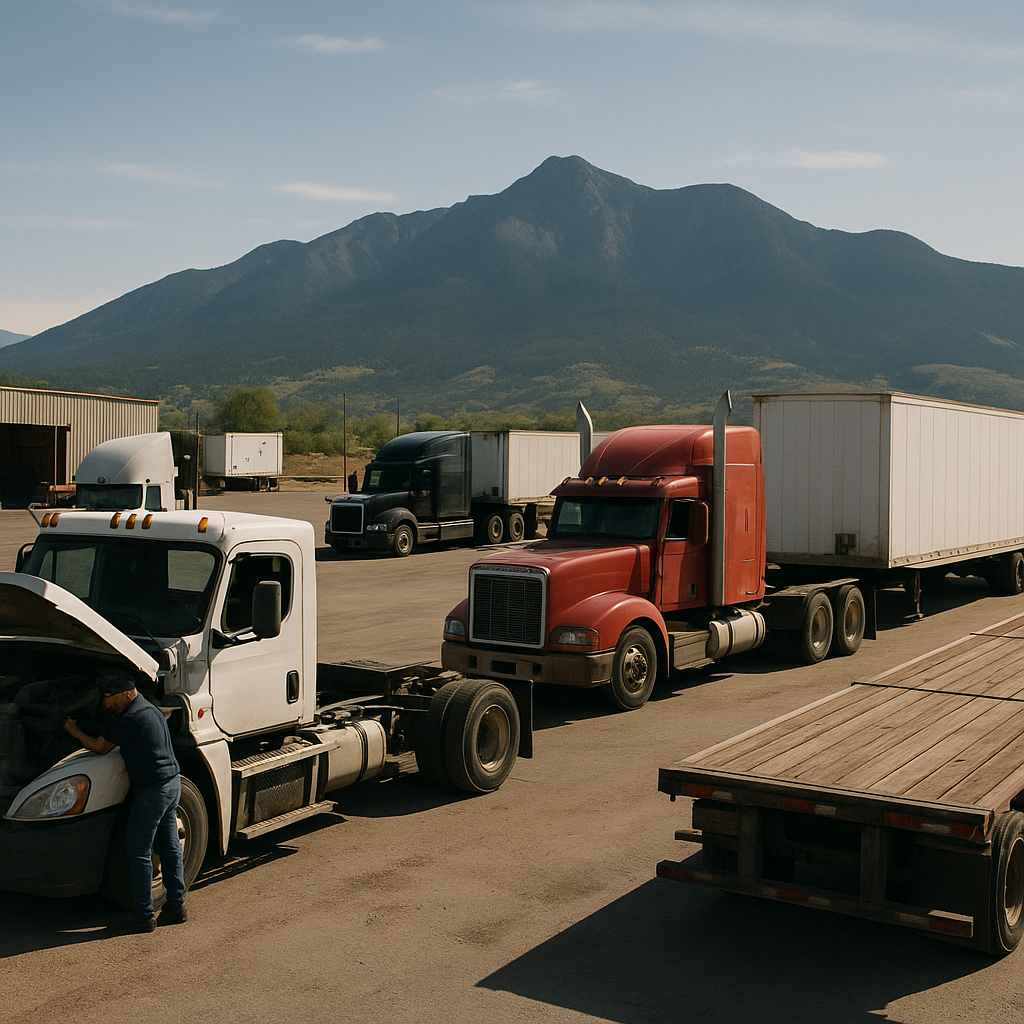

If you’re searching for auto hauler trucking insurance in Colorado, the biggest mistake to avoid is treating car hauling like regular personal driving or generic commercial auto. A Colorado car hauler policy has to match how you actually operate: what you haul, where you run, what authority you have, and how loading and unloading happen.
A one-car trailer in Colorado can still create real cargo and liability exposure. A three-car hauler running interstate creates even more moving parts. This guide separates Colorado rules from FMCSA basics, shows which coverages matter, and explains how to compare quotes without buying the wrong policy.
What Auto Hauler Trucking Insurance Covers in Colorado#
Auto hauler trucking insurance in Colorado covers business use of a truck and trailer hauling vehicles for pay or as part of a commercial operation. It usually combines auto liability, cargo-related protection, and equipment coverage because personal auto insurance is generally not built for paid vehicle hauling.
Car hauler vs personal auto coverage#
An auto hauler is a business that transports cars, pickups, SUVs, or similar vehicles using a trailer or carrier. If you’re hauling vehicles for money, under a business, or under motor carrier authority, that’s commercial activity, not ordinary personal driving.
That’s where many new operators get burned. Personal auto insurance is usually written for personal use, commuting, and normal household driving. It isn’t designed around cargo, business hauling, commercial trailers, or the extra risk of loading somebody else’s vehicle onto your equipment.
In Colorado, the address on the truck matters less than the operation itself. If you use a pickup and wedge trailer, a dually and multi-car trailer, or a larger commercial setup, the policy still has to reflect actual business use and the equipment involved.
Core policies for hauling vehicles#
Auto liability pays for injury or property damage you cause to others with the insured truck in a covered accident. It’s the foundation for most commercial hauling operations.
Motor truck cargo covers damage to the vehicles you’re hauling, subject to the policy’s limits, exclusions, and valuation terms. This is where auto haulers need to read the fine print, because not every cargo form treats hauled vehicles the same way.
Physical damage covers your own truck or trailer for losses like collision, theft, fire, or other covered causes. If your rig is financed, this is often required by the lender.
Some operators may also need general liability, which covers certain business-related bodily injury or property damage not caused by operating the truck on the road. Depending on the setup, trailer-related coverage or other endorsements may also matter.
When loading and unloading creates extra risk#
Loading and unloading is where a lot of ugly claims happen. A hauled vehicle can scrape a ramp, shift on the trailer, get damaged while being secured, or get harmed during offloading.
That matters because some policies treat transit, loading, and unloading differently. If your cargo form excludes part of that process, or your policy is written for the wrong equipment or wrong use, you can find out after a loss instead of before one.
For Colorado auto haulers, the safe move is simple: make sure the quote matches the truck, trailer, route type, cargo type, and how you actually handle vehicles day to day.

Colorado Rules vs FMCSA Requirements#
Colorado rules and FMCSA requirements are not the same thing. Colorado handles state-level insurance and business regulation, while federal rules apply when your operation falls under interstate motor carrier requirements, and those federal rules depend on carrier type, vehicle weight, and cargo.
What Colorado regulates#
Colorado has its own insurance and business oversight through state agencies, including the Colorado Division of Insurance. That state framework matters for policies issued in Colorado and for general insurance regulation inside the state.
But state-level rules are only part of the picture. A Colorado address does not automatically mean Colorado-only insurance logic. If your operation crosses state lines or falls under federal motor carrier rules, state minimum thinking can leave you short.
That’s why car haulers get into trouble when they ask, "What’s Colorado’s minimum?" without first asking what kind of carrier they are and where they run.
What federal FMCSA rules regulate#
The FMCSA is the Federal Motor Carrier Safety Administration, the federal agency that regulates many interstate trucking operations. If you’re a for-hire interstate carrier, federal financial responsibility rules can apply under 49 CFR Part 387.
For example, under 49 CFR Part 387, for-hire interstate carriers hauling property in vehicles over 10,001 pounds generally need at least $750,000 in public liability. Auto haulers should not stop there, though. If you’re hauling automobiles for hire interstate, the minimum public liability requirement is commonly $1,000,000 under the same federal framework for certain for-hire carriage categories, which is why "all truckers need $750K" is wrong for auto haulers.
If you need to confirm authority or operating status, use FMCSA SAFER to check carrier information. Your policy needs to match what your authority and operation actually show.
Interstate vs intrastate hauling differences#
Interstate means your operation crosses state lines or is part of freight moving across state lines. Intrastate means the hauling stays within one state and is not part of interstate commerce.
That distinction changes everything. A Colorado auto hauler moving vehicles only within Colorado may face a different insurance and filing setup than a hauler running Colorado to Utah, Wyoming, Kansas, or beyond.
The practical rule is this: don’t buy coverage based only on truck count, trailer size, or what another driver says. Buy it based on whether you’re for-hire or private, interstate or intrastate, what you haul, and how your authority is set up.
How Hauler Size Changes Insurance Needs#
A one-car hauler and a three-car hauler can both need the same core commercial coverage categories. The difference is usually in exposure, limits, equipment values, and underwriting, not in whether commercial insurance logic applies at all.
1-car hauler setups#
A one-car setup can look simple, but it still carries business risk. If you’re using a pickup and trailer to haul vehicles for pay, you still need the insurer to understand that you’re doing commercial vehicle transport, not just towing your own property.
Cargo exposure may be lower with one unit than with multiple units, but the claim can still be serious if the hauled vehicle is valuable. Loading risk also doesn’t disappear just because the trailer is smaller.
Some owner-operators assume a smaller setup means they can buy a stripped-down policy. Sometimes that’s exactly how a claim gap gets created.
3-car hauler setups#
A three-car hauler usually increases exposure in a few obvious ways. You’re carrying more vehicle value at once, spending more time loading and unloading, and putting more stress on the trailer and securement process.
That can affect cargo limits, physical damage values, and how an underwriter views the operation. Even if the truck is still owner-operated and local to Colorado, the policy should reflect the actual number of vehicles hauled and the kind of trailer being used.
When fleet size starts changing risk#
Once you add trucks or drivers, risk gets broader fast. Driver scheduling, garaging, maintenance habits, and claim history start to matter more.
But the real issue isn’t just fleet size. It’s whether the policy keeps pace with how the hauling is being done. A solo owner-operator and a small fleet both need coverage built around the actual equipment, route pattern, and cargo exposure.
Required vs Recommended Coverages for Auto Haulers#
Most Colorado auto haulers need auto liability as the base policy, then add other coverages depending on what they haul, what equipment they use, and where claims could hit. The difference between required and recommended coverage is not random upselling; it’s whether your operation has a real uncovered exposure.
Auto liability as the foundation#
Commercial auto insurance covers business-owned vehicles for covered liability and, if selected, damage to the insured vehicle. For an auto hauler, auto liability is the starting point because it addresses injury or property damage you cause to others on the road.
If you’re subject to federal filing requirements, your minimum limit may be driven by federal rules, not just a Colorado baseline. That’s where authority, vehicle weight, and operation type matter more than guesswork.
For many auto haulers, a higher limit is common because shippers, brokers, or contracts may expect more than the bare legal minimum. Required does not always equal sufficient.
Cargo coverage and what it may exclude#
Motor truck cargo covers the customer’s property you’re hauling, which for auto haulers usually means the vehicles on your trailer. This is one of the most important coverages to scope carefully because the exclusions and valuation terms matter as much as the limit.
A cargo policy may handle theft, collision-related damage, or other transit losses differently depending on the form. It may also limit coverage by vehicle type, cap recovery for certain units, or treat loading and unloading in a specific way. The NAIC is a useful plain-language source for understanding policy exclusions, deductibles, and endorsements.
This is the section of the policy to read twice. If you haul higher-value units, salvage vehicles, dealership vehicles, auction buys, or mixed-value loads, the cargo wording has to fit that reality.
Physical damage, garagekeepers, on-hook, and trailer-related options#
Physical damage covers your own truck and trailer for covered losses such as collision or theft. For many owner-operators, this is what keeps one bad wreck or theft from turning into an equipment crisis.
Garagekeepers covers damage to a customer’s vehicle while it’s in your care, custody, or control at a covered location, usually in a service or storage setting. That’s more relevant if you store customer vehicles, not just transport them.
On-hook towing covers a vehicle attached to a tow truck while being towed. That’s mainly a tow-truck coverage, not a standard auto hauler coverage, so car haulers shouldn’t assume it’s automatically relevant.
Trailer interchange covers physical damage to a non-owned trailer in your possession under a written interchange agreement. Many non-intermodal owner-operators don’t need that, but they may need non-owned trailer protection depending on how equipment is used.
The point isn’t to buy every option. It’s to match coverage to the real operation so the policy covers the risks you actually have.
How Much Auto Hauler Insurance Costs in Colorado#
Auto hauler trucking insurance in Colorado does not have one standard price. Cost depends on the operation, the equipment, the cargo exposure, the driver’s history, and the coverage structure, so two haulers in the same state can get very different quotes.
What drives price#
The biggest pricing drivers are usually the type of hauling, interstate or intrastate use, the value of the truck and trailer, the value of the vehicles hauled, and the driver’s motor vehicle record. Loss history matters too.
A newer authority may be priced differently than an established operation. A hauler running longer distances or carrying higher-value vehicles may also see different pricing than a local operator doing simpler moves inside Colorado.
Even garaging location and where the unit is regularly kept can affect underwriting. Colorado matters, but it’s only one piece of the file.
Why quote ranges vary#
This is why broad internet numbers often mislead people. One quote may assume lower cargo limits, a different deductible, or a different definition of covered operations than another quote.
A quote can also shift if the insurer learns the trailer type, the number of vehicles hauled at once, or the fact that the operation crosses state lines. That’s not bait-and-switch by itself. Often it’s just the underwriter finally pricing the real exposure.
If you’re trying to compare options and you’re not sure whether the quote actually fits your operation, [](https://www.logrock.com/?utm_source=BLOG&utm_campaign=auto-hauler-trucking-insurance-in-colorado).
How policy structure changes cost#
Higher liability limits, broader cargo terms, lower deductibles, and higher stated equipment values can all increase premium. Raising deductibles may lower premium, but it also increases what you pay out of pocket after a loss.
Physical damage on a more valuable truck or trailer will usually cost more than on older equipment. Cargo pricing can also change materially if you increase limits to match the value of the vehicles you actually haul.
The useful question isn’t "What’s the cheapest?" It’s "What does this quote actually cover, and what does it leave out?"
What to Ask For in a Colorado Auto Hauler Quote#
A good Colorado auto hauler quote starts with accurate operating details. The more clearly you describe your authority, routes, equipment, and cargo, the less likely you are to get a quote that looks fine on paper but fails when a claim happens.
Information to have ready#
Bring the basics first: whether you’re interstate or intrastate, for-hire or private, your USDOT status, your MC number if applicable, and where the truck is garaged. An MC number is the motor carrier authority identifier tied to certain for-hire interstate operations.
You should also have truck and trailer details ready, including VINs, values, body type, and how many vehicles you typically haul at once. Add driver history, years in business, planned radius, and the kinds of vehicles you haul most often.
If the insurer asks how loading is handled, answer that carefully. That’s not small talk. It affects claim handling.
Questions that prevent mismatched coverage#
Ask whether the cargo form specifically fits hauled vehicles and whether there are exclusions for certain unit types or values. Ask how loading and unloading losses are treated.
Ask whether the quote assumes intrastate-only use or allows interstate hauling. Ask whether the listed truck and trailer match the actual equipment being used.
Also ask what isn’t covered. A quote is only as useful as its exclusions.
How to compare two quotes fairly#
Compare liability limits, cargo limits, deductibles, physical damage values, and listed endorsements side by side. Don’t compare monthly payment alone.
A lower-priced quote may be lower because it leaves out important protection or applies tighter exclusions. A more expensive quote may include broader cargo terms or better alignment with your authority and route pattern.
The goal is not to win a price contest. It’s to make sure the policy matches the hauling you actually do.
Ways to Lower Cost Without Buying the Wrong Policy#
You can sometimes lower auto hauler insurance cost without gutting the policy, but only if the changes make sense for your operation. The safest savings usually come from cleaner underwriting, not from pretending the risk is smaller than it is.
Risk controls that matter to underwriters#
Clean driving records still matter. So do documented maintenance habits, realistic garaging information, and a clear description of your operation.
If your equipment is well maintained and your business details are consistent from application to bind, that can help avoid underwriting friction. Sloppy or incomplete submissions can do the opposite.
Choosing deductibles carefully#
A higher deductible can lower premium. But if you can’t comfortably absorb that out-of-pocket amount after a truck, trailer, or cargo loss, it may be false savings.
Pick a deductible you can actually live with on a bad day, not just one that makes the quote look better.
Avoiding coverage gaps that create expensive claims#
The fastest way to make insurance "cheaper" is to cut cargo, cut physical damage, or accept a policy that doesn’t really fit auto hauling. That’s also how small savings turn into large uncovered losses.
For skeptical owner-operators, the practical test is simple: if the policy only looks affordable because it ignores how you actually run, it isn’t the right policy.
When to Get Help From a Commercial Truck Insurance Broker#
If your auto hauler setup involves interstate questions, multiple coverages, contract requirements, or loading-related exposures, a specialized commercial truck broker can help you scope the policy correctly. That matters more than getting a fast quote that misses a key detail.
Signs the policy is getting too complex#
If you’re comparing multiple liability limits, trying to understand cargo exclusions, or switching between intrastate and interstate work, the policy is already detailed enough to justify expert help.
The same goes for mixed-use setups, changing trailers, added drivers, or uncertainty about whether the authority and insurance line up.
Why matching coverage to authority matters#
A policy should match the authority and operating profile, not just the truck. If your filing, vehicle class, route type, or hauling method is mismatched, that can create delays, rejected filings, or claim trouble later.
How specialized support helps avoid gaps#
LogRock specializes in trucking insurance for owner-operators and small fleets. If you’re not sure what coverage fits your operation, [](https://www.logrock.com/?utm_source=BLOG&utm_campaign=auto-hauler-trucking-insurance-in-colorado).
FAQ#
How much does insurance cost for a car hauler?
Insurance cost for a car hauler varies based on the hauling setup, the truck and trailer values, the value of the vehicles being hauled, driving history, operating radius, and whether the operation is interstate or intrastate. Cargo terms, deductibles, and liability limits also change the quote. That means two Colorado car haulers can pay very different amounts even if they both haul vehicles for a living. The useful way to look at pricing is not a generic online number, but a quote built around your actual equipment, routes, and coverage needs.
What kind of insurance do I need for hauling?
Most auto haulers need commercial auto liability as the base, then often need motor truck cargo and physical damage depending on the operation. Some may also need general liability or trailer-related coverage depending on contracts and equipment use. The exact requirement changes based on whether the work is for-hire or private, interstate or intrastate, and what kind of vehicles are being hauled. The safest approach is to build coverage around the real operation rather than assuming a personal auto or generic business auto policy is enough.
How much is hauling insurance?
Hauling insurance does not come with one standard price because the risk changes from one operation to another. Underwriters look at the driver, authority, route pattern, truck and trailer values, claims history, and cargo exposure. They also price based on policy choices like deductibles, physical damage values, and liability limits. So the number on one quote only means something if you know what it includes and excludes. A lower-looking quote may simply cover less or be written for a different type of operation than the one you actually run.
Do I need cargo coverage if I only haul one or three vehicles at a time?
Yes, you still need to review cargo exposure even if you only haul one or three vehicles at a time. The number of vehicles changes the amount of value on the trailer, but it does not automatically remove the risk of damaging a customer’s vehicle in transit, during loading, or during unloading. A smaller setup can still face a serious claim if the hauled vehicle is valuable. The important part is confirming that the cargo policy fits auto hauling specifically and that any exclusions or loading-related limits are understood before you bind coverage.
Does personal auto insurance cover car hauling for business?
Usually no. Personal auto insurance is generally designed for personal driving, not for hauling vehicles for pay or for a business operation. If you’re using your truck and trailer to transport customer vehicles, auction purchases, dealer units, or other cars as part of work, that is commercial use. A personal policy may exclude business hauling or simply not address the cargo and trailer exposures involved. That is why so many new operators get surprised after a loss: the truck is insured, but the actual hauling operation was not insured the right way.
What is the difference between Colorado rules and FMCSA requirements?
Colorado rules are state-level requirements and insurance regulation, while FMCSA requirements apply when your operation falls under federal motor carrier rules, especially in interstate commerce. Federal requirements are not one-size-fits-all. They depend on whether you are for-hire or private, the vehicle weight, and the type of cargo. For auto haulers, that distinction matters because a Colorado-only assumption can leave an interstate operation mismatched. The policy needs to match the authority, route type, and operation profile, not just a general idea of what commercial auto insurance should look like.
What should I compare in two auto hauler quotes besides price?
Compare liability limits, cargo limits, deductibles, equipment values, endorsements, and exclusions. You also want to confirm that both quotes are written for the same operating scope, including interstate or intrastate use, the same truck and trailer, and the same kind of vehicles hauled. Ask whether loading and unloading losses are treated the same way in both policies. Price only means something when the coverage is actually equivalent. If one quote is much lower, there is usually a reason, and that reason is often less protection or a mismatch with the real operation.





