
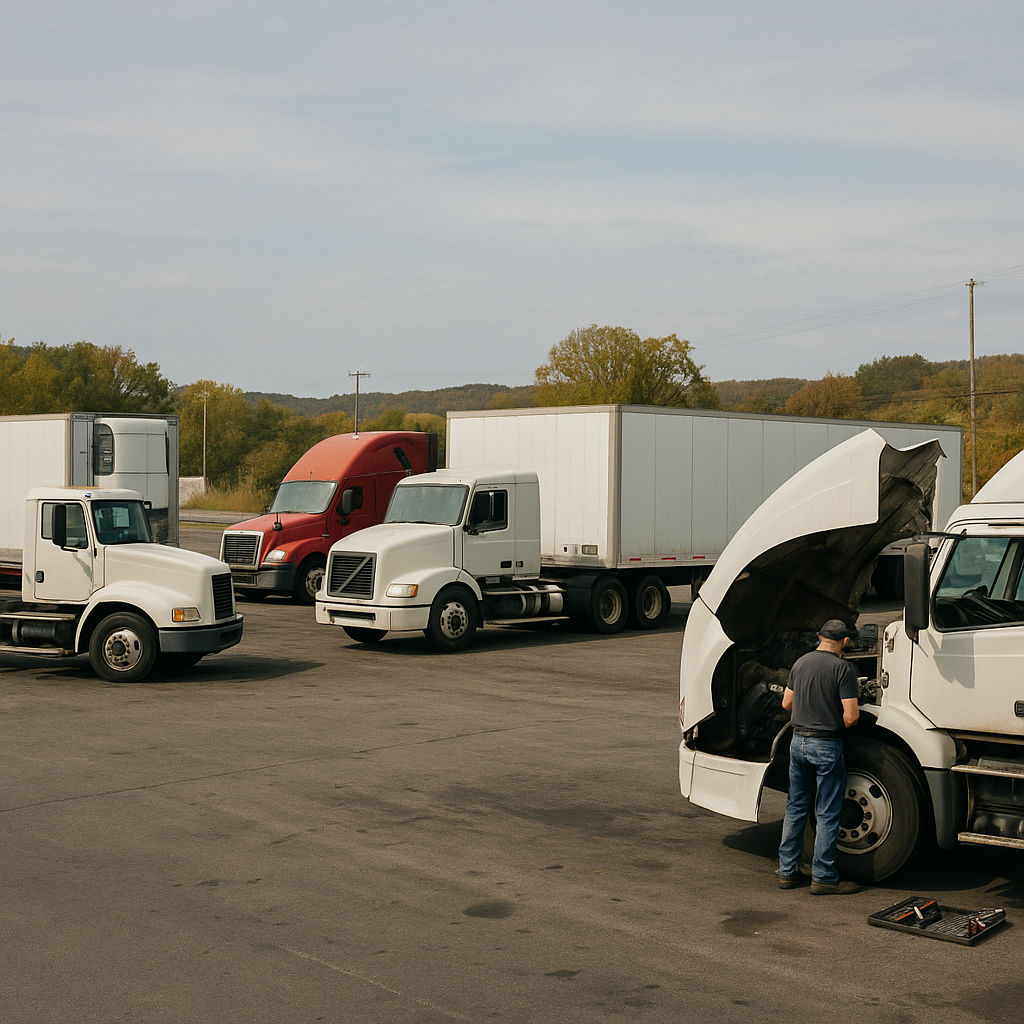

Dry van trucking insurance in New Jersey is a commercial insurance setup built around how your truck runs, what freight you haul, where you operate, and what filings you need. The big mistake is treating it like generic commercial auto or assuming New Jersey and FMCSA rules say the same thing. This guide breaks down the coverages, requirements, and quote details that matter for owner-operators and small fleets.
What Dry Van Trucking Insurance Covers in New Jersey#
Dry van trucking insurance in New Jersey usually means a package of commercial coverages built around a for-hire trucking operation, not just a policy for a trailer type. Most dry van operators compare liability, cargo, physical damage, and trailer-related options, then add or skip other coverages based on how they actually run.
A dry van is an enclosed freight trailer used to haul non-temperature-controlled cargo. Dry van work often looks simple on paper, but insurance still changes based on whether you’re leased on or running under your own authority, whether you stay in New Jersey or cross state lines, and whether you own or borrow trailer equipment.
What makes a dry van operation different#
Dry van freight usually doesn’t create the same insurance profile as hazmat or tanker work, but it still brings real exposure. You’re still dealing with public liability on the road, cargo claims, theft risk, tractor damage, and trailer damage questions.
A one-truck owner-operator may need a lean setup that covers the truck, freight, and off-dispatch exposure. A small fleet with two to five trucks may need different deductibles, different driver schedules, and tighter review of cargo values and trailer arrangements.
The core coverages most dry van operators compare#
Primary liability is the coverage that pays for injury or property damage your truck causes to other people. Motor truck cargo is coverage for the freight you’re hauling. Physical damage covers your truck itself, usually through collision and comprehensive or fire/theft-style protection, depending on policy structure.
Many dry van operators also review general liability, which is a separate policy for certain non-driving business claims, non-trucking liability or bobtail-style coverage for certain off-dispatch use, and trailer coverage options depending on whether the trailer is owned, borrowed, or exchanged under contract.
Where quote comparisons often go wrong#
Most bad quote comparisons happen because the policies don’t actually match. One quote may show a lower premium because the cargo limit is lighter, the deductible is much higher, trailer exposure is missing, or the policy assumes a different operation than the one you run.
Another common mistake is mixing up personal auto with commercial trucking coverage. Personal auto insurance is written for private passenger driving, not for-hire trucking, USDOT operations, or freight exposure. That misunderstanding doesn’t show up until a filing is needed or a claim gets tested.
If you’re staring at two quotes that look close but don’t explain trailer damage, cargo terms, or off-dispatch use clearly,

New Jersey Rules vs. FMCSA Requirements#
New Jersey dry van operators may be dealing with state rules, FMCSA rules, or both, depending on how they operate. The key question is whether you’re running interstate or intrastate, whether you’re for-hire or private, what the truck weighs, and what cargo you haul.
The FMCSA is the Federal Motor Carrier Safety Administration, the federal agency that regulates interstate motor carriers. An MC number is federal operating authority for certain for-hire interstate carriers, while a USDOT number identifies carriers subject to federal safety oversight.
What New Jersey regulates#
New Jersey can affect insurance compliance for intrastate operations, vehicle registration, and related licensing issues. The New Jersey Department of Banking and Insurance oversees insurance in the state, while the New Jersey Motor Vehicle Commission handles vehicle and licensing functions that often sit alongside trucking compliance.
That matters because a New Jersey-based dry van operator might assume a federal filing solves everything. It doesn’t. State-level requirements may still matter for trucks that stay inside New Jersey or for business setup details tied to the vehicle and operator.
What FMCSA regulates#
FMCSA insurance requirements apply when the operation falls under federal interstate rules. Under 49 CFR Part 387, for-hire interstate carriers hauling general freight in vehicles over 10,001 lbs must carry at least $750,000 in public liability. That does not mean all truckers need the same limit.
A BIPD limit means bodily injury and property damage liability combined under the required public liability framework. The MCS-90 is a federal endorsement attached to certain policies to show proof of financial responsibility for regulated motor carriers.
You can also verify operating status and authority details through SAFER, which helps confirm whether a carrier is active and what federal profile is on file.
How carrier type, weight, cargo, and route change the answer#
A private carrier moving its own goods is not the same as a for-hire carrier moving someone else’s freight. A light vehicle under the federal weight threshold is not treated the same as a heavy tractor. Dry van general freight is not treated the same as hazmat. Interstate is not the same as intrastate.
That’s why "What’s required?" has to be scoped to your actual operation. New Jersey rules may shape one part of the answer, and FMCSA rules may shape another. Assuming one minimum fits every dry van business is how people end up underinsured, overinsured, or filed incorrectly.
Primary Liability, Cargo, and Physical Damage: What to Prioritize#
For most dry van owner-operators, the first three coverages to review are primary liability, cargo, and physical damage. They do different jobs, and if one is missing or mismatched, the policy can fail where the business needs it most.
Primary liability for claims involving other people#
Primary liability should be the first thing you sort out because it covers injury or property damage your truck causes to others. If you’re running under your own authority, this is usually the coverage tied most directly to required filings and operating status.
The right limit depends on your carrier type, vehicle weight, cargo, and whether you’re interstate or intrastate. Most owner-operators hauling dry van general freight under interstate authority end up focused on the standard for that operation, but contracts or broker requirements may push higher than the legal floor.
Cargo insurance for freight in transit#
Motor truck cargo covers the freight while you’re hauling it. For dry van operators, the main question isn’t just "Do I have cargo?" but "Does the limit fit the value of the loads I actually haul, and do the policy terms match those loads?"
If your contracts expect a certain cargo limit, you need to match that requirement carefully. Cheap-looking cargo coverage can hide narrower terms, higher deductibles, or exclusions that matter for theft-prone freight, unattended vehicle situations, or certain commodity classes.
Physical damage for the tractor and optional trailer exposure#
Physical damage covers your truck itself rather than damage you cause to other people. In trucking, that usually means collision for crash damage and comprehensive for things like theft, vandalism, weather, or certain non-collision losses. Fire and theft protection may also appear in policy structure, sometimes alongside CAC, which means combined additional coverage.
Collision shouldn’t be treated as a stand-alone fix. Your lender, lease agreement, or risk tolerance usually drives how broad that truck coverage needs to be. Trailer exposure is a separate conversation, especially if you sometimes pull your own trailer, sometimes pull someone else’s, or switch under agreement.
Do You Need Bobtail, Trailer Interchange, or Non-Owned Trailer Coverage?#
Bobtail-style coverage and trailer-related coverage matter only when your operation creates those exposures. They are useful in the right setup, but they are also common places where owner-operators buy the wrong thing or pay for coverage they don’t actually need.
When bobtail or non-trucking liability matters#
Non-trucking liability is coverage for certain non-business use of the truck when you’re not under dispatch. People often call this bobtail coverage, but the important point is that it is not a replacement for primary auto liability and it does not cover paid hauling.
If you’re leased to a motor carrier, your lease may require this off-dispatch protection. If you’re running under your own authority full-time, the conversation may be different. The right answer depends on how often the truck is used outside business dispatch and what your contracts say.
When trailer interchange applies#
Trailer interchange applies when you have a signed interchange agreement making you responsible for a trailer you’re using. That is a contractual exposure, not a default need for every dry van operator.
A lot of owner-operators hear "you pull other people’s trailers, so you need trailer interchange." That’s not always true. If there’s no signed interchange agreement, that coverage may not be the right fit.
When non-owned trailer physical damage matters#
Non-owned trailer physical damage covers damage to a trailer you don’t own when you’re responsible for it, typically outside a formal interchange setup. For many non-intermodal dry van owner-operators, this is the more relevant trailer discussion.
The mistake is buying both automatically or skipping both automatically. Match the trailer coverage to how you actually get trailers, who owns them, and what paperwork makes you responsible.
How Much Dry Van Insurance Costs in New Jersey#
Dry van trucking insurance in New Jersey doesn’t have one honest flat price because the premium depends on the operation, not just the truck. Your actual premium depends on your operation, cargo, radius, driving history, vehicle value, and other factors.
What drives the price#
Insurers usually look hard at driving records, years of experience, prior claims, garaging location, route patterns, and whether the operation stays intrastate or runs interstate. They also look at whether you’re a new venture, how many trucks are on the policy, and whether you run under your own authority.
Dry van is often viewed differently from higher-hazard freight classes, but that doesn’t make all dry van accounts equal. A clean local-to-regional operation may price differently than a new authority running long-haul lanes with inconsistent freight descriptions.
How limits, deductibles, and cargo value change the quote#
Higher liability limits usually change the premium. Higher cargo limits usually change the premium. Lower deductibles usually change the premium because the policy takes on more of the loss before you do.
That’s why two operators with similar tractors can see very different numbers. One may carry a higher cargo limit for broker contracts, one may finance a newer truck needing broader physical damage, and one may accept a higher deductible to shift some risk back to the business.
How insurer appetite and operating profile affect pricing#
Insurance carriers have different appetites, meaning they prefer certain types of trucking risks over others. One carrier may be comfortable with experienced dry van owner-operators running familiar lanes. Another may pull back on new ventures, certain urban garaging areas, or certain loss histories.
Fleet size matters too. A two-to-five-truck fleet may get reviewed differently than a single-truck owner-operator because driver management, scheduling, and claims patterns can look different. The best way to judge a quote is whether the policy fits the operation first and the premium second.
What a $1,000,000 Liability Limit and $100,000 Cargo Limit Mean#
A $1,000,000 liability limit and a $100,000 cargo limit describe two different buckets of risk. One is for damage your truck causes to other people, and the other is for the freight in your trailer.
Why liability limits are quoted separately#
A liability limit applies to third-party bodily injury or property damage claims. When a dry van operator says "I need a million-dollar policy," they usually mean a $1,000,000 primary liability limit, but that tells you nothing about cargo, physical damage, or trailer terms.
That number may come from a contract, a broker requirement, or a business decision to carry more than the legal minimum for the operation. It should be judged against your authority, route type, and contractual needs, not treated like a universal trucking rule.
What cargo limits actually protect#
A cargo limit is the maximum available for covered freight loss, subject to the policy’s terms, conditions, and exclusions. A $100,000 cargo limit can be appropriate for one dry van operator and too low or unnecessarily high for another, depending on what loads are actually being hauled.
The important question is whether the limit matches typical load value and shipper or broker expectations. A limit that looks fine on a certificate can still be a bad fit if your freight regularly runs above it or the policy excludes the commodity creating most of your revenue.
How to compare policies that look similar#
Two quotes can be close in premium and very different in protection. One may include broader cargo terms, one may exclude certain theft scenarios, one may carry very different deductibles, and one may handle trailer exposure differently.
That is where buyers get burned. Before focusing on premium, make sure the quote matches the way the truck runs, the freight you haul, and the paperwork your customers require.
How to Compare Dry Van Quotes Without Missing Coverage Gaps#
The best way to compare dry van quotes is to line up the policy terms side by side instead of looking at premium alone. A cheaper quote is not a better quote if it changes deductibles, strips out trailer protection, or assumes the wrong operating profile.
The NAIC offers plain-language insurance guidance that supports this basic rule: compare what the policy actually covers, not just the price tag.
Checklist for comparing quotes#
Check these items before you call two policies "the same":
- Liability limit and whether it fits your actual authority and contracts
- Cargo limit, deductible, and major exclusions
- Physical damage deductible and valuation basis for the truck
- Trailer coverage, if any, and whether it fits owned or non-owned use
- Filings and endorsements, including whether the policy supports the operation described
- Interstate versus intrastate setup
- Off-dispatch use and leased-equipment treatment
Questions to ask before binding#
Ask how the policy treats leased trailers, borrowed trailers, and non-owned equipment. Ask whether non-trucking liability applies to your setup. Ask whether the cargo form has exclusions that matter for your freight.
If you’re changing authority, changing lanes, adding drivers, or adding a second truck, the quote needs another look. Those changes can turn a previously fine policy into a mismatch.
When to talk to an agent#
An agent helps most when the operation doesn’t fit a simple box. If the quote is hard to interpret or your setup is changing,
How to Lower Dry Van Insurance Costs Without Overbuying#
The safest way to lower dry van insurance cost is to reduce avoidable risk and tighten up the information going to underwriting. Cutting important coverage blindly can backfire fast when a claim hits or a contract gets reviewed.
Operational choices that may help#
Clean driving history matters. Accurate garaging matters. Clear cargo descriptions matter. Consistent maintenance records matter. If the underwriter gets a cleaner, more accurate picture of the operation, the quote process usually goes better than when details are vague or inconsistent.
Route discipline can matter too. If you say the truck runs a certain radius and the operation actually looks very different, that mismatch can create problems beyond the quote itself.
Coverage decisions that should not be cut blindly#
Don’t assume the fix is just slashing cargo, raising deductibles past what the business can handle, or removing trailer-related protection without checking your contracts. A lower premium only helps if the policy still works when freight gets damaged, a borrowed trailer gets hit, or a filing is challenged.
The goal is to avoid paying for coverage you don’t use while keeping the protections your operation actually depends on.
Records and documentation that can help underwriting#
Keep vehicle details current, keep driver information accurate, and keep loss runs and maintenance records organized. If you’re a newer operation, clean paperwork helps the carrier see what you’re really doing instead of guessing from a messy submission.
Get a New Jersey Dry Van Trucking Insurance Quote#
A good dry van trucking insurance quote in New Jersey starts with accurate operation details. The more clearly the quote reflects your truck, freight, route, authority, and trailer setup, the easier it is to spot coverage gaps before they become claim problems.
What information to have ready#
Have your USDOT and MC details ready if they apply. Have vehicle information, garaging address, driver history, cargo type, operating radius, and trailer arrangements ready too.
If you own the trailer, say that. If you pull non-owned trailers, say that. If you’re intrastate today but planning interstate authority, say that too. Those details change what a good quote looks like.
How LogRock helps compare options#
LogRock specializes in trucking insurance for owner-operators and small fleets. The point of the process should be to help you compare real differences in coverage, not just collect a premium number.
What to expect next#
Expect questions about how the truck actually runs, what freight you move, and what contracts require. That’s a good thing. If you’re not sure what coverage fits your operation, LogRock can help you scope it.
FAQ#
How much is dry van insurance?
Dry van insurance doesn’t have one standard price because the premium depends on the operation behind the truck. Insurers usually price around driving history, years in business, authority status, garaging location, radius, cargo type, claims history, truck value, and the coverages selected. A one-truck owner-operator with clean history hauling ordinary dry goods may look very different from a new venture with long-haul interstate lanes. The best way to judge cost is to compare matching quotes with the same liability, cargo, physical damage, and trailer assumptions.
How much does a $1,000,000 liability insurance policy cost?
A $1,000,000 liability policy can vary widely because that limit is only one part of the risk profile. The premium still depends on whether you’re interstate or intrastate, whether filings are required, what kind of freight you haul, your truck class, your driving and claims history, and how long you’ve been operating. The carrier also looks at garaging, lanes, and whether you’re under your own authority or leased on. In other words, the limit matters, but the operation behind the limit matters more.
How much does commercial insurance cost in NJ?
Commercial truck insurance in New Jersey depends on whether the operation is intrastate or interstate, what the truck weighs, whether it’s for-hire, what cargo it carries, and which coverages are included. Liability, cargo, physical damage, general liability, non-trucking liability, and trailer-related protection all affect total premium differently. A New Jersey-based dry van operator staying local may be priced differently than one crossing multiple states under federal authority. The cleanest way to compare cost is to match the policy structure first, then compare premium.
How much does $100,000 cargo insurance cost?
The cost of a $100,000 cargo limit depends on what you’re hauling and how the policy is written. Insurers usually look at freight type, theft exposure, prior cargo claims, operating lanes, deductible, and whether the cargo wording is broader or narrower. A $100,000 limit for ordinary dry van freight can price differently from the same limit on more theft-sensitive or higher-risk commodities. That’s why the number on the certificate isn’t enough by itself. You need to know whether the policy terms actually fit your loads.
Do New Jersey dry van operators need FMCSA insurance and state insurance requirements?
Sometimes yes. Sometimes no. It depends on the operation. If you’re a for-hire interstate carrier, FMCSA insurance rules and filings can apply under 49 CFR Part 387. If you operate intrastate in New Jersey, state-level rules and licensing requirements may matter even if the federal interstate framework does not apply the same way. Some operators deal with both sets of rules at different points in the business. The answer turns on carrier type, weight, cargo, authority, and where the truck actually runs.
Is bobtail insurance the same as primary liability?
No. Bobtail or non-trucking liability is not the same as primary liability. Primary liability covers injury or property damage your truck causes to others during business operations and is the core coverage tied to road exposure and, in many cases, filings. Non-trucking liability is for certain off-dispatch, non-business use and does not replace business auto liability. If you haul for hire, bobtail-style coverage does not step in as your main liability policy while you’re moving freight for work.
What coverages does a dry van owner-operator usually compare first?
Most dry van owner-operators start with primary liability, motor truck cargo, and physical damage. Those three cover the biggest basic exposures: damage to others, damage to freight, and damage to the truck itself. After that, the next discussion usually turns to non-trucking liability for off-dispatch use and trailer-related coverage if the operator owns trailers, borrows them, or becomes responsible for them by contract. The exact mix changes with authority type, route pattern, vehicle value, and how trailer equipment is handled.
How can I tell if a quote is missing important dry van coverage?
Start by checking whether the quote matches your real operation. Then review the liability limit, cargo limit, deductibles, major exclusions, trailer terms, endorsements, and required filings. Make sure the policy reflects whether you’re interstate or intrastate, whether you own or pull non-owned trailers, and whether you need off-dispatch protection. Two quotes can look similar and still leave very different gaps. If the premium looks attractive but the cargo wording, trailer exposure, or business-use assumptions changed, the quote may not protect the operation the way you think.





