
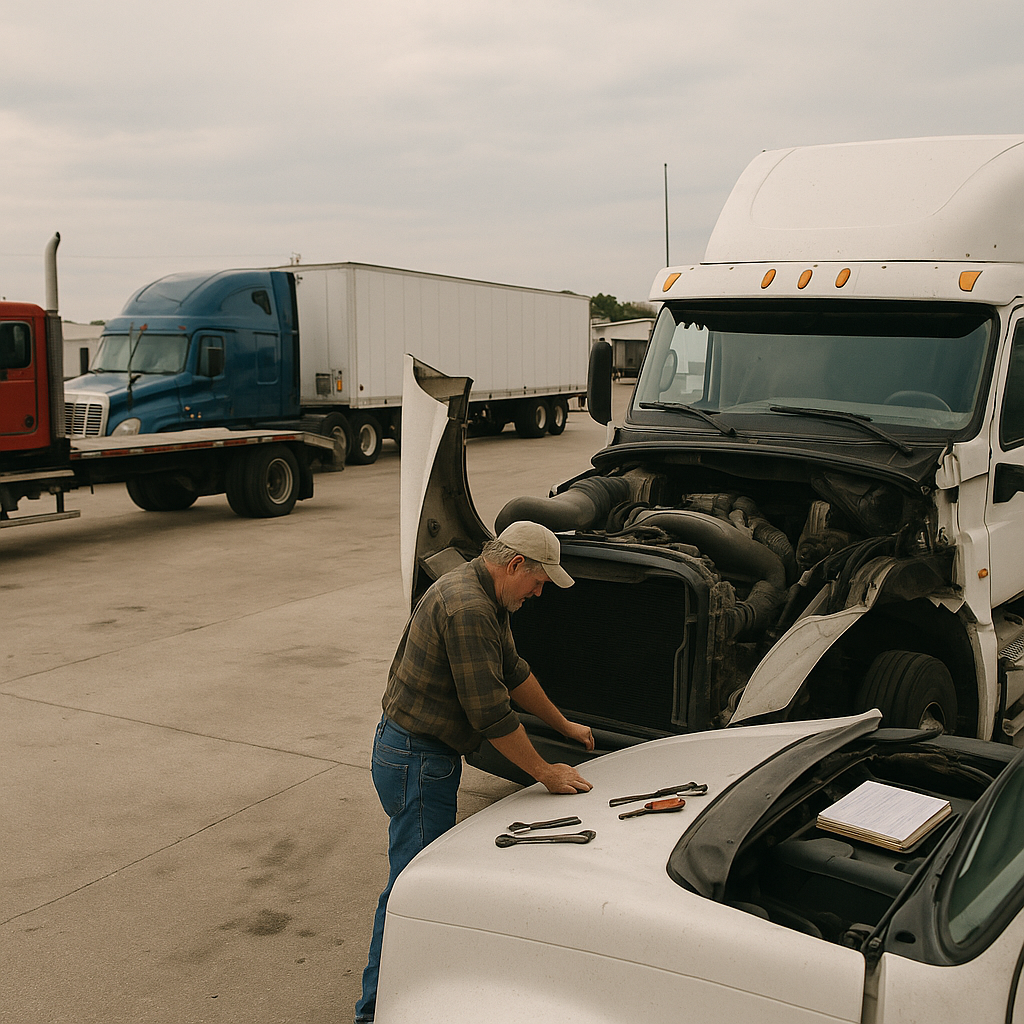

If you’re trying to figure out whether truck collision damage coverage pays for your truck, the other guy’s truck, or both, you’re not alone. This is one of the most common mix-ups in commercial truck insurance, especially when personal auto terms, rental-truck waivers, and trucking liability limits all get mashed together.
This guide breaks it down in plain English. You’ll see what collision coverage usually pays for, what it doesn’t, how deductibles work, and why liability numbers like 250/500/100 don’t tell you what your own truck repairs will cost.
What Truck Collision Damage Coverage Is#
Truck collision damage coverage is a type of physical damage coverage that helps pay to repair or replace your insured truck after a covered crash. It applies to damage to your truck, usually the scheduled tractor or power unit on the policy, not to the other driver’s injuries or property damage.
Physical damage coverage is insurance for damage to your own vehicle. Collision coverage is the part of physical damage coverage that responds when your truck hits another vehicle or object, or overturns in a covered loss.
That matters because a lot of drivers hear “truck insurance” and assume every kind of damage falls under one bucket. It doesn’t. Collision coverage is about the insured truck itself.
Plain-English definition#
If your tractor backs into a pole, slides into a guardrail, or gets hit in traffic, collision coverage is the part of the policy that may help pay for repairs. The NAIC uses the same basic distinction in its plain-language insurance definitions: liability coverage handles damage you cause to others, while physical damage coverage addresses damage to your own vehicle.
A deductible is the amount you pay out of pocket before insurance contributes on a covered claim. Your policy terms and the truck’s insured value affect how much the carrier pays.
What counts as a collision loss#
A collision loss usually means contact with another vehicle or a physical object. In trucking, that can include a lane-change crash, backing accident, guardrail strike, rollover, or impact with a tree or pole.
Why owner-operators buy it#
Owner-operators usually buy collision coverage because one serious hit can put the truck down fast. If the tractor is financed, the lender may also require physical damage coverage as a condition of the loan.
What Collision Coverage Usually Pays For#
Truck collision damage coverage usually pays for covered damage to the insured truck after it strikes another vehicle, object, or overturns. It does not pay for the other party’s injuries or property damage, and trailer coverage may depend on whether that trailer is separately insured or scheduled.
Truck-to-vehicle crashes#
If your truck collides with a car, another tractor-trailer, or a service vehicle, collision coverage is the part that may pay for damage to your unit. That’s separate from bodily injury liability, which covers injuries you cause to others, and property damage liability, which covers damage you cause to someone else’s vehicle or property.
A lot of claims involve both sides at once. Your truck damage may go under collision, while the other party’s damage may go under liability.
Single-vehicle incidents#
Collision coverage also usually applies when no second vehicle is involved. If the truck overturns on a ramp, slides off the road, or hits a ditch or embankment, that can still be treated as a collision loss if the policy terms apply.
This is where drivers get burned by assuming “collision” means only a crash with another vehicle. In trucking, many expensive losses are single-unit events.
Impact with objects#
Impact with a pole, dock, building, barrier, deer-related swerve into an object, or low-clearance structure can trigger collision handling for the truck damage. If a trailer is involved, whether damage is covered depends on how that trailer is insured.
If it’s your trailer, it may need its own physical damage treatment. If it’s someone else’s trailer, that often raises separate trailer coverage questions beyond the tractor’s collision coverage.
What Collision Coverage Does Not Cover#
Truck collision damage coverage does not cover everything that goes wrong after an accident or breakdown. It generally excludes wear and tear, mechanical failure, cargo loss, injuries to others, damage to other people’s property, and many non-collision losses like theft or hail unless other coverage applies.
Mechanical breakdown and wear#
Collision coverage isn’t a maintenance plan. It generally does not pay for engine failure, blown turbos, worn tires, brake wear, rust, rot, corrosion, or gradual deterioration.
If an engine lets go on its own, that’s not a collision claim just because the truck is now disabled. The cause matters.
Cargo and load damage#
Motor truck cargo coverage is insurance that may protect the freight being hauled, subject to its own terms and exclusions. If the truck is damaged in a wreck and the load is also ruined, the truck damage and cargo damage are usually handled under different coverages.
That’s a big distinction for owner-operators. Damage to the truck doesn’t automatically mean damage to freight is covered under the same part of the policy.
Other people’s injuries and property#
Collision coverage is not liability coverage. If another driver is injured or you damage another person’s car, fence, building, or equipment, those are usually liability issues, not collision issues.
The Insurance Information Institute uses the same core distinction: collision covers damage to your own vehicle from impact, while liability covers damage or injury you cause to others.
Non-collision losses#
Theft, vandalism, fire, hail, flood, and some weather-related damage are usually handled under comprehensive or other physical damage terms, not collision. A lot of trucking policies package physical damage options together, but they still work differently.
One common mistake is thinking “I have full coverage” means every loss hits the same bucket. In practice, the trigger for the loss decides which coverage responds, if any.
Collision Coverage vs Rental Damage Waivers#
Truck collision damage coverage and rental damage waivers are not the same thing. Collision coverage is insurance for a scheduled insured truck under a policy, while a rental damage waiver is a contract term that may reduce or shift your responsibility for damage to a rented unit.
Commercial truck insurance vs rental protection#
A damage waiver is an agreement where the rental company may waive some right to collect for damage if the contract terms are met. That’s different from an insurance policy that insures a truck listed on your commercial policy.
This is where a lot of search results confuse people. Rental-truck pages talk about waivers, Safemove-style add-ons, overhead damage, and rental contract terms. That’s not the same thing as an owner-operator insuring a tractor used in business.
Who the coverage protects#
Commercial collision coverage follows the insured unit shown on the policy schedule. Rental protections usually apply only within the rental agreement and only under that contract’s conditions, exclusions, and permitted uses.
So if you’re comparing a rented moving truck product to commercial truck insurance, you’re comparing two different systems.

Why waiver language is different#
Waivers may have tight rules around authorized drivers, prohibited roads, overhead contact, late reporting, or business use. Commercial truck collision coverage has its own terms too, but it is built around the insured operation, vehicle, and policy language rather than a short-term rental contract.
For an owner-operator, mixing those two ideas usually leads to the wrong expectation at claim time.
How Deductibles, Limits, and 250/500/100 Fit In#
Collision coverage usually has a deductible, and the payout depends on policy terms and the truck’s value. Liability limit shorthand like 250/500/100 refers to bodily injury and property damage liability, not to how much your own truck gets repaired for under collision coverage.
Deductibles on physical damage#
A deductible is your share of a covered loss before the insurer pays. If the repair bill is covered, the deductible is usually subtracted from the payment, whether funds go to the shop or to you, depending on claim handling.
Higher deductibles can lower premium, but they also mean more out-of-pocket exposure after a crash. Your actual premium depends on your operation, cargo, radius, driving history, and other factors.
Policy limits vs liability limits#
Physical damage coverage for the truck is different from liability coverage for damage you cause others. Collision usually works off the insured value and policy terms for the truck, not off a split-liability number.
An actual cash value is the truck’s value at the time of loss after depreciation. If the truck is a total loss, meaning repair cost meets or exceeds the threshold in the policy or claim handling, payout is usually based on actual cash value, subject to the deductible and policy language.
What 250/500/100 actually means#
250/500/100 is shorthand for liability limits. In plain language, it refers to a per-person bodily injury limit, a per-accident bodily injury limit, and a property damage liability limit.
Those numbers do not tell you how much money is available to fix your own tractor under collision coverage. That’s the key misunderstanding. A driver can have liability limits shown as 250/500/100 and still have very different physical damage protection depending on the truck’s insured value, deductible, endorsements, and whether collision was even purchased.
How a Truck Collision Claim Usually Works#
A truck collision claim usually starts with reporting the loss, documenting damage, and letting the insurer review the facts. The carrier or adjuster then evaluates coverage, estimates repair cost, applies the deductible, and decides whether the truck will be repaired or treated as a total loss.
After the accident#
An adjuster is the person who investigates the claim and evaluates damage and coverage under the policy. After a crash, the first steps are usually to make the scene safe, notify law enforcement if needed, report the loss promptly, and preserve photos, statements, and basic details.
Don’t wait around assuming you can sort it out later. Delayed reporting can make a straightforward claim messier.
Photos, estimates, and adjuster review#
The insurer will usually want photos of the damage, unit information, loss details, and repair estimates. Depending on the claim, the truck may be inspected in person or through a remote review process.
Coverage review matters just as much as the damage estimate. The carrier still has to decide whether the loss fits the collision terms of the policy.
Deductible and payout timing#
If the loss is covered, the deductible is normally withheld from what gets paid. If the truck can be repaired, payment is generally based on covered repair cost under the policy, less the deductible.
If repair cost is too high compared with the truck’s actual cash value, the claim may be handled as a total loss. That final number depends on valuation, salvage, and policy language.
How to Decide Whether Collision Coverage Is Worth It#
Collision coverage is worth considering when you couldn’t comfortably repair or replace the truck out of pocket after a crash. The real decision comes down to truck value, financing, downtime risk, and how exposed your operation is to accidents, not just whether you carry the minimum liability required to run.
Truck value and repair exposure#
Start with one plain question: if the tractor got heavily damaged tomorrow, could the business absorb it? If the answer is no, collision coverage may deserve a hard look.
Even moderate collision damage on a commercial truck can get expensive fast. Body work, suspension, steering components, sensors, and downtime stack up.
Operation type and route risk#
A truck running dense urban freight, tight docks, mountain routes, or winter lanes usually faces different collision exposure than one running simpler, lighter-risk lanes. Usage matters.
The truck’s age matters too, but older doesn’t always mean easier to self-insure. Some older trucks are fully paid off but still critical to cash flow.
Separating legal minimums from protection needs#
FMCSA rules mostly deal with financial responsibility for liability, not whether you protect your own truck with collision coverage. Under 49 CFR Part 387, federal minimum financial responsibility requirements address public liability for certain motor carriers, not physical damage on your tractor. FMCSA materials at FMCSA make the same practical distinction: legal operating requirements and optional protection decisions are not the same thing.
That’s why state minimums and FMCSA filings don’t answer the collision question. Requirements vary by carrier type, vehicle weight, cargo, and whether you operate interstate or intrastate. Collision coverage is a business protection decision about your equipment, not a universal federal requirement.
If you’re not sure what coverage fits your operation, LogRock can help you scope it.
FAQ#
What does collision damage coverage cover?
Truck collision damage coverage generally covers damage to the insured truck when it hits another vehicle or object, or when it overturns in a covered loss. That can include crashes with cars, backing into fixed objects, guardrail impacts, and many single-vehicle wrecks. It applies to your truck, usually the scheduled tractor or power unit on the policy, not automatically to every trailer or piece of freight involved. Payment is still subject to policy terms, the truck’s insured value, and your deductible.
What collision damage does not cover?
Collision damage coverage usually does not cover wear and tear, rust, mechanical breakdown, tire wear, or gradual deterioration. It also doesn’t usually cover cargo damage, theft, vandalism, fire, hail, or flood unless another coverage applies. Just as important, it does not pay for injuries to other people or damage to someone else’s car, fence, building, or equipment. Those are generally liability issues. In short, collision is for impact damage to your own insured truck, not every loss that happens around the accident.
What does collision coverage not cover?
Collision coverage does not replace liability coverage, cargo coverage, comprehensive coverage, or maintenance-related protection. If your engine fails without a crash, if freight is ruined, or if another driver claims injury, collision is not the part of the policy built for that problem. It also may not cover a trailer unless that trailer is separately insured or scheduled correctly. The main job of collision coverage is narrow but important: paying for covered crash-related damage to your own truck.
What does 250/500/100 mean in insurance?
250/500/100 is liability shorthand, not collision shorthand. It refers to bodily injury liability per person, bodily injury liability per accident, and property damage liability. Those numbers describe how liability coverage may respond when you injure someone or damage someone else’s property. They do not tell you how much money is available to repair your own tractor after a wreck. Your truck’s collision payout depends on whether you bought collision coverage, the deductible, the insured value, and the policy terms.
Is truck collision coverage required by FMCSA?
FMCSA financial responsibility rules focus on liability, not on collision coverage for your own truck. Under 49 CFR Part 387, the federal rules address public liability requirements for certain motor carriers based on factors like carrier type, weight, and cargo. That is separate from the decision to insure your own tractor for crash damage. So while a lender may require physical damage coverage on a financed truck, collision coverage itself is generally a protection choice, not a universal FMCSA filing requirement.
If I hit something with my trailer, does collision cover that too?
Maybe, but don’t assume it does. Collision coverage often applies to the insured unit listed on the policy, usually the tractor or another specifically scheduled vehicle. Trailer damage may need separate physical damage treatment depending on whether it’s your trailer, a non-owned trailer, or equipment under another agreement. If the trailer belongs to someone else, other trailer-related coverages may matter too. This is one of the easiest places for owner-operators to have a gap, so unit scheduling and trailer status matter.





