
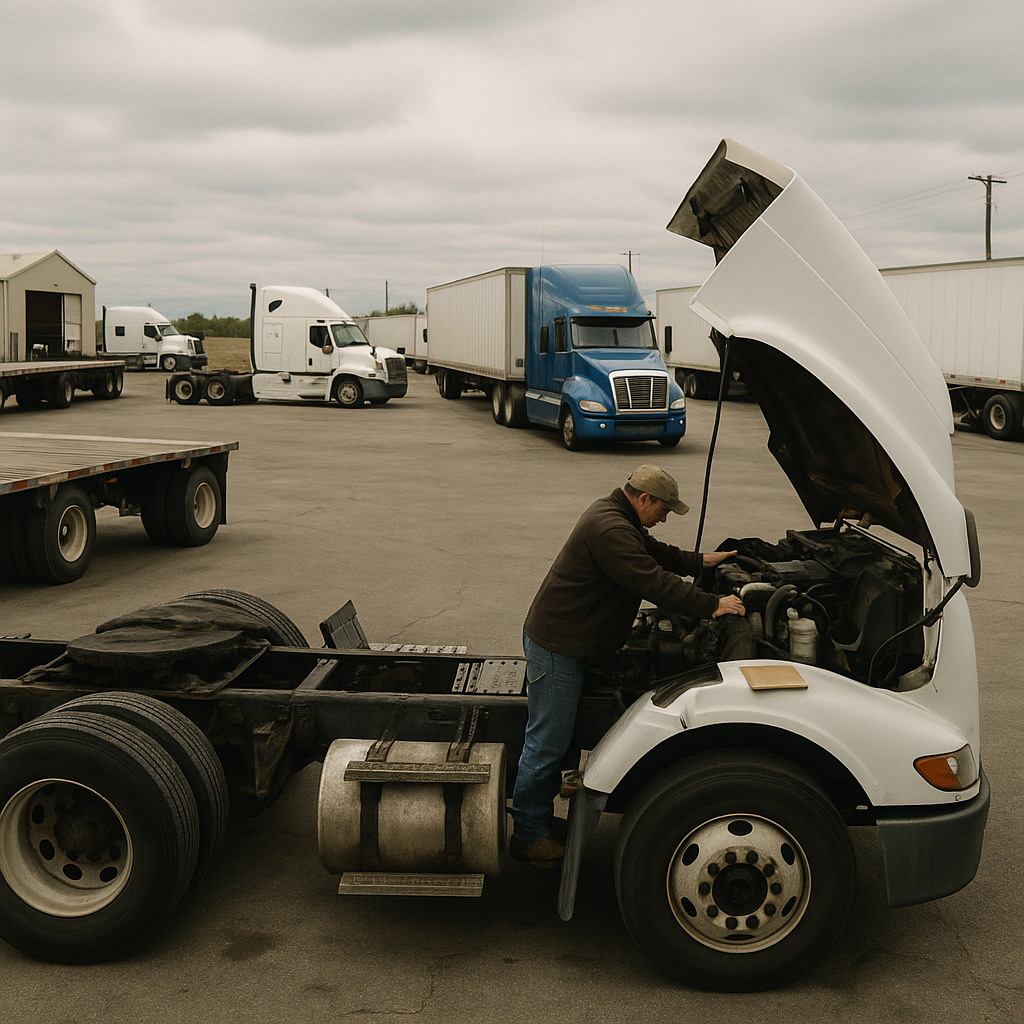

A commercial truck weather damage claim usually turns on one question: did the right policy apply when the storm hit? Hail, wind, flood, and debris damage often fall under physical damage coverage, but cargo, trailers, and liability each follow different rules. This guide shows what may be covered, what to document, and how to avoid hurting your claim.
What Commercial Truck Weather Damage Claims Usually Cover#
A commercial truck weather damage claim usually involves physical damage coverage, not auto liability. Physical damage coverage pays for damage to the insured truck from covered losses like hail, wind, falling objects, or flood, subject to policy terms, deductibles, and exclusions. The exact result depends on what was damaged and which coverage was actually on the policy.
For most owner-operators, the truck itself is the first thing to separate from everything else. A dented hood, broken windshield, roof damage, or flood-soaked cab may fall under physical damage. But that doesn’t automatically mean every storm loss gets paid in full, or paid at all.
A deductible is the amount you pay out of pocket before insurance contributes on a covered loss. If the repair bill barely clears the deductible, filing may still make sense, but you should know what the claim is likely to produce.
Hail and falling debris#
Hail damage often shows up as roof dents, hood damage, cracked glass, mirror damage, or damage to fairings and mounted equipment. Falling branches, signs, or other storm-thrown debris can be treated the same way if the policy covers that type of direct physical loss.
The problem is that weather damage doesn’t always stop at visible dents. If debris punctures the cab, sleeper, or mounted gear, the claim may involve multiple damaged parts and a closer adjuster review.
Wind, tornado, and storm-blown damage#
Wind losses can include torn fairings, damaged doors, broken lights, shattered glass, or body damage from objects blown into the truck. Tornado-related damage may be obvious, but insurers still want proof of when and where the event happened and what parts were affected.
If the truck was parked, hooked to a trailer, or under dispatch when the storm hit, that can affect which policy responds to each part of the loss.
Flooding and water intrusion#
Flood losses are where a lot of bad assumptions start. Water intrusion can mean soaked flooring, damaged electronics, contaminated fluids, engine damage, or long-term corrosion concerns. A truck that took on water may look repairable at first and turn into a larger claim later.
Be especially careful with water damage because insurers often look closely at whether the loss was sudden storm damage or something that looks more like seepage, neglected maintenance, or a pre-existing issue.
When liability does not apply#
Auto liability covers damage or injury you cause to others while operating the truck. Under 49 CFR Part 387 at eCFR, FMCSA financial responsibility rules deal with public liability requirements for regulated carriers, but those rules are not the same thing as coverage for storm damage to your own truck.
That distinction matters because many drivers know their FMCSA minimums and assume that means the truck itself is protected. It doesn’t. Storm damage to your truck usually depends on optional first-party coverage, not the liability coverage tied to your authority.
If you’re looking at storm damage and you’re not sure which policy should respond,
Step 1 – Check Which Policy Applies Before You File#
Before you file a commercial truck weather damage claim, identify exactly what was damaged: the tractor, trailer, cargo, or someone else’s property. Personal auto assumptions often fail here because trucking losses are split across different policy forms and operating situations. Filing under the wrong coverage can slow the claim or lead to a quick denial.
Commercial auto for a truck is not the same thing as a personal car policy with a business errand attached. A for-hire truck running under authority has different exposures, different policy language, and often multiple coverages stacked together.
Commercial auto vs. personal auto#
A common mistake is thinking, “Storm damage is storm damage.” In trucking, the truck may be covered one way, the trailer another, and the load another. If a driver has only liability and no physical damage, there may be no coverage for damage to the truck itself.
Commercial trucking also lives inside a regulatory framework that personal auto doesn’t. FMCSA, USDOT registration, and SAFER filings affect your operation, but they don’t replace the need to read the actual insurance policy that covers the unit.
Owner-operator and fleet differences#
An owner-operator may know exactly where the truck was and what happened when the storm rolled through. A small fleet has a different problem: multiple units, multiple drivers, and inconsistent documentation. The same hail event can produce a clean claim on one truck and a messy one on another.
Truck, trailer, and cargo coverage boundaries#
Motor truck cargo covers freight you haul for others, subject to its own terms and exclusions. Trailer interchange applies when you use a non-owned trailer under a written interchange agreement. Non-owned trailer physical damage is different: it addresses damage to a trailer you don’t own, typically when there is no signed interchange agreement.
Bobtail, often used loosely by drivers, usually refers to non-trucking or non-business use scenarios and does not cover paid hauling. So whether the truck was bobtailing, loaded, parked, or pulling a borrowed trailer can change the answer in a hurry.
Step 2 – Document the Storm Damage Immediately#
The fastest way to strengthen a commercial truck weather damage claim is to document everything before cleanup or repairs change the scene. Take timestamped photos and video, note the location, and preserve proof of what the truck looked like right after the storm. The goal is to show direct storm damage, not just a repair bill later.
The Texas Department of Insurance advises policyholders after storms to document damage, protect property from further loss, and keep records tied to the claim. That consumer guidance lines up with what helps trucking claims too.
Photos and video from every angle#
Walk the truck and record the whole exterior first. Then get close-ups of dents, broken glass, torn fairings, roof damage, mirror damage, light damage, and any impact points from debris.
Get wide shots showing where the truck was parked or operating when the storm hit. If it was at a truck stop, shipper, receiver, yard, or roadside shoulder, capture signs, lane markings, or other location clues.
Waterline, debris, and roof damage#
For flood or water intrusion, document the waterline immediately if it’s visible. Photograph mud, debris, wet carpeting, soaked insulation, electrical issues, warning lights, and any contaminated compartments.
Roof damage matters more than many drivers think. Hail strikes, punctures, and seal damage can let water in later, which makes early photos critical.
Receipts, logs, and repair estimates#
Keep towing invoices, roadside service records, hotel receipts tied to the breakdown, cleanup costs, and emergency mitigation expenses. Save dispatch records, ELD location history if available, and any maintenance notes showing the truck’s condition before the storm.
If you can get an estimate quickly, good. But don’t wait for a perfect estimate before reporting obvious storm damage.
Step 3 – File the Claim Fast and Accurately#
File the claim as soon as it’s safe to do so and follow the notice requirements in your policy. There isn’t one universal deadline for every commercial truck weather damage claim, but slow notice can complicate recovery even when coverage exists. Prompt reporting gives the insurer a cleaner shot at inspecting storm-related damage before conditions change.
The Texas Department of Insurance also tells consumers after severe storms to contact the insurer promptly and keep claim-related records. That’s practical advice for trucking because delay is one of the easiest ways a straightforward loss becomes a fight.
How long you typically have to report#
The safest rule is simple: report the loss as soon as safely possible. Policies often require prompt notice, and waiting too long can raise questions about whether later damage came from the storm or from continued use, water intrusion, or delayed repairs.
If the truck is disabled, report first and sort estimates second. Don’t assume you need every detail nailed down before opening the claim.
What information the insurer will ask for#
Expect to provide the date, time, and location of the storm event, what happened, the likely weather cause, and what parts of the truck were affected. They’ll usually want photos, unit details, and whether a trailer or cargo was involved.
Be ready to explain whether the truck was loaded, empty, parked, under dispatch, or moving. That operating status can help determine which policy pieces are relevant.

How to avoid gaps in the loss report#
Keep your first report factual and complete. If you know hail hit the truck at a shipper yard and damaged the hood, windshield, roof, and passenger-side fairing, say that plainly.
Don’t leave out the trailer or cargo if they were also affected. And don’t wait for a “better” estimate when the storm connection is already obvious.
Step 4 – Work With the Adjuster Without Hurting Your Claim#
The best way to deal with an adjuster is to stick to observable facts, keep your timeline straight, and avoid guessing. An adjuster is the person assigned to investigate the loss and evaluate what the policy may pay. Most claim problems get worse when the insured speculates, minimizes damage, or talks past what can actually be documented.
Start with what you saw, where the truck was, what weather hit it, and what damage you found after the event. Keep that statement plain and consistent.
What to say about what happened#
Good claim language sounds boring on purpose. “The truck was parked at the receiver. A severe storm came through. After the storm, I found hail dents on the hood and roof, a cracked windshield, and water inside the cab.”
That works better than theories. You don’t need to explain wind speed, flood depth you didn’t measure, or whether a seal “must have already been weak.”
What not to say about water damage#
Water damage claims get touchy when drivers start guessing. Don’t say things like “it’s probably nothing,” “that leak may have been there before,” or “I’m not sure if the truck already had some issue there.”
Those statements can blur sudden storm damage with wear, neglect, or pre-existing conditions. If you don’t know something, say you don’t know yet and that you’re documenting what you observed.
How to answer settlement questions#
If the first number seems light, don’t argue from frustration. Ask for a written explanation of what was included, what was excluded, and whether any line items were reduced because of deductible, prior damage, or policy language.
Keep communication in writing when you can. If the loss is serious and the claim conversation is getting muddy,
Common Reasons Weather Damage Claims Get Denied or Underpaid#
Most denied or underpaid weather claims come down to four issues: wrong policy, weak proof, timing problems, or damage that doesn’t look clearly storm-related. A deductible or exclusion can also shrink the payment enough that the result feels like a denial even when the carrier accepts part of the claim. That’s why the paperwork matters as much as the damage itself.
A lot of owner-operators assume the weather event alone should make the claim easy. In practice, the insurer still asks whether the policy covered that unit, that peril, and that type of loss on that date.
Wrong policy or missing coverage#
No physical damage coverage means no first-party payment for damage to your own truck. No cargo coverage means load damage may not be covered under the truck’s physical damage section. No trailer coverage means a damaged non-owned trailer may fall into a gap depending on the setup.
An endorsement is a policy change that adds, restricts, or clarifies coverage. Endorsements can matter a lot in equipment-heavy claims.
Late notice or weak documentation#
If the claim comes in late and the truck has already been driven, partially cleaned, or repaired, storm evidence gets harder to sort out. That gives the adjuster more room to question causation and scope.
Wear-and-tear versus storm damage#
Insurers often separate direct storm damage from rust, old leaks, corrosion, prior dents, seal failure, or maintenance issues. That’s especially common with water intrusion claims, where a pre-existing weakness may become part of the debate.
Exclusions and deductibles#
A policy exclusion is a listed situation or type of loss the policy does not cover. Even where coverage applies, a high deductible can change whether filing makes financial sense for a smaller hail or debris claim.
If the loss is substantial, review the full claim packet before repairs move too far ahead.
How to Improve the Odds of a Fair Weather Damage Payment#
A fair payment usually comes from clean evidence, a detailed repair scope, and a calm response to mistakes in the estimate. You don’t need to make dramatic demands to improve a commercial truck weather damage claim. You need to show exactly what storm damage occurred and where the estimate missed it.
The NAIC offers plain-language consumer guidance on claim handling and dispute basics, and that framework is useful here: understand your policy, review the insurer’s explanation, and challenge errors with evidence.
Use clean documentation#
Organize photos by area of damage. Match them to a simple written timeline and keep receipts, towing records, and inspection notes together.
Request a detailed estimate review#
Ask for line-by-line clarity if the estimate seems short. If a panel, roof section, wiring issue, or water-damaged interior component was left out, point to the photos and repair notes.
Dispute errors with evidence#
If you disagree, send a written list of disputed items with supporting pictures or a second repair opinion. Keep the focus on documented storm damage, not on emotion or assumptions about what the insurer “should know.”
Weather Damage Coverage Questions by Truck Setup#
The same storm can trigger different claim answers depending on your truck setup, trailer situation, and whether you were hauling, parked, or bobtailing. Owner-operators usually feel this first because one policy gap can hit the truck, trailer, and load in different ways. Small fleets feel it when documentation differs from unit to unit.
An owner-operator with physical damage on the tractor may still have a separate question about cargo, a non-owned trailer, or personal items in the cab. A small fleet may have one truck parked in a secure yard, another under load, and a third moving through the storm. Those are not identical claims just because the weather system was the same.
Parked trucks often produce cleaner fact patterns. Loaded trucks can raise cargo issues fast. Bobtail scenarios can confuse drivers who assume any “bobtail” policy covers any off-load event, but non-trucking style coverage is narrow and not a replacement for proper physical damage.
The key is matching the policy structure to how the truck actually operates, not how you think it operates on paper.
When to Review Coverage Before the Next Storm#
Review weather-related coverage before storm season, not after a loss. Check whether you carry physical damage, how the deductible works, what the limit is on the truck, and whether trailers or cargo create separate gaps. Small details in endorsements can change the claim outcome.
Ask direct questions at renewal. Does the current policy match how the truck is used? Is a non-owned trailer exposure handled correctly? Are deductibles high enough that smaller weather claims become your problem anyway?
LogRock specializes in trucking insurance for owner-operators and small fleets. If you’re not sure what coverage fits your operation, LogRock can help you scope it.
FAQ#
How long do you have to file a claim after weather damage?
Report weather damage as soon as safely possible and follow the notice requirements in your policy. There isn’t one universal filing deadline that fits every commercial truck policy, so waiting can create problems even when the loss would otherwise be covered. Delay makes it harder to prove what came from the storm versus what happened later from continued driving, cleanup, or water intrusion. Open the claim once the damage is clear, then keep adding documents, photos, and estimates as you get them.
Does commercial insurance cover wind damage?
Commercial insurance may cover wind damage if the truck has the right physical damage coverage and the loss is not excluded by the policy. Wind-related claims can include broken glass, body damage, torn fairings, or impact from storm-blown debris. But auto liability usually does not pay for damage to your own truck. Trailer damage and cargo damage may also follow separate coverage forms, so don’t assume one claim section automatically handles the whole event. Always check what unit was insured and which coverage applied when the storm hit.
What is one of the most common reasons for a claim being rejected by an insurance company?
One of the most common reasons is that the policy in force did not actually cover that kind of loss. In trucking, that often means the driver had liability but no physical damage, or had coverage for the tractor but not the trailer or cargo involved. Weak documentation and late notice are also common problems. On top of that, insurers may question whether the condition was really storm damage or something older like rust, seepage, prior dents, or maintenance-related wear. Clean proof and quick reporting matter.
What not to say to insurance adjuster water damage?
Don’t speculate, minimize the damage, or say things that make the loss sound pre-existing. Statements like “it was probably leaking already,” “I’m sure it’s fine,” or “I don’t really know what happened” can muddy a water damage claim. A better approach is to stick to observable facts: where the truck was, what storm conditions occurred, when you found the water intrusion, and what damage you saw. If you don’t know the cause of a specific component failure yet, say that clearly instead of guessing. Keep your notes and photos organized.
Does auto liability cover storm damage to my truck?
No, auto liability generally covers damage or injury you cause to other people, not weather damage to your own truck. For regulated trucking operations, FMCSA financial responsibility rules under 49 CFR Part 387 are about public liability, not first-party repair coverage for hail, wind, or flood losses to your equipment. That’s why many owner-operators are surprised after a storm: they met operating requirements, but they didn’t carry the physical damage coverage needed for the truck itself. Cargo and trailer losses may also require their own separate protection.





