
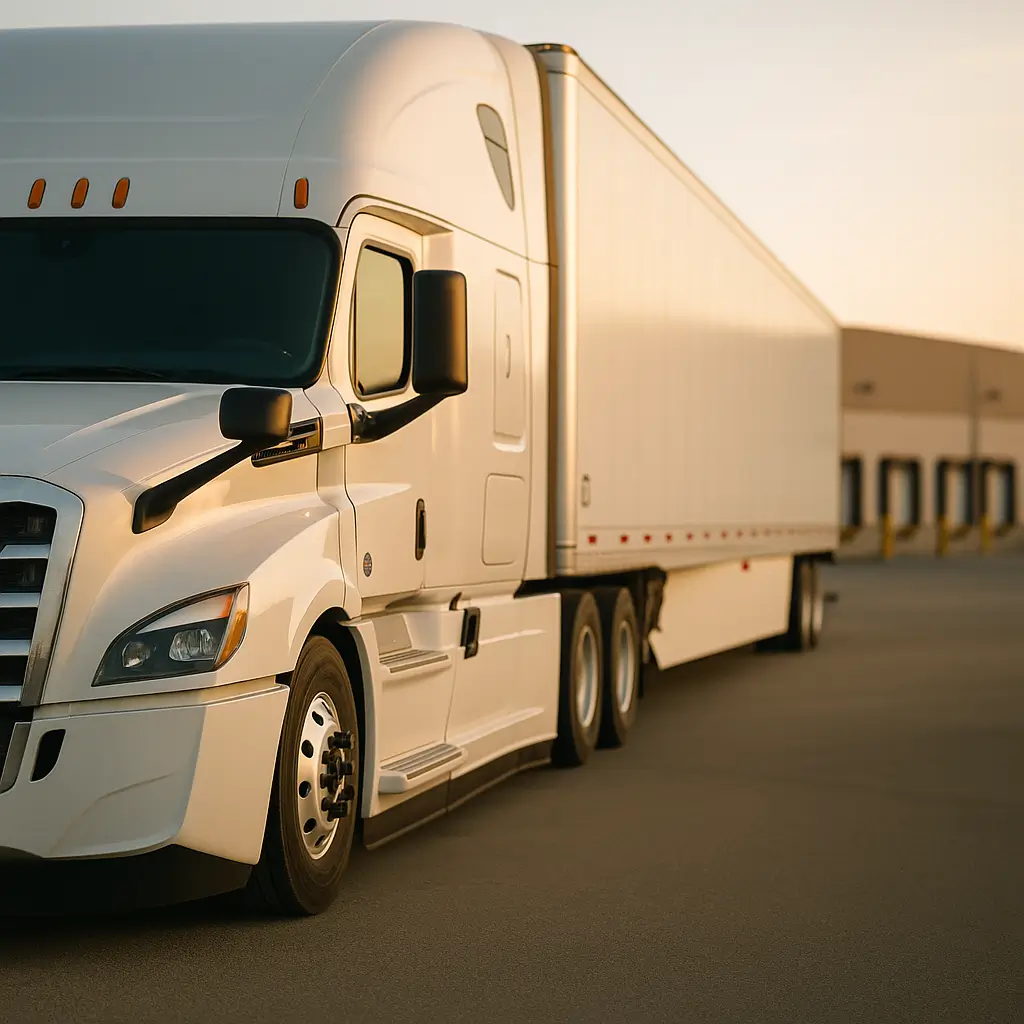
Find the cheapest commercial truck insurance in New Jersey with 2026 cost benchmarks, the common $1.5M expectation, and proven ways to lower premiums. Get a quote.
The cheapest commercial truck insurance in New Jersey is the lowest-priced policy that still matches your real operation (radius, lanes, cargo, drivers, garaging ZIP) and the limits brokers actually require—often including a common $1.5M liability expectation in NJ contracts. If you shop a “cheap” quote that’s missing the right limit, filing, or endorsement, it can turn expensive fast through re-rates, mid-term changes, or COI rejection.
If you want a reality check on what NJ owner-operators are seeing, start with NJ commercial truck insurance cost benchmarks, then quote apples-to-apples with the same limits, deductibles, radius, and commodity.
Key Takeaways:
- “Cheapest” = cheapest policy you can actually use (right limits/COI requirements, correct radius/commodity, correct details).
- In NJ, many accounts effectively shop around a $1.5M liability expectation, which can reshuffle who’s “cheapest.”
- Your biggest pricing levers are garaging ZIP, NYC/metro lane exposure, new venture status, commodity class, and radius.
- To lower cost without killing your authority: document safety, keep continuous coverage, tighten radius/commodity, and avoid mismatched quotes.
Table of Contents
Reading time: 9 minutes
- How to Get the Cheapest NJ Commercial Truck Insurance
- How Much Does Commercial Truck Insurance Cost in New Jersey?
- NJ Truck Insurance Requirements
- Which Companies Offer the Cheapest Commercial Truck Insurance in New Jersey?
- Realistic NJ Pricing Examples
- How Can I Lower My Commercial Truck Insurance Costs in NJ?
- NJ Filings, Registration, and Compliance
- Common Mistakes That Make NJ Trucking Insurance More Expensive
- Frequently Asked Questions
- Conclusion
How to Get the Cheapest NJ Commercial Truck Insurance (Fast, Without Getting Burned)
To get the cheapest NJ commercial truck insurance without a re-rate, you must quote the same liability limits, radius, commodity, and deductibles across carriers and match what brokers will accept on the COI.
New Jersey is a tough state to “cheap out” in because a policy can be low-priced on paper but still fail in the real world: wrong limit for a broker, wrong radius for your lane, wrong commodity class, or missing endorsements.
1) The cheapest policy is the one that fits your operation
Definition: “Cheapest” means the lowest premium for coverage that accurately reflects your truck, drivers, garaging ZIP, commodity, and where you actually run.
A quote can look cheap because it’s missing something you’ll need tomorrow (higher liability limit, cargo coverage, additional insured wording, waiver of subrogation, etc.). Then you pay endorsement fees, lose loads, or get forced into a mid-term rewrite — common when additional insured wording or limits don’t match what the broker actually requires.
2) The 3-step shortcut to real “cheapest” quotes
- Step 1: Confirm required limits. Don’t compare a $1M quote to a $1.5M quote and call one “cheaper.”
- Step 2: Gather underwriting inputs. Garaging address/ZIP, radius and top lanes (especially NJ ↔ NYC), commodity, driver MVRs and CDL experience, prior dec page, and loss runs.
- Step 3: Compare apples-to-apples. Same liability limit, same physical damage deductible, same cargo limit/deductible, same driver schedule/usage.
How Much Does Commercial Truck Insurance Cost in New Jersey?
Commercial truck insurance in New Jersey can vary widely because pricing is driven by liability limits, garaging ZIP, lane exposure (including NYC/metro), commodity class, and whether the carrier is a new venture.
A clean, experienced local NJ owner-operator is a very different risk than a new venture running Elizabeth-to-Bronx lanes several nights a week.
Baseline cost ranges (benchmarks, not promises)
Use these as budget ranges while you quote-shop, then validate against NJ benchmarks.
- New venture (first year authority) + higher-risk lanes/commodities: commonly high (often the highest quotes you’ll see).
- Experienced owner-operator (clean MVR, continuous coverage): typically mid-range.
- Small fleets (2–10 units): per-truck pricing can improve with structure and safety controls, or worsen if claims stack up.
For NJ-specific numbers and how limits impact price, reference: NJ commercial truck insurance cost benchmarks.
For a quick visual breakdown of what NJ truckers are paying in 2026, watch this:
Why trucking insurance is so expensive in New Jersey
Underwriters price New Jersey heavily on claim frequency and severity, especially in dense corridors and metro lanes.
- Traffic density + severity: more accidents and larger bodily injury/property damage claims.
- Theft/cargo exposure: higher in some territories, yards, and delivery patterns.
- NJ ↔ NYC/metro lane exposure: often rated differently than purely South Jersey regional work.
- Higher limits: the higher the liability, the fewer markets want the risk, and price can jump.
NJ Truck Insurance Requirements: Minimum Liability vs the Common “$1.5M” Expectation
Commercial truck insurance shopping in New Jersey involves two separate thresholds: the legal minimums (state and/or federal depending on the operation) and the market minimums set by brokers, terminals, and shippers.
If you buy only the bare minimum that applies to your authority but your broker network requires more, the policy can be “cheap” and still unusable.
1) What is the minimum liability requirement for commercial trucks in NJ?
Plain-English answer: The minimum depends on whether you operate interstate or intrastate and what you haul, per FMCSA’s minimum financial responsibility requirements, but many NJ freight sources will require higher limits than the lowest legal threshold to tender loads.
Practical tip: Ask your top 3 brokers or contract customers what they require on the COI before you bind coverage, including any required endorsements or wording.
2) How the $1.5M expectation changes “cheapest” comparisons
In many NJ operations and contracts, you’ll hear “we need $1.5M limits,” and that expectation can change which carrier is cheapest because pricing and appetite shift at higher limits.
A carrier that’s competitive at lower limits may be uncompetitive (or unwilling) at higher limits, so your shopping list and outcomes change based on the limit you actually need.
Not sure whether you actually need $1.5M or can get by with less? This video breaks down how to think about your real limit needs:
Which Companies Offer the Cheapest Commercial Truck Insurance in New Jersey? (The Honest Answer)
No single insurer is always the cheapest for commercial truck insurance in New Jersey because carriers price by your individual risk profile, including new venture status, garaging territory, lanes, and commodity.
What works in NJ is shopping by situation and eliminating “false savings” caused by mismatched limits or misstated operations.
Cheapest-by-situation table (how to think like an underwriter)
| Operation type | Likely cheapest carrier type | Typical required limits | Key pricing drivers | What to watch out for |
|---|---|---|---|---|
| New venture (0–12 months) | Specialty / new venture markets | Often higher than federal mins | No loss history, no prior coverage, lanes | Big down payment, strict underwriting, fast cancellations |
| Experienced O/O (clean record) | Standard markets | Depends on brokers | Continuous coverage, MVR, commodity | Rate swings if radius/commodity is misstated |
| Local contractor/dump | Specialized commercial auto + trucking markets | Contract-driven | Jobsite exposure, seasonal mileage | Class code accuracy, driver schedule |
| Box truck / last mile | Commercial auto + light trucking markets | Broker-driven | Urban density, stops/day | Claims frequency; proper business use classification |
| Hotshot | Pickup + trailer markets | Contract-driven | Trailer value, cargo type | Cargo coverage gaps; physical damage deductibles |
What to check besides price (to avoid fake “cheap”)
- Claims handling and repair network: downtime can cost more than premium savings.
- Installment fees + finance charges: monthly pay can increase total cost.
- Exclusions and underwriting restrictions: radius, commodity, driver limitations.
- COI turnaround speed: brokers won’t wait if wording is wrong or slow.
Realistic NJ Pricing Examples (Truck Type, New Venture vs Experienced, North vs South Jersey)
New Jersey truck insurance pricing changes most when your lanes, garaging ZIP, commodity class, or “new venture” status changes, even if the truck stays the same.
These scenario-style examples are directional (low/medium/high impact) because exact dollars depend on underwriting and your submission quality.

NJ cost scenarios: what changes the price the most
| Scenario | What changed | Expected impact | Why it changes price | What to do |
|---|---|---|---|---|
| New authority starts running NJ ↔ NYC | Lane exposure increases | High | Higher frequency/severity environment | Tighten lanes if possible; document safety tech |
| Same truck, different commodity | Commodity class changes | Medium–High | Theft/damage/litigation history differs | Be precise and consistent in cargo description |
| Garaging moves South → North Jersey | Garaging ZIP changes | Medium–High | Loss history by territory | Improve yard security; secured parking proof helps |
| Higher physical damage deductible | Deductible increases | Low–Medium | You retain more risk | Pick a deductible you can cash-flow |
| Adds a second truck | Fleet size changes | Medium | More exposure; may unlock programs | Build driver files and safety controls early |
By truck type (what people actually shop)
- Semi truck insurance (tractor-trailer): price is driven heavily by liability limit, radius, and freight class—not just tractor value.
- Box truck insurance: urban delivery patterns (stops per day) often push claims frequency.
- Dump truck insurance (contractor): jobsite exposure and seasonal usage matter.
- Hotshot insurance: trailer value, cargo type, and radius are major levers.
North vs South Jersey: why garaging ZIP matters
Underwriters rate territory based on where the truck is garaged and where it runs, so North Jersey and metro exposure often price differently than South Jersey regional operations.
If your truck is “garaged” on paper somewhere else to chase a cheaper rate, you risk a re-rate, cancellation, or serious claim complications. Cheap now can turn expensive later. Supplemental resource: watch this before changing garaging details to save money on trucking insurance.
New venture premium penalty (and how to reduce it)
New venture trucking insurance is typically priced higher because there’s no established insurance history, no loss runs, and higher uncertainty for underwriters.
- Keep continuous coverage: lapses get punished and can reset you to “new venture” pricing.
- Bring experience proof: CDL tenure, prior employment, and verifiable driving history help.
- Use safety tech and keep documentation: ELD, dashcam, GPS, maintenance records.
- Write a simple safety program: even a 1-truck operation benefits from written procedures.
How Can I Lower My Commercial Truck Insurance Costs in NJ?
You can lower NJ commercial truck insurance costs by tightening radius and lanes, maintaining continuous coverage, improving driver quality, raising deductibles only within cash-flow limits, and proving safety controls with documentation.
If cash flow is tight, focus on savings that don’t create coverage gaps or COI problems.
Highest-impact ways to pay less (without losing loads)
- Shop the correct limit once: binding cheap and endorsing upward later often costs more and delays COIs.
- Tighten radius (if your model allows): local/regional can price differently than OTR or NYC-heavy work.
- Clean up driver risk: MVRs, violations, driver age, and experience matter a lot.
- Raise deductibles strategically: only if you have a cash reserve for claims.
- Secure parking and prove it: fenced yard, cameras, trackers, indoor/secured parking documentation.
- Stay consistent on commodity: misclassification is a common re-rate trigger.
- Pay-in-full when possible: avoids installment fees and finance charges.
- Ask for discounts with proof: dashcam policy, ELD compliance, maintenance logs, written safety procedures.
Operator reality check: the cheapest policy long-term is the one you can keep in force. A cancellation or lapse can raise your next quote more than the “savings” you got today.
NJ Filings, Registration, and Compliance: What You Need for a Cheap Quote to Stick
Cheap truck insurance quotes often fall apart after binding when filings, entity details, garaging, radius, or driver information don’t match the carrier’s underwriting and compliance requirements.
This is where “cheap on paper” turns into endorsements, rework, COI delays, or a mid-term rewrite.
Common items that affect price and timing
- Proof of insurance (COI): must match broker wording and required certificate holders.
- Interstate vs intrastate compliance: requirements depend on your actual operation, as defined through FMCSA’s registration and operating authority process.
- Registration details: keep registration and titling details current with the New Jersey Motor Vehicle Commission commercial vehicle guidance before binding.
- Submission accuracy: correct legal entity/DBA, garaging, VINs, driver list, and operations.
Fast checklist (owner-operator / small fleet)
- Your limits match what your freight sources require.
- Your radius and commodity match what you actually do.
- Your driver file is complete (even if it’s just you).
- You can produce paperwork quickly when a broker asks (COI delays cost loads).
Common Mistakes That Make NJ Trucking Insurance More Expensive
The most expensive NJ trucking insurance mistakes are mismatched limits, coverage lapses, and misstated operations (garaging, radius, or lane exposure) that trigger re-rates, cancellations, or COI rejection.
- Comparing mismatched limits: a $1M quote isn’t cheaper than a $1.5M quote—it’s a different product.
- Letting coverage lapse: you can get treated like a higher-risk new venture again.
- Incorrect garaging or radius: best case is a re-rate; worst case is cancellation or claim disputes.
- Buying bare-minimum coverage brokers won’t accept: then paying expensive mid-term changes.
- Hiding NYC/metro exposure: underwriting usually finds it through lanes, filings, and loss patterns.
Why Logrock’s Approach Wins: Cheap That Stays Cheap
Affordable trucking insurance is coverage that gets your COI accepted, matches your real operation, and stays in force without re-rates caused by bad assumptions.
Owner-operators don’t need “cheap” at any cost; you need insurance that protects your authority and your cash flow when something goes sideways at 2 a.m.
- COI-ready details: correct limits and common broker requirements upfront.
- Operational accuracy: lanes, garaging, radius, and commodity aligned to reality.
- Less premium waste: fewer mid-term fixes and fewer surprises at renewal.
Frequently Asked Questions
Commercial truck insurance cost in New Jersey varies primarily by liability limit, garaging ZIP, lane exposure (especially NJ ↔ NYC/metro), commodity class, driver history, and new venture status. NJ premiums are often higher when you operate in dense corridors because claim frequency and severity tend to be priced into the territory. For budgeting, use verified local references and then quote the same limits and deductibles across carriers so you’re comparing apples-to-apples. For NJ-specific benchmarks and how limits affect pricing, see LogRock’s NJ commercial truck insurance cost benchmarks.
The minimum liability requirement for a commercial truck in New Jersey depends on whether the operation is interstate or intrastate and what you haul, but the practical minimum is often set by the market (brokers, terminals, shippers) rather than the lowest legal threshold. FMCSA financial responsibility rules set federal minimums for many interstate motor carriers, while NJ-specific registration details can also affect what you need before a policy is useful. The fastest way to avoid buying an unusable cheap policy is to confirm COI requirements with your top freight sources before binding.
There is no single rule that makes $1.5M the answer for every truck, but many NJ brokers, freight contracts, and terminals set $1.5M as their working requirement on the COI, especially for NYC and metro lanes. Before assuming a lower limit will work, ask your top freight sources what they require in writing. If $1.5M is the floor for the loads you want, shop at that limit from the start rather than binding lower and upgrading later.
No single company is always the cheapest for commercial truck insurance in New Jersey because carriers price based on your specific risk profile, including garaging territory, lanes, radius, commodity, drivers, and whether you’re a new venture. A carrier that is cheapest for a clean, experienced regional owner-operator may be expensive or unavailable for a new authority running NYC lanes. The best approach is to shop multiple markets using identical inputs: same liability limit, same deductibles, same cargo, and the same driver schedule.
No. Commercial auto insurance generally covers vehicles used for business purposes, such as a van or pickup for a contractor, while commercial truck or motor carrier insurance applies to vehicles operating under a USDOT/MC number for hire or as part of a trucking operation. Trucking policies typically require different limits, filings, cargo options, and COI wording. If you are not sure which category your operation falls into, that mismatch is a common reason a cheap auto quote will not satisfy a broker.
In most cases, yes. Auto liability covers injury or damage you cause to others, while motor truck cargo insurance covers the freight you are hauling. Brokers and shippers often require a specific cargo limit on your COI separate from your liability limit. If your cheap quote does not include cargo coverage, or includes a lower limit than your freight sources require, you may end up paying for it separately anyway, so include cargo in your apples-to-apples comparison.
You can lower NJ commercial truck insurance costs by keeping continuous coverage with no lapses, tightening radius and lanes when possible, improving driver quality with clean MVRs and documented experience, and proving safety controls like ELDs, dashcams, trackers, and maintenance logs. Garaging and parking security also matter in NJ territories, so documented secured parking can help. You can also reduce premium by raising deductibles, but only if you can cash-flow the deductible after a loss.
Yes, and this is one of the fastest ways a cheap quote turns expensive. Underwriters rate territory based on garaging ZIP, and if the truck is actually parked somewhere else, you risk a re-rate at renewal, a denied claim, or cancellation if the carrier discovers the mismatch. If your garaging situation changes, update the policy right away instead of waiting for renewal.
It depends more on structure than headcount. If you add a second truck with a documented driver file, maintenance records, and a basic safety program, per-truck pricing can sometimes improve because you start to look like a managed small fleet rather than a single high-variance unit. Without that structure, a second truck mostly adds exposure, and pricing can move against you. Build the paperwork before you add the unit, not after.
Commercial truck insurance is expensive in New Jersey mainly because underwriters price higher claim frequency and severity in dense traffic corridors, plus added theft and cargo exposure in certain territories and delivery patterns. Regular NJ ↔ NYC/metro lane exposure can also be rated more aggressively than purely regional South Jersey operations. On top of that, many NJ contracts and broker networks expect higher liability limits, often discussed as $1.5M, which reduces carrier appetite and can raise pricing.
Conclusion: Get the Cheapest NJ Quote You Can Actually Run
The cheapest commercial truck insurance in New Jersey is the policy that matches your limits, lanes, cargo, and compliance—and stays in force without surprises. If you do one thing today, quote apples-to-apples and assume NJ shopping is often built around a $1.5M expectation in many real-world contracts.
Key Takeaways:
- Don’t compare mismatched limits: $1M vs $1.5M isn’t a price difference—it’s a different product.
- NJ pricing is heavily driven by garaging ZIP + NYC/metro lanes.
- New ventures pay more: reduce it with documentation, safety controls, and continuous coverage.
For a reality check on local pricing, review NJ commercial truck insurance cost benchmarks, then shop quotes with consistent inputs so “cheap” stays cheap.
If you’re trying to find the cheapest commercial truck insurance in New Jersey without ending up with a policy that fails your broker’s COI requirements, LogRock can help you compare quotes at the limits you actually need — including the common $1.5M expectation — based on your real lanes, garaging ZIP, and commodity.
Speak with LogRock and request a quote




