
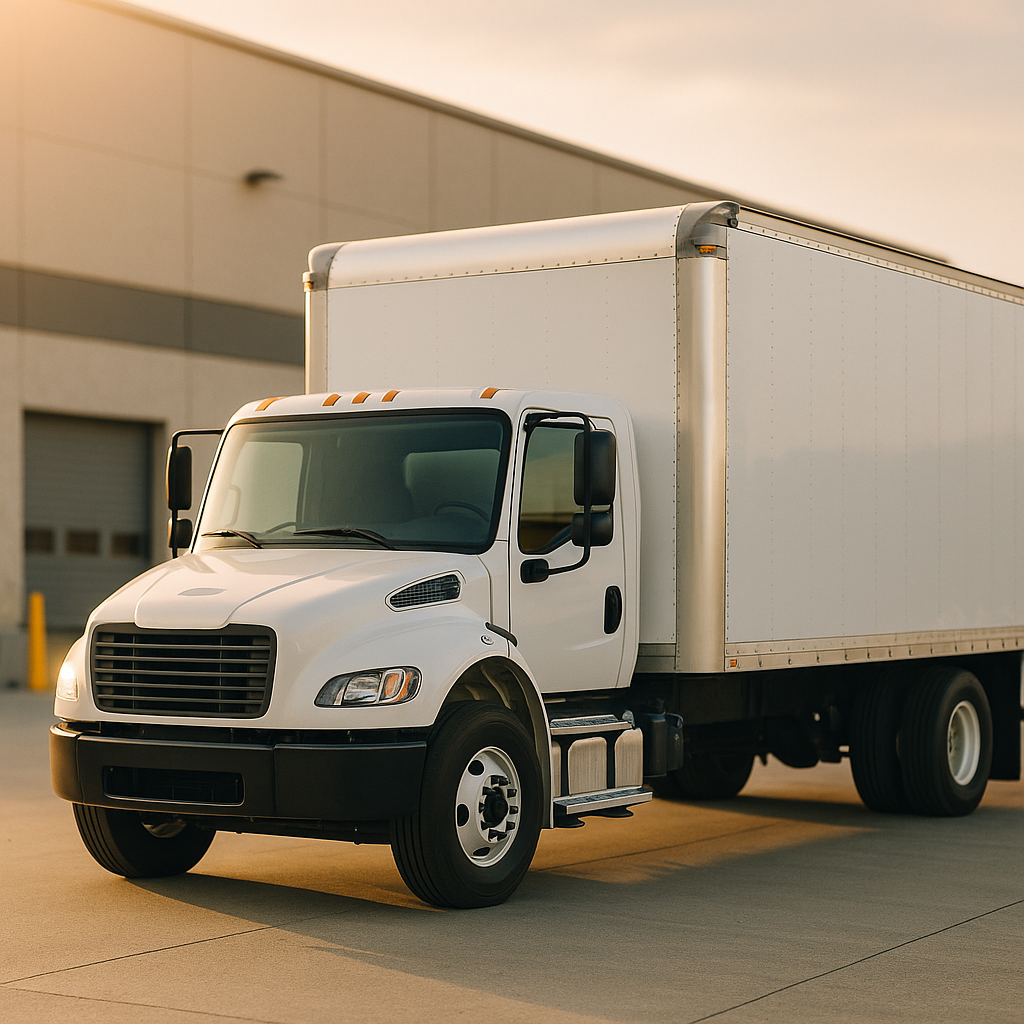
2026 26 ft box truck insurance cost often runs $250–$2,600+/mo. See new-venture vs established pricing, coverages, down payments & savings.

26 ft box truck insurance cost in 2026 typically ranges from $250–$700 per month for established operators and $1,200–$2,600+ per month for many new ventures, depending on ZIP code, cargo, limits, and driving history. That spread is normal in commercial auto because underwriting is pricing exposure (miles, territory, claim severity) and uncertainty (new venture, weak prior insurance, violations).
If you want a hub-level explanation of the coverage “package” most owner-operators end up buying, start here: box truck insurance for owner-operators.
Table of Contents
Reading time: 8 minutes
- Introduction: The premium is a “fixed cost” that can break your month
- Key takeaways
- Average 26‑ft box truck insurance cost per month (2026): what you should budget
- What coverages are included in 26‑ft box truck insurance?
- What affects insurance rates for a 26‑ft box truck? (the real pricing triggers)
- How to lower 26‑ft box truck insurance cost (and avoid nasty surprises at bind)
- Frequently Asked Questions
- Conclusion: Price your 26‑ft box truck correctly (and stop bleeding premium)
Introduction: The premium is a “fixed cost” that can break your month
In 2026, a 26‑ft box truck policy can require thousands upfront (down payment + fees) even when the “monthly” number looks manageable on paper. That mismatch is why so many owner-operators feel like insurance is random—because cash flow gets hit at bind, not on a spreadsheet.
Most people aren’t researching pricing out of curiosity. You’re trying to protect cash flow when fuel spikes, detention doesn’t get paid, or a repair lands at the wrong time.
This guide gives realistic ranges, breaks down what “full coverage” usually means in trucking, and shows the levers that can lower premium without creating dangerous gaps.
Quick answer (snippet-friendly): 26‑ft box truck insurance cost per month
| Operator / Risk Tier | Typical Monthly Range | Typical Annual Range |
|---|---|---|
| Established (clean history, stable ops) | $250–$700 | $3,000–$8,400 |
| New venture (0–12 months) | $1,200–$2,600+ | $14,400–$31,200+ |
| High-risk / specialty (dense metro, high-value cargo, losses) | $800–$2,500+ | $9,600–$30,000+ |
These are typical market ranges compiled from industry pricing summaries—not a guarantee—because limits, filings, MVR, cargo, and territory can push quotes outside the band (see benchmarks from Insurify and FreightWaves).
Key takeaways
Budgeting for a 26‑ft box truck often means planning for roughly $3,000–$31,200+ per year in insurance, depending on whether you’re established, a new venture, or high-risk. Use these points as your “quote sanity check” when you’re comparing options.
- Most 26‑ft box trucks price like serious commercial auto exposure: territory, new venture status, and cargo create big spreads.
- “Full coverage” is a package, not a magic phrase: it usually means liability + physical damage, and often cargo and/or general liability based on contracts.
- Your first payment is often higher than “one month”: down payments, billing terms, and filings can raise the amount due at bind.
- Fast wins exist: tighten radius, improve garaging, raise deductibles strategically, add telematics/dashcam, and shop apples-to-apples.
Average 26‑ft box truck insurance cost per month (2026): what you should budget
A typical 26‑ft box truck insurance budget in 2026 falls between $250 and $2,600+ per month because underwriting prices vehicle value, miles, territory, loss history, and coverage limits (see Insurify; FreightWaves). A 26-footer often costs more than smaller straight trucks because claim severity tends to be higher and the equipment is usually worth more.
Liability-only vs “full coverage” pricing (a real budgeting view)
| Package style | What it usually includes | Typical monthly range (26‑ft) |
|---|---|---|
| Liability-focused | Primary liability (sometimes + cargo) | $250–$900 |
| Full package (common for financed trucks / strict contracts) | Liability + physical damage (+ cargo; sometimes GL) | $800–$2,600+ |
If you want a second pricing cross-check by equipment size and coverage mix, Logrock’s breakdown on box truck insurance price can help you benchmark.
Cash-flow tip: When someone says “$1,500/month,” ask (1) What’s the down payment? and (2) How many installments? A policy can be “$1,500/month” and still require $3,000+ to start depending on deposit requirements and fees.
What coverages are included in 26‑ft box truck insurance?
A 26‑ft box truck insurance policy is usually built on commercial auto (primary liability + physical damage) with add-ons like cargo or general liability when your contracts require them. For a plain-English breakdown of what liability vs physical damage actually covers, see commercial auto insurance basics.
Primary liability (required for most commercial operations)
Primary liability pays for bodily injury and property damage you cause to others (cars, other trucks, buildings, and so on). This is the backbone coverage for for-hire and business-use operations, and shippers/brokers often require limits higher than bare minimums.
Physical damage (comprehensive + collision)
Physical damage covers your truck for collision, theft, vandalism, weather losses, animal strikes, and related damage depending on policy terms. If your truck is financed or leased, physical damage is commonly required by the lienholder, and your deductible is one of the biggest pricing levers you control.
Motor truck cargo (for-hire freight protection)
Motor truck cargo covers the customer’s freight while it’s in your care, custody, and control, subject to exclusions, limits, and handling requirements. Cargo limits and cargo type (general freight vs high-theft items vs household goods) can move your premium fast.
General liability + common add-ons (as needed)
General liability (GL) typically covers off-truck liability (for example, certain premises or operations exposures), while add-ons may include hired/non-owned auto, rental reimbursement, towing, and other endorsements. Whether you need GL often comes down to customer contracts and how your work is structured (dock work, helpers, loading/unloading responsibilities, and similar risks).
What affects insurance rates for a 26‑ft box truck? (the real pricing triggers)
Commercial truck insurance rates are primarily driven by territory, experience, operation details, claims history, and coverage limits, which is why two “identical” 26-footers can price wildly differently. Insurance is also a big recurring cost in trucking’s operating cost structure, which is why dialing it in matters for survival (see ATRI cost context: ATRI operational costs reports).
For a deeper rating breakdown (and how underwriters think), use this companion guide: what affects the cost of truck insurance.
1) Territory: state, city, and your garaging ZIP
Your rating territory is anchored by where the truck is garaged (ZIP code) and where it actually runs, and dense metros tend to price higher because claim frequency, theft, repair costs, and litigation severity are higher. Tell your agent where the truck is parked overnight (secured yard vs street parking) because underwriters care.

2) New venture vs established operator
New venture commonly means 0–12 months in business (or 0–12 months with authority depending on the insurer), and new ventures often see higher premiums and tougher billing terms due to limited loss history. If you’re starting out and your pricing feels brutal, read new venture trucking insurance explained for what typically improves your tier over time.
3) Driver and MVR (the stuff underwriters don’t negotiate)
MVR violations, at-fault accidents, limited commercial experience, and prior insurance lapses can push you into a higher tier quickly. If you add drivers, one rough MVR can affect the whole account.
4) Operation: radius, mileage, and “what you actually do”
Local vs regional lanes, mileage, overnight parking patterns, and loading/unloading exposure all change how underwriters view risk. “Local” has to be priced and documented as local—because weekend multi-state runs can trigger re-rating or underwriting changes.
5) Cargo type, value, and claim history
Cargo drives both severity and theft risk, and certain cargo categories (high-theft electronics, time-sensitive goods, household moves) can raise rates or tighten terms. One cargo claim can follow you for years.
6) Limits, deductibles, and whether you’re building a smart package
Liability limits, physical damage deductibles, cargo limits, endorsements, and your payment plan determine whether “affordable” is actually sustainable. The goal isn’t bare-minimum coverage; it’s right-sized coverage that keeps contracts intact and keeps you operating after a loss.
Quick context: A 26‑ft box truck isn’t a tractor-trailer, but the underwriting math is similar to semi truck insurance and hotshot insurance: territory, experience, radius, and losses create the biggest swings.
How to lower 26‑ft box truck insurance cost (and avoid nasty surprises at bind)
Lowering 26‑ft box truck insurance cost usually comes down to controlling billing terms (down payment and installments) and presenting a cleaner, more verifiable risk profile (radius, parking, drivers, and safety tools). If you want a bigger checklist of savings tactics, see how to save on truck insurance.
Down payment + monthly billing: why “$X/month” isn’t the whole story
Commercial policies often require a deposit up front and then installments, and new ventures/high-risk operations may get stricter terms. What matters for your bank account is the amount due to start, not the “equivalent monthly” number.
Illustrative example: A quote that works out to $1,500/month could still require $3,000+ to bind depending on deposit requirements, fees, and installment structure.
Filings and proof: when requirements change your cost (and timing)
FMCSA insurance filing requirements can apply when you’re operating for-hire interstate under specific authority, and missing the right filing can delay dispatch even if you “have insurance.” The safest move is to confirm your authority/operation and make sure your agent can issue the right proof and filings (FMCSA reference: FMCSA insurance filing requirements).
9 practical ways to pay less (without creating coverage gaps)
- Shop apples-to-apples: same limits, same deductibles, same radius, same drivers.
- Tighten your radius and document lanes: “local” priced as local.
- Raise deductibles strategically: only if you can actually pay them during a claim.
- Add dashcams/telematics and use the data: underwriters like proof of behavior change.
- Secure parking: fenced lot, cameras, lighting—especially in theft-heavy ZIPs.
- Avoid lapses: coverage gaps are expensive in commercial auto.
- Right-size cargo limits: don’t buy limits you don’t need, but don’t underinsure contracts.
- Clean up driver quality: experience and MVR drive tier placement.
- Ask about packaging discounts: sometimes bundling or multi-unit helps, sometimes it doesn’t.
Checklist: how to get an accurate quote fast
- Truck details: VIN, year/make/model, stated value (or purchase docs)
- Garaging: address/ZIP and where it’s parked overnight
- Operations: radius, states run, estimated annual mileage
- Cargo: description, typical max value, COI requirements
- Drivers: DOB, license info, experience, violations/accidents, loss runs/prior insurance
- Coverage targets: limits/deductibles, lienholder info if financed
This is how you get “accurate and affordable” instead of “cheap until underwriting reviews it.”
Frequently Asked Questions
In 2026, 26‑ft box truck insurance commonly ranges from $250–$700 per month for established operators and $1,200–$2,600+ per month for many new ventures, depending on ZIP code, cargo, limits, and driving history. Industry benchmarks show similar spreads because underwriters price territory, miles, driver history, and the coverage package (liability-only vs liability + physical damage + cargo). Use your garaging ZIP, your real operating radius, and your contract-required limits to quote accurately, then compare offers apples-to-apples.
New ventures typically pay more because insurers have limited operating and loss history to underwrite, so they price higher uncertainty and often require stricter billing terms (larger down payments and fewer installments). The fastest ways to improve your tier are staying continuously insured (no lapses), keeping a clean MVR, running consistent lanes, and documenting safety tools like dashcams or telematics. For a detailed breakdown of what underwriters look for in the first 0–12 months, read new venture trucking insurance explained.
Yes, liability-only is usually cheaper because it excludes physical damage coverage for your truck (and may also exclude cargo and general liability). “Full coverage” in trucking usually means primary liability + physical damage at a minimum, and contracts often add cargo and sometimes GL on top. If your 26‑ft truck is financed or leased, physical damage is commonly required by the lienholder, and skipping it means you’re effectively self-insuring the truck’s value. For a simple breakdown of the core coverages, see commercial auto insurance basics.
Sometimes, but it depends on whether you’re operating for-hire interstate under FMCSA authority and what you haul. For example, FMCSA financial responsibility rules for for-hire interstate property carriers can require at least $750,000 in liability for non-hazardous freight under federal regulations (higher limits apply for certain hazardous materials), and the required proof may involve filings such as BMC-91/BMC-91X. The most reliable step is to match your authority and contracts to the filing requirement and confirm your insurer/agent can produce the correct filings and COIs (FMCSA reference: FMCSA insurance filing requirements).
Conclusion: Price your 26‑ft box truck correctly (and stop bleeding premium)
A 26‑ft box truck quote usually isn’t “random”—it’s territory, experience, operation details, limits, and billing terms showing up in dollars. If you tighten radius, improve parking, document safety tools, and shop apples-to-apples, you’ll usually see better offers without gambling on gaps.
Key Takeaways:
- Budget ranges are wide by tier: established operators often land around $250–$700/mo, while many new ventures land around $1,200–$2,600+/mo.
- Package matters: liability-only vs liability + physical damage (+ cargo/GL) can change pricing dramatically.
- Cash flow matters at bind: down payment and installments can be the difference between a workable start and a rough month.
Related reading (state cost context): Texas commercial truck insurance cost and Florida commercial truck insurance cost.





