
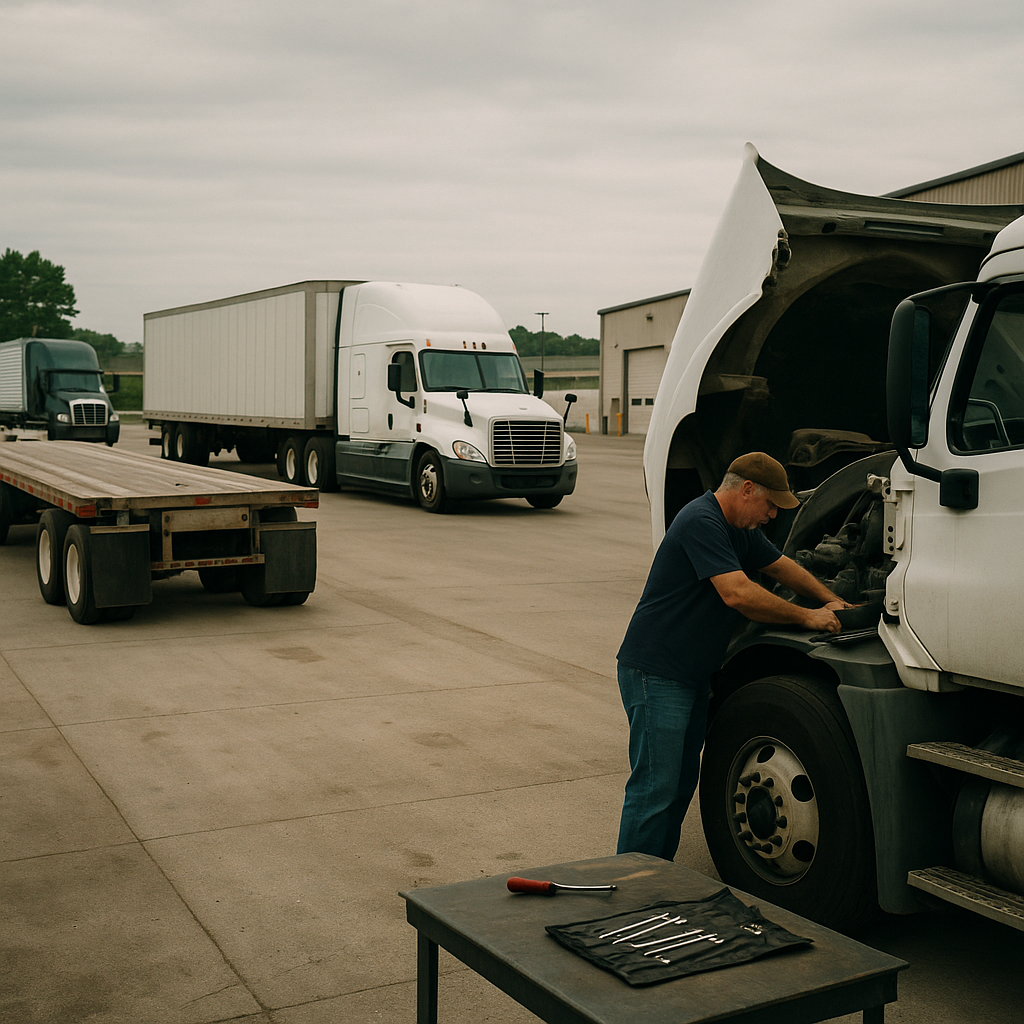

Amazon Relay carrier setup is really a readiness check: your authority, truck, safety profile, and insurance all have to line up before you can expect approval. If you’re an owner-operator or small fleet trying to move fast, the biggest delays usually come from mismatched documents, wrong coverage, or applying before the operation is actually ready.
What Amazon Relay Is and Who Can Use It#
Amazon Relay is a carrier-facing freight platform where approved carriers can find and book loads. For most owner-operators and small fleets, the key question isn’t just "How do I sign up?" It’s whether your authority, equipment, and insurance setup fit what the platform expects.
Amazon Relay is built for motor carriers, not personal vehicle gig work. A motor carrier is a business that transports property for compensation using commercial vehicles. That’s why this topic is about carrier setup, not driver login issues or customer support for shoppers.
How Amazon Relay works#
At a basic level, Amazon Relay lets approved carriers access available freight, accept loads, and manage parts of the move through the platform. A load board is a marketplace where carriers can view and book freight opportunities.
That makes it attractive to small operations that want another source of loads without cold-calling shippers all day. But access starts with approval, and approval starts with having the business side squared away.
Carrier types that typically qualify#
Single-truck owner-operators and small fleets are the natural fit for this article. If you have active authority, commercial equipment, a usable safety profile, and insurance that matches your operation, you’re in the conversation.
An MC number is the operating authority FMCSA uses for for-hire interstate carriers. A USDOT number is the federal identifier tied to a carrier’s safety and compliance record.
What the platform is not#
Amazon Relay isn’t a shortcut around trucking compliance. It doesn’t replace your FMCSA registration, your insurance requirements, or the need for equipment that matches the freight you’re trying to haul.
A lot of new carriers mix this up and think platform approval is mostly an app sign-up. It isn’t. It’s more like a screening process layered on top of normal commercial trucking requirements.

Amazon Relay Carrier Requirements#
Amazon Relay carrier requirements usually come down to five things: active carrier authority, a clean and complete carrier profile, qualifying commercial equipment, insurance that matches the operation, and a safety record that doesn’t raise red flags. If any one of those pieces is missing or inconsistent, review can slow down fast.
Operating authority and carrier profile#
Before you apply, make sure your business details are consistent everywhere. Your legal business name, address, USDOT number, MC number, and operating status should line up across your documents and federal records.
FMCSA oversees interstate motor carrier registration and safety compliance through FMCSA. Your public carrier record can also be checked through SAFER, which is often where mismatches show up first.
A clean profile matters because review teams compare what you submit against what’s already on file. If your authority is new, inactive, or inconsistent with your application, expect extra back-and-forth.
Safety and compliance basics#
Your safety record matters even before you haul your first Relay load. A BASIC score refers to FMCSA’s Behavior Analysis and Safety Improvement Categories used to track safety and compliance issues.
You don’t need to overcomplicate this part. The practical takeaway is simple: unresolved compliance problems, weak inspection history, or missing required records can make any platform review harder.
That doesn’t mean every new carrier is disqualified. It means the cleaner and more complete your compliance picture is, the smoother the setup tends to go.
Insurance requirements at a high level#
This is where a lot of owner-operators get tripped up. Amazon Relay setup ties into commercial trucking insurance, not personal auto insurance and not just your state’s private passenger minimums.
Commercial auto liability is the insurance that covers bodily injury and property damage you cause while operating a commercial vehicle. Requirements vary by carrier type, vehicle weight, cargo, and whether you operate interstate or intrastate.
Under 49 CFR Part 387, for-hire interstate carriers hauling general freight in vehicles over 10,001 lbs must carry at least $750,000 in public liability, while other operations can have different minimums depending on commodity and vehicle type. You can verify the federal rule in 49 CFR on eCFR.
If you’re staring at your policy and you’re not sure whether it actually fits your operation,
Vehicle and Equipment Needed for Amazon Relay#
Amazon Relay is generally built around qualifying commercial trucking equipment, not personal cars or light-duty side-hustle vehicles. For most carriers, that means a tractor-trailer setup with registrations, plates, and insurance that match the actual operation you’re applying under.
Typical tractor and trailer setup#
A tractor-trailer is a road tractor pulling a semi-trailer for commercial freight. That’s the setup most people mean when they talk about Relay work.
The important part isn’t just owning a truck. Your truck, trailer arrangement, and operating documents need to make sense together. If your authority says one thing, your insurance says another, and your equipment paperwork says something else, you can expect delays.
Documentation to have ready#
Before applying, have your key documents organized and current. That usually includes your authority details, vehicle registration, proof of insurance, and business information.
A certificate of insurance is the document that shows your active insurance coverage, limits, and named insured. It needs to reflect the business and operation being reviewed, not an old setup or a personal policy from before you started hauling commercially.
Common equipment mismatches#
One common mistake is trying to apply before the truck is fully in service. Another is having insurance quoted for a future operation that doesn’t match what’s active today.
The other big one is treating Relay like a sprinter van or passenger-car app. For an owner-operator running for-hire freight, your equipment has to fit commercial trucking rules, and your coverage has to fit the truck and trailer arrangement you’re actually using.
How to Register and Get Approved#
Amazon Relay registration usually follows a simple path: create the carrier account, submit business details, upload the requested documents, and wait through verification and review. The process isn’t hard in theory, but incomplete insurance, inconsistent authority details, and missing equipment documents are what usually drag it out.
Create and submit the application#
Start by entering your carrier business information exactly as it appears on your FMCSA records and insurance documents. That means your legal entity name, USDOT number, MC number, and contact information should match across the board.
Don’t treat this like a profile you can clean up later. Small mismatches now can create manual review later.
If you’re still building the business side and need to line up the basics first,
Upload documents and verify details#
Next comes document upload and verification. This is where the platform checks whether your paperwork supports the operation you’re claiming.
Typical trouble spots include expired documents, insurance certificates that don’t reflect the right named insured, and authority details that don’t match federal records. An MCS-90 is a federal endorsement attached to certain motor carrier liability policies to show proof of financial responsibility for public liability requirements.
The MCS-90 isn’t the same thing as having the right overall policy structure. Carriers sometimes assume that because a filing or endorsement exists, the whole insurance setup is good to go. That’s not always true.
Review, approval, and next steps#
After submission, expect a review period and possible follow-up requests. If something is unclear, you’ll usually need to correct or resubmit documents before approval moves forward.
This is why readiness matters more than speed-clicking through the application. A complete, consistent file often gets through faster than a rushed one with holes in it.
Once approved, the next step is learning how to access and book loads, while keeping your compliance and insurance current. Approval isn’t a one-time event you can ignore after day one.
What Insurance You Need Before You Apply#
Before you apply for Amazon Relay, you need commercial trucking insurance that matches your real operation, not a personal auto policy and not coverage built for some other class of business. The big mistake is buying something that sounds close enough, then finding out it doesn’t fit your authority, vehicle, or freight setup.
Commercial auto versus personal auto#
Personal auto insurance covers private driving for everyday personal use. It does not replace commercial trucking coverage for a for-hire carrier.
The NAIC offers plain-language insurance definitions that help make this distinction clear. If you’re hauling freight under your authority, think commercial trucking first, not personal auto with a business-use assumption.
This is also where people confuse state minimums with federal requirements. Your state minimum isn’t automatically your FMCSA minimum, and platform requirements can sit on top of that.
Coverage types Amazon Relay-aligned carriers may need#
For Amazon Relay-aligned operations, the core starting point is usually commercial auto liability. Depending on your setup, you may also need other coverages that match how the truck and trailer are actually used.
Motor truck cargo covers damage to the freight you’re hauling, subject to the policy terms. Physical damage covers damage to your truck through collision and other causes like comprehensive loss, depending on the options chosen.
Bobtail or non-trucking liability covers certain non-business use when you’re operating without a trailer or outside dispatched trucking activity; it does not cover paid hauling. Trailer interchange covers a trailer in your care when you have a signed interchange agreement, while non-owned trailer physical damage fits many owner-operators using trailers they don’t own without that interchange setup.
How to avoid overbuying unrelated coverage#
The goal isn’t to pile on every trucking coverage you’ve heard mentioned in a forum. It’s to match coverage to your actual operation.
For example, not every owner-operator needs trailer interchange. Many need non-owned trailer physical damage instead. Not every truck needs reefer breakdown. And collision can’t stand alone without the broader physical damage structure.
LogRock specializes in trucking insurance for owner-operators and small fleets. If you’re not sure what coverage fits your operation, LogRock can help you scope it.
Common Setup Mistakes That Delay Approval#
Most Amazon Relay setup delays come from preventable readiness problems: wrong insurance, missing documents, equipment that isn’t actually ready, or a carrier profile with inconsistent details. The fastest way to move slower is to apply before those basics line up.
Insurance mismatch#
This is the biggest one. Owner-operators often submit coverage that was quoted for a different operation, written under the wrong named insured, or built around personal auto assumptions instead of commercial trucking.
Even when a policy looks close, the details matter. Carrier type, weight, cargo, and operating scope all affect what fits.
Authority and document gaps#
A missing certificate, stale registration, typo in the business name, or inactive authority can kick your file into extra review. Platforms don’t like ambiguity, and neither do insurers.
Double-check every record before you submit. The business name on your application, authority, and insurance should read like the same business because it is.
Equipment not ready#
Don’t apply while the truck is still half-set up. If registration, plates, trailer plans, or insurance details are still in motion, finish that work first.
Applying too early creates document drift. By the time review starts, the paperwork may already be outdated.
Safety and profile issues#
A thin or messy compliance record can also slow things down. Ongoing FMCSA compliance still matters after setup, so treat approval like the start of the job, not the finish line.
After Approval: Load Access, Support, and Day-to-Day Use#
After approval, Amazon Relay becomes a working platform for load access, booking, and routine carrier activity. Getting approved is only step one; keeping your documents current and operating cleanly is what helps you keep using it without interruptions.
What happens after approval#
Once active, you’ll generally move from setup into load search, booking, and operational use. Depending on the freight available to you, you may see different load patterns and scheduling options.
Some carriers look for one-way moves. Others focus on round-trip or block-style opportunities if those fit their lane strategy and equipment.
How load access typically works#
Load access isn’t just about being approved. Your performance, operational reliability, and current compliance picture can affect how useful the platform is in practice.
That means day-to-day success usually comes from two things: running the freight well and keeping your back-office details clean.
Where to get help if onboarding stalls#
If you’re searching for Amazon Relay login help, support contacts, or onboarding status, go through Amazon’s official carrier support channels inside the platform or on its official site. This article is meant to help you get setup-ready, not replace platform support.
The insurance side is separate. If the holdup is whether your trucking policy actually fits the operation, that’s a different problem and needs a trucking-specific review.
FAQ#
How do I become a carrier on Amazon Relay?
To become a carrier on Amazon Relay, start by making sure you’re actually setup-ready as a motor carrier. That means having active authority, a USDOT and MC number where required, qualifying commercial equipment, and insurance that matches your operation. Then complete the Relay application, upload your documents, and respond to any verification requests.
The practical mistake to avoid is applying too early. If your insurance certificate, business name, authority records, and truck documents don’t all line up, approval can stall. For most owner-operators, the smoothest path is getting the business, compliance, and insurance side clean before starting the application.
What are the disadvantages of Amazon Relay?
The main disadvantages of Amazon Relay are setup friction, document review delays, and the need to keep compliance details current after approval. It isn’t a casual app signup. Carriers have to maintain authority, insurance, and a usable safety profile, and any mismatch can slow onboarding or create ongoing headaches.
There’s also the operational side. Platform freight can be useful, but it’s still platform freight, which means you’re working within someone else’s process, documentation standards, and load access system. For small carriers, that can be worth it, but only if the operation is built to handle the admin side cleanly.
How to get setup with Amazon Relay?
To get setup with Amazon Relay, take it in order: confirm your authority is active, make sure your truck and trailer arrangement is ready, verify your insurance fits the operation, gather your documents, and then submit the carrier application. After that, upload whatever paperwork is requested and watch for follow-up questions during review.
The best way to speed things up is to reduce inconsistencies before you apply. Use the exact same business details across your FMCSA records, insurance documents, and application. Most delays happen because something small doesn’t match, not because the application itself is complicated.
What kind of vehicle do I need for an Amazon Relay?
Amazon Relay is generally for qualifying commercial trucking equipment, usually a tractor-trailer setup rather than a personal vehicle. The exact fit depends on the type of loads, your carrier operation, and whether your registrations, insurance, and authority support that equipment.
The key is to think beyond the truck itself. You need equipment that matches your commercial use, plus documents that match the equipment. A personal pickup, passenger car, or loosely defined "business vehicle" usually isn’t what people mean when they’re talking about Relay carrier setup for a for-hire trucking operation.
Does personal auto insurance work for Amazon Relay?
No, personal auto insurance does not replace commercial trucking insurance for an Amazon Relay carrier operation. If you’re hauling freight as a for-hire carrier, you need commercial coverage built for that type of risk and, where applicable, aligned with federal financial responsibility rules under 49 CFR Part 387.
This is one of the most common setup mistakes new carriers make. A personal policy may cover private driving, but it doesn’t solve commercial auto liability needs for a trucking business. If your coverage doesn’t match your authority, vehicle, and freight operation, approval and insurability can both become problems.





