

If you’re looking into amazon relay truck requirements, the big question usually isn’t just "Can I sign up?" It’s whether your truck, trailer, authority, insurance, and safety profile actually fit the work. A lot of small carriers find out too late that Relay is a carrier program, not a shortcut around FMCSA rules, insurance filings, or equipment standards.
This guide breaks down what owner-operators and 1–5 truck fleets usually need to look at before they apply. The goal is simple: help you figure out fit before you waste time on an application or spend money on the wrong setup.
What Amazon Relay Is and Who It’s For#
Amazon Relay is a carrier-facing load platform for trucking companies with their own authority, equipment, and insurance; it is not a driver job app and it does not replace your FMCSA registration, operating authority, or business insurance. If you want to haul Relay freight, your carrier has to be set up correctly before Amazon’s approval process even matters.
Amazon Relay is built for motor carriers, not individual company drivers looking for employment. A motor carrier is a trucking business that transports property for hire or as a private carrier. Before a carrier can operate in regulated interstate commerce, it generally needs the right USDOT registration and, for for-hire interstate freight, the right FMCSA operating authority through the federal registration process at FMCSA.
Carrier vs. driver#
This is where a lot of people get crossed up. If you’re an owner-operator with your own authority, you’re evaluating Relay as a carrier. If you’re a driver leased to someone else, the carrier you run under would be the one dealing with Relay eligibility, not you personally.
Single-truck operators vs. small fleets#
A one-truck operation can still be a fit if the truck, trailer setup, insurance, and compliance profile line up. A two- to five-truck fleet may have more flexibility on scheduling and coverage, but small size by itself doesn’t disqualify you.
What Relay is not#
Relay doesn’t create your authority, fix a weak safety record, or stand in for commercial trucking insurance. It also doesn’t mean every truck type will qualify for every load board opportunity. Qualification depends on the carrier’s equipment, operating authority, and compliance profile.

Truck Types That Typically Fit Amazon Relay#
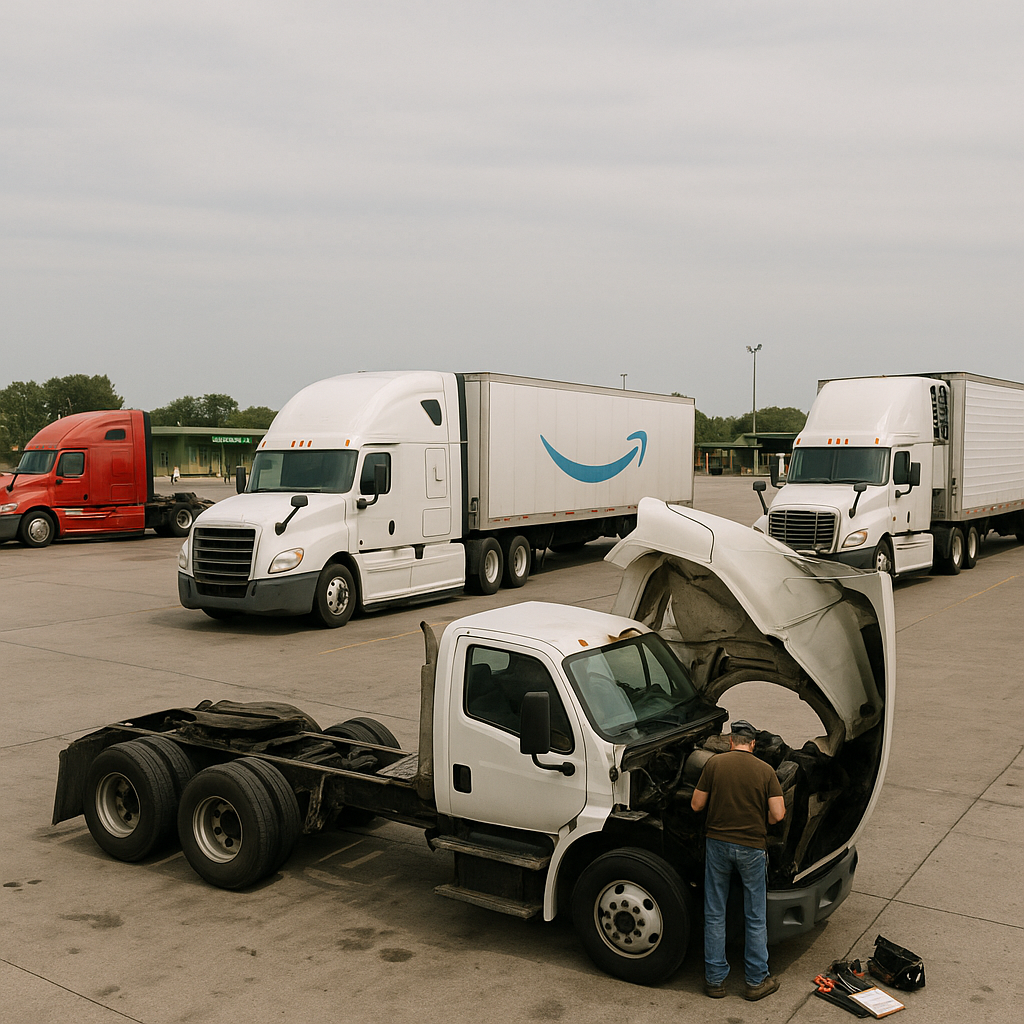
The truck you need for Amazon Relay depends on the freight program, load type, and lane, not just the fact that you own a commercial vehicle. Tractor-trailers, box trucks, and some van-based setups may fit certain work, but no single truck type automatically qualifies for every Relay opportunity.
The mistake many carriers make is assuming "Amazon freight" is one thing. It isn’t. Some loads are built around full tractor-trailer operations, while others may fit box truck or straight truck programs if available in that market. Your truck has to match the freight, pickup and delivery expectations, and any equipment rules attached to that work.
Tractor-trailer operations#
For many carriers, the most natural fit is a road tractor paired with the right trailer type. A tractor-trailer is a power unit pulling a separate freight trailer, usually used for standard over-the-road and regional freight operations.
If you’re already running dry van freight under your own authority, this setup often lines up best with Relay-style freight networks. But even here, trailer type matters. A carrier set up for one kind of freight doesn’t automatically fit every lane or every facility requirement.
Box trucks and straight trucks#
A box truck or straight truck is a single vehicle with the cargo area attached to the chassis rather than pulled as a separate trailer. These are common in local and regional delivery, and they’re one of the most searched Amazon Relay topics because many operators want to know whether a 26-foot box truck can qualify.
Sometimes the answer is yes for certain programs, and sometimes the answer is no for the work you’re actually targeting. The key point is that owning a box truck is not the same as being approved for every Relay load category.
Sprinter vans and cargo vans#
A cargo van is a light commercial van used for smaller freight or parcel-type operations. Some operators search for Amazon Relay sprinter van requirements, but van eligibility depends heavily on the specific program and market.
That’s where people overgeneralize from social posts and videos. A van may fit one Amazon-related opportunity and not another. Don’t assume "Amazon delivery" and "Amazon Relay carrier work" are the same business model.
Trailer use and freight fit#
Your trailer needs depend on the load and how your operation is set up. Dry van is the common starting point people think about, but some work may involve trailer pools, drop-and-hook operations, or trailer-specific expectations.
If your truck type is close but you’re not sure the insurance or trailer setup fits,
Equipment and Documents Amazon Usually Expects#
Amazon usually expects more than just the right truck on paper; carriers also need basic safety equipment, current cab documents, reliable tracking and communication tools, and a truck that can pass inspection without drama. Missing paperwork or poor equipment readiness can slow you down even if your vehicle category fits the freight.
Think of this as the "real world" part of eligibility. A truck can look fine in an application and still turn into a problem at dispatch, check-in, or roadside inspection if the supporting details aren’t in order.
Required safety equipment#
A safety equipment kit is the basic emergency and compliance gear a commercial vehicle should carry for breakdowns, roadside stops, and inspection readiness. Exact needs vary by operation, but carriers should verify the practical basics before they apply or dispatch.
That usually means checking the truck’s condition, emergency gear, lighting, tires, securement-related items where relevant, and anything else needed for lawful, safe operation. Amazon may care about service reliability, but roadside inspectors care about whether the unit is legal and safe.
DOT and cab paperwork#
Cab paperwork means the vehicle and carrier documents the driver needs to keep available in the truck for operations and inspections. That can include registration-related documents, proof of insurance, inspection records where applicable, and authority-related information tied to the operation.
Don’t mix this up with your insurance shopping file back at the office. If a driver or owner-operator can’t produce what the operation requires when needed, that’s a preventable problem.
Tracking and communication setup#
Relay work usually assumes the carrier can stay in contact and comply with tracking expectations. That means your phone, dispatch workflow, and any app or device setup can’t be an afterthought.
For a single-truck owner-operator, this often comes down to whether you can handle check calls, app workflows, and load visibility from the cab without missing something important.
Inspection readiness#
Inspection readiness means the truck, trailer, and records are maintained well enough to stand up to routine enforcement or facility scrutiny. A truck that constantly has light issues, tire issues, or paperwork gaps can become a liability fast.
Insurance Requirements That Can Block Approval#
Insurance is one of the biggest Amazon Relay approval trouble spots because carriers often confuse FMCSA minimums, Amazon expectations, and their own actual risk exposure. Personal auto won’t satisfy commercial hauling, and the right insurance package depends on your operation, vehicle weight, cargo, and whether you run for-hire interstate freight.
A lot of owner-operators hear one number from another driver and assume that’s the whole answer. It isn’t. Under 49 CFR Part 387, for-hire interstate carriers hauling general freight in vehicles over 10,001 pounds must carry at least $750,000 in public liability. But federal minimums are not the same thing as a shipper or broker’s approval standard, and they don’t automatically describe every operation.
Commercial auto liability basics#
Commercial auto liability covers bodily injury and property damage you cause to others with a business vehicle. In trucking, this is the core coverage tied to FMCSA financial responsibility rules for many for-hire interstate carriers.
This is where scope matters. Requirements vary by carrier type, vehicle weight, cargo, and whether you operate interstate or intrastate. For example, the federal minimum often cited for general freight applies to specific for-hire interstate operations under 49 CFR Part 387, not to every truck on the road in every situation.
Cargo and related coverages#
Motor truck cargo covers damage to freight you’re hauling, subject to the policy terms and exclusions. Physical damage covers your truck or trailer for collision and other covered causes of loss, depending on whether you carry collision, comprehensive, or fire and theft with combined additional coverage.
Amazon or other freight partners may expect certain insurance categories beyond bare legal minimums, especially if the freight, equipment, or contract calls for them. That doesn’t mean every operator needs every optional coverage, but it does mean a mismatch between the work and the policy can block approval.
Why personal auto is not enough#
Personal auto insurance is insurance written for private, non-business driving, not for commercial freight hauling. NAIC’s consumer guidance at NAIC explains the difference between personal and commercial auto coverage in plain language.
If you’re hauling for hire, using your personal vehicle policy as your main protection is usually the wrong setup. The insurer may not rate or cover the exposure correctly, and Amazon isn’t evaluating you as somebody commuting to work. It’s evaluating a motor carrier.
Where Amazon and FMCSA differ#
FMCSA rules set legal baselines for regulated operations. Amazon can still set its own carrier onboarding standards above those baselines based on contract requirements, freight type, customer expectations, and operational risk.
That gap catches small carriers all the time. You might be legally allowed to operate and still not be positioned correctly for a specific shipper’s program. If you’re not sure what coverage fits your operation, LogRock can help you scope it.
Approval Requirements Beyond the Application Form#
Amazon Relay approval is usually more than filling out a form and waiting, because carriers are judged on authority status, safety signals, insurance alignment, and basic operational readiness. A clean-looking application can still get delayed if your FMCSA record, SAFER profile, or setup doesn’t support the type of work you’re asking for.
This is the part many new authorities underestimate. The form is easy compared with making sure your business actually looks ready from the outside.
Authority and safety record#
An MC number is your FMCSA operating authority identifier for regulated for-hire interstate carriage, and a DOT number is the USDOT registration number tied to your safety record and monitoring. If either piece is missing, inactive, or inconsistent with the operation, that’s a problem before load access even comes into play.
Amazon can evaluate the same public-facing carrier basics anyone else can see. Your status can be checked in the SAFER system, and your registration and authority framework starts with FMCSA’s carrier registration rules at FMCSA.
BASIC scores and safety history#
BASIC scores are FMCSA safety measurement categories used to flag patterns in areas like unsafe driving, vehicle maintenance, and hours-of-service compliance. Carriers worry about them for a reason: they shape how your operation looks from a risk standpoint.
A bad inspection pattern, out-of-service issues, or repeated maintenance problems can raise concerns even if your paperwork is technically complete. You don’t need a perfect history to be viable, but obvious red flags make approval harder.
Common hidden blockers#
The common blockers are usually boring, not mysterious:
- Insurance certificates that don’t match the operation
- Inactive or not-yet-mature authority
- Vehicle details that don’t fit the freight you’re targeting
- Missing or inconsistent carrier information
- Weak inspection or maintenance history
A lot of "I don’t know why I wasn’t approved" stories come back to one of those basics.
How to prepare before applying#
Treat this like a pre-audit. Verify your authority status, review what SAFER shows, make sure your insurance reflects the actual hauling operation, and confirm that your truck and trailer setup fit the kind of Relay freight you want.
How Many Trucks You Need and What Small Fleets Should Expect#
You do not automatically need multiple trucks to explore Amazon Relay; a single truck can be enough if the carrier, equipment, and compliance setup meet the program’s requirements. More trucks may increase flexibility and capacity, but fleet size alone does not guarantee approval or better opportunities.
This matters for owner-operators who assume Amazon only wants bigger carriers. In practice, the better question is whether your current setup can reliably handle the work you want to book.
Single-truck eligibility#
A one-truck carrier can be a fit if the business is set up correctly and the equipment matches the available freight. The tradeoff is less margin for breakdowns, missed appointments, or coverage gaps.
Two- to five-truck fleets#
A small fleet has more room to cover maintenance downtime, rotate equipment, and accept work more strategically. That can make Relay easier to operate, but it doesn’t erase insurance, authority, or safety issues.
When scale matters#
Scale matters more operationally than it does at the first screening stage. More trucks can broaden your options, but size without compliance is still a dead end.
Operational tradeoffs#
Before you chase volume, be honest about dispatch capacity, maintenance discipline, and cash flow. A single truck that is well matched to the work often does better than a rushed expansion.
How to Apply for Amazon Relay Step by Step#
The simplest way to apply for Amazon Relay is to gather your carrier, vehicle, and insurance documents first, then complete the carrier setup carefully and review everything before submission. Most delays happen because a carrier starts the application cold, then scrambles for missing details halfway through.
Think of the application as the last step in prep, not the first. If your records are organized, the form is much less painful.
Gather the right documents#
Start with your core business and equipment details: authority information, USDOT and MC identifiers, vehicle details, insurance documents, and any business records the setup process asks for. Have the exact legal business name and matching carrier information ready.
Complete carrier setup#
Enter your information slowly and make sure it matches your FMCSA-facing records. Small mismatches in names, numbers, or coverage details can create avoidable review issues.
Review and submit#
Before you hit submit, compare the application against your SAFER record, your insurance paperwork, and your actual equipment list. If your operation changed recently, make sure the records reflect that change.
What to do if you get stuck#
If the application stalls, don’t just keep resubmitting blindly. Figure out whether the problem is authority timing, insurance scope, equipment fit, or inconsistent business information. If the issue looks insurance-related,
What to Do If Your Truck Does Not Fit Relay Right Now#
If your truck doesn’t fit Amazon Relay right now, the smart move is to fix the mismatch before buying more equipment or changing your whole operation around one load source. Relay can be a good fit, but it is not the only path for an owner-operator or small fleet.
Start with the basics. Reassess whether your current truck and trailer actually match the freight you want to haul. Fix insurance gaps first, then clean up authority or safety issues if those are the weak points.
Only after that should you think about investing in a different vehicle class or trailer type. Chasing loads with the wrong setup gets expensive fast.
FAQ#
What kind of truck is needed for an Amazon Relay?
The truck needed for Amazon Relay depends on the freight program, lane, and equipment rules tied to that work. In practice, carriers most often look at tractor-trailer setups, box trucks, straight trucks, and some van-based operations, but no single vehicle type automatically qualifies for every Relay opportunity.
The real test is whether your truck matches the freight Amazon is offering and whether your carrier setup supports that operation. Trailer needs, insurance scope, and facility expectations matter too. If you’re evaluating a specific truck you already own, check fit by load type rather than assuming all Amazon-related work uses the same equipment model.
Is it hard to get approved for Amazon Relay?
Amazon Relay approval is usually manageable for a compliant carrier, but it gets harder fast when insurance, authority, safety history, or equipment details don’t line up. The application itself may be straightforward, yet approval is often about whether your business looks ready from a compliance and operational standpoint.
Common trouble spots include incomplete insurance, inconsistent carrier information, weak inspection history, inactive authority, or a truck type that doesn’t fit the work you’re targeting. That’s why some carriers feel approval is easy while others get delayed. The difference is usually in the setup behind the form, not the form itself.
How many trucks do you need to get a contract with Amazon?
A single truck can be enough to evaluate Amazon Relay, so you should not assume you need a multi-truck fleet just to get started. For many owner-operators, the deciding factor is whether the carrier has the right authority, equipment, insurance, and operating discipline to handle the work reliably.
Larger fleets may have more flexibility with maintenance downtime, dispatching, and load coverage. But more trucks do not automatically improve approval odds if the business has compliance issues. For a one-truck operator, the better question is whether your current setup can meet the requirements without stretching your business too thin.
How much do Amazon Relay box trucks make?
Amazon Relay box truck earnings vary widely by market, lane availability, utilization, season, deadhead, fuel costs, insurance costs, and how efficiently the truck is run. That’s why headline revenue numbers from videos or forums don’t tell you much about whether the work is actually worth it for your business.
The better way to look at it is net revenue, not gross load pay. Price in commercial auto liability, cargo if required, physical damage, fuel, maintenance, tires, downtime, tolls, and your own time. A box truck can look profitable on a screenshot and still underperform once real operating costs are added back in.
Does Amazon Relay replace normal trucking insurance?
No. Amazon Relay does not replace the commercial trucking insurance your carrier needs to operate legally and meet shipper or platform requirements. Relay is a freight platform, not an insurance policy and not a substitute for your own authority-related coverage.
You still need insurance that fits your actual operation. Depending on what and how you haul, that may involve commercial auto liability, motor truck cargo, and physical damage, among other coverages. Your actual premium depends on your operation, cargo, radius, driving history, and other factors. The main point is simple: access to loads does not remove your responsibility to carry the right insurance.





