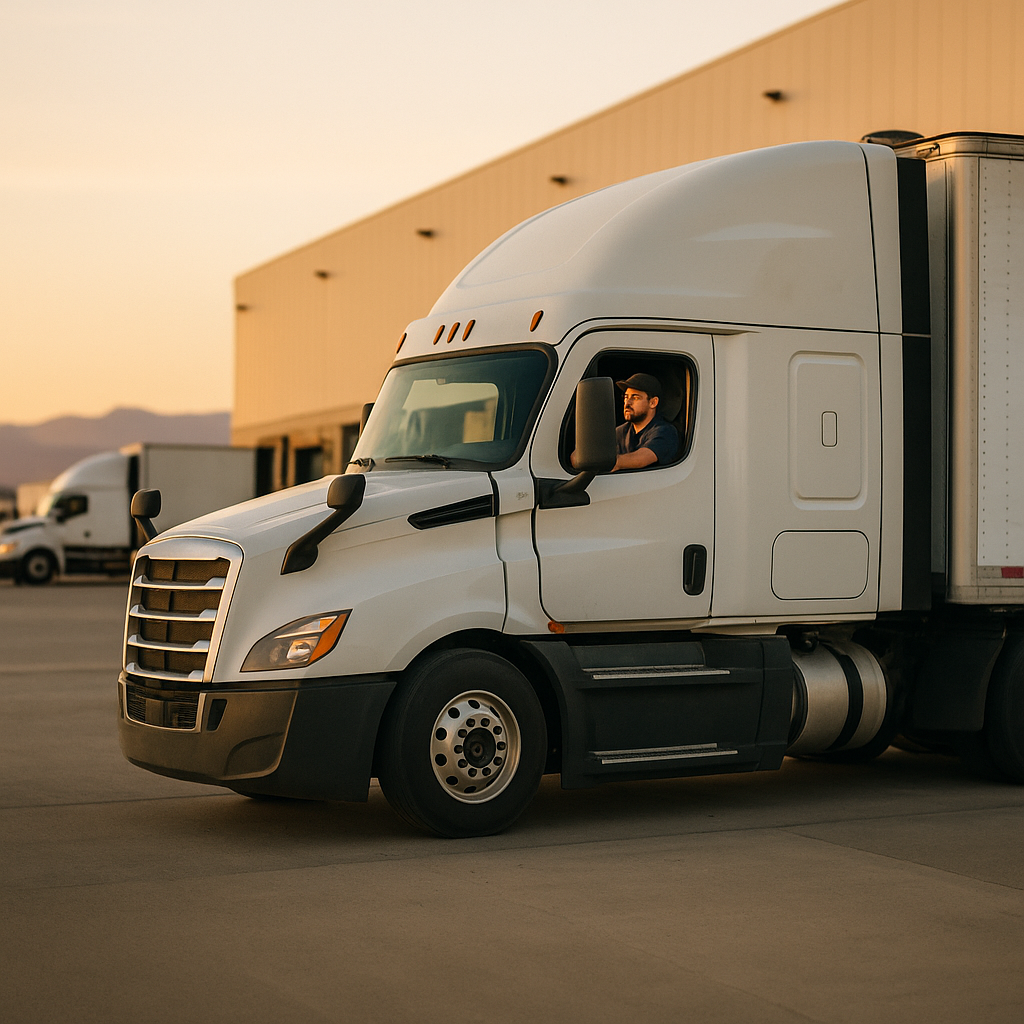

2026 Arizona small-fleet commercial truck insurance runs ~$9K–$22K per truck. Coverages, filings, COIs, Mexico runs—price it right.
Arizona commercial truck insurance for small fleets in 2026 typically costs about $9,000–$22,000 per power unit per year for standard for-hire operations, with higher pricing for new authority, long haul, high-value cargo, higher limits, or poor loss history.
If you’re comparing quotes, start with a clean definition of what you’re actually buying—limits, coverages, and who’s insured—using commercial truck insurance basics for fleets so you don’t “save money” by accidentally removing something a broker needs.
Insurance is either a controlled cost—or a surprise that eats your month. For 2–20 power units in Arizona, a missing coverage or wrong limit can get a load rejected during broker setup, even if the premium looks great.
Table of Contents
Reading time: 8 minutes
- Key takeaways (save this before you call for quotes)
- Who counts as a “small fleet” (and why Arizona pricing varies)
- 2026 cost: Arizona commercial truck insurance for small fleets (real scenarios)
- Required coverages in Arizona (plus add-ons small fleets need)
- Arizona compliance + filings (2026): what you’ll need and a fast timeline
- Frequently Asked Questions
- Conclusion: Quote smarter and protect cash flow

Key takeaways (save this before you call for quotes)
For 2026 planning, many Arizona fleets with 2–20 power units land around $9K–$22K per truck per year for standard for-hire operations, but new authority + long haul + high-value cargo can price well above that.
- Budget range (2026): Many AZ small fleets land $9K–$22K per truck/year, but “new venture + long haul + high-value cargo” can blow past it.
- Limits are driven by contracts, not just regulations: Brokers commonly demand $1M liability and specific cargo limits, even when legal minimums differ.
- Speed comes from preparation: Same-day COIs are common; filings and approvals move fastest when you bring VINs, garaging ZIPs, driver list, and loss runs.
- Operation type matters: Hotshot, box, reefer, tanker/hazmat all price differently—misclassifying your operation can trigger denial or mid-term re-rating.
Who counts as a “small fleet” (and why Arizona pricing varies so much)
Most commercial trucking underwriters define a small fleet as roughly 2–20 power units, and pricing/eligibility often changes at specific unit counts inside that range.
You’re big enough to have multiple drivers, more miles, and more exposure—but also big enough to earn better terms by showing controls (driver standards, maintenance cadence, documented safety practices).
Why Arizona can rate differently than “the internet average”
- I-10 / I-17 volume + Phoenix metro congestion: More stop-and-go and more four-wheelers can increase claim frequency exposure.
- Heat + equipment stress: Tires, cooling systems, reefer units, and roadside events often show up as towing/physical damage losses when maintenance slips.
- Common lanes to CA/NV/NM/UT: Your radius and states of operation can change carrier appetite and pricing.
If you want the shortest path to affordable pricing, focus on the levers carriers actually rate: drivers, losses, radius, cargo, and equipment. This breakdown of what affects the cost of truck insurance will help you think like underwriting—so you’re not guessing.
2026 cost: Arizona commercial truck insurance for small fleets (real scenarios)
In 2026, Arizona small-fleet commercial truck insurance commonly ranges from about $9,000 to $22,000 per power unit per year for standard for-hire operations, with wide swings based on drivers, loss history, radius, cargo, and limits.
Insurance is one of the biggest operating-cost pressure points in trucking—right up there with fuel, equipment, and driver costs. ATRI regularly tracks insurance as a major cost category in industry cost research (ATRI: https://truckingresearch.org/).
Cost table (use as a reality check, not a quote)
Image placeholder (Costs Table)
Alt text: Table showing Arizona small fleet commercial truck insurance costs per truck in 2026
Description: Simple cost range table by fleet type and fleet size.
| Fleet scenario (AZ small fleet) | Typical operation | Estimated per-truck annual range (2026) | What’s baked into the assumption |
|---|---|---|---|
| 3-truck dry van | Interstate, steady lanes | $9K–$15K | Experienced drivers, clean/managed loss history, standard cargo, consistent garaging |
| 6-truck hotshot | Mixed radius | $10K–$18K | Pickup + trailer values, variable freight, tighter underwriting on classification |
| 10-truck box truck | Local/regional | $11K–$19K | Higher stop frequency, more driver turnover risk, metro exposure |
| 4-truck reefer | Regional/interstate | $12K–$22K | Higher cargo expectations, temperature-control exposure, equipment complexity |
What moves the number up/down the fastest
The fastest premium swings usually come from just a few underwriting inputs—especially when you’re a new venture or changing operations.
- Driver quality + stability: MVR issues, preventables, and “new driver every month” signals higher risk.
- New authority / new venture: Pricing is often higher until you build verifiable history.
- Operation details: Radius, cargo class, and limits requested (especially when brokers require higher limits).
If you operate in multiple states, compare AZ against neighboring markets before you assume your quote is “high.” Use commercial truck insurance cost by state to sanity-check what you’re being told.
Required coverages in Arizona (plus the add-ons small fleets actually need)
For for-hire interstate trucking, FMCSA financial responsibility rules in 49 CFR Part 387 establish minimum liability requirements, while many brokers and shippers still require $1,000,000 auto liability by contract.
Image placeholder (Coverage Checklist)
Alt text: Checklist of required commercial truck insurance coverages for Arizona fleets
Description: Visual checklist: liability, cargo, physical damage, general liability, trailer interchange, bobtail/non-trucking.
Primary auto liability (the deal-breaker coverage)
What it is (plain English): Pays for injuries and property damage you cause to others in an at-fault crash.
Why it’s essential: It’s the backbone coverage brokers look for first, and federal rules for many operations live under 49 CFR Part 387. In the real world, contracts often set the “true minimum” limit.
Who needs it: Any fleet operating commercially—especially for-hire, interstate, or under broker/shipper contracts.
Motor truck cargo (what brokers care about)
What it is: Covers loss/damage to freight you’re hauling, subject to exclusions, conditions, and reporting requirements.
Why it’s essential: Many broker packets require cargo proof before you ever see a rate confirmation. Reefer, high-value loads, and certain commodities can require higher limits or tighter endorsements.
Who needs it: For-hire fleets hauling anyone else’s freight (most small fleets).
Physical damage (comp/collision) for your equipment
What it is: Covers your truck if it’s stolen, vandalized, burned, or wrecked (comprehensive/collision, subject to deductibles).
Why it’s essential: If your equipment is financed/leased, lenders usually require it, and one total loss can crush cash flow even if you own the unit outright.
Common add-ons that actually matter for small fleets
- General liability: Helps with non-auto claims (for example, incidents on a shipper’s yard).
- Trailer interchange: If you pull non-owned trailers under interchange agreements.
- Non-trucking / bobtail: Often required when leased to a motor carrier; applies only under specific “off-dispatch” situations.
Operation-type spotlight: hotshot fleets in Arizona
Hotshot underwriting often hinges on power unit type, trailer value, cargo variability, and radius creep, so it’s usually priced and accepted differently than a standard Class 8 tractor setup.
If your fleet includes pickups with goosenecks/flatbeds, treat it as its own program search—not an afterthought—using hotshot insurance guide for Arizona operators to reduce misclassification that can lead to denial or mid-term premium surprises.
Arizona compliance + filings (2026): what you’ll need and a fast timeline
If you operate under FMCSA interstate for-hire authority, your insurer typically files proof of insurance with the FMCSA electronically, and missing info or last-second changes can delay activation and dispatch.
Federal: authority, filings, and why lapses hurt
FMCSA outlines insurance filing requirements here: https://www.fmcsa.dot.gov/registration/insurance-filing-requirements.
- You don’t upload filings yourself: The insurer (or their filing service) submits required filings once you bind.
- Incomplete submissions slow everything down: VIN changes, driver changes, or garaging changes right after binding can trigger re-underwriting.
- Lapses are expensive: Cancellations and coverage gaps are a fast track to fewer options and higher prices at renewal.
Arizona-specific reality (keep it simple)
Arizona requirements can differ for intrastate-only operations versus interstate authority, and your credentials (IRP/IFTA) and insurance should be planned together so you’re not trying to fix compliance the day a broker asks for a COI.
“Same-week start” timeline (what actually works)
Image placeholder (Same-Week Timeline)
Alt text: Timeline graphic for getting coverage, filings, and COIs for an Arizona small fleet
Description: 3–5 day timeline showing quote, bind, COIs, and filings.
- Day 0–1 (you): Fleet schedule, VINs, garaging ZIPs, driver list (DOB + license), commodities, radius/lane list, requested limits/deductibles, and loss runs (if you have prior coverage).
- Day 1–2 (agent + underwriting): Submit complete apps, answer follow-ups quickly, and confirm operation classification.
- Day 2–5 (execution): Bind coverage, issue COIs to brokers/shippers, request filings where applicable, and update certificate holder/additional insured requests.
If you’re building new authority or tightening compliance, use a checklist instead of guessing. Start with FMCSA compliance checklist for new authorities.
If you run near the border: Mexico loads and “cross-border” confusion
Many U.S. commercial auto policies do not automatically extend coverage into Mexico, and cross-border setup depends on where the handoff occurs (drop yard vs crossing), who holds the Mexico-leg contract, and whether a Mexico-specific policy/endorsement applies.
Don’t assume—ask your agent to confirm coverage territory in writing for the exact lane and contract structure.
Frequently Asked Questions
Arizona small fleets usually need liability to operate and cargo/COIs to get booked, and your exact requirements depend on authority type, contracts, and what you haul.
Arizona trucking operations typically need commercial auto liability, and for many for-hire interstate carriers the minimum requirements are tied to FMCSA financial responsibility rules in 49 CFR Part 387. Most small fleets also carry motor truck cargo and physical damage because brokers require cargo to set you up and lenders require physical damage on financed equipment. In practice, many broker/shipper contracts require $1,000,000 liability and specific cargo limits even if a legal minimum is lower for your exact operation.
For many 2–20 truck fleets, a realistic 2026 planning range is about $9,000–$22,000 per power unit per year, assuming standard for-hire operations and no major claim problems. Your price moves fastest with driver quality and stability, prior loss history, new authority/new venture status, cargo class, operating radius, and the limits you request (especially higher liability limits). Deductible strategy and safety controls can help, but misclassifying your operation can also trigger re-rating mid-term.
Same-day coverage and COIs are often possible in Arizona once underwriting approves the risk and the policy is bound. Speed mostly comes down to submission quality: VINs, garaging ZIPs, complete driver roster (license/DOB), commodities, lanes/radius, and prior loss runs when applicable. COIs can usually be issued quickly after bind, but authority-related filings can take longer depending on required forms and processing queues. The fastest fleets avoid last-minute driver or vehicle changes during underwriting review.
If you operate under FMCSA authority, your insurer typically submits proof of insurance filings to FMCSA electronically as part of activating and maintaining that authority. Separately, brokers and shippers usually require certificates of insurance (COIs) showing your liability limits, cargo coverage, and certificate holder/additional insured wording for their setup packet. Intrastate-only operations can follow different state rules, so confirm requirements based on your registration, authority status, and the contracts you plan to haul under.
The biggest cargo mistake is buying a limit that matches one broker’s minimum but doesn’t match the highest-value freight you actually touch on your lanes. That gap can turn into an out-of-pocket settlement if a load exceeds your limit, or it can create a claim dispute when exclusions, temperature requirements, unattended vehicle rules, or reporting conditions aren’t followed. Before you sign broker contracts, read cargo insurance for trucking explained so your policy fits what you haul—not just what looks cheapest on paper.
Next steps: quote smarter for your Arizona small fleet (and keep your cash flow predictable)
To control trucking insurance cost without creating coverage gaps, prioritize (1) stable drivers and clean MVRs, (2) limits that match your broker/shipper contracts, and (3) a complete quote packet that underwriting can approve quickly.
Recommended checks before you bind:
- Use the semi truck insurance coverage checklist to spot missing endorsements and common gaps.
- If you’re negotiating contract requirements, review liability insurance limits for trucking so your limits match real broker/shipper expectations.
Conclusion: Quote smarter and protect cash flow
Arizona small fleets planning for 2026 should expect many standard for-hire accounts to land around $9K–$22K per truck per year, with pricing driven most by drivers, losses, radius, cargo, and contract limits.
If you want speed (same-day COIs) and fewer surprises (no mid-term re-rating), bring complete info upfront and make sure your operation is classified correctly.
Key Takeaways:
- Price range: $9K–$22K per power unit per year is a common planning band for standard operations in 2026.
- Contracts matter: Broker/shipper requirements often drive $1M liability and cargo limits more than “minimums.”
- Prep wins: VINs, garaging ZIPs, driver roster, lanes, and loss runs are what make fast binds and fast COIs possible.
If you want help putting a clean quote packet together, Logrock can shop options built for small fleets and keep the coverage aligned with the loads you actually run.