
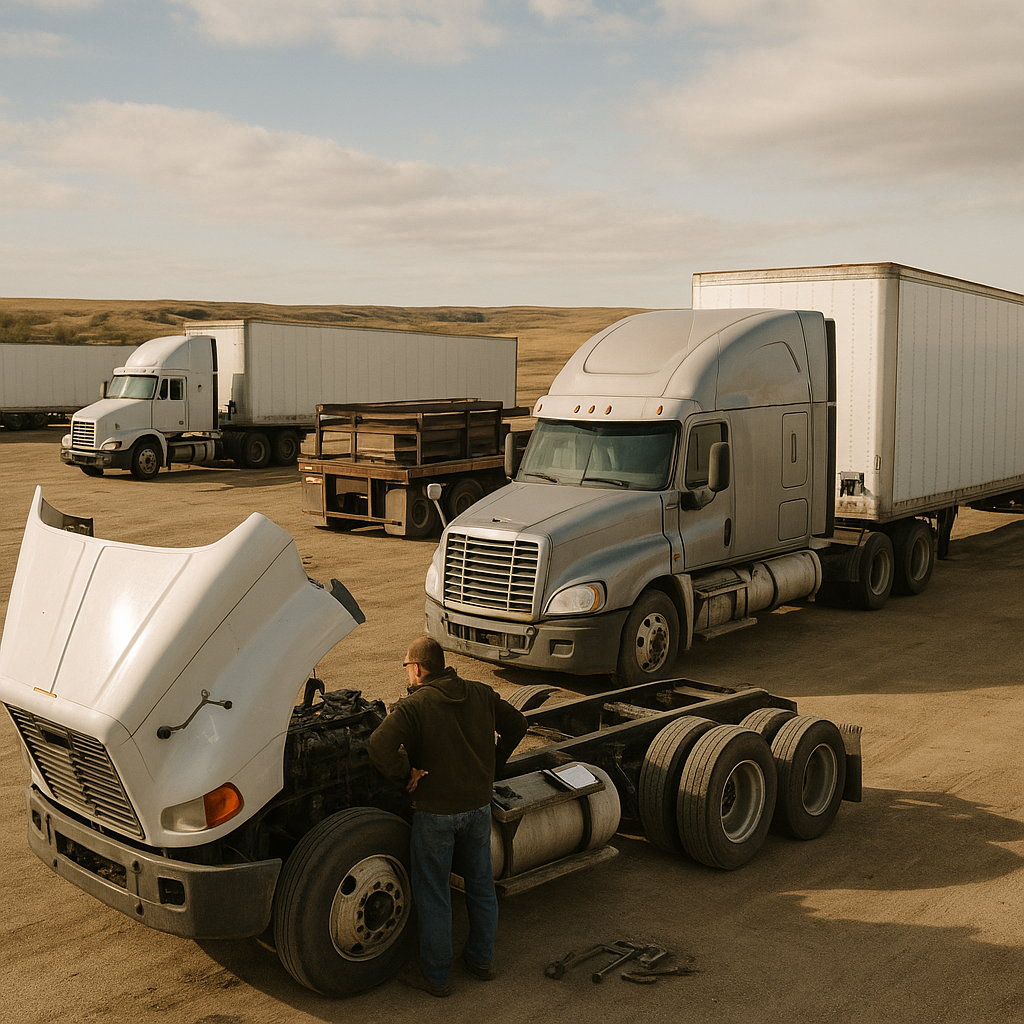
If you’re shopping for box truck truck insurance North Dakota, the biggest mistake is assuming every box truck needs the same policy. It doesn’t. Your requirements depend on how you use the truck, what you haul, whether you cross state lines, and whether you’re dealing with state rules, FMCSA rules, or contract requirements.
👉 Ready to save on your box truck insurance?
Watch the video below for a quick overview of box truck insurance rules, how much it costs, and practical ways to save. Or give us a call: (704) 290-3630
Box Truck Insurance in North Dakota: The Basics#
Box truck insurance in North Dakota is commercial insurance built around business use, not a personal vehicle policy. Most operators need coverage scoped to the truck, cargo, drivers, and operating type, because a local delivery box truck and an interstate freight box truck don’t carry the same risk or the same compliance needs.
A box truck operation is any business use of a straight truck or cube truck to haul goods, tools, equipment, or customer property for pay or as part of a business. That matters because insurers usually treat it as commercial auto exposure from the start, even if the truck looks similar to a large personal moving truck.
What counts as a box truck operation#
If you’re using the truck for furniture delivery, appliance hauling, contractor materials, retail deliveries, or general freight, you’re in commercial territory. That can apply whether you’re an owner-operator with one truck, a small fleet, or an LLC just getting started.
A lot of confusion starts when operators think, “It’s not a semi, so maybe regular commercial auto is enough.” Sometimes it is. Sometimes it isn’t. The real question is what the truck is doing.
Why personal auto usually is not enough#
Personal auto insurance is coverage written for private, non-business driving. Once a box truck is used to haul goods for a business, make deliveries, or generate income, that personal policy usually isn’t built for the exposure.
That’s where people get burned. A driver buys a truck, puts it under an LLC, takes a paid load, then finds out the policy they bought was never meant for that use. If you’re not sure what fits your operation,
Who this guide is for#
This guide is for North Dakota owner-operators, small fleets, and new LLCs running one to five box trucks. It’s especially useful if you’re doing local or regional work and trying to sort out state minimums, FMCSA filings, cargo coverage, and what applies before you haul the first load.
What Insurance Does a Box Truck Actually Need?#
Most box truck operators start with auto liability, then add cargo, physical damage, and sometimes general liability depending on the job. The right setup depends less on the label “box truck” and more on whether you haul freight, own the truck, work under contracts, or need coverage beyond basic road liability.
Commercial auto liability is insurance that pays for bodily injury or property damage you cause to others in a crash while operating the truck for business. For most operators, that’s the foundation policy because it’s what responds to damage you do out on the road.
If you want a deeper breakdown of commercial auto liability, it helps to think of it as the road-use policy that keeps your truck legal and contract-ready.
Core coverages to consider#
Motor truck cargo is insurance for the freight or goods you’re hauling for others. If you’re moving appliances for a retailer, hauling packaged goods, or running local route freight, motor truck cargo insurance can matter as much as the liability policy.
Physical damage is insurance for damage to your own truck, usually through collision and comprehensive causes like crashes, theft, weather, or fire. If the truck is financed or expensive to replace, physical damage coverage is often a practical requirement even when the law doesn’t force it.
General liability is insurance for non-driving business claims, such as certain slip-and-fall or premises-style exposures tied to your operation. For some box truck operators, especially those dealing directly with business customers or contract work, it can show up in vendor or shipper requirements.
When cargo and physical damage matter#
A furniture delivery operator might need liability plus cargo because customer goods are in the truck every day. An owner hauling contractor materials may care more about protecting the truck itself if the unit is financed and downtime would hurt cash flow.
A local appliance route is another good example. The truck may stay within a short radius, but cargo claims can still be expensive if multiple units are damaged in one stop or one crash.
How box trucks differ from semis#
Box trucks often have simpler operations than semis, but that doesn’t automatically mean simpler insurance. Some box truck risks are actually more specialized because they involve tighter delivery schedules, urban stops, customer handling, or mixed-use work.
A semi hauling general freight under a standard authority setup may fit a more familiar underwriting pattern. A box truck doing local retail deliveries, occasional interstate loads, and seasonal rental backup can raise more questions about cargo, use class, and excluded activities.

North Dakota Minimums vs FMCSA Rules#
North Dakota state minimums and FMCSA federal requirements are not the same thing. A local intrastate box truck may only deal with state-level insurance rules, while a for-hire interstate box truck can trigger federal financial responsibility rules, filings, and higher liability expectations under 49 CFR Part 387.
State minimums are the legal floor set at the state level for operating a vehicle in North Dakota. Federal trucking requirements apply separately when your operation falls under interstate motor carrier rules.
State minimums for commercial vehicles#
North Dakota regulates insurance at the state level, but state insurance rules are not a shortcut for figuring out trucking compliance. The North Dakota Department of Insurance is useful for state insurance context, but it does not replace motor carrier-specific federal rules.
This is where operators mix up “legal to register a vehicle” with “legal to haul for-hire freight.” Those are not always the same thing.
When FMCSA filings apply#
FMCSA is the Federal Motor Carrier Safety Administration, the agency that oversees interstate motor carrier safety and registration. If your box truck operation is for-hire and interstate, federal rules may apply even if you’re based entirely in North Dakota.
Under FMCSA rules and 49 CFR Part 387, for-hire interstate carriers hauling general freight in vehicles over 10,001 lbs must carry at least $750,000 in public liability. Carriers under 10,000 lbs can fall under a lower federal minimum, while some operations such as certain hazmat hauling require much more. The point is scope matters: carrier type, weight, cargo, and interstate status all change the answer.
If you want a broader breakdown of trucking liability requirements, the key takeaway is simple: your state minimum isn’t automatically your federal minimum.
Why contract requirements can exceed both#
A shipper, broker, warehouse, or customer can ask for limits above the legal minimum. That’s common. A contract might require $1 million in auto liability, cargo coverage, or specific certificates even when the law itself does not.
Practical example: a North Dakota box truck doing local intrastate furniture delivery may mainly need state-compliant commercial coverage and whatever the customer contract asks for. A different operator with a 26-foot box truck hauling general freight into Minnesota could need a USDOT number, interstate compliance, and federal filings tied to operating authority. Before binding, verify your status through SAFER and make sure the policy setup matches the operation you actually run.
How Costs Are Set for a 26ft Box Truck#
Insurance for a 26ft box truck is priced by risk, not just by length. Two trucks of the same size can quote very differently because insurers look at the driver, hauling pattern, cargo, operating radius, authority status, truck value, and claims history before they decide what the policy should cost.
A 26-foot box truck is a straight truck with a cargo box attached to the chassis, often used for deliveries, moving, route work, or regional freight. Size matters some, but it rarely tells the whole story.
What drives the quote#
Insurers usually price around a few core factors:
- driving record and years of experience
- local, regional, or interstate radius
- cargo type and whether you’re hauling for others
- truck value and any lienholder requirements
- deductibles and chosen limits
- prior claims, lapses, and operating history
A new venture with a fresh MC number can be viewed differently from an established local operation with stable routes. That’s one reason two owner-operators with nearly identical trucks can see very different pricing. For a broader foundation, these owner-operator insurance basics help explain why underwriting looks beyond the truck itself.
Why size alone does not set price#
A 26ft box truck doing local household delivery around Fargo may be rated one way because the radius is smaller and the loads are more predictable. Another 26ft box truck hauling general freight across several states may be rated differently because interstate exposure, cargo variability, and compliance demands can increase the risk.
The same truck can also price differently based on where it’s garaged, how often it’s driven, and whether it has higher physical damage values. A financed newer unit usually carries different pressure than an older paid-off truck.
Sample cost factors for new LLCs#
For a new LLC, insurers often focus hard on what’s still unknown. If cargo is described vaguely as “miscellaneous goods,” if the route could be local one month and interstate the next, or if the driver has limited commercial experience, pricing can move fast.
A more complete submission usually helps. “One 26ft box truck, local appliance delivery, owned unit, no filings needed, named driver with clean MVR, standard deductible” tells a cleaner story than “box truck for business use, details to come.”
How to Set Up Coverage for a Box Truck LLC#
To set up box truck insurance for an LLC, start with the business entity, then match the policy to the truck, drivers, cargo, and route before you start hauling. The smoothest setups happen when the insurer gets a clear picture of whether the operation is local or interstate, for-hire or private, owned-unit or rental-backed.
An LLC is a limited liability company, a business structure that separates the company from the owner’s personal assets in certain situations. Forming the LLC is a business step, but it doesn’t answer the insurance question by itself.
Before authority or contracts start#
Get the business name and entity details squared away first. Then gather the truck year, make, VIN, stated value, garaging address, and financing information if any.
Next, define the actual work. Are you hauling your own business property, delivering customer goods locally, or hauling for-hire freight across state lines? That answer affects whether you may need filings, cargo, or a different liability setup.
Documents insurers usually ask for#
Expect to provide driver license details, prior insurance history, business information, and operational facts. If you already have a USDOT or MC number, include it.
If you don’t have authority yet, be upfront about that too. The cleaner the timeline, the easier it is to line up the policy with when contracts, filings, or dispatch actually begin.
Common setup mistakes to avoid#
The big mistakes are predictable: quoting it like personal auto, leaving cargo undefined, or assuming a rental box truck is insured the same way as an owned truck. Rental use can create a different insurance problem entirely depending on what the rental company provides and what your business still needs to cover.
Another common miss is buying only the limit that sounds familiar from a forum thread. A lender, broker, or customer can care more about certificates, cargo, or physical damage than about the bare legal minimum.
Ways Box Truck Operators Can Save Without Guessing#
The safest way to lower box truck insurance cost is to line up coverage with the operation you actually run. Better pricing usually comes from accurate underwriting details, sensible deductibles, clean records, and realistic limits, not from stripping out coverage you may need the first time a claim hits.
Coverage choices that affect price#
Higher deductibles can reduce premium, but only if you can handle the out-of-pocket hit after a loss. Matching your radius, use class, and cargo description to the real operation also matters because overbroad or vague submissions can make insurers price for uncertainty.
Operational habits that reduce risk#
Clean MVRs, stable routes, secure parking, and documented maintenance can all support a better underwriting picture. So can consistency. If you say the truck stays local, then start running unplanned interstate freight, the policy may no longer fit.
When to review limits instead of cutting them#
The cheapest-looking policy can backfire if it doesn’t meet a shipper contract, lender requirement, or cargo need. Cutting physical damage to lower the quote might not make sense if a financed box truck would be hard to replace after one collision.
How to Get a Box Truck Insurance Quote the Right Way#
A strong box truck quote starts with clean information and ends with clear coverage explanations. Before you compare premium, make sure each quote matches the same operation, limits, cargo, filings, deductibles, and ownership setup so you’re not comparing two different policies by accident.
Information to gather first#
Pull together your business name, garaging address, truck details, VIN, driver information, operating radius, cargo type, and whether you’ll run intrastate or interstate. If you have a USDOT or MC number, confirm the details on SAFER.
You can also review a practical checklist on how to get a trucking insurance quote before you start comparing options.
Questions to ask before binding#
Ask whether the quote assumes for-hire or private use, whether cargo is included, whether physical damage is stated on actual truck value, and whether any excluded uses could affect your day-to-day work. That’s where a lot of “cheap” quotes fall apart.
What a strong quote should explain#
A good quote should spell out the liability limit, deductible structure, covered vehicle, covered use, and any filings needed. It should also make clear whether the policy is built for your real box truck operation, not a generic commercial auto placeholder.
FAQs#
What is the best insurance for a box truck?#
The best insurance for a box truck usually starts with commercial auto liability, then adds cargo and physical damage when the truck hauls freight, is financed, or must satisfy a shipper or lender. “Best” doesn’t mean the same policy for everybody. A local delivery truck, a contractor-owned box truck, and a for-hire interstate freight unit can all need different setups. The right fit is the one that matches the truck’s actual use, meets any legal or contract requirements, and avoids gaps around cargo or business use.
How much does insurance cost for a 26ft box truck?#
Insurance cost for a 26ft box truck depends more on operation type than on length alone. Insurers usually look at driving history, cargo, operating radius, truck value, deductibles, claims history, and whether the truck runs local routes or interstate freight. A local delivery truck with predictable stops can rate differently from a similar truck hauling mixed freight across state lines. Your actual premium depends on your operation, cargo, radius, driving history, and other factors, so two similar trucks can still price very differently.
What kind of insurance is needed to start a box truck LLC?#
A box truck LLC usually needs commercial auto liability first, then any required filings and extra coverages based on how it will operate. If the truck hauls freight for others, cargo may matter. If it’s financed, physical damage often matters. If it runs interstate for-hire, FMCSA-related filings may apply depending on weight, cargo, and authority status. Start with the entity details, truck information, driver info, route type, and cargo description so the quote is built for the business you’re actually launching.
How much does a $1,000,000 liability insurance policy cost?#
A $1,000,000 liability policy does not have one standard price for all box truck operators. Cost depends on the driver, operating history, cargo, territory, garaging, claims record, truck type, and whether the limit is required by contract or chosen above the legal minimum. In practice, a $1,000,000 limit may be common in some contract setups, but the premium can still vary a lot between a local North Dakota delivery operation and a newer interstate freight business. The useful comparison is coverage scope and exclusions, not limit alone.





