
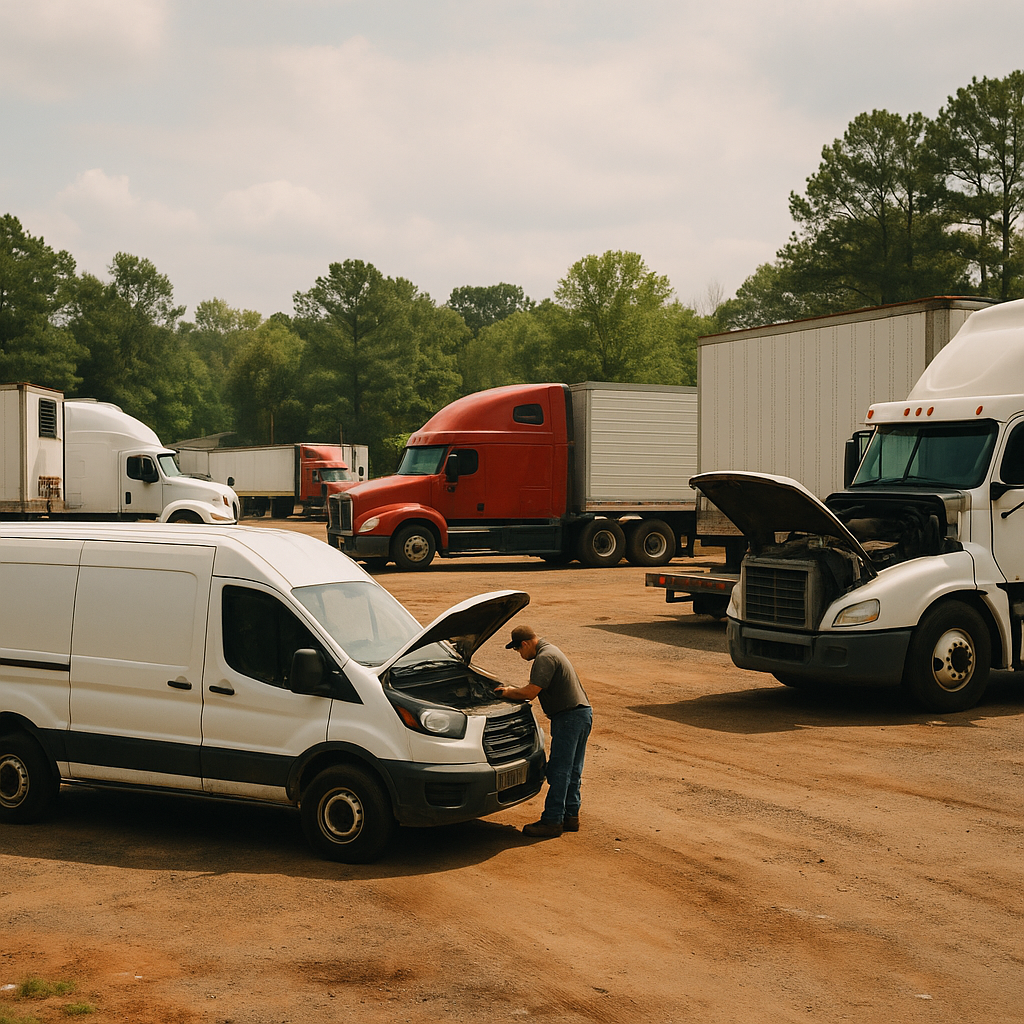

Georgia cargo van insurance depends on how you use the van, what you haul, and whether you stay inside Georgia or cross state lines. A courier doing local contract work, a contractor carrying tools, and a for-hire carrier hauling customers’ goods can all need different coverage, limits, and filings.
Georgia Cargo Van Insurance at a Glance#
Georgia cargo van insurance isn’t one package every operator buys. Your setup depends on whether the van is for personal use, business use, contract delivery, or for-hire hauling, plus whether you’re dealing with Georgia-only rules or federal motor-carrier rules.
A lot of confusion starts here: liability for the van and protection for the freight are not the same thing. Commercial auto liability insurance pays for covered third-party bodily injury or property damage caused by a covered vehicle. Motor truck cargo insurance covers certain loss or damage to a customer’s freight while it’s in your care, custody, or control, subject to policy terms.
When a cargo van needs commercial coverage#
If your cargo van is part of how you make money, a personal auto policy may not fit the exposure. Regular delivery work, hauling goods for a customer, operating under a contract, or using the van in a business can all push you into commercial coverage territory.
Georgia operators also need to separate state questions from federal ones. This guide walks through that decision path: personal versus commercial use, Georgia versus interstate rules, coverage options, cost drivers, and what to gather before you ask for a quote.
The coverage decisions that depend on your work#
The right policy depends on the work, not the vehicle name alone. A cargo van used for light contractor work can look very different from a van hauling customers’ freight for compensation.
That means you shouldn’t assume every cargo van business needs the same liability limit, cargo limit, filing, or policy bundle. Start with what you actually do day to day, then match coverage to that exposure.

Decide Whether Your Cargo Van Needs Commercial Auto Insurance#
If you use a cargo van to earn money, carry tools for a job, make deliveries, or haul property for compensation, you may need commercial auto insurance instead of relying on a personal policy alone. The exact answer depends on business use, contract terms, ownership, and what the policy actually allows.
Personal errands versus business use#
A personal auto policy is built for personal driving. Once the van becomes part of your business, that line starts to move fast.
If the van is only used for personal errands, that’s one thing. If it’s used regularly for job sites, service calls, scheduled deliveries, customer pickups, or any business activity tied to revenue, you need to review whether personal auto still fits.
Contractor, courier, and for-hire delivery scenarios#
A contractor carrying their own tools is different from an operator hauling a customer’s property. The first may still need commercial auto because the van supports a business. The second can also create freight exposure, contract requirements, and possibly motor-carrier compliance issues.
A courier or local delivery driver may be paid for transportation even if the vehicle is smaller than a tractor-trailer. That doesn’t automatically mean every FMCSA filing applies, but it does mean personal auto assumptions can break down fast.
Questions to answer before relying on a personal auto policy#
Before you trust a personal policy, answer a few practical questions:
- Is the van titled to you personally or to a business?
- Do you use it to make deliveries or transport property?
- Are you paid to move goods from one place to another?
- Does a platform, broker, shipper, or customer require commercial auto, cargo, or general liability?
- Do your contracts require specific limits or certificates?
This is where operators get burned. They think, “It’s just a van,” then a claim hits and the policy doesn’t match the work. If you’re not sure whether your setup counts as business or for-hire use,
Match Georgia and Interstate Rules to Your Operating Authority#
Georgia intrastate rules and interstate FMCSA-related rules are separate questions. If you only work inside Georgia, your compliance path can differ from an operator hauling for hire across state lines, and you shouldn’t assume a USDOT number or MC number tells you the full insurance answer by itself.
Georgia intrastate work#
If you operate only inside Georgia, start by confirming what Georgia requires for your vehicle class, registration, and operating type. Intrastate rules can involve state-level authority, registration, and insurance questions that are separate from interstate motor-carrier filings.
The Georgia Office of Commissioner of Insurance and Safety Fire is a useful state resource for insurance questions and licensed insurance assistance. For actual operating authority or registration questions, confirm details with the appropriate Georgia agency before the van goes to work.
Interstate for-hire operations#
If you haul property for compensation across state lines, federal financial responsibility rules may apply based on your operation, vehicle classification, and cargo. Under 49 CFR Part 387, for-hire interstate carriers hauling general freight in vehicles over 10,001 lbs must carry at least $750,000 in public liability. That doesn’t mean all cargo van operators need that amount.
Some cargo vans won’t fall into that exact category. Weight, for-hire status, commodity, and interstate scope all matter. Hazmat, passengers, and other operations can trigger different requirements.
USDOT numbers, MC authority, and insurance filings#
A USDOT number is an identifier used by the Federal Motor Carrier Safety Administration for safety monitoring and compliance. An MC number is operating authority tied to certain for-hire interstate operations. Neither number tells you, by itself, exactly what policy package to buy.
If your operation requires a filing, you may also hear about the MCS-90, a federal endorsement attached to certain public-liability policies for motor carriers. It is not a substitute for reading the policy or confirming the actual operating requirements with your broker or compliance source, as FMCSA explains on its MCS-90 information page.
You can verify certain carrier registration and public insurance information through SAFER. That’s especially useful when you want to confirm whether interstate authority is active and whether public insurance filings appear on record.
Why vehicle weight, cargo, and carrier type matter#
This is the part people oversimplify. A cargo van used for local business errands is not the same as a for-hire interstate carrier. A private carrier is not the same as a for-hire carrier. General freight is not the same as hazmat.
So when you hear blanket statements about “required limits,” stop and scope the operation first:
- Are you for-hire or private?
- Are you intrastate or interstate?
- What’s the vehicle weight?
- What commodities do you haul?
- Do contracts require higher limits than the legal minimum?
Choose Coverage Based on the Van, Cargo, and Contract#
Most Georgia cargo van operators need to build coverage around three things: the van, the freight, and the contract. Commercial auto liability handles covered driving-related liability, cargo handles customers’ goods when covered, and the rest depends on whether you own the van, finance it, haul for hire, or take on extra contract obligations.
Commercial auto liability#
Commercial auto liability insurance covers certain third-party injury or property damage claims arising from the operation of a covered vehicle, subject to the policy’s terms, exclusions, and selected limits. This is the core vehicle liability coverage most business-use and for-hire operators start with.
The right limit isn’t one-size-fits-all. It should match the legal requirement that applies to your operation, plus any contract requirements from a shipper, broker, customer, or platform.
Motor truck cargo coverage#
Motor truck cargo insurance covers certain loss or damage to customers’ freight while it’s in your care, custody, or control, subject to exclusions, deductibles, commodity restrictions, and policy terms. If you’re hauling someone else’s goods, this is the coverage people often assume they have when they actually don’t.
Not every cargo policy covers every commodity the same way. High-theft goods, fragile goods, temperature-sensitive freight, and high-value loads may need special review. Contract language also matters, because some customers ask for cargo limits or endorsements that don’t match a generic quote.
Physical damage and collision coverage#
Physical damage insurance helps protect your insured van against covered damage to the vehicle itself. That can include collision coverage, which pays for covered crash damage to your van, and comprehensive coverage, which pays for covered non-collision losses like theft, fire, or some weather events.
This is different from liability. Liability protects you against covered damage you cause to others. Physical damage helps protect your own van, which matters more if it’s financed, newer, or critical to keeping your business moving.
General liability for for-hire operations#
General liability insurance covers certain non-driving third-party claims, like some premises or operations exposures, for eligible businesses. It is not a substitute for commercial auto liability.
Some for-hire operators need general liability because a broker, customer, or warehouse contract asks for it. Others may not need it at all. The point is to match the policy to the actual contract and exposure, not buy it just because somebody in a forum said every carrier needs it.
Non-trucking liability, trailer interchange, and refrigeration breakdown#
A few coverages are more situation-specific:
- Non-trucking liability covers certain non-business use for qualifying leased owner-operators. It does not cover paid hauling.
- Trailer interchange covers damage to a non-owned trailer in your possession when a signed interchange agreement makes you responsible.
- Non-owned trailer physical damage can fit operators using someone else’s trailer without that interchange setup.
- Reefer or refrigeration breakdown can matter if you haul temperature-controlled freight and need protection tied to cooling-unit failure.
| Situation | Usually starts with | Often added | Main reason |
|---|---|---|---|
| Personal errands only | Personal auto review | None or minimal business review | Business use may not apply |
| Contractor with tools | Commercial auto liability | Physical damage | Van supports business work |
| Courier or local delivery | Commercial auto liability | Cargo, physical damage | Paid delivery raises exposure |
| For-hire freight hauling | Commercial auto liability | Cargo, GL, filings if required | Customer goods and contracts |
| Temp-controlled delivery | Commercial auto liability | Cargo, reefer breakdown | Spoilage and equipment exposure |
If your contracts, commodities, or certificates are all over the place, don’t guess. Review your operating scope before binding coverage and
Understand What Affects Cargo Van Insurance Costs in Georgia#
Cargo van insurance in Georgia is individually underwritten, so the premium can vary a lot from one operator to the next. Driver history, business history, garaging location, operating radius, mileage, cargo, vehicle value, claims, limits, deductibles, and coverage choices all affect the quote.
Driver and business history#
Insurers want to know who’s driving and how stable the operation is. Years of commercial driving experience, violations, accidents, prior claims, and how long the business has been operating all matter.
A newer business isn’t automatically uninsurable. But missing information, inconsistent business details, or avoidable surprises can make quoting harder.
Operating radius and delivery territory#
A van staying local in Georgia presents a different exposure than one running regional or interstate routes. More miles, more states, and denser delivery areas usually change the risk picture.
Where the van is garaged and parked overnight matters too. That’s part of the underwriting story, especially for theft, vandalism, and frequency of use.
Cargo, contracts, and required limits#
What you haul can change everything. General merchandise, tools, electronics, food products, or higher-value freight don’t all rate the same way.
The same goes for limits. A request for higher liability or cargo limits can change the quote, but the right limit should come from actual legal requirements, contract demands, and real loss exposure, not a rumor about what “everybody carries.”
Vehicle value, deductibles, and claims exposure#
If you add physical damage, the van’s value matters. A financed late-model van usually needs a different approach than an older van you could replace out of pocket.
Deductibles matter too. So does the difference between a liability-only quote and a broader quote that includes cargo and physical damage.
How to compare quotes without creating coverage gaps#
Compare like for like. If one quote includes only liability, and another includes liability, cargo, and physical damage, they are not comparable just because the vehicle is the same.
The cleanest way to improve quote accuracy is simple: give complete operating details, keep your records current, use consistent business information, and compare matching limits, deductibles, and endorsements.
Prepare a One-Van Quote Checklist#
A clean cargo van insurance quote starts with accurate details. For a one-van owner-operator or small business, the fastest path is to gather business, driver, vehicle, cargo, and contract information before you start calling around.
Business and authority details#
Start with the basics:
- Legal business name
- DBA, if you use one
- EIN, if applicable
- Garaging address
- Requested effective date
- USDOT number, if applicable
- MC number or authority details, if applicable
Be exact here. If the business name on the application doesn’t match contracts or registrations, it can slow everything down.
Driver and vehicle details#
You’ll usually need:
- Driver’s license information
- Years of commercial driving experience
- Violations, accidents, and claims history
- VIN
- Stated vehicle value
- Lienholder information, if financed
A VIN is the vehicle identification number assigned to that specific van. Make sure it matches the title and registration records.
Cargo and operating details#
Underwriters will also want the practical operating picture:
- Annual mileage
- Normal operating radius
- States traveled
- Overnight parking location
- Commodities hauled
- Maximum value per load
- Whether the goods belong to customers
- Delivery type
- Whether you use trailers
- Whether temperature control is involved
Contracts, certificates, and target effective date#
If a broker, shipper, customer, or platform gave you insurance requirements, have them ready. Certificate requests, cargo limits, additional insured wording, or general liability requirements can all affect the quote.
Most important, describe your operation accurately. Don’t pick a broader or cleaner-sounding class if it doesn’t match the work. That shortcut can create problems later if the policy and the real operation don’t line up.
Build Coverage Around the Work You Actually Do#
Georgia cargo van insurance makes more sense when you work the problem in order: decide whether the van is personal or commercial, figure out whether you’re intrastate or interstate, verify authority and contract requirements, and then choose coverage for both the vehicle and the freight exposure.
Review your setup any time the work changes. Adding states, hauling different commodities, taking higher-value loads, financing the van, using trailers, or moving from contractor work into for-hire hauling can all change what fits.
If you’re not sure whether your policy matches the work on the ground, get a second set of eyes on it before you accept the next load.
FAQ#
How much is insurance on a cargo van?
Cargo van insurance doesn’t have one standard price. The premium depends on how the van is used, whether the work is business or for-hire, the driver’s record, years in business, Georgia garaging location, operating radius, mileage, cargo type, prior claims, vehicle value, selected limits, deductibles, and whether you add cargo or physical damage coverage.
The biggest mistake is comparing unlike quotes. A liability-only quote is not the same as one that also includes cargo or physical damage. To make a useful comparison, match limits, deductibles, endorsements, and the actual description of the work being done.
What insurance do I need for a cargo van business?
Start with commercial auto liability if the van is used in a qualifying business, delivery, or for-hire operation. Then look at whether you also need motor truck cargo for customers’ goods, physical damage for the van itself, general liability for certain contract-driven exposures, or other specialty coverage tied to trailers or temperature-controlled freight.
The right answer depends on ownership, whether you haul your own property or someone else’s, whether you’re intrastate or interstate, and what your contracts require. Policy terms and operating details matter more than the words “cargo van” by themselves.
How much does $100,000 cargo insurance cost?
A $100,000 cargo limit does not come with one standard price. Insurers rate cargo coverage based on what you haul, your maximum value per load, theft exposure, operating territory, claims history, deductible, any exclusions or commodity restrictions, and whether contracts require specific terms or endorsements.
That means two Georgia cargo van operators asking for the same cargo limit can get very different quotes. One may haul low-value general goods locally, while another may carry higher-theft or time-sensitive freight. The cleaner approach is to quote the real commodity mix and compare policy wording, not just the top-line limit.
How much is a $1,000,000 liability insurance policy?
A $1,000,000 liability policy is not priced uniformly. The quote depends on your driving history, business history, operating radius, vehicle type, garaging location, cargo, authority, and whether any filings or contract requirements are involved.
Just as important, you should confirm that the limit actually fits your operation. Some operators ask for a higher limit because a broker or customer requires it. Others may be responding to a rumor about what every carrier needs. Get the quote based on your real setup, then confirm that the limit matches applicable obligations and the work you’re taking.
Do I need cargo insurance if I only make local deliveries in Georgia?
Maybe. Local work inside Georgia does not automatically remove the need for cargo coverage if you’re hauling customers’ goods. If you can be held responsible for loss or damage to the freight, motor truck cargo coverage may still matter, even when the route is short and the van never leaves the state.
The key question is not just distance. It’s whose property you’re hauling, what your contract says, what commodities are involved, and whether you have care, custody, or control of the goods. Some operators assume commercial auto covers the load, but liability and cargo are separate coverages.





