
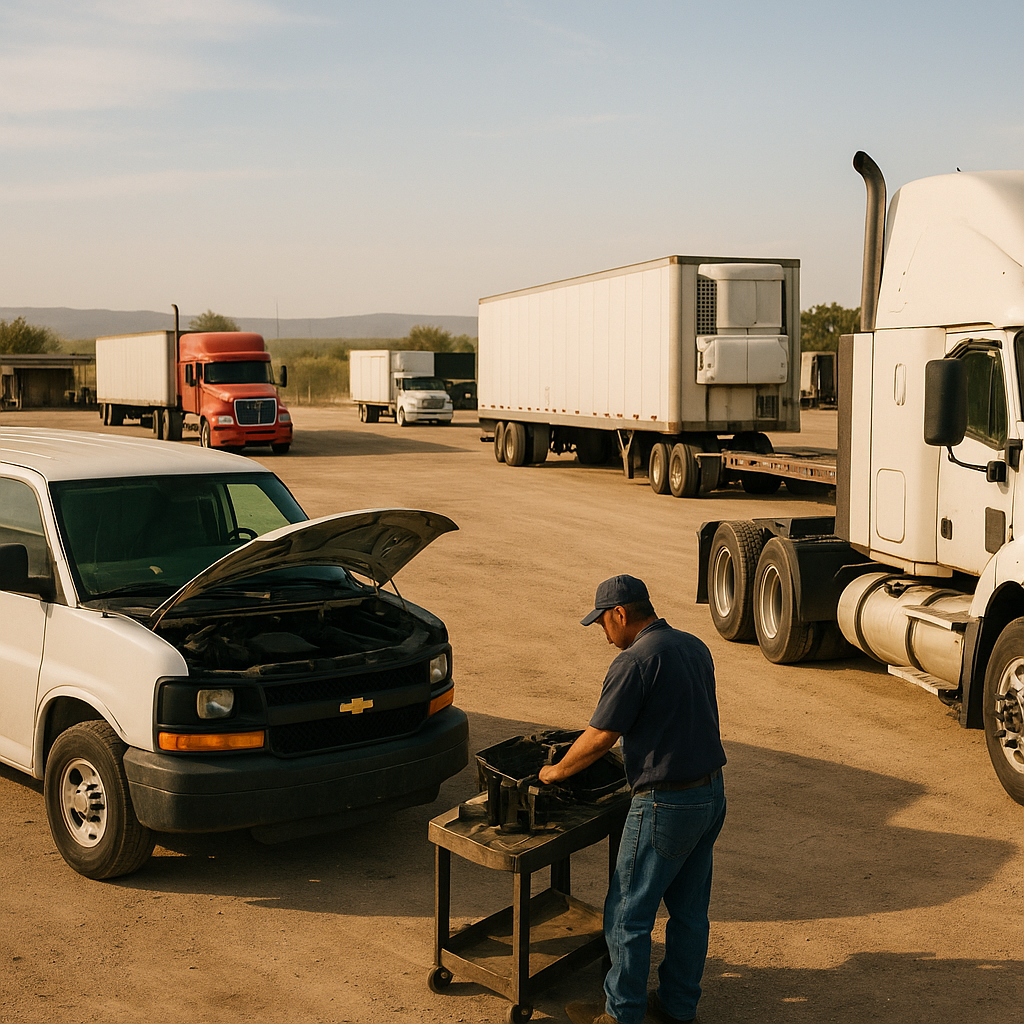

Cargo van truck insurance Texas questions usually start in the wrong place: people ask about price before they pin down how the van is actually used. A cargo van doing personal errands, hauling your own tools, making local business deliveries, or moving freight for someone else can trigger very different insurance needs.
Start With How You Use the Cargo Van#
The fastest way to sort out cargo van truck insurance Texas is to start with use, not vehicle type. Insurers usually care less that it’s called a cargo van and more about who owns it, who drives it, what it carries, how far it goes, and whether you’re being paid to haul for someone else.
A cargo van can look the same in a parking lot and still need very different coverage. One van may be a contractor’s business vehicle carrying owned tools. Another may handle local delivery work. Another may operate as a for-hire freight vehicle under someone else’s load board or brokered freight.
Local business use versus personal use#
Personal use means ordinary non-business driving like errands, commuting, or family trips. Commercial use means the van supports a business, whether that’s carrying tools, meeting customers, making deliveries, or hauling property tied to paid work.
Calling it a “cargo van” doesn’t decide the policy type. The insurer usually looks at business use, listed drivers, garaging location, travel radius, cargo, contracts, and whether the operation is for-hire. For-hire means you’re being paid to transport property for someone else.
Contractor, delivery, and for-hire freight work#
A contractor carrying owned tools has a different exposure than a courier dropping packages around Houston. A local business making its own deliveries is different from an operator hauling customer freight across state lines. Those details matter because they change both eligibility and the coverages that need to be on the policy.
If your primary class is last-mile or final-mile delivery, confirm that the insurer or broker actually writes that class before you spend time applying. Not every market wants that exposure, and it’s better to know up front than after you’ve sent in vehicle and driver info.
When a personal auto policy may leave a business-use gap#
A personal auto policy may limit or exclude regular business driving, especially delivery or for-hire activity. That’s where people get burned: they assume the van is insured because it has an auto policy, then learn after a claim that the actual use wasn’t covered the way they thought.
The main takeaway is simple: don’t assume every Texas cargo van business is a federally regulated motor carrier. Some are, some aren’t, and the right starting point is always the work the van actually does.

Separate Texas Rules From FMCSA Requirements#
Texas vehicle insurance rules and FMCSA insurance rules are separate systems. Texas handles state-level financial responsibility for vehicles, while federal motor-carrier rules can apply to certain interstate for-hire operations depending on authority, cargo, vehicle, and how the business is classified.
Texas financial responsibility is not the same thing as federal motor-carrier financial responsibility. The Texas Department of Insurance explains Texas auto insurance and financial responsibility requirements, while FMCSA rules deal with qualifying motor carriers under federal law.
Texas financial-responsibility requirements#
Financial responsibility means showing you can pay for covered damage or injuries from an auto accident, usually through insurance that meets state requirements. In Texas, that framework applies at the state level and doesn’t automatically answer whether a cargo-van operation has separate federal obligations.
That’s the first place drivers mix things up. They hear a state minimum, or they hear another driver mention federal filings, and assume the same rule fits every commercial van. It doesn’t.
When federal insurance rules can apply#
The Federal Motor Carrier Safety Administration, or FMCSA, oversees certain interstate motor-carrier operations. Federal insurance filings and operating authority may apply to qualifying interstate for-hire motor carriers rather than every Texas cargo-van business, according to FMCSA operating-authority and insurance guidance and the minimum financial responsibility rules under 49 CFR Part 387.
Under 49 CFR Part 387, the federal minimum depends on carrier type, vehicle weight, and commodity. For example, for-hire interstate carriers hauling general freight in vehicles over 10,001 lbs must carry at least $750,000 in public liability. That’s not a universal rule for every cargo van.
Interstate authority, cargo, and vehicle configuration#
A USDOT number is a federal identifier used for certain safety and registration purposes. An MC number is operating authority for certain for-hire interstate carriers. An MCS-90 is a federal insurance endorsement tied to certain motor-carrier financial responsibility obligations.
Those terms are related, but they aren’t interchangeable. Crossing a state line by itself doesn’t mean every cargo van needs the same filing, the same authority, or the same limit. Cargo, vehicle configuration, for-hire status, and classification all matter.
Why an MC number is not automatic for every cargo van#
A lot of bad advice starts with “if you run interstate, you need X.” That’s too broad. Some operators need a USDOT number but not operating authority. Some need authority and a filing. Some are doing business use that stays outside the typical for-hire interstate freight setup.
Before you rely on a dispatcher, a forum, or another driver, confirm your own registration and authority status through FMCSA. That’s a lot safer than building your insurance around someone else’s operation.
Build Coverage Around What the Van Carries and Does#
The right cargo van policy starts with commercial auto liability, then adds protection based on the van, the cargo, and the business activity. Most gaps happen when operators assume freight, tools, rented vehicles, and weather damage all sit under one policy when they often don’t.
Commercial auto liability is coverage for bodily injury or property damage you cause with a covered business vehicle, subject to the policy’s terms and limits. It’s the foundation for most commercial cargo van setups because it addresses the auto accident exposure itself.
Commercial auto liability#
If the van hits another vehicle, damages property, or causes injuries, commercial auto liability is the coverage people usually mean when they ask if the van is “insured.” It’s tied to covered autos, listed operations, policy terms, and the limits you selected or are required to carry.
That’s also why matching the operation matters. A policy written for light local business use may not line up with regular delivery or for-hire freight if the insurer wasn’t told that’s how the van is used.
Physical damage and comprehensive coverage#
Physical damage covers damage to the insured vehicle itself. Collision covers impact-related damage, while comprehensive covers many non-collision losses such as hail, wind, theft, vandalism, and fire, usually with a deductible.
Texas operators should pay close attention here because hail is a real exposure. If the van is essential to the business, losing it to storm damage can shut down income fast. Comprehensive can help with that, but only if it’s actually on the policy and the deductible makes sense for your operation.
Motor truck cargo coverage#
Motor truck cargo coverage is insurance designed for covered freight while it’s in transit, subject to the policy’s terms, limits, and exclusions. It is not a blanket promise that every item inside the van is covered under every condition.
Freight usually means property you’re transporting for someone else. Your own tools, equipment, or supplies may fall outside cargo coverage or be treated differently. If the van carries both customer property and your own gear, ask for that distinction to be reviewed before binding coverage.
General liability for business operations#
General liability covers certain non-auto business liability exposures, such as some premises or operations claims, depending on the policy. It does not replace commercial auto liability, and it doesn’t turn an auto claim into a general liability claim.
This matters when a contract asks for both. A shipper, customer, or landlord may require evidence of general liability, but that requirement doesn’t reduce the need for proper auto coverage.
Non-trucking liability and trailer-related coverage#
Non-trucking liability, often called NTL or bobtail in everyday conversation, is meant for certain owner-operators when the vehicle is used outside covered business or dispatch use. It’s not a substitute for primary commercial auto coverage, and it doesn’t cover paid hauling.
Trailer coverage also needs careful handling. If you’re using a trailer, don’t assume it’s automatically covered because it’s attached to the van. Trailer responsibility depends on ownership, policy terms, and whether a separate trailer-related coverage is needed.
Find Coverage Gaps Before a Claim Exposes Them#
The best way to spot a coverage gap is to ask six plain questions before you buy: who owns the van, who drives it, where it travels, what it carries, who owns what’s inside, and what your contracts require. If you can’t answer those clearly, your quote probably isn’t lined up with your real exposure.
Freight versus tools and equipment#
Cargo coverage can include commodity restrictions, theft conditions, deductibles, and loading or unloading terms. So if the van carries electronics, tools, general merchandise, or mixed loads, the details matter. A simple “I need cargo” request usually isn’t enough.
If you carry your own ladders, tools, or supplies, don’t assume they’re covered the same way as customer freight. That mismatch causes a lot of ugly claim conversations after a theft or accident.
If you’re not sure where your biggest gap is, a coverage-scope review can help before you put a load or contract at risk.
Hail and weather damage in Texas#
In Texas, hail damage is typically a comprehensive physical-damage issue if comprehensive is included on the policy, subject to the deductible and policy terms. If the van is financed or critical to daily work, that detail matters a lot more than people expect.
Wind, falling objects, theft, and vandalism usually land in the same general bucket. That’s why skipping comprehensive to lower the quote can create a much bigger business problem later.
Leased and rented cargo vans#
Lease and rental agreements can shift responsibility for physical damage, liability, and contract obligations in ways an owned-vehicle policy doesn’t. Read those agreements closely before assuming your current policy handles a temporary or leased vehicle the same way as your owned van.
The same goes for hired vehicles. Don’t assume a rented van automatically picks up the same protection, the same drivers, or the same business-use permissions.
Driver, territory, and cargo restrictions#
An extra driver, a wider territory, or a new cargo type can change eligibility and pricing. So can attached trailers, overnight parking habits, and theft-prone commodities.
If your work changes, your policy needs to change with it. Otherwise, the declaration page may look fine right up until a claim tests what was actually disclosed.
Contract requirements from shippers and brokers#
Shipper and broker contracts may require specific limits, certificates, cargo terms, or named parties. A certificate of insurance is only evidence that a policy exists on a certain date. It doesn’t rewrite the policy or fix missing coverage.
Understand What Drives Texas Cargo Van Insurance Cost#
Texas cargo van insurance cost depends on exposure, not just the van itself. Insurers commonly look at driver history, claims, business experience, vehicle value, operating radius, garaging location, annual mileage, cargo, requested limits, and deductibles before they decide whether and how to quote.
Operating history and driver experience#
A cleaner driving record and a better loss history usually make an operation easier to place than repeated accidents, major violations, or recent commercial losses. Time in business and experience with the specific type of work also matter.
An operator doing occasional local contractor work presents a different picture than one hauling brokered freight across a wide territory. Even if the vans look identical, the risk doesn’t.
Vehicle value, age, and safety features#
The van’s value affects the amount at risk under physical damage. Newer or more expensive vehicles usually create a bigger insured exposure than older units, especially if financing or replacement timing would hurt the business.
Safety features, storage practices, and anti-theft measures can matter too. So can whether the van is parked in a secured location or left loaded overnight.
Radius, garaging location, and Texas weather exposure#
Garaging ZIP code means where the vehicle is primarily kept when not in use. Insurers use it because traffic patterns, theft rates, storm exposure, and claim frequency can vary a lot by area.
Operating radius matters for the same reason. A van running short local trips is one risk profile. A van covering long distances, different metros, or interstate lanes is another.
Cargo type, limits, deductibles, and contract requirements#
A higher liability limit, higher cargo limit, or broader physical-damage protection can change the quote because you’re asking the insurer to take on more exposure. Commodity type matters too, especially where theft, breakage, spoilage, or contract requirements increase claim severity.
A deductible is the amount you pay before covered physical-damage insurance responds. Choosing one is a risk-retention decision, not just a way to make the quote look lower.
How coverage choices can affect the quote#
This is why comparing random price examples online usually wastes time. Your actual premium depends on your operation, cargo, radius, driving history, and other factors. A lower quote may simply be built on narrower coverage, higher deductibles, or a different class of business.
If you want a useful quote review, have your vehicle use, commodities, operating area, contracts, and loss history ready before you ask for numbers. That gives the policy a better chance of matching the work.
Compare Quotes by Coverage Scope, Not the Headline Price#
The smartest way to compare cargo van quotes is to make the policies equivalent before you compare payment amounts. If limits, deductibles, cargo terms, drivers, or scheduled vehicles differ, you’re not comparing one quote to another in any useful way.
Start with the basics: same liability limits, same named insured, and the same scheduled vehicles. Then confirm the vehicle identification number, garaging address, listed drivers, and operating territory all match the real operation.
Next, compare physical-damage deductibles and how the van’s value is handled. Then review cargo limits, covered commodities, theft conditions, and key exclusions. A quote that looks cheaper may just leave out the exact problem you’re trying to insure.
A certificate of insurance shows evidence of coverage, but it doesn’t replace the policy, endorsements, or your contract requirements. If shipper contracts, mixed contractor and freight work, or uncertain federal authority status are involved, a dedicated human review is worth the extra few minutes.
| Quote item | What to confirm | Why it matters |
|---|---|---|
| Liability coverage | Same limits and business use | Different limits change exposure |
| Vehicle schedule | Same VIN and van value | Wrong unit means wrong quote |
| Physical damage | Same comp and collision deductible | Lower price may mean more out of pocket |
| Cargo coverage | Same limit, commodity, theft terms | Cargo wording changes claim outcomes |
| Drivers and territory | Same listed drivers and operating area | Eligibility can change by use pattern |
Use This Texas Cargo Van Insurance Checklist#
Before you request quotes, gather the basic facts that actually shape the policy. That usually includes the VIN, ownership or lease papers, garaging ZIP code, driver information, loss history, operating radius, commodities, customer contracts, and any USDOT or MC details tied to the operation.
Before requesting quotes#
Write down whether the van carries customer property, your own tools, or both. That one distinction affects whether you’re mainly looking at freight exposure, business-property issues, or both at the same time.
If the van would be hard to replace after hail, theft, or other non-collision damage, confirm you want comprehensive reviewed and decide what deductible you can realistically absorb.
Before buying a policy#
Read the named insured, listed vehicle, listed drivers, territory, and business description carefully. Make sure the policy reflects how the van is really used, not the closest shortcut description on an application.
If you think federal authority or filing rules may apply, verify that status through authoritative sources instead of guessing. You can check public carrier information on FMCSA SAFER and confirm broader federal guidance through FMCSA and 49 CFR Part 387.
Before starting a new contract or route#
Any time you add a vehicle, add a driver, change cargo, widen your territory, or sign a new contract, review the policy again. Coverage that fit one route or one customer may not fit the next one.
That review is especially important before you sign a shipper, broker, lease, or rental agreement that shifts responsibility for liability or physical damage.
Choose Coverage That Matches the Work You Actually Do#
The decision path is simple even if the details aren’t: identify how the van is used, separate Texas rules from possible federal obligations, match coverage to the real exposure, check exclusions and contract requirements, then compare equivalent quotes instead of chasing the lowest number.
A cargo van doing occasional contractor work should not be evaluated like a for-hire interstate freight operation. And neither one should be judged by personal-auto assumptions.
After you’ve gathered the checklist information, it helps to get a trucking-focused review before you sign a shipper, broker, lease, or rental agreement. LogRock specializes in trucking insurance for owner-operators and small fleets.
FAQ#
How much is insurance on a cargo van?
Cargo van insurance cost depends on how the van is used, not just what the vehicle is. Insurers usually look at driver history, claims, business experience, garaging location, operating radius, annual mileage, vehicle value, cargo, and the coverage you want to buy. A van used for local contractor work may rate very differently from one used for delivery or for-hire freight. Instead of relying on a generic estimate, compare quotes only after the liability limits, deductibles, cargo terms, and listed drivers match. Otherwise, the cheaper option may simply be covering less.
What insurance do I need for a cargo van business?
Most cargo van businesses start with commercial auto liability because it covers covered bodily injury and property damage from an auto accident, subject to policy terms and limits. From there, the right add-ons depend on the work. If you own the van and couldn’t easily replace it, physical damage may matter. If you haul customer freight, motor truck cargo may matter. If contracts require non-auto business protection, general liability may matter. If you carry your own tools or equipment, ask how those items are treated. The right answer comes from the operation, not the vehicle label.
How much does $100,000 cargo insurance cost?
A $100,000 cargo limit does not set the price by itself. Insurers also look at what you haul, theft exposure, territory, claims history, security practices, deductible, and the policy’s conditions and exclusions. Electronics, high-theft goods, or mixed freight can be viewed very differently from lower-risk commodities. Loading and unloading terms, unattended vehicle conditions, and overnight storage can also affect how the risk is evaluated. So the better question isn’t just the limit amount. It’s whether the cargo coverage matches the commodity, route, and contract terms that apply to your business.
What is the cheapest commercial truck insurance company in Texas?
There’s no single company that’s always the cheapest for every Texas cargo-van operation. One carrier may like local contractor use, another may prefer certain business autos, and another may decline your class altogether. The lowest headline quote can also leave out coverage you actually need, such as comprehensive for hail, proper cargo terms, or the right driver and territory setup. A better approach is to compare equivalent quotes from markets that actually accept your operation. Match the limits, deductibles, covered use, and exclusions first, then decide which quote gives you the best fit.
Do I need cargo insurance if I only carry tools and supplies?
Not always, because tools and supplies you own are not the same as customer freight. Motor truck cargo coverage is generally designed for covered property you’re transporting for someone else in transit, subject to the policy’s wording. If the van mainly carries your own tools, materials, or job supplies, those items may need separate treatment depending on ownership and policy terms. That’s why it helps to spell out exactly what rides in the van day to day. A policy that handles customer freight well may still leave a gap for owned equipment or vice versa.





